



When the Johor Bahru–Singapore Rapid Transit System (RTS) Link opens between Woodlands North in Singapore and Bukit Chagar in Johor Bahru in January 2027, the boost in cross border travel is expected to benefit most property owners in Singapore’s northern region like Woodlands.
The enhanced reliability that the RTS promises to deliver has clear benefits. A cross border journey that takes 45 minutes on a good day, and can stretch considerably further during peak hours, is reduced to a five-minute train ride.
For landlords in Woodlands who cater to workers that frequently travel between Singapore and Johor Bahru (JB) - and also want to be close to the Causeway - the RTS opens a competing alternative housing market for these tenants.
This is the allure of much more affordable rental properties in JB that are roughly a quarter of the average rent in Woodlands. The regular and reliable service of the RTS turns this into a practical commute.
Woodlands Is One of Singapore's Most Affordable Districts
Woodlands, Admiralty, and Marsiling make up the largest towns in District 25, and this housing market has consistently offered the most affordable residential options in terms of psf prices.
Two of the most actively transacted condominiums in this district are Parc Rosewood and Woodhaven, which fetch a median price of approximately $1,390 psf and $1,300 psf, respectively, across transactions in 2024 and 2025.
Both are 99-year leasehold projects from 2011, which means that they have about 84 years left on their land leases. Overall, the median price of condos in District 25 is about $1,291 psf across all private non-landed transactions, which is one of the lowest median prices at the district level.
On the other hand, HDB resale prices have moved steadily upwards. Four-room flats in Woodlands changed hands at a median of $461,500 in 2022, increasing to around $530,000 in 2024, and reaching $550,000 in the first half of this year. Likewise, five-room flats have moved from $556,000 in 2022 to $655,000 in the first half of this year.
Woodlands is one of the most affordable HDB towns in Singapore in terms of median HDB resale price, alongside other relatively affordable towns like Jurong West, Jurong East, and Choa Chu Kang.
None of this reflects a market in distress. Transaction volumes are solid and the price trend is moving up, but prices in Woodlands are lower for a clear reason: the town sits at Singapore's northern edge, a long way from the city centre.
The RTS delivers connectivity, but some of it has already been priced in
Broadly speaking, the advantage of a strong public transit network is largely priced into the residential real estate market in Woodlands. Woodlands MRT interchange sits on both the North-South Line (NSL) and the Thomson-East Coast Line (TEL), giving residents a direct route into the central business district via the TEL.
What the district has historically lacked is not the Singapore-side commute but the cross-border connection: the Causeway, with its unpredictable clearance times, has made JB feel further than the 500-odd metres of the Strait of Johor would suggest.
A five-minute rail crossing with a single, consolidated clearance process would be a game-changer for the region. For buyers with ties to Johor (such as Malaysian PRs, families who maintain connections across the strait, professionals whose work spans both sides), a property in Woodlands might soon carry a greater convenience value than before.
Structural works at Woodlands North RTS station, the terminus on the Singapore side, are largely complete with systems testing expected to begin in September, according to LTA. The comprehensive multi-agency customs and immigration trials are also expected to run throughout the fourth quarter of this year.
For now, the RTS seems to be moving ahead with its operations expected to start in January 2027.
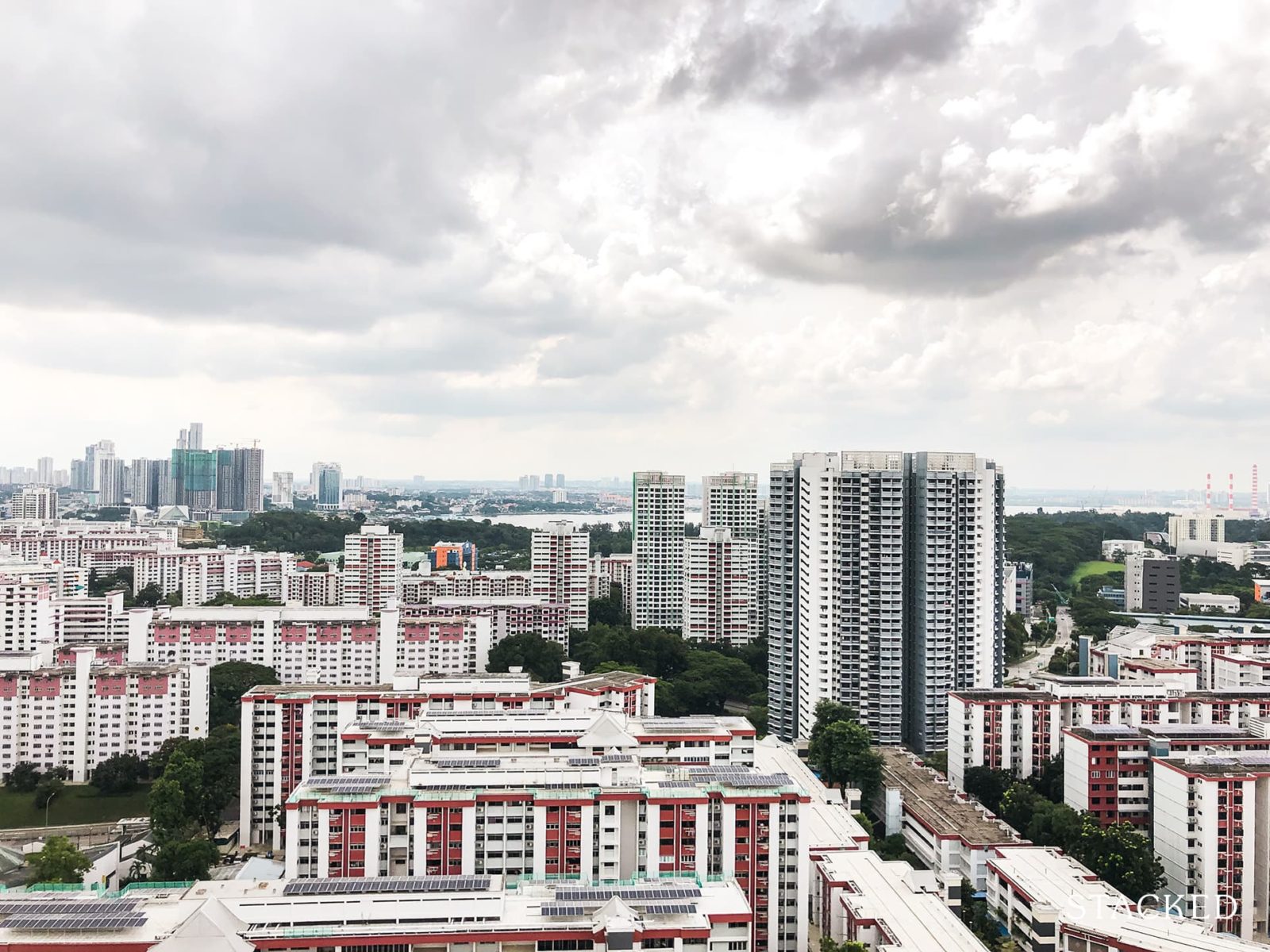
The impact on housing prices has started to permeate through the HDB and condo markets in Woodlands. The steady rise in both private and HDB resale prices between 2022 and 2025 almost certainly reflects buyers moving early in anticipation of the RTS.
We observe that buyers who wanted to position ahead of the RTS opening have, to a considerable degree, already acted.
The case for further price gains relies on another long-term growth factor, that is the transformation of Woodlands into a regional hub, with plans to bring more employers and jobs to the north. This would generate greater housing demand in addition to the proximity to JB.
This will be a long-term transformation that will take several years before we can truly gauge the impact this will have on the residential and commercial markets in Woodlands.
The same can’t be said for the rental market in Woodlands
We might also be looking at a situation where the RTS creates a real problem for landlords in Woodlands.
The town has historically been able to draw on a reliable tenant base that includes workers from JB who work in Singapore. Most are willing to pay rent in Singapore because commuting daily from JB means unpredictable Causeway queues, and some see that hassle outweighing the savings.
Through an analysis of about 200 Woodlands rental listings and 60 listings in each of the four condominiums close to the JB border - compiled in May 2026 - Ken Foong, Equity Analyst, Southeast Asia and Australia Real Estate at Bloomberg Intelligence, found that rents in JB run about 75% cheaper than those in Woodlands.
On a psf basis, the rental gap works out to roughly $5.02 psf per month (pm) in Woodlands against approximately $1.24 psf pm in border-adjacent JB areas, in Singapore dollar terms.
"With the opening of the RTS, more people might choose to rent in Johor Bahru, close to the Bukit Chagar station, and benefit from the lower cost of living in Malaysia," says Foong, adding: "This can result in more competition for properties in Woodlands to be rented out, leading to some downside risk for housing rents in the area”.
At that differential, a tenant in a 700 sq ft Woodlands unit paying around $3,500 a month could move to a broadly comparable JB apartment for under $900 a month, absorb the cost of a monthly RTS pass, and still save a substantial sum.
Once a daily commute to and from JB becomes much more reliable with a fixed schedule, the reason to pay Singapore rent, for tenants who chose Woodlands purely to be close to the Causeway, simply disappears.
But not all tenants in Woodlands fall into that category. Families with children attending schools in Singapore, residents with long-term ties to Singapore, and workers who would rather avoid daily immigration clearance - regardless of how fast it gets - are unlikely to relocate.
But the tenants who were willing to fork out relatively high rents just because the time taken to cross the Causeway was an unappealing opportunity cost will gradually shrink. To be clear, we are not likely to see rental demand collapse per se, instead a moderation is more likely.
In a district where rents already sit at the lower end of the Singapore market, even a 10 to 15% reduction in prospective tenants is enough to shift negotiating power and put downward pressure on asking rents.
Three-bedroom condominiums in District 25 currently command a median of $4,000 per month, placing the district among Singapore's five lowest-median districts in that unit category.
HDB rentals tell a similar story: four-room flats in Woodlands fetch a median of $3,100 a month, and five-room flats around $3,300 a month, based on data compiled in 1Q2026. Landlords across both private and public housing in this town do not enter the RTS era from a position of pricing strength.
The change will not be simultaneous for sales and rentals
Broadly speaking, buyers take a longer time to adjust their budgets due to market changes. Usually, they will wait for real transaction data to materialise before adjusting expectations, and it typically takes 18 to 36 months after the completion of a major new rail link for sale prices to fully reflect the change.
In Woodlands, where prices have already moved in anticipation of the RTS, any further gain from here is likely to be smaller and more gradual.
In terms of rents, landlords and tenants respond quicker. Tenants make decisions at shorter intervals: a lease renewal comes every one or two years, and any tenant can do the numbers on moving to JB versus staying in Woodlands the moment the RTS is running and daily commuter volumes are visible. Landlords whose current tenants are price-sensitive are likely to encounter that conversation at the next renewal.
That two-to-three-year timeline is probably about right for sale prices. For Woodlands rentals, the first signal will come sooner: vacancy rates and asking rents in the 12 to 18 months after opening will give a clearer picture than initial transaction data.
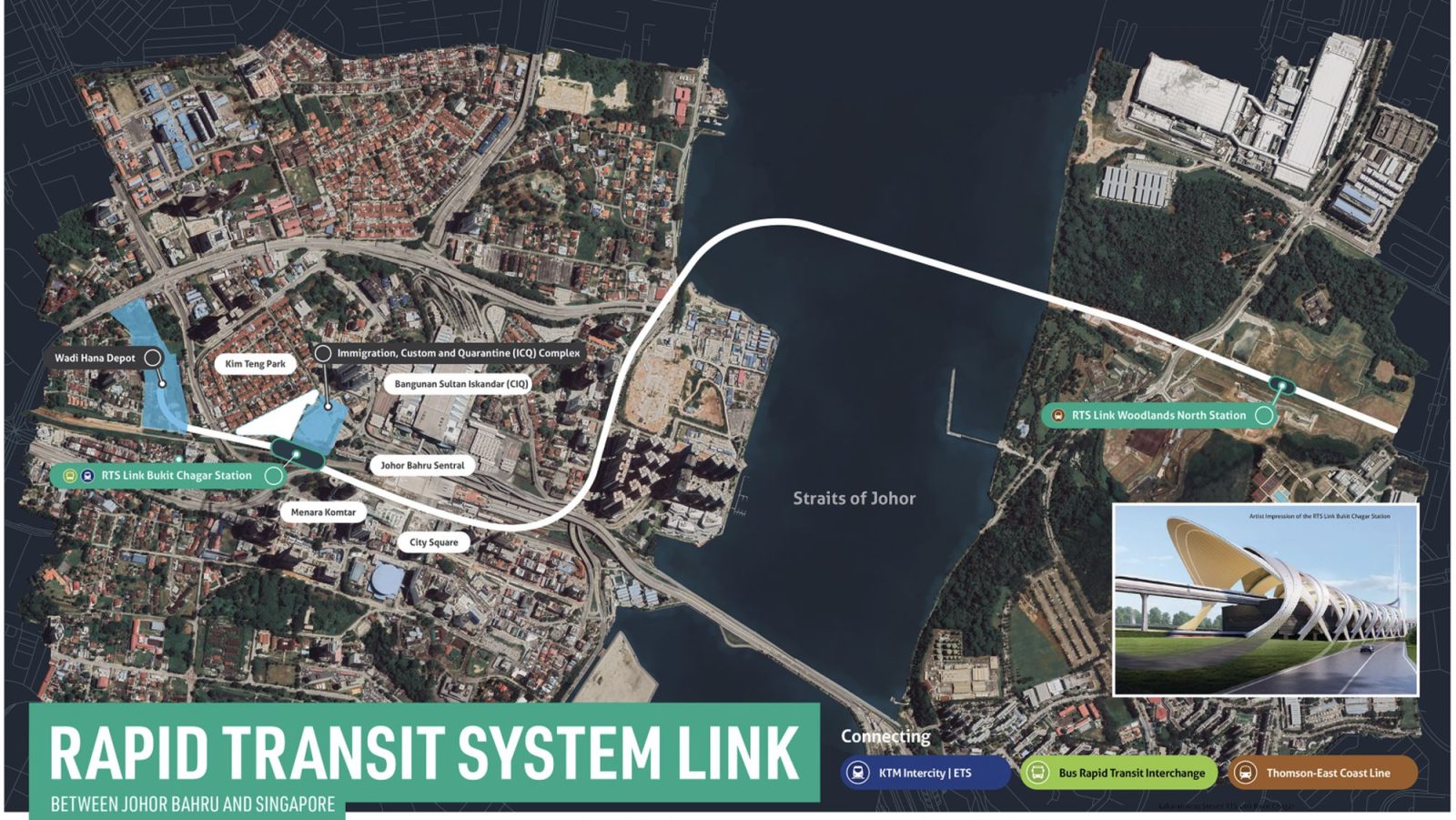
Construction around Bukit Chagar has already started
On the JB side, investment around the Bukit Chagar RTS terminus has moved from speculative to ongoing developments.
New residential launches in the immediate Bukit Chagar vicinity see sales prices in the range of RM600 - 900 psf (approximately S$170 - 260 psf at current exchange rates), a fraction of equivalent Singapore pricing with the RTS completion timeline as the primary driver of recent interest.
The larger near-term development is the RM2.6 billion integrated project that MRT Corporation and Sunway Group formalised in February 2025. The roughly four-acre site sits directly adjacent to the Bukit Chagar RTS Station and the CIQ complex, and will include four residential towers, a shopping mall, a hotel, serviced apartments, and education and health-wellness components.
The park-and-ride facility, comprising 850 car bays and more than 1,000 motorcycle spaces, is targeted to open by November 2026. A covered pedestrian link from the RTS platform to JB Sentral is also scheduled for completion by year end, meaning commuters will be able to walk from the train to the city's main transport interchange without stepping onto the street.
These developments suggest that a more comprehensive and integrated infrastructure is in the works around the JB end of the crossing. If Malaysian authorities and developers can pull off these plans, it will be harder to justify paying rent in Singapore when JB is a five-minute train ride away.
The SEZ extends the pressure beyond housing
The Johor-Singapore Special Economic Zone (JS-SEZ), formally established in January 2025 and encompasses several areas across southern Johor, will also be transformative for other real estate sectors other than housing.
With a corporate tax rate of 5% available to qualifying investors for up to 15 years, the JS-SEZ drew RM91.1 billion in approved investments in the first nine months of 2025, with Singapore as the largest single investor at RM28.5 billion.
For Singapore's northern corridor specifically, Foong flagged two downstream effects. The first is the impact on the retail market in Woodlands. Frasers Centrepoint Trust (FCT), the real estate investment trust whose portfolio includes Causeway Point, is one of the Singapore REITs most directly in the line of fire.
Causeway Point accounted for approximately 25% of FCT's fiscal year 2025 profit, and as the RTS makes JB trips easier and more frequent, some of that catchment's retail spend will cross the strait, says Foong.
"It might take some time for Causeway Point to reach a new equilibrium in terms of tenant sales,” he says, adding that it could refresh its tenant mix and plans for renovations to raise its overall competitiveness.
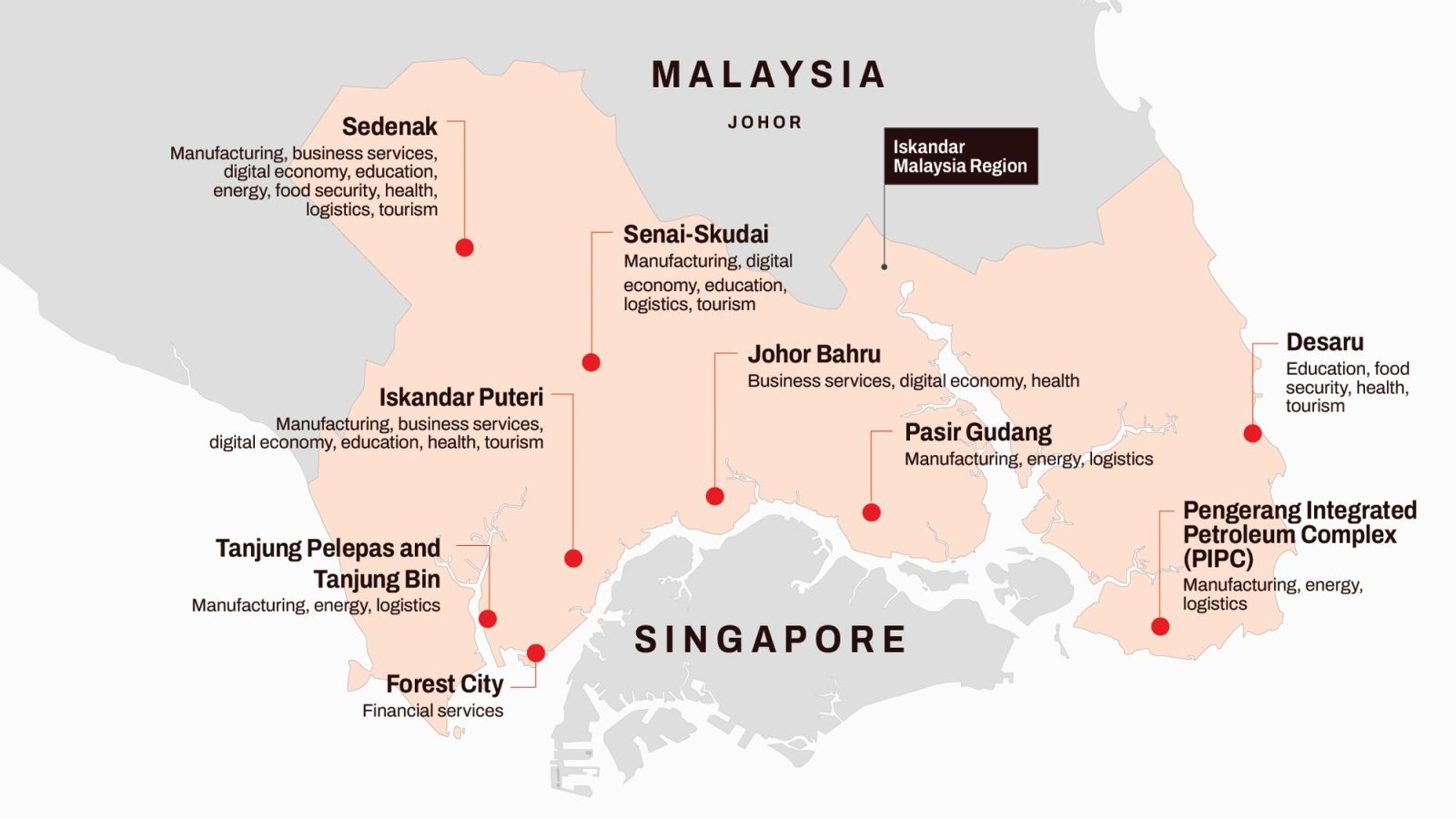
The second impact will likely be felt across the industrial sector, and Foong estimates warehouse rents in JB are at least 50% below Singapore rates.
"Some firms might move some of their warehouses and operations to Johor or choose sites in Johor instead of Singapore for expansion," he says. "They won't need to keep as much inventory in the city-state as they can rely on shipments from Johor. They can also benefit from lower labour and operating costs”.
Neither of these changes will happen overnight, but how fast they develop depends on how quickly the SEZ's investment pledges turn into real activity on the ground. But the combination of the RTS and the SEZ is set to shift economic activity between Singapore and Johor, with Singapore's northern corridor at the receiving end here.
What each side of the market will be monitoring
The RTS will be a game-changer for Woodlands, especially because it introduces a cross-border residential alternative rather than simply shortening a within-Singapore commute. But the picture looks very different depending on whether you are buying or renting in Woodlands.
For buyers and owners, the enhancement in cross-border connectivity is significant, partially priced in, and backed by the long-term transformation of Woodlands into a regional hub.
Whether housing prices in District 25 continue to close the gap with other suburban districts comes down to whether the gravity of Woodlands as a regional centre can attract enough employers and workers to boost the housing demand there on its own, beyond the enhanced connection to JB.
For landlords, the question is more pressing and more uncomfortable. How many of the workers renewing leases in 2027 will, with the cost difference now clear and the commute now practical, decide that JB is the better option. And what will it cost in terms of rental concessions or extended vacancy to retain the ones who have not yet decided.


0 Comments