


This case study is based on a recent consultation by Grady (R047131G), a property agent and partner property consultant with Stacked. This write-up walks through the key decisions, trade-offs, and market considerations involved, with insights that buyers and sellers may find useful.
The desire to have more space is among the key considerations that most home buyers take with them as they start their house hunting journey. Those who really value a large living space tend to lean towards older developments built in the 1980s and 1990s. Most of the time, projects built back then typically feature generous layouts and spacious floor plans.
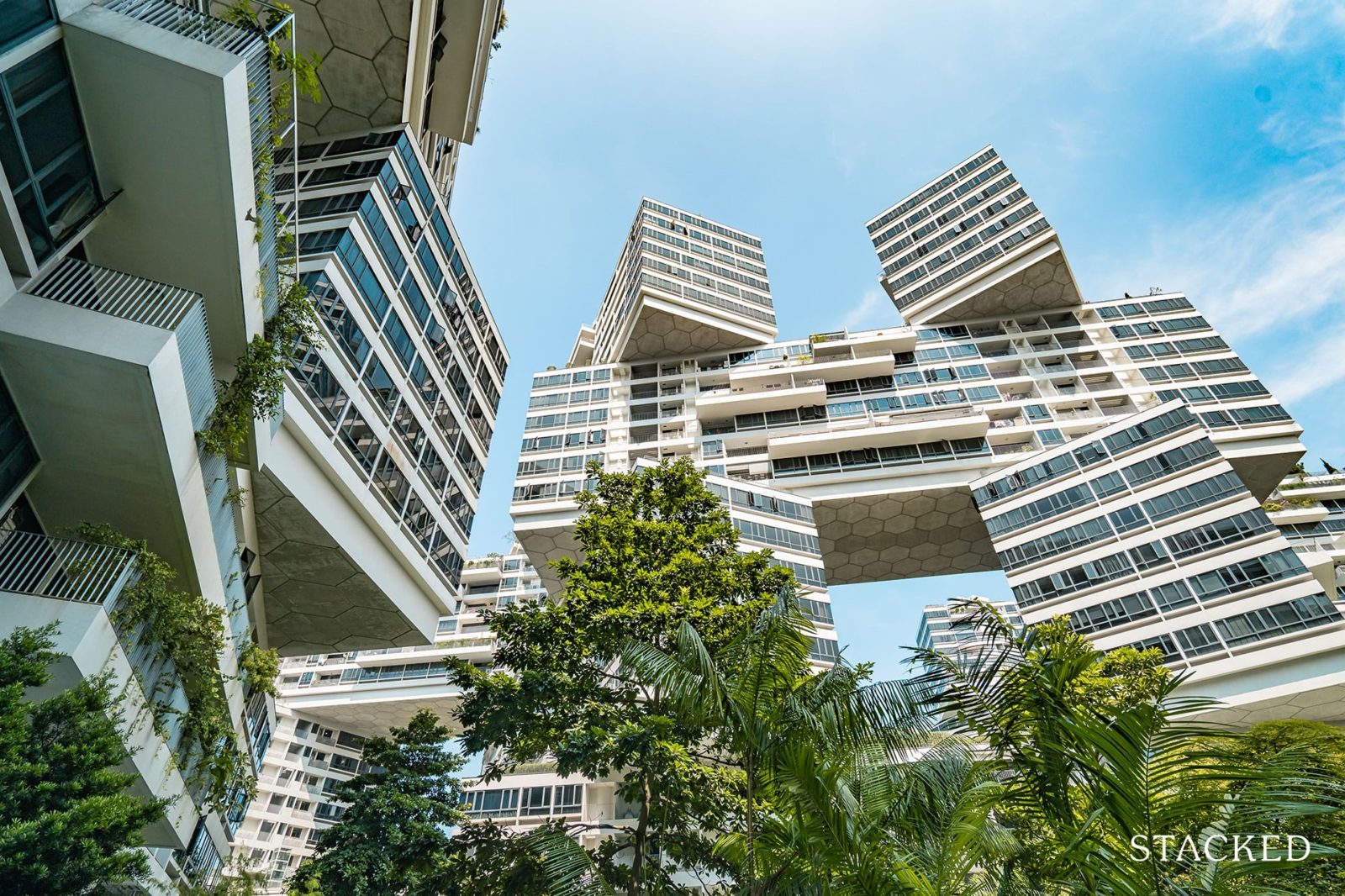
If you consider the size of some new three-bedroom units on the market today, they are nearly comparable to the size of older two-bedroom units in developments like The Interlace and The Anchorage.
When this couple first approached Stacked partner property consultant Grady back in January 2023, their three-bedroom unit at Trivelis was one year away from completing its five-year minimum occupation period (MOP).
Trivelis is the only Design, Build and Sell Scheme (DBSS) project in Clementi. The 888-unit development features three 40-storey residential blocks with a mix of three- to five-room units.
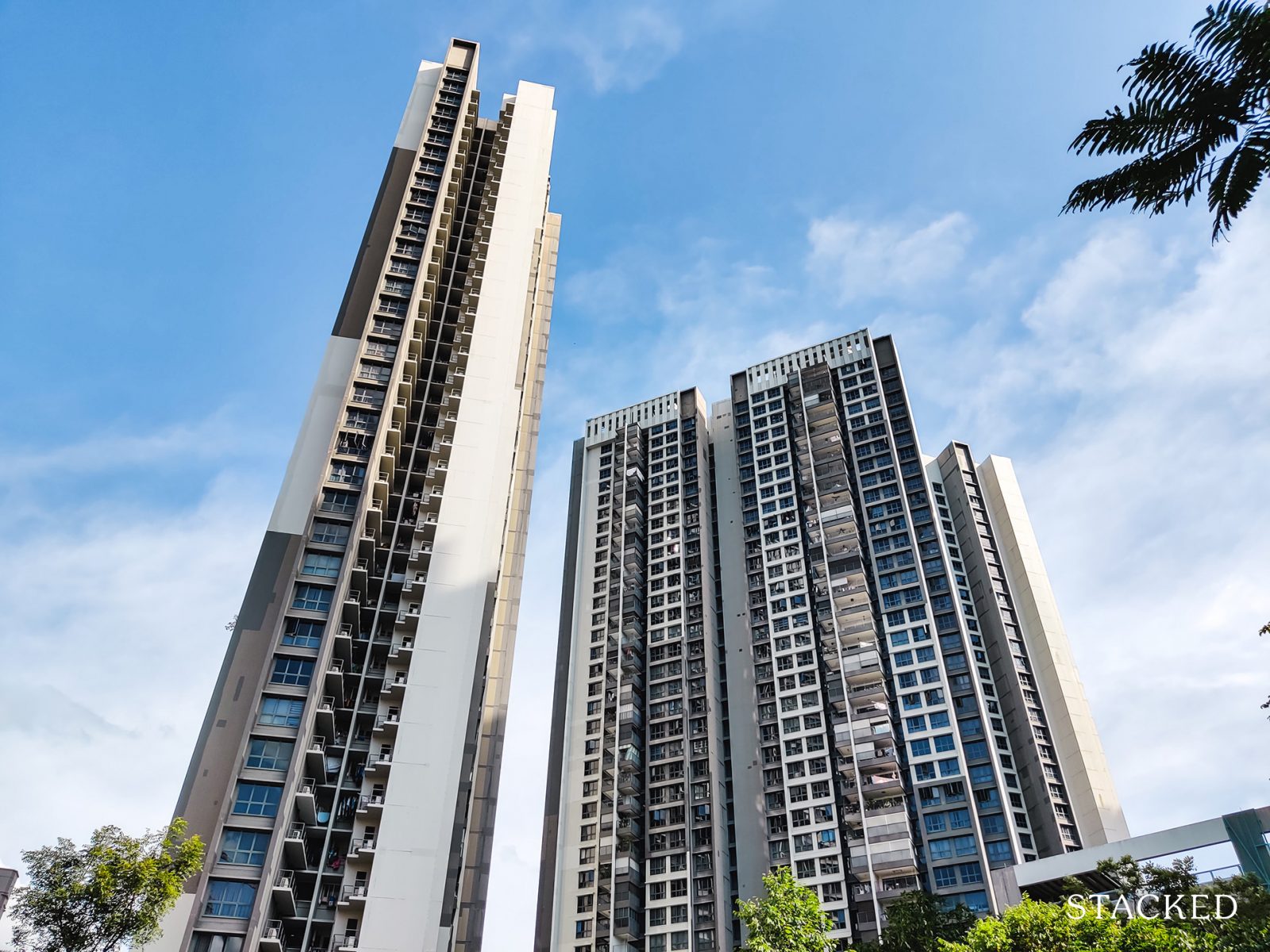
Trivelis was the first new HDB launch in Clementi in over a decade, and it garnered much anticipation among buyers who were keen to stay in the area when it launched for sale.
But the announcement of a new Build-To-Order (BTO) development next door - Clementi Ridges - as well as several defects at Trivelis overshadowed the sales and completion of the project.
To find out what were the range of challenges that the initial owners of Trivelis faced, read our comprehensive review of that development here.
Turning back to our couple, they shared that they had initially picked this neighborhood in order to be close to family. They did not initially plan to move out so quickly after crossing the MOP, but they changed their mind when they noticed that transaction prices in their block were not moving much.
According to resale caveats, there were only three resale transactions in 2025 that involved three-room units. Resale prices for those transactions ranged from a unit that fetched $678,000 when it was sold in April, to $679,000 for a unit that transacted in May, to $689,888 for a resale unit in June.
The price momentum spurred the couple to push up their timeline to sell their unit, and as their unit approached the end of its MOP, they started to actively research their options to upgrade to a private property.
Initially, they spoke to their friends who had bought private properties before or were considering buying one soon. Those conversations, while insightful, were not helpful in answering many of their queries and concerns about the buying process and the property market.
Eventually they got in touch with Grady for a consultation, and he was mindful that most HDB buyers, especially families, tend to prioritise having more space. He was worried that potential buyers may not see the appeal of the smaller three-room unit that the couple were looking to sell.
After discussing the way forward with the couple, they agreed to work with a professional home styling and photography team to help buyers to visualise the unit and how it could fit into a potential buyer’s lifestyle needs.
An overarching concern that Grady and the couple faced was competition from the neighbouring BTO project Clementi Ridges. Not only were the flats there marginally newer, the BTO project also offered resale flats that were larger sized and relatively more affordable compared to the units at Trivelis.
Conscious of the impending opportunity cost, Grady advised the couple what could happen if they continued to list their unit without closing a deal soon.
While their DBSS unit was on a high floor, they also faced competition from their neighbours including Clementi Ridges and Clementi Towers, where million-dollar transactions have been recorded.
When the couple’s unit completed its MOP in August 2025, Grady started marketing the sale of their three-room flat and the listing garnered three offers. Eventually, the unit was sold to a buyer who had submitted the highest price slightly above $700,000, which met the flat’s valuation.
Finding a replacement property that could hold its value
Grady shortlisted several older freehold and 999-year leasehold developments in District 5, District 21 and other city-fringe locations in the Rest of Central Region (RCR). He was also mindful that the coupe wanted a property that could retain its capital value for a long time.
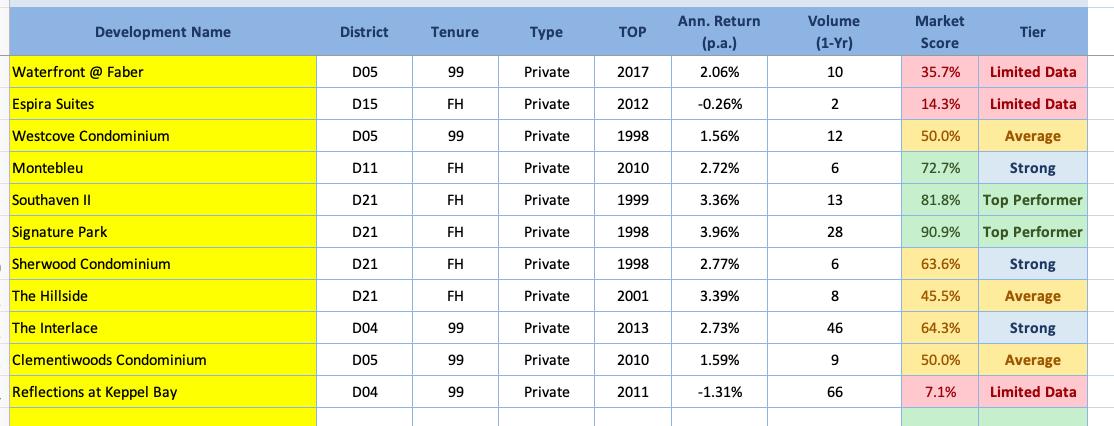
To help the couple understand the relative performance of the different shortlisted projects, Grady devised a scoring system to tier the shortlisted properties based on past transaction data.
For those with higher scores, their price performances tend to move with the market. From his list, the top performers were Signature Park, Southaven II followed by Montebleu, Sherwood Condominium and The Interlace.
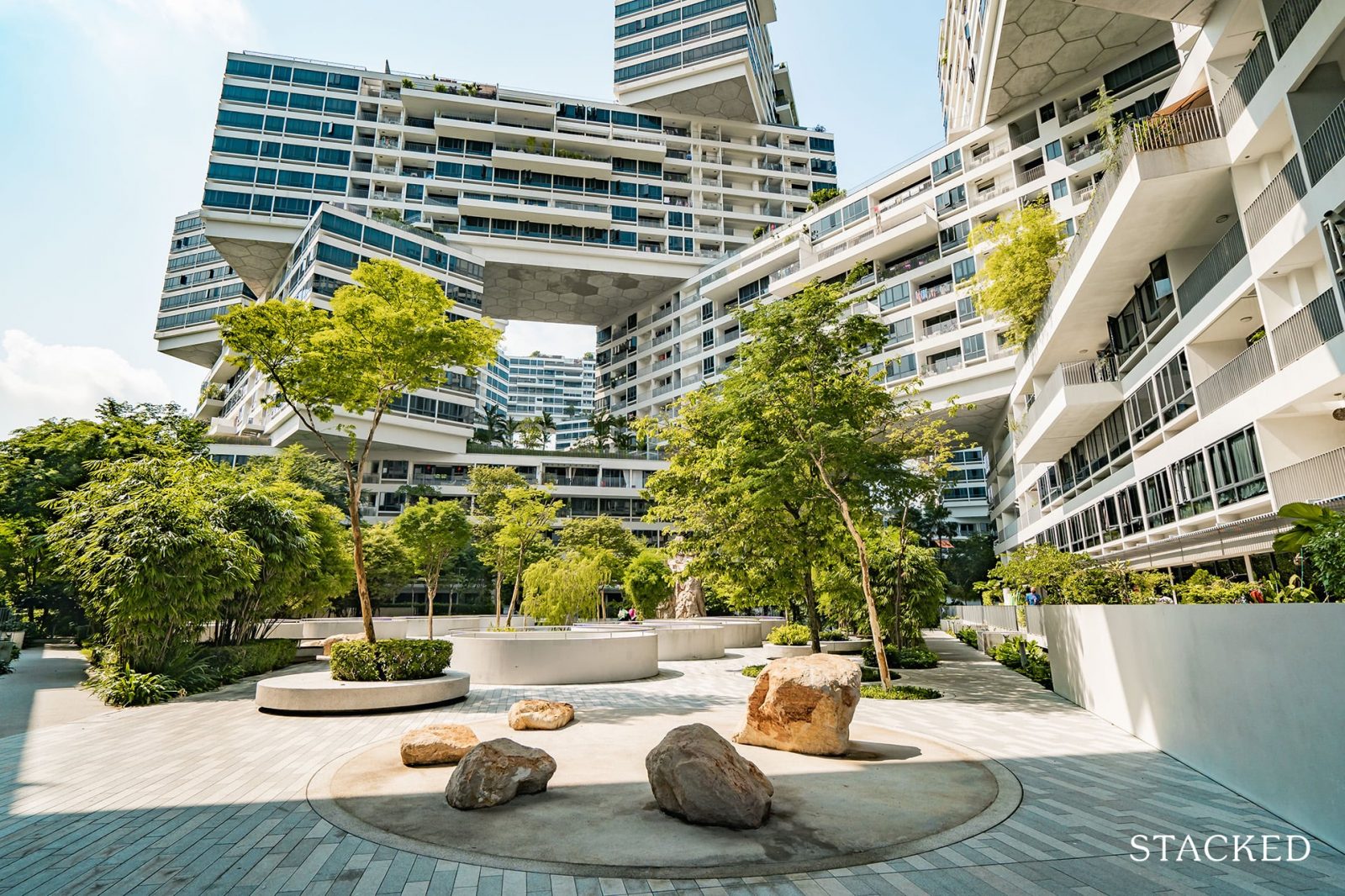
All of those projects have a freehold tenure, except for The Interlace, and three developments (Signature Park and The Interlace) are mega-sized projects with close to or more than 1,000 units.
According to Grady, developments with a large number of units tend to see higher resale transaction volumes since there are proportionately more sellers. This usually results in a steady sales momentum that allows sellers to gradually increase their asking prices over time.
To help the couple understand the sales performance of individual developments, Grady mapped out the property data over a Reactivity Index. The Index measures how much property prices tend to respond to a market shift.
This includes annualised gains, transaction volume over the past year, tenure and property age to bypass lease decay factors in the buyers’ decision making. In the context of older properties, they tend to face lesser demand, which translates to lower reactivity to the market.
In an earlier article, the Stacked editorial team outlined factors that can distort the return on investment (ROI) of a property purchase. These include the length of the holding period, timing during the sales phase, and transaction volume relative to the outliers.
Based on the couple’s preference for neighbourhoods in District 21, they shortlisted 10 developments and Grady organised a series of viewings over the year.
In November 2024, they viewed a 1,066 sq ft unit at Waterfront at Faber, a relatively new 210-unit development built in 2017 by World Class Land. While the layout was spacious, the three-bedder was slightly out of their budget. After this viewing, they decided to stick to two-bedroom units.
Following a break over the festive season, they resumed viewings in January and saw two developments, a 1,065 sq ft unit at Espira Suites and a 1,292 sq ft unit at Westcove.
Over the next few months, they continued with the viewings, first at Montebleu then Southaven II. While they liked the lush greenery surrounding Southhaven II, they did not like the constant traffic noise reverberating from the Pan Island Expressway and the confluence of a few major roads in the area.
It was in August when they decided to accelerate their search and viewed four properties – Signature Park, Sherwood Condominium, The Hillside and The Interlace.
After viewing the entire list, the couple shortlisted two of their favourites – The Interlace and Southaven II. The latter was eliminated as there were no available units apart from the one they viewed, which was facing the road and too noisy for their liking. That left them with The Interlace.
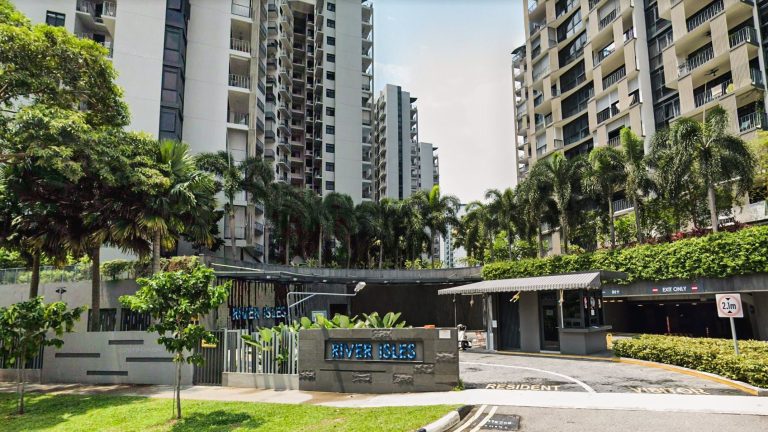
One striking element they liked about that development was the development’s innovative design, which won the World Building of the Year award at the 2015 World Architecture Festival.
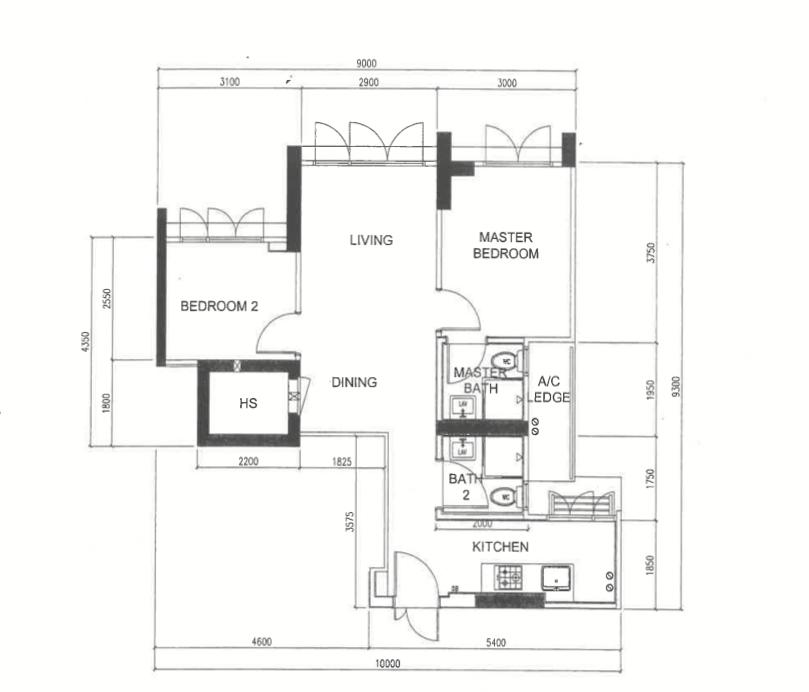
They viewed four different two-bedroom units that were between 980 - 1,001 sq ft. For the smaller unit, they felt that the extended balcony was wasted space that they could have used, and that the unit’s overall size was too small.
On their second trip back to the Interlace in October, they viewed two more units - another 980 sq ft unit as well as a 1,001 sq ft unit.
The larger sized unit offered a view of the Southern Ridges, and at 1,001 sq ft it was spacious enough for the extra space that the couple felt they needed.
This unit also had bigger windows compared to the other developments they viewed. Other features which appeal to the buyers were the enclosed kitchen in the unit, the spacious common areas across the entire development, and its wide range of facilities.
One drawback was the fact that it was a west-facing unit, which meant it would get slightly warmer in the day due to its exposure to the afternoon sun. However, it also has its merits like an unblocked view of the Queenstown area.
In terms of connectivity, The Interlace’s location overlooks the Ayer Rajah Expressway (AYE) but is not as noisy compared to the Upper Bukit Timah area.
In the end, the couple decided to make an offer which was within their planned budget of $1.75 million.
For a more in-depth look at the resale prices at The Interlace, you can read an earlier article by the Stacked editorial team which covered why The Interlace outperformed other 99-year condos in District 4, as well as the reasons why it lagged behind price growth in the overall private residential market.
In summary, the development’s transaction history shows that even with strong resale volumes and outstanding design, a project can still turn in a mixed performance. Apart from appreciation percentages, other factors such as unit size, facing, and price quantum can contribute to a more balanced view of a development’s profitability.
Putting transactions in context of market performance
To offer a more balanced view, Grady measured the properties’ reactivity to the market over three timelines in five-year periods. Benchmarked against the private residential index performance, a threshold was set for the average prices from individual properties alongside regional and district averages.
This gives an indicator to how so-called ‘reactive’ the properties are to market conditions, whereby higher scores reflect higher reactivity, which meant price movements followed the market closely.
When viewed over several property cycles, resale prices of private properties have generally been on an upward trajectory barring periods of cyclical market downturns and black swan events.
For instance, resale prices saw a dip in 2013 that correlate with a slew of property market cooling measures, such as major Additional Buyer's Stamp Duty (ABSD) hikes, tighter Loan-to-Value (LTV) limits, and the introduction of the Total Debt Servicing Ratio (TDSR).
Prices started picking up in 2018 and continued to increase through to 2025. However, there were other nuances that the market had to contend with. “During the Covid-19 pandemic, macroeconomic forces such as workforce changes caused a structural shift in the market, reducing demand for one-bedder units drastically, ” Grady says.
With rental yield as the primary driver of one-bedder demand, the sudden changes to the expat market had an impact on the rental demand for this unit type, and also prompted developers to rethink the designs for subsequent new launches.
This high reactivity to market changes could be reflected in lowered prices and transaction volumes, thus leading to lower overall scores. “Other authoritative sources such as URA transaction data enables property owners to arm themselves with accurate data to understand how well the property is performing in relation to the market,” Grady says.
Final thoughts
When it comes to buying a unit in a mega-development - those with more than 1,000 units - a straightforward benefit is the access to more facilities throughout the development but at relatively lower maintenance fees.
(The pros and cons of choosing a mega-development were covered in detail in another article).
While the larger than average design of the units and high price quantum may slow price appreciation for The Interlace, it still has a fair number of attributes that make it a valuable purchase.
With Grady’s careful guidance and in-depth market knowledge, the couple made an informed decision and successfully transitioned from HDB flat owners to purchase their first private property.
By understanding the market data, they effectively met their objective of upgrading in size and asset while searching for a property that can hold its value.
There are several factors that influence how resale prices in a development tend to move over time, says Grady, adding: “From the land size, communal spaces, proximity to top schools, accessibility, connectivity, these are all factors that can impact a property’s performance”.
Studying these fundamental factors and attributes enables property owners to deepen their understanding of why properties can fare quite differently despite some similarities and being in the same neighbourhood.



0 Comments