


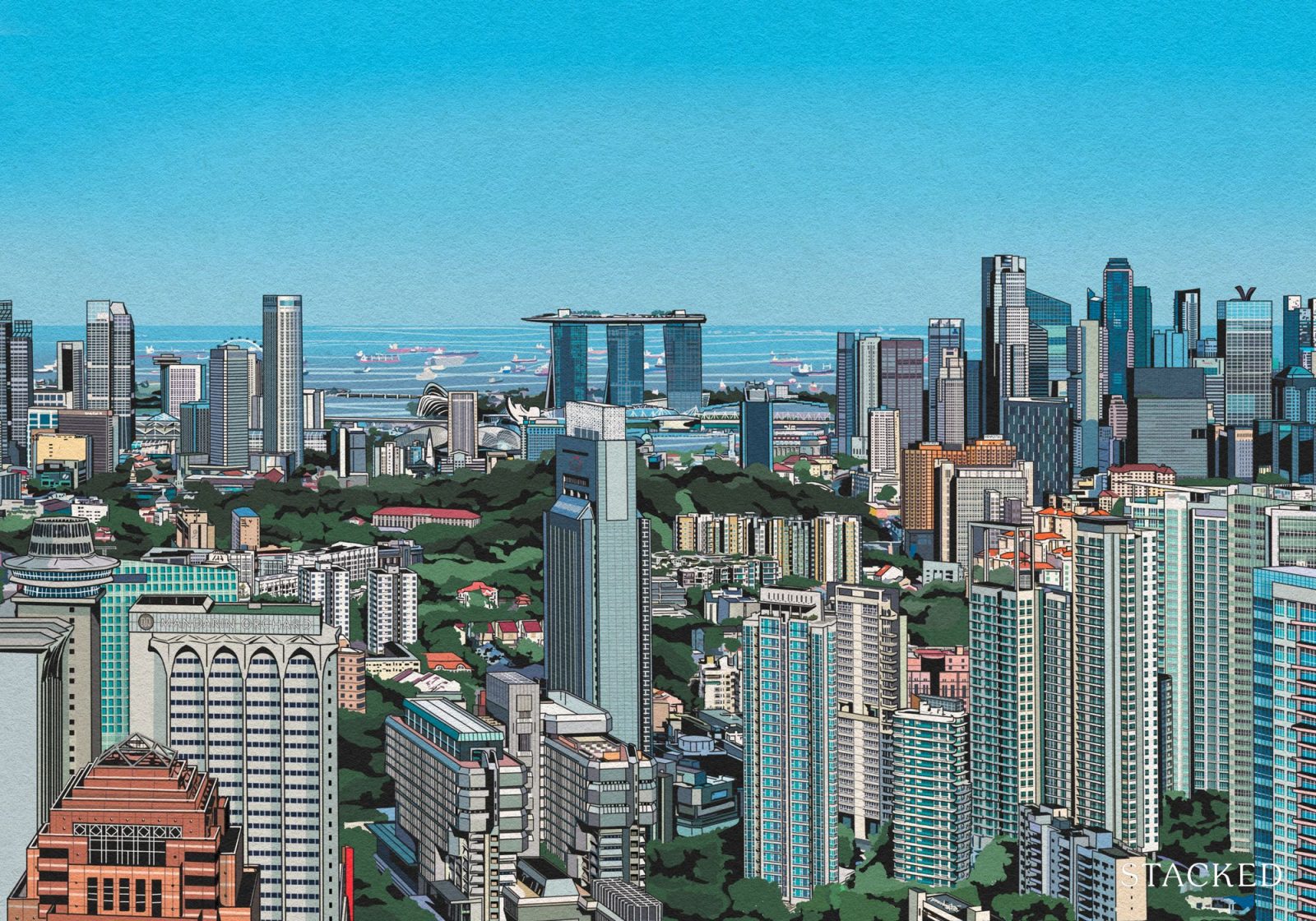
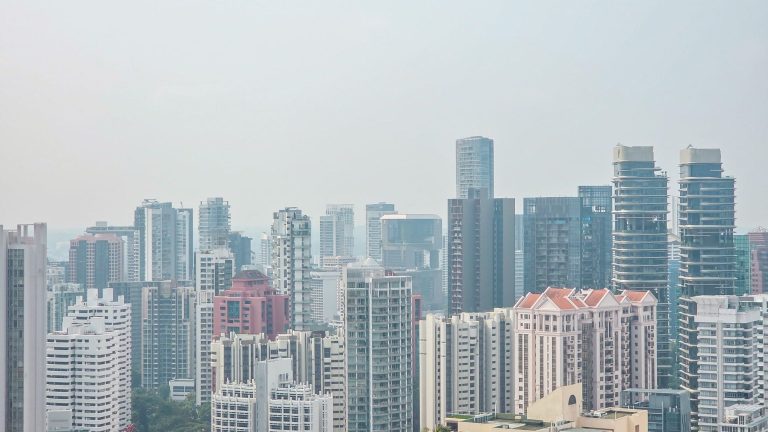
Living in the Central Business District (CBD) may be convenient for some professionals and executives, but I think a typical Singaporean family wouldn’t consider that part of central Singapore as a desirable neighbourhood to raise a family.
Besides some straightforward drawbacks - such as the lack of schools and green spaces - the CBD is notoriously lacking when it comes to the type of lifestyle amenities that cater to families. Once the weekend comes around, the streets of Shenton Way or Anson Road grow quiet.
Of course, there are a handful of oases of activity in certain pockets, but by and large most of the retail and F&B outlets shut early, waiting for the office crowd to roll in when the weekday returns.
For decades, Singapore’s urban planners have been setting the stage to change all of that. As far back as the 1990s, Singapore’s planners have pursued a strategy of decentralisation. We’ve created different regional hubs in Tampines, Jurong East, Woodlands, and most recently Paya Lebar and One North, to bring workplaces closer to residential neighbourhoods.
It also helps to reduce the volume of commuters and traffic that flows in and out of this densely packed district.
As these regional centres have matured, the discussion concerning the CBD has also shifted. Instead of asking ourselves how we could reduce our reliance on the CBD, planners are asking a different question: if the CBD no longer needs to function as Singapore's main office district, what else could it become?
A popular solution would be to turn it into a mixed-use neighbourhood. A place where people don't just work, but also live, raise families and spend their weekends. This shift goes beyond zoning laws or merely building a few condos or flats.
This was one of the topics of discussion at the recent Real Estate Developers’ Association of Singapore (REDAS) Real Estate Market Outlook (REMO) Seminar 2026. This year, the annual event took place at the Grand Copthorne Waterfront Hotel on July 15.
From Business District to Family District: What Will It Take?
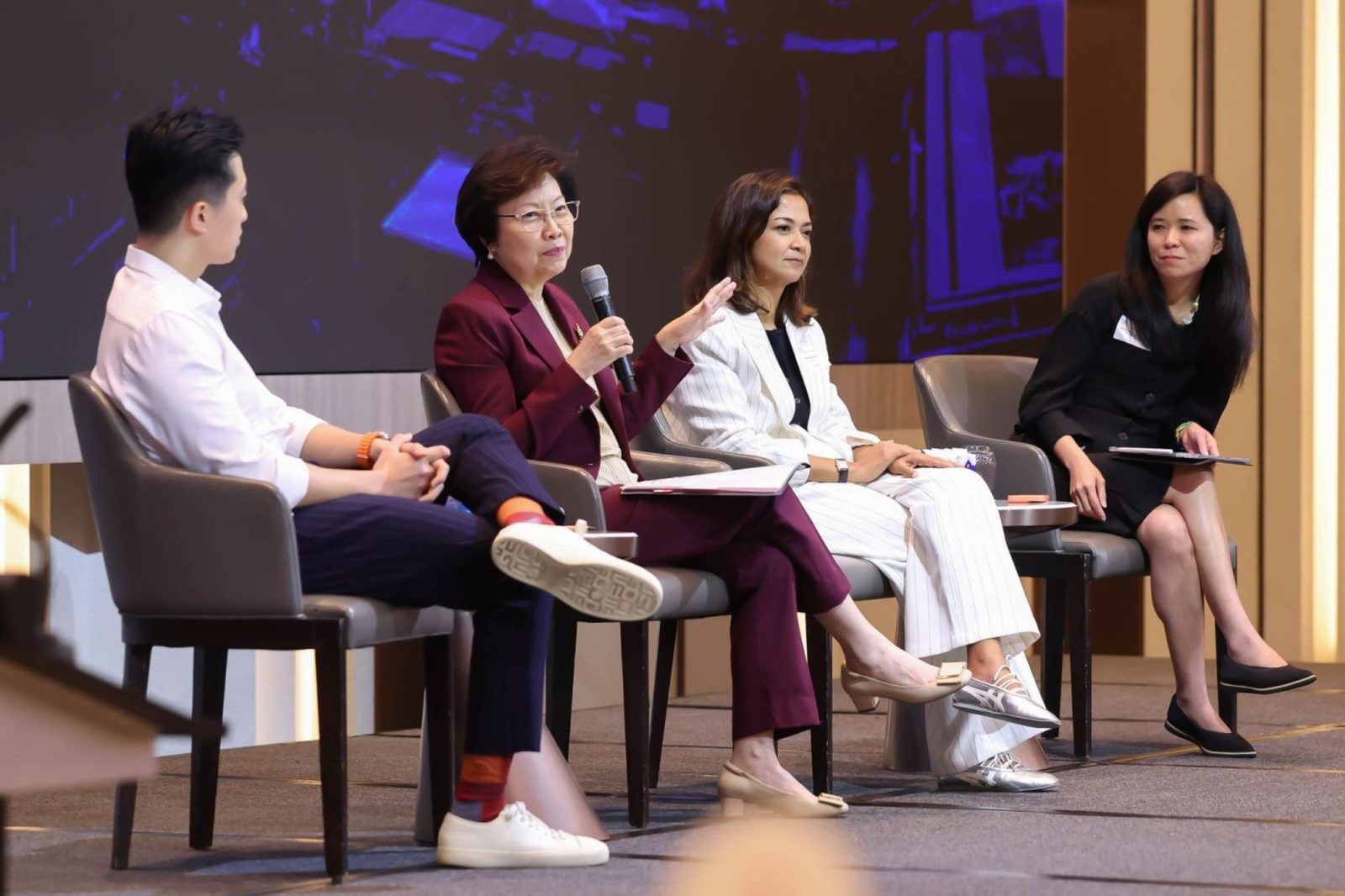
A panel discussion at the REDAS REMO 2026 threw the spotlight on whether Singapore's CBD can truly evolve beyond its traditional role, and become a true residential neighbourhood.
The discussion brought together Dr Cheong Koon Hean (Chairman, Lee Kuan Yew Centre for Innovative Cities at SUTD), Gallant Tang (Group CEO, SingHaiyi Group) and Nicole Batchelor (Place Strategy Lead, Cistri).
During the panel, Dr Cheong noted that the traditional CBD model is increasingly showing its age. Like many cities around the world, Singapore's CBD was originally quite puritan in its zoning: almost every part of it is commercial. This results in an area that thrives during office hours, but feels desolate after work.
It has now worsened in the post-Covid era: with the normalisation of Work-From-Home or hybrid remote-working models, the CBD has also lost a chunk of its weekday activity.
For planners, this presents two related challenges:
First, we face the underutilisation of land in a part of Singapore that has some of the most valuable land plots and buildings. The second question, which continues from the first, is how we can make better use of the same spaces.
The most straightforward solution is to embrace mixed-use developments, which allow multiple activities to coexist.
But this is easier said than done. Dr Cheong pointed out that there are economic realities at play which don’t easily allow us to ‘repurpose’ the CBD just by changing the zoning to allow this.
Land in a central region like the CBD is prime real estate, and land values are among the most expensive in Singapore. Developers are subject to market forces, so they’ll understandably prioritise the highest-value uses.
It’s unlikely that any publicly-listed developer can face its shareholders and explain they’re accepting reduced margins in the name of affordable housing, community facilities, and other amenities that families rely on.
Instead of overriding this issue with state control, Singapore's approach has been more subtle: we’ve been content to let the market function, but we also use incentives that encourage mixed-use and residential components in the CBD.
The CBD Incentive Scheme, introduced in 2019, is perhaps the clearest example of this: it encourages the conversion of older office buildings into mixed-use developments to create a more vibrant, round-the-clock city centre.
However, even if more homes are built, that alone won’t transform the CBD in the ways that we need it to. An increase in family-friendly housing isn’t something that exists in isolation, says Tang, adding: “There's no such thing as just a family-friendly house. It's an ecosystem”.
While living in the CBD may appeal to young professionals - and Tang himself said he values the time saved by living close to work - that changes once children enter the picture. Amenities that young couples never needed before, such as childcare, schools, and parks, become essential.
This creates a chicken-and-egg problem: businesses like supermarkets, family clinics, and childcare centres, don’t open (or at least don’t stay open) until there are enough residents to support them. And yet, those residents don’t move in because there aren’t enough of these amenities.
But forging such an ecosystem is beyond the scope of developers, says Tang.
Decisions on where to locate schools, hospitals, or MRT stations, are made as part of Singapore's long-term urban planning.
This is the element of residential master planning that requires collaboration between private and government interests. This is more so for areas like the CBD because, given the high cost of redevelopment, there’s little room for mistakes. Each new project must fit into a shared vision of how the district will unfold.
This also means the transformation of the CBD is unlikely to happen quickly. It will be a careful, deliberate process to grow the base of residents and their needed amenities at the same time.
While planners can map out neighbourhoods, they cannot build communities.
Certain intangibles - like a sense of belonging, neighbourly relationships, and a community built over decades - cannot be designed into a master plan. Nicole Batchelor echoed this distinction: she noted that even with homes, restaurants, and public spaces, it doesn’t mean people will stay or identify with the neighbourhood.
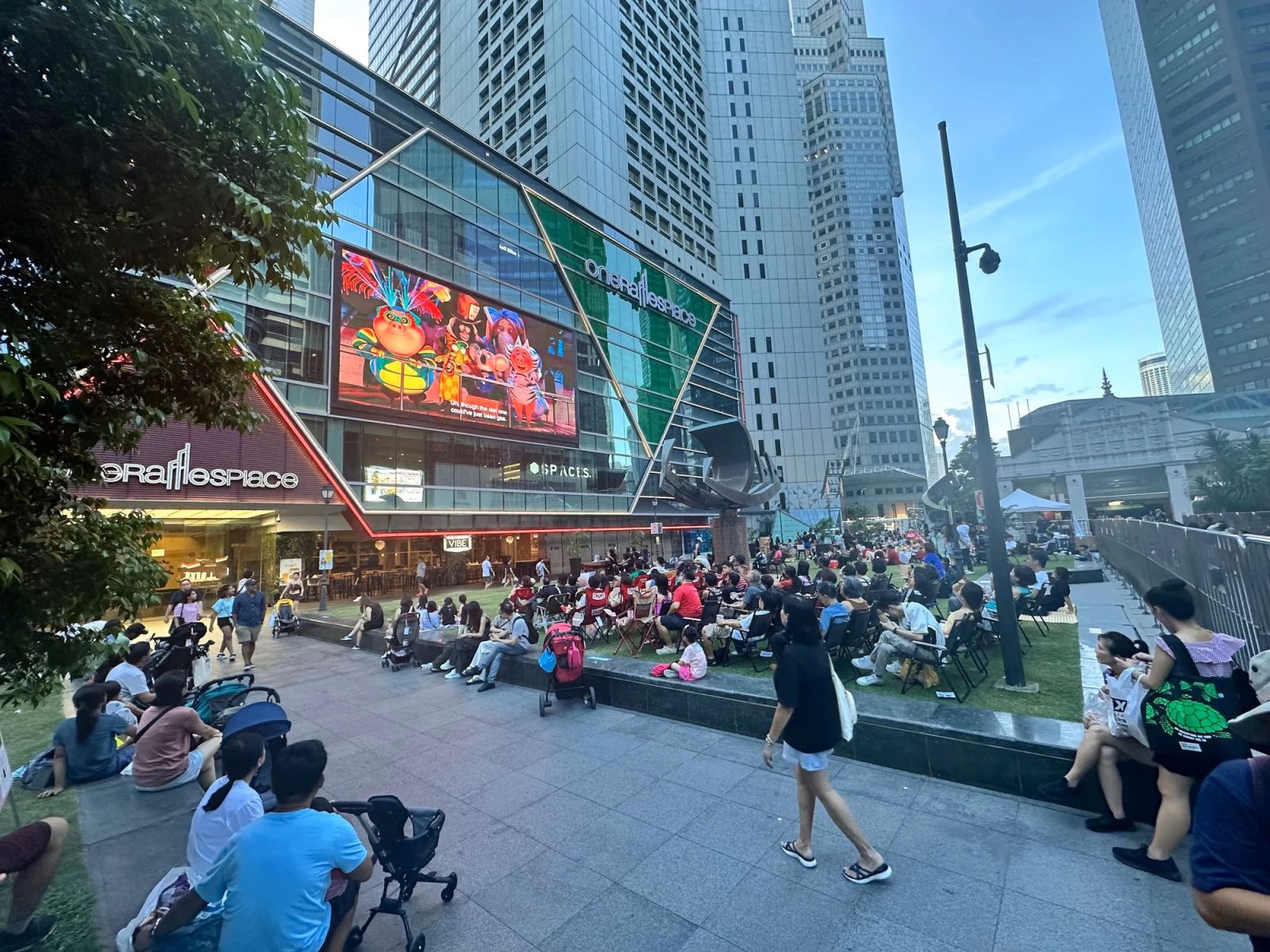
As such, part of the challenge is to create reasons for people to spend time in the CBD there beyond work. Only then will we see everyday routines and social connections develop. She cited the temporary movable chairs introduced at Raffles Place as an example.
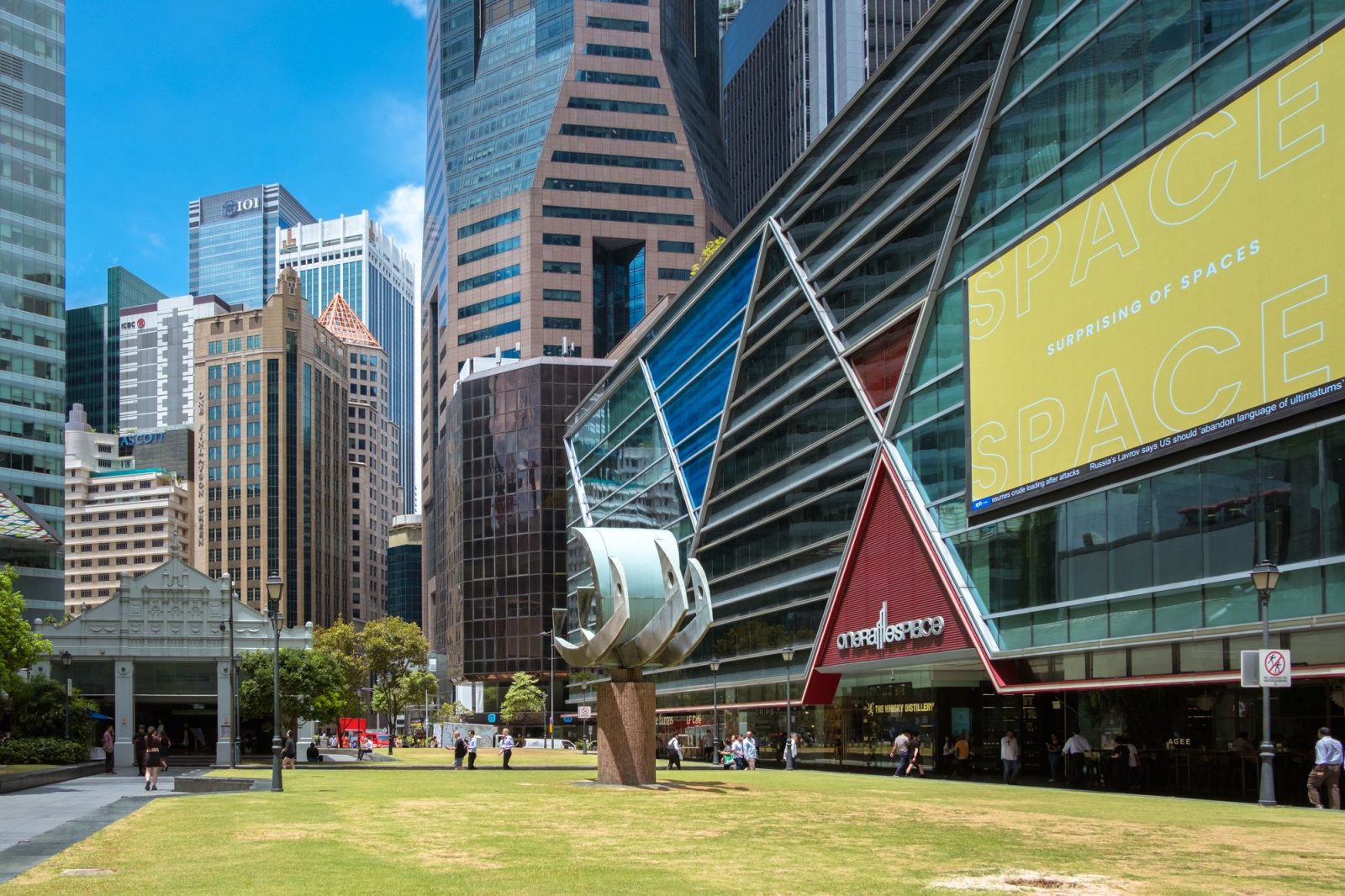
On paper, the intervention was modest - public seating around Raffles Place MRT which the public could reposition. This changed how the space was used - office workers lingered after lunch, cleaners and F&B staff gathered during breaks, and informal meetings took place outdoors. The same space attracted a different crowd on weekends, forming conversation spots or hang-out areas for residents and friends.
A notable sign of success was, when the chairs were eventually removed, people actually asked where they had gone. The lesson, she felt, was that placemaking is not just about large-scale redevelopment.
Small but well-thought out interventions can change how people experience a place, and they are meaningful ways for communities to form naturally, rather than through top-down planning.
If there was one main takeaway from this, it is that transforming the CBD is going to be less of a zoning challenge and more of a social or cultural hurdle.
I feel that chief among these is an issue I’ve also touched on regarding the Marina Bay area. The CBD, much like Marina Bay today, is nobody's neighbourhood.
Most private residential buyers in Singapore tend to be HDB upgraders. Among this group, a majority usually choose to remain in the same neighbourhood where they are upgrading from. Their parents likely live nearby, their children have made friends among the neighbours, and their favourite hawker centre or coffee shop is nearby.
For now, the CBD doesn't offer that sense of neighbourhood continuity. Very few people today can say that they ‘grew up’ in Anson Road or around Raffles Place.
We can fix issues like needing more green spaces, more childcare centres, and perhaps we can even put more schools here (though that seems like quite a challenge for the government to plan); but the lack of a grass-roots connection is not something we can immediately solve.
Someone has to volunteer to go first. As we introduce more residential options within the CBD, these homeowners have to be clear-eyed that they’re paying top dollar for Singapore’s most expensive locations, while also accepting that certain qualities - like community and familiarity - may not emerge for decades.
Will the presence of malls and good connectivity be enough? From the words of the panel experts, I doubt so. They help, but the sense of belonging and familiarity is arguably more important, and is something that can only be built over time.
As a point of contrast, let’s look at it from the opposite direction.
Consider gentrification, where an ageing or less-than-luxurious neighbourhood starts becoming more prime.
Tiong Bahru is perhaps Singapore's best-known example. Today, what lures homeowners to this heritage neighbourhood isn’t simply that it has conserved buildings or good MRT access. It was the neighbourhood's character. The distinctive atmosphere gave people a reason to spend time there and, eventually, a reason to want to live there.
That’s not to say the government played zero role in that; conservation efforts and continued investment in public spaces undoubtedly helped. But these efforts were amplified by an existing social fabric, unlike the CBD which has to create one from scratch.
Likewise, we previously highlighted that the Great World neighbourhood has a unique advantage within the city centre, or Core Central Region (CCR). Unlike most of the CCR, it already possessed something that can’t be manufactured: a genuine neighbourhood identity. That stands in stark contrast to other central locations like Marina Bay, and arguably most of the CBD today.
I tend to see Marina Bay and the CBD as choreographed destinations. Extraordinary pieces of urban planning to be sure, yet they’re still just places to do things, and not really places to live.
I’d argue that the dramatic transformations we see from gentrification - or just from the upgrading of neighbourhoods like Jurong East and Woodlands - are easier and faster compared to the challenges that planners face in the CBD.
Here’s the other big problem with the CBD compared to the transformation or gentrification stories in the heartlands
Most successful transformations started with somewhere that was undervalued.
The appeal of an area grows, investment follows, prices rise, and the area becomes desirable. That's the classic story of previously overlooked areas like Tiong Bahru in Singapore, Shoreditch in East London, or Brooklyn in New York City.
The CBD is trying to do the reverse. It's already one of the most expensive places in Singapore, but now it has to convince regular Singaporeans to treat it as an everyday neighbourhood.
In addition, gentrification or upgrading tends to happen when cross-sections of society converge. In the case of Tiong Bahru, or even Bugis if you want to go back to the ‘80s, it was a place where students, artists, young professionals, small business owners and long-time locals all shaped the identity. This was what laid the groundwork for it becoming more desirable.
Unfortunately, we can’t get this broad cross-section in the CBD, simply due to CBD prices. Homes here are priced at the top end of Singapore's market; so the first generation of residents is likely to come from a much narrower socioeconomic group. Some existing initiatives, like Plus and Prime flats in certain areas, go a long way toward breaking this sort of entrenchment - but it’s going to be a challenge to execute this in the already crowded and high-priced CBD.
If Singapore genuinely wants the CBD to become a neighbourhood, success ultimately depends on who is able to live there. This means a rather bold, contrarian stand where we implement housing and amenities that don’t maximise land value; and it means embracing the principle that social diversity is itself a form of key infrastructure.

0 Comments