



An upward revision of the income ceiling for buying Build-To-Order (BTO) flats was singled out by Prime Minister Lawrence Wong as one of the ways the government is boosting its support for Singaporean families and households.
Amid a slew of family support measures, such as more paid childcare leave and support for parents, the government also plans to make it easier for first-time families with children - or expecting a child - to secure a BTO flat.
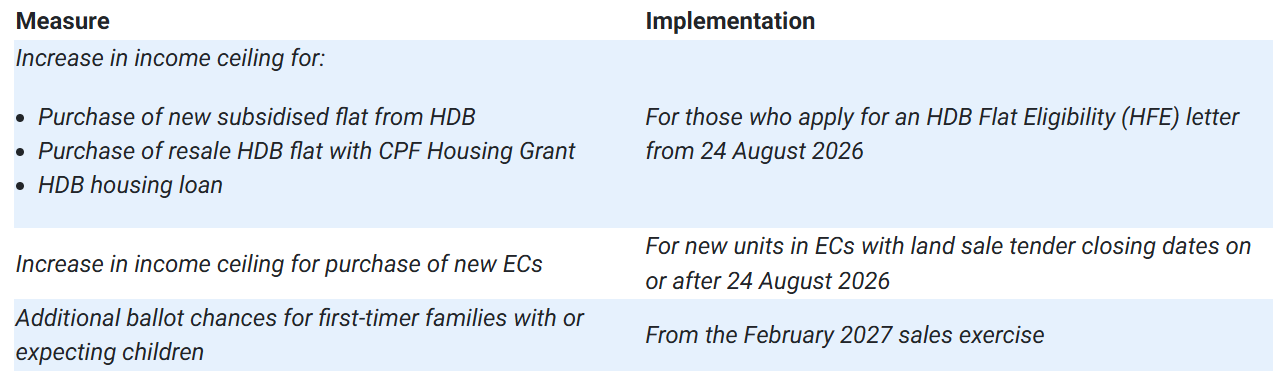
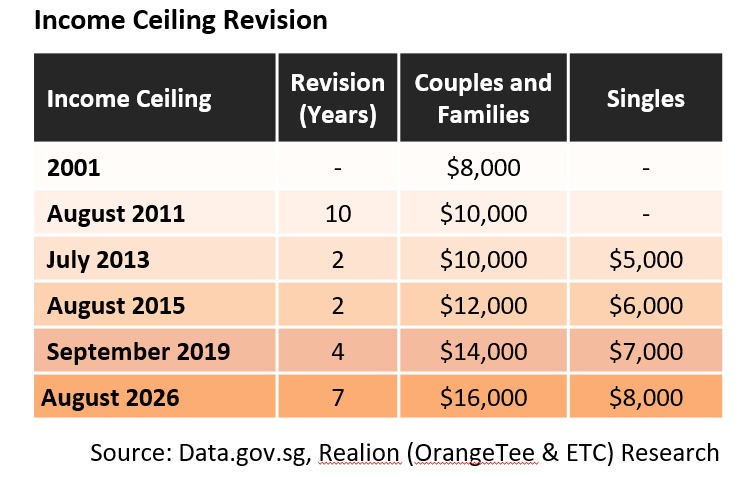
Foremost among the government’s changes is an increase in the income ceiling from $14,000 to $16,000 for families applying for a BTO flat. Meanwhile, the income ceiling for families applying for an Executive Condo (EC) will go up from $16,000 to $18,000.
Unveiling during his National Day Rally speech on Aug 23, Prime Minister Lawrence Wong says that the changes come as the local public housing market is on stronger footing, with the overall success rate of BTO applications on the rise, and the resale market stabilising.
According to Christine Sun, chief researcher & strategist at Realion (OrangeTee & ETC) Group, the revision of the income ceiling is timely and that previous revisions occurred approximately every four years. Previous adjustments took place in 2011, 2015, and then in 2019.
She also observes that the current income revisions are not excessive, and that previous income ceiling revisions had similarly occurred in increments of $2,000 for families and couples.
“Middle-income families and slightly higher-income couples with no kids are likely to benefit from the revisions, as some may have exceeded the income ceiling to purchase subsidised BTO flats,” says Sun.
She adds that before the revision, some families and couples may not have sufficient cash/ CPF to buy a HDB resale flat. Based on URA transaction data compiled by OTT, between July and August this year, the median price of a four-room flat was $628,000 while the price of a five-room flat was $735,800.
What are the implications of a higher income ceiling?
Raising the income ceiling will certainly widen the pool of potential buyers applying for a new BTO flat, and it might open the doors for more families and couples to purchase larger-sized or pricer BTO flats.
On the one hand, this means that these buyers will be diverted away from the resale market, where competition for larger-sized and flats in highly desirable locations has been consistently stiff. This has, in part, contributed to the increase in million-dollar resale flats in nearly all HDB towns.
This aligns with the government’s urban development plans, where future flats could be taller (potentially exceeding 50 storeys) or Prime / Plus flats, which are likely to cost more, says Sun. For example, we’ve already been told that the former Outram Park Complex will eventually make way for Singapore’s tallest BTO development.
In March, the Minister for National Development Chee Hong Tat announced a 60-storey tall development at Pearl’s Hill. Read more about these plans in our article: A 60-Storey HDB Is Coming To Pearl’s Hill — The First Public Housing Here In 40 Years.
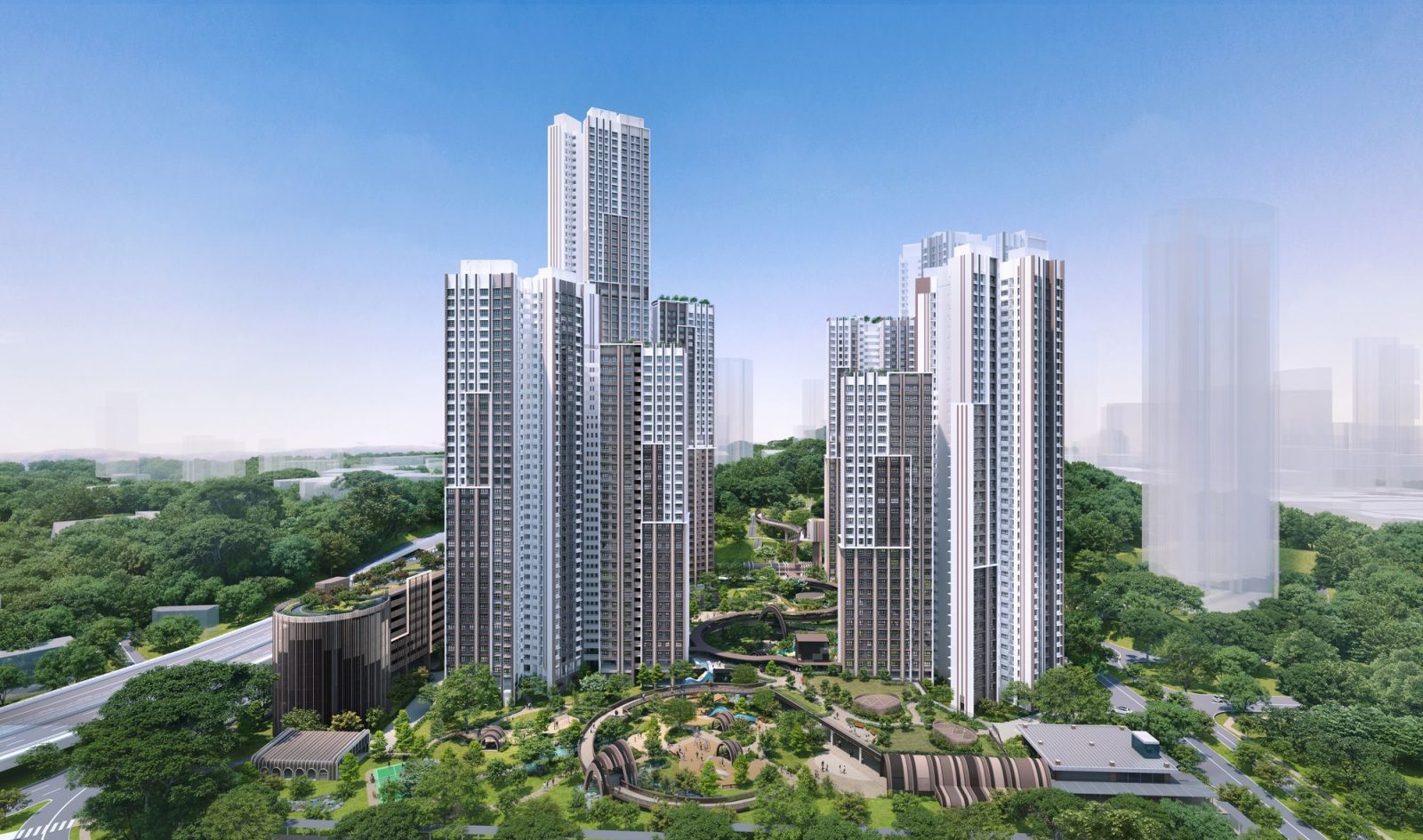
When the record-breaking BTO was announced, market watchers were already sounding out about the possible prices of the flats there. They mentioned that substantial subsidies would need to be factored into the sale price to ensure affordability for eligible buyers.
However, Sun also points out that raising the income ceiling means that lower-income buyers who cannot afford other housing options may face tougher balloting odds.
How will the new income ceiling impact homebuying calculations?
With the income ceiling going up by $2,000 for families and couples, and $1,000 for singles, homebuyers have to relook at their financial calculations. Here’s an example, generated by OTT, of how it might play out for a typical family.
For instance, assuming a Loan-To-Value (LTV) ratio of 75%, a Mortgage Servicing Ratio (MSR) capped at 30% of gross monthly income, a 25-year loan tenure and a 4% stress test rate, a borrower with an income ceiling of $14,000 could take a maximum loan of around $795,700. This would allow them to purchase a BTO flat priced at up to $1.06 million.
With the income ceiling raised to $16,000, the borrower can take a maximum loan of up to $909,372 and purchase a flat up to $1.212 million. The higher income ceiling gives buyers greater purchasing flexibility, which would potentially allow them access to almost any BTO flat on the market, including Prime and Plus flats and high-floor units.
In another example, cited by ERA Singapore, Assuming a 25-year loan tenure, a stress-test interest rate of 3% p.a., and no existing debt obligations, a BTO buyer with a household income of $14,000 per month will be able to borrow up to approximately $885,000. This translates to a monthly mortgage payment of about $4,200.
With the higher income ceiling of $16,000, BTO buyers can now borrow up to about $1.01 million. This raises their maximum loan amount by around $125,000, although their monthly repayments would also rise to about $4,800.
Widening the door for more EC ownership
It’s not just BTO flats where the revised income ceilings will have an effect. For years, industry analysts have called on the government to reconsider the income ceiling for ECs. The monthly household income ceiling for households looking to buy a new EC unit from property developers will be raised from $16,000 to $18,000.
To help buyers calculate the change, here’s a typical case cited by OTT.
With an income ceiling of $16,000 and assuming a Loan-To-Value (LTV) ratio of 75%, and a Mortgage Servicing Ratio (MSR) that caps the borrower’s total monthly mortgage repayment at 30% of their gross monthly income, a 30-years loan tenure with a 4% stress test rate; a borrower could take a maximum loan of up to around $1.005 million and buy an EC of up to $1.34 million.
But if we take the revised income ceiling into account, the borrower can take a maximum loan of up to $1.13 million and purchase an EC of up to $1.508 million. Currently, the median price of new ECs in August 2026 is S$1.92 million or S$1,830 psf. Therefore, an increase of about $168,000 can help to cover about 8 to 10 per cent of the purchase cost of a new EC, based on median price as a gauge, according to data by OTT.
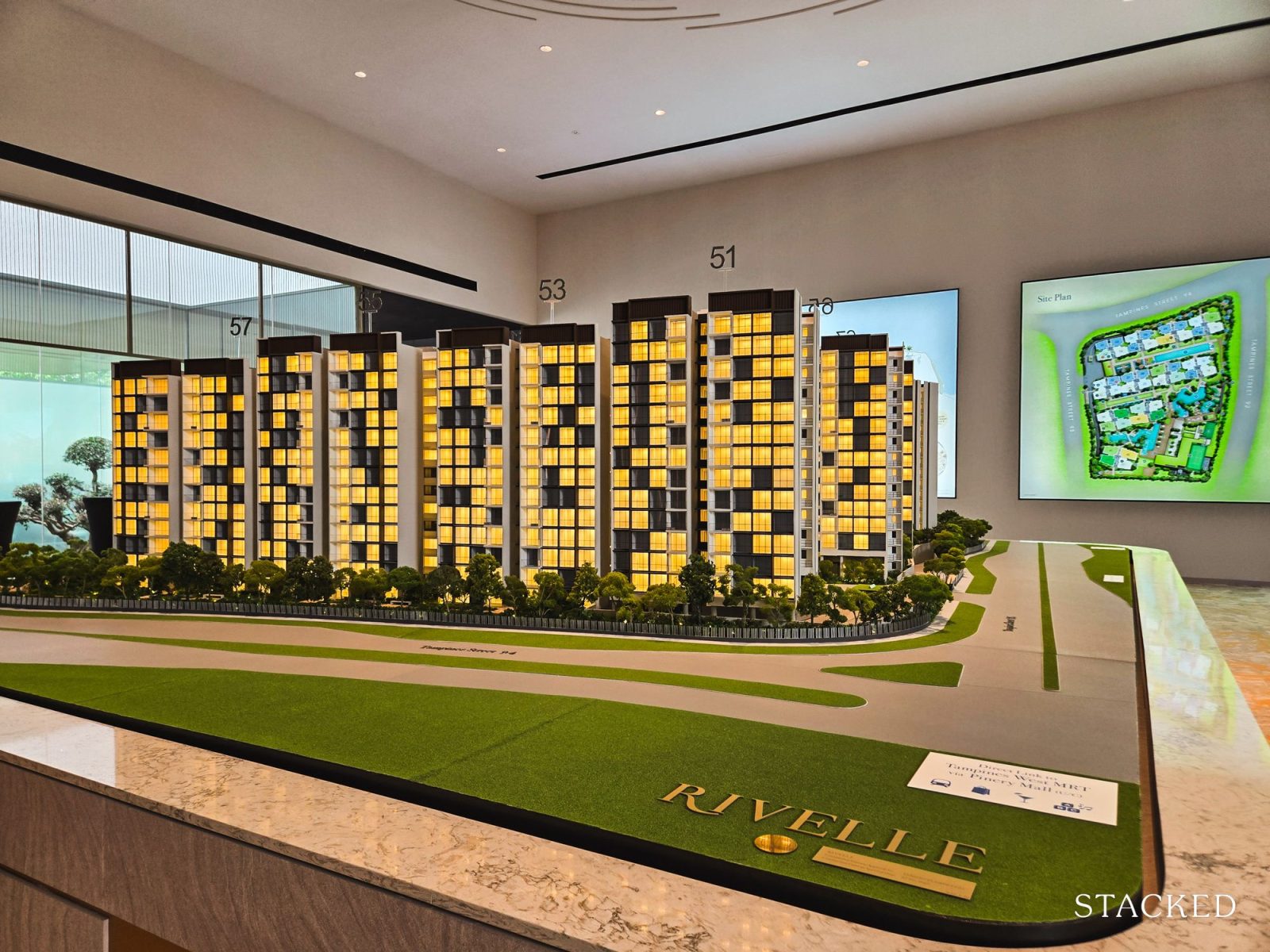
However, prospective EC buyers should take note that the revised income ceiling will apply to new units in ECs with land sale tender closing dates on or after 24 August 2026. According to MND, the revised income ceiling will also not apply to balance units in existing ECs.
In short, this means that the three launch-ready EC developments coming to market in the coming months - a project at Senja Close by City Developments Ltd (CDL), a project at Woodlands Drive 17 by Sim Lian Group, and a development on Sembawang Road by Oriental Pacific Holdings - will still be sold under the previous income ceiling of $16,000. Check out our article: 17 Upcoming New Launch Condos In 2026 — Where They Are And The Ones To Watch.
Kelvin Fong, CEO of PropNex, says that the increase in the income ceiling will improve access by allowing more households - particularly those whose incomes have risen in recent years - to qualify for new ECs. “It can also help from a home financing and affordability perspective, as prospective buyers may be able to secure a higher loan amount,” he says.
Meanwhile, for property developers, the higher income ceiling should enlarge the pool of eligible buyers for new ECs and support demand alongside the recent EC policy changes, which reserve 90% of units at new EC launches* for first-timer homebuyers for the first two years of project launch. (*For EC sites sold on or after 8 May 2026.)
But he also cautions that the ability to translate a broader demand pool into stronger sales will still depend on keeping the overall price quantum within the purchasing power of prospective buyers.
Likewise, prospective EC buyers should not expect a major impact on the market, as recent policy changes will likely continue to have a significant impact on the market, says Sun. She is referring to the removal of the deferred payment scheme and the lengthening of the minimum occupation period.
Read our coverage of the latest changes to the EC scheme in our article: Singapore’s New EC Rules In 2026: 10-Year MOP, 15-Year Privatisation Timeline And What It Means For Buyers.
More BTO ballot chances for families with children
The overarching theme that PM Wong was addressing when he announced the latest housing changes was boosting the government’s support for Singaporean families. And this means providing further support for families in their marriage and parenthood journey.
To aid in this goal, first-timer families with, or expecting children, will get additional ballot chances. From the February 2027 BTO sales exercise, first-timer families with - or expecting children - will receive one additional ballot chance for each Singaporean child aged 18 and below. This will apply to all BTO and SBF flat applications.
The most immediate impact of this change will be the next BTO sales exercise. Originally scheduled for October 2026, the government says that the next sales exercise will be delayed to November 2026. HDB says that this is to give potential flat buyers sufficient time to review their housing plans and apply for an HDB Flat Eligibility (HFE) letter under the revised income ceilings.
This means that around 7,960 flats in Bedok, Geylang, Sembawang, Tengah, Toa Payoh and Yishun will be launched in the upcoming November 2026 BTO sales exercise. Community Care Apartments will also be offered in Toa Payoh. We expect to hear more details on the projects, including their classification, closer to the launch of the sales exercise in November.
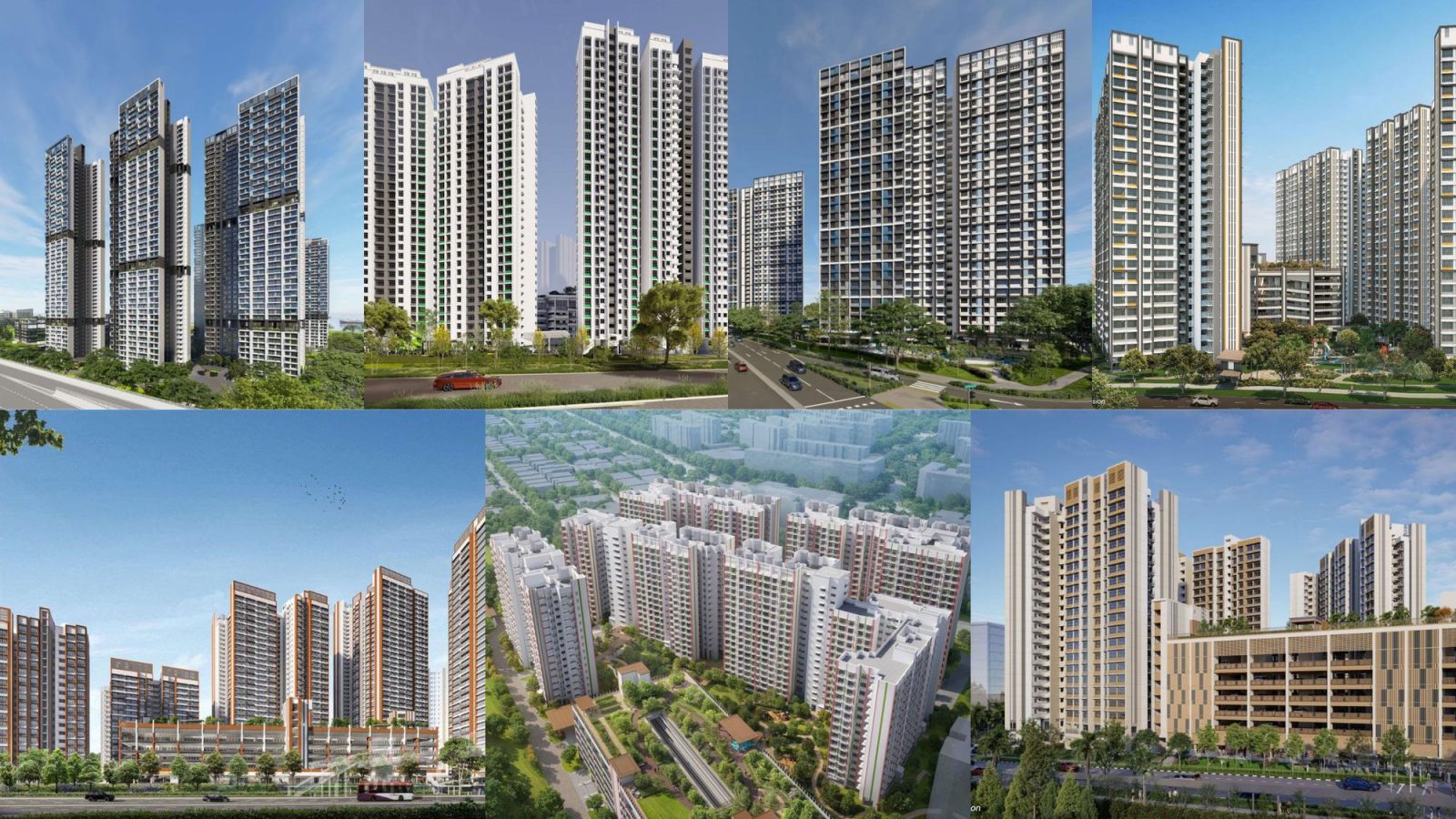
Currently, first-timer families are given greater priority in the computer ballot in BTO sales exercises. Eligible families under the First-Timer (Parents & Married Couples) category receive three ballot chances, as well as first priority under the Family and Parenthood Priority Scheme when applying for a 4-room or smaller BTO flat in Standard projects.
Those who have been unsuccessful in two or more BTO applications for Standard flats will receive an additional ballot chance for each subsequent BTO application for a Standard flat, and this is capped at five ballot chances in total.
All other first-timer families receive two ballot chances, while second-timer families receive one ballot chance. First-timer families who have been unsuccessful in two or more BTO applications for Standard flats receive an additional ballot chance for each subsequent BTO application for a Standard flat, capped at four ballot chances in total.
Broadly speaking, the increased ballot chances may not have a big impact on the market since the number of people affected may not be large, says Sun. “Anecdotally, many current applicants usually utilise the fiancé-fiancée scheme, while others could be students/NS men. Moreover, as the priority scheme for first-time families was implemented some time back, I think many would already have applied and successfully obtained a new flat,” she says.
Other market watchers also echo the limited effect of this policy adjustment.
Marcus Chu, CEO of ERA Singapore, notes that while the extra ballot might encourage some large families to apply for more popular BTO projects, a major shift in preference is unlikely. “Families are more likely to prioritise factors such as proximity to public transport, schools, supermarkets, and hawker centres rather than a project's popularity,” he says.
He also doesn’t expect a notable increase in applications for larger flats, since large households naturally apply for bigger flats. However, he does point out that the extra ballot would give households with multiple young children a higher chance of success.
“As a result, households without children or with fewer young children might find it advantageous to apply for smaller flats,” says Chu, adding: “This extra ballot aligns with the government’s pro-family policies, including the recently announced increase in childcare leave for each working parent, as well as increased financial support for each child through Edusave top-ups and lower preschool fees”.




0 Comments