


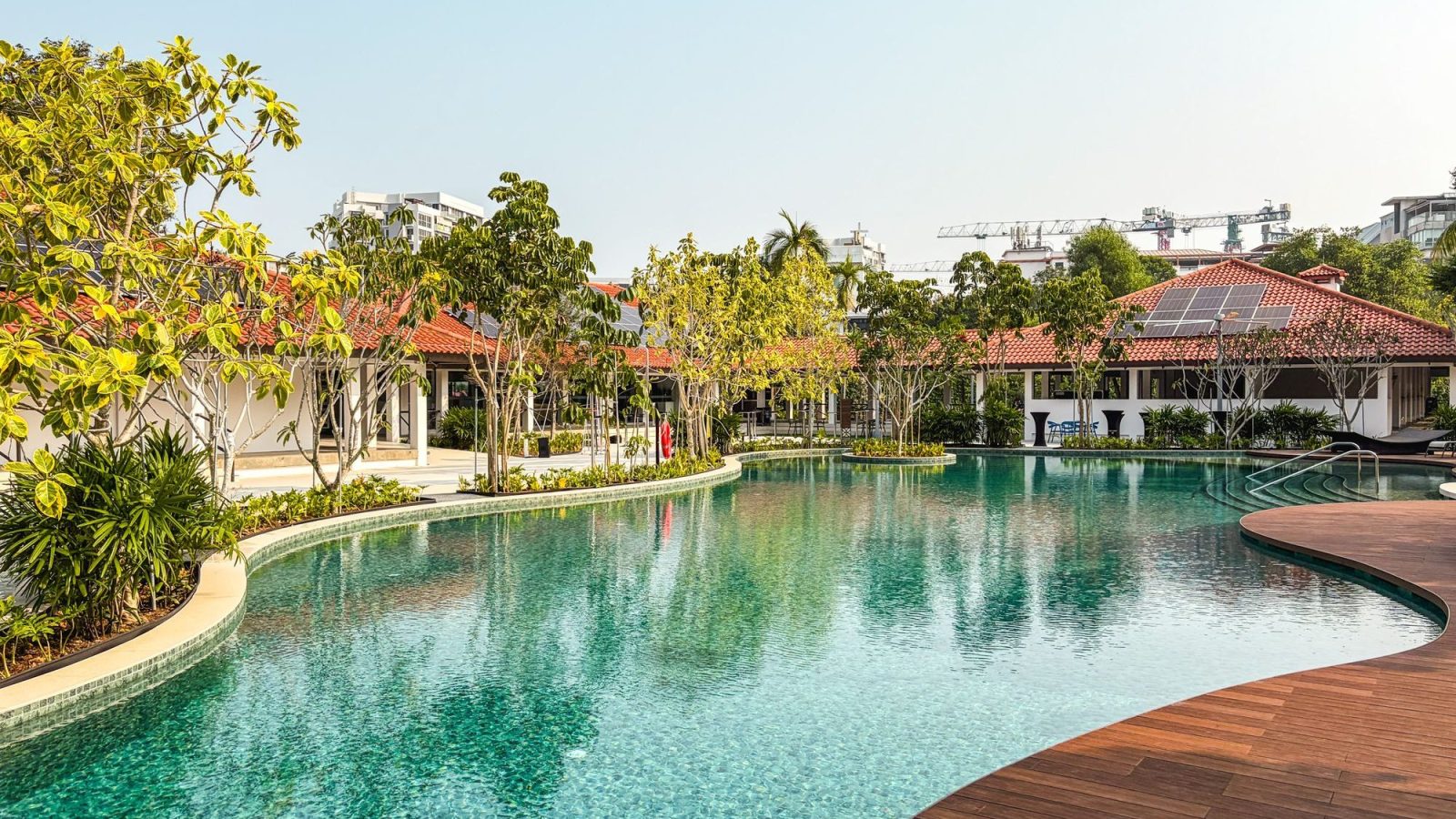
Many Singaporeans around my age will probably associate ‘chalet’ with weekend retreats at Pasir Ris or Changi. It brings to mind late-night barbecues with extended family or a group from school, and a room nobody looked at too closely because it was only for two nights.
The new Coliwoo Resort Changi takes much of its inspiration from memories like that, and on the actual grounds where some of those memories were made. The thoroughly renovated property at 159 Jalan Loyang Besar was a state-owned holiday chalet for roughly 40 years, and a temporary workers' dormitory after that, before the site was left to sit vacant.
Last weekend, Stacked had the opportunity to stay and experience the newly opened property, a few weeks after the resort opened.
The site is managed by Coliwoo, the mainboard-listed co-living operator, who won the site through a Singapore Land Authority (SLA) price-quality tender in June 2025, with a bid that worked out to $225,000 a month on a three-year lease.
After a 10-month renovation, the new property consists of 380 rooms across the entire 380,000 sq ft site. It did manage to salvage and refresh some of the existing elements, including about 40% of the old landscaping and the original terracotta roof tiles of the old chalets.
But the concept behind Coliwoo Resort Changi revolves around a more leisurely kind of stay, with the Pasir Ris property far enough from town to feel like a break and close enough to regional business hubs to commute to work.
After experiencing the new resort first-hand over two nights, I set out to see whether the new resort delivers that, as well as the type of guest who might be keen to commit to a longer-term booking.
The rooms are mostly studios, starting from $3,000 a month
Coliwoo began as the co-living arm of real estate solution and space optimisation company LHN Group. But the co-living brand became successful enough that it spun off as its own company in November 2025, with an initial public offering that was over 20 times oversubscribed.
Today, Coliwoo manages more than 25 properties across Singapore, from studios in Balestier to its flagship property in Orchard. The resort in Changi is the first resort-style property in its portfolio, and in terms of land size, it is the largest site that the operator oversees - although the actual property is only its third-largest by room count.
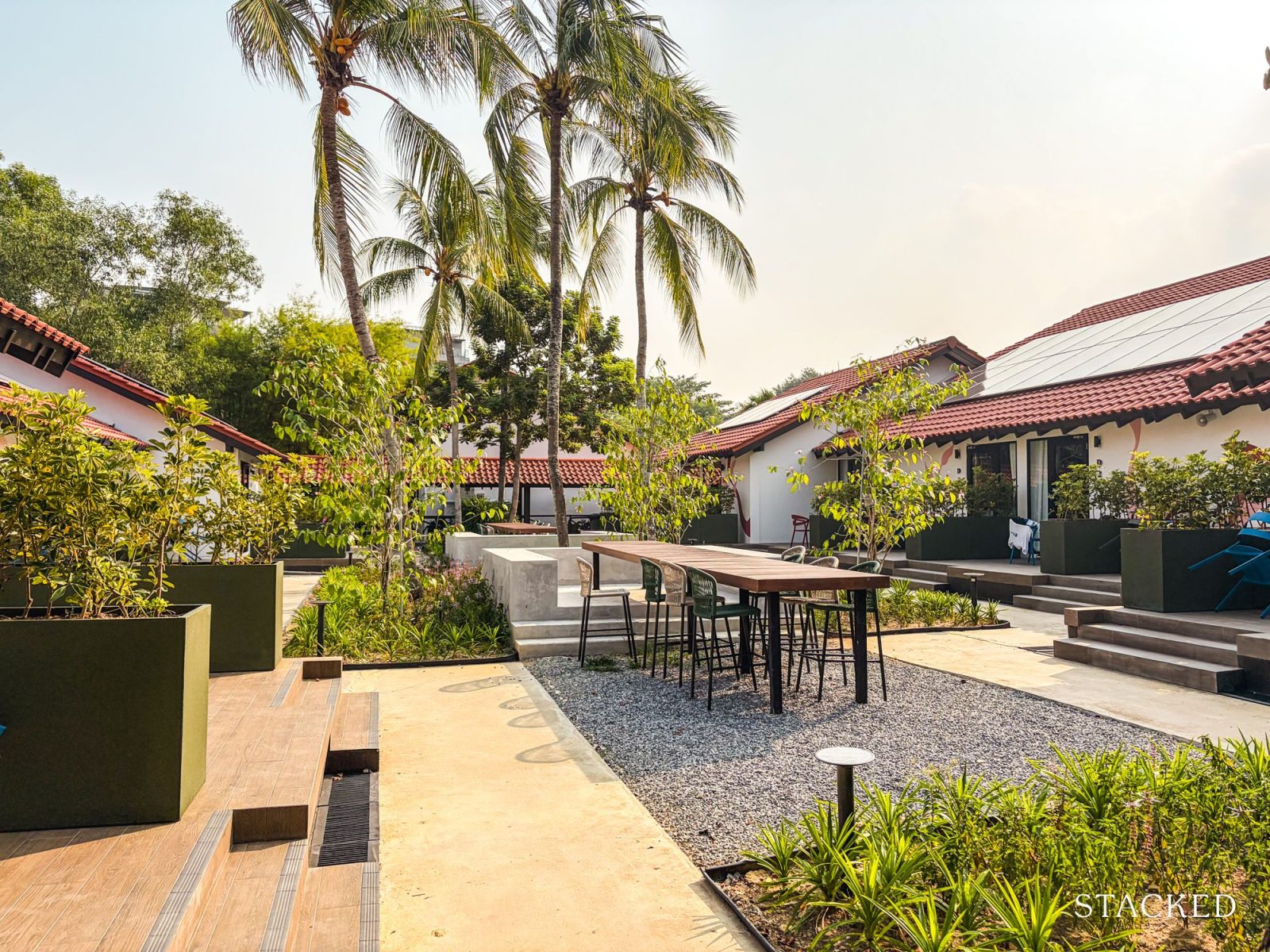
There are seven room types at Coliwoo Resort Changi:
- Maisonette, 400 sq ft, a two-storey duplex: 92 rooms
- Eastin Studio, 280 sq ft: 2 rooms
- Poolview Queen Studio, 280 sq ft: 3 rooms
- Premier Studio, 240 sq ft: 94 rooms
- Deluxe Studio, 220 sq ft: 94 rooms
- Patio Studio, 220 sq ft: 3 rooms
- Superior Studio, 200 sq ft: 92 rooms
Six of the seven types of rooms are studios of 200 to 280 sq ft, with 288 of these types of rooms in total at the resort. These rooms have been designed for individuals or couples. On the other hand, the 92 Maisonettes are the only family-sized rooms available on the property. So, despite being called a resort, most of the available rooms will be studios.
But each unit is fully furnished, with a kitchenette, an ensuite bathroom, wifi and air-conditioning. Coliwoo splits the accommodation options into medium-term - of three to six months - and long-term, lasting six months to a year.
The monthly rate starts at $3,000 for the 200 sq ft Superior Studio, the smallest room type available. An opening promotion takes $500 off the monthly rate for guests who book and begin their stay by 31 October 2026, and nightly rates start at about $190.
The studio was well-equipped, but the plumbing was loud at night
I was put in a Poolview Queen Studio of about 280 sq ft, and it was one of three rooms that made up one of the low-rise buildings on the property.
Based on my experience, an individual staying in that type of room has space to spare, and a couple could probably manage just fine as well. But I would not take it for a longer stay if I were paired with another person living with me.
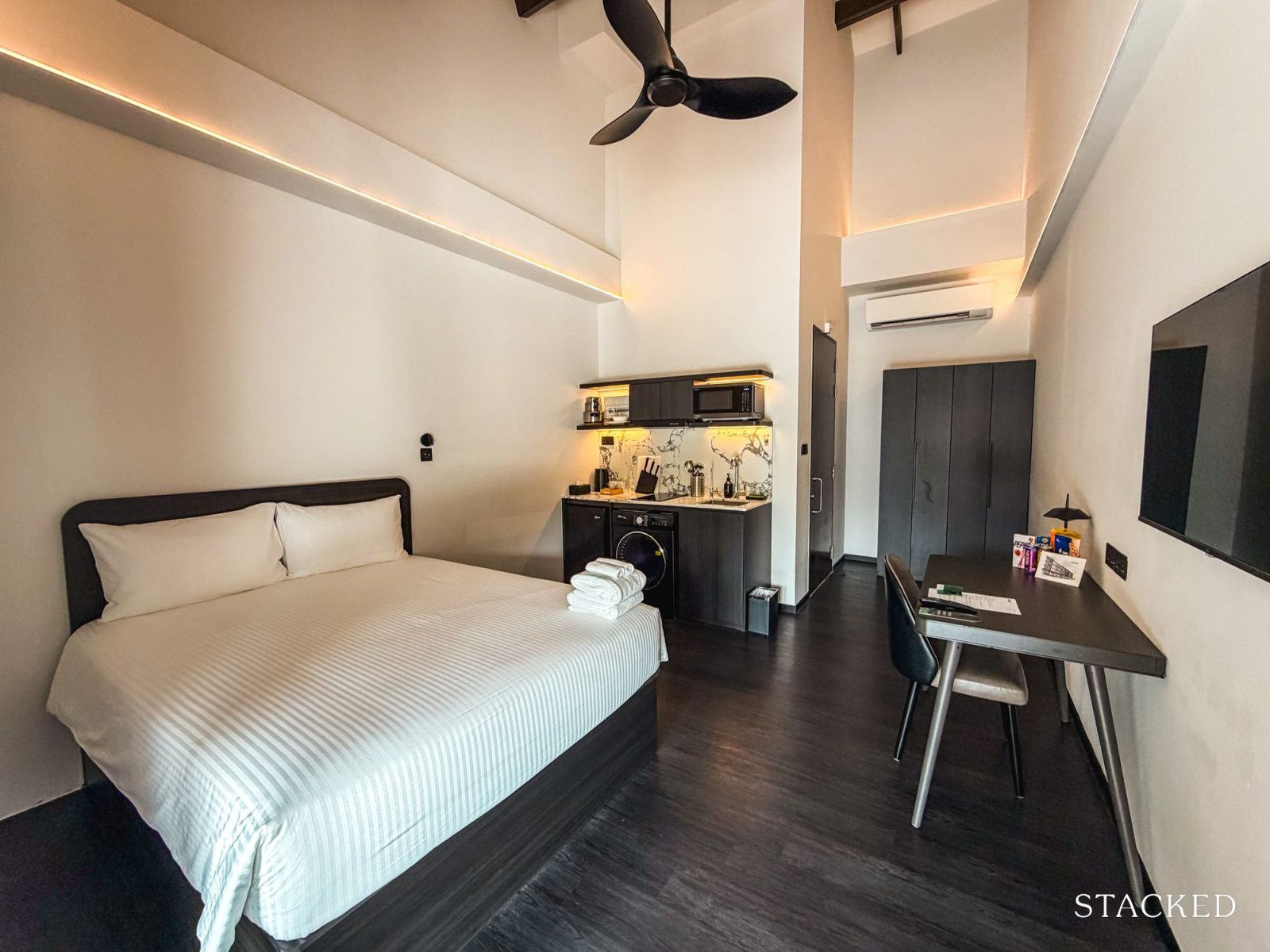
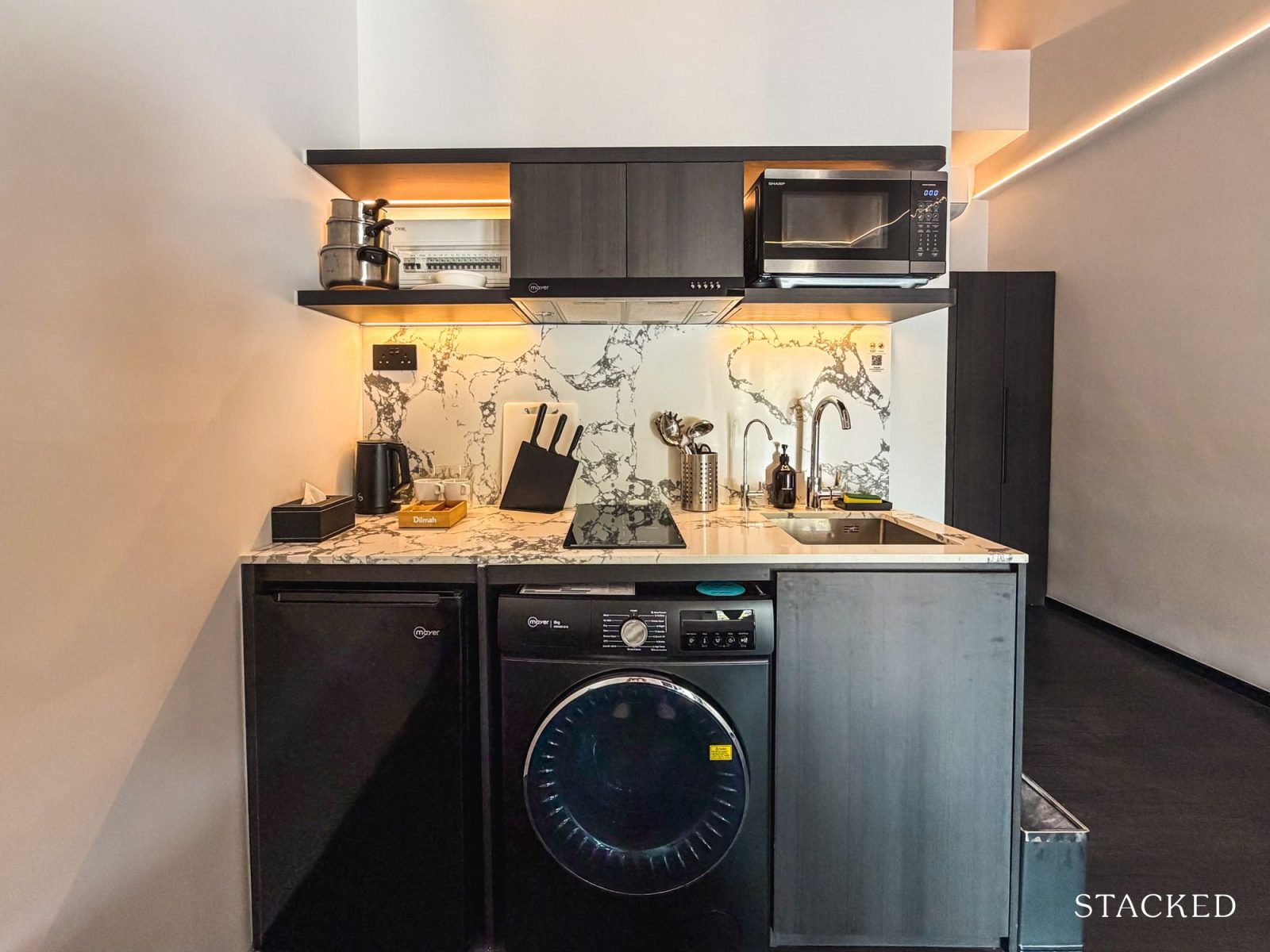
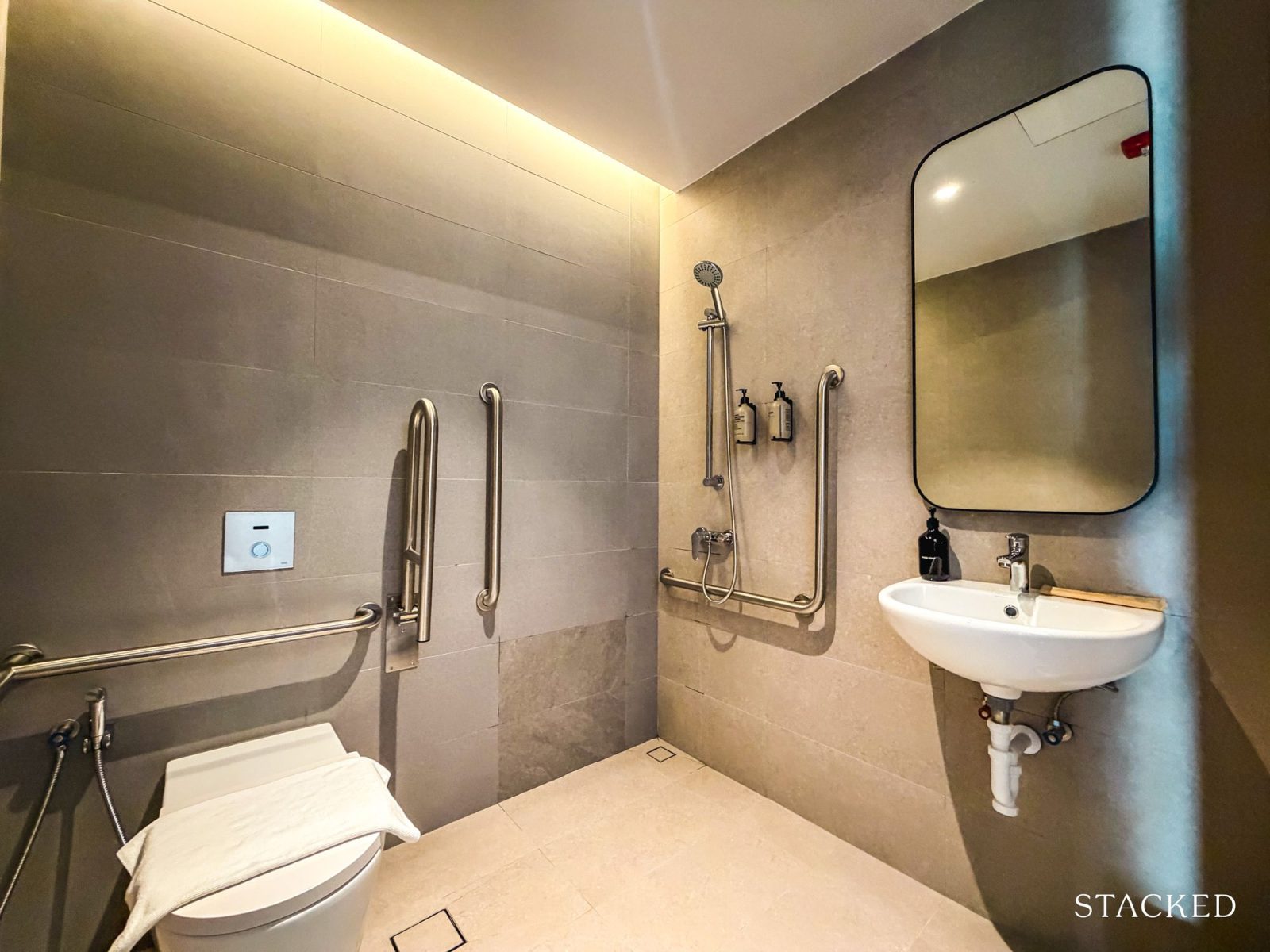
However, the room was thoughtfully provided with nearly everything that a solo guest might need: a queen-sized bed, a desk and chair for one, a washer-dryer, and a kitchenette with a microwave, as well as a mini-fridge and a sink. You also get your own private bathroom, unlike in other co-living rooms on the market these days.
Overall, I found the short stay there comfortable, except for one gripe. My room seemed to share a wall with a common toilet, and each time it was used, the sounds were loud enough to wake me up in the early hours on both days.
I couldn’t tell if this was specific to my room, or down to the way the units share a plumbing system. But that also raises an obvious question: can my neighbour hear my pipes just as clearly?
This type of structural issue doesn’t boil down to operational efficiency, or the teething problems that accompany the completion of a new development. And I found it noteworthy enough, especially when we consider that rest and leisure are at the crux of this new resort.
In general, a guest here for a night or two can let it go. But for someone on a medium- or long-term stay - especially at the rates which Coliwoo is asking - it would be much harder to overlook.
(Writer's note: After my visit, the operations team at Coliwoo Resort Changi clarified that the plumbing issue is not structural. They are fitting flow restrictors to bring the water pressure down and looking at insulation around the affected pipework, and that the fix will be applied across all affected units.)
The details in the rebuild lie in the facade and eco-features
The 10-month renovation saw Coliwoo repaint the old chalet buildings in a black and white palette, clearly inspired by the aesthetic of the old colonial-era bungalows, with murals of plants and flowers on the facade.
It’s certainly eye-catching and is one of the first things a guest notices when they step onto the property. This design also anchors in the resort concept that Coliwoo Resort Changi is attempting to showcase.
Some of the materials used in the rebuild came from the site's own past, with timber screens from the old chalet remade into tabletops, benches, planter boxes and bathroom privacy panels.
Coliwoo says it put a lot of effort into the eco-features of the new resort. The eco-features are where the renovation shows most. Rooftop solar panels and a battery supply part of the daily electricity demand for lights, air-conditioning, and water heating. The company says this reduces the amount of electricity the property draws from the grid.
Other green and sustainability features include rainwater harvesting, EV charging bays, and ceiling fans in the rooms to ease the reliance on air-conditioning.
Meanwhile, the facilities are modest for a property this size: a swimming pool, a small gym, and three karaoke rooms that each cost $20 to book, and there are plenty of outdoor shared areas with tables and chairs. We were told that an outdoor sports corner and a jacuzzi pool will be operational for guests later this year.
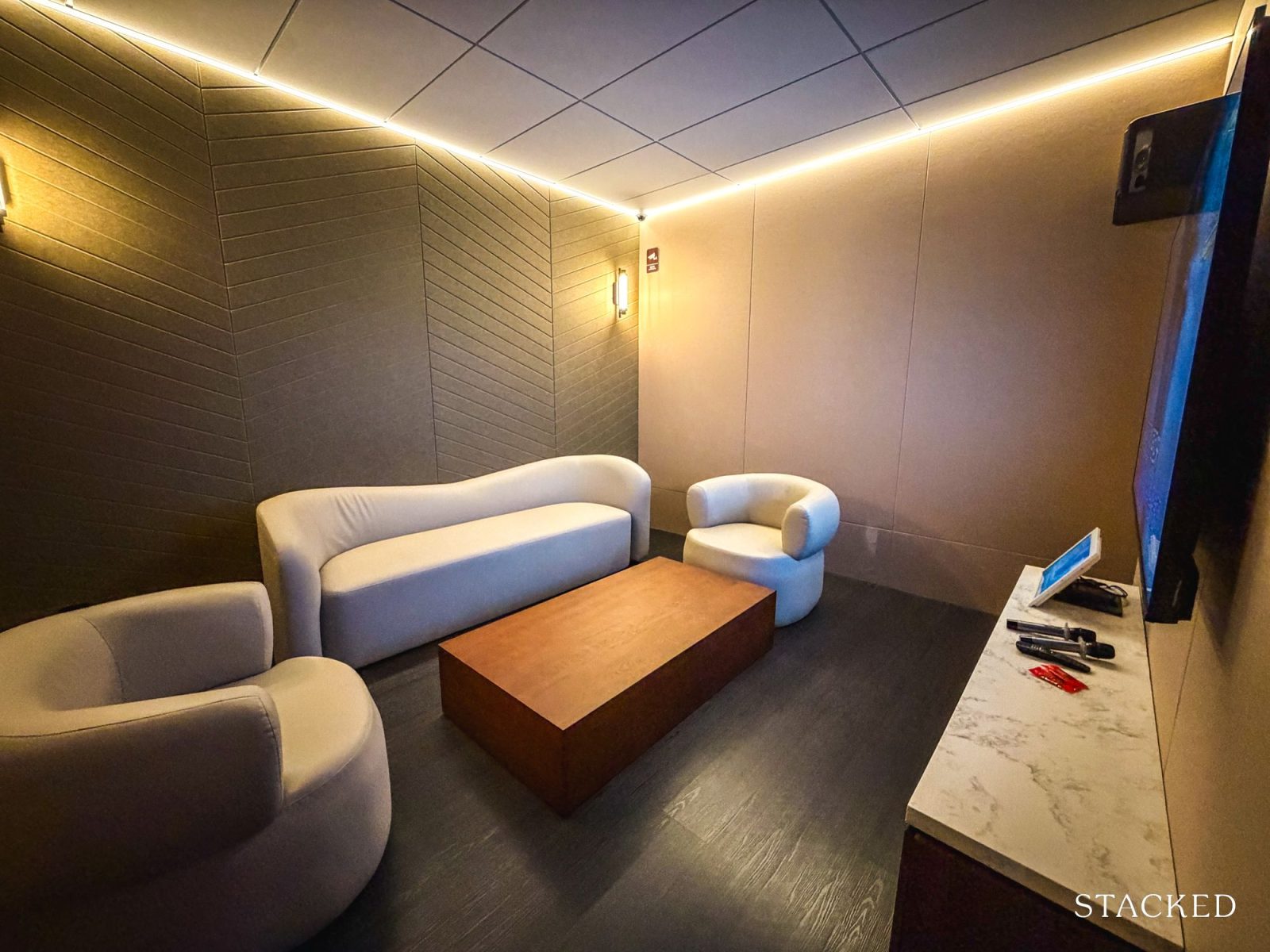
Coliwoo is also running a community-based farm plot, as well as a year-long calendar’s worth of yoga, sound-healing sessions and weekend runs through Pasir Ris Park.
But the renovation removed the old chalet barbecue pits, although Coliwoo runs weekend barbecue socials in the shared areas. For a place that leans into nostalgic chalet memories, the missing BBQ pits were something that I missed having.
Overall, the relatively short list of facilities makes sense for a stay there that is also built around slowing down and taking time off. But it does mean that the resort relies on the existing public facilities, especially one found in neighbouring Pasir Ris Park.
Downtown East is where most of the attractions are found
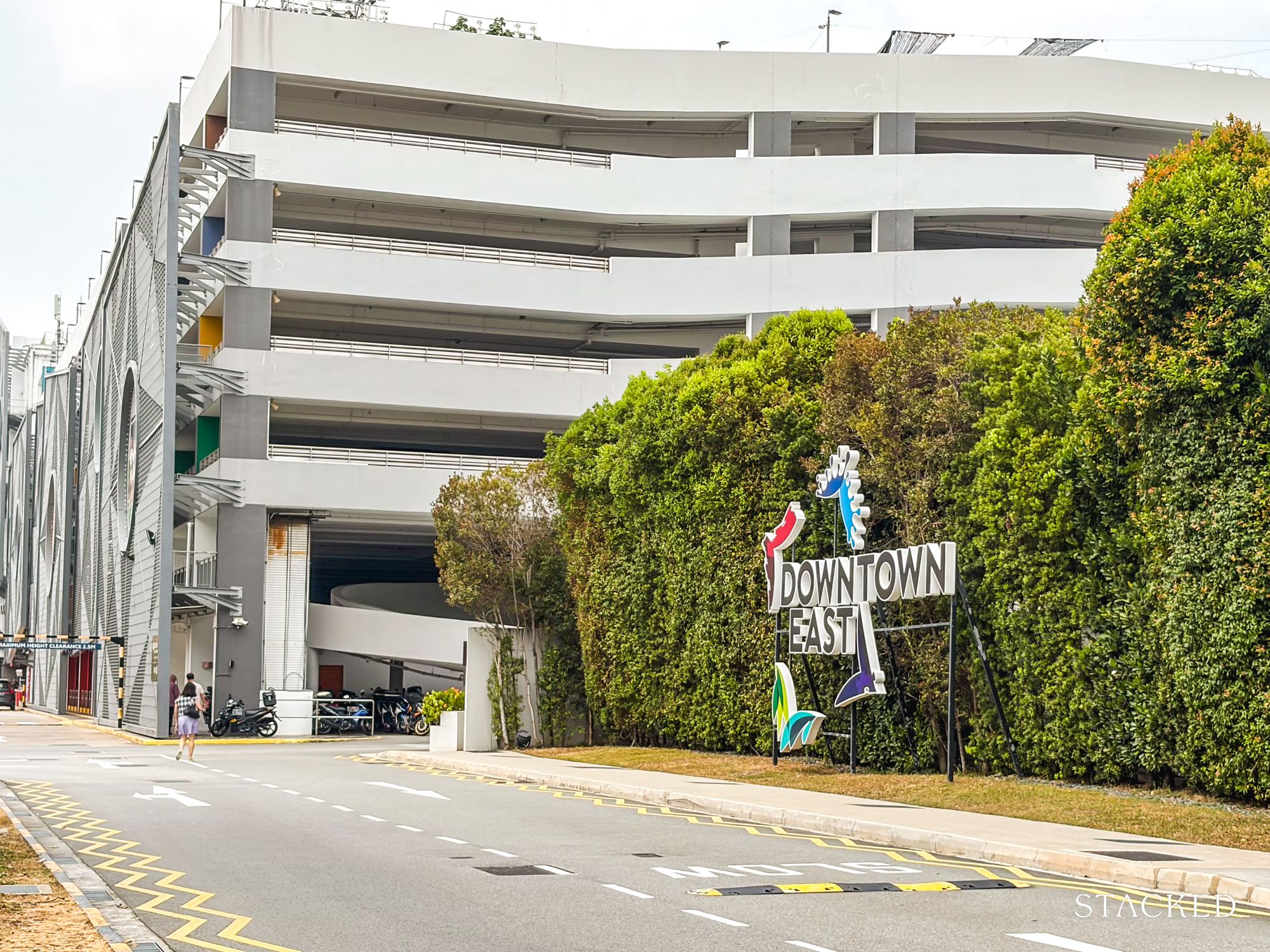
Fortunately, the entire development is quite permeable, with convenient entrances to the neighbouring park and other amenities. A back gate leads straight into Pasir Ris Park, and the park connects to Downtown East and its E!hub mall.
If you stay in one of the units near the front entrance, which was where I was housed, the walk to E!hub took about eight minutes. For residents situated in rooms close to the back of the property, it will be a shorter walk.
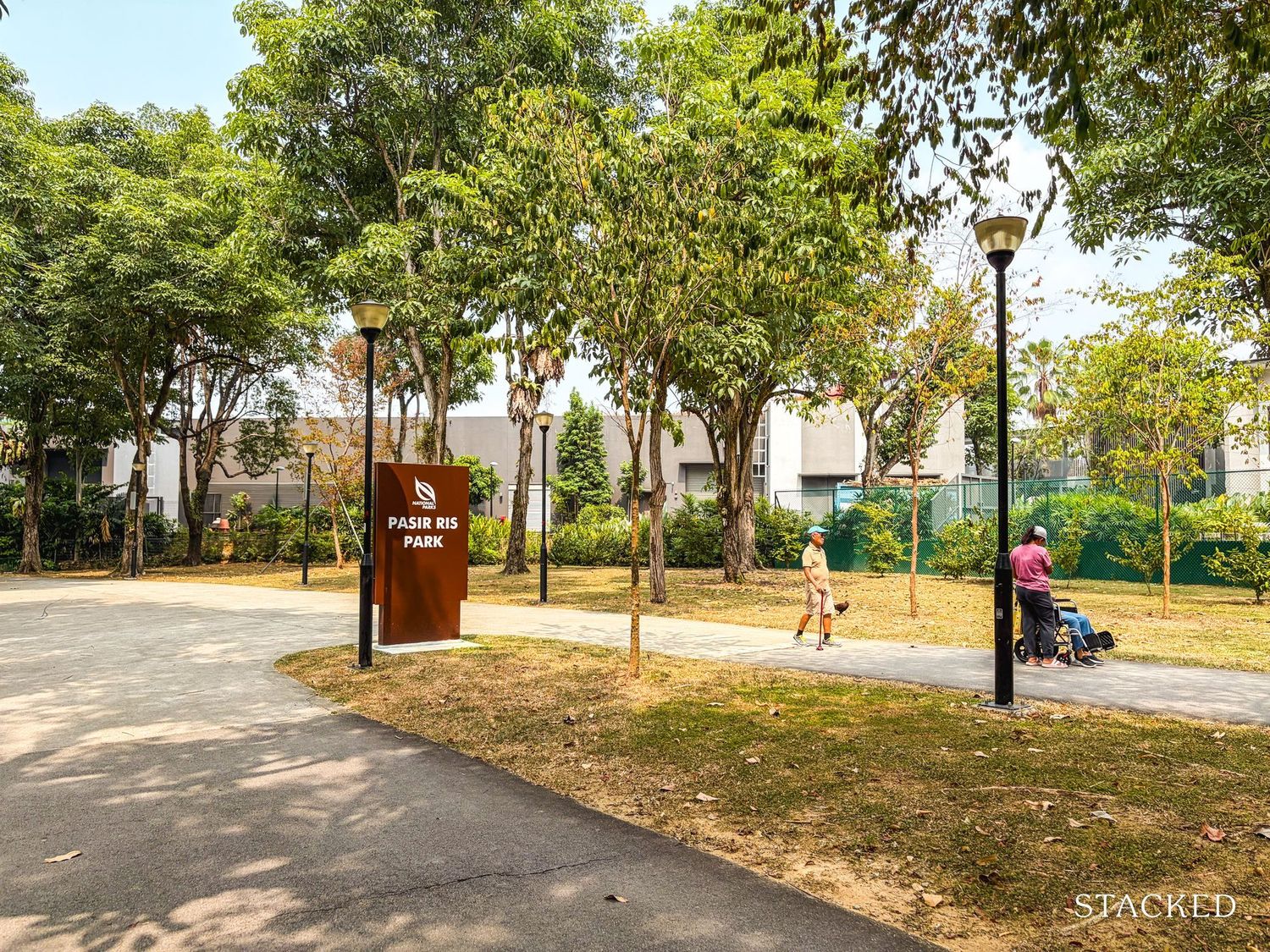
During my two-night stay there, I had most of my meals at Downtown East because there were few to no F&B options on-site. Coliwoo lists an on-site convenience shop and a food and drinks stall among its facilities, though neither appeared to be ready during my stay.
E!hub has a food court, a row of restaurants and a FairPrice, which is the one that matters for anyone planning to cook in the kitchenette.
Pasir Ris Park is next door, with cycling, kayaking and a beach, and Downtown East adds more recreational options that are a few minutes away. For a resident who wants the outdoors and day-to-day essentials within walking distance, the location works well.
But getting out of Pasir Ris takes some planning
Leaving the area is harder than getting around within it: Pasir Ris MRT station, the eastern end of the East-West Line, is a 25-minute stroll or a few bus stops away.
Only one bus service runs past the resort's entrance towards the station. The rest leave from a stop opposite Downtown East, which is itself a walk from the property, so I took the bus each time rather than attempt the full route in the heat.
Changi Airport and Changi Business Park are a 10-minute drive, while the SUTD campus is about 15. For international students, the bus to campus takes over 40 minutes each way.
The upcoming Cross Island Line is due to add a new station, Pasir Ris East, in the area when it is operational around 2030. But until that opens, I reckon that medium- to long-term residents will have to rely on a car, unless they plan to stay within the compound most of the time.
The accommodation rate is higher than typical co-living studios
The co-living and flexible accommodation market in Singapore has grown significantly in recent years, with several brands and operators that dominate more than half of the market share, while numerous smaller operators make up the rest of the fragmented market share.
This means that co-living rates across popular neighbourhoods have largely stabilised, with several benchmark prices that help make reasonably fair comparisons.
For example, a one-bedroom unit at Weave Residence - East Coast, the smallest layout available, starts from $3,400 a month. A self-contained studio, including Coliwoo's own co-living studios elsewhere in Singapore and ABIEL's new Geylang micro-units, costs between $2,200 and $3,000.
But neither is a like-for-like match for a resort studio in Changi, which leans more toward a hospitality offering than a student hostel or a self-contained shophouse room. They mainly serve as a snapshot of the range the flexible-accommodation market now covers.
At $3,000, Coliwoo Resort Changi's smallest studio sits in the middle of that price range, and above the rent for a one-bedroom condo in the area. We found that a typical one-bedder in Ripple Bay, The Estuary, or Ocean Front Suites could fetch a monthly rent of approximately $2,600. Likewise, two-bedders in the same three projects may lease for about $3,300 per month, and offer more space than a 200 sq ft room.
Although the opening discount that Coliwoo is offering for a limited time brings the price of the studio in line with that one-bedder, but for far less space. Its edge over a plain condo rental is the furnishing, the bundled bills and a flexible lease.
However, we would also caveat that the comparisons we’ve drawn up here are not exact either way, since the condo figures are for unfurnished units on longer leases. For a stay under a month, the nightly rates may also not be as competitive as a nearby hotel's.
Coliwoo's bet on long-stay relies on corporate leases
Taking a step back, I reckon that the leisure options in the wider Pasir Ris area have moved on from the nostalgic chalets and the beachfront lifestyle over the past decade. The character of this part of Pasir Ris has also evolved with the development of new private and public housing and a mall by the MRT.
There is also the question of how long Coliwoo will be here, since its initial lease from the state runs for three years from 2025, with an option to renew for three years and a further term of three years after that. The two renewals are at the state's discretion, so the operator's commitment to the site based on its existing lease ends in 2028.
Coliwoo's next Changi property shows where this resort property sits in terms of its overall property portfolio in Singapore. In March, it bought the former Park Avenue Changi at Changi Business Park for $101 million, a site that is probably more appealing to its corporate tenants, and a far better connected one compared to its resort.
This leads us to conclude that the tenants Coliwoo is counting on for the long term may be companies and corporate leases. The operator says it is working on deals for firms to book rooms in bulk for overseas staff posted here for a project or a relocation, the kind of managed rental housing that institutional investors have been buying into.
Overall, my stay at Coliwoo Resort Changi was comfortable and the studio I lived in was well-furnished. But I still think it suits a narrow group: someone based around Changi who travels often enough that the commute rarely matters, or someone who simply wants to live near nature.


0 Comments