


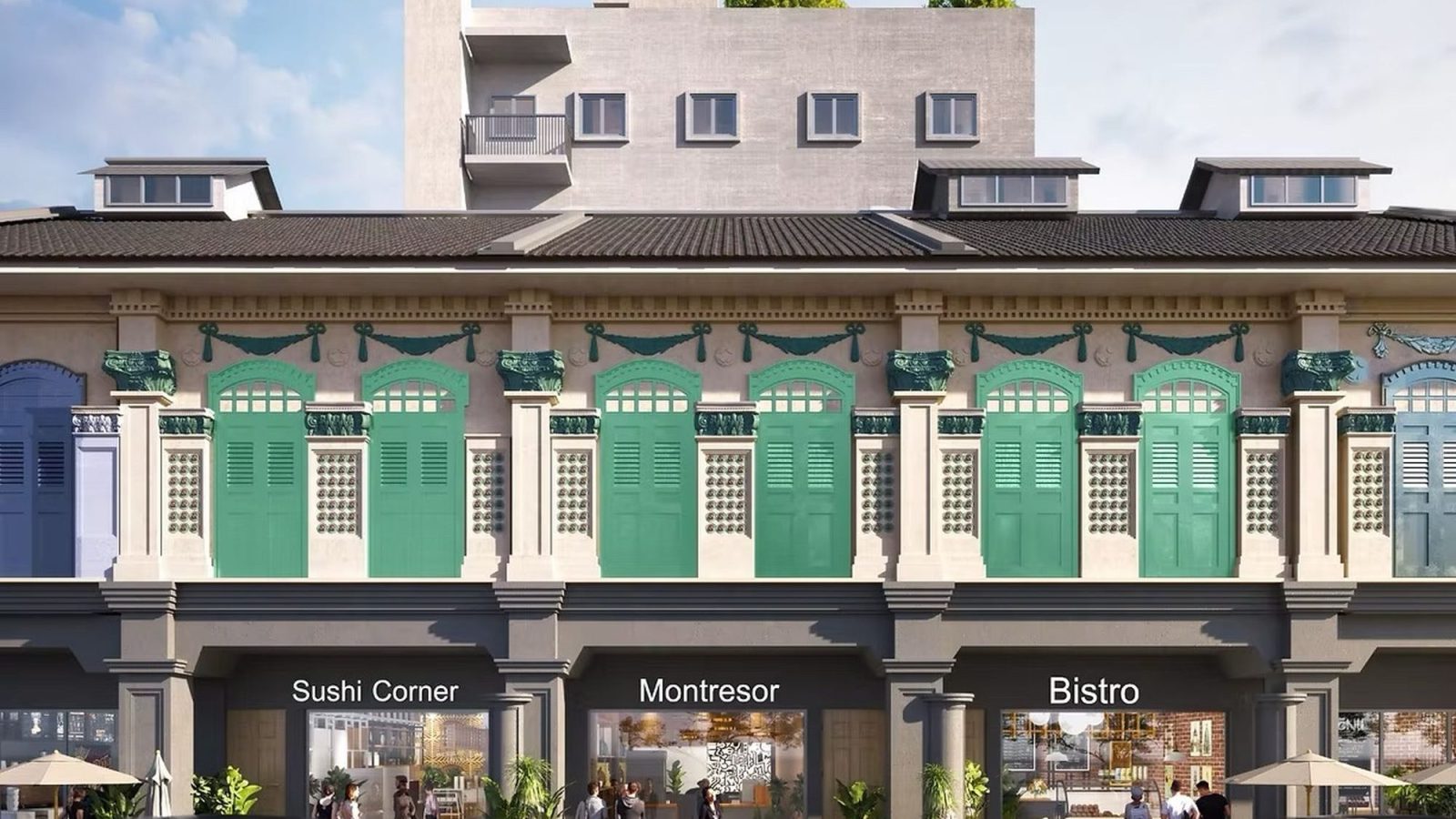
ABIEL Property Investment Fund, a Singapore real estate investment firm, has unveiled plans to convert a trio of Geylang Road shophouses into self-contained micro-residences. The investment firm has a solid track record in Singapore of acquiring and managing shophouses and industrial assets, and a residential asset has been on its radar for some time now.
When Stacked toured 81 Aljunied Road - a new industrial property developed by ABIEL - in June this year, Maureen Li, the founder and chief executive of the investment firm, shared that they were also working on a new concept. At the time, she described it as sitting somewhere between that building's managed-workspace model and co-living.
One thing she did make clear was that Abiel had no interest in adding another undifferentiated co-living product to a market.
This week, ABIEL unveiled its first branded residential concept, which will be housed in three adjoining conservation shophouses at 223, 225 and 227 Geylang Road. The investment firm acquired the properties for $18.68 million.
The upper floors will be converted into House 223: which consists of 15 fully self-contained homes. These residences span a total of 12,957 sq ft across five floors. Each unit is around 200 sq ft and comes with its own kitchenette, bathroom, washing machine, workspace and sleeping area.
The development is expected to open in September 2026, with rents ranging from $2,300 to $2,700 a month. It aims to target short- to mid-stay visitors who need accommodation in Singapore for three to 24 months.
Singapore's rental rules leave medium-term professionals with few options
Singapore has strict regulations on rental properties, which are intended to protect housing supply for citizens and permanent residents. As a result, private residential properties require a minimum lease of three months, while HDB flats require a minimum lease of six months. Short-term rentals on platforms like Airbnb are not allowed.
This leaves an accommodation gap for a specific group: professionals in Singapore for more than a few weeks but less than a year or two. "There are plenty of long-lease housing options in the market, as well as high-end serviced apartments. But what is missing are the options in between," says Li.
She explains that someone on a nine-month posting to Singapore usually ends up in a sublet arrangement that was never designed for them, and that sublet is a flat that a local family could have rented.
On the other hand, House 223 is designed for the length of stay that this group of tenants usually spend in Singapore, offering them high-quality accommodation that meets their needs without taking housing off the market, she says.
Some of the intended target audience include doctors on medical fellowships, consultants on engagements, executives posted here to set up regional offices, or graduates on rotational programmes. These professionals usually cannot justify hotel rates spread over months, and they are also not settling in long enough to sign a two-year lease, given the non-permanent posting.
ABIEL believes that House 223 fills that gap with medium-term rentals ranging from three to 24 months. Each unit is fully furnished and move-in ready, with no added furnishing costs or utility subscriptions to set up on arrival.
Communal spaces at House 223 are scarce
The shophouses at 223, 225 and 227 Geylang Road will retain their existing ground- and second-floor tenants, which are currently leased to restaurants and entertainment and nightlife operators. Meanwhile, House 223 occupies the three floors above, in line with the spirit of prevailing conservation rules: busy and commercial on the street level, but quieter up top.
ABIEL has an in-house team who designed the new interiors and the new exterior façade, with a project architect and specialist engineers handling the broader building work. The design draws from three aesthetics: industrial loft, mid-century modern and Japanese minimalism.
Visitors can expect warm wood details, charcoal and forest-green tones, stone surfaces and exposed steel. Rather than packing every corner with built-ins, ABIEL aims to make the 200 sq ft feel more intentional than cramped.
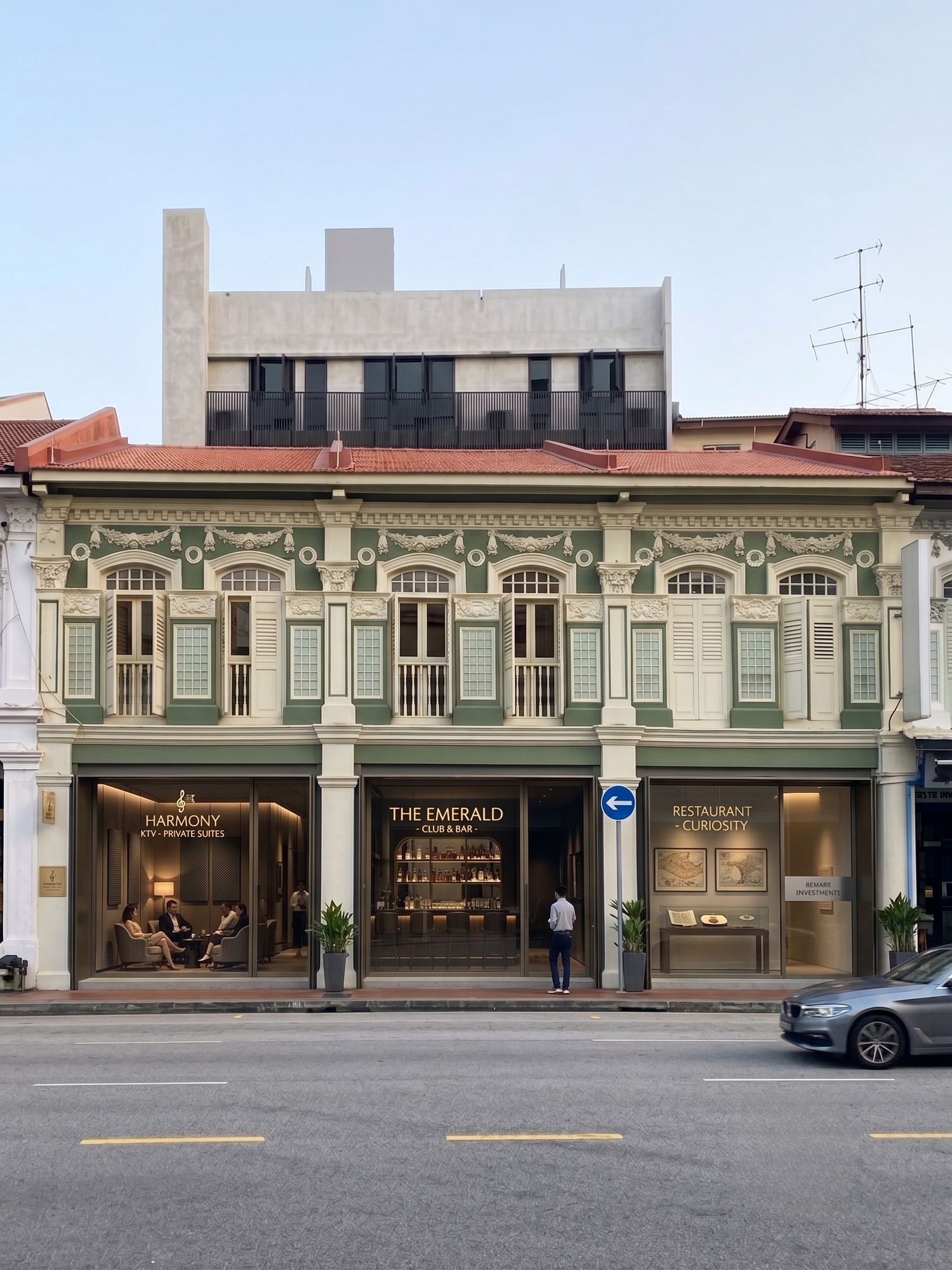
Although each unit is efficiently sized and entirely private, the rooftop space is open and designed to facilitate interaction. The only communal space in the residence is on the rooftop, where residents have access to an edible kitchen garden to pick their own herbs and vegetables, an outdoor barbecue, a long communal dining table, reading corners, and hammocks.
"We are not building the rooftop simply for the view," says Li. "It is meant to be used throughout the day, such as a place to enjoy coffee next to the garden in the morning, or a barbecue with people you have only just met in the evening”.
Getting acquainted with neighbours and new people is one of the hurdles that people on overseas postings usually face, on par with adjusting to a new culture. The rooftop is Abiel's answer to that: a space designed so that socialising happens when residents actively seek it out, not because the layout of the building makes running into people unavoidable.
House 223 is up against fierce competition in Singapore’s flexible accommodation market
The flexible accommodation market in Singapore is well past its fragmented and nascent stage. Today, established players dominate the market here, such as Coliwoo, The Assembly Place, and medium sized players like Cove and Hmlet.
While Abiel has been deliberate about positioning House 223 as something distinct from co-living, the overlap in the target tenant profile and price range will inevitably lead to comparisons.
Established co-living operators in the market, like Cove and Hmlet, offer private furnished rooms at $1,000 to $1,600 a month, including utilities and wifi. However, the kitchens, laundry rooms and living areas are still shared. For professionals who do not mind sharing those spaces, the price point is much lower than House 223.
At first glance, Figment - a more upmarket brand of flexible accommodation - seems to be the most direct comparison to House 223. Operating a portfolio of 28 conservation residential shophouses in Singapore, Figment’s monthly rents range from $2,200 to $4,700. It also targets a similar demographic of executives and creative professionals.
But unlike House 223, each Figment property houses around four to six residents, and all of them share the common areas. Figment's pitch leans heavily into community, with private dining events and a members' club for co-working. Residents get a private room, typically with an en-suite bathroom, but the kitchen and living spaces are communal.
Figment has built its brand on the heritage interiors and architectural character of its properties, with residents living in the actual conservation shophouse. This gives Figment its boutique quality and appeal in the market.
Notably, Figment also has a property in Geylang, sitting at the lower end of its pricing range. According to its website, monthly rents at its Geyland property - which is located at 17 Geylang Lor 24A - start from $1,900 per month.
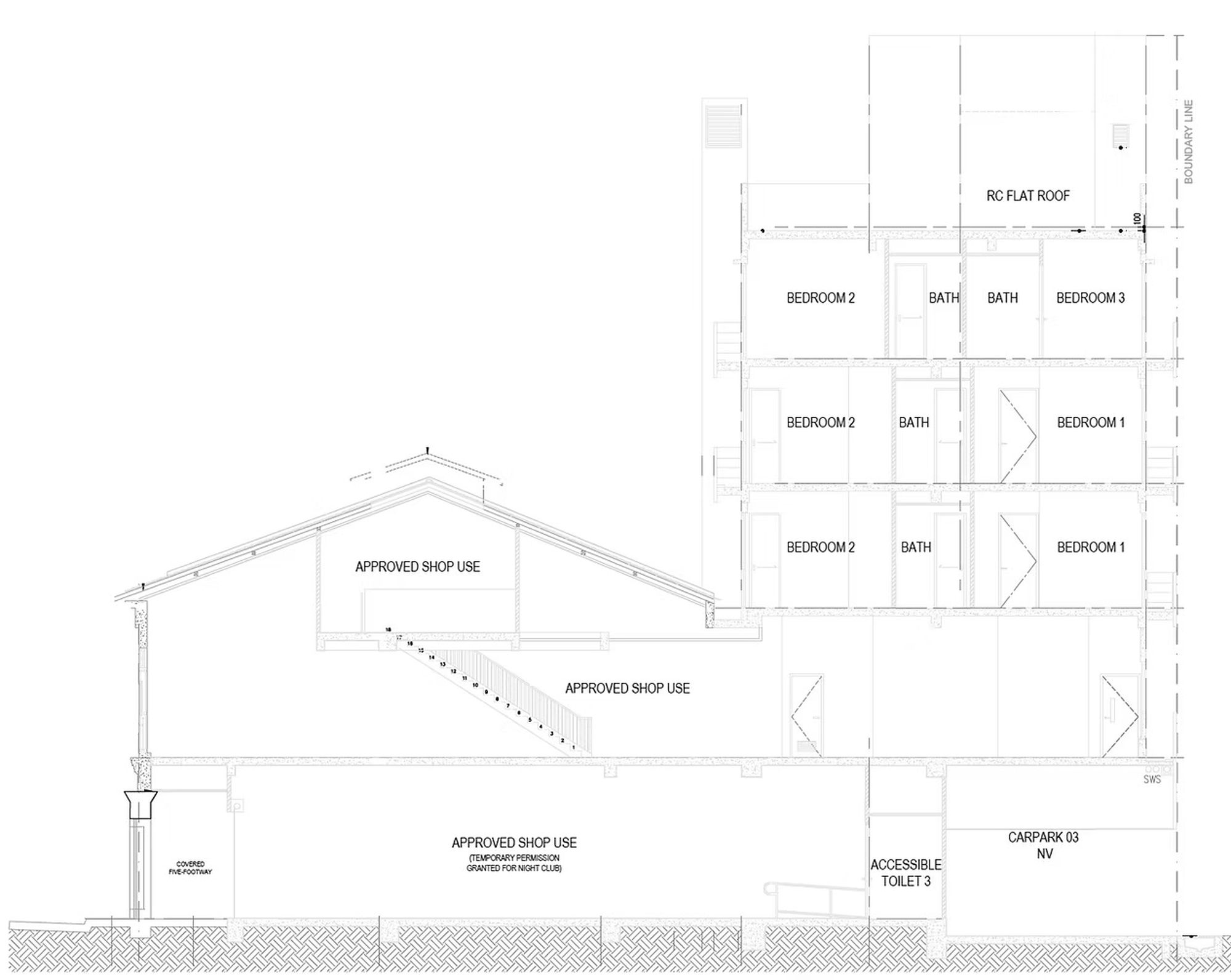
Based on what we can examine from a cross-section of House 223, it seems like the residential component appears only in the extension built behind and above the conserved shophouse, not within the heritage space itself. The conserved section will still be occupied by the commercial tenants.
On the other end of the price list are established serviced apartment operators like Ascott, Fraser Suites and Somerset. These hospitality-backed brands offer fully self-contained, professionally managed turnkey units that are in locations generally closer to the central business district or Orchard Road. Rooms like studios typically start from $4,000 a month and go significantly higher for larger units. But they are also geared towards corporate relocation packages.
With its room rates going for $2,300 to $2,700 a month, House 223 is almost double the cost of entry-level co-living options. And from what we can see so far, its differentiating factors are self-contained units: no shared kitchen, no shared laundry, no chance encounters with a flatmate.
The same playbook with a different asset class
Overall, from our perspective, we see Abiel's strategy at House 223 closely mirroring the approach it took for 81 Aljunied Road: find an asset others have overlooked, identify a poorly served segment in that market, and build specifically for that gap.
At 81 Aljunied Road, the freehold “Business 1” plot had sat on the market for years before Abiel came in and built a nine-storey industrial building with designer interiors. It now commands about $8 psf a month in rent compared to the $3–5 psf that comparable properties in the area are asking.
Likewise, Abiel acquired its Geylang shophouses when the area drew comparatively little interest from institutional investors. Although 15 units is not a large collection for a medium-term rental property, at $2,300 to $2,700 a month per unit, the income at full occupancy would be an appealing start for its residential portfolio.
Geylang is still the kind of address that raises a few questions, but the neighbourhood has changed considerably over the past decade. Older residential blocks have given way to new condos, the late-night F&B scene has drawn a wider following, and more walkable streets are planned around Geylang Road under the Historic East Corridor initiative.
House 223 also sits closer to Kallang with a better proximity to city-fringe neighbourhoods. In a previous interview with Stacked, Li mentions that Abiel leads with the physical asset and works backwards to find its best use.
Whether the same model that has worked well for Abiel for its other shophouse and industrial properties can be successfully replicated in its new micro-residences will become clear after the project welcomes its first visitors in September.



0 Comments