


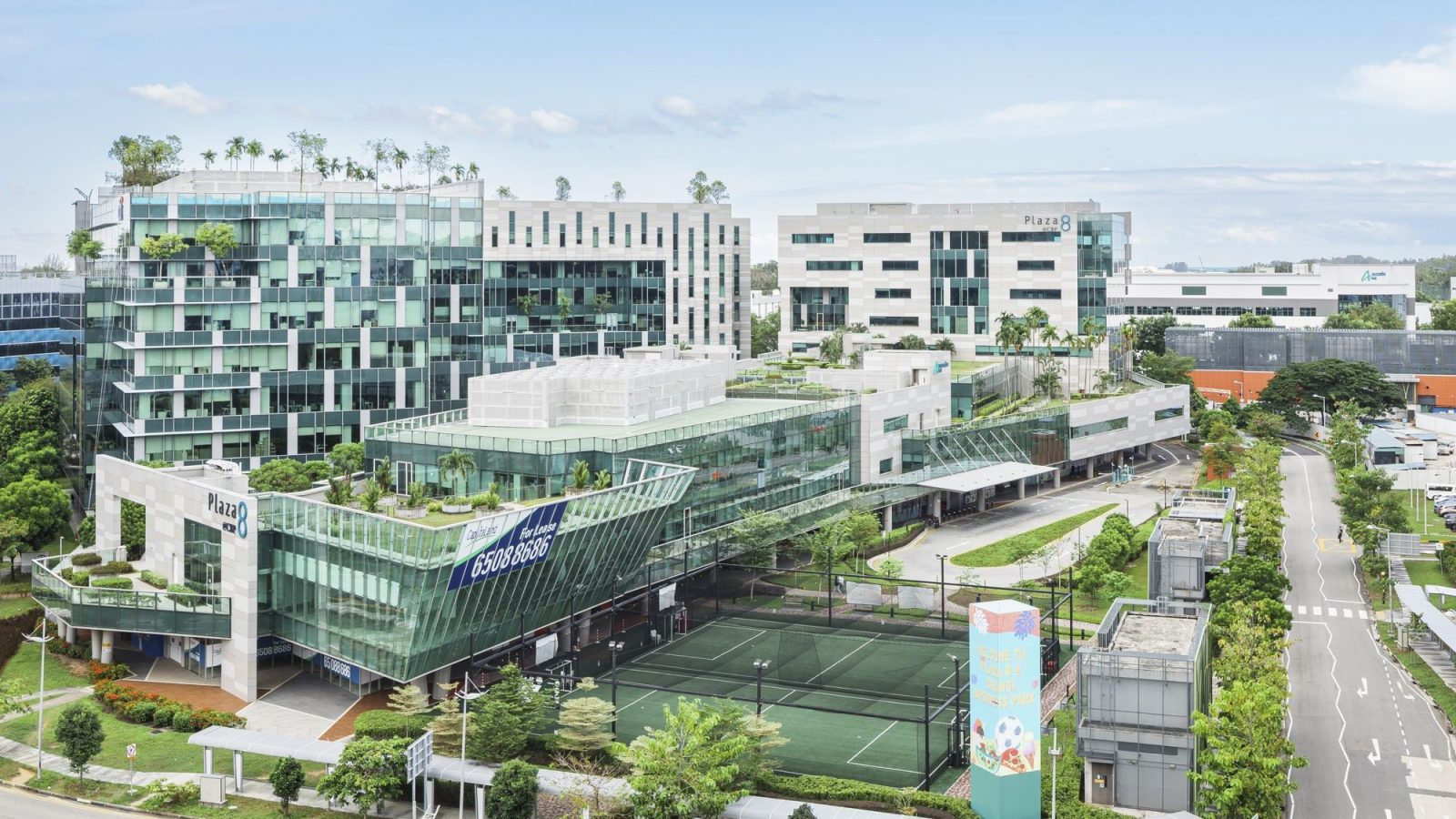
Whether you’re a retail business opening your first storefront, or an industrialist looking for the right factory unit, there’s a good chance that you would have to deal with getting financing on a commercial or industrial property at some point or another.
For property investors, hefty Additional Buyer’s Stamp Duty (ABSD) imposed on the purchase of a second, third, or more residential property makes investing in residential assets much less lucrative.
In Singapore, a second residential property is capped at a lower loan-to-value (LTV) on your mortgage compared to the first property, which means less leverage on that second loan. A third residential property faces even lower LTV caps than your second purchase.
On the other hand, acquiring commercial or industrial property - such as retail shops, offices, or light manufacturing spaces - has neither additional stamp duties nor LTV cap requirements, regardless of how many other properties you own.
As a result, the loan quantum lies with the bank, which depends on their assessment of a borrower’s individual repayment ability. Moreover, the properties themselves are diverse, and so these real estate assets serve various markets and functions. For example, you could be looking at a $10 million strata office unit in Suntec City, or a $700,000 industrial space in Tuas.
If you're a business owner, and want to own your own manufacturing or assembly space, acquiring these loans from banks is also something that you will have to deal with. But for what kind of properties or situations are you likely to get better financing?
We spoke to two commercial mortgage brokers to understand how banks make these types of loan assessments, as well as some of the strategies that business owners can use to deal with rising interest rates.
What Are the Main Differences Between Residential And Commercial Loans?
Residential loans in Singapore are transparent and highly regulated. Often if the borrower meets the set of financing requirements, approval is largely mechanical.
In most cases, the LTV for a residential mortgage is 75% for a first housing loan, or 55% if the loan tenure runs past 30 years or extends beyond the buyer's age of 65. A second residence is 45% for a second housing loan, 35% for a third and beyond.
But commercial and industrial properties have no standardised rate or LTV cap. Instead, there are LTV rates that range from 70% to 90%. Since each case is unique, the same borrower could get 70% from one bank to 90% from another, according to Jo'An Tan, Associate Director at Redbrick Mortgage Advisory.
She adds that existing relationships with banks also play a role in securing more financing. "The bank also looks at how far the relationship can go, and whether I can grow with this company,” she says.
While residential loans are artificially capped low by policy, commercial is priced on risk.
So How Could A Borrower Strive For 90% Financing?
According to Ethan Ng, Director at Cashew Mortgage brokerage, business owner-occupiers who show high-liquidity and cashflow, as well as provide supporting evidence of the usage only as an owner-occupier, are better equipped to achieve financing of up to 90%.
He has seen borrowers like this from engineering firms, contract service providers, janitorial companies, and project management firms who are buying their own office or work spaces. For these borrowers, the banks judge them on the repayment ability of the business's real financial health.
On the other hand, when it comes to investors, banks assess whether the rental income alone can sustain the loan, since there's no operating business behind the property. Since rental collection is the only source of income from that asset, the loan gets underwritten more cautiously.
If everything is in order, some investors can secure up to 70% and 80% financing on these properties, Ng says.
Adjusting To The Elevated Interest Rate Environment
According to Ng, commercial lending rates in Singapore are typically 0.5% higher than the benchmark residential lending rates.
Both residential and commercial mortgage rates in Singapore have risen in the second half of this year. The low end of commercial lending rates in Singapore over the past three weeks has ranged from 1.55% to 1.65%, with some banks pricing it as high as 1.8% in some cases.
Looking ahead, Ng expects this to rise to 2% by the time the year is over, with the possibility of rates continuing to climb in 2027.
Broadly speaking, due to the US Federal Reserve recently hiking its rates for the first time since 2023, this has a direct impact on the Singapore Overnight Rate Average (SORA), the wholesale rate that commercial loans are pegged to.
In Singapore, most local banks actually price in expected interest rate hikes from the US Federal Reserve ahead of time. Most brokers share that the latest interest rate increase has largely been priced into the latest packages offered by local banks like DBS, UOB, and OCBC.
What we’ve seen in the last month isn't the first time rates have climbed this fast. In the years after the Covid-19 pandemic, from around 2022 to 2024, commercial rates in Singapore climbed from under 1% to above 3%. This prompted the Monetary Authority of Singapore to raise the stress-test rate banks use to qualify borrowers.
Following an exuberant post-pandemic recovery period, as well as a more volatile geo-political situation in recent years, several major economies are facing high upward inflationary pressures. This has led most central banks to signal, or have published, higher interest rates to combat the relatively elevated global inflationary environment.
Small Interest Rate Hikes Won't Stop Buyers from Getting their Assets
The progressive increase in interest rates around the world has meant that Singapore's banks have also had to raise rates here. But the mortgage brokers that Stacked spoke to say that the degree of rate increase so far have not put off buyers from acquiring assets, especially when the price and net yields are hard to turn down.
That's because the alternative is for business owners to rent units for their business activities instead. "If there's one thing we know for sure in Singapore, it’s that the long-term trajectory suggests that rents hardly ever go down without recovering later on," says Tan. She adds that most owner-occupiers and businesses would rather take on the higher interest rate burden now, rather than face rising office or industrial rents for their business in the future.
On the other hand, property investors know that if they manage to buy into an asset that can attract long-term tenancy, they can continue to charge high rents which can offset their high interest repayments.
The brokers say that businesses aren't too concerned about higher interest rates if mortgage instalments can work for their monthly cash flow operations. For example, a 0.5% rate increase might only add $200 to 300 a month to a business's payment, Tan points out.
That's a better deal compared to a borrower who takes a shorter tenure or lower LTV to save on total interest, but ends up with a much bigger monthly payment that strains their business later on.
Some Businesses Are Responding in Their Own Ways
However, some borrowers are adjusting how they structure their financing, rather than hold off on their purchases, says Ng. He adds that this could be repricing existing loans - an option that some customers may be familiar with.
He cites a recent example where one of his clients was able to get his existing interest payments repriced from 2.25% down to 1.8%. "This client was able to secure the lower rate because he prompted the bank in the first place, as well as the good business relationship he had with them,” says Ng.
That was a better approach than refinancing, which would trigger new legal fees and a fresh valuation with a different bank, he says.
Amid the elevated rate environment, there are also some investors who are choosing to invest in properties with a smaller quantum - between $700,000 and $800,000 - says Ng. That is because these properties with lower barriers of entry, and higher rental to mortgage instalment ratios, can be eligible for up to 70% to 80% financing from banks.
Meanwhile, others are saving themselves the headache and buying all cash if they can afford it, says Ng.
At the end of the day, he and Tan concur that businesses who find the right product for their needs are not shying away from looking for a loan to finance a new purchase just because borrowing costs are higher than they’re used to.
Strong Tenancy Matters More Than Flexibility
For investors, the most important thing isn't the property itself, but whether it comes with a clear investment thesis, specifically one that's likely to attract tenants and keep turnover low.
The brokers say the investors and business owners they work closely with are generally favourable toward the industrial property market, in particular the food factory segment. Ng said demand for food factory units has stayed just as strong, with units getting snapped up as quickly as before, even in a higher rate environment.
Tan pointed to areas like the food factories in Admiralty and Senoko, which have historically performed well in terms of tenant demand. Recently, two strata-industrial freehold projects in MacPherson, an established industrial estate with a similar tenant profile, sold out at launch. It was another sign of how much demand this segment is pulling so far this year.
Tan illustrated the stickiness with an F&B kiosk near an escalator: a landlord assumes a tenant doing good business won't move over a small annual rent increase, since they've already built a customer base in that spot, and moving risks losing it.
Generic units, like B2 industrial space, technically give landlords more flexibility. But in a smaller market, a differentiated product tends to perform better on the rental market than a flexible and generic one, says Tan.
The same logic applies to businesses buying their own space. A physical location can matter to how a business operates and grows. A financial services SME buying for its own use, for example, will often pay a premium just to be near other businesses or clients in its industry.
Overall, business owners and property investors in the commercial and industrial space are taking the increase in commercial lending rates in their stride. Singapore still offers the most competitive lending rates for business owners, and the regulatory environment is robust.
Looking ahead, it remains to be seen how long the bullish sentiment will continue, especially if central banks like MAS step in more aggressively next year to clamp down on rising inflationary pressures and a volatile geo-political landscape.




0 Comments