


Industrial spaces in Singapore don’t often get the spotlight, and most businesses rarely have cause to show off this type of workspace.
Most industrial buildings in Singapore that are zoned for ‘Business 1’ use - which includes light manufacturing activities, media and publishing, and media production - are built to be functional first.
The design of the frontage, lobby and finishings are often at, or nearly at, the bottom of the list of expenses a developer would include while building a new B1 industrial property.
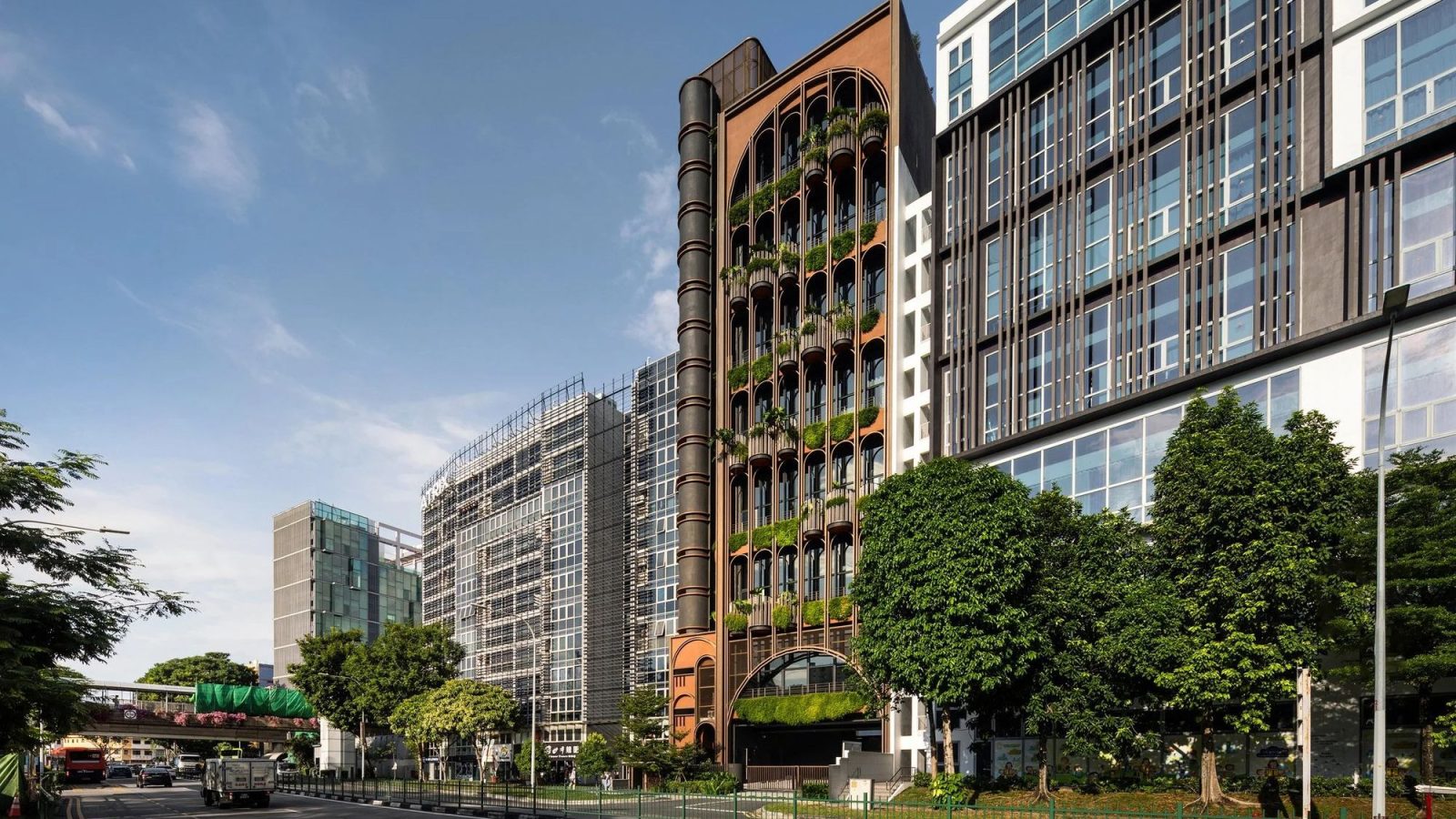
But in Aljunied, one building breaks away from this usual pattern. The property is so eye-catching that it is difficult to miss from the street, and the nine-storey-tall building is clad in corten steel and metal mesh, with a dark, curved façade that sets it apart from the tinted glass and pale tile of the industrial blocks around it.
This is 81 Aljunied Road, a rare freehold B1 industrial building that was completed in 2024. It is owned by real estate investment firm Abiel, which runs it as a managed work-and-storage space under its Space+ brand.
What makes it worth a visit is the bet this investment firm has placed behind this signature property; that hospitality-grade design can earn its keep in a category of buildings that has never really asked for it.
I spent an afternoon there to see whether that holds up for the people who actually work inside.
A plot that sat unsold for years until an investor saw a different model fit for it
The new industrial building, which is next to Aljunied MRT station on the East-West Line, is a genuinely uncommon pairing.
Most industrial land in Singapore is leasehold with short tenures, and we often only see freehold land used for residential purposes. So, a freehold B1 plot opposite an MRT station is the kind of combination that rarely comes up.
Before it was redeveloped, it had sat on the market for years before Abiel moved on it.
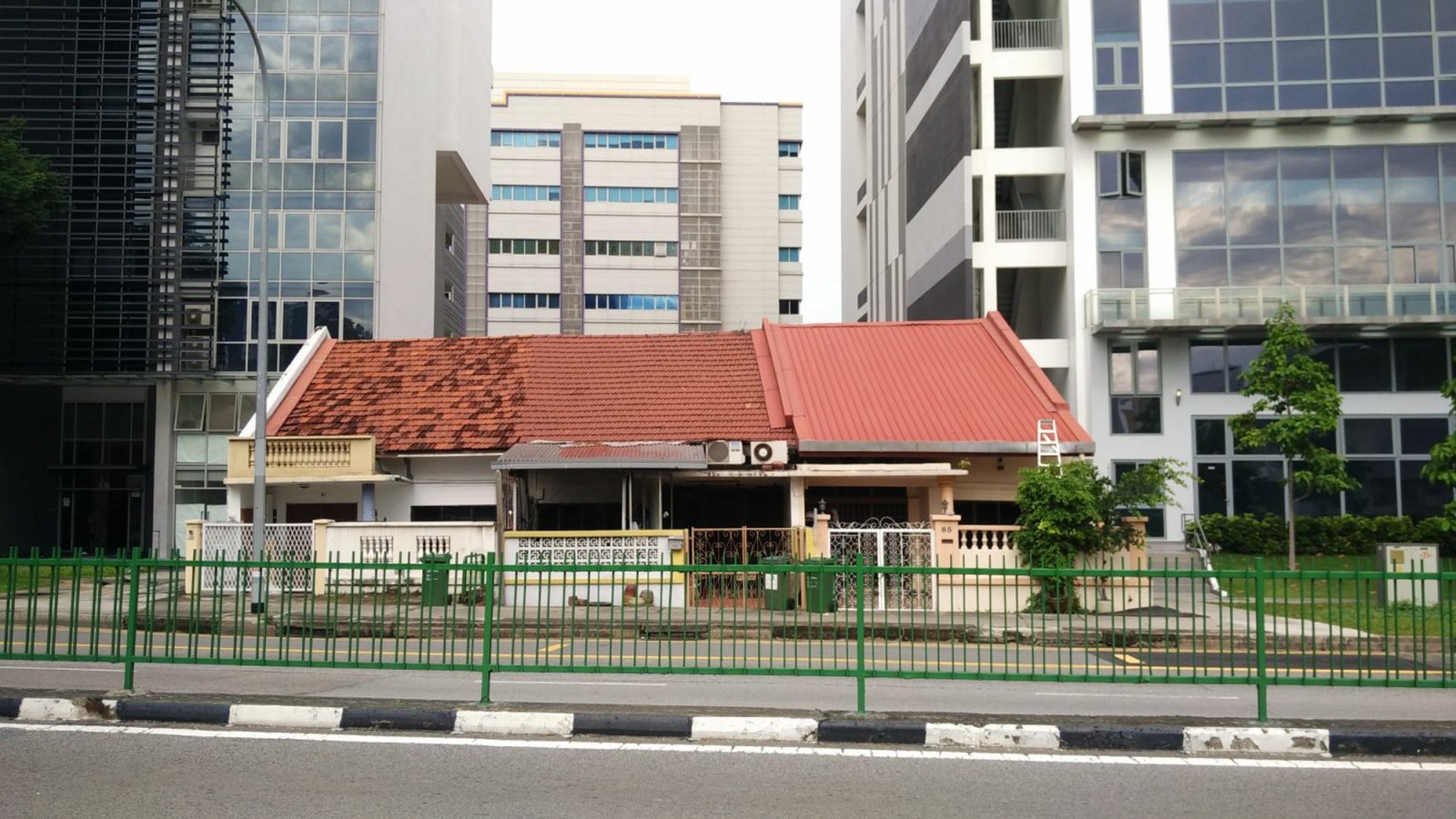
Abiel acquired the plot in February 2020 for $10.88 million, which is about $720 psf on the gross floor area. It was not a vacant piece of land, and featured a row of three freehold terraced houses at 81, 83 and 85 Aljunied Road. These had been leased as worker dormitories for several years.
But the investment firm demolished the old houses to redevelop the site into the nine-storey building that stands today. The completed building has a gross floor area of 15,118 sq ft - with a net lettable area of 9,978 sq ft - and sits on a 6,047 sq ft site with a plot ratio of 2.5.
Abiel's founder and chief executive, Maureen Li, tells me that the reason the old houses had lingered for so long on the market was because the financial model that most developers would typically reach for a plot like this just doesn't work in this case.
"Most developers run a strata-titled model on a plot like this, and it simply doesn't work," she says. Rather than carve a building into strata units to sell off, Abiel keeps its assets whole and leases them as managed space, a model it had proved before embarking on its own development projects.
"We started in 2017 by leasing a single floor in an existing building. We didn't own it, so we had no control over the exterior. We took the space at $2.30 psf and re-let it, inclusive of the common area, for $5 psf,” says Li.
She adds that after making a few adjustments to this model, the firm was able to bank on a successful track record of managing these types of properties. It was able to rake in a consistent rental income and a consistent flow of leasing demand for the properties it managed.
“That track record is what gave us the confidence to build and own our own asset rather than rent someone else's,” she says.
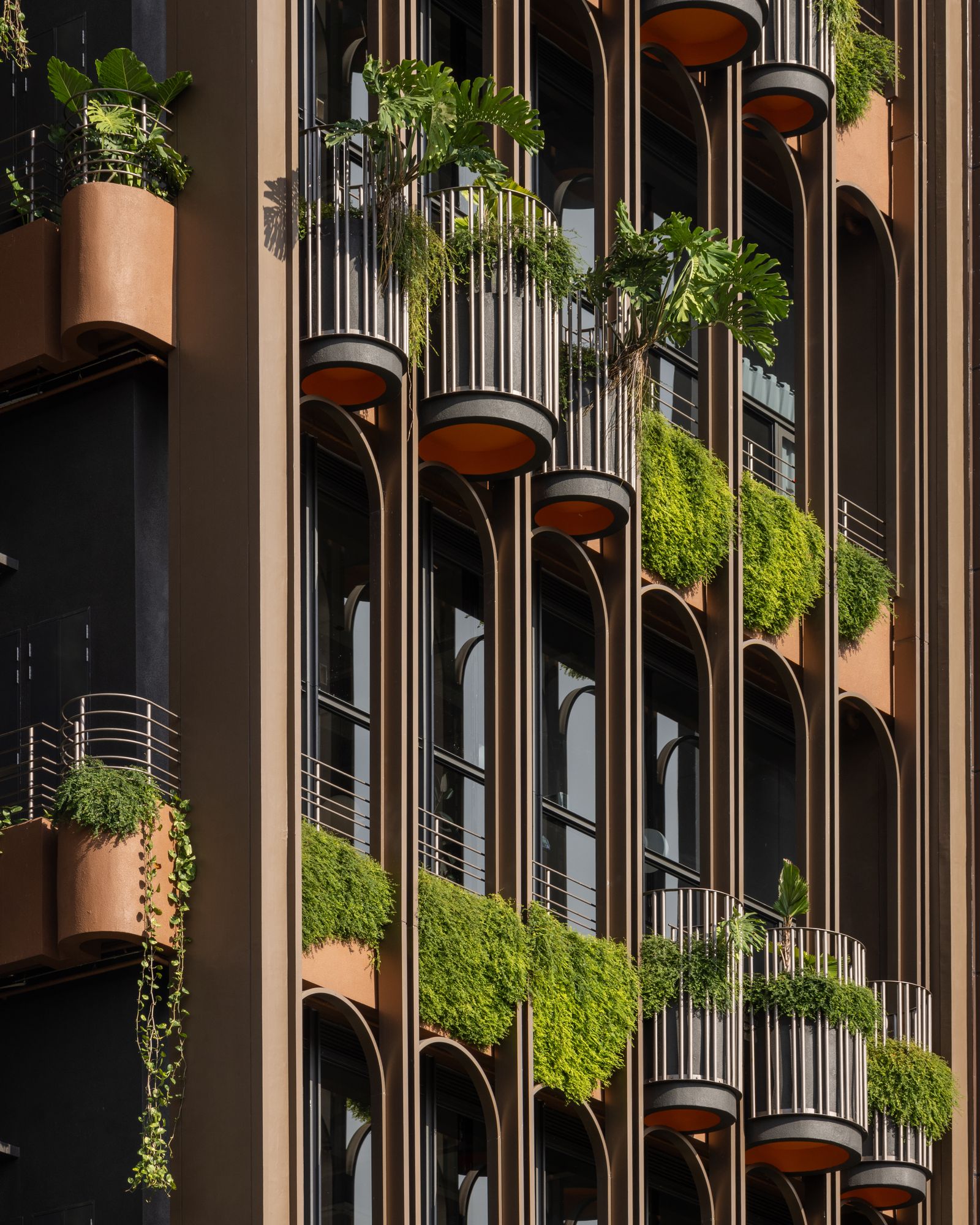
The architecture of the building was designed by Francis Goh, founding partner of FDAT Architects. The concept was inspired by the architectural elements that characterise the swanky New York warehouse aesthetic.
This was well within the capability of this architectural studio, which was behind the biophilic redesign of Pan Pacific Singapore and the conversion of John Portman's Marina Bay tower into PARKROYAL COLLECTION Marina Bay. It applied the same hospitality-inspired sensibility to an industrial shell.
The pitch underneath all of this is curation. Abiel's asset management model is to buy an undervalued asset and then build the product that is most in demand for its particular location, rather than the product that is easiest to sell, says Li.
"There's plenty of flexible space on the market," she says, "but we're after a different kind of value: something that genuinely resonates with the people using it."
For one tenant, a single photograph did what no viewing could accomplish
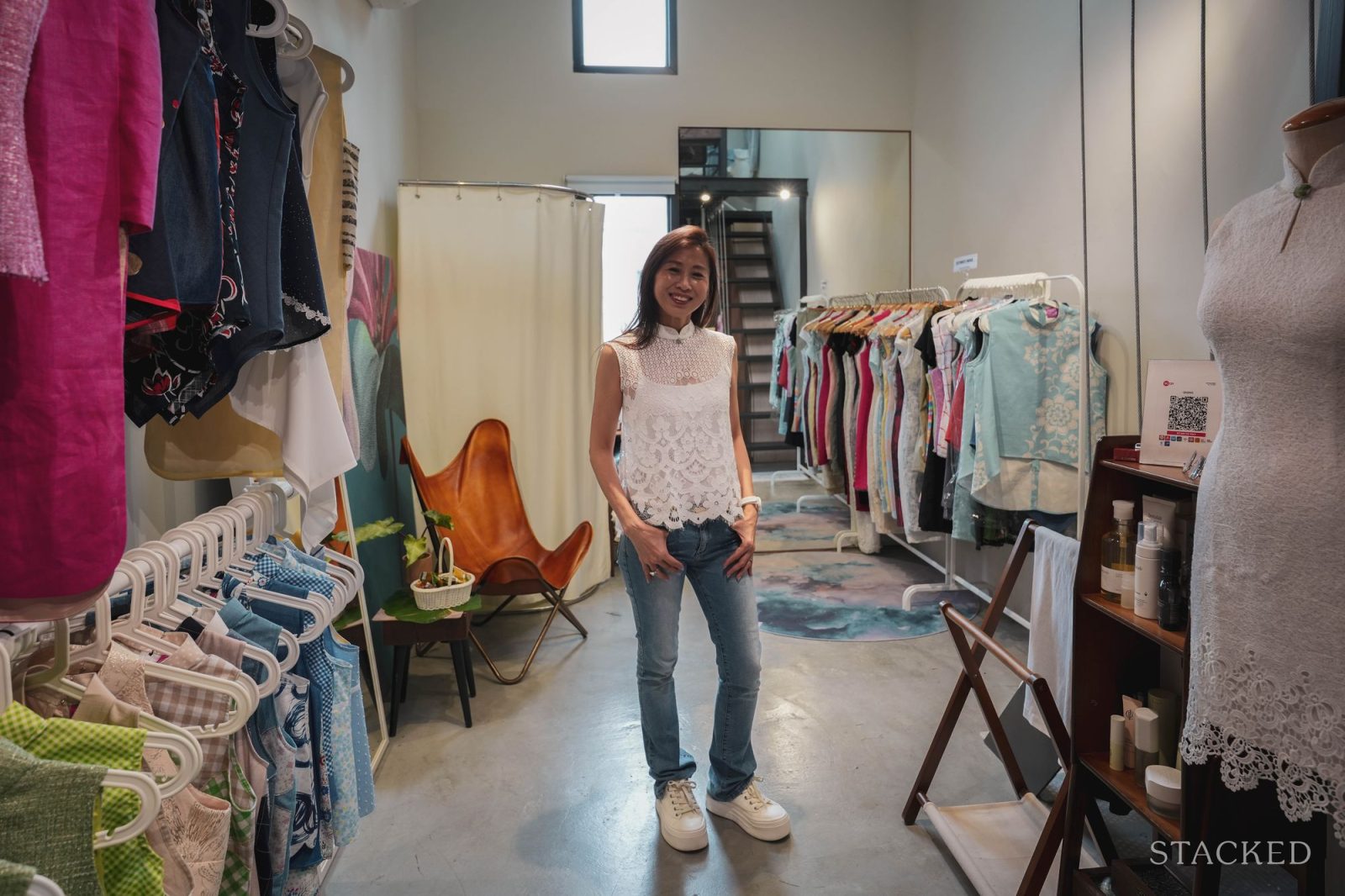
Josephine Ho runs Qi Qing, a label making modern, contemporary qipao aimed at getting younger Singaporeans interested in this style of dress again.
She is a one-person operation and she had spent seven years in an old mixed-development unit on Upper Serangoon Road before the building was sold in a collective sale, and she was left without a retail front. What followed was a difficult year for her and her business.
She did not want to rush into the wrong space, but searching carefully had its own cost too. For nearly twelve months, she had no brick and mortar shopfront, and was instead going directly to customers and running collaborations with other brand owners simply to have somewhere to operate. She looked diligently, mostly on PropertyGuru, and for a long time nothing felt right.
Then, late one night, a single listing photo immediately caught her eye. It was a top-down picture looking into one of the units at 81 Aljunied, that showed the double-volume ceiling of one of the units for lease and a staircase dropping down from a loft.
She texted the agent there and then, viewed a unit two days later, and committed almost immediately. She says that the first time she walk through the main door of the building won her over on the spot, and reinforced her belief that she had found the right place for her business.
A representative from Abiel walked her through all six units on that floor, each with a different layout and its own details: one unit had full-height windows, another had a mirror already built in, and a neighbouring one had an opening to a small balcony-like space.
But the remark that settled it was a small one. Choosing between the three units, she was told her customers would probably want to look at themselves in the mirror more than out of the window, which made the unit with the mirror the obvious fit for a retail brand like hers.
Working inside it: a building that doubles as a film set
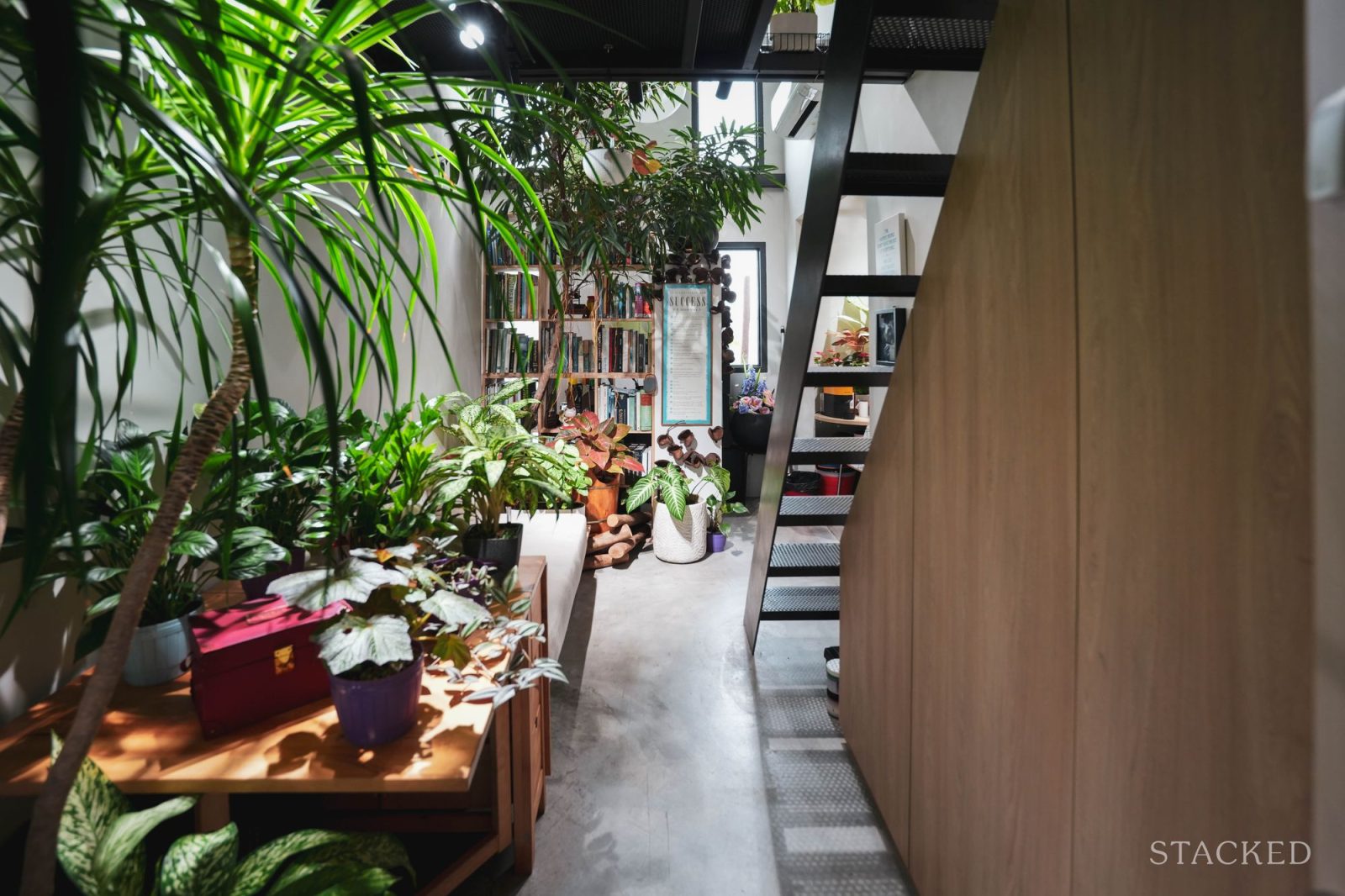
But the unit that she settled on is smaller than her previous space, and Ho is candid that it took some time for her to adjust to the space. On the other hand, she remarks that the design of the building more than makes up for the smaller space.
The lower floor of her unit is where the qipao she makes are displayed and customers browse. The loft above is where the quieter, behind-the-scenes work happens, and it is where she most likes to be, particularly when the late-afternoon sun shines through at around five or six o'clock.
Sometimes, she sits on this loft staircase for her meals. That’s not a quality that a square-footage comparison would capture, and it is the part of the building that a tenant pays for without quite being charged for it.
Beyond her own unit, the building itself earns its keep for many other creative businesses like hers. Ho shoots her brand's content within the building rather than hiring external studio locations, and says the lift lobby, the corridors, and the staircases read on camera like a hotel or a film set. She even shares that some customers have asked which hotel she does her product shoots at.
For a one-person fashion label where photography is a crucial part of the marketing process, a building that doubles as a backdrop is not a soft perk. It removes a recurring cost that creative businesses like hers usually face. It is this type of value that Abiel sought to offer its tenants when it was designing this building.
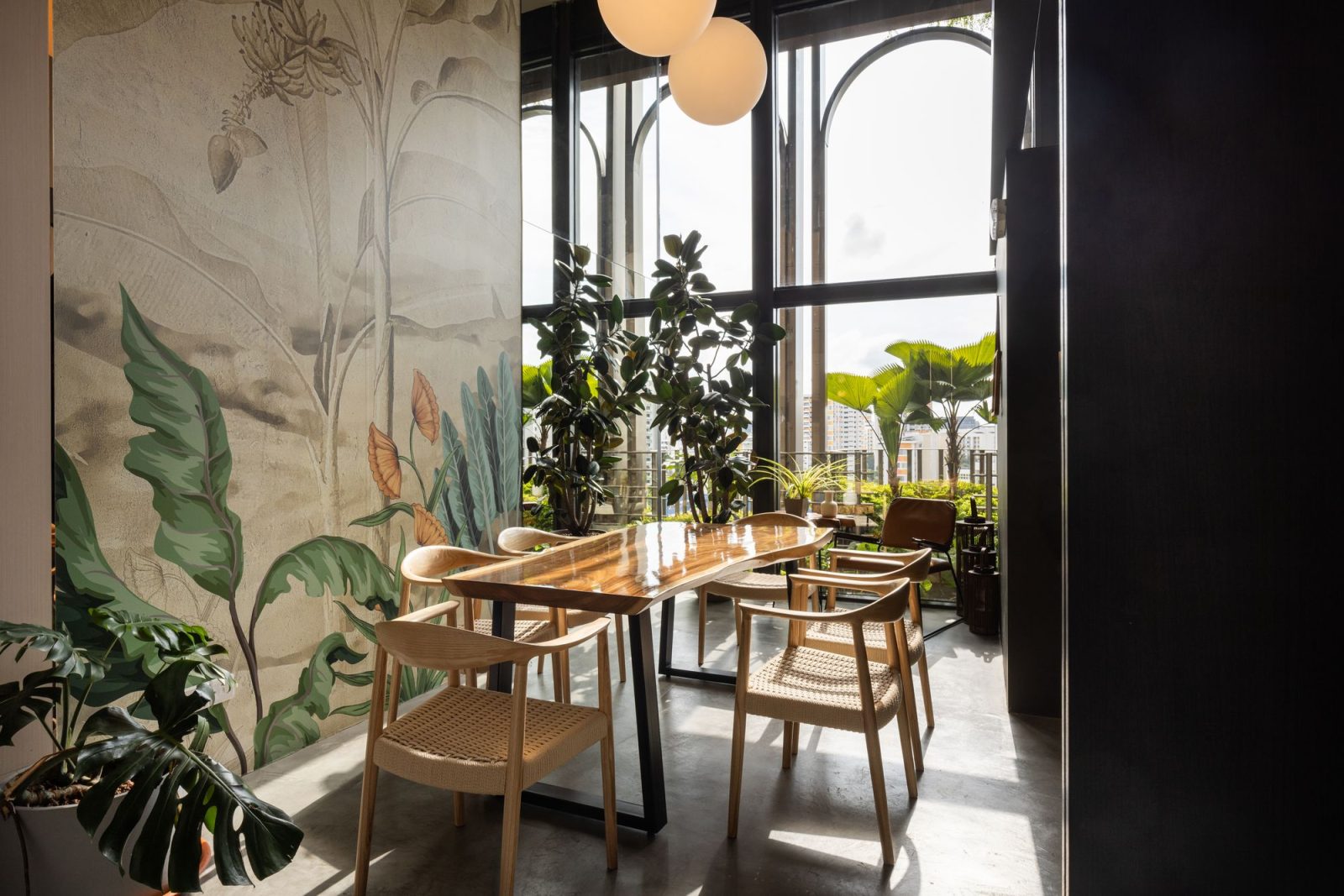
She has also shaped corners of the building around her customers' experience. One spot in the common area on her floor she calls the "husband corner", where the partners of browsing customers can make a hot drink, sit with a snack and wait. It is a small, homely touch, but it is enabled by a landlord that gave her the space and the fit-out to do it.
The address does the wayfinding
For many small local businesses and start-ups, the location of 81 Aljunied is a significant contributor to their nascent market presence. Aljunied MRT station, on the East-West Line, sits directly across the road, close enough that the building is visible from the train tracks.
The building is so recognisable that rather than give detailed directions, Ho tells customers to look for the brown building by the road. And all of them have been able to find their way there.
At her old Upper Serangoon premises, the nearest station was a couple of bus stops away, and parking was insufficient. Here, a multi-storey car park sits next door. For a business whose customers come specifically to try on and buy clothes, the ease of finding a convenient parking spot is a game changer.
The shared spaces are where the curation reveals itself
The building runs as a managed workspace, with six units to a floor sharing one meeting room, a pantry and common areas. Ho makes most use of the second-floor event space, which comes with full-height windows, an attached toilet, a pantry and the basic furniture and equipment already in place. For someone who used to haul her products to a borrowed venue for each event, the ability to host on site is one of the clearer day-to-day gains she names.
This is where Abiel's design intent is most deliberate. Li says the firm tried to anticipate what tenants might not want to pay for directly but still need, such as a pantry and common spaces, and provide it as part of the offer.
"Those small touches are what lift the experience," she says. The thinking extends to the types of tenants it is focused on reaching out to. SMEs make up the majority of the tenants there and are the growing segment in Singapore’s commercial and industrial market, but Li argues they are often poorly served when they move into a B1 space.
This is because the frontage of the building is frequently unimpressive, which shapes the first impression that their own clients may form. And in co-working spaces, their branding is often not displayed at all. "That's the gap 81 Aljunied Road was built to close,"says Li.
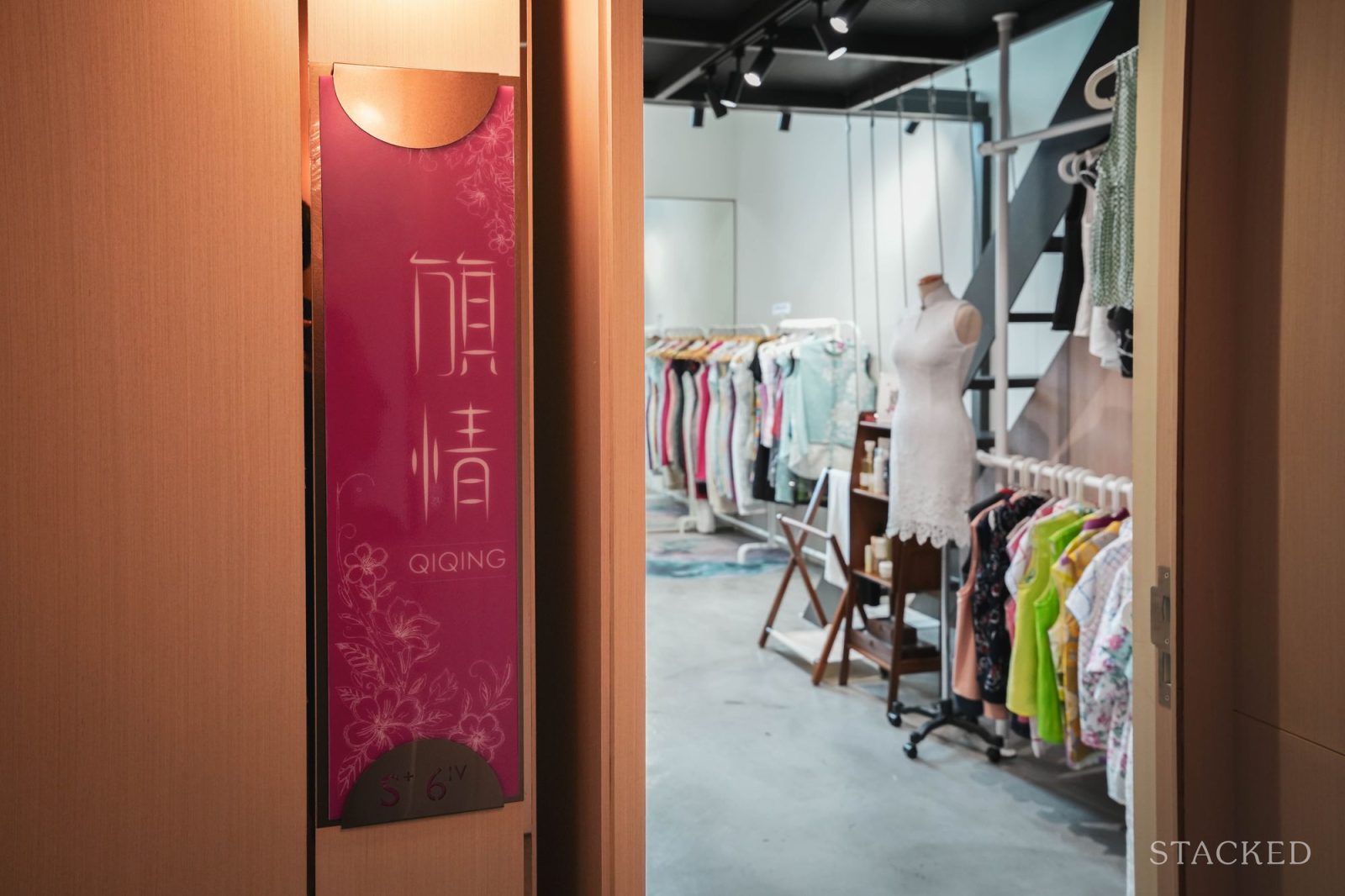
Most of the tenants at 81 Aljunied are small local businesses and start ups in the e-commerce, new media, and technology sectors that utilise some form of basic production. Most are image-conscious businesses that host their own clients on site, where presentation counts for as much as the rent.
However, Abiel does its own due diligence on prospective tenants, who must also qualify for B1 industrial use, and tries to avoid filling the building with first-year startups. Ho's two years in the building and her decision to extend on a two-plus-two lease are the kind of retention that the model is aimed at.
Why design, not yield, is the pitch to investors
At 81 Aljunied Road, average rents run at around $8 psf a month, and Abiel says the building is now fully let, with a waiting list of about six tenants in the wings.
That is a clear premium compared to other B1 spaces nearby, such as industrial buildings in Aljunied and Lorong 23 Geylang where average rents are about $2.60 psf to $2.85 psf a month, based on CommercialGuru listings.
Part of that rental difference is a size effect, since larger floorplates usually command a lower psf to keep the total quantum manageable. Those listings are also for bare, larger units, rather than the smaller, fully fitted, and serviced spaces at 81 Aljunied Road.
There, a private unit starts from around $2,000 a month for a team of up to five, with the fit-out, Wi-Fi, and shared amenities bundled into the rent, and no separate upfront or recurring costs. Leases can also run as short as six months, a flexibility that is hard to come by on a conventional B1 tenancy.
For a small business, that folds away the fit-out bill and the setup time a bare B1 unit would otherwise carry, and it lowers the commitment of taking the space in the first place.

For a real estate investment firm, the more telling claim is where its investment returns originate. Abiel’s current portfolio has an approximate value of $130 million spread across various properties in Singapore, including 81 Aljunied Road and its conservation shophouses in Geylang and Kampong Glam.
Li comments that in a yield-constrained market, design is one of the few remaining sources of genuine differentiation, and that Abiel's assets are hard to replace precisely because they are difficult to copy.
It is worth being clear-eyed about what that does and does not prove. A design-led building that commands a premium and holds a tenant like Ho for two years is a proven result, not a brochure claim. But Ho is close to the ideal occupant for this product: a design-literate, content-driven creative for whom the building is part of the marketing, not just the rent.
The harder test is whether the same premium holds across a more diverse spread of SME tenants, the logistics-leaning and the unglamorous, for whom a film-set corridor is a nicety rather than a business input.
Abiel's tenant selectivity is partly an answer to that, but selectivity is easier to maintain in one boutique building than across a portfolio. Li is candid that the model has limits she will not cross: Abiel buys only freehold properties for now, and she is openly undecided on 99-year leasehold assets, on the view that lease decay is still a decay of asset value and she has stakeholders' interests to protect.
A second building, a second fund, and the same property-first logic
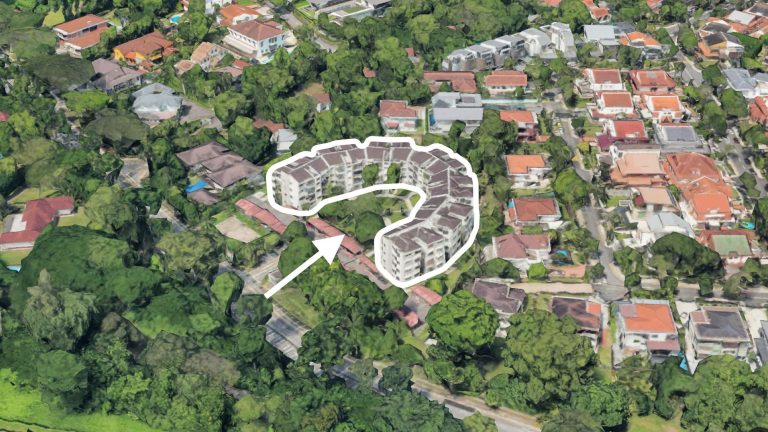
81 Aljunied Road is not meant to stand alone within the firm’s investment portfolio here. Abiel has acquired the adjacent freehold site at 84, 86 and 88 Lorong 23 Geylang, where the construction for a second building is already underway.
FDAT is designing it not as a copy but as a refined iteration: the two blocks will be linked by overhead bridges and a 24-hour public pedestrian path, anchored by a central garden plaza, with a cafe in the plaza under consideration, subject to URA approval.
The new block has larger floor plates, so a tenant can expand across the development, keeping front-of-house in one block and back-of-house in the other while drawing on the amenities in both.
There are also plans to expand its capital. The Abiel Real Estate Fund, the firm's first investment vehicle, launched in 2020 as a closed-end platform that holds each asset in its own structure.
A second fund is meant to be additive rather than a repeat, Li says, bringing the fund and financing side in-house so Abiel operates as a self-contained ecosystem, with acquisitions ongoing. "Abiel leads with the property and what maximises its value; operations follow," Li says.
She adds that the firm is working on a new concept that may be unveiled near the end of this year, and this could sit somewhere between the 81 Aljunied Road workspace model and co-living.
Li is tight-lipped about the specifics for now, but is clear about the reasoning: most operators start with an operating concept and then look for a building to house it, while Abiel acquires something of hard-to-replace value first and then works out how to make the most of it. On that basis, she says, the firm has no interest in adding another undifferentiated co-living product to a market that she believes has no room to accommodate.
Based on my visit to the property during a single afternoon, and hearing about the experience of one tenant who has been there two years, 81 Aljunied Road demonstrates that design can lift a B1 industrial building well beyond the utilitarian norm. For the right occupant it is much more valuable compared to a conventional industrial unit.
Looking ahead, time will tell how this concept can grow to meet the needs of other tenants in the market, beyond the design-driven tenant the building was so clearly made for. The clearest test will be the next building: whether the same product, scaled up and aimed at larger SMEs, can hold its premium when the tenant on the other side of the lease is paying for space rather than a backdrop.



0 Comments