


Over the past 15 years, I’ve had the opportunity to visit nearly 200 new launch projects, from mass market condos to luxury residences. This has given me a good grasp of market trends and an overall appreciation of the ever evolving property market in Singapore.
In recent years, there has been a great deal of focus on new projects in the Rest of Central Region (RCR) and Outside Central Region (OCR). But a slew of new luxury condos in the Core Central Region has fuelled a resurgence in demand for these centrally located projects, buoyed by an awareness among some buyers of the narrowing price gap between CCR and RCR / OCR projects.
We’ve seen strong take-up rates for several of these new projects, such as River Modern (90%), River Green (88%) and Newport Residences (66%), which have all performed impressively during their respective launch weekends.
Dunearn House will be the latest condominium in the CCR, and its launch will test if buyer demand has remained resilient in the higher end of the private residential property market.
If I were to fathom a guess, the answer would be a resounding yes. Let me share some reasons why I think this is so.
Let’s start by examining the indicative prices, which are headline grabbing for all the right reasons. Two-bedders (527 sqft) will start from ~$1.47m ($2,799 psf), three-bedders (872 sqft) from ~$2.60m ($2,978 psf) and four-bedders (1,184 sqft) from $3.59m ($3,030 psf).
I alluded to the narrowing price gap between new projects in the CCR and the RCR/OCR in recent years. An example to bring this to the fore is Vela Bay, a new project in Bayshore (in the OCR) which sold 72% of units on its launch weekend at an average price of $2,886 psf.
At this price, it is higher than the lowest psf in Dunearn House, which is located in the CCR. That said, I recognise that these are the “starting from” prices and the average psf for Dunearn House should land around $3,200 psf instead, which would still be a mere 11% higher than Vela Bay’s average selling price.
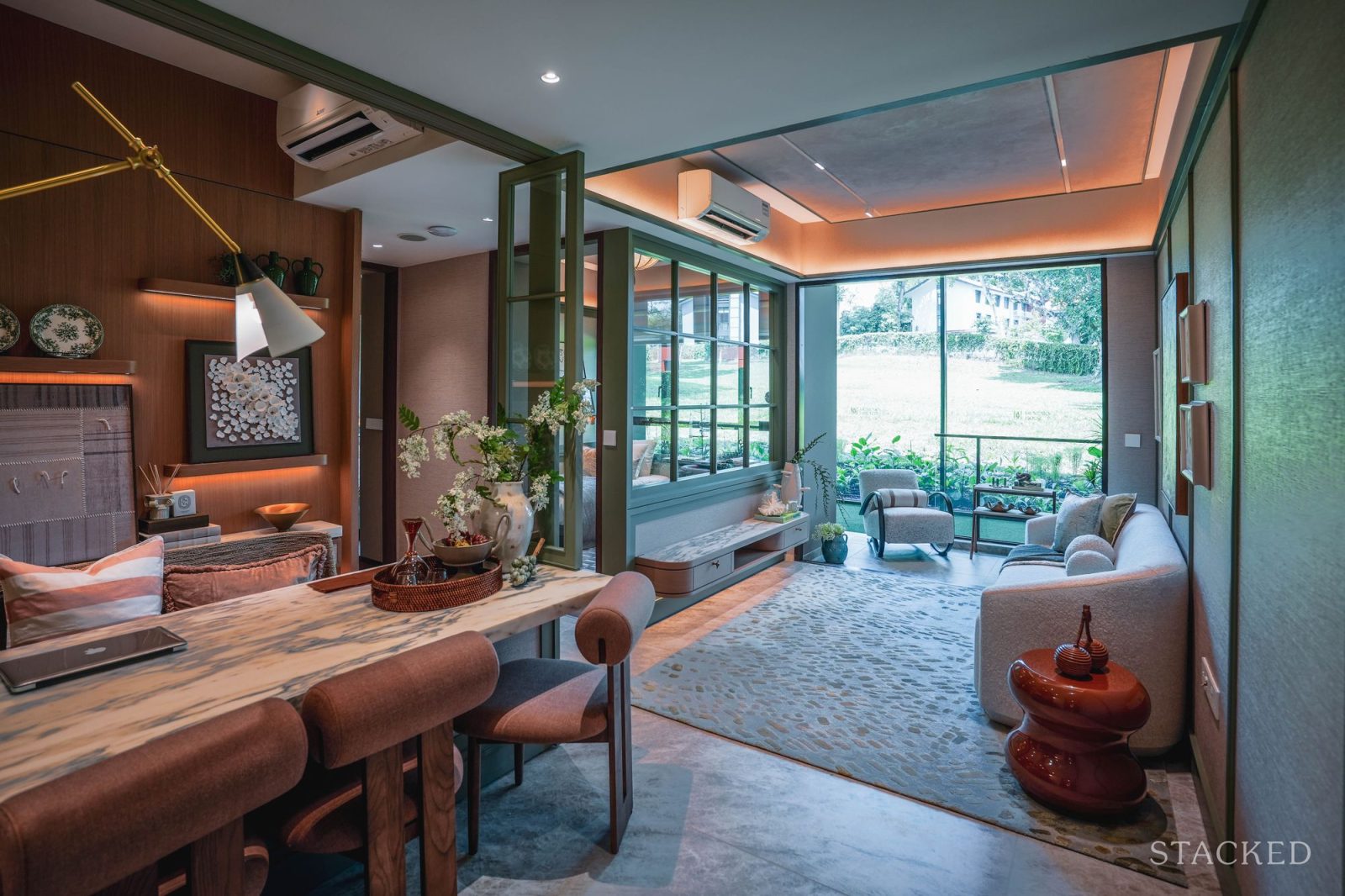
What this means practically is that if unit layouts and condo facilities are similar, buyers just need that bit more budget to purchase a CCR development, which I argue would be in line with the aspirations of this group of buyers.
Moreover, Dunearn House is no ordinary launch. What makes me most excited is that it marks the beginning of the Turf City transformation, a new precinct amidst an established one in the heart of Bukit Timah.
Being a part of the inaugural launch of the first new condo in this precinct means that you are truly a first mover in an estate that will eventually house approximately 20,000 residential units, a new MRT station, 22 conserved buildings, and numerous other amenities. It leaves homeowners and investors with plenty to look forward to in the years to come.
Property developers certainly seem confident that homeowners will flock to the chance of owning a home in Bukit Timah. When the land tender for the site that would become Dunearn House was launched in 2025, the tender attracted a total of 9 bidders. A consortium comprising Frasers Property, CSC Land, and Sekisui House trumped the second highest bid by a mere 4% to purchase the plot for $1,410 psf per plot ratio (ppr).
Moreover, the adjacent plot was also just sold in May 2026 for $1,625 psf ppr to a joint venture comprising Wing Tai Holdings and Metro Holdings. This means that the buyers of Dunearn House would likely be entering at a more competitive price point compared to the launch of the future Wing Tai-Metro development.
The Turf City Master Plan
Personally, I think that the repositioning of the former Turf City into a new residential precinct is a crucial selling point of Dunearn House. Spanning 176 hectares, or more than 250 football fields, Turf City’s masterplan for up to 20,000 homes has been long in the making and Dunearn House’s launch marks the start of it all.
We’ve known that the former Turf City would eventually make way for residential development way back during the 1998 Master Plan, a year before the Singapore Turf Club moved to Kranji in 1999. The fact that the Kranji racecourse held its last race 2 years ago in 2024 highlights the long gestation period that Turf City’s Master Plan has taken to materialise.
Bukit Timah Turf City will include a mix of both public and private housing options. This is a notable evolution in the government’s approach towards residential planning, where, historically, HDB flats tended to be concentrated in public housing estates like Clementi or Jurong, and private homes, in particular, landed properties, in another enclave of their own.
But with the development of Turf City, and even the Mount Pleasant district in Toa Payoh, coming up, I think that we will witness many more of this private / public housing mix. When the first Build-To-Order (BTO) flats in Turf City launch, it will mark the first public homes in Bukit Timah since the flats at Toh Yi Drive were last completed in 1989.
Frankly, the announcement that Turf City would house a mix of public housing and private residences came as a surprise to me, given the number of Good Class Bungalow (GCB) Areas that surround the future precinct.
I thought it may have been much more lucrative for the government to release only private land sites here. Moreover, I was under the impression that maintaining the sense of exclusivity would have been a consideration for urban planners. But I feel that having a public-private mix will also go a long way in social integration and bring about a more balanced housing mix that can cater to a broad segment of Singaporeans.
More practically, while residents from the nearby GCB estates may not be pleased that their tranquillity enjoyed over the decades is set to be disrupted, the prospect of having HDB flats here should prove to be a positive for the future owners of Dunearn House.
In spite of the strict ownership restrictions that will be imposed on the future Prime flats there (which we suspect will be the case), there’s a high chance that it will yield several million-dollar flats when they fulfil their Minimum Occupancy Period (MOP). These owners will likely turn to nearby condo options to upgrade, and Dunearn House will likely be considered.
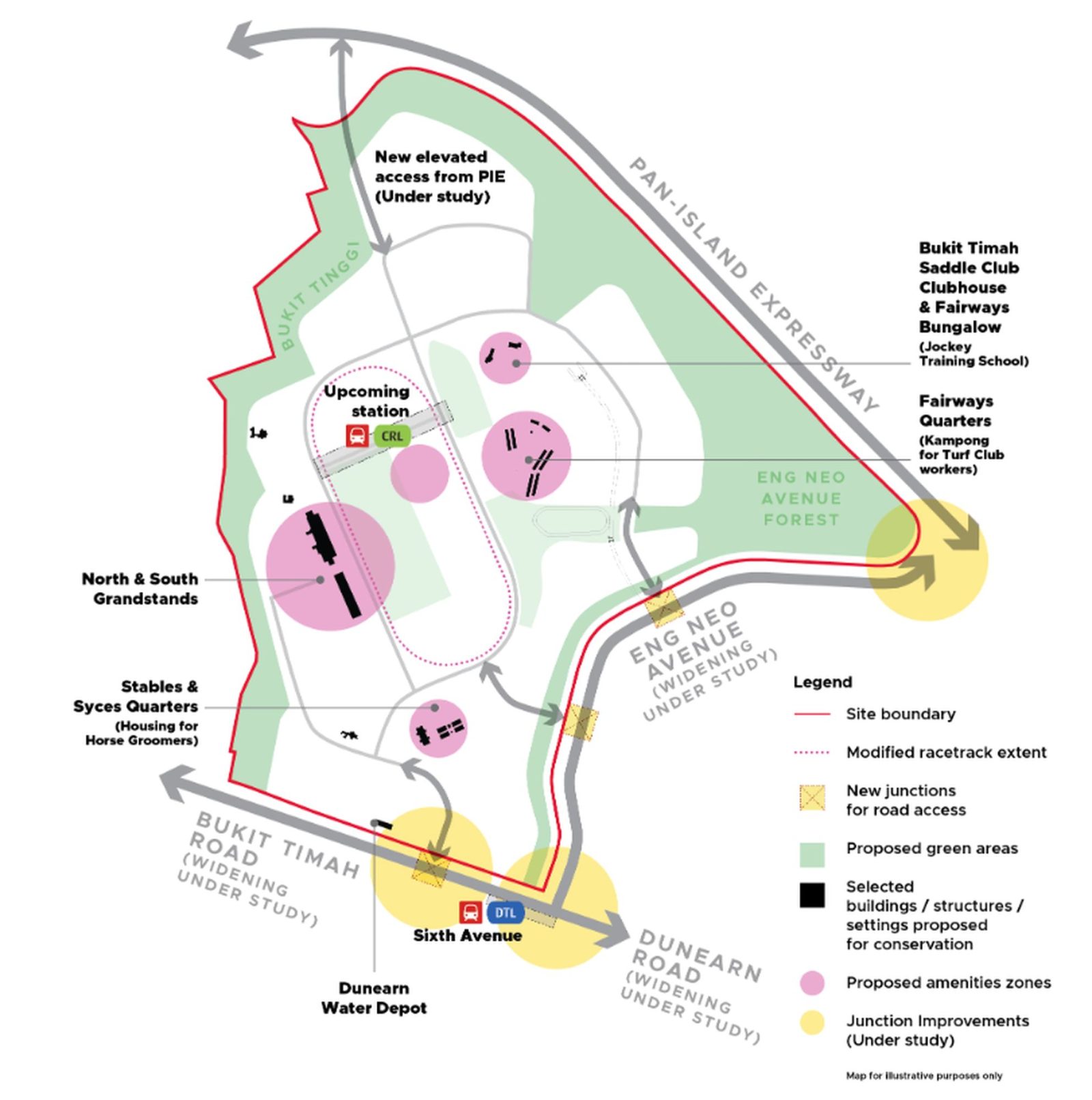
Beyond the new homes that will be built at Turf City, 22 buildings have been proposed for conservation and will be repurposed as community facilities. We’ve seen this repositioning of conservation buildings incorporated into new housing estates elsewhere, such as Mount Pleasant, and most recently Gillman Barracks.
I think this is a positive move and a sign that we are becoming more conscious of the importance of our past as a developed society, as we forego total demolition for maximum GFA to retain a treasured part of our history. Practically speaking, the future residents in Turf City will get more pockets of greenery and low-rise amenities spread across the sprawling site, which enhances its liveability.
The addition of a new RMT station - Turf City MRT station on the future Cross Island Line - will certainly boost connectivity for residents in this estate, especially so considering the thousands of new HDB flats that are expected here. It’s great in terms of convenience, but I can’t help but wonder if this comes at the cost of sacrificing the peace and exclusivity that has long been associated with this part of Singapore.
Patience Is Key
As with all grand master planned developments in Singapore, Turf City’s transformation will take time. While I am confident of Singapore’s ability to execute this successfully, being the first mover will require patience from the buyers, with the estate expected to be fully completed only in the 2040s.
There are downsides to this too. Firstly, your 99-year lease at Dunearn House will start to decrease with each passing year of construction. Residents will also have to contend with constant construction noise over the years, which may ironically hit the most premium units the worst, as four of these stacks are outward-looking towards the new Turf City estate.
Thankfully, there are several conserved buildings just across Dunearn House - namely the West Bungalow and Syces Quarters - that should provide some buffer and distance away from the extensive construction expected in the vicinity.
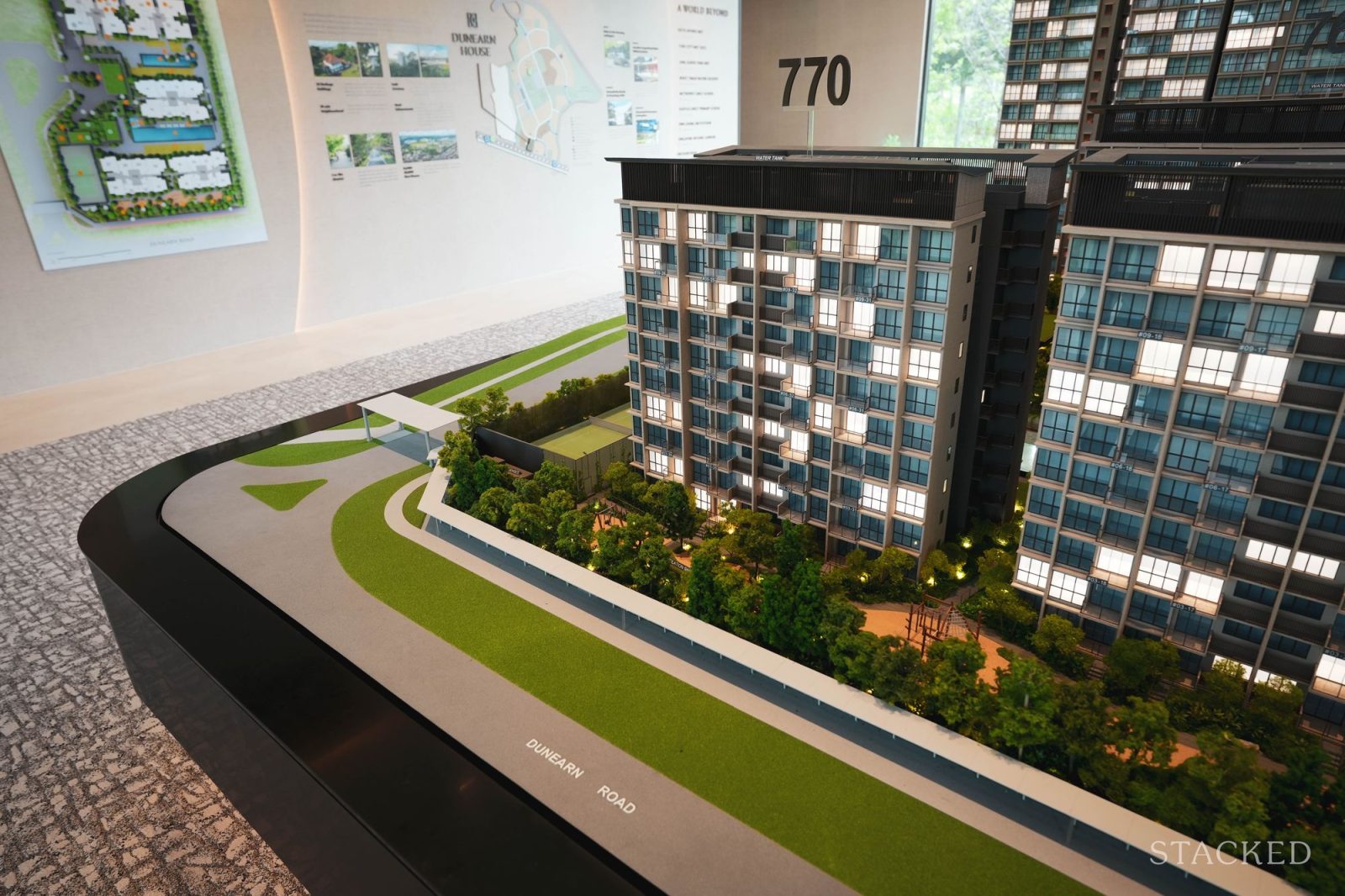
That said, outward-facing units on the other side are not spared completely either, as they will be subject to the road noise from Dunearn Road. Although the developers have catered a buffer by placing all the children’s play areas and the tennis court in between, Dunearn Road is a major road after all, and the smaller unit types will have to contend with the dust and noise arising from it.
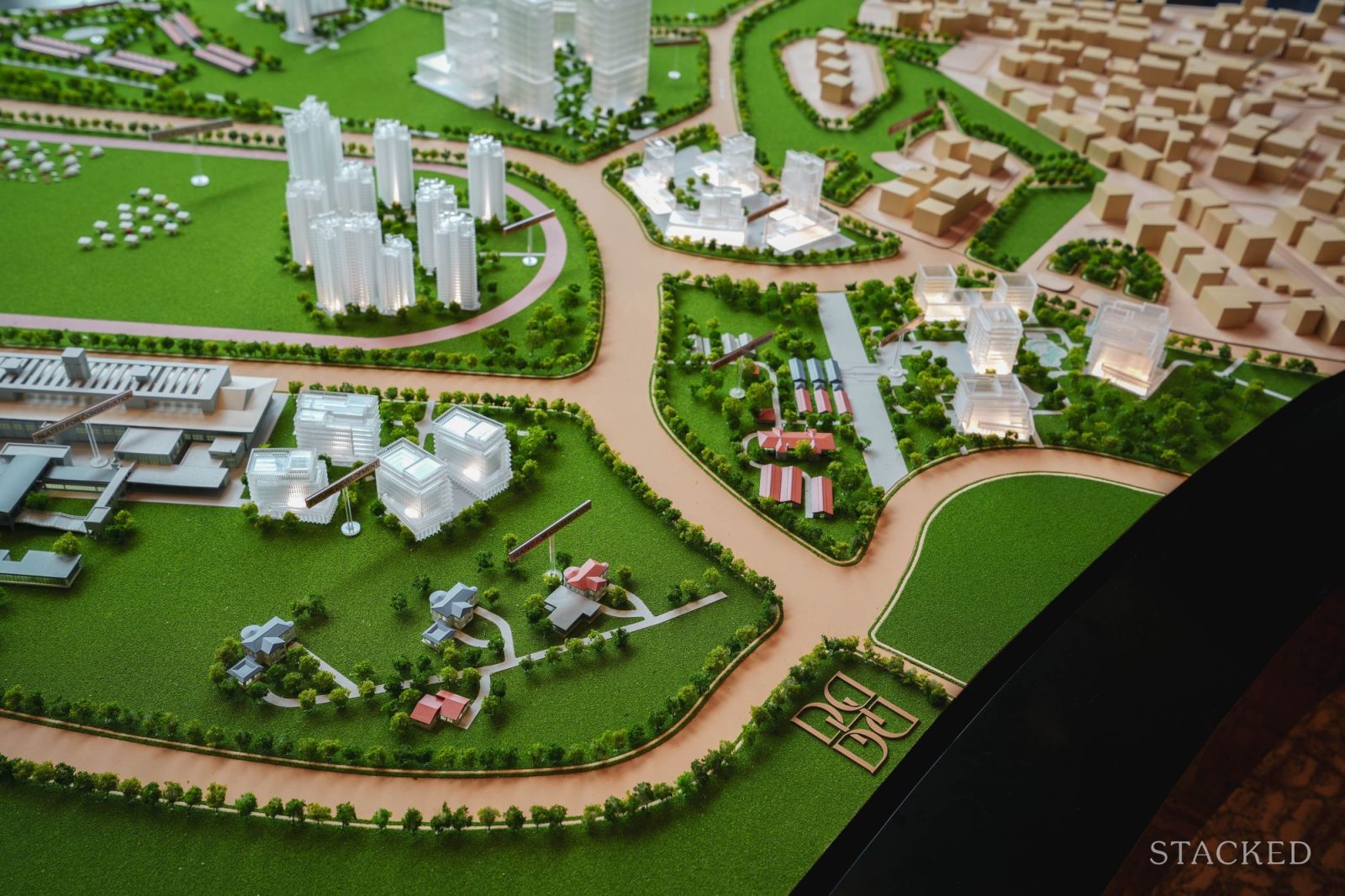
In my view, the developers have already done as much as they can given the site constraints. This is a plot that has the busy Dunearn Road on one side and the future developments at Turf City on the other, with the former being more permanent than the latter. By placing the tennis court and children’s play areas in between, the blocks are set as far back as they can be (estimated to be about 15m) from the road.
Given a choice, I would pick either the blocks that are pool facing for minimal disruption over the years or the stacks facing Turf City, since I feel that the construction will eventually come to an end and I could eventually be looking out to a brand new estate at my doorstep.
Taking a step back, I can’t recall a new prime housing estate that has been carved out like this in recent decades, and my take is that the appeal of living in Bukit Timah will sustain the high level of buying interest among Singaporeans, especially those who already live close by.
The prospect of it being the “go-to” location in Bukit Timah means that a first mover like Dunearn House may benefit from the visibility that Turf City will eventually enjoy, if you are patient enough.
Existing Amenities
Since the completion of the Turf City estate will take time, it is important to understand the existing amenities here too. This is especially close to my heart since I live across the road from Dunearn House.
The neighbourhood is as local as it gets, despite impressions some may have about private residential estates (i.e. lack of amenities). The three coffee shops along Sixth Avenue (10 minutes walk from Dunearn House) are pretty crowded on weekdays and weekends, with taxi uncles and cyclists alike enjoying the popular Sixth Avenue Nasi Lemak and 6th Avenue Wanton Mee (not very creative names I must say) for breakfast.
For larger gatherings, I tend to host at home and often order takeaway from one of two tze char stores here, making it a simple and affordable option. Fancier meals are also available, with restaurants such as Caruso, Brazil Churrasco and Pasta Fresca da Salvatore being long time tenants in the area.
It’s a quiet estate overall, but springs to life during breakfast and lunch and I appreciate how there are affordable options that are readily available. Frankly, parking has always been an issue during peak hours, given the limited options along Anamalai Avenue (unless you have a friend staying at Royalgreen) and I cannot imagine having to jostle with thousands of new residents in the estate when the new developments are completed.
The downside to a residential area like Sixth Avenue is the lack of major shopping malls. There are existing ones down the road such as Bukit Timah Plaza and Beauty World Centre etc but I must say that they are rather dated, although they remain helpful for picking up groceries (Fairprice Finest and Sheng Shiong), eateries (Nonya Delicatessen, Tok Panjang and many other Korean restaurants) and enrichment classes.
I am anticipating the completion of Bukit V, the 220,000 sq ft shopping mall that is part of the mixed used integrated transport hub at Beauty World, which also encompasses The Reserve Residences and is set to be completed around 2028. The injection of a new mall should breathe new life into the neighbourhood and potentially trigger further rejuvenation for the area.
For nature lovers, the Bukit Timah Truss Bridge leading to the Rail Corridor will be a 4 minute drive or 2.7km (37 minutes) walk away. A further 10km either way will take you to Tanjong Pagar or Woodlands. This has personally been my go-to getaway on weekends, as the lush greenery provides good shade and feels unlike anything you can find in Singapore.
More interestingly, construction is underway for a 1.4km elevated linear park above the Bukit Timah Canal that will stretch from just down the road from Dunearn House to the Rail Corridor, in a move that is seemingly inspired by the New York High Line.
On the other hand, the Singapore Botanic Gardens is an 8 minute drive away, providing you with another option for your walks or jogs. It will also be accessible via MRT, which will only take you 2 stops from Sixth Avenue station.
As most of you know, Bukit Timah is arguably Singapore’s most famous education belt. For Dunearn House, residents may potentially be within 1 km of Methodist Girls’ School. Confirmation of this would certainly boost sales to a certain extent, given how enthusiastic parents can be about primary school enrolment. Other primary schools that are close by include Henry Park Primary School, Nanyang Primary School and Raffles Girls’ Primary School, with secondary and tertiary institutions being Nanyang Girls’ High School, Hwa Chong Institution and National Junior College.
First GFA Harmonised Project in the Heart of Bukit Timah
Personally, I feel that Sixth Avenue is right at the heart of Bukit Timah. A fun fact is that the MRT station named after it along the Downtown line was the only one with the option of being named “Bukit Timah” during a public vote in 2009.
Sixth Avenue also epitomises Bukit Timah living because of its proximity to the numerous GCBAs such as Queen Astrid Park, Garlick Avenue, and First / Third Avenue among numerous others. In fact, some parts of Sixth Avenue are also considered part of the Fourth / Sixth Avenue GCB area.
Dunearn House is also sandwiched between numerous GCB estates which highlights the prestige of living among some of Singapore’s most well-heeled families. You have Swiss Club Road and Binjai Park to the west, and Eng Neo Avenue and Raffles Park to the east of the development. This proximity will not necessarily be a reason for any price appreciation at Dunearn House but you can be assured that your neighbours appreciate maintaining exclusivity as much as you do.
Dunearn House’s appeal will also come from the fact that it is the first new condo in Bukit Timah that is being built under the revised Gross Floor Area (GFA) harmonisation framework. The exclusion of voids and air-con ledges have made prices more reflective of the actual usable space since the regulatory change in 2022.
With some of the nearby developments offering much larger layouts for two to four-bedroom units, the harmonised floor size at Dunearn House means that its efficiency and practicality will come into focus. In general, I have been impressed by recent new projects that have been designed under the revised framework, as their smaller sq ft on paper often appears to be larger when translated into the showflat.
This bodes well for Dunearn House in light of the competition nearby, and this is familiar territory for the Stacked team, having reviewed a number of condos in the past, including Royalgreen, Fourth Avenue Residences, Fifth Avenue Condominium, and The Sixth Avenue Residences.
A quick comparison below shows the disparity in sizes between what I like to term as ‘new age’ condos and the “old school" ones, a point which I would like to reference in the paragraph above.
| Development | Tenure | TOP | Two-Bedder | Three-Bedder | Four-Bedder |
| Dunearn House | 99 Years | 2030 | 527 - 628 sqft | 872 - 1,001 sqft | 1,184 - 1,378 sqft |
| Royalgreen | Freehold | 2022 | 667 - 829 sqft | 926 - 1,076 sqft | 1,259 - 1,475 sqft |
| Fourth Avenue Residences | 99 Years | 2022 | 646 - 721 sqft | 915 - 1,119 sqft | 1,475 - 1,496 sqft |
| Fifth Avenue Condo | Freehold | 1998 | 1,163 - 1,604 sqft | 1,496 - 1,776 sqft | 2,174 - 2,217 sqft |
| The Sixth Avenue Residences | Freehold | 2009 | 969 - 1,302 sqft | 1,356 - 2,605 sqft | 1,636 - 3,165 sqft |
Alongside Dunearn House, Fourth Avenue Residences and Royalgreen belong to the “new age” condos where units are markedly more compact, and this is where I feel Dunearn House will stand out most.
Due to its harmonised GFA, the relatively smaller unit sizes at Dunearn House may not translate into a smaller usable unit. In fact, based on what I’ve seen, it has made developers more conscious about fully utilising every inch of space and we see that playing out with efficient layouts, all while ensuring that the smaller units translate into a more palatable price quantum.
In this case, I feel that Dunearn House’s launch would pose the biggest competition to Fourth Avenue Residences and Royalgreen, although it would also come down to the eventual differential in price quantum and psf.
As for the so-called “old school” developments such as The Sixth Avenue Residences and Fifth Avenue Condo, I feel that there may still be a market for these condos as some buyers will prefer the luxury of space, which will include features such as a larger living and dining area and a dedicated yard. Facilities will also be less sought after - for example, The Sixth Avenue Residences offers a tennis court for 175 units, as opposed to one tennis court for 380 units at Dunearn House and one court for 285 units at Royalgreen.
On this note, I would like to highlight how the “new age” condos have performed since their launch. Fourth Avenue Residences sold at an average psf of $2,375 during its launch weekend in January 2019 while its freehold neighbour, Royalgreen, saw its average psf reach $2,750 during its October 2019 launch. With the benefit of hindsight, we know that 2019 was a great time to buy property and I must confess that I personally liked Fourth Avenue Residences so much that I visited the showflat thrice during my own property hunt!
Despite that, the average psf for both developments is not much higher than when they first launched - Fourth Avenue Residences’ average as of late July 2026 stands at $2,500 psf while Royalgreen is at $2,936 psf, with the latter faring slightly better at a 6.8% gain over seven years compared to 5.2% over the same period.
I find the story to be more nuanced than that - if you dive deeper into the transactions, you will notice that many of the poorer-performing units i.e. <2% annualised returns, were generally the smaller 1 and 2 Bedroom units for Fourth Avenue Residences, while Royalgreen’s resale transactions generally performed disappointingly.
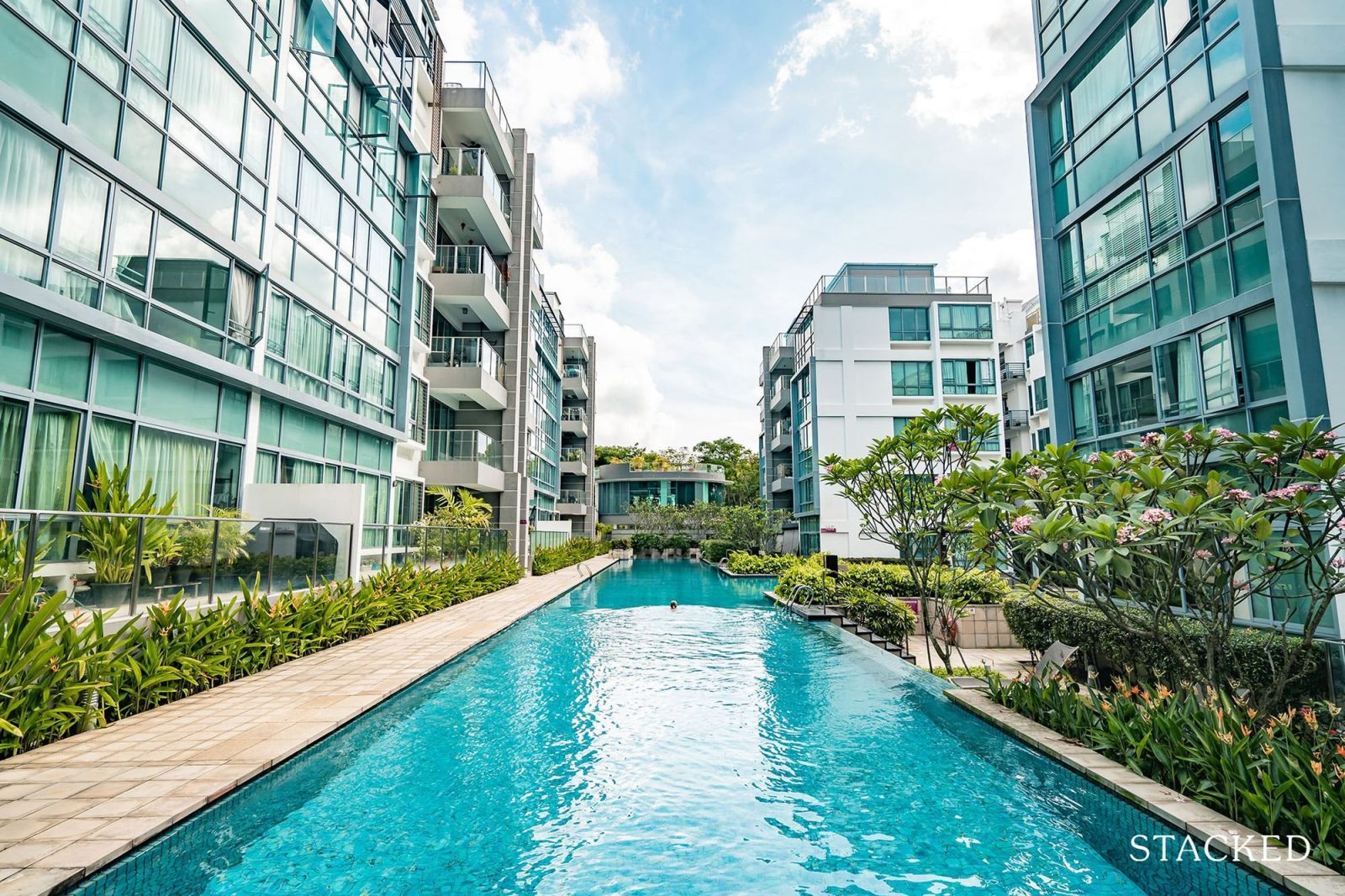
Frankly, I am a little surprised at how poorly both developments have performed in the resale market, especially since the wider residential market has grown significantly since 2019. We can only speculate, but simplistically, my take is that the One- and Two-Bedroom units have generally seen less interest among resale buyers while Royalgreen’s relatively steep psf at launch may have made growth more subdued.
For those who point to smaller unit sizes at these developments which may not cater well for the demand in Bukit Timah, you could also throw in Watten House, which launched in 2023 at an average psf of $3,230. While there have not been any subsale transactions there, psf is also flat based on recent transactions. Perhaps the Turf City transformation and Dunearn House’s launch are the catalysts for these developments for their prices to pick up, but I also think these developments are a cautionary tale and prove that not every new launch makes you money.
Dunearn House is also being marketed as the first new launch in the vicinity of the Swiss Club landed enclave in 33 years. While factual, my gripe is that this may be a bit of an oversell to the layman, as the reference point is simply too specific.
Royalgreen and Fourth Avenue Residences, which are in District 10 and within the Bukit Timah Planning Area, are just across the road and were both completed in 2022. If you’re wondering which was the last launch 33 years ago that is being referred to, it is La Suisse I and II, a development along Swiss View and a project I suspect few can immediately recall. Simply put, the Swiss Club enclave was never known to have condos anyway because GCBs form the bulk of the housing supply here.
Site Plan and Facilities
Our review of Dunearn House covers more details about the project, including its facilities and a deep dive into each of the 3 showflat units. But I would also take the opportunity to point out some aspects of the site that I think are noteworthy.
For one, I do like that there will be a dedicated road carved out for Dunearn House for its entrance. This is an exclusive road solely for its residents and will certainly add to the premium nature of the development.
Those who drive may not love this, but there are only 228 car park lots for 380 units, representing just 60% of all units. This is part of URA’s master plan for Turf City as a “car-lite” and 10-minute neighbourhood where traditional carpark provisions are significantly reduced to make way for lush greenery, a network of cycling paths, and a pedestrian-friendly environment integrated with the MRT network (either Turf City or Sixth Avenue) within a 10-minute stroll for all homes. I can’t disagree with that from an environmental perspective, but it does make it a little more troublesome for buyers who really require a car or simply love driving one.
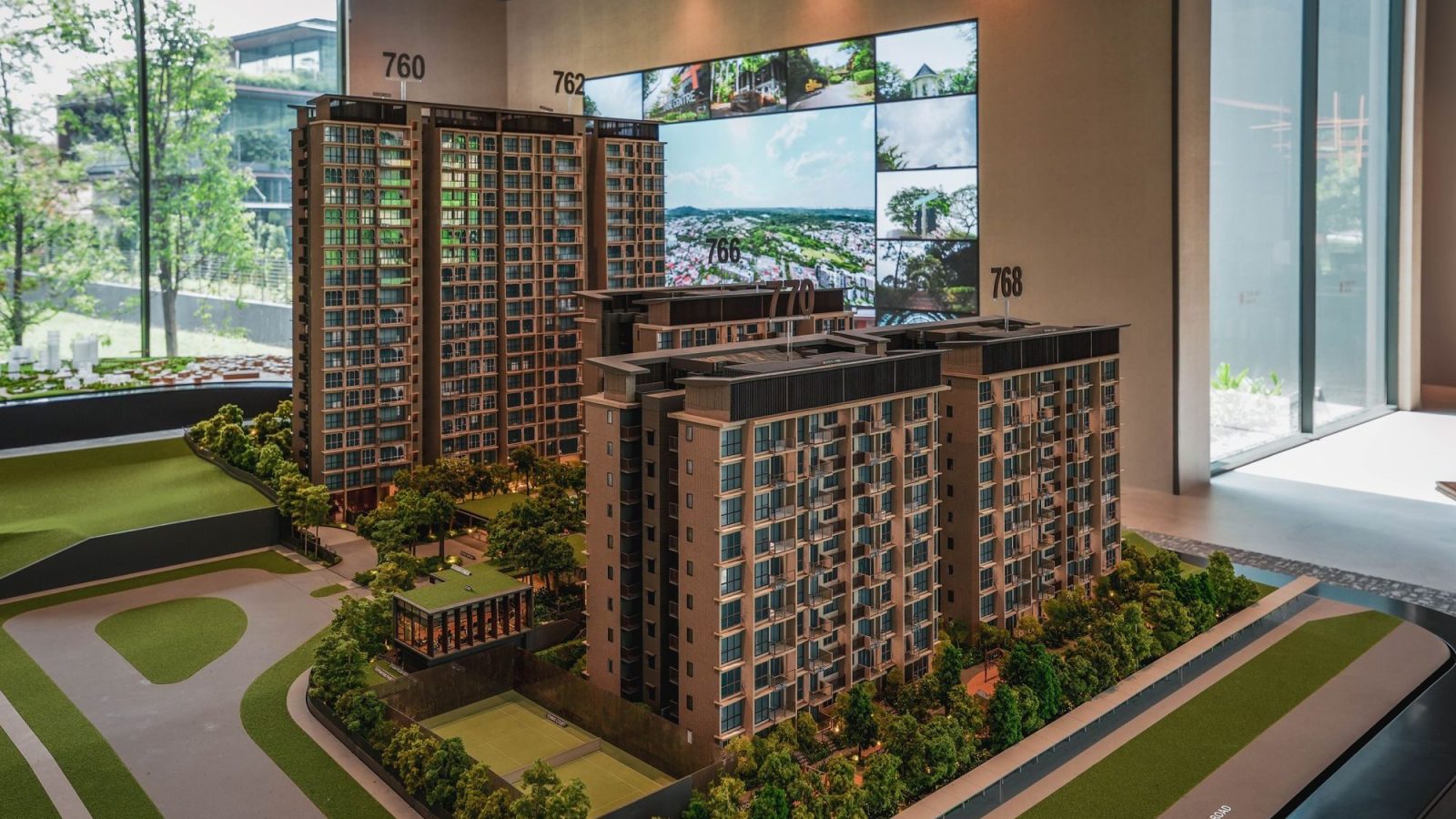
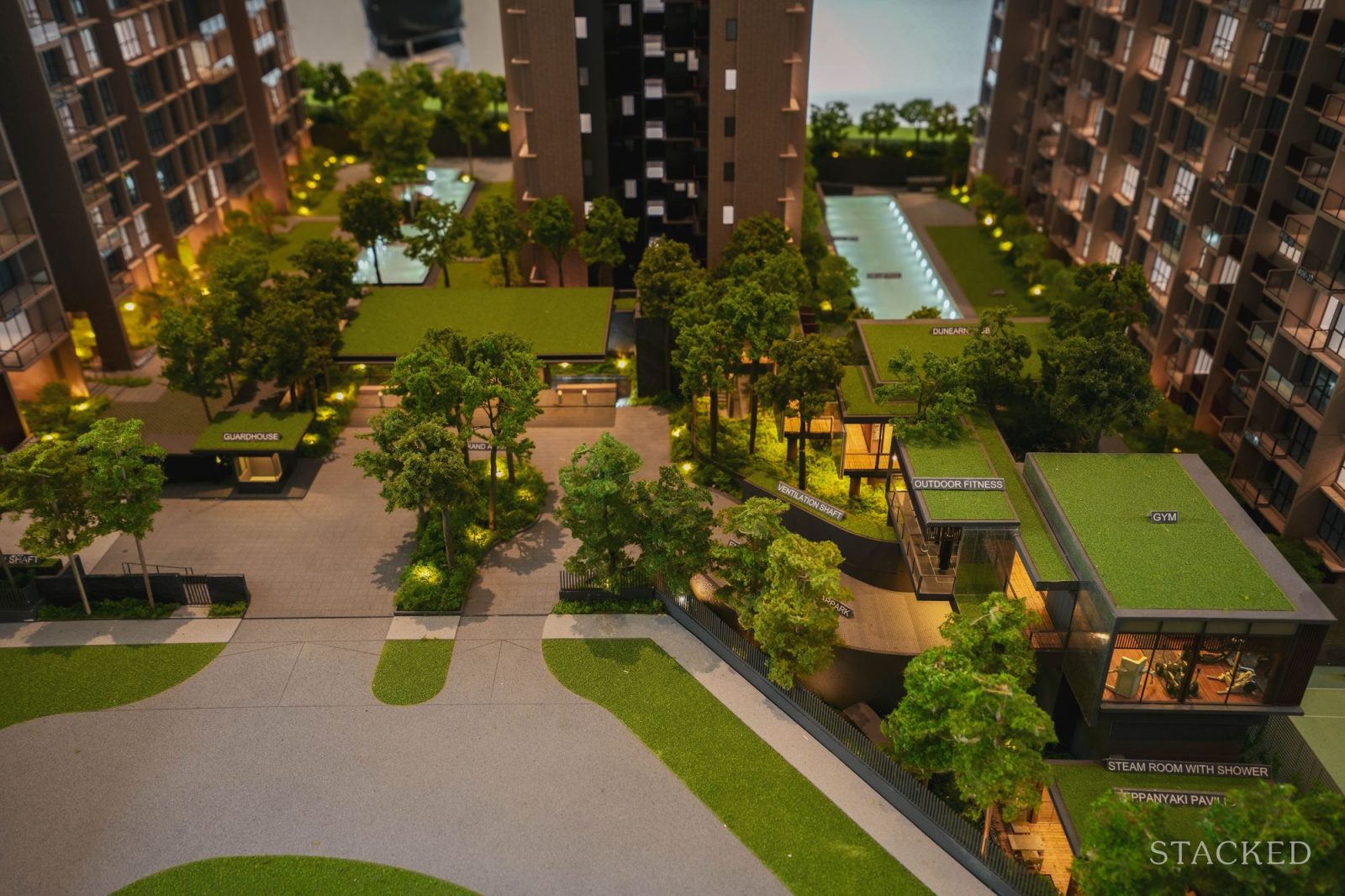
The facilities for 380 units are also pretty extensive, especially those for families with toddlers and younger children. Practically the entire frontage of the development towards Dunearn Road will be dedicated towards kids’ play areas, including the Play Crawl & Jump Garden, Play Forest Adventure Garden, and Play Swing Garden. The developers’ decision to prioritise these areas goes a long way in acknowledging the profile of buyers here, including those who are buying a home in order to be close to the schools in this area.
Due to the site’s elevated terrain, units on the lower floors at the the North end of the development will not have great views as it will appear to be slightly sunken. However, what’s nice about it is that the various pavilions there will feel slightly hidden from plain sight and the function room - of which there are two in the development - will have an accompanying cascading waterfall, which makes for a beautiful ambience.
Unit Layouts
I found it impressive that around 70% of all units will have a window in the kitchen and bathrooms. This applies even so for the 2 Bedroom units. Those of us with windows at home will definitely appreciate that natural ventilation and certainly remove the need to worry if the mechanical vent fails you someday!
This is only made possible because there are generally fewer units per floor, with some blocks (760 and 762) having just 4 units on each floor. This means that every unit is a corner stack with the opportunity to have plenty of windows for ventilation. For the remaining blocks (766, 768 and 770), there are 8 units per floor, which is not too bad considering how other new launches generally have between 10 and 12 units on each floor.
Where Dunearn House excels against its resale competition is its unit efficiency, especially since GFA harmonisation rules kicked in in 2022. Since Dunearn House is a non-PPVC development, its units offer some flexibility in terms of knocking the walls down. I’ll dive into the three-bedroom + study showflat (Type CS1 - 947 sqft), as I feel that three-bedders in general will receive the most demand among buyers.
Instead of a formal review of the layout, I will highlight portions that resonated with me.
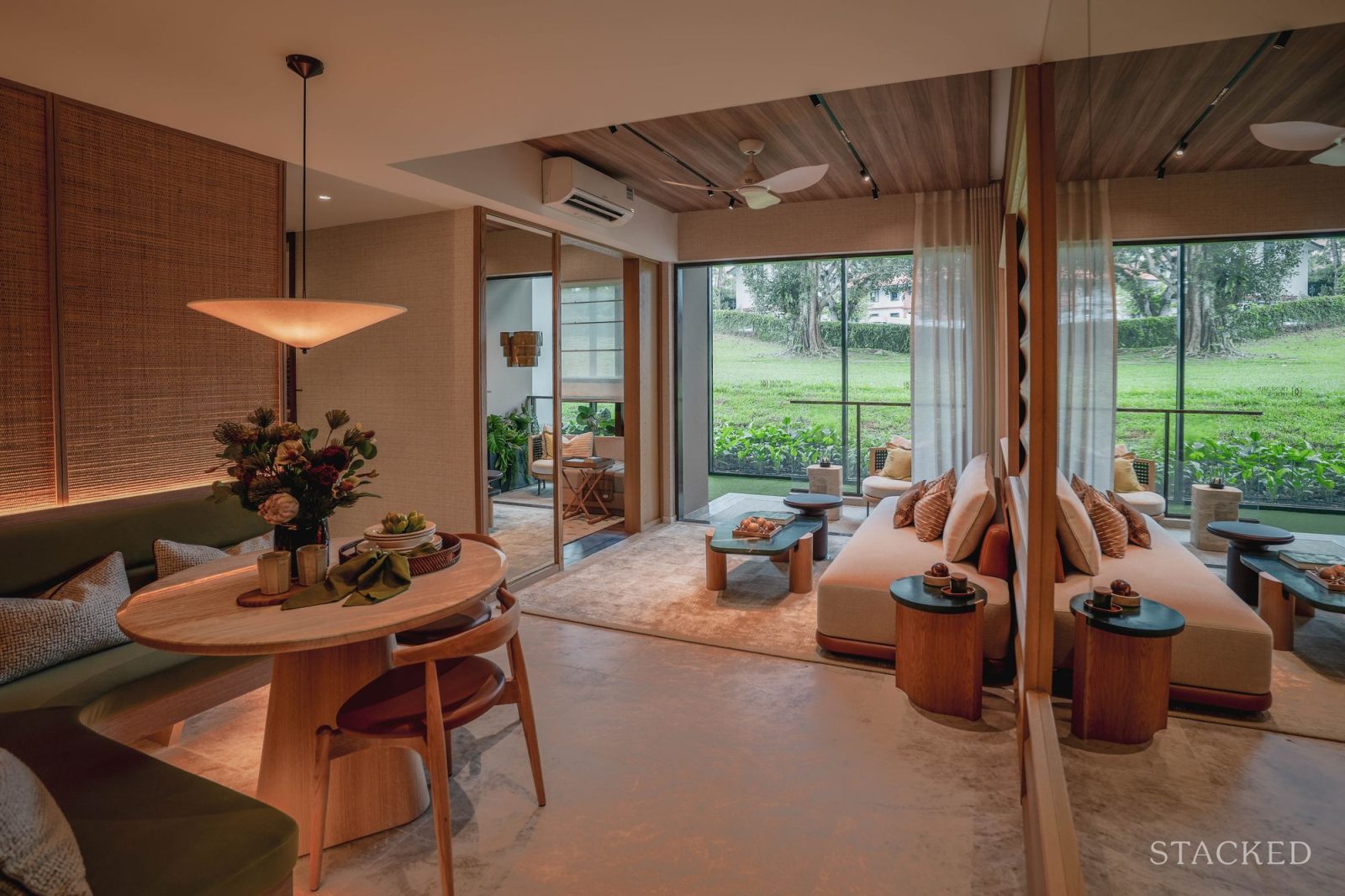
Firstly, it is impressive to have a proper three-bedroom unit with a study with just 947 sq ft. I find this layout to be very practical as you get an enclosed kitchen with a wc and home shelter. In the kitchen, the areas are well organised with countertops on both sides, allowing you plenty of space for food preparation. The appliances here including the fridge, oven and gas hob are from Smeg, which is known to be a trendy and respectable European brand. The inclusion of the gas hob will come in handy for families who cook, as it remains the preferred option for many in Singapore.
Since this is an enclosed kitchen, there is a window by the end of the kitchen. There’s no proper yard area per se, which is to be expected but you could consider installing a drying rack that will benefit by being next to the window. Alternatively, you could also fall back on the Smeg washer cum dryer that will be included in the unit.
The dining area is slightly more compact, but it is not a surprise as 947 sqft is a compact unit after all. You could still squeeze in a 6-seater dining area and the use of benches as the developers have done will also help with efficiently organising the space.
For the living room, it is of a similar standard to other new launches, with a 3m width and room for a 3 to 4-seater couch and a small coffee table. The 5 sqm balcony is definitely a good size as it’s not too big to be considered a waste of space.
Both common bedrooms are 9 sqm in size and can fit a Queen size bed in them. You also get full length windows, which help to bring in more natural light into the room. You will also notice that for the purposes of the showflat, the wall for Bedroom 3 has been brought down to highlight the flexibility of a non-PPVC unit. However, the choice of bringing down this particular wall is probably impractical as it is where your TV will be placed.
The bathrooms in this layout both come with windows for ventilation and are certainly a plus point for buyers. Fittings are of high quality here too, with Hansgrohe supplying the taps and shower mixers. Hansgrohe has proven to be a reliable product in the Singapore market over decades, and it is no surprise that many new launches and homes have decided to go with them.
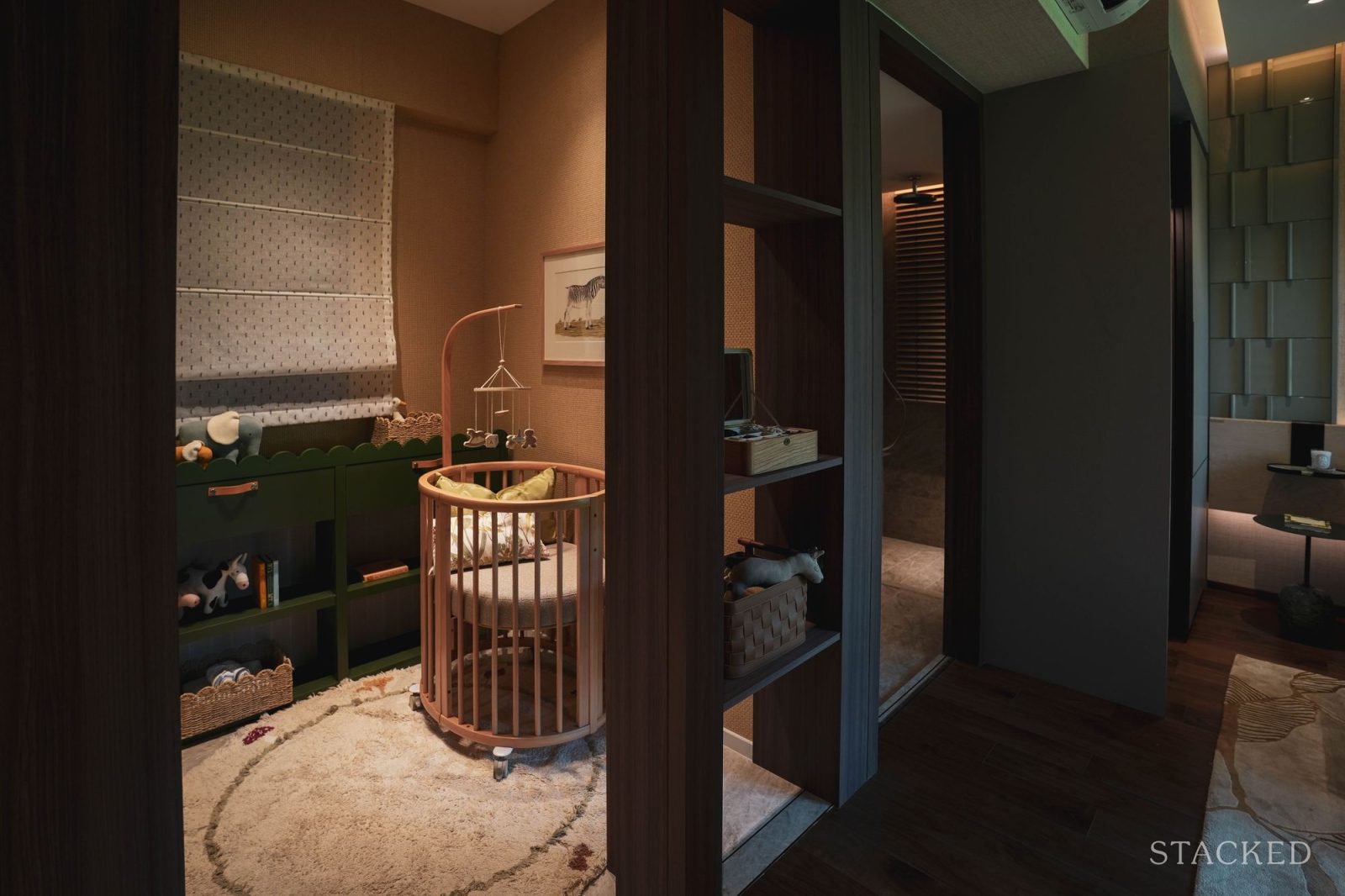
What I like most about this layout is the additional study. As you can see, it is not a great deal of space, but it can still fit a baby cot and some toy storage area by the side. This is definitely practical for those expecting a child in the future. Alternatively, with some interior design works, this could also function as a walk-in wardrobe for your Master Bedroom so there is a degree of flexibility here. This is probably the part of the unit that I appreciate most as you sometimes just need that “extra room” either for your newborn, clothes or even an additional storeroom.
Who Is The Project For
Dunearn House’s focus on smaller units - with 45% of units being two-bedders (527-678 sqft) and a further 25% being three-bedders that are 1,000 sqft or less - affordability appears the priority for the developers.
In general, I thought that the layouts at Dunearn House are commendable and should appeal to a wide group of buyers. Moreover, as the first project in the Turf City transformation, Dunearn House will appeal to several major groups of aspirational homeowners.
For the smaller two-bedders that will start from just below $1.5m, I think it will catch the attention of many first time buyers who may be looking to own a unit in a well heeled neighbourhood at a reasonable price. Singles and couples will likely be in focus here.
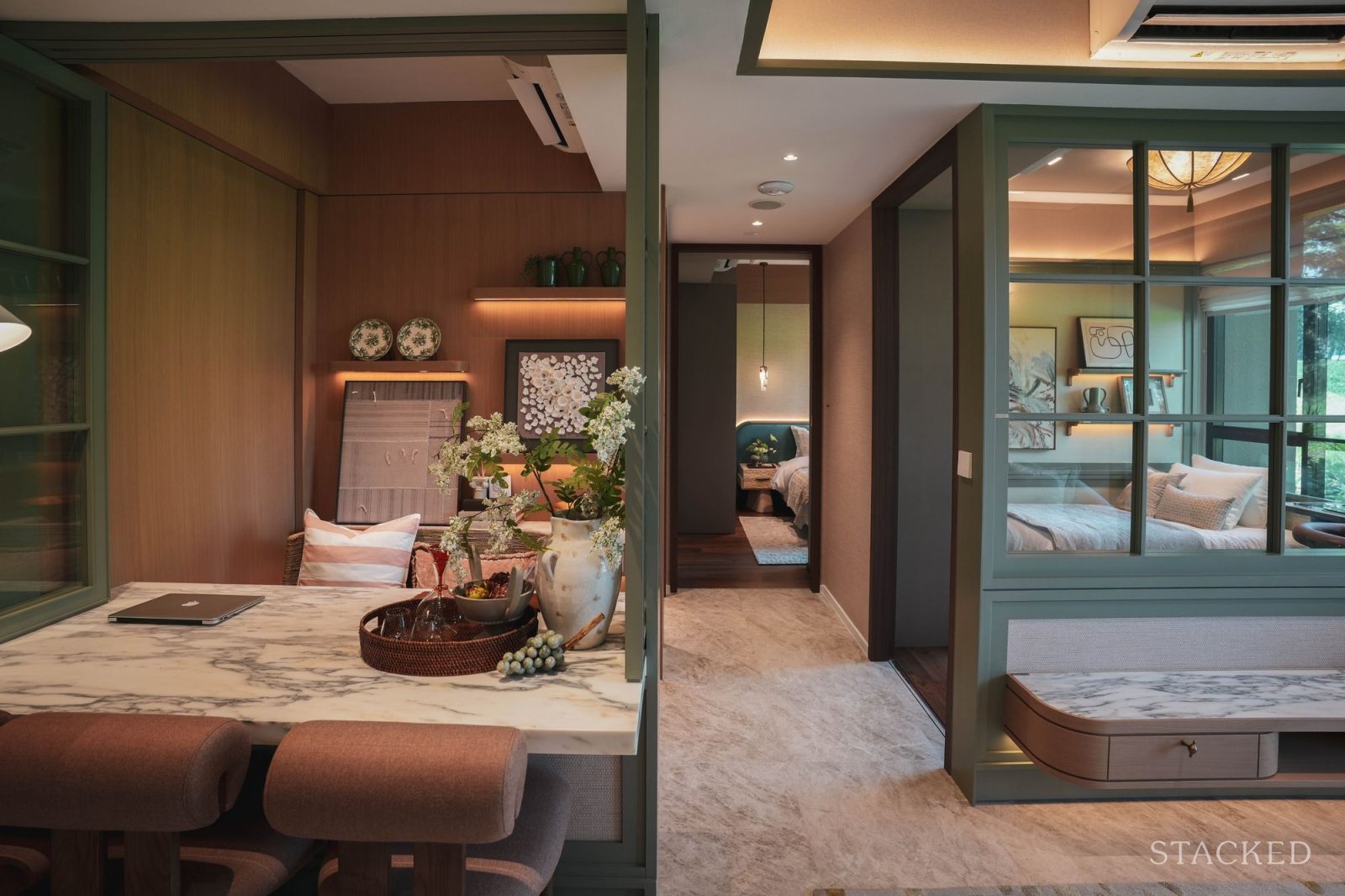
For more premium two-bedroom types, including those with a study and three-bedroom units, they may appeal to a mix of first time buyers and upgraders from condos and HDB flats that may be further west.
Nearby HDB estates will likely contribute a pool of million-dollar upgraders, especially in Clementi, Queenstown and Holland Drive. Several flats in these areas have witnessed a significant appreciation in their property prices, which they can leverage to upgrade. Those living in smaller or equal-sized condos in the west from Hillview to Bukit Panjang may also seize the opportunity to move to a more central location, benefitting from both a “brand name” upgrade as well as the impending Turf City transformation.
Finally, the limited four-bedroom units could see some families who have lived in the area for a long time choose to right-size and realise gains in their landed properties. Condo owners in the vicinity from Shelford to Stevens may also take the opportunity to upgrade to a layout that has proven to be efficient yet practical, as many of the older developments have large bay windows and aircon ledges.
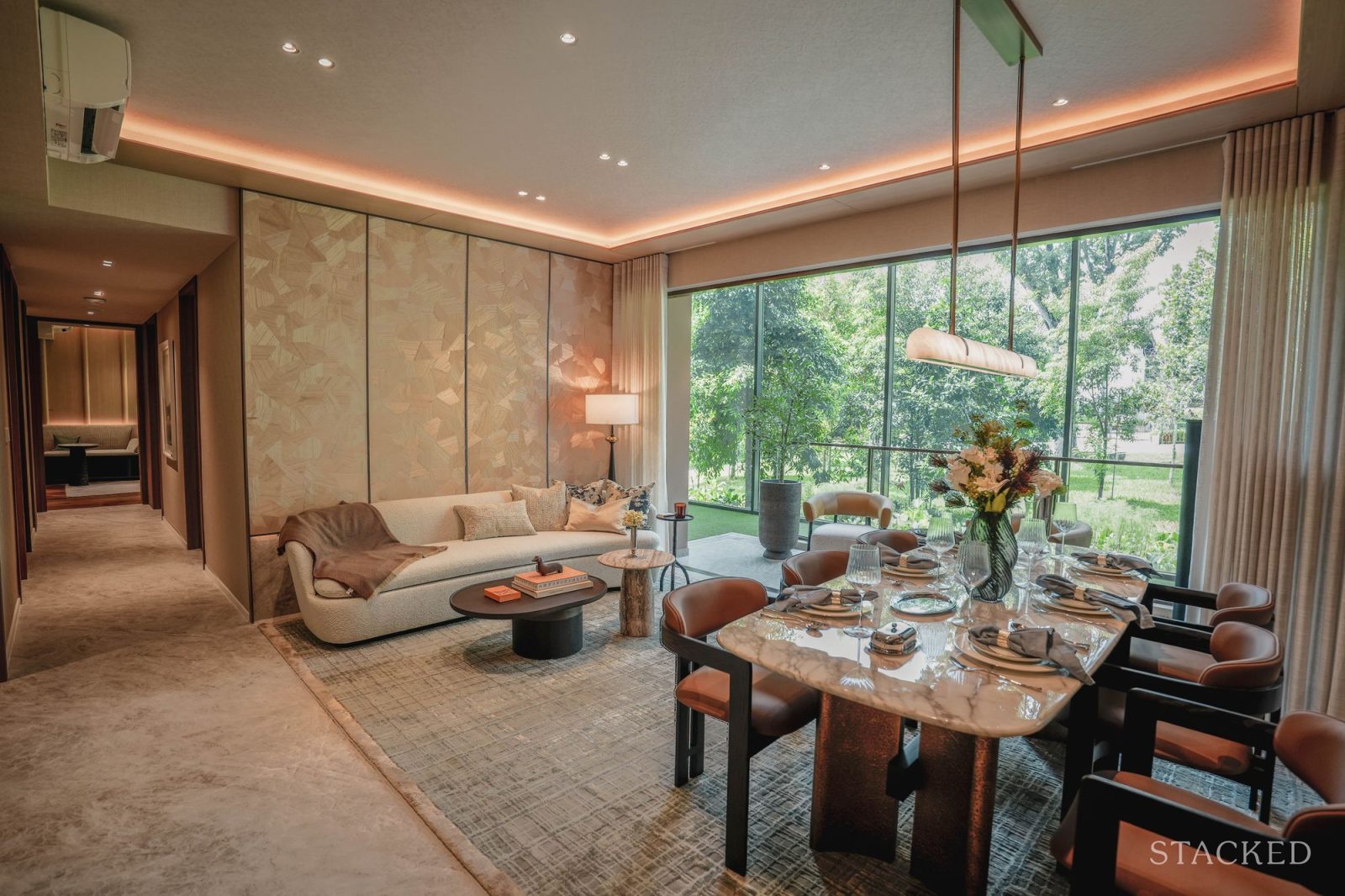
If I had a choice, perhaps what I would have liked to see more of would be the inclusion of larger format four-bedroom units, as I feel that the success at Watten House has proven that there is market demand for larger units in Bukit Timah. That said, I can also understand that having that in a development such as this may also not be the most suitable, as Dunearn House is billed as a first mover in a new mixed housing estate (public and private), with a demand pool that is likely to be for units with a more acceptable quantum.
On that note, my guess is that along with the recent new launches, three-bedrooms will have the strongest demand at Dunearn House, given the versatility it offers for families and couples alike. For many, a three-bedroom is an aspiration and well suited to be a “forever home”, as many younger couples start with a two-bedroom unit and seek to upgrade thereafter. Those who are on the BTO track will likely also target a three-bedroom unit as the most practical option, especially for those who have or are planning for children.
I would personally take a closer look at the four-bedder if your budget permits, given its rarity at Dunearn House. It has a smaller unit size (from just 1,184 sqft) compared to its neighbouring condos, which may allow it to have a more palatable quantum despite the higher psf.
Dunearn House’s layout will excel in terms of its unit efficiency, given the absence of bay windows and the exclusion of aircon ledges from the GFA calculation. If Singapore’s income levels continue to rise, a four-bedder will be well-positioned as an aspirational yet attainable product that buyers will target to purchase in the future.
Final Word by contributing writer, Matt
Dunearn House marks the beginning of what will be a district that will be forever transformed. To many, the thought of having HDB flats built between GCB estates would have been unthinkable not too long ago, but it is a progressive and all-embracing move by the government.
Dunearn House has set the bar high with its GFA-harmonised layouts that have proven to be efficient and practical at the same time. Many units have windows in their kitchens and bathrooms, a rarity we can’t take for granted. Unblocked views of the Bukit Timah landed estate and Turf City are also desirable, although they will come with the road noise and construction works for some years to come.
Regardless of how much the eventual psf comes up to be (I reckon it would land around $3,200 psf), Dunearn House was purchased more than $200 psf (15%) cheaper than its direct GLS neighbour. This bodes well for buyers, as the developers next door would certainly find it tough to match the prices on offer here. The expected average psf of $3,200 also comes in line with the market on CCR developments.
On balance, if you are comfortable with how CCR prices are in this market, Dunearn House offers a strong product proposition that allows buyers to enjoy the amenities available in this established neighbourhood while awaiting the wider transformation about to take place at its doorstep.



0 Comments