


This case study is based on a recent consultation conducted by Joshua Ho (R062914Z), a property agent and partner property consultant with Stacked. This write-up walks through the key decisions, trade-offs and market considerations involved, with insights that buyers may find useful.
A significant challenge when it comes to resale projects is sometimes the availability of units for sale. There may only be a few owners in the condominium who intend to sell their unit, and this translates into a handful of units that may meet a buyer's needs.
Often, this can make the house-hunting process even more difficult for first-time homebuyers, who may find themselves faced with tough compromises.
In this case study, when these clients first contacted Joshua in March 2025, this was one of the main considerations they faced. The buyers didn’t want to wait for a new development to be completed, which typically takes about three to four years after the sales launch.
However, being first-time buyers, their property plans were not as fully fleshed out at the time. So, rather than make any immediate recommendations to them, Joshua’s advice was for them not to rush into a purchase.
“As first-time buyers, they had not yet fully identified what mattered most to them in a home. Buyers need to focus on making these key decisions, before we can identify relevant listings,” he says, adding that the important things to clarify are priorities, budget, and long-term lifestyle plans.
After helping this couple outline their priorities and needs for their new home, the couple came to realise there were a number of important factors they hadn’t considered. So, they paused their search and refrained from making any hasty decisions.
After several months, the couple reached out to Joshua again in November 2025. During those months, they had gained greater clarity on what they wanted from a first home.
During their next conversation with Joshua, they shared that a priority was to continue living near one of their parents - who stayed at Seastrand, a condo at Pasir Ris Link. And an ideal situation would balance their independence and privacy, while maintaining good contact with their family.
The couple also said they had no plans to have children. This also helped to free up more options since school proximity wouldn’t be a concern.
Finally, the client expressed that their ideal home came with a sea view. This was expressed as a preference rather than a requirement, but it would be a strong and consistent one that impacted subsequent decisions.
Perhaps the most significant factor behind all this was the fact that they were first-time buyers.
Buyers making their first housing purchase face the additional challenge of finding a suitable home that is within their budget. Compared to HDB upgraders, or existing private property owners, first-time home owners aren’t supported by the sale proceeds that came from the sale of their previous home. This usually means a tighter housing budget.
In this case, the couple had set a budget of approximately $1.25 million to $1.3 million.
Joshua’s challenge was to keep within this budget, while finding suitable properties in the East Coast / Pasir Ris locale. The couple also expressed that a two-bedroom unit might be their preference, given the price range.
One of Joshua’s initial recommendations was Coco Palms, one of the largest developments in Pasir Ris and a well-known outperformer in the area. For more details, see our Stacked Pro analysis of Coco Palm’s unusually strong resale gains.
“On paper, Coco Palms ticked all the right boxes. It is close to Pasir Ris MRT, and it’s near to Downtown East and White Sands. It also has a proven track record of transactions,” Joshua says.
In addition, since it is a large project with 944-units, the range of condo facilities would offer more options for the large number of households living there. Based on a separate analysis by Stacked, this is one of the reasons for the development’s persistent demand and how it has stood out in the Pasir Ris market.
After they visited the development, the couple generally agreed with Joshua’s assessment. But the units there did not have the sea view that they preferred.
We would point out that these preferences are an important consideration when it comes to purchasing owner-occupied properties. Whereas an investor might compromise on some of the unit qualities such as the view, given the investment track record of the units at Coco Palms.
But as owner-occupiers, the clients’ priority was a home they could see themselves living in for years to come. “Some property decisions can't be made entirely by spreadsheets. Coco Palms was the stronger option on paper but they were buying a home, not just an investment asset,” says Joshua.
Another condo that they considered was Seastrand, which is the same development that one of the couple’s parents lived in. But this came with a problem.
While some of the available units at Seastrand had clear sea views when the condo was completed in 2014, the subsequent development of Sea Esta in 2015 and Ripple Bay in 2016 ended up encroaching on the view of some of the units.
Moreover, Seastrand is further inland along Pasir Ris Link, whilst Sea Esta and Ripple Bay are closer to Pasir Ris Park and the East Coast shoreline. The combination of all of this resulted in the obstruction of the view of some units at Seastrand, depending on the specific stack and floor.
(While it’s not directly pertinent to our case study, this is an interesting observation for readers: when purchasing a condo project, be conscious of the height and facing of surrounding plots!)
It seemed like the next step was to look at available units at Sea Esta and Ripple Bay.
This would serve the purpose of being close to the parents of the couple, while also having their desired sea view. On the face of it, both of these projects seemed capable of meeting their needs.
But this was when they ran into the dreaded availability issue, which some resale buyers face at one point or another in their purchasing journey.
Sea Esta was the first development they examined. Even though the location was right, many of the available listings were for three-bedders. In 2025, many of these were changing hands at between $1.4 million to well above $1.8 million, with larger units crossing the $2 million threshold.
This was all beyond the couple's target budget of $1.25 million to $1.3 million. Where smaller or cheaper units presented themselves, these were often the ones without the desired sea views.
Given how much private home prices have climbed since the end of the Covid-19 pandemic, available resale supply in that part of the housing market was relatively low. At the time, and even now in 2026, many sellers reconsidered putting up their homes for sale because the price of a replacement property felt too high.
“Eventually I was able to arrange viewings for three separate Ripple Bay units. They liked the units but the sellers were not very realistic. Our offers were already over the last comparable sales but they still rejected them,” Joshua says.
Rather than encourage the clients to stretch their budget, Joshua suggested staying disciplined and walking away. But now, he needed to find them suitable units, and there were no available listings that met their location and unit attribute criteria on the usual property listing portals.
Thus, Joshua had to turn to an old but proven method: writing and sending letters to owners to ask if they wanted to sell their unit.
Writing and sending letters is a time consuming feat, and Joshua had to identify the exact sea-facing stacks that met the buyer's requirements in Sea Esta and Ripple Bay. After that, he had to filter this shortlist based on the floor height.
For example, at Ripple Bay Joshua noticed that units had to at least clear the sixth floor in order to enjoy a reasonable sea view.
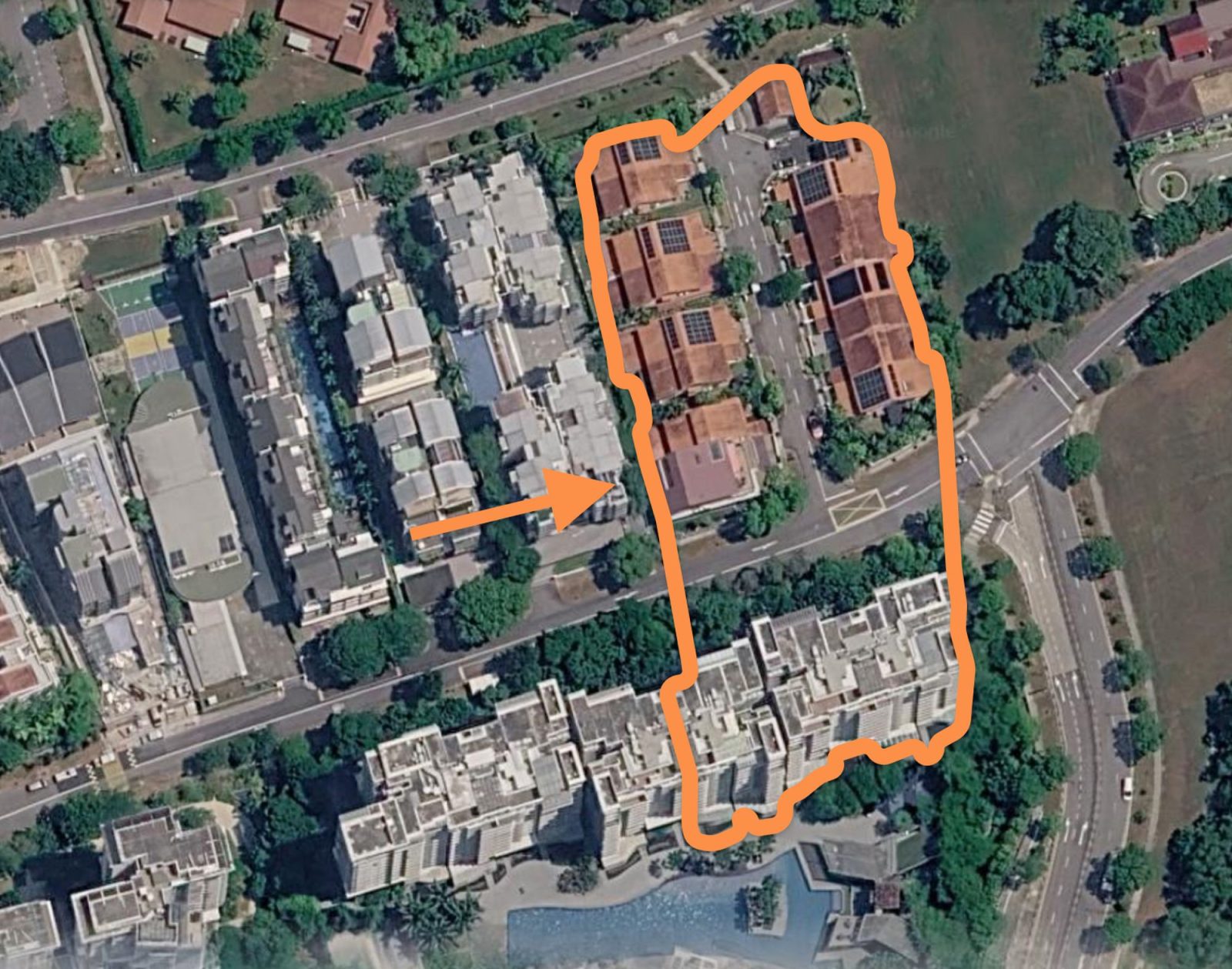
Using a combination of aerial views, maps, and on-the-ground research, Joshua was able to determine that the adjacent condo - although with blocks that were less tall than the blocks at Ripple Bay - could still block some of the sea-facing views.
He also identified block 16 (outlined above) as being ideally positioned to capitalise on the sea-facing views and the neighbouring greenery.
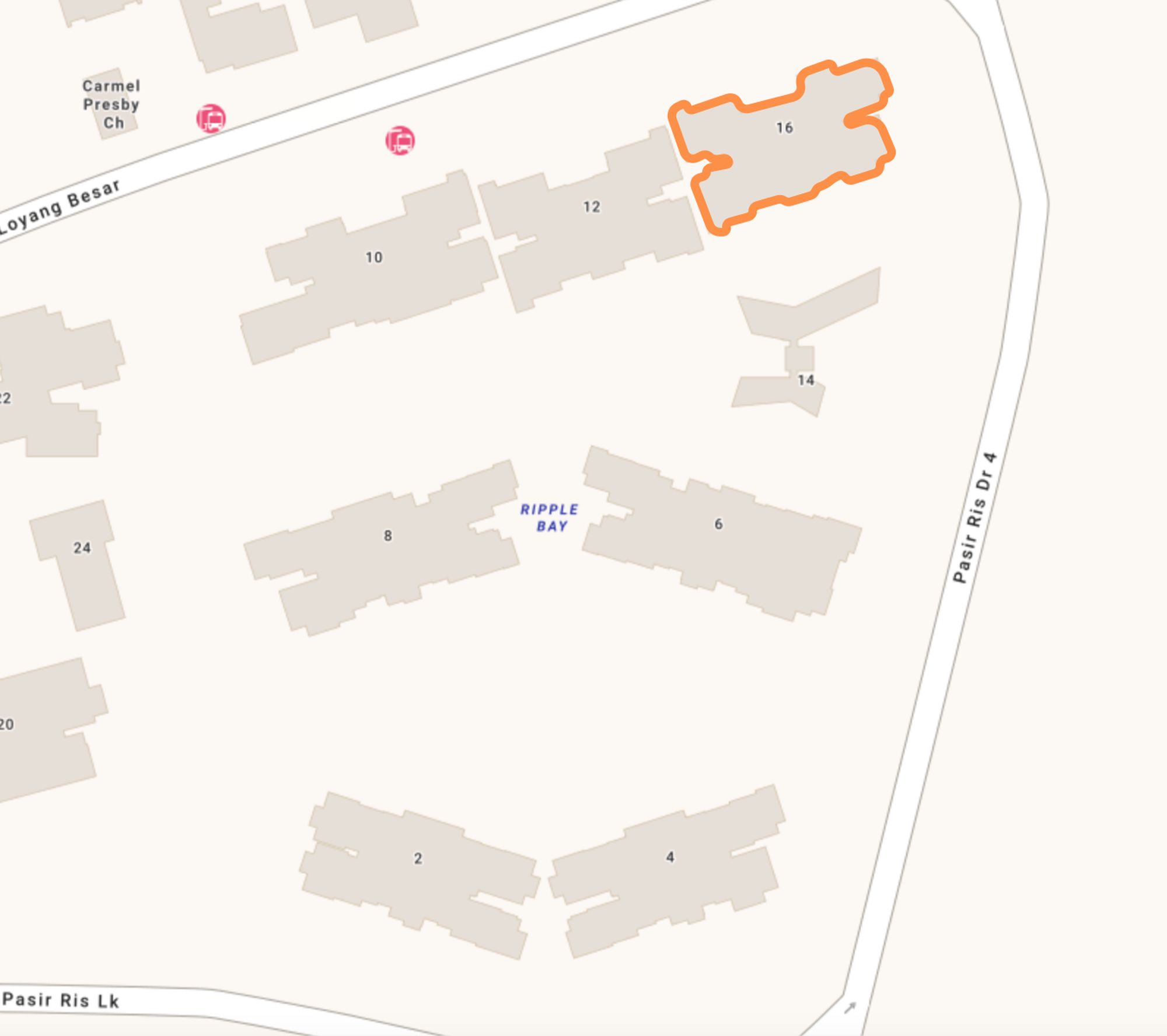
After identifying which blocks to target, he started sending letters to each of the units in the blocks that he had identified, to ask if they were interested in selling their unit. Some units at Sea Esta were also included in this campaign, just in case there were off-market buyers who hadn’t listed smaller or more viable units.
This was a time consuming and laborious process, and Joshua reckons that he sent at least 60 letters to various owners at Ripple Bay alone, not to mention the neighbouring Sea Esta.


Out of all the letters that he sent out, he only received two replies from owners at Ripple Bay. One of the replies was familiar: it was one of the sellers they’d already met, who hadn’t accepted their offer.
But another reply came from an owner who hadn’t been actively marketing his unit. Although this owner hadn’t previously thought of selling the property, Joshua’s letter had prompted them to consider it.
This owner was also dealing with medical issues at the time, and the idea of a sale raised the possibility that - if the price were right - it might be the right time for them to sell and move somewhere more appropriate to their needs.
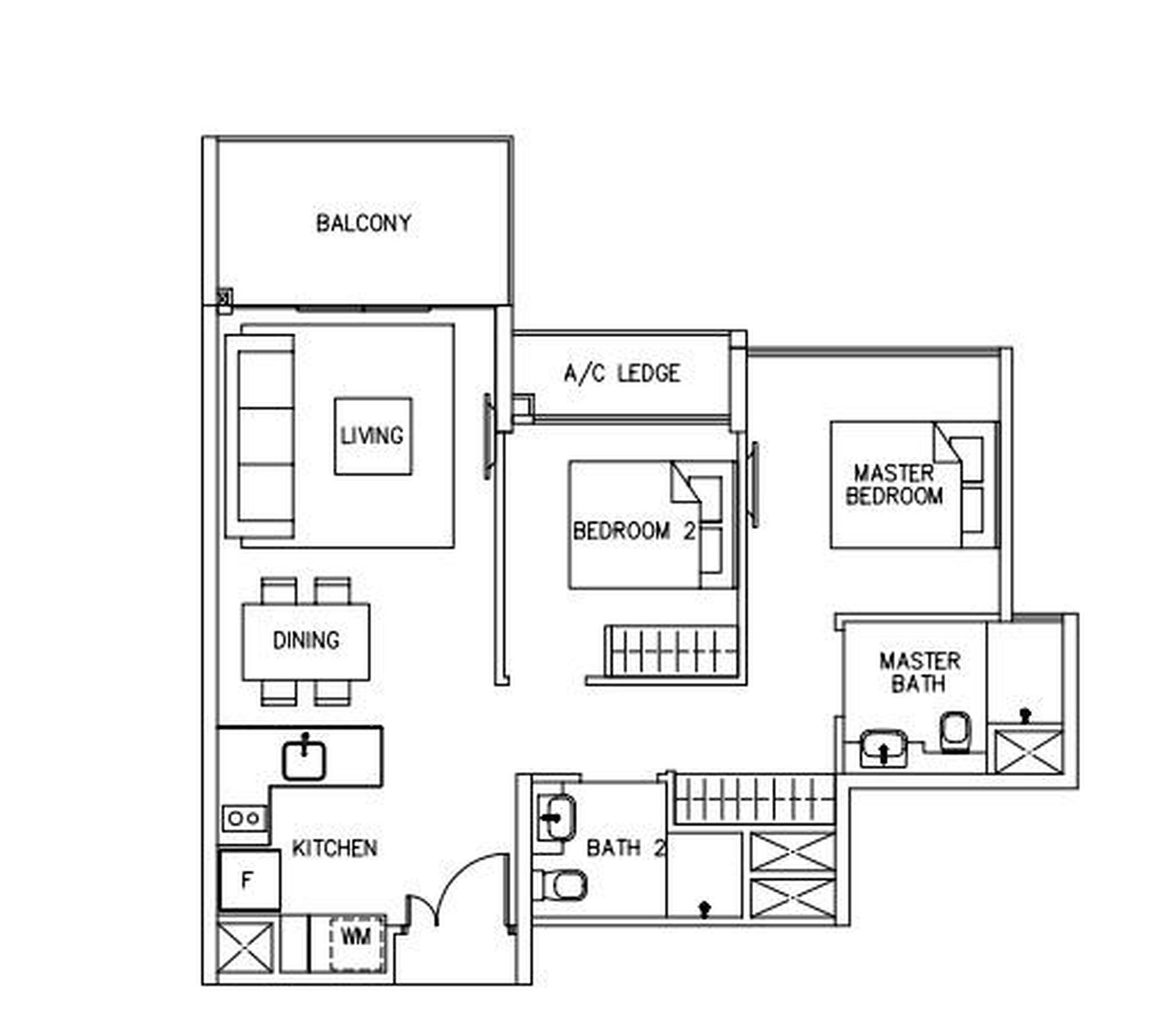
When he got in touch with this owner, Joshua found that the unit did in fact have a sea view and it was nicely situated on the 10th floor, which cleared most of the surrounding tree-line and other buildings. The unit was also a 764 sq ft, two-bedroom two-bath configuration that would be ideal for the couple.

The picture above shows the view from the unit. You can see why it was important that the unit was on the 10th floor, since the units on the sixth floor or lower could still be blocked by the surrounding developments.
Next, Joshua compared resale transactions for sea-view stacks in Block 16 for the couple to understand the prices there. Part of this was to prepare them for the premium they may have to pay for a unit of this type of sea view.
| Date of Transaction | Block | Size (Sq Ft) | Type | PSF($) | Price($) |
| 09/06/25 | 16 | 764 | 2 BR | $1,666 | $1,272,888 |
| 13/02/25 | 16 | 764 | 2 BR | $1,636 | $1,250,000 |
| 23/05/25 | 16 | 764 | 2 BR | $1,599 | $1,222,000 |
| 26/03/25 | 16 | 775 | 2 BR | $1,455 | $1,128,000 |
| 03/07/25 | 16 | 775 | 2 BR | $1,413 | $1,095,000 |
| 08/07/25 | 10 | 775 | 2 BR | $1,394 | $1,080,000 |
| 09/05/25 | 6 | 797 | 2 BR | $1,356 | $1,080,000 |
| 05/06/25 | 6 | 786 | 2 BR | $1,355 | $1,065,000 |
The transactions highlighted in green identify units with sea-facing views, which fetched between $1.222 million to $1.273 million, while the transactions in yellow indicate comparable two-bedroom units without these sea views.
Based on the transactions, Joshua judged that a sea-view price premium of roughly $150,000 to $200,000 was reasonable. Armed with this information, the clients were able to negotiate with greater confidence.
Eventually, they agreed to purchase the 764 sq ft unit for $1.315 million in January 2026. Whilst this was slightly above their original target budget, they felt the premium was justified given the rarity of the unit, the proximity to family, and the quality of the sea view.
Overcoming the final hurdle
Agreeing on a price didn’t mean the end of the transaction process. And in this case, shortly after the deal was agreed, the first bank valuation for the unit returned, and it valued the unit at approximately $1.15 million.
A discrepancy between the bank’s valuation and the asking price can be problematic. The maximum Loan To Value (LTV) ratio applies to the lower of a resale property’s price or valuation, and any shortfall has to be covered by the buyer in cash.
(Note: for new launches, the developer’s price is considered to be the same as the valuation, so this is an issue for resale properties.)
However, Joshua points out that valuations are not always fixed, and different banks can take different views of the same property which causes valuations to periodically change. He adds: "I advised the clients not to panic after receiving the first valuation”.
With the added help of a mortgage broker, Joshua helped the clients to explore alternative financing options and valuation sources. While we can’t disclose the exact finances involved, the clients were able to find a bank that accepted a valuation closer to the actual price. Joshua also says that, as a bonus, the clients didn’t end up needing a higher interest rate.
(In some situations, the bank that accepts a higher valuation may also have a higher-interest loan package; but luckily this wasn’t the case for this transaction.)
Finally, after their initial consultation in March 2025, a break to refine priorities, a renewed search in November, multiple negotiations, and a letter-writing campaign, the couple finally completed their purchase.
For them, the result was exactly what they had hoped to achieve from the beginning. They remained close to family whilst maintaining their independence, they had their desired sea view and facilities, and it was largely within their allocated budget.
Final thoughts
When it comes to finding a buyer’s agent, the role goes beyond just looking up property portal listings, and advising on price. As Joshua demonstrates, a buyer’s agent has to be proactive, and this can extend into finding off-market alternatives that meet client needs.
A degree of patience is also required. Joshua was careful to wait until the clients were ready, even if that meant a break of several months. By taking the time to think over their priorities, and develop a clear budget, these buyers were able to proceed with more confidence.
When it comes time for viewings, the buyers are also willing to stay disciplined when prices aren't reasonable. A common mistake is caving to unrealistic demands, just because “there’s no other listings.” But as this particular case shows, better opportunities aren’t always visible - and you can be rewarded if you give your agent time to look.




0 Comments