


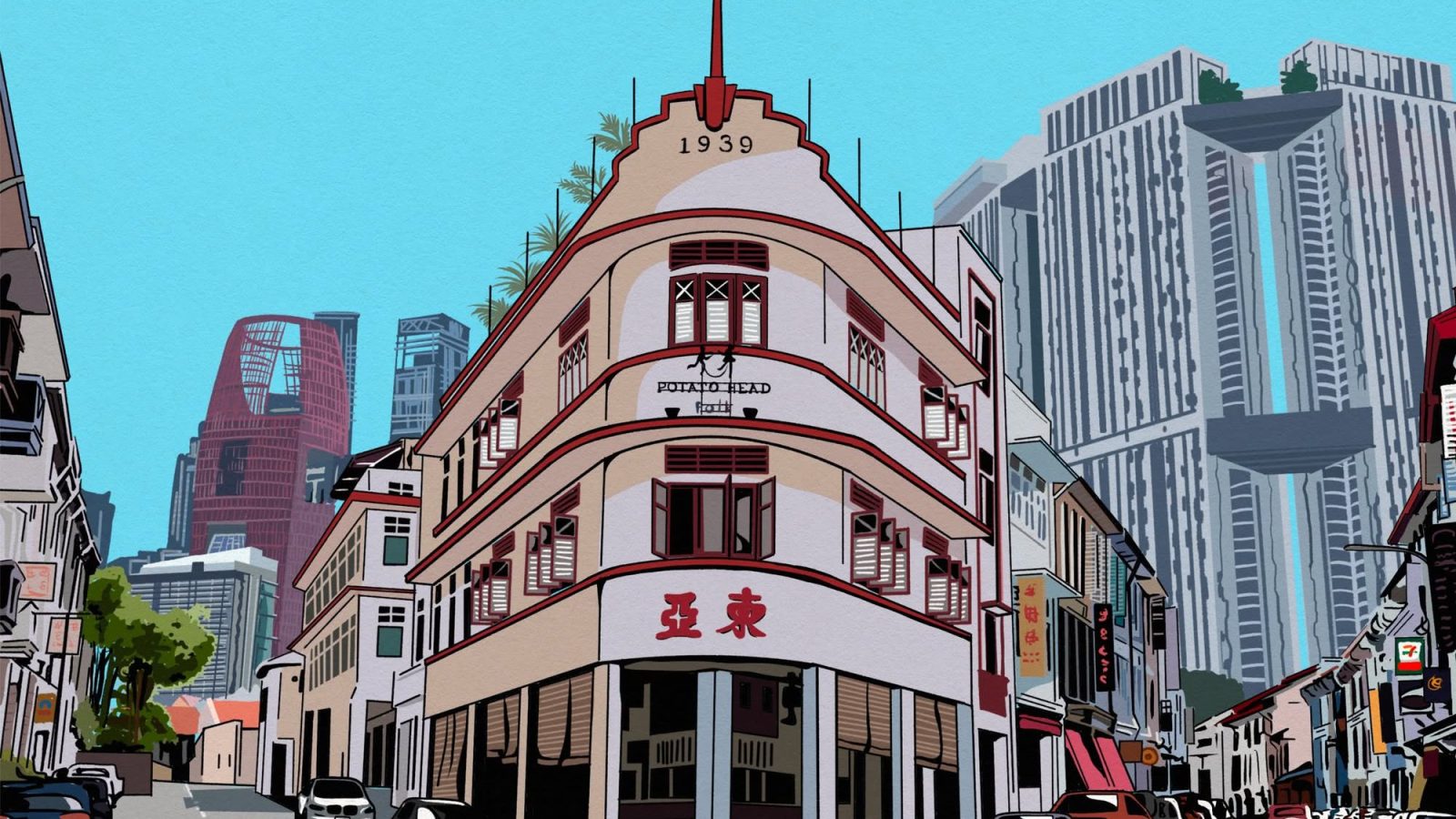
Over the years, I’ve had the chance to interact with several shophouse owners, and some of the most heated discussions I’ve had with some of them revolve around the architectural significance of some of the shophouse properties they own.
I’ve held the view that, in some cases, the individual shophouse isn’t the architectural masterpiece. Instead it is the street along which they are located, and the cityscape that it generates, which is the highlight. It’s a challenging position to explain to some shophouse owners, especially those who buy it based on its historic value.
Sometimes I even get the evil eye from realtors when I share my stance. To me, what’s historically important isn’t the individual shophouse, but the regular urban grain they collectively create.
The next time you walk between a row of shophouses, notice some of the architectural details like how all the rooftops all align neatly, the well-known five-foot way offers a seamless pedestrian connection, and there’s an even rhythm to the facade.
The consistency of elements like party walls (i.e., the walls between the shophouses are shared by both neighbouring units) create consistent plot widths as well. In turn this results in a more uniform and aesthetically pleasing streetscape.
In my mind, this is one aspect that makes our shophouse districts distinctly Singaporean. There are less than a handful of cities in Southeast Asia that have whole blocks with this degree of balance and uniformity.
That’s not to say individuality isn’t expressed. An entire history of what we like to call Socio-Economic Status (SES) was encoded in the facade. Without damaging the symmetry of the street, one shophouse might have traditional Chinese timber posts, whilst a richer neighbour might have Corinthian capitals (the fancy bit at the very top of a column, with leaves or scrolls), copying European fashion.
We can even point to specific periods in our past where groups made their mark. In the early 1900s, Peranakan wealth was visible with the more intricate coloured tiles and plasterwork. Geometric art patterns, different window proportions, and more elaborate entrances hinted at everything from social class to cultural influence.
Familiar landmark houses contributed to the map of the city. I recall how my late grandmother used to say errand boys or visitors seldom used the actual street address. Instead, a place might simply be referred to as “the red house”, “the flower house” or “the blue house”. In a way, we’ve continued this placemaking, with the origin of certain names that we have for notable buildings, such as The Red House in Katong.
All of this would have been lost had it not been for a post-WWII measure: the imposition of rent control. I think it's timely that we take a quick look back at how it happened, as Singapore celebrates its 61st birthday.
The days when Singapore had rent control
It may come as a surprise to most of our readers that Singapore used to have rent control measures, and that the final remnants of that policy lasted all the way till April 2001.
In both instances (we had two rounds of this), war was the initial catalyst. The first round of rent control was implemented between 1917 to 1922 in response to WWI. Subsequently, rent control was reintroduced in 1939 at the start of WWII. But something weird happened with the WWII rent control measures - it persisted long after the end of the war.
What initially began as an emergency measure was later recast under the Control of Rent Act, under which the “standard rent” was still based on rental rates from 1st August 1939. This rental amount applied across multiple property segments as long as a building was completed on or before 7th September 1947. The rent standard applied to homes, shophouses, offices, warehouses, or even factories.
It’s probably not a coincidence that this period of rent control coincided with many famous and long-lived local businesses. Katong provides a good example of this. From the 1950s to the 1970s, businesses such as Red House Bakery and Tay Buan Guan Department Store were booming. Chin Mee Chin, which still operates in Katong today, was another such business, but in the case of Chin Mee Chin the owners made the smart move of purchasing the shophouse in the early 1950s. This benefitted them significantly once rent control was removed.
Rent controls went beyond simply limiting how much landlords could charge.
The tenants of controlled premises also enjoyed considerable protection against eviction. For example, even after a tenancy expired, a tenant could remain as a ‘statutory tenant’. That meant a landlord couldn't demand the property back right after the lease ended. The landlord had to cook up some reason for recovering possession of their own property, such as unpaid rent, serious breaches of the tenancy agreement, or genuinely requiring the property for their own occupation.
(I have no idea how you prove or disprove that last one!)
This sometimes led to a situation where a tenant might be paying rent far below the market rate, while also being almost impossible to dislodge. As a result, a practice known colloquially as “tea money” emerged.
A tenant might demand money in exchange for surrendering the tenancy. Likewise, someone seeking to take over the tenancy might be willing to pay quite a bit, given the subsequently low rent and security. The only one not making money from that arrangement was… well, the landlord.
The problem was that this type of rent control continued for a surprisingly long time - nearly 62 years according to records. Come to think of it, this was probably way more effective than the additional buyers stamp duty (ABSD) we have today.
(“Tenant included, cannot remove” is the final boss of preventing property investment.)
This form of rent control created some distorting effects, in some of the most valuable locations in Singapore
One obvious example is Chinatown, where large numbers of pre-war shophouses remained under rent control for a long time. Even when it was well into the 1990s, some of these shophouses could still be occupied by tenants who were paying rents based on the rates in 1939.
I met one reader who lived there with his family of four in 1992. He recalls his family paying around $60 a month for their rent-controlled accommodation. Adjusted for inflation* paying $60 per month in rent back in 1992 is the equivalent of just around $100 - $110 today.
*Adjusted for inflation using Singapore's Consumer Price Index (CPI).
Over at 21 Amoy Street, a conserved shophouse in the Telok Ayer Conservation area, court records show a premises still occupied by statutory tenants as late as 1996. Vacant possession was meant to be achieved by 1998, but it took until October 2000 before the premises were finally vacated. This was due to the aforementioned protections afforded to statutory tenants.
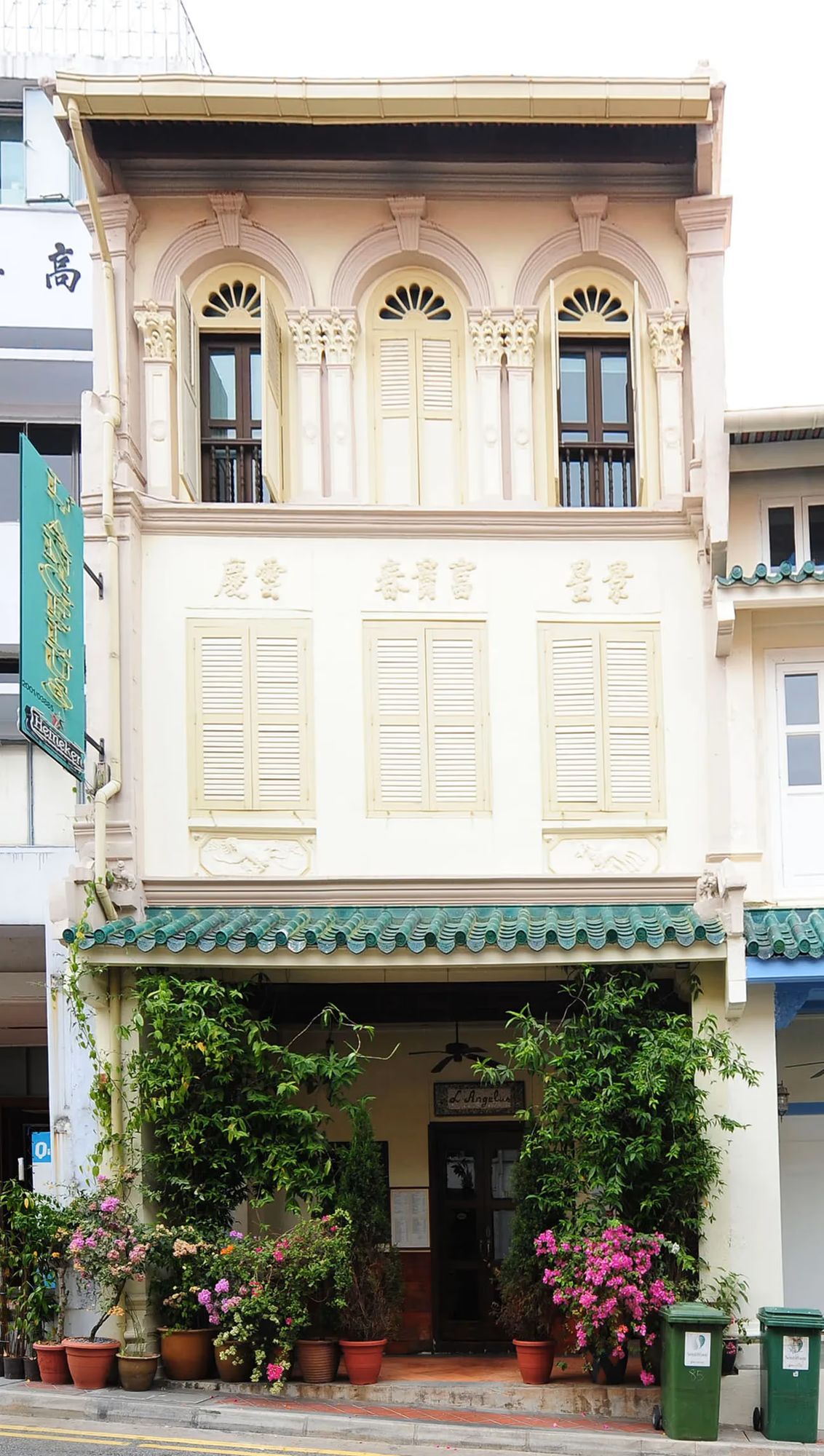
At another shophouse at 85 Club Street, the Sze-To clan association recorded that rent control prevented it from recovering its own property. When rent control finally gave the association the chance to take the building back in 1988, members had to decide whether to sell or conserve it. They chose conservation, which was instituted in 1994 and the building still stands today.
There are other examples across the Golden Shoe area; this is the name for the area where most of the Central Business District (CBD) now stands, before its transformation to what we recognise it today. The former area stretched from Raffles Place, Collyer Quay, Robinson Road, Cecil Street and towards Shenton Way. If you looked at the boundary lines on a map, it resembled an upside down shoe, hence the name.
There aren’t many records of how low rent in the area was back then. What we do know, however, is that by the time rent control was lifted from some properties here in the ‘70s, some tenants had been paying as low as $350 a month (about $1,400–$1,500 in today’s terms).
Overall, the most widely remembered and famous examples of these rent-controlled shophouses seem to be locations in Chinatown.
Removing statutory tenants created in a two-pronged situation, but one result was accidentally beneficial
The downside to all this was landlords eventually let most rent-controlled properties become dilapidated. Not only were they making a pittance from the property - compared to decontrolled neighbours charging market rate - but the rental income was sometimes insufficient to cover maintenance.
Major overhauls, such as facade restoration or plumbing, were especially tough to justify. It’s not an exaggeration to say that, in the eyes of some owners, the rent-controlled properties were more liability than asset.
Now under normal circumstances, all of these properties might have been sold off and eventually redeveloped. But if that happened, many of our existing conservation shophouses wouldn’t be around today. By sheer luck, the ‘statutory tenant’ law preserved these properties.
Even though the landlord could still sell the property, they couldn’t sell it with vacant possession. So if you had bought a rent-controlled shophouse back then, you had to buy it with the statutory tenant inside. And then the problem would transfer to you: owning the building didn’t end the protected tenancy, so now you were the one collecting a pittance in rent, while being unable to remove the tenant.
Unsurprisingly, interested buyers for rent-controlled properties were about as common as three-legged unicorns.
By sheer accident, this is why many of our conserved shophouses still stand today. It wasn’t that they were widely treasured - at least not to begin with - it was just that they were very hard to sell. That also meant no redevelopment.
To be fair, the conservation efforts by the government that followed wasn’t 100% down to luck either
We got lucky that the government recognised the importance of conserving some of the shophouses before the remnants of rent control was fully abolished.
The original crown jewel of conservation was the Chinatown district, which is why we usually associate most of the conserved shophouses in Singapore to that area.
URA had actually begun rehabilitating state-owned shophouses at Murray Street and Tudor Court during the 1970s and early 1980s. But it was in 1986, under the Conservation Master Plan, that major efforts took place.
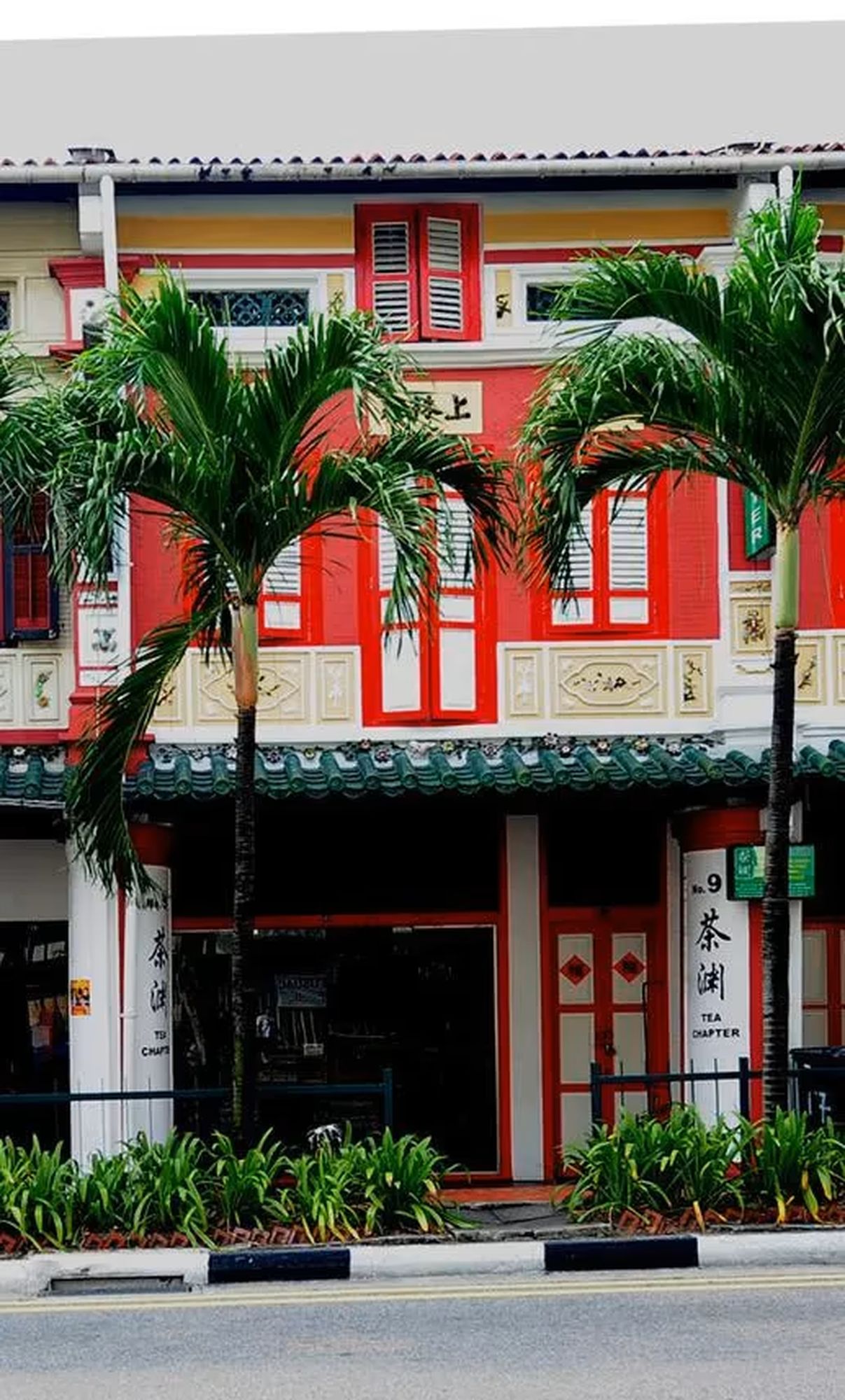
In 1987, URA completed the restoration of 9 Neil Road as a main showpiece. This was the start of a larger project involving 32 dilapidated shophouses in that area. The idea was to demonstrate that these old buildings could be properly restored and conserved, while still remaining commercially viable. The shophouse at 9 Neil Road even hosted Queen Elizabeth II during her 1989 State Visit.
Today, there are plenty of examples of how well this conservation effort has been successful. At 29 Club Street, the conserved shophouse is now occupied by Le Bon Funk restaurant. Walk inside, and you’ll see the characteristically long and narrow layout of the traditional shophouse, which actually works well for a dining area.
At 72 Amoy Street, a conserved shophouse accommodates Nouri and Appetite; and along Ann Siang Road, another early-20th-century shophouse has been adapted into a modern family office. I’m told this family office also retains elements of the original interior, like a spiral staircase.
There’s also 77B Neil Road, today occupied by jewellery atelier Carrie K. Its modern interior was designed around the existing shophouse. A significant turnaround from the days when these shophouses were in danger of becoming slums, and the government had to actively prove they were worth restoring.
There’s something very Singaporean about how this all turned out
Our history is full of situations where we started with a pretty situation, and somehow found an advantage in it. We had almost no land, so we learned to use it obsessively well. We didn’t have sufficient water, so water security became a national obsession and now an area of expertise. Our domestic market is tiny, so we built an economy around connecting multiple other markets.
I see rent control and our shophouses as a small-scale version of the Singapore story.
Rent control wasn't intended to conserve anything, but it did. It was an outdated system that left some buildings in terrible condition, but took what remained and how a few minded conservationists managed to turn it around.
The point I want to emphasise here is that we didn’t just bulldoze everything and restart - we turned ageing buildings from liability to asset, and then into a heritage element. Maybe that's why the shophouse is an especially appropriate piece of Singapore’s built environment, and one which we should celebrate in the wake of our National Day. It’s not the Merlion, but it’s reflective of a subtler Singaporean trait: finding a way to make what should be a mess into a winning edge.

0 Comments