


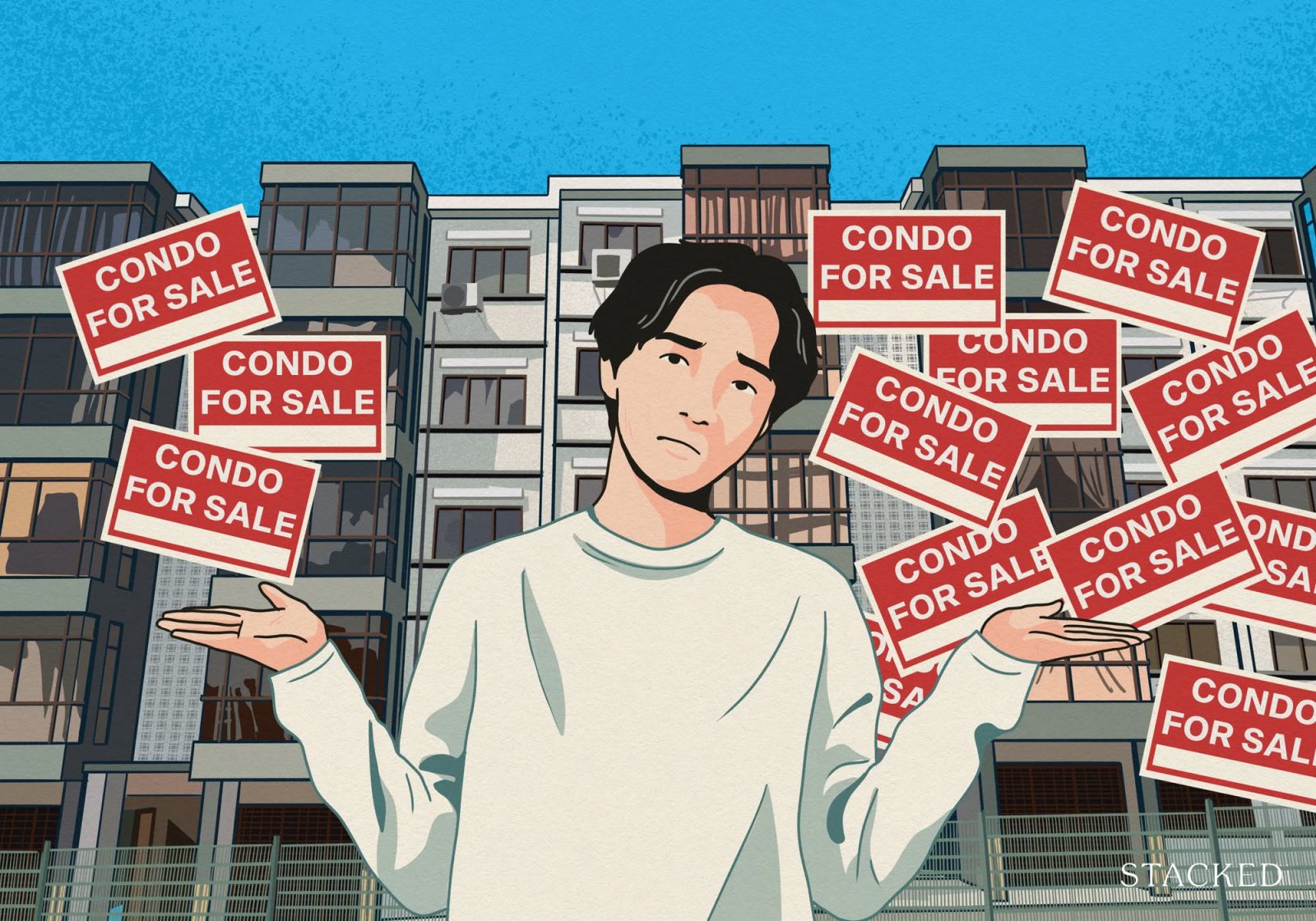
When the government first introduced the Sellers Stamp Duty (SSD) in 2010, to curb short-term housing speculation, it was a clear move by the government to ‘kill’ the act of residential property ‘flipping’.
Now, after several revisions to the SSD framework, including the latest revisions rolled out in 2025, I have a more nuanced perspective of the overall influence of this policy towards speculative residential investments in Singapore’s housing market.
Today, the SSD has only “sort of” killed house-flipping in the market. While the policy incentivises most sellers to wait out the four-year period before selling their property, I think it still hasn’t killed the idea of the short-term hold.
This approach is grounded on the belief that residential prices always increase, developers usually start pricing new projects lower, and buyers can resell the property at a profit (in a sub sale or resale) without too much commitment.
In general, I think this approach has its merits, but it may be time to point out some of the challenges that investors need to navigate, especially for those attempting it for the first time.
Why do some buyers aim to sell near a development’s TOP or right after the SSD?
This stems from the expectation, and assumption, of a few developer pricing strategies. Namely, that developers tend to price new projects at a relatively lower initial selling price compared to the average resale price of the area, before gradually increasing the average selling price in subsequent sales phases.
This means that when the development is completed, or attains its Temporary Occupation Permit (TOP), the units will be at their highest price in terms of developer sales.
Now this isn’t always clear cut. We see instances when developers may not raise the price if they feel sales are too sluggish, or they may not raise the price in response to black swan events such as new property cooling measures.
Alternatively, there are times when developers may not release the most premium units for sale at launch, or only release units of a certain size or floor level in order to sell them first.
Nonetheless, most of a project’s earliest buyers will end up seeing a higher capital return when the units are subsequently sold on the resale market. We've previously analysed over 20,000 buy-sell transactions involving new launches since 2011, and the results broadly support this.
Some examples of this which we have covered in the past include projects such as The Clement Canopy. In one notable example, an early buyer ultimately made a profit of more than $700,000 when the unit changed hands, compared to a neighbouring unit which was purchased from the developer by a subsequent buyer later in the sales cycle.
Recently, I see more buyers who understand this approach towards purchasing new condo units, or it is introduced to them by agents. As a result, some of these buyers decide that since the average price in a new development is expected to increase by the time it attains its TOP, they can realise a healthy capital return without being locked into the unit for too long.
They just need to secure a good unit at the start of the sales phase - that is also at a competitive price - and then wait till the development completes its TOP, or right after the SSD period, to sell the unit and walk away. Some might realise this resale gain sooner through a sub-sale, which is selling the unit before the entire project is completed.
While this resale approach is generally true, it comes with the risk of several oversimplifications.
In general, buying a unit early in the developer’s sales phase is only one ingredient in this approach to secure stronger resale returns. Even if the developer does raise average selling prices, that doesn’t guarantee that resale buyers will appear.
A new project can see prices increase throughout its sales phase, but as it approaches its TOP other market activities can derail this strategy. New developments will hit the market that appear to be even more attractive, property cooling measures could intensify, and interest rates may rise.
Sometimes, it’s not even particularly clear why a project doesn’t resonate with buyers in the resale market. But the result is the same; on paper, you bought a new unit at a price lower than the current selling price and could realise a healthy profit.
However, in reality, your listing has been up on various property portals for months, and no one is responding. I would point out that even before the Covid-19 pandemic, we had already identified cases of projects where prices fell instead of rising, during or just after the launch process.
A recent incident at a prime Bukit Timah Development
Here’s a recent example that came across our editorial desk to illustrate this risk.
About two years ago, a buyer purchased a three-bedroom unit in a high profile Bukit Timah condo. I can’t give out the details, but let’s just say it’s a project connected to an MRT station, and showed significant promise when it first launched for sale.
This buyer bought the unit with the intention of holding it for only a few years, and in fact the property did see its prices rise. However, it wasn’t a big price jump (around 15% over a roughly five-year period), and it took far longer for this to materialise than initially expected.
The subject unit by this seller remained on the market for close to a year before a buyer was eventually found.
For comparison, listings are usually the hottest within the first two weeks. Buyers already scouting out an area are quick to notice when units crop up for sale, and even those close to buying another project will typically want to view the unit just to make sure they’re making the right choice.
But in this particular case, the unit went without a successful enquiry for close to six months before seeing any real buying interest, and it took about a year for a deal to cross the line.
While the original buyer did make some profits in the end; firstly, it took far longer than originally planned to find a buyer, and the owners were fortunate that they had somewhere else to stay and could still rent out the unit to cover ongoing costs.
It was quite harrowing to hear from the agent marketing this unit that there were no inquiries for months, and there’s definite psychological pressure to drop the price.
Another example comes to mind, this time it involved a buyer who purchased a compact unit in a well-known Novena project.
The rationale was familiar. The buyer entered early during the sales phase and heard the usual spiel about how prices in the development would rise. They were further encouraged by the explanation of the Progressive Payment Scheme (PPS).
Under the PPS, buyers only pay for their property in stages as construction progresses. In effect, they don’t pay the full monthly repayment from the start, as is the case with resale projects. Instead, the monthly repayments increase as the bank disburses more of the loan in stages.
This can contribute even further to potential resale gains, since the buyer is paying lower interest costs during construction, as the interest is applied to only a portion of the loan rather than the full full amount.
The buyer was also reassured that Novena is a mature, proven location with strong tenant demand. So, even if they couldn’t sell right after the development attained its TOP, it was “simple” to just rent out the unit until they eventually found a buyer.
This all sounds sensible on paper. But when the development was completed, the intended resale didn’t happen. Online listings were put up and the brand new unit was staged to attract buyers, but there were no inquiries for months. As a result, the buyer found herself becoming a landlord by necessity rather than by choice.
When a tenant was eventually found, managing the tenancy ended up being a major focus. Requests, complaints, maintenance issues, and even quarrels with the management ended up becoming problems for this buyer to manage.
Eventually this buyer switched property agents, and requested the next agent - a more experienced realtor - to find ways to offload the unit as soon as possible. Unfortunately, the existing tenancy interfered with this. The tenant complained about the constant requests to let buyers view the unit, as well as having to shift furniture or prep the unit for viewings.
According to the agent handling the sale, seven viewings were cancelled within the first three months alone, because suitable arrangements couldn’t be made with the tenant.
This highlights a problem with one of the most common reassurances given to short-term investors: "If you can't sell, just rent it out."
The reality is that renting out a property doesn’t always solve the problem, it might just replace one problem with another. Rental income can help offset holding costs and mortgage repayments. But once a tenant moves in, selling the property can become more complicated.
This isn't anyone's fault. From the tenant's perspective, they're paying to live in the property, not to facilitate your sale. But from the owner's perspective, every cancelled viewing is one less opportunity to find a buyer.
Some tenants may also be less than enthusiastic about accommodating a sale. A transaction can create uncertainty about their future living arrangements. It might mean negotiating an early departure, or having to move out when they already live or study nearby. In this particular case, what started as a contingency to buy more time for the owner to sell the unit, ended up becoming another obstacle that made it more difficult to dispose of the asset.
The unit, incidentally, remains unsold and the buyer has had to move into an in-law’s flat so that the unit can remain rented.
This isn’t to say that new launches are a bad deal, or even that either of these buyers made a poor purchase.
There was a sensible basis to both investments. In fact, one of the buyers eventually made a profit, while the other may yet do so. The issue isn't necessarily the quality of the asset. It is that many buyers spend far more time thinking about the purchase, than about how they’ll dispose and exit the asset.
This is partly because details like launch prices, annualised price growth in an area, PPS benefits, and future transformation plans are more tangible. It's much easier to calculate a launch discount than it is to predict who will buy your unit in four to five years time. But the eventual asset exit is often where the strategy succeeds or fails.
It’s important to address questions like:
- Who is the buyer likely to be when you sell? Are there upgraders nearby, or are you relying on existing private property owners to buy your unit?
- Look at the prices of surrounding homes and how they appreciate, not just to estimate your own gains, but to determine if upgraders in the area can afford your future asking price
- Do you have alternative accommodation if you need to rent out the unit?
- What happens if the resale market is weaker than expected, or cooling measures are introduced? Do you accept a lower price and sell as quickly as you can, or switch to a long-term hold?
This is, incidentally, why we include exit strategy as a key component in most Stacked Pro reviews. It’s vital and yet often overlooked.
Therefore, while the introduction of the SSD didn't really kill the notion of house-flipping among some investors, it stretched the timeline that investors had to consider. Instead of trying to exit within months, some investors now wait around four years. But four years is still long enough for market conditions to change.




0 Comments