


This article was written by Sebastian Sieber, founder of Cashew.sg, a Singapore-based digital mortgage platform.
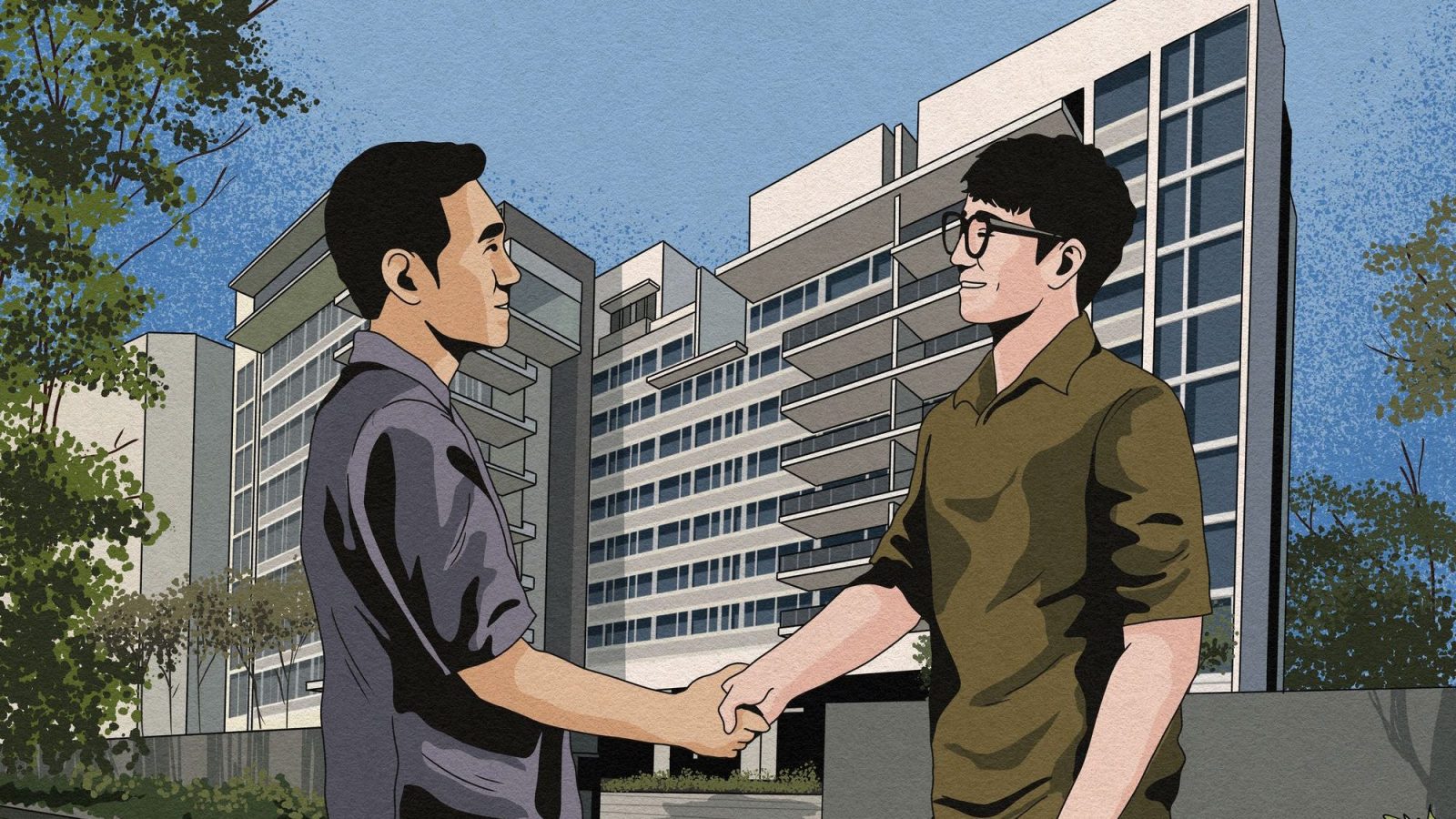
If you’ve had to buy or sell residential property in the last few years, there’s a good chance that you would have come across a pitch like this in one form or another. The setup is relatively straightforward: a parent buys a residential property under the name of their adult child, an arrangement designed to boost the family’s investment portfolio.
It aims to keep capital within the family, offers the adult child a headstart in property ownership, and avoids the 20% additional buyer's stamp duty (ABSD) from purchasing a second property under the same name.
From a financial perspective, what you are actually doing is lending several hundred thousand dollars to another adult - unsecured - against an asset you do not own, while the ABSD you had hoped to avoid stays recoverable with a surcharge on top.
Various forms of this arrangement have been prevalent in the market for several years, but recent legal judgements and rulings have flipped this on its head for these would-be property investors.
But why does this arrangement seem immediately appealing?
Prohibitively high ABSD rates imposed on locals and foreigners buying second, third, or more residential properties in Singapore have encouraged some aspiring property investors to find legal, and illegal, ways to avoid paying the right amount of ABSD.
According to the prevailing tax regime: a Singapore citizen pays no ABSD on the purchase of their first residential property, but a hefty 20% on the purchase of a second property, and a 30% rate on the acquisition of a third property.
This means that a $1.8 million condominium unit, bought as a second residential property by a local, faces a stamp duty of $419,600 in cash ($59,600 BSD + $360,000 ABSD). Which is due within 14 days of the signed sales contract.
Don’t forget that buyers are still liable for the usual buyer's stamp duty - a fact that some may overlook when they’re distracted by the headline transaction price.
After the roll out of the higher ABSD rates in 2018 and 2021, some buyers utilised trusts to purchase property. In this arrangement, parents may buy property but hold it for others like their under-age children - but parents usually own the property in substance even though their child’s name is on the paperwork.
But properties transferred into a living trust have attracted ABSD (Trust) since 9 May 2022, initially at 35% and at 65% since 27 April 2023, payable upfront. Remissions are available, but only when each beneficial owner is an identifiable individual, the interest has vested, and the trustee applies within six months.
When you weigh the fees on these alternative arrangements, it seems like the appeal of putting the property in a child's name, and paying no additional tax, looks obvious. However, in our experience this has serious implications.
What were the legal rulings made in 2026?
Among the legal cases brought to court this year regarding property tax avoidance, several are important case studies.
In one case, a mother helped her daughter to buy a $2.4 million property in 2019, but only the daughter's name went on the property title. But the mother put in more than $1 million towards the purchase: the deposit, the mortgage payments, and other purchase costs along the way.
She also pledged $432,000 with the bank so her daughter could qualify for the purchase. Her understanding was that she owned 75% of the house, and her daughter the remaining 25% - and she had a handwritten note from the time to show it.
However, when her daughter's marriage broke down, she went to court to claim her 75% share. But the mother ended up losing her case, and it hinged on a document that she had signed herself.
In 2024, with lawyers involved, mother and daughter had put the arrangement in writing. It called the money a loan, set out how it would be repaid, and it said nothing about her owning any part of the house.
Since her daughter had promised to pay her back, the court treated the money as a loan, not a stake in the property. Thus, as a creditor, not an owner, the mother had a claim against her daughter but not against the house.
The divorce court treated the house as a matrimonial asset and ordered that it sold, only then would the mother get paid out of her daughter's share, once the split with her former spouse was done.
Essentially, the mother paid over a million dollars towards the purchase of the property, but now has to wait for the divorce settlement - which she has not part in - before she can recoup her money. The latest court records show that the mother has filed an appeal.
What does this tell us about property ownership?
But the ruling also revealed how the courts might have handled the situation if the mother was successful in her original claim, and the liable taxes that she would have faced.
When it comes to stamp duties, the person who truly owns the property counts as the buyer, even if their name is nowhere on the property title. So, if the court had accepted that the mother owned 75% of the house from the day it was bought, it would also have accepted that she owned 75% of the asset.
The mother already owned a flat in Bedok, and that would have made the new purchase her second property, which would have attracted ABSD. The judge added that it was possible that there would be a penalty for paying it late.
He raised the possibility that mother and daughter had both committed an offence, because the paperwork filed at the time did not disclose who was really buying. And he went further to say that had he found that the arrangement existed, he would likely have held that it was set up for an illegal purpose: to get her the 75% ownership without paying the ABSD on it.
The underlying takeaway from this case is: underpaying stamp duty counts as an illegal purpose whether or not you knew it was unlawful.
Four ways to (legally) hold a second property
Usually, buyers are hyperfocused on stamp duties, but we found that what decides most cases is financing.
| Arrangement | Stamp duty upfront | Legal owner | Financing available | Main downside |
|---|---|---|---|---|
| Own name, second property | BSD + ABSD | You | 45% LTV, 25% of value in cash | High cash cost, no legal risk |
| Wholly in a child's name, your money | BSD only, if it is their first | The named person | 75% LTV, 5% cash, their CPF | s33A clawback plus 50% surcharge; asset exposed to their divorce, bankruptcy or death |
| 99-to-1 or fractional sale | BSD on the fractional purchase | Both parties | Both, proportionately | Audited category. And per SGCA 27, the registered share may be exactly what you get |
| Held on trust | 65% ABSD (Trust) | Trustee | 15% LTV, no CPF: effectively majority cash | Remission refused if beneficial owners are not identifiable |
So, how does the math work out for a $1.8 million condo unit?
Let's assume a Singapore citizen wants to purchase a $1.8 million condo unit as a second property, with price equal to valuation and no remission claimed.
- In your own name: $360,000 ABSD plus $59,600 BSD. Total $419,600.
- In a relative's name, where it is their first property: $59,600 BSD, no ABSD.
The apparent savings amount to $360,000. If IRAS reassesses this under s33A: $360,000 in additional duty plus a 50% surcharge of $180,000 comes up to a total $540,000. You would be $180,000 worse off than having paid the tax regime correctly - before legal fees, before any late payment penalty.
But the loan would be in your relative’s name, making it their liability. And this is the part that most people tend to underestimate: since this prices their next purchase, not yours.
If they went ahead to buy their first property, they can borrow 75% of the sales price and need to fork out 5% in cash. But once they are carrying that loan, the loan on their next purchase drops to 45% and the cash they have to find rises from 5% to 25% of the sales price.
Thus, their cash requirement is five times bigger, and their CPF is not allowed to cover it.
In general, we would still advise property buyers to sell first, then think about buying. This is because while you are in between property ownership the new purchase counts as your first property and there is no ABSD.
Taking our example of the $1.8 million purchase, that is about $360,000 saved in costs. But the catch is getting the timing right, since this can leave you without a home in between, and exposed if prices move while you are out of the market.
You could consider the married couple remission: Buying the second place first and paying the $360,000. Thereafter, sell the initial property within six months and claim the money back from IRAS. but we admit that the six-month deadline is a challenge because if you miss it the refund is gone.
Alternatively, some buyers consider decoupling, and sometimes involve a couple who already own a place together. One of you sells your half to the other, which frees your name so your next purchase counts as a first property. On a $2 million home, buying out a $1 million half costs roughly this:
| Item | Cost |
|---|---|
| Stamp duty on the half being transferred | $24,600 |
| ABSD on the transfer, 20% of $1m | $200,000 |
| Legal fees, two sets | approx. $5,000 |
| Refinancing | approx. $5,000 |
| Total | $234,600 |
Against $400,000 of ABSD saved on a $2 million next purchase, you come out roughly $165,000 ahead, legally. But it only works if all of this lines up:
- The spouse keeping the home has to qualify for the whole loan on their own income.
- The spouse leaving has to repay the CPF they used, plus the interest CPF would have earned on it.
- You have to be past the seller's stamp duty window. Sell a $1 million half too early and that duty alone can reach $160,000, which wipes out the gain.
Expect two to three months where a bank loan is involved, but take note that it doesn’t pay off in every case.
Another arrangement is through a trust, if it's done properly. Simply put: You buy the property and hold it for your child. You pay 65% of the price upfront, which on the $1.8 million example is about $1,170,000, then claim most of it back.
But the ABSD refund only comes if the child is named, their share is genuinely theirs from the start, and you apply within six months. You cannot use CPF and you will not get a bank loan, so this is a cash route.
Sebastian Sieber is the founder of Cashew, a Singapore-based mortgage advisory platform. This article is general information about stamp duty and lending rules and is not legal, tax or financial advice. Anyone considering how to hold a property should take advice on their own circumstances from a conveyancing lawyer.

0 Comments