


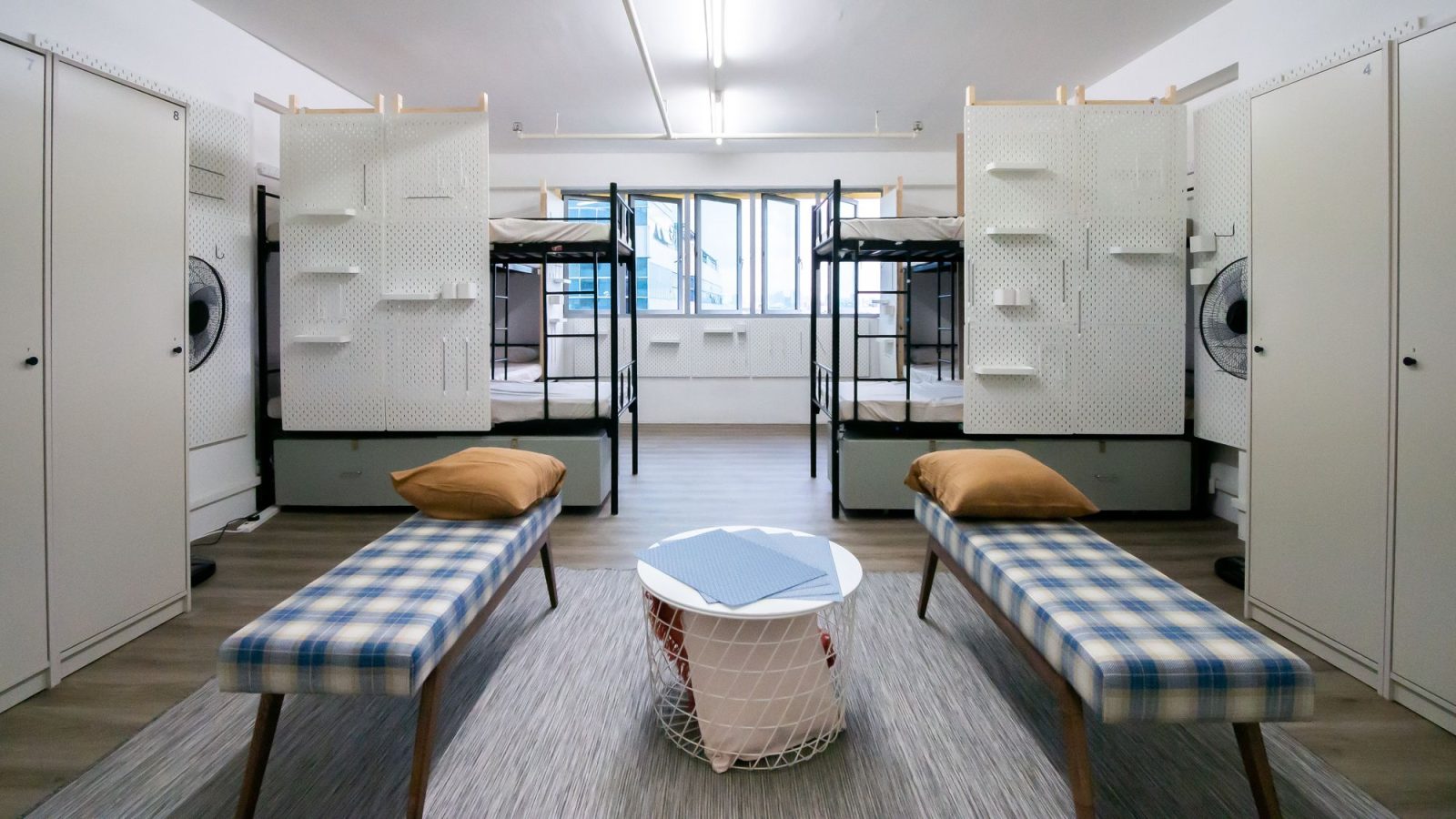
After the spotlight was briefly thrown on foreign worker dormitories in Singapore during the height of the Covid-19 pandemic, this segment of the market hasn’t received as much public scrutiny or media coverage.
But the pandemic did have a lasting impact on the government and worker dormitory operators, who took that experience as an impetus to heighten accommodation standards and the quality of dormitories in Singapore.
Now things are coming to a head for many dormitory operators who are muscling through a period of short-term growing pains, in the hope of coming out of this transition period to reap significant long-term rewards.
This comes as many dormitory owners are in the middle of renovating over 1,500 existing worker dormitory buildings across Singapore, as they rush to meet stricter top-down accommodation standards. At the same time, many contractors who hire foreign workers in industries like marine offshore and construction, say that foreign workers are voicing out when accommodation is sub-par.
The top-down accommodation standards that all foreign worker dormitory operators are rushing to enact is part of the Ministry of Manpower’s (MOM) ongoing push for operators to retrofit dormitories to meet higher standards. This was officially launched as the Dormitory Transition Scheme (DTS), which aims for all dormitories to achieve a set of minimum requirements before 2030, including a lower concentration of workers per room, among other quality of life improvements.
With less than four years to go before the 2030 deadline, Mohamed Fuad Abdul Rahman, the President of the Dormitory Association Singapore Limited, said that many dormitory owners and managers are ramping up renovation activities for a substantial push to the finish line.
During the Covid-19 pandemic, the overcrowded and cramped living conditions, coupled with the high-density accommodation environment, exacerbated the spread of the virus among many foreign worker dormitories. This thrust these issues into the spotlight and the broader public consciousness.
But the media attention and heightened public scrutiny expedited an ongoing move to improve dormitory conditions into a legislative priority, says Fuad. “That cloistered environment became a hotbeat for transmission of the Covid-19 virus back then, and the lessons learnt as well as the experience in dealing with those issues sped up the progress for legislative resolve,” he says.
An Ambitious Undertaking
Nevertheless, it is an ambitious undertaking that many dormitory owners and managers find themselves dealing with today. The Dormitory Transition Scheme requires dormitory owners and operators to meet several requirements including:
- Maximum 12-worker room occupancy at 12 workers
- Minimum one toilet for every 6 residents
- At least 3.6 square meters per resident.
- There are also requirements for better dormitory isolation facilities.
Fuad says that he will be busy in the next few years as he oversees the upgrade of over 450,000 beds across 1,566 existing foreign worker dormitories in Singapore, while keeping a close eye on potential supply shortages.
Of these beds, 287,837 sit within 60 purpose-built dorms (PBD), or dorms which are specifically built with features to meet the needs of workers. These are often designated 'Class 4' dorms, which represent the class with the largest bed-count. Developments like these are the largest foreign worker dormitories in Singapore, and are usually the ones which are getting retrofitted first.
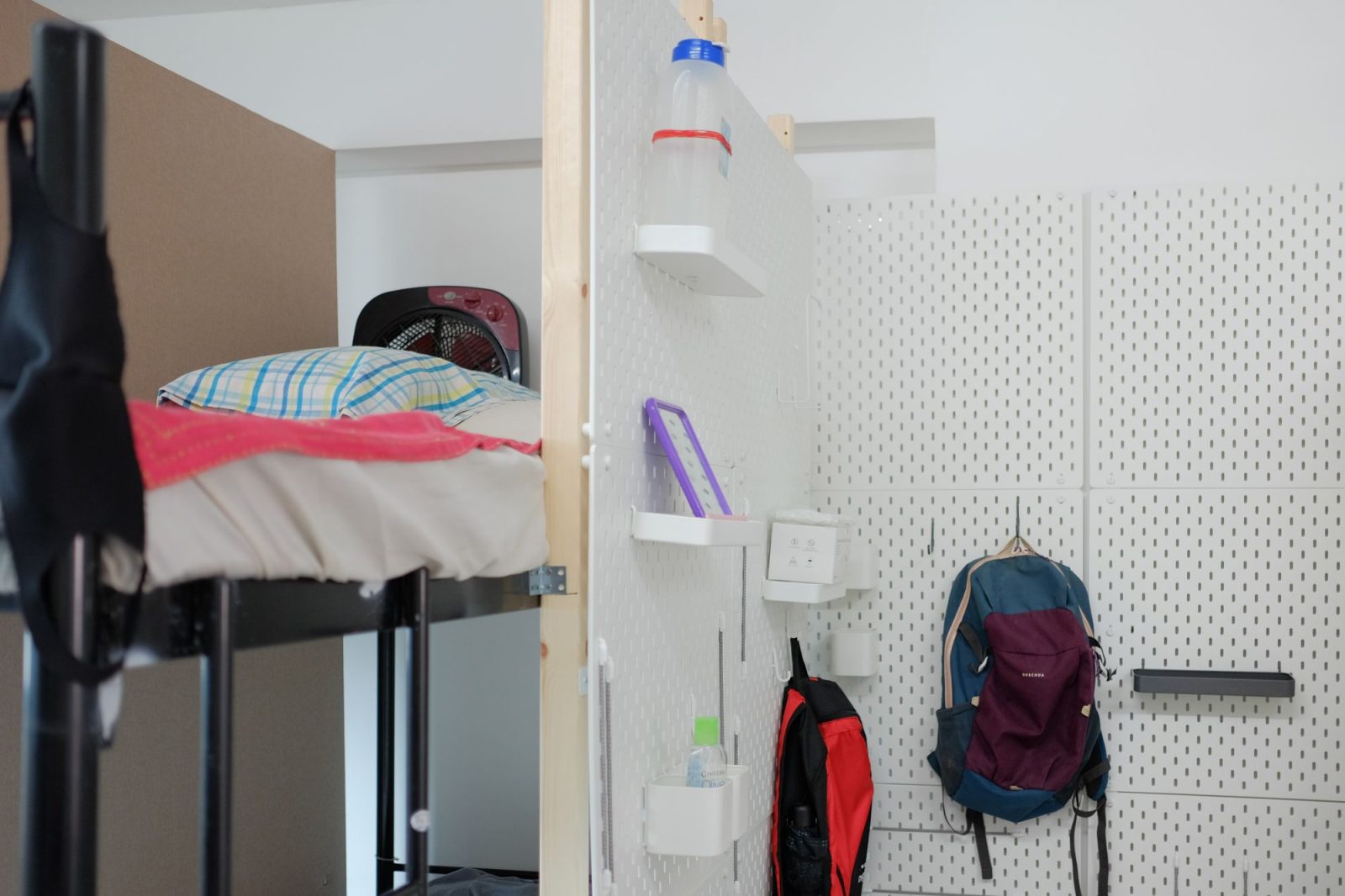
In February this year, MOM also announced grants for operators towards retrofitting their dorms. The ministry is offering $4,200 for each dormitory room retrofit and $9,800 for en-suite toilets, for projects completed before 2029. Dorms completed from 2029 to 2030 are still entitled to funding, albeit less.
Before these changes, the requirements and accommodation standards for a typical worker dormitory were something that operators kept in their heads, says Rahman. But with the subsidies on the line, many dormitory operators and owners are feeling the urgency.
To catch up to demand for MOM approved dorms, there's been a significant push towards building new PBDs. This has been supported by a significant increase in the number of development sites for new worker dormitories launched for tender by the government.
"Dorm operators have told me that they do not remember a previous time where so many sites came out in one year," Fuad says.
A total of five sites have been released this year. Additionally, on 11 Sept, the government announced that the tenders for two more sites, in Mandai and Upper Jurong, will be put up for sale in 2027.
MOM has also begun building its own branded dormitories that adhere to the new accommodation standards. These are ‘NESST’ dormitories, which is MOM’s own brand standing for Nurture, Engage, Support, Shape, and Transform. There’s one at Tukang, which opened in early 2026, adding 2,400 beds.
A second NESST dormitory is being developed in Sengkang West, which is expected to accommodate about 7,200 beds when it is completed in 2028.
Private developers are also building new dorms which adhere to the New Dormitory Standards, including the 3,200-bed Terusan Edge, which BCA awarded to S11 Ascendance Management after it put in the winning bid of $105.0 million. Meanwhile, a subsidiary of Centurion Corporation won a site at Kranji Close, after it put in the winning bid of $343 million in August this year..
Eventually, by 2040, new dorms and existing dorms must meet the NDS, or New Dorm Standards, with over 4.2 sqm per resident and an additional requirement of over 1 meter spacing between beds.
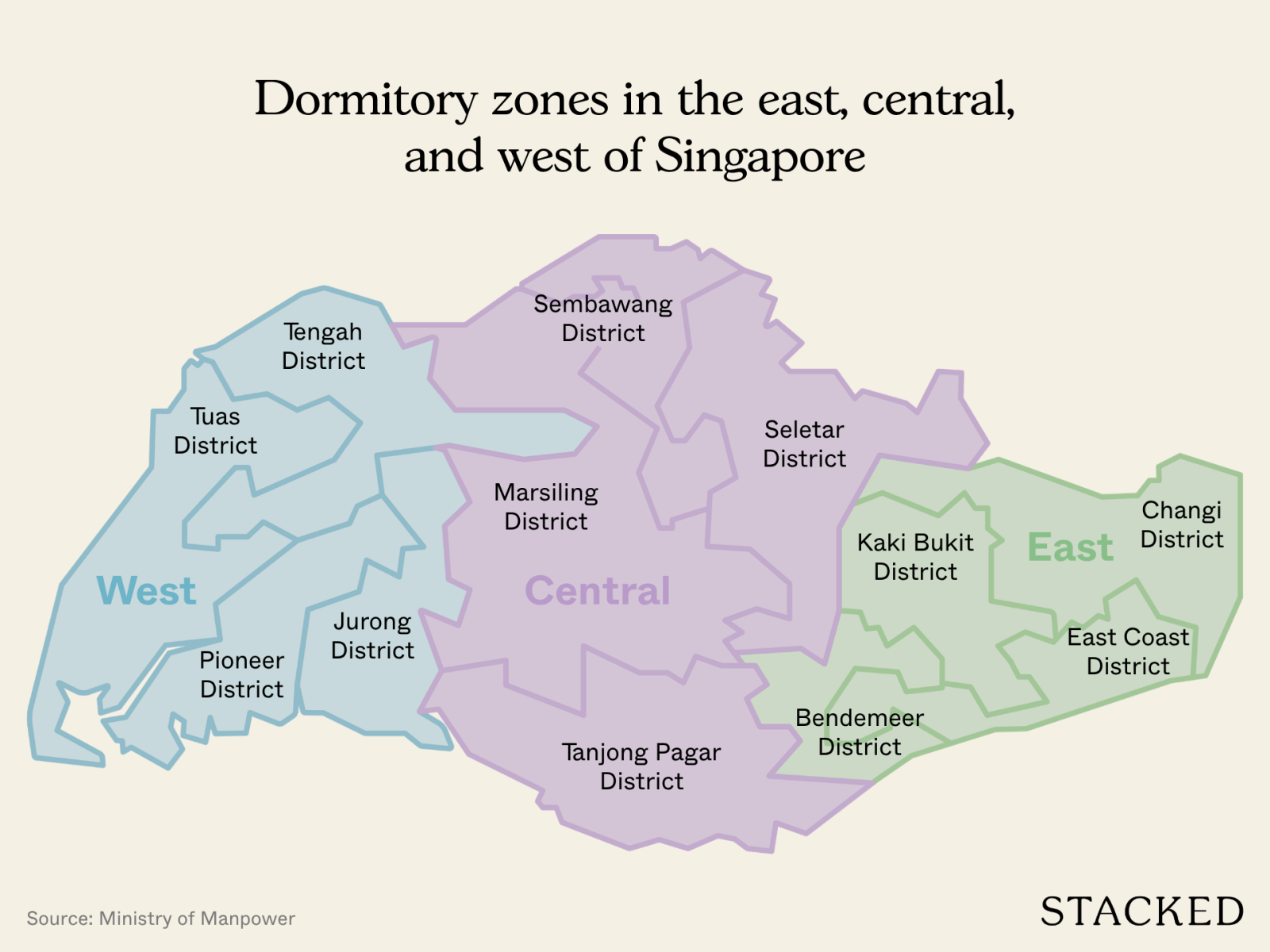
Keeping The Balance Of Supply and Demand Healthy
MOM and DASL are being deliberate about keeping supply and demand in balance in this window of time during the retrofitting of existing dorms and before the new dorms open up around 2028.
This includes being more relaxed on FCDs and CTQs approval. To fill a temporary dip in supply, the government has approved more factory-converted and temporary dorms for workers to be housed in temporarily.
This contributed to an 8.7% increase in Class 2 beds and a 10.9% boost of an additional 8,455 Class 3 beds between H1 2025 and H1 2026. Class 2 and 3 refer to smaller sized dormitories than Class 4 by bed-count.
But this balancing act gets harder at the edges. Class 1 and Class 2 dorms are mostly run by companies whose core business isn't housing. Many are corporations who converted existing premises to house their own workers. Therefore, if retrofitting costs are too expensive for their business, it might push them to rent instead, further squeezing demand on existing PBDs and putting unpredictable pressure on bed rents.
Rents Have Stabilised. But Can They Hold Steady?
Even with all the change across the industry, worker dormitory rents have largely stabilised so far this year, says Leonard Tay, head of research at Knight Frank Singapore. The consultancy recently published a market report on the worker dormitory industry, in partnership with the Dormitory Association Singapore.
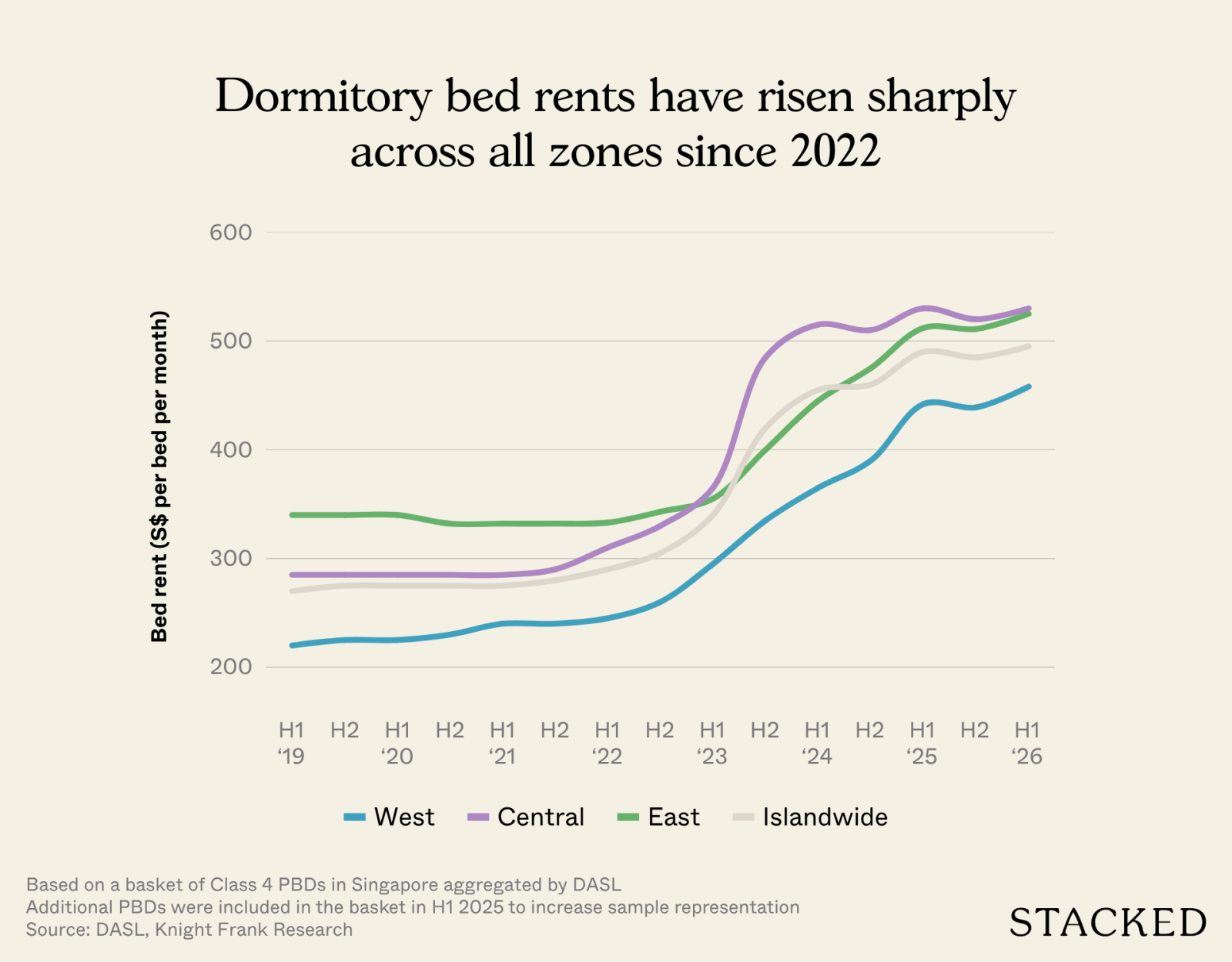
According to market data compiled by Knight Frank Singapore, the average worker dormitory rent increased at a yearly rate of 36.1% in 2023, followed by a 10.8% y-o-y increase in 2024, with rents climbing 5.4% y-o-y in 2025.
The industry is on track to see average worker dormitory rents climb by 2.1% over the whole of 2026.
This is after the major inflection point in 2022 to 2023, when rents surged 36.1%. This was due to the sudden halt of construction activity, and then a subsequent rush back into the market in 2022 when vaccines became more accessible and quarantine measures eased.
It was the sheer demand and pressures to complete ongoing construction projects at the time that had a huge impact in driving up worker dormitory rents, says Tay.
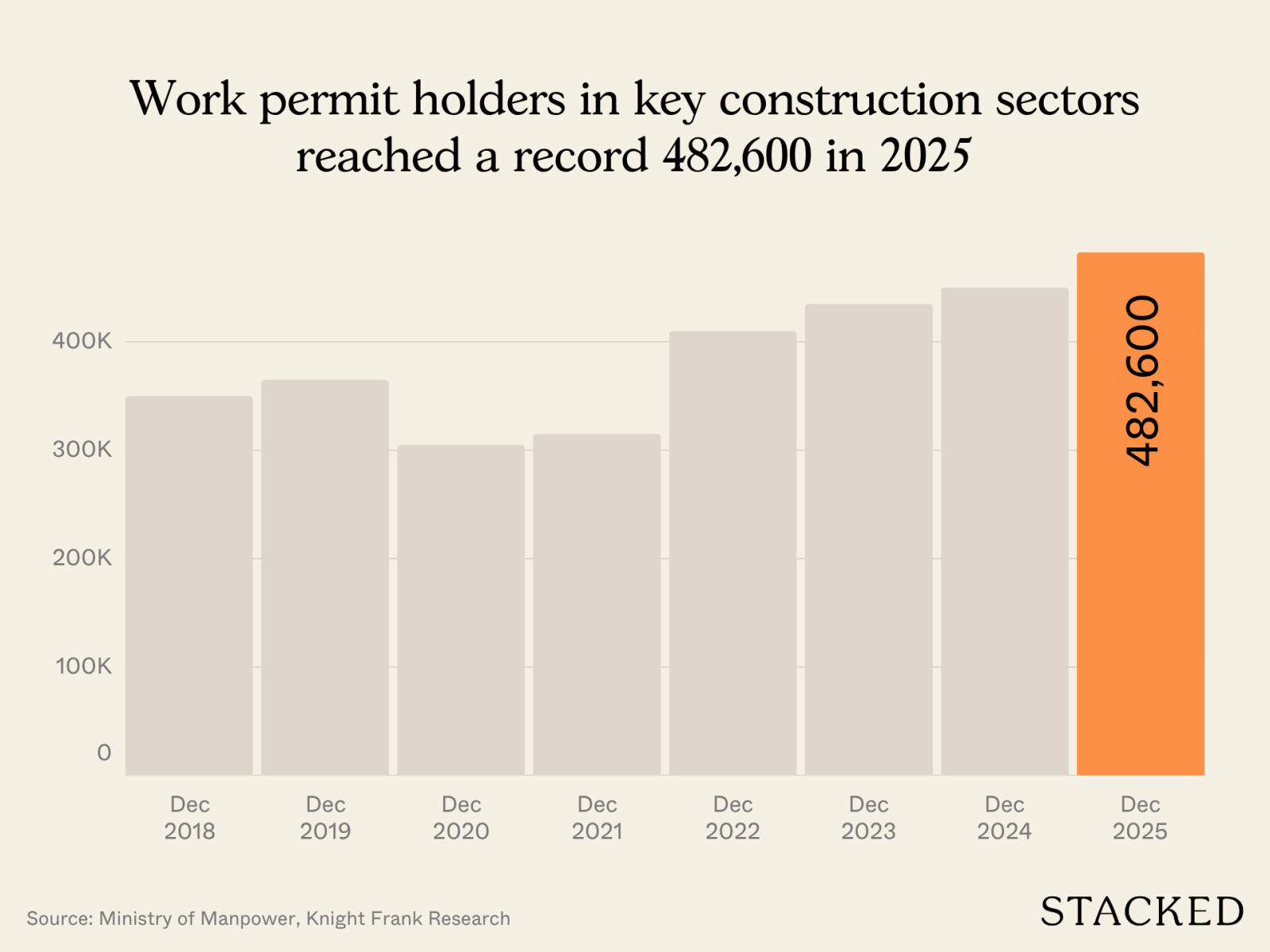
Due to the reopening of the market and the large backlog of ongoing and delayed construction projects in Singapore, the number of foreign construction workers in Singapore spiked in 2022, and builders rushed back into projects post-2020.
As of December 2025, there are 482,600 workers in the construction, marine shipyard, and process industries, according to the Knight Frank report.
But complicating the market are decreasing bed occupancy rates which fell to 95.8% in the first half of this year from 98.3% in the same period the year prior.
Bed rents in the coming years will not be driven by sheer demand economics, but by the cost of quality, the cost of retrofitting, construction, and utilities needed to meet the new standards, says Tay.
Fuad added that the dynamics in the dormitory sector have changed. It's no longer just a standard product — there's more competition among operators to attract tenancy. He's seen operators install air-conditioning, for example, even though it isn't an MOM requirement.
Dorm bed rents are a real construction cost for construction companies in Singapore, and thereby their projects. If operators squeeze profits, that places a burden on the construction companies who pay for that housing, and in turn places pressure back on the operators themselves, because fewer workers on site means less demand for their own beds.
Fuad said that most operators are not looking to squeeze construction companies for profit. "In a way, we position ourselves as a support to the construction industry," he says. "We're now chasing that quality of accommodation rather than that dollars and cents metric”.




0 Comments