



The prolonged period of global macroeconomic uncertainty has spurred many would-be homeowners in most mature markets to turn to renting instead of buying, and this has certainly been the case over the past few years, according to research by Cushman and Wakefield (C&W).
This was one of the key findings in the global real estate consultancy’s inaugural APAC Living Investor Survey. It shared that most of the investors surveyed by C&W were exercising more caution when it comes to deploying capital into residential (also known as living sector) assets, but were fundamentally committed to increasing their portfolio allocations to these properties.
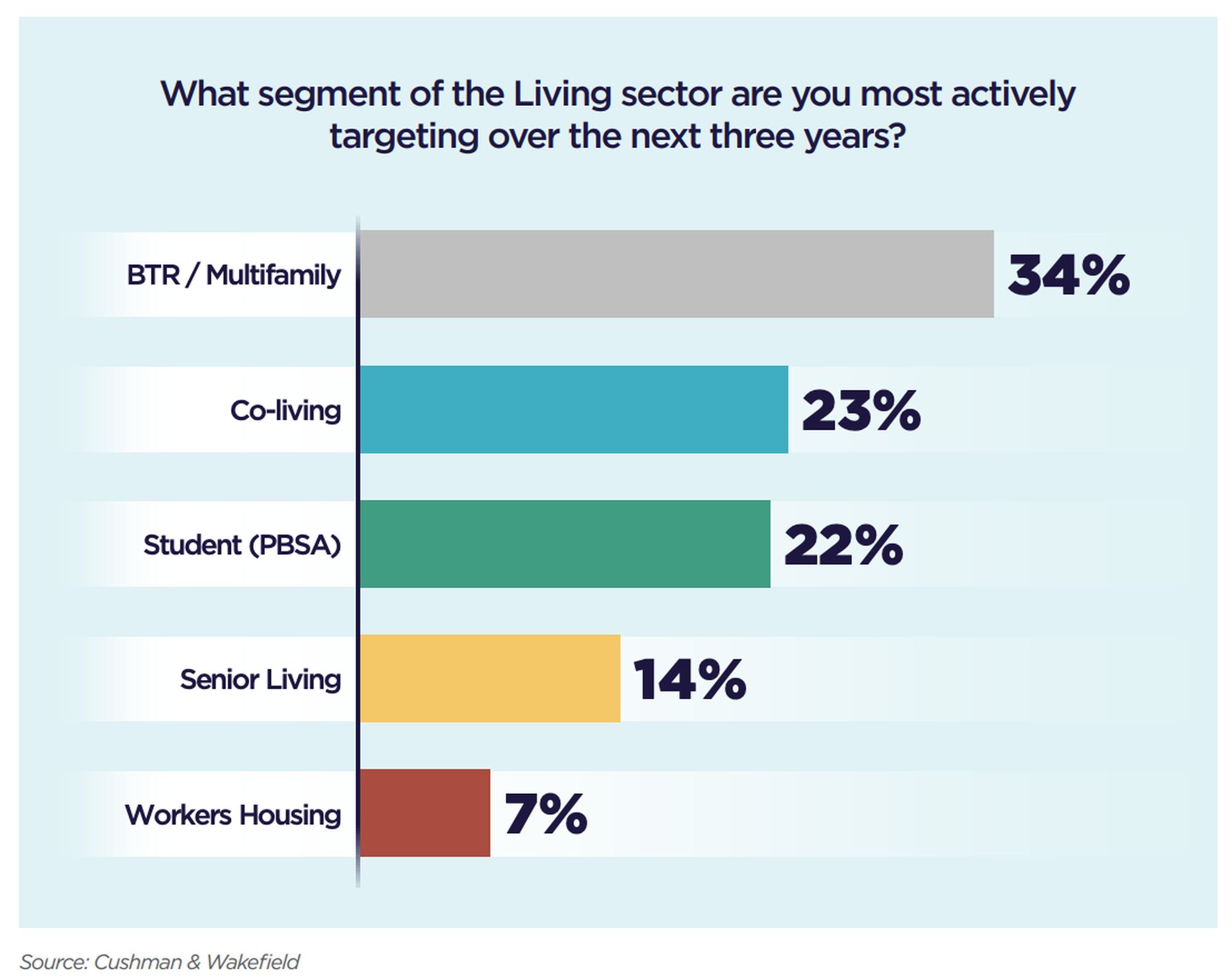
The broad uptick in rental demand across major housing markets, including residential sectors like Built-to-Rent (BTR) properties, student housing, and co-living apartments, has caught the eye of real estate investors and institutional funds.
The latest investment cycle has seen many of these fund managers and investors particularly keen on capitalising on the rising demand for student housing infrastructure in Asia Pacific, according to the C&W market report.
The report states that investors are projected to pour in over US$33 billion (S$41.81 billion) into residential or living sector assets and properties over the next five years. The survey included responses from investors with residential portfolios that consisted of over 200,000 units or beds.
The student housing segment typically performs well in more volatile environments, as people are more likely to choose to go to university, study for longer, or go back to school, says Conal Newland, Head of Living for APAC at C&W.
'Students' in this case, refer not only to full-time university enrolled students, but also those on short term exchanges, courses and other short term educational and working arrangements.
"We've seen an impact of the political environment in the US being a disincentive for some overseas students," says Josh Rose-Nokes, Director of APAC Living Research at C&W. He adds that tertiary and university-level students in the Asia pacific regions are increasingly turning to other university options closer to home as an alternative.
The ease of capital deployment is key
How, exactly, these students are housed depends on the particulars of the individual markets and jurisdictions. In Japan, this might look like acquiring an existing multi-family property, whereas in Hong Kong, it might be converting city hostels for central student housing.
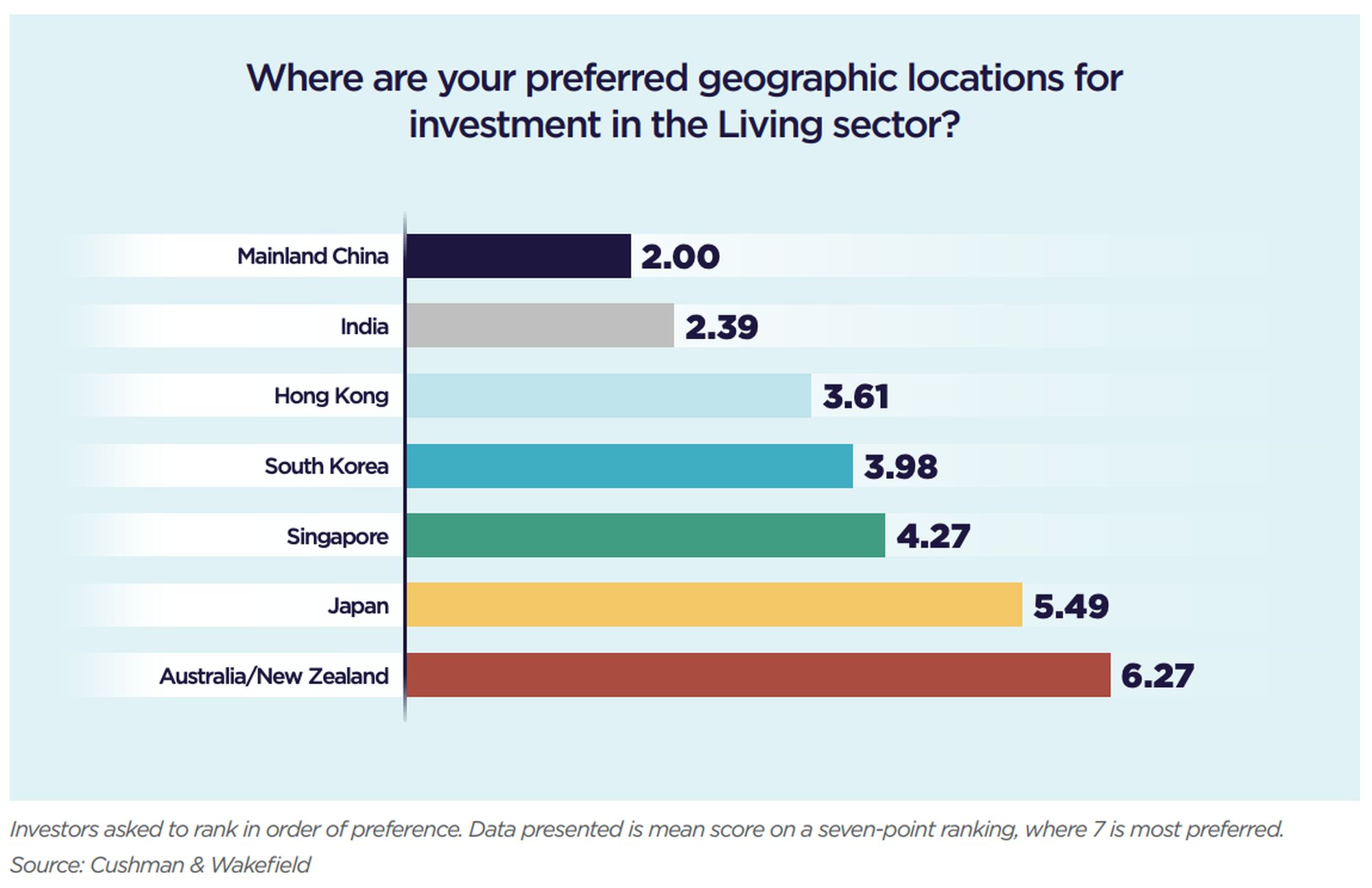
In the survey, investors were most interested in these types of assets in Japan and Australia, as institutional-scale deployment in those regions is easier. In turn this attracts a high volume of global capital inflows into those markets.
Singapore, South Korea and Hong Kong followed as other key markets, but these three countries also attracted a healthy amount of domestic investment interest in addition to foreign-based capital.
The consultancy adds that Japan and Australia's rental and property infrastructure, as well as the financial support networks in these jurisdictions, support the scale of capital deployment which makes their investment priorities worthwhile.
Japan is the most mature multi-family market in the region. The country already has a strong infrastructure of corporatised multi-family properties suitable for rental, which makes acquisition easy. Rose-Nokes said that despite the gradual normalisation of Japan's monetary policy, there were record investment volumes in 2025 in Japan.
Australia registered the second-highest levels of interest. Key markets there, like Sydney and Melbourne, have long faced an undersupply of residential stock to meet prevailing demand for new homes.
But the limited supply of existing residential developments for investment also means that some degree of exposure to the development and construction industry there is crucial. Australia has had three rate hikes this year, which has made borrowing more costly.
In the rest of the Asia Pacific region, the direction of real estate capital is somewhat ambivalent, meaning that there will be broad allocation targets about how much of their portfolio goes to a region or segment. For the most part, funds have tended to prioritise the best risk-adjusted returns.
Ongoing supply constraints hinder investment goals
Investors were still interested in Singapore, Hong Kong and Seoul, but on a more domestic scale. In these markets, capital deployment is more risky because there's less readily available rental-ready supply. These markets are also smaller, and don't scale as easily.
But there are still pockets of opportunity. For example, certain policy changes in Hong Kong have made it easier to convert hotels, offices and hostels to student housing.
In South Korea, rental demand is expected to grow as the country shifts away from its unique Joense rental system which allows renters to pay a lump sum to landlords in exchange for room and board, which is returned to them at the end of their tenancy. Recently, the country has seen the system being abused by fraudsters.
Stacked covered the changes in South Korea’s rental market in this article back in February 2026.
In Singapore, most of the investment is directed at co-living. Here, there's a dearth of off-campus private sector housing to meet its demand, says Rose-Nokes.
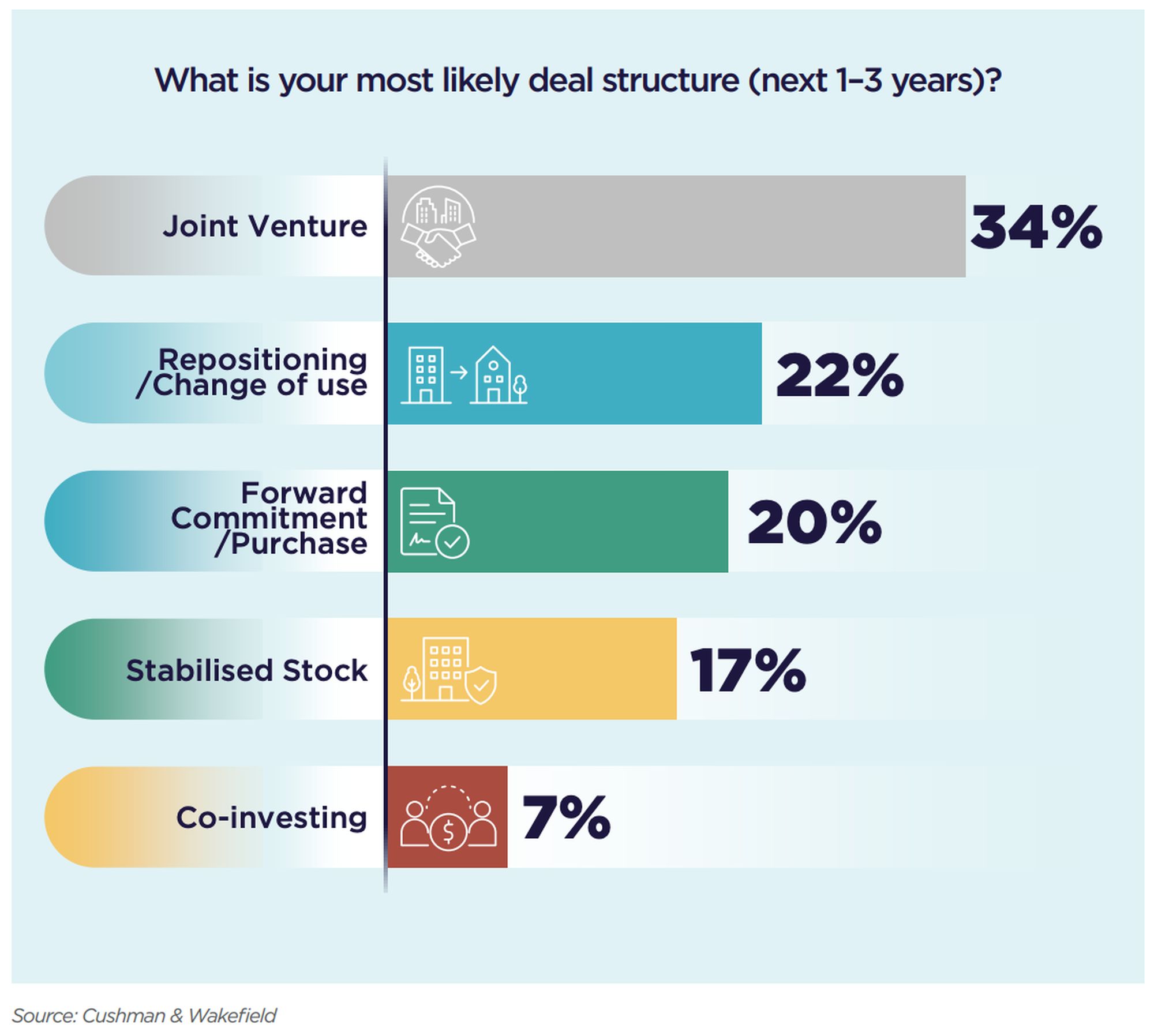
The survey suggests that partnering with local operators is the preferred way in for most global investors — 34% picked partnerships as their most likely deal structure, ahead of converting existing buildings (22%) and buying properties before they're even built (20%). More than half of the respondents said that local specialist partners are their preferred choice for management.
Around 73% of respondents said they will be using conversion strategies, which is the dominant strategy in Singapore and Hong Kong. The researchers also note that in Singapore, conversion provides a more tax efficient route into the living sector.
Developmental economics typically makes it difficult for developers to secure new greenfield or brownfield sites for development into rental-focused properties, and there's only so many shophouses which can be converted.
What does this mean for Singapore?
Although Singapore's public housing does a lot of the heavy lifting for most of the population, demand for different types of rental housing has been on the rise, especially among younger Singaporeans.
In addition to serving overseas students coming into Singapore, the properties also include young couples waiting on their BTO flat, but also for young Singaporeans, either singles or couples, who want more flexibility or privacy earlier in life, without the burden of a mortgage. That's attributed to a cultural shift we're seeing in Singapore, where renting is starting to become more of a norm.
For the local housing market, if capital is indeed deployed to the region at this scale and speed, it will become easier for renters, both foreign students and workers, and young Singapore residents, to find quick and affordable accommodation in a frictionless way.
Local operators like lyf, Hmlet and Coliwoo want to be ready to capitalise on partnerships with investors, while getting in touch with conversion opportunities and bottlenecks. And for local landlords who are in the business of renting out their primary or second homes, this means potentially partnering with an operator or as some people do.
There's a risk that without operators and a turnkey product, renters with quick move-in timelines will choose a corporate operator instead.
Challenges and Headwinds
But the growth and opportunities in the region’s living sector are not without a few headwinds in the coming years.
According to the surveyed investors, many have learned tough lessons from the Covid-19 pandemic, and know better what to do with their capital during periods of uncertainty. Between geopolitical crises, energy shocks and inflation they’re better prepared in case the worse should happen.
But Newland reiterated that barring upward inflationary pressures, there is relative stability across a number of macroeconomic factors. "We will see strong liquidity as we move towards the end of 2026 and moving into 2027, which is essentially deals in the pipeline closing, and all things being equal, then I think we will see that momentum continue to build,” he says.




0 Comments