


For years, most buildings in Singapore have depended on extensive and energy-hungry air-conditioning systems to cool indoor spaces. And this dependency has increased as more high-rise residential buildings, high-quality office developments, and integrated commercial projects are built.
But air-conditioning systems are one of the major barriers in our efforts to reduce the overall energy consumption in the built environment.
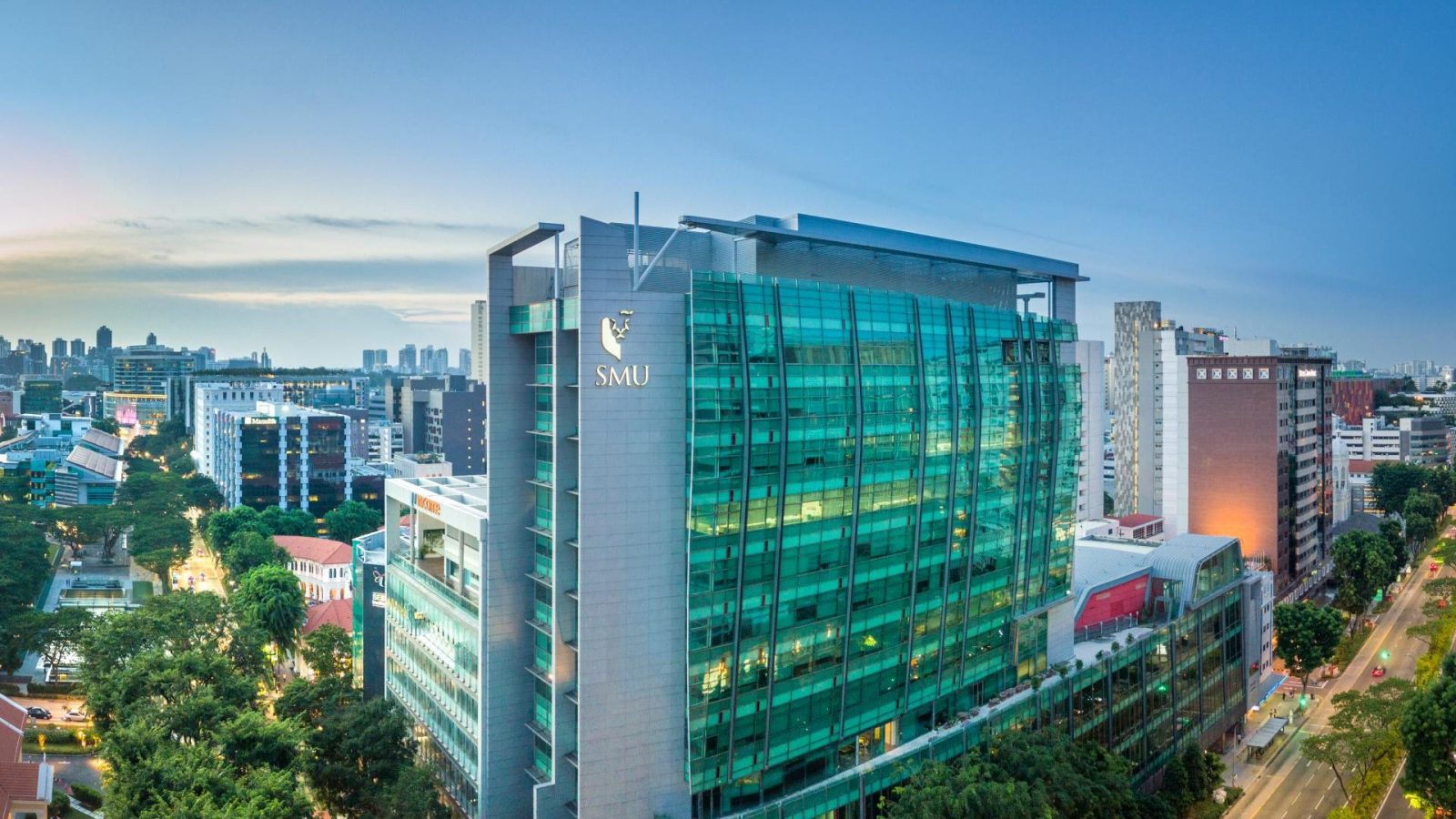
That’s why I was excited to visit the administrative building of Singapore Management University, which recently completed a retrofit that saw its previous air-con system replaced with a hybrid cooling system.
Truth be told, I wasn't exactly sure what an office building that isn't fully air-conditioned would feel like. I imagined hot air getting trapped, making the indoor spaces feel stuffy - the typical experience with most energy-saving indoor climate systems.
But when I visited the building on Victoria Street on Tuesday, I was pleasantly surprised. The air felt light and cool indoors - that ‘just right’ feeling is rare in Singapore interiors, which are often either blasted with AC or circulating hot air.
The visit to SMU’s admin building was jointly organised by the university and the Building and Construction Authority (BCA).
The renovation and green retrofitting of the admin building was one of 26 developments that were involved in a pilot project by BCA, which has rolled out a refreshed Green Mark certification scheme - Green Mark Version 7 (GM v7).
Officially unveiled on Sept 2, GM v7 is a refresh of the existing Green Mark framework that provides more flexibility for building owners to pursue and demonstrate sustainability performance.
Some of the key changes include:
- the introduction of a standalone BCA Energy Rating
- a new Super Lower Energy (SLE) tier: SLE70
- streamlined requirements and certification processes
- Portfolio Certification
- extended 5-year validity for eligible projects demonstrating sustained energy performance
The existing SLE performance level continues as SLE60, while GM v7 introduces SLE70 as a higher performance tier for projects achieving at least 70% energy savings against the stipulated baseline.
It took the team at SMU, led by Sundaravadivelan Selvam, Vice President, Campus Infrastructure and Services, a total of three years to get the whole building to a state where electricity costs are substantially cut and to achieve BCA's latest low energy certification.
What is Green Mark Version 7?
Green Mark Version 7 is a refresh of BCA’s Green Mark Scheme, which was launched in 2005. In 2021, BCA launched a tailored Green Mark ratings system under the scheme, including four tiers from "Standard" to "Platinum," based on a building’s holistic sustainability.
These criteria include energy efficiency, as well as intelligence, health and well-being, whole life carbon, resilience and maintainability.
Now, Green Mark Version 7 unveils a second rating pathway that buildings can take, which evaluates only their energy consumption, making it a more approachable goal, especially for existing buildings that can only become greener through retrofitting.
This is the "SLE70" nomenclature, which refers to "Super Low Energy" at over 70% energy savings against the building's typology 2005 baseline. The new ranking also includes four other tiers below it in ascending order of energy savings, plus formal recognition of the use of Alternative Cooling Technologies.
"This will enable more building owners to start their sustainability journey through energy improvement retrofits, and to progressively do more over time," says Chee Hong Tat, Minister for National Development, who was speaking about GMv7 at the International Built Environment Week on Sept 2.
The minister says that GM v7 is intended as a more flexible and business-friendly strategy for asset owners and developers. BCA has also taken steps to streamline certification processes, including allowing owners to bundle buildings under the same typology together during applications, and extending green certification validity from three to five years.
"The refreshed framework will support our continued push towards the 80-80-80 targets, while making it easier for more building owners and developers to come on board," says Chee.
The 80-80-80 refers to Singapore’s Green Building Masterplan, which aims for Green certification for 80% of buildings, for 80% of new developments to meet Super Low Energy standards, and for top-performing buildings to increase their energy efficiency by 80%.
These percentages are based on 2005 baseline figures, determined based on the typical energy use of buildings of the same type as of 2005.
A More Integrated Approach
The retrofit project by SMU on its administrative building covered four floors of its 14-storey building, in a process that took three years. The university says that the other floors in the building are currently under renovation in the same way.
According to Selvam, the project's green features, which granted the glassy building on Victoria Street a provisional SLE60 rating, cost about $4 million. This figure included a new chiller plant, a new optimised Air Handling Unit, hybrid cooling with ceiling fans, LED lighting, control systems and solar panels.
However, Selvam said that this figure includes $1 million in 'green premiums', such as selecting more energy-efficient equipment and technology, that SMU had to invest to enable the building to achieve its certification. The university estimates that it will pay back its $1 million investment in about four years from the electricity costs it saves.
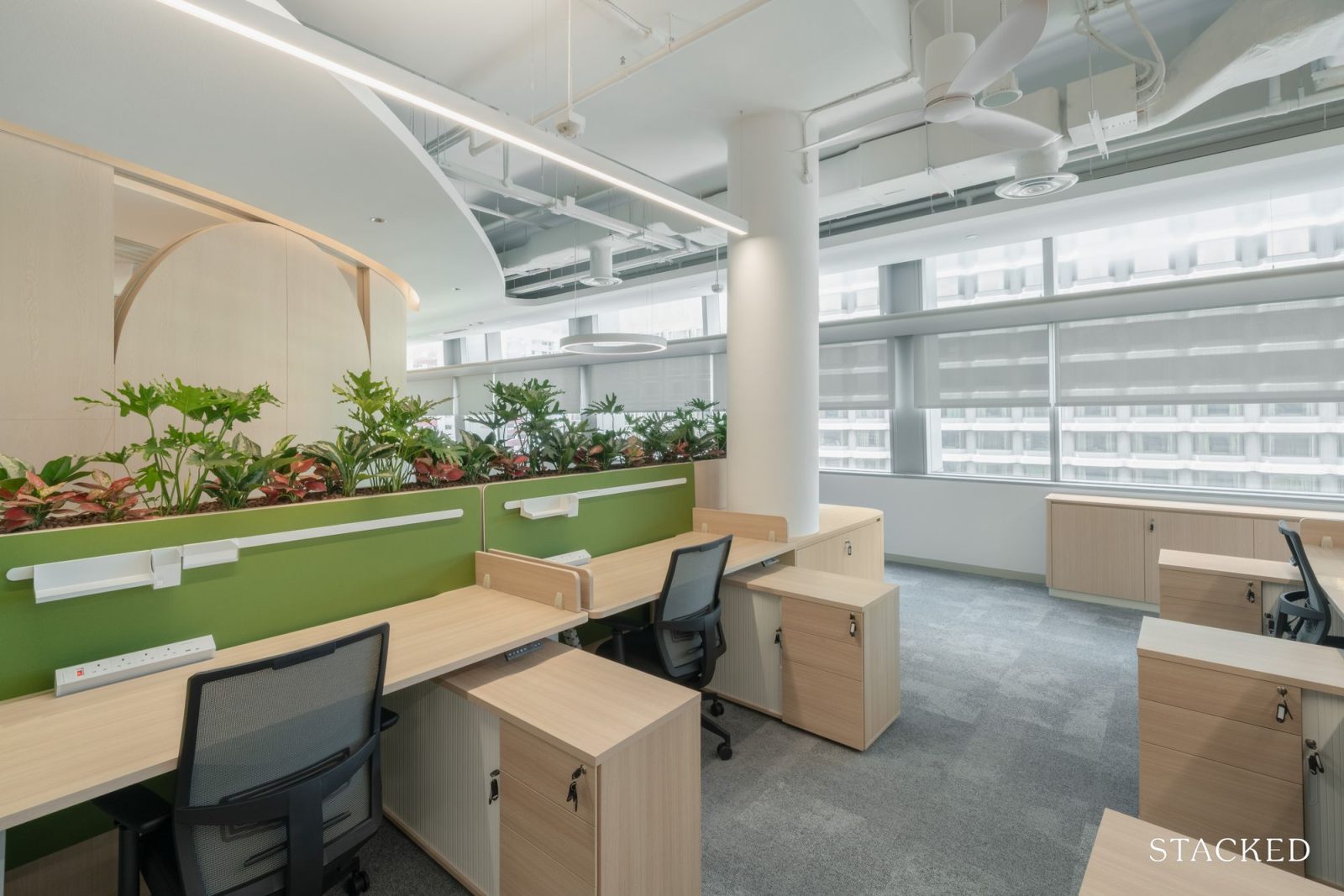
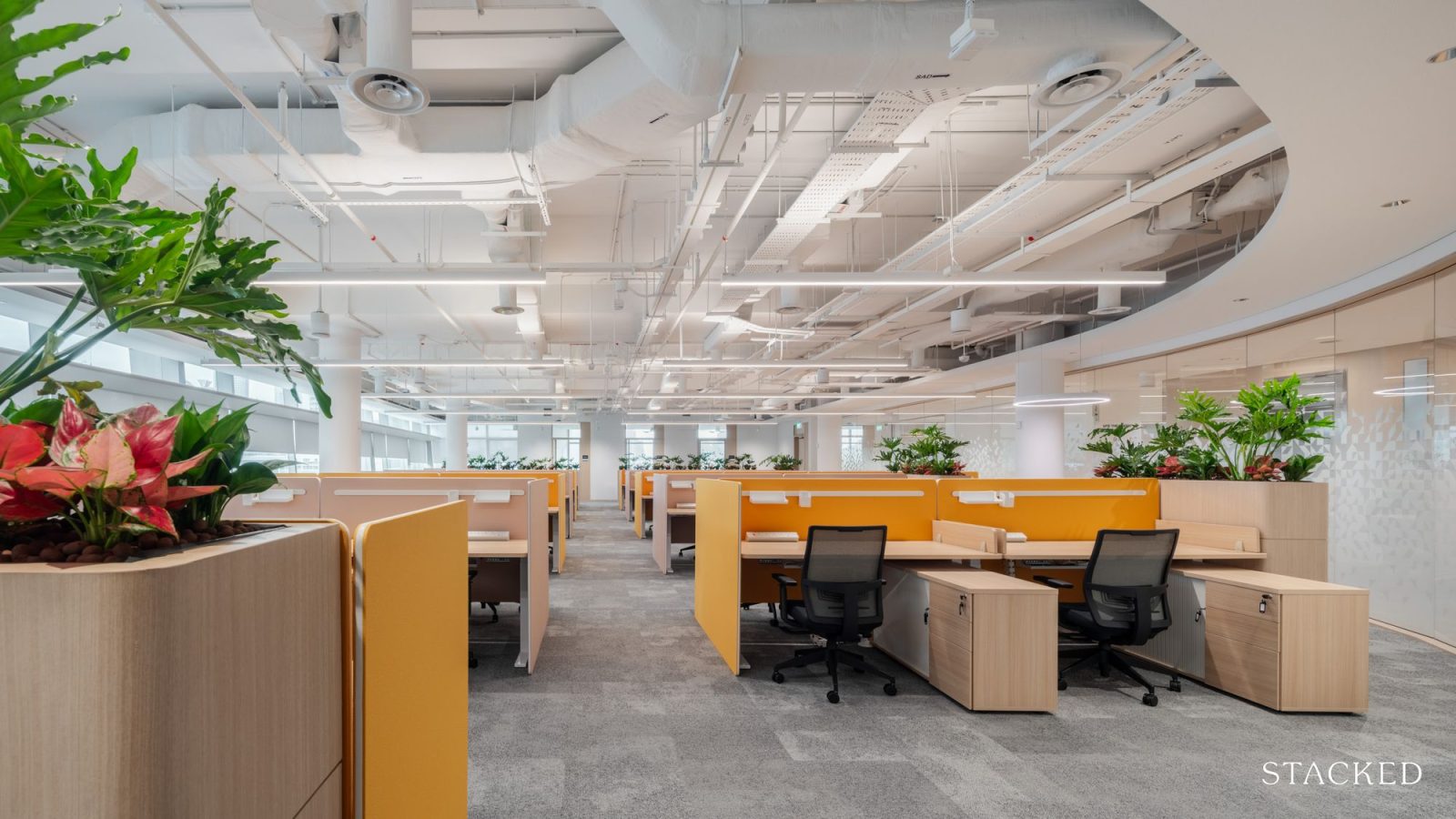
At a first glance, the floors where the green retrofitting has been completed already feel pleasant. The main office space is lined with rows of desks by a large window. There are ceiling fans throughout and LED strip lights over every row of desks. The window is partitioned into lower panels with automated blinds, and upper panels which are left blank for daylight harvesting.
According to Selvam, the team took a tailored and flexible approach, where the users' needs were placed at the centre of the design process. This consisted of several user engagement and feedback sessions as the cooling and lighting design were being implemented.
When the team installed the ceiling fans, users reported feeling too cold because the air blew downwards. So the team tried flipping the fans upside down to blow upwards, which worked.
There are two types of sensors placed throughout the office floor. The first is a motion sensor, which controls the fans and automatically turns them off when no users are detected in the space. The second is light sensors, which face the window. These are able to dim the lights in areas where enough daylight is harvested.
Overall, it's a delicate balance to strike between harvesting sunlight for its solar benefits throughout the day, while still protecting the cooling systems, says Selvam. In terms of the hybrid cooling, there are AC vents which are set at 25.5 degrees Celsius. That cold wind is then circulated by the fans, creating that genuinely cool feeling.
By adopting the key upgrades, including chiller plant replacement, AHU optimisation, lighting controls, solar PV installation and hybrid cooling initiatives, the retrofit is expected to deliver approximately 15–20% annual energy savings, equivalent to approximately half a million kWh per year.
Extending a helping hand to smaller building owners
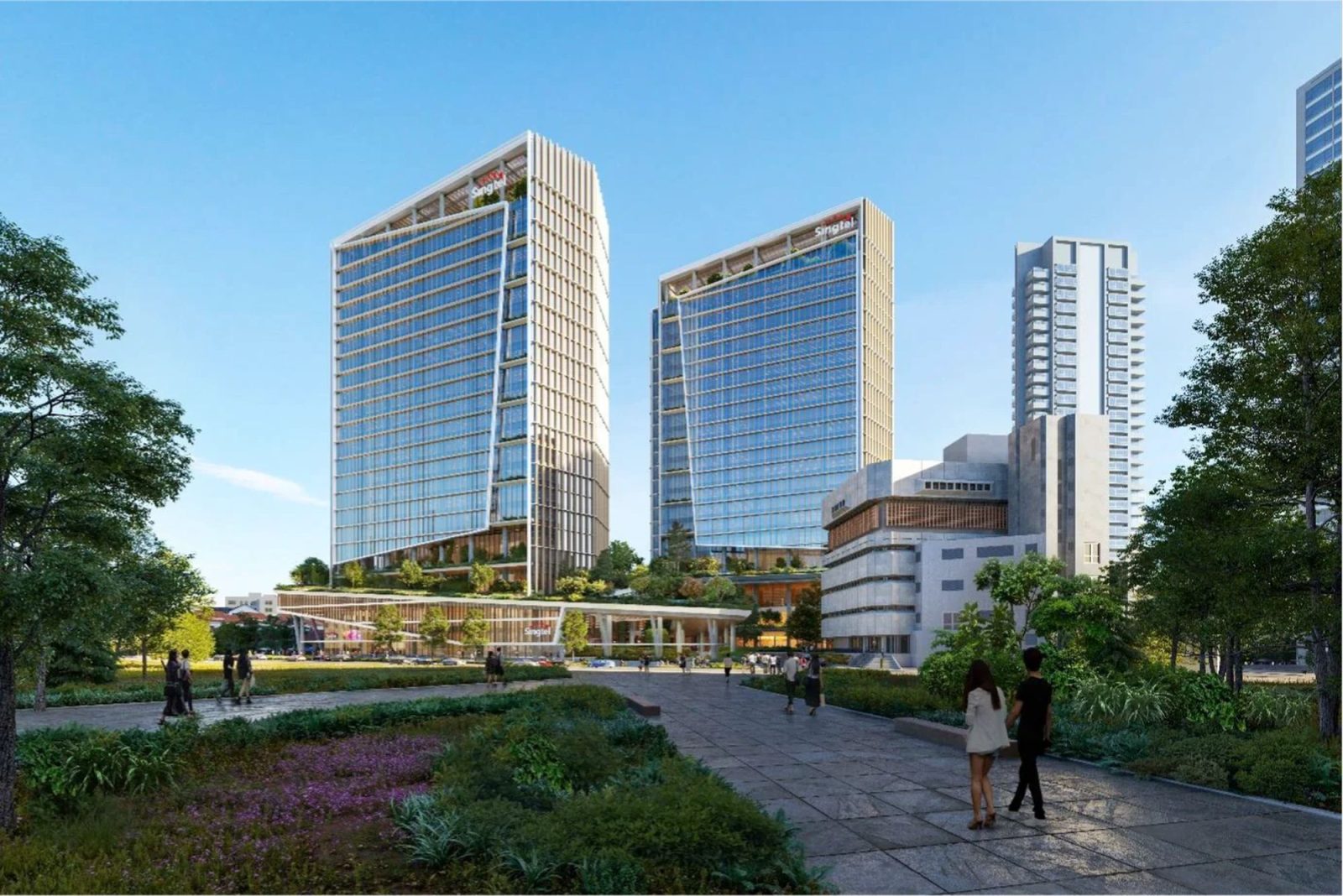
Two more developments that took part in the pilot project of GM v7 were the new Comcentre building, which is being developed into two 20-storey office towers that achieved a Platinum rating and a Zero Energy rating.
Meanwhile, Bay South and Bay East at Gardens by the Bay have also received a Platinum rating and SLE70 rating, but got there through different means. Bay South's biomass cogeneration system generates energy from the gardens' organic waste. Bay East leans on passive design and a large rooftop solar installation.
Green Mark version 7 makes going green more accessible for the older guard of buildings in Singapore, instead of reserving those accreditations for new developments being built from the ground up.
The new scheme is also intended to align more closely with global ESG reporting frameworks and international sustainability standards, which will make it easier for certified building owners to access green financing and remain competitive in a sustainability-focused global economy, says Chee.
To ease the transition, BCA will provide a six-month grace period and continue to accept GM: 2021 applications until 31 March 2027. But from 1 April 2027, all new Green Mark applications, including those for building developments on land sold under the Government Land Sales (GLS) Programme on or after 30 Jun 2022, will be assessed under GM v7 only.


0 Comments