


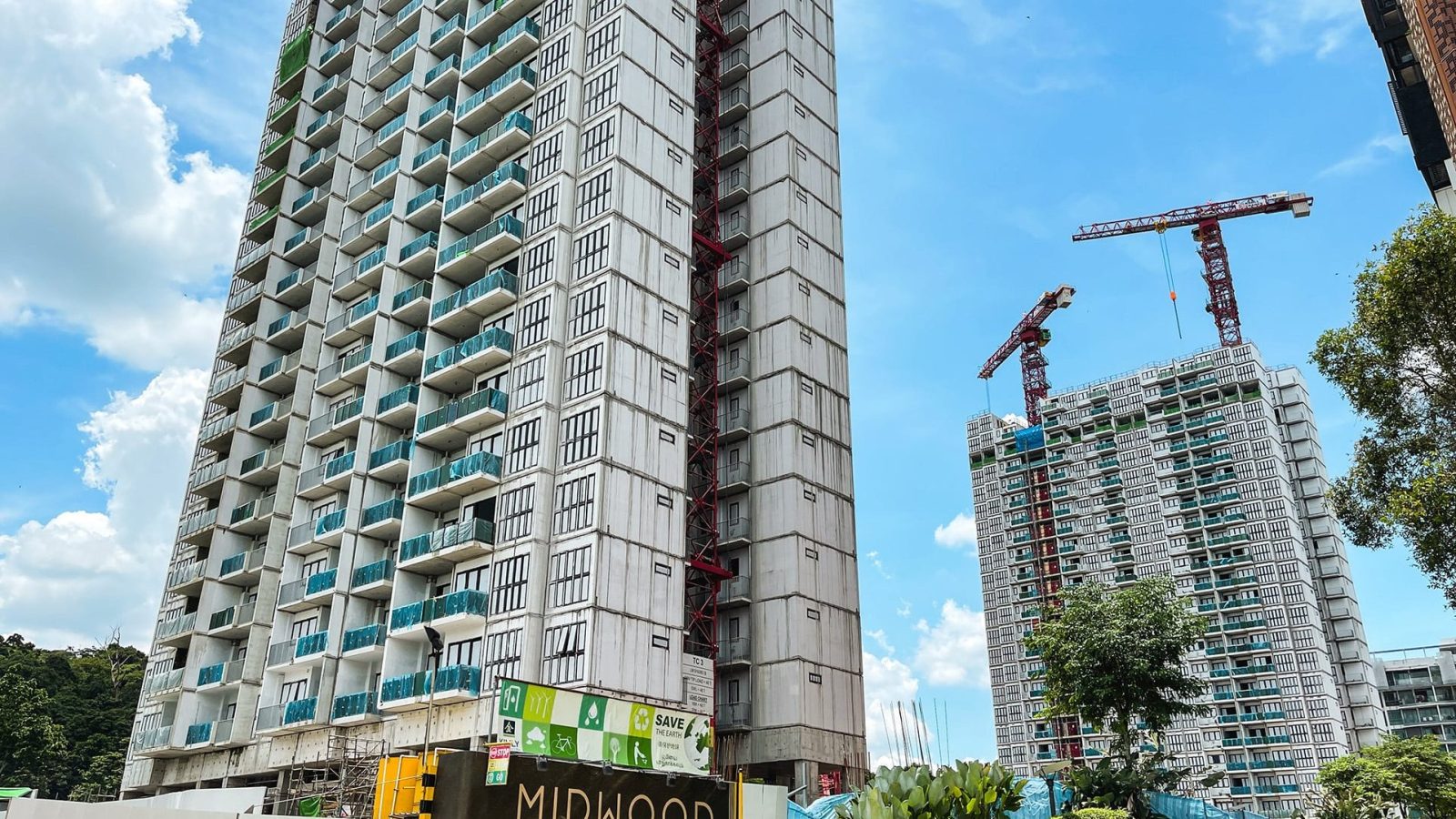
In the first three months of this year, Singapore’s construction industry emerged as one of the country’s strongest-performing sectors, recording 11.8% y-o-y growth.
The strong performance looks set to continue in the coming years, with the Building and Construction Authority (BCA) projecting that the average construction demand will increase from $33 billion in 2027 to $46 billion in 2030.
However, the buoyant outlook is tempered by escalating construction costs, according to JLL's Global Construction Costs Index 2026. Across Asia Pacific markets, cost growth forecast ranges from 3.8% to 4.7% in 2027, almost matching the cost increases in North America (3.2%-4.2%) and Europe (2.2%-3.5%).
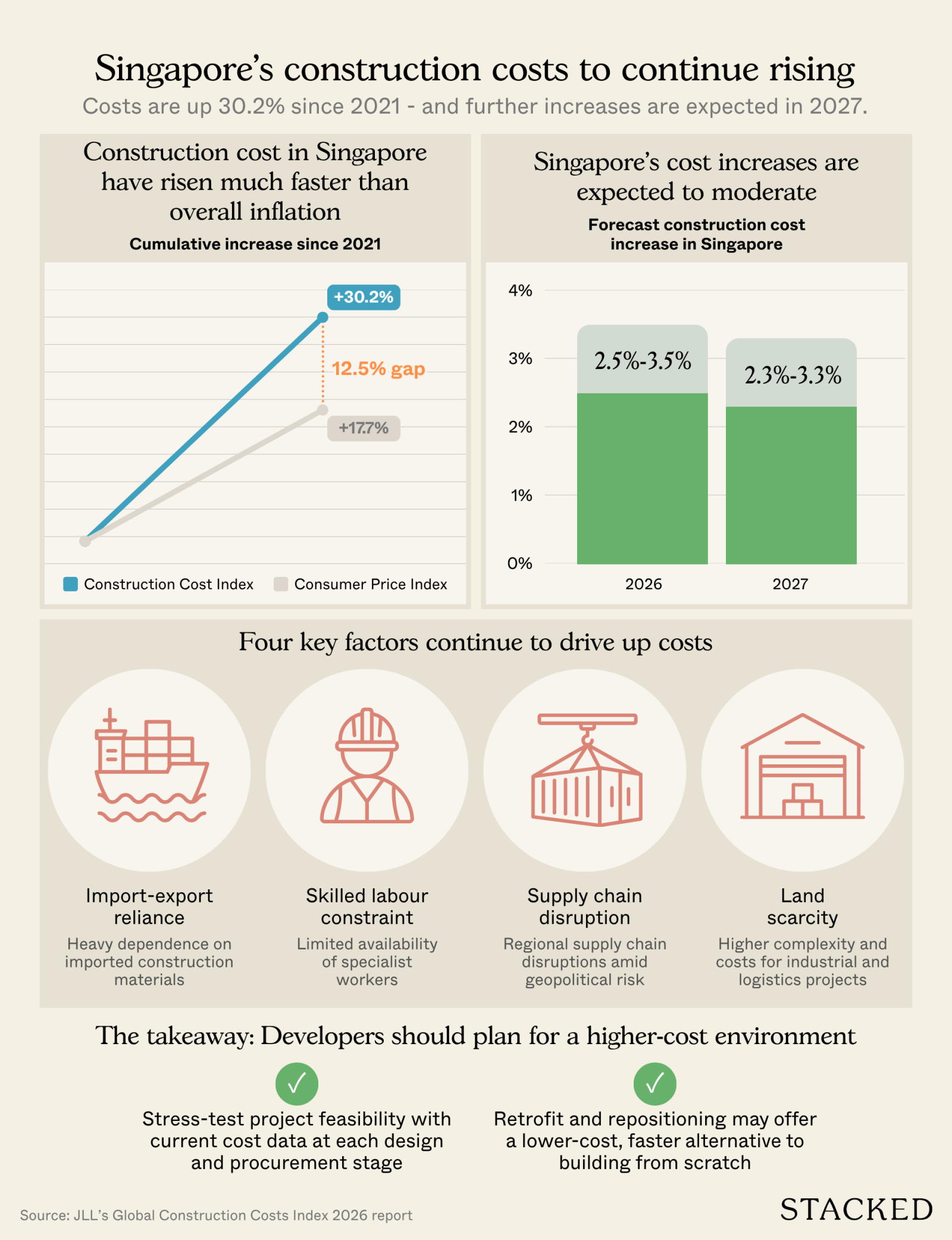
For Singapore, JLL forecasts that construction costs will grow by 2.5%–3.5% in 2026, and ease slightly to 2.3%–3.3% in 2027. Meanwhile, cumulative tender price inflation in Singapore has reached 30.2% from 2021 to date, against CPI growth of 17.7%. This means a gap of more than 12 percentage points, which contributes to higher expected construction costs next year.
How geopolitical unrest affects import-dependent markets like Singapore
The latest Middle East conflict will soon last for a year, and that has led to longer and more complex supply chains routing through Middle Eastern trade hubs.
With Asia Pacific's heavy reliance on Middle Eastern energy and construction materials, the result is sustained cost increases due to supply chain disruption.
In Hong Kong, industrial and logistics construction costs now approach or exceed $2,500 per square metre, more than 60% above regional averages.
At the same time, energy-intensive materials, including steel, aluminium, and cement, are seeing elevated prices across the Asia Pacific region, often exceeding those in European or North American markets.
Why is construction inflation outpacing APAC consumer inflation?
In Australia, Singapore, and Japan, construction cost inflation has run 1.5 to 2 times ahead of CPI over the past five years, according to the JLL report.
The price spike can be attributed to sector-specific pressures including heavy import-export reliance, skilled labour shortage for specialist workers, specialised material demands, and supply chain complexity. These specific items are often not captured in general consumer price indices.
In Singapore, cumulative tender price inflation has risen by 30.2% since 2021, compared with yearly CPI growth of 17.7%. This means that even as central banks successfully moderate broad consumer prices, construction projects continue to face acute cost pressures that broader economic indicators don’t reflect.
Why Singapore's developers may increasingly favour upgrading existing assets
As construction costs continue to rise, the long-term change could spur a shift from ground-up development towards an increase in asset enhancement and adaptive reuse.
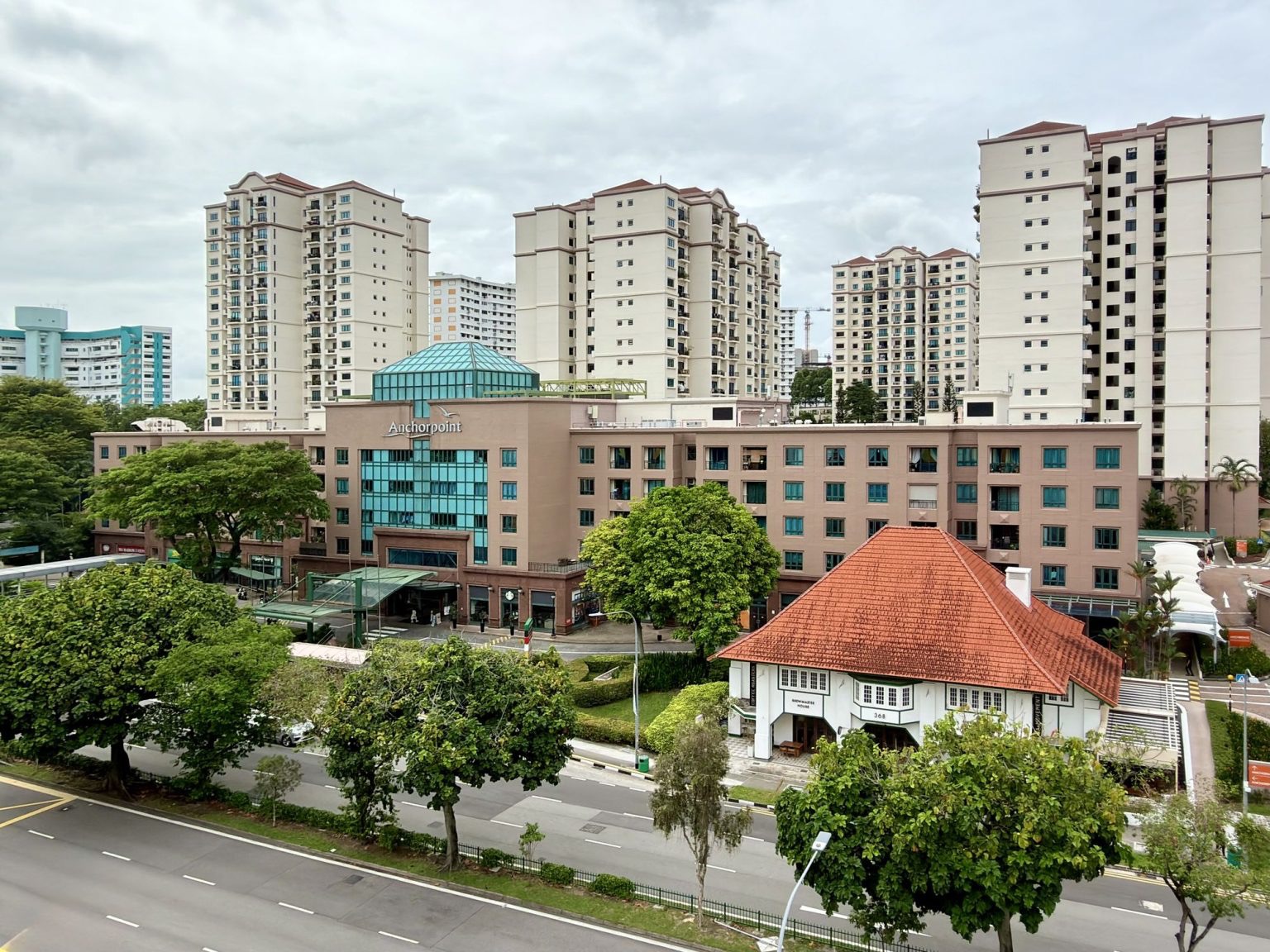
Developers may find that retrofitting or Asset Enhancement Initiatives (AEIs) could offer better cost and time efficiencies than new construction projects. Recent examples include Anchorpoint and Tampines Mall, which recently completed a $24 million AEI that started in September 2025.
What this could mean for existing well-located assets is the potential for rental growth, especially in markets with constrained supply and persistent demand. Meanwhile, owners can reposition existing assets to capture changing occupier demand.
For gateway cities like Hong Kong and Singapore, severe land constraints are pushing costs to higher levels. The cost gap is particularly acute for industrial and logistics assets, where Hong Kong and Singapore’s premiums directly contradict the sector’s typically lower construction costs.
Data centres are another example of real estate sectors which rely heavily on mechanical, electrical, and plumbing (MEP) core systems. These will experience above-average cost pressures that the headline tender price figure does not often capture.
In Singapore, the demand for raw materials comes from projects that cut across public and private sectors. This spans Build-To-Order (BTO) public housing, mixed-use commercial and infrastructure works including Changi Airport Terminal 5, the Marina Bay Sands expansion, and the Thomson-East Coast Line extension.
Conclusion
With cost pressures unlikely to reverse, and construction cost price increases establishing a permanently higher baseline across Asia Pacific markets, developers have to consider the risks of project delays leading to prolonged cost escalation.
“Developers face a clear choice: adopt more agile risk and supply chain management to keep projects on course, or fall behind,” says Daniel Malacchini, Head of Cost Advisory & Cost Management, Project and Development Services (PDS) at JLL Asia Pacific.
He adds that developers should stress-test project feasibility with current cost data at each design and procurement stage. Retrofit and repositioning may offer a lower-cost, faster alternative to building from scratch.
The JLL report also points out that as macro-economic conditions evolve, organisations must pivot from single point-in-time feasibility assumptions and implement continuous re-underwriting throughout the project lifecycle. Best practices include investing in high-quality properties with strong growth potential, securing contracts for materials and services with changing prices, and upgrading existing properties to increase their value.


0 Comments