


Hi Stacked,
I am a single woman approaching 50, and I would like your advice on how to manage my two properties as I approach retirement.
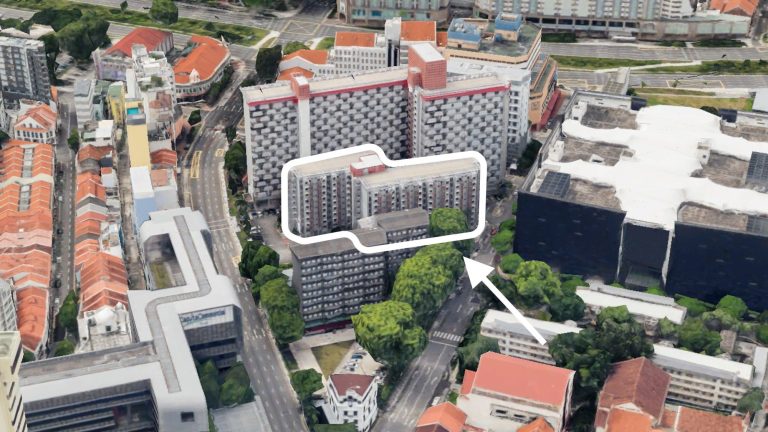
The first is a three-room HDB flat of about 829 sq ft in Queenstown, with a lease that started in 1969, so it is about 57 years old. It is currently rented out at $3,300 a month. The flat is fully liveable, and it has a utility room at the back that gives it extra usable space.
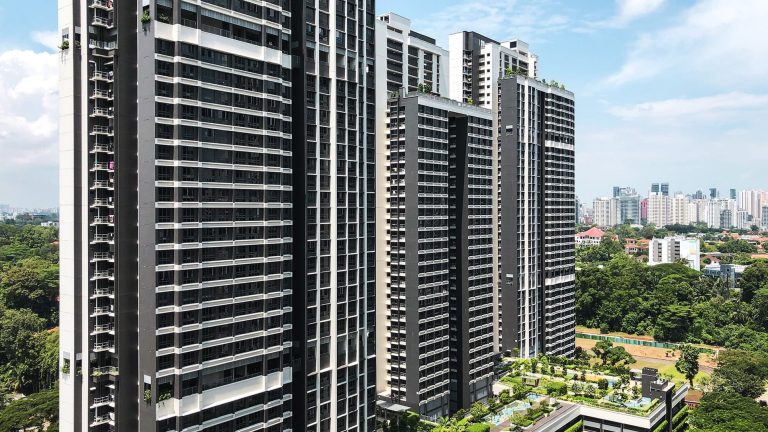
The second is a two-bedroom condo unit of about 635 sq ft in Queenstown, which was completed in 2022. This is where I live.
I have rented out the HDB flat for the past decade without any real difficulty finding tenants. But I am increasingly concerned about its longer-term rental demand and resale value, especially with the number of new homes being built in the surrounding area.
As I approach retirement, I am worried about lease decay, and whether it would be more prudent to keep renting the flat out, sell it at some point, or consider other options such as VERS.
I would appreciate your advice on the following:
- Does it make financial sense to keep holding and renting out the HDB flat in the longer term?
- How could the remaining lease affect its resale value over the next five to 15 years?
- Is there an optimal time to sell before lease decay becomes a bigger concern?
- Should I sell the flat and invest the proceeds for retirement instead?
- How should I balance the rental income with my overall retirement needs?
Thank you!
(This is part of an ongoing series where we answer reader questions about the property market. If you have one of your own, send it to stories@stackedhomes.com)
(This is part of an ongoing series where we answer reader questions about the property market. If you have one of your own, send it to stories@stackedhomes.com.)
Hi, and thanks for writing in!
At $3,300 a month, your flat collects $39,600 a year in rent, which would add up to roughly its current market value in about 11 years. With 42 years still left on the lease, there is a lot of rent to come, which is why we wouldn't sell it simply because it is old.
However, lease decay will affect the flat's resale value since a buyer has to finance whatever lease is left, and that difference widens as the years run down.
Your flat is a three-room unit of about 829 sq ft in Queenstown, on a 99-year lease that started in 1969, so the lease will have about 27 years left by the time you turn 65.
You also own a two-bedroom condo of about 635 sq ft in Queenstown, completed in 2022, which we'll treat as your long-term home. Since you haven't mentioned any outstanding loans, CPF usage or other savings, we'll focus on what the flat can earn and fetch.
We'll start with what the flat could sell for and how hard its rent is working. Then we'll look at how the lease affects your future buyers, how far its price could fall before holding stops paying, and where VERS fits in.
What could your flat sell for today?
To estimate this, we looked at three-room resale transactions in Queenstown from Jan to Oct 2026, grouped by the year each flat's lease started.
Average price of three-room flats in Queenstown based on lease start year
| Lease start year | Average unit size (sq ft) | Average resale price |
|---|---|---|
| 1967 | 649 | $324,085 |
| 1968* | 1,102 | $1,040,888 |
| 1969 | 684 | $356,143 |
| 1970 | 699 | $362,379 |
| 1971 | 646 | $340,571 |
| 1973 | 759 | $398,000 |
| 1974 | 685 | $456,667 |
| 1975 | 696 | $460,020 |
| 1976 | 700 | $382,192 |
| 1977 | 713 | $400,667 |
| 1978 | 700 | $390,000 |
| 2008 | 646 | $701,250 |
| 2011 | 743 | $690,000 |
| 2012 | 733 | $760,984 |
| 2013 | 721 | $727,000 |
| 2015 | 678 | $734,556 |
| 2016 | 700 | $800,625 |
| 2018 | 732 | $745,833 |
| 2020 | 667 | $782,500 |
| 2021 | 679 | $834,768 |
| 2022 | 675 | $818,444 |
Flats with leases starting between 1967 and 1978 averaged roughly $324,000 to $460,000, while those with leases from 2008 onwards averaged between $690,000 and $835,000. These averages also reflect differences in location, floor and condition, so the lease is only one of several reasons for the gap.
Flats with a 1969 starting lease like yours averaged $356,143. But this rests on just seven sales at an average of 684 sq ft, so it likely understates what an 829 sq ft flat would fetch.
A closer comparison is the larger three-room flats in Queenstown's older blocks. Of the flats with leases starting from 1969 to 1977, 11 units of 753 sq ft or more were resold this year at an average of $429,727, ranging from $376,000 to $505,000 depending on the block and floor.
We couldn't find a three-room flat of your size and lease year among the resale transactions since 2017, so your flat's stated size may include the utility room, or your layout may simply be uncommon. Either way, we'll use about $430,000 as a working estimate of your flat's value.
Older flats rent for less than newer ones, but not by much
Your rent of $3,300 is about 6.5% above Queenstown's median of $3,100 for three-room flats rented out between Jul and Sep 2026, based on HDB's rental records.
To see how much a flat's age affects its rent, we matched each three-room rental approved in Queenstown this year to the lease start year of its block. We then set the median rent of each group against its average resale price.
Three-room flats in Queenstown: rent against resale price by lease start year
| Lease start year | Rental approvals (Jan to Sep 2026) | Median monthly rent, 2021 | Median monthly rent, 2026 | Average resale price, 2026 | Gross rental yield |
|---|---|---|---|---|---|
| 1975 and earlier | 499 | $2,000 | $3,000 | $393,237 | 9.2% |
| 1976 to 1985 | 125 | $2,000 | $3,000 | $387,632 | 9.3% |
| 2006 to 2015 | 51 | $2,300 | $3,400 | $733,380 | 5.6% |
| 2016 and later | 45 | $2,400 | $3,600 | $818,479 | 5.3% |
Flats with leases starting in 1975 or earlier rented for a median of $3,000, about 17% less than the $3,600 for flats with leases from 2016 onwards. Yet their average resale price of $393,237 was about 52% lower.
In other words, buyers discount an older flat much more than tenants do. Older flats also make up most of the town's rental market for this flat type.
Since 2021, rents for older three-room flats have produced gross yields of around 9%, compared with 5% to 6% for newer ones. Old flats, or blocks with leases from 1975 or earlier, made up 69% of rentals in the area.
Your $3,300 places you in roughly the top quarter of rents for these older flats, as about 24% of this year's recorded rentals in that group were at $3,300 or more. Your flat's larger size likely helps, and may be part of why you've found tenants without difficulty for a decade.
On our $430,000 estimate, your rent works out to a gross yield of about 9.2%. However, part of what makes the yield high is the low price, and the price is low because buyers expect the flat to be worth less over time, so some of your rent is compensation for that decline.
Will the new flats nearby take your tenants?
Queenstown does have a large batch of newer flats reaching the open market. Based on HDB's property records, about 2,400 flats in the town are estimated to reach their MOP in 2026, nearly 1,100 of them three-room units, all in 14 blocks along Margaret Drive completed in 2021.
But few owners of newer flats have rented them out as a whole so far. Flats with leases from 2016 onwards accounted for 45 of this year's three-room rental transactions in Queenstown, against 499 in the oldest blocks.
HDB's records also show no further Queenstown blocks reaching their MOP between 2027 and 2030. Meanwhile, newer flats classified as Plus or Prime can never be rented out as a whole, even after their 10-year MOP, so they won't compete with yours for tenants looking to rent whole flats.
Where the newer flats do compete is for tenants who want modern fittings and are willing to pay about $600 a month more for them. Your flat's larger size gives it more space than the average newer three-room flat, which ranged from about 646 to 743 sq ft in this year's resale data.
There is little in the data to suggest that your flat's age has become an obstacle to renting it out. The new supply is more likely to cap how much you can raise the rent in the near term.
How much of the rent do you actually keep?
Your $3,300 a month doesn't account for property tax, conservancy charges and agent's fees. Here is an illustrative breakdown of those recurring costs.
| Monthly rent | $3,300 |
| Estimated Annual Value (AV) | $26,088 |
| Estimated property tax (annual) | $3,131 |
| Conservancy charges | $50.40 |
| Agency fees (assuming they're paid once every 2 years) | $3,597 |
| Monthly nett rent | $2,839 |
This leaves about $2,839 a month, or $34,068 a year, after property tax, conservancy charges and the agent's fee. These costs take up about 14% of your rent, which puts your net yield at about 7.9% on our $430,000 estimate.
This figure is still before repairs, vacancy periods and income tax on the rent, and before any loan you may still be repaying on the flat. In a block of this age, we'd set aside part of the rent each month for repairs.
The decaying lease matters more to your buyers than your tenants
Your flat has about 42 years left on its lease this year, falling to about 37 in five years, 32 in 10 years and 27 in 15 years.
What changes over that time is who can afford to buy it. A buyer can only use their CPF in full if the remaining lease covers the youngest buyer up to age 95, and HDB limits its loan tenure to the remaining lease minus 20 years, or 65 minus the buyers' average age, whichever is shorter.
How the remaining lease narrows your pool of buyers
| Year | Your approximate age | Remaining lease | Minimum buyer age to use CPF in full | Longest HDB loan tenure allowed by the lease |
|---|---|---|---|---|
| 2026 | 50 | 42 years | 53 | 22 years |
| 2031 | 55 | 37 years | 58 | 17 years |
| 2036 | 60 | 32 years | 63 | 12 years |
| 2041 | 65 | 27 years | 68 | 7 years |
Even today, a buyer would need to be 53 or older to use their CPF in full. The remaining lease would allow a 22-year HDB loan, but a 53-year-old could borrow for only 12 years, since the loan has to be repaid by age 65.
Younger buyers could still use some CPF, but on a pro-rated basis, so they would need more cash upfront for the same flat.
So your likely buyers each year become older households who can pay most of the price upfront, such as downsizers who already know the estate. An older flat in a central, mature estate can suit them well, but a smaller pool usually means a longer wait for a buyer and less room to hold firm on price.
None of this matters to your tenants, who only need the flat for the length of their tenancy, so your flat could stay easy to rent even as it becomes harder to sell. For more on how this plays out across towns, see our analysis of when lease decay actually starts to show in HDB prices.
Prices of the oldest flats are slipping this year, while newer ones still rise
To see how flats of different ages have held their value, we tracked the average resale price of three-room flats in Queenstown by lease group since 2017.
| Year | Lease start 2016 and later | Lease start between 2006 and 2015 | Lease start between 1996 and 2005 | Lease start between 1986 and 1995 | Lease start between 1976 and 1985 | Lease start 1975 and earlier |
|---|---|---|---|---|---|---|
| Current age | Age 10 and younger | Age 11 to 20 years | Age 21 to 30 years | Age 31 to 40 years | Age 41 to 50 years | Age 51 years and older |
| 2017 | - | $544,059 | - | - | $355,093 | $356,547 |
| 2018 | - | $533,887 | - | - | $330,769 | $331,769 |
| 2019 | - | $531,952 | - | - | $313,268 | $306,495 |
| 2020 | $656,484 | $552,815 | - | - | $314,021 | $310,168 |
| 2021 | $644,473 | $569,667 | - | - | $340,792 | $343,776 |
| 2022 | $675,471 | $595,878 | - | - | $373,073 | $358,563 |
| 2023 | $686,404 | $639,466 | - | - | $397,508 | $378,269 |
| 2024 | $731,395 | $671,016 | - | - | $388,285 | $394,025 |
| 2025 | $774,599 | $725,017 | - | - | $405,621 | $423,298 |
| 2026 (Up to Oct) | $818,479 | $733,380 | - | - | $387,632 | $393,237 |
Older flats rose alongside newer ones during the post-COVID upswing. For flats with leases starting in 1975 or earlier (the group your flat belongs to), the average resale price rose from $306,495 in 2019 to $423,298 in 2025, an increase of about 38.1%.
This year, prices for the older groups have started to fall. The oldest group's average fell about 7.1% between 2025 and the first 10 months of 2026, and flats with leases from 1976 to 1985 fell about 4.4%, while those with leases from 2006 to 2015 rose about 1.2%, and those from 2016 onwards rose about 5.7%.
An average can also fall simply because more of the cheaper flats happened to sell this year, so we checked whether that explained the drop in the oldest group.
For the most part, it didn't. Flats with leases from 1967 to 1975 recorded lower averages in 2026 than in 2025 in every lease year except 1968, whose only sale each year was a terrace flat. The decline also shows up in both the Standard and Improved flat models.
The wider HDB market has been far steadier, with HDB resale prices slipping by just 0.1% in 3Q2026, their third small quarterly decline this year.
Still, these are averages across 148 sales in a partial year, and a slightly larger share of the cheaper Standard flats changed hands this year. They don't mean your flat has lost 7% of its value, but they do suggest that the COVID boom which lifted flats across all ages may be unwinding faster for the oldest ones.
Older flats in this group remain about 28% above their 2019 average, so you haven't lost the gains of the past few years. But we wouldn't count on further price growth as a reason to hold, and the case for keeping the flat has to stand on its rent.
Holding still pays off over five years, as long as your flat can sell for about $331,000
A lower selling price later doesn't automatically make holding the wrong choice, since you'd have collected rent in the meantime. Here's how much you could collect after costs over the next five, 10 and 15 years.
| Nett rental income in 5 years | $170,340 |
| Nett rental income in 10 years | $340,680 |
| Nett rental income in 15 years | $511,020 |
To compare this fairly with selling, we let both options pay you an income while keeping the underlying asset intact. If you sold at about $430,000 today, you'd have about $418,126 after paying an agent's fee of 2% plus GST and legal fees, before repaying any loan or refunding your CPF.
Legal fees come to a few hundred dollars if you have an HDB loan, and about $1,800 to $2,500 if you have a bank loan. We've used $2,500 to stay on the cautious side.
Assuming the proceeds are invested in a fund returning 3% to 4% a year, those proceeds would produce about $1,045 to $1,394 a month, against the $2,839 the flat brings in after holding costs.
To match your rent, those proceeds would need to earn about 8.1% a year, every year, which is about double the 3% to 4% we've assumed.
The flat's weakness is that its value will shrink while the invested proceeds stay intact. So the question is how much the flat must still be worth at the end of each holding period for the extra rent to have made up the difference.
The selling price your flat would need for holding to beat selling now and investing at 4%
| Holding period | Income from investing $418,126 at 4% | Remaining lease at the end | Selling price needed (after costs) |
|---|---|---|---|
| 5 years | $83,625 | 37 years | $331,411 |
| 10 years | $167,250 | 32 years | $244,696 |
| 15 years | $250,876 | 27 years | $157,982 |
Over the next five years, holding comes out ahead as long as your flat can still sell for more than about $331,000, after costs, with 37 years left.
For comparison, if you sold the flat today, units with about 40 years left averaged $324,085 this year at just 649 sq ft, or about $499 psf, which would put an 829 sq ft flat at around $414,000.
If you hold for 10 years, your flat would need to sell for about $245,000, and after 15 years, about $158,000, but there are no past sales to check these against.
The oldest HDB flats resold this year still had about 39 years left on their leases, so the market has yet to show how buyers will price a flat with 27 to 32 years remaining.
Each extra year of rent lowers the price your flat needs to fetch, but each year of lease decay also lowers the price it can fetch. Over the next five years, the rent is comfortably ahead, but beyond that, the balance between the two becomes much harder to predict.
If you do sell, not all of the proceeds would come back to you as cash. If you used CPF to buy the flat, the amount withdrawn and its accrued interest would be refunded to your CPF account, where it still counts towards your retirement but is subject to CPF's withdrawal rules.
Selling makes more sense if the money has a clear purpose, such as paying down a condo loan, building a cash reserve, or reducing how much of your wealth sits in two illiquid assets in the same town. If the main goal is to keep your monthly income, selling would likely leave you with less to spend each month.
Should you hold on in the hope of VERS?
Under the Voluntary Early Redevelopment Scheme (VERS), selected precincts will be offered the chance to sell their flats back to the government when they reach about 70 years of age, if enough residents vote in favour. Your flat turns 70 around 2039, when you'd be in your early 60s.
However, not every precinct will be offered VERS, and the government has signalled that payouts will reflect the flat's remaining lease, so it is unlikely to be the windfall that SERS often was. How the compensation will be worked out has yet to be announced.
For your retirement planning, we would leave VERS out of the numbers entirely and treat any offer as a bonus, since your precinct may never be selected and there are no payout figures to work with yet.
So, what should you do?
Based on what you've shared, we'd keep renting out the flat for now. It rents at the top end of its group, older flats make up most of Queenstown's three-room rental market, and the rent of about $2,839 a month after costs would be hard to replace by investing the sale proceeds.
But we would separate holding for the next few years from holding for the next 15. Our break-even figures are reasonably well supported for the first five years, while beyond that, they depend on how buyers price flats with 30 or fewer years left, which nobody can see yet.
Instead of picking an "optimal" year to sell, we'd review the decision each time a tenancy comes up for renewal. Check recent sales in your block, your actual rent after all costs, and any major repairs coming up.
If you have enough cash, a manageable condo loan and other retirement income, you can afford to keep collecting rent while accepting a lower eventual price.
On the other hand, if most of your wealth sits in these two homes, or you'll need the sale proceeds for essential expenses, freeing up that capital becomes more important than keeping the rent.


0 Comments