


For many owner-occupiers, buying a new property is a series of trade-offs between timing, price, and location. It was a common situation that our previous case study buyers found themselves in, where they were looking for somewhere they could live with their families.
That often meant less flexibility on purchase timelines that had to take into account other factors like aligning their child's primary school start date or disposing of their previous property.
But the perspective changes when your priority is as an investment buyer looking for capital gains. In these cases, a good real estate agent needs to balance your lifestyle needs while planning the exit strategy.
That was the case brought forward by this couple, who engaged Stacked consultant Grady Chew to help them buy their first home. The recently engaged couple wanted it to serve as their family home, while doubling as an investment property.
This desire likely stemmed from the experience of one of their friends, who reaped a significant profit after buying and then selling a condo unit.
However, there was a lot of homework that the couple needed to do before embarking on their property journey. Chew recalls that both of them were totally new to the private property market, had never invested before, and had barely started any real estate research.
The couple told him that they wanted to prioritise capital gains, rental income, and their own liveability, in that order.
Moreover, they are due to be married next year, but were in no rush to move out or close on a deal since they felt like they had relatively comfortable living arrangements. The husband wasn't paying rent out of pocket, since his company covered his rental fees.
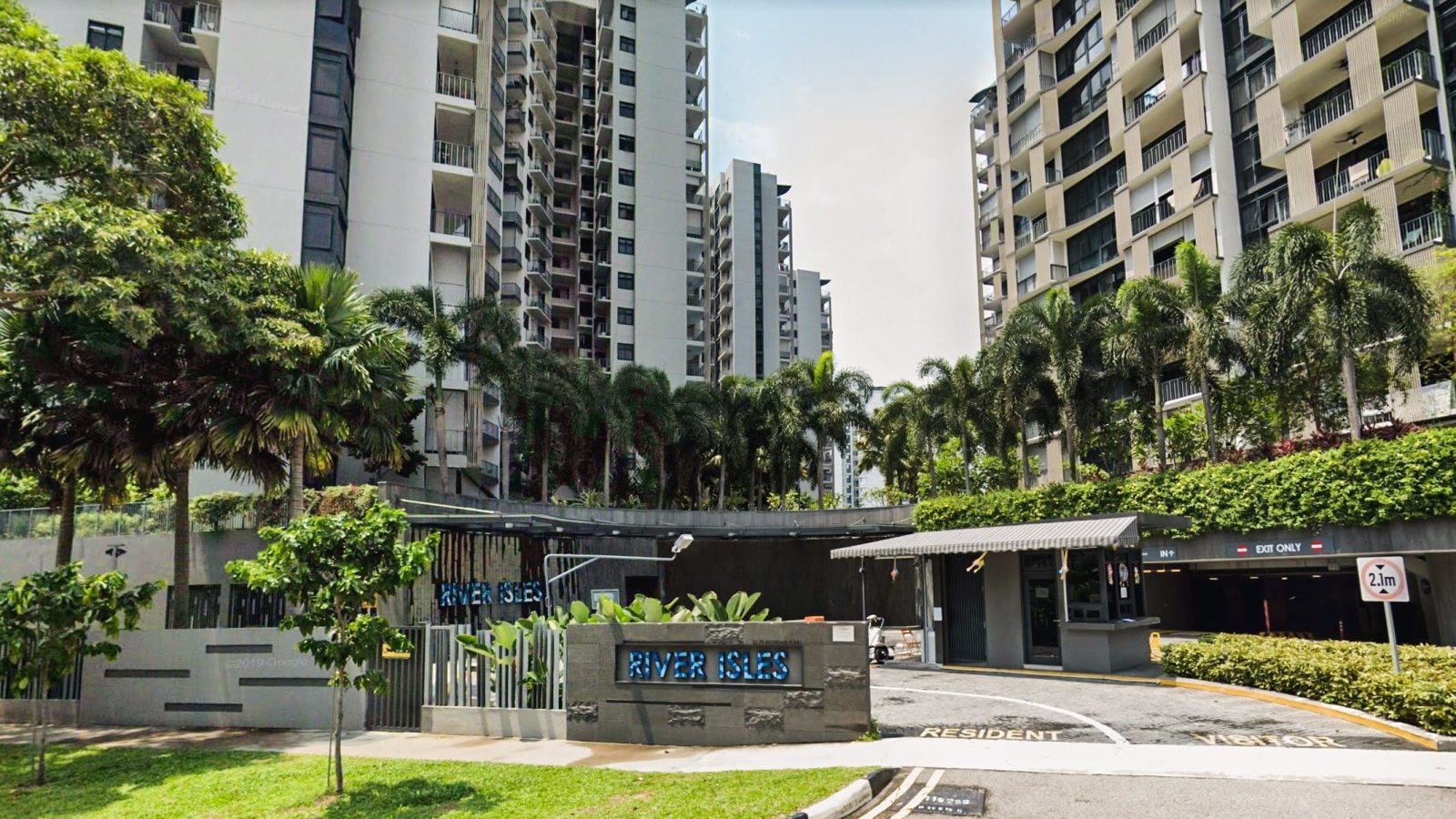
They engaged Grady in June this year and began to view potential properties between July and August. In September, they exercised their Option To Purchase (OTP) on a two-bedroom unit at River Isles for $1.22 million, with the sale expected to be completed next month.
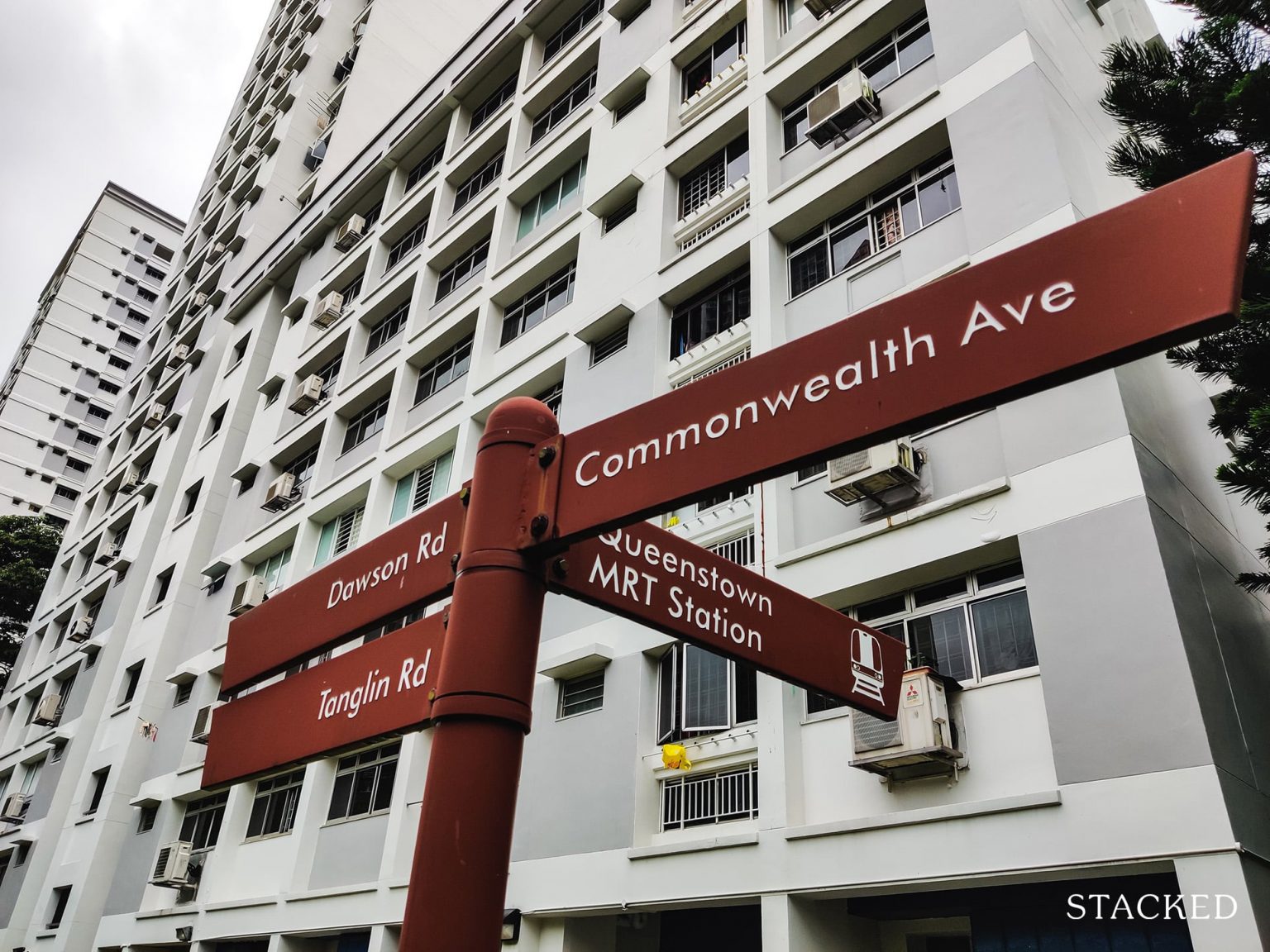
Their first question was whether to keep hoping for the SBF flat in Queenstown, or go straight to buying a resale condo unit.
The couple were in line for a Sale of Balance Flats (SBF) in Queenstown, a mature city-fringe neighbourhood. With less than 20 remaining unsold flats in the development offered to them, they weren’t sure whether they would get a chance to select the flat at all.
In addition, they had calculated that they had a budget of around $1.2 million, which meant that new launch projects were very likely out of the question. So far this year, the average price of a new two-bedroom unit - the minimum viable size for a couple like them - can fetch at least $1.8 million to $2 million.
This narrowed the couple's options to the private residential resale market, and even then, most of the affordable options were located in suburban towns (or the Outside Central Region), says Chew.
There might even be options in the resale HDB market. A resale four-room flat in Queenstown typically goes for approximately $800,000 to $900,000 (depending on its age), while a newer four-room BTO flat could change hands for around $400,000 to $500,000.
As a result, Chew encouraged the couple to stick with the SBF Queenstown flat if they could secure one. In his view, a new flat had a better chance of realising the type of profit which the couple wanted to attain.
He estimated that they could buy a four-room flat there for about $400,000 to $500,000, and thereafter sell it for around $1.2 million once the Minimum Occupation Period (MOP) was up.
However, the couple were put off due to their queue number and the lack of flexibility during the five-year MOP.
Although a private home was going to be much pricier, they felt more certain that they could secure a unit they actually want to live in. It would also grant them the flexibility in deciding when and how they would like to live, or eventually rent out.
In addition, they were considering the price appreciation of private residential properties compared to resale HDB flats. In general, the resale price of private homes has a tendency to appreciate faster than flats.
Even if the rate of appreciation is comparable, the price quantum becomes a factor: for example, a 10% increase in a $500,000 flat is $50,000, whereas a similar 10% increase in a $1.2 million condo unit is $120,000.
What Could Their $1.2 Million Budget Purchase In The Private Residential Market?
According to a property analysis by Chew, he found several projects featured units which fit their lifestyle needs, but had other factors that made them good investment assets.
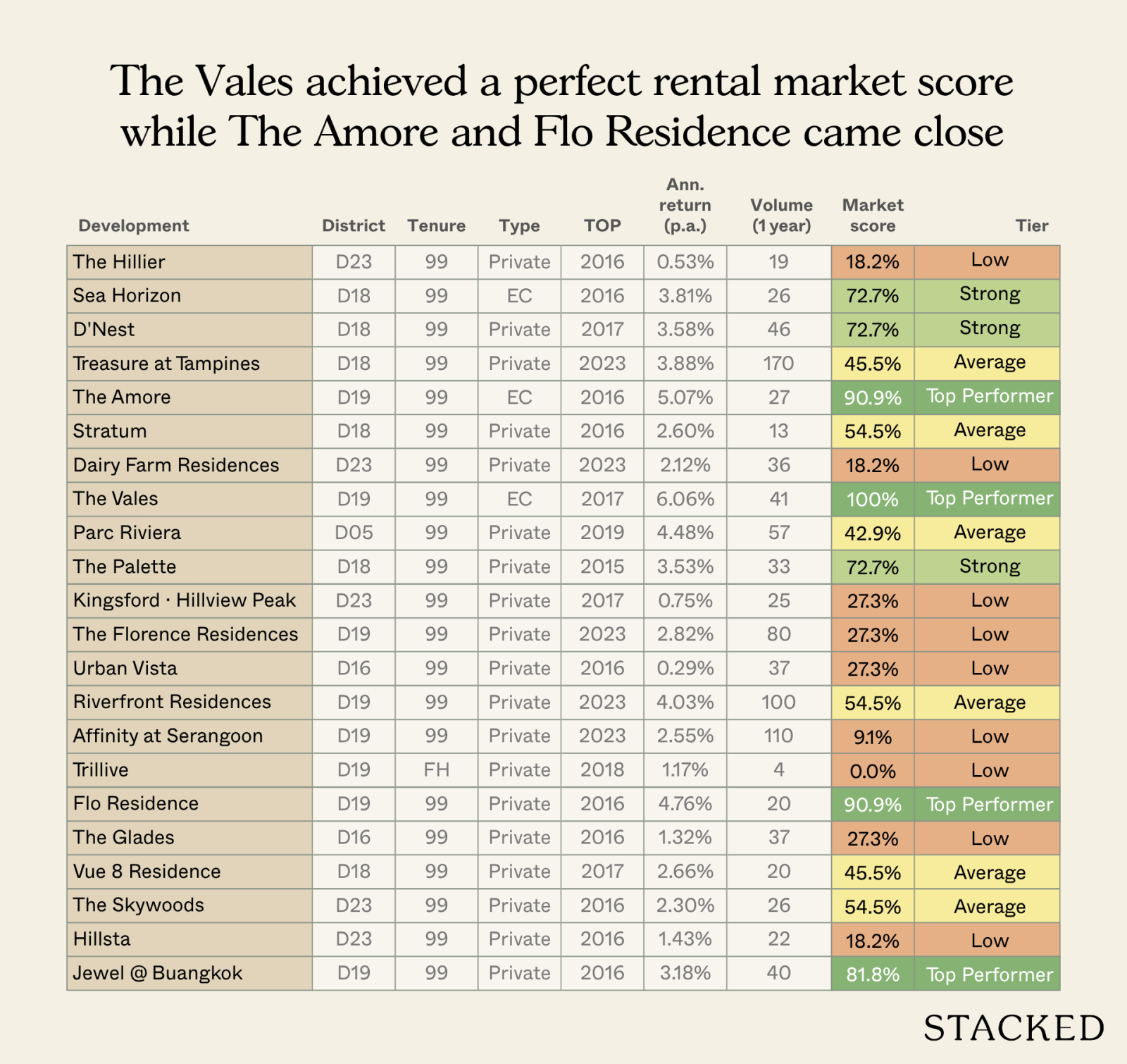
These units scored above 90% on his “reactivity” metric, which he uses to measure how closely a project’s prices track the wider market. It's also his own unique scoring system that he's developed independently throughout his years as an agent.
He arrives at this number by comparing each project’s price gains against three benchmarks: URA’s private property price index, the gains in the project’s region, and the gains in its district. He does this for three periods which saw growth: 2013 to 2018, 2018 to 2023, and 2020 to 2025.
If the benchmark rose over a period, a project needed to rise at least 70% of the benchmark rate to earn a point. It earns another point for at least 12 sales a year, a sign of steady demand.
"Generally, when the performance of the property market improves, a majority of developments should also benefit from a price uplift," he says, adding that each development reacts to market changes in a different way.
His thesis is that if the resale price trajectory of a project has kept up with the broader private residential market over the past decade or so - through the moderation in 2013, the shift in demand during the Covid-19 pandemic, and the recent price increases - it is more than likely to keep doing so.
The units in these developments also likely have all the factors that buyers want: a reasonable price at launch, sensible unit layouts, good access to schools and public transport, as well as nearby amenities like malls.
In this case, his shortlist came down to nine projects, all in District 19: Waterwoods, River Isles, The Amore, Waterbay, The Vales, A Treasure Trove, Jewel @ Buangkok, Parc Vera and Flo Residence.
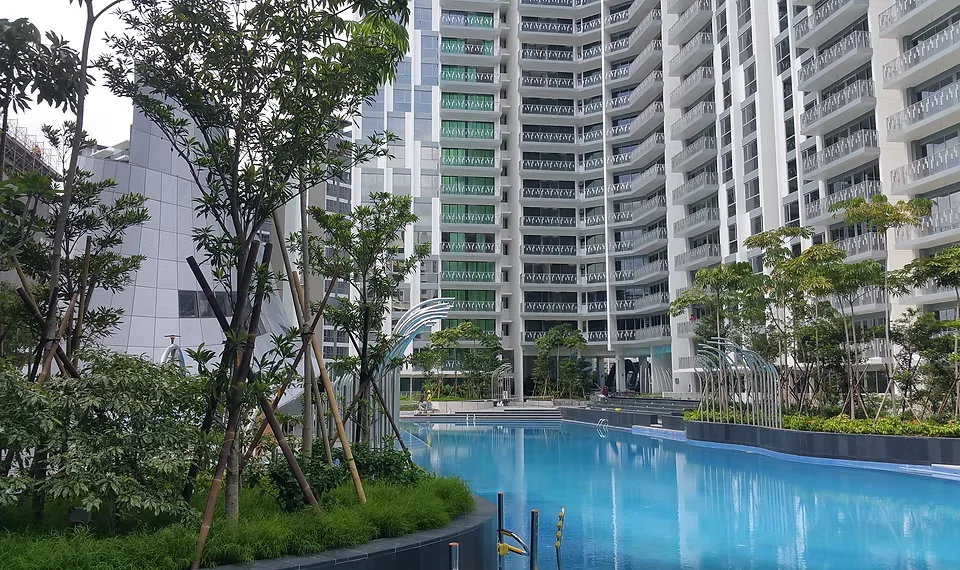
Taking hold of the shortlist, the couple went ahead to do their own research on the developments. Eventually, they picked three projects that caught their attention: Flo Residence, River Isles and Sol Acres.
This was where the data gave way to gut feel, says Chew. “There will still be some emotional choice that influences how different buyers compare condos, and it is something that a reliance on data cannot express," he says.
The couple eliminated Flo Residence first. Despite scoring 90.9% on Grady’s metric, the couple wanted a more family-centric project. Next, they scratched off Sol Acres, an executive condominium in Choa Chu Kang. It was too far from the wife's workplace in Punggol.
That left River Isles, which ticked most of the boxes on their checklist of needs and wants. It had scored a full 100% on Grady’s reactivity metric, and its two-bedroom, two-bathroom units suited both renting out and moving in later.
The condo was also opposite the Riviera station on the upcoming Cross Island Line, which is due to be operational in 2032. This proximity to the MRT station gave it an added boost in the eyes of the buyers.
But River Isles only had a handful of two-bedroom units for sale.
The couple first viewed a unit on the 14th floor and put in a $1.23 million offer, hoping to catch the seller's attention and then negotiate. But the unit ended up getting sold to another buyer who had put in a $1.24 million offer.
“Sometimes it's a learning experience when buyers realise they can miss a unit by so narrow an amount,” says Chew.
Sure enough, another unit on the 11th floor came on the market in August, and the couple offered $1.21 million to the seller, who responded with a counter offer of $1.23 million, including a few conditions: that they would continue to stay three months after the sale completion, the seller would pay rent when the ownership changed hands, and the 4% exercise fee to be released straight to the seller.
But the couple weren’t willing to pay $1.23 million for a lower floor unit when the previous unit on the 14th floor had gone for only $10,000 more. But Chew encouraged the couple to play their biggest bargaining chip: time.
With somewhere to live until 2028, they could agree to all of the seller’s terms, including the three-month stay. In exchange, the seller met them in the middle at $1.22 million.
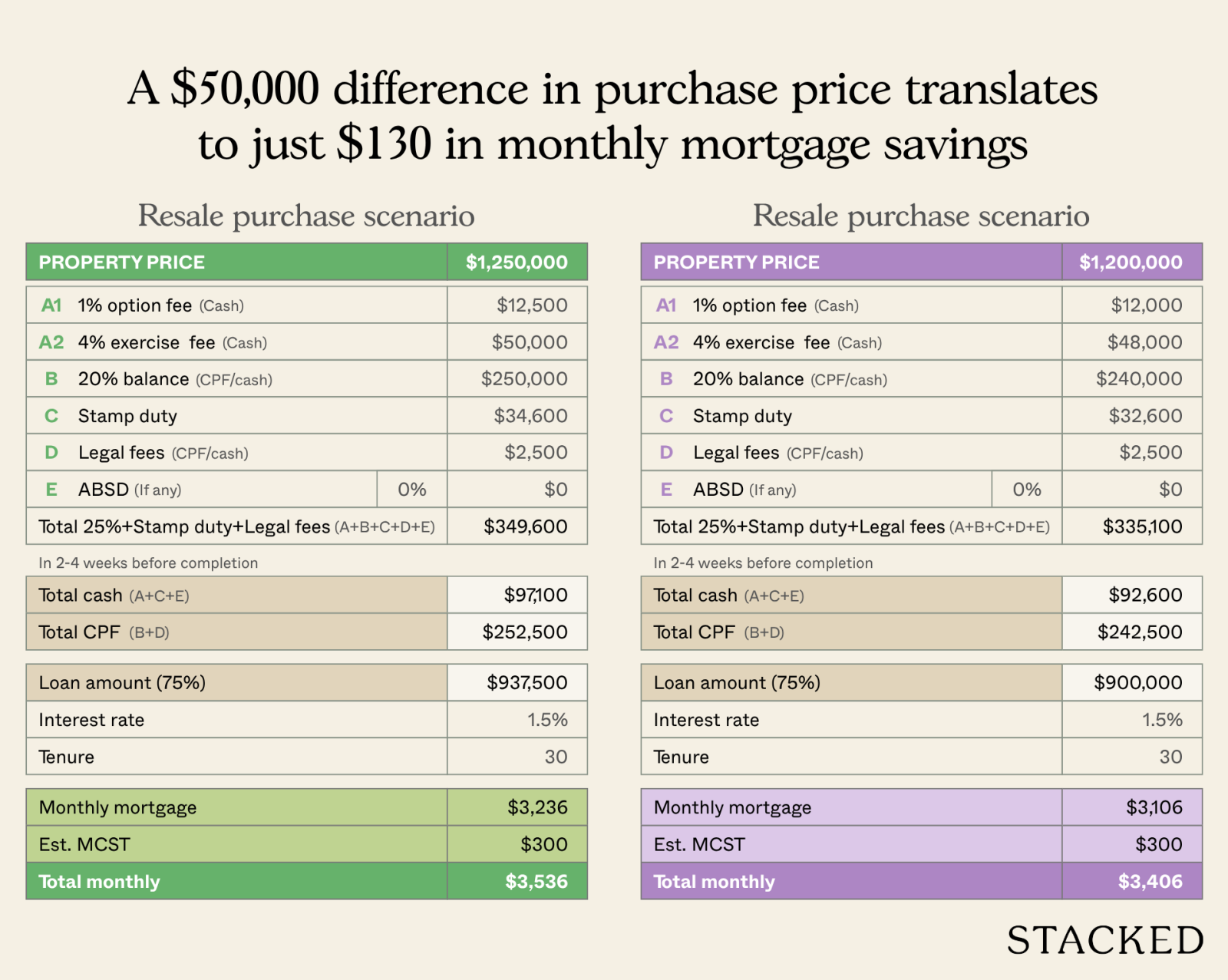
Furthermore, a lower price saves less each month than many buyers expect. Chew calculated that a $50,000 difference in purchase price changes the monthly repayment by only about $130. By that measure, the $10,000 they saved works out to roughly $26 a month. The bigger difference is in the upfront cash, and in the profit they’ll make when they sell.
In The End, Financing Was Straightforward
With a combined income of about $20,000 a month, the couple took out a loan which ended up being 75% or $915,000. Over 30 years, monthly repayments come to somewhere between $3,200 to $3,600. That’s well within the TDSR, capping total debt repayments at 55% of income.
So, it was helpful that the couple were buying the place jointly. Upfront, they needed about $341,000: $61,000 in cash for the option and exercise fees, $244,000 in cash or CPF, $33,400 in buyer’s stamp duty, and about $2,500 in legal fees. As first-time buyers, they paid no additional buyer’s stamp duty.
According to Chew, the sale will be completed next month, and the previous owner will stay in the unit until March next year. Thereafter, the couple plan to rent the unit, with the aim that the rental income will help cover the mortgage.
Although the couple first planned to sell this property within four to five years, they’re now open to holding on to it for at least six years, when Riviera MRT station is due to open in 2032. “More importantly, they want to make sure the project can appreciate in the years to come,” says Chew.
Key Takeaways
Buying a property as an investment first, and a home second, means weighing more factors. Buyers have to consider whether they’d want to live there, but also how easily it will sell: who will buy it, at what price, and when.
Property agents like Grady judge a project’s investment value by its past price growth, and by how well it has kept up with the market through Singapore’s property cycles.
A home buyer needs the right unit at the right time, while an investor can afford to be patient for the right deal. In this case study, flexibility was the buyer's best negotiating power.
The couple closed the deal $10,000 below the seller’s counter-offer, partly because they could give the seller three months to find a new home. They could also let the first unit go, trusting Chew that another opportunity would come up.
While an owner-occupier might base their decisions more on property tours and layouts, an investment buyer will be more data-focused. An investment buyer has to look at how a project’s prices have moved through past cycles, how often units change hands, and who will want to buy it later. That’s a lot of data to dig through, and it’s where many buyers can benefit from engaging an agent early on in the process.
An HDB flat might seem the better bet for capital gains. But what matters for an investor is control over when you can sell, whether you can rent out the whole unit, and which unit you end up with. A private condo leaves those choices largely in your hands. That gives you more options as the market changes.
Investors might assume resale condos make poor investments, but at the same budget, they often offer more space than new launches. They also tend to cost less per square foot, which gives more room for the price to grow before you sell. For buyers holding for under 10 years, the shrinking lease is also less of a concern, as a well-located condo should still appeal to the next buyer.





0 Comments