


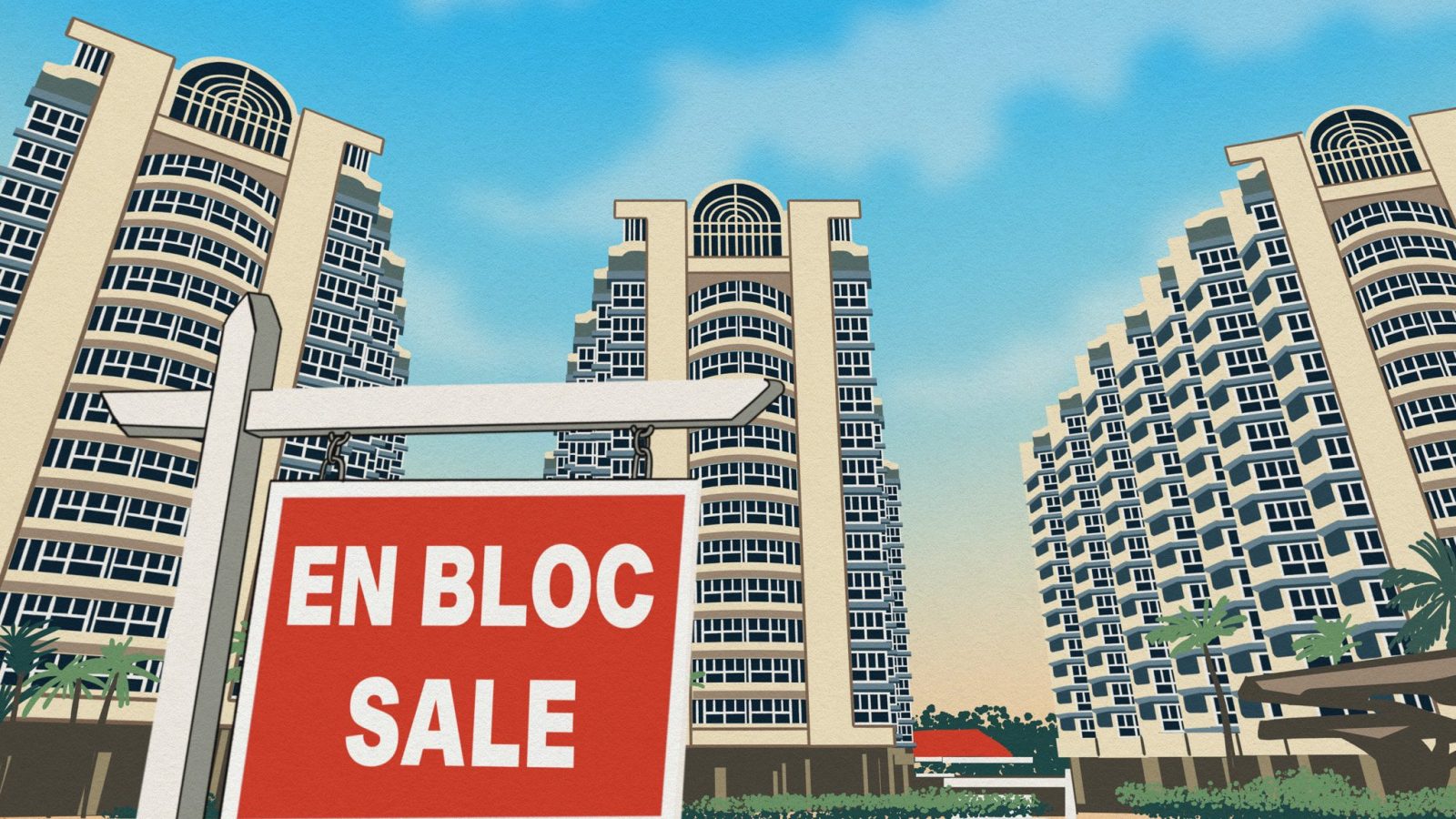
Last week, we saw a slew of significant policy changes and adjustments which will have far-reaching consequences for many players in the property market. We saw the removal of the 15-month waiting period for private property owners purchasing five-room flats, to changes that property agents will have to contend with in the coming months.
Amid these ground-shaking announcements, it could be easy for casual property market watchers to overlook another significant change: a tweak to the remission timeline for the Additional Buyers Stamp Duty (ABSD) regime for developers purchasing enbloc sites.
To bring you up to speed, ABSD isn’t only something levelled on property buyers by the government. Developers also pay it in the form of a 5% non-remittable ABSD on the land price, plus another 35% that can be remitted if they meet a 5.5-year deadline. If the project isn’t completed and sold within those 5.5 years, they risk losing that 35%.
But the latest changes make the ABSD regime for developers buying and redeveloping large enbloc sites less prohibitive and risky. Developers still pay the 40% ABSD, but if they undertake a large collective sale and redevelopment project they will get significantly more time to sell out the project.
Here’s a snapshot of what’s been happening in the enbloc market so far, and how the latest ABSD remission timelines could affect the enbloc possibility of older properties (including those property owners, and the buyers of the new condos).
An extended ABSD deadline to encourage large transformation projects
From July 29 onwards, enbloc sites where the redevelopment would result in a new condo with over 1,400 new private homes, developers will have seven years to complete it and sell out all of the units, in order to be eligible to clawback their 35% remittable ABSD.
Smaller enbloc redevelopment projects, where the new development results in the construction of at least 700 new residential units, developers will have six years to sell out the development and complete construction. In addition, qualifying projects* may receive a further six-month extension.
*Qualifying projects are those with complex engineering challenges, projects approved under the Strategic Development Incentive (SDI) for urban renewal, or projects that adopt more advanced construction methods.
These changes come after developers had been calling on the government to recalibrate the previous ABSD regime.
Prior to the latest change, each new development project was subject to the same 5.5 year deadline, regardless of a project’s size. This had meant that a 50-unit boutique project would have the same deadline as a mega-sized development with over 1,000 private residential units.
The imposition of the high ABSD rate as well as the remission timeline contributed to the enbloc market losing steam in recent years, and has dimmed the en-bloc prospects for older condos, especially those projects sitting on large land plots.
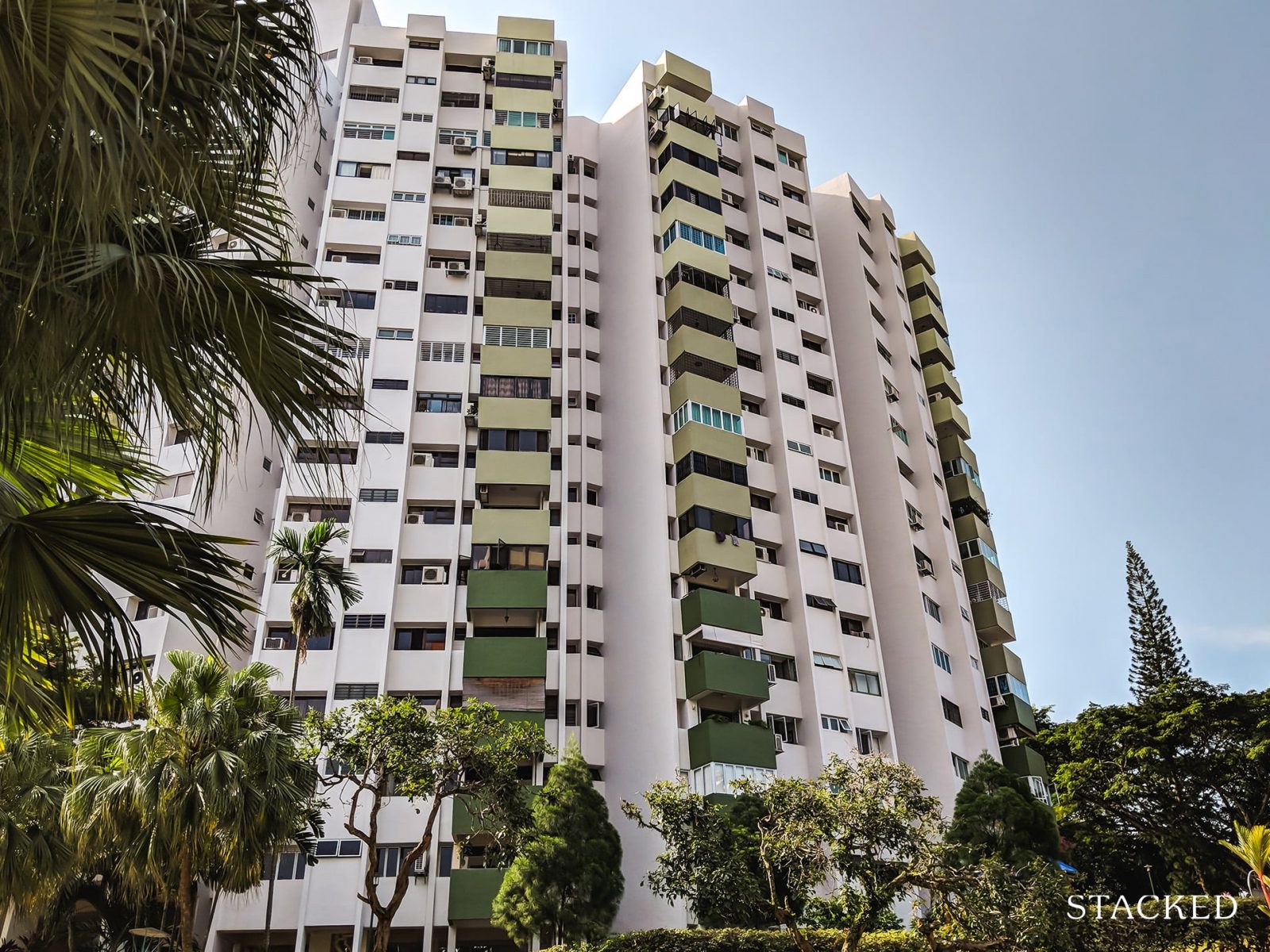
Prominent examples include the 660-unit Pine Grove or the mixed-use People’s Park Centre, which recently launched its third collective sale attempt. Pine Grove sits on a roughly 893,000 sq ft site in Ulu Pandan in District 21. The owners there have launched five collective sale attempts over the past two decades.
On the other hand, although People's Park Centre sits on a relatively smaller site of around 95,500 sq ft, its prime central location in the Chinatown area would result in high selling prices if the project is redeveloped, making it a challenge for any developer to move every unit before the previous 5.5-year deadline.
However, with the change in the ABSD remission timeline for developers, this has given many of these older and sizeable projects the best chance at a successful collective sale that we’ve seen in the past eight years.
This could spark the return of the enbloc “hope premium”
While the latest changes have sparked hope that we might see a revival of the enbloc market in Singapore, I wonder if this will give rise to an unintended consequence: namely, the return of buyers looking to capitalise on the enbloc prospects among older properties.
In the past, this was colloquially described as a “hope premium”, where these buyers assume - or even predict - that an en-bloc sale would see them reap a significant windfall by investing in certain older developments.
This was a somewhat common investment strategy in previous decades. I recall hearing from the grapevine that some investors - all eyeing to reap the same en-bloc windfall - were communicating with each other the moment they bought into an old condo. A large enough bloc of these new owners would make it easier for that development to subsequently successfully push for a collective sale.
However, this has faded in recent years due to two prominent factors. First, the government began to substantially ramp up the supply of Government Land Sales (GLS) sites.
Between a negotiated en-bloc deal (which has sometimes turned contentious) and a GLS site, most developers would argue that developing a new project from a GLS site is the more straightforward route. Older Singaporeans may recall the two-year saga that brought the attempted collective sale of Horizon Towers in 2007 to a halt, blocked by a minority of dissenting owners.
Moreover, the property market is a different beast today compared to the last time the enbloc market was in its heyday in 2018. Foremost is the growth in private residential prices, especially after the property market surged after the end of the Covid-19 pandemic.
Today, many enbloc hopefuls face a tough choice as the cost of a replacement property has increased, but developers navigate slim margins that limit how much they are willing to reasonably pay for a collective sale acquisition.
But if the resulting change in the ABSD remission timeline ends up seeing developers move back into the enbloc market, I wonder if we will once again see some investors staking their bet on older, well-located projects in expectation of an en-bloc windfall.
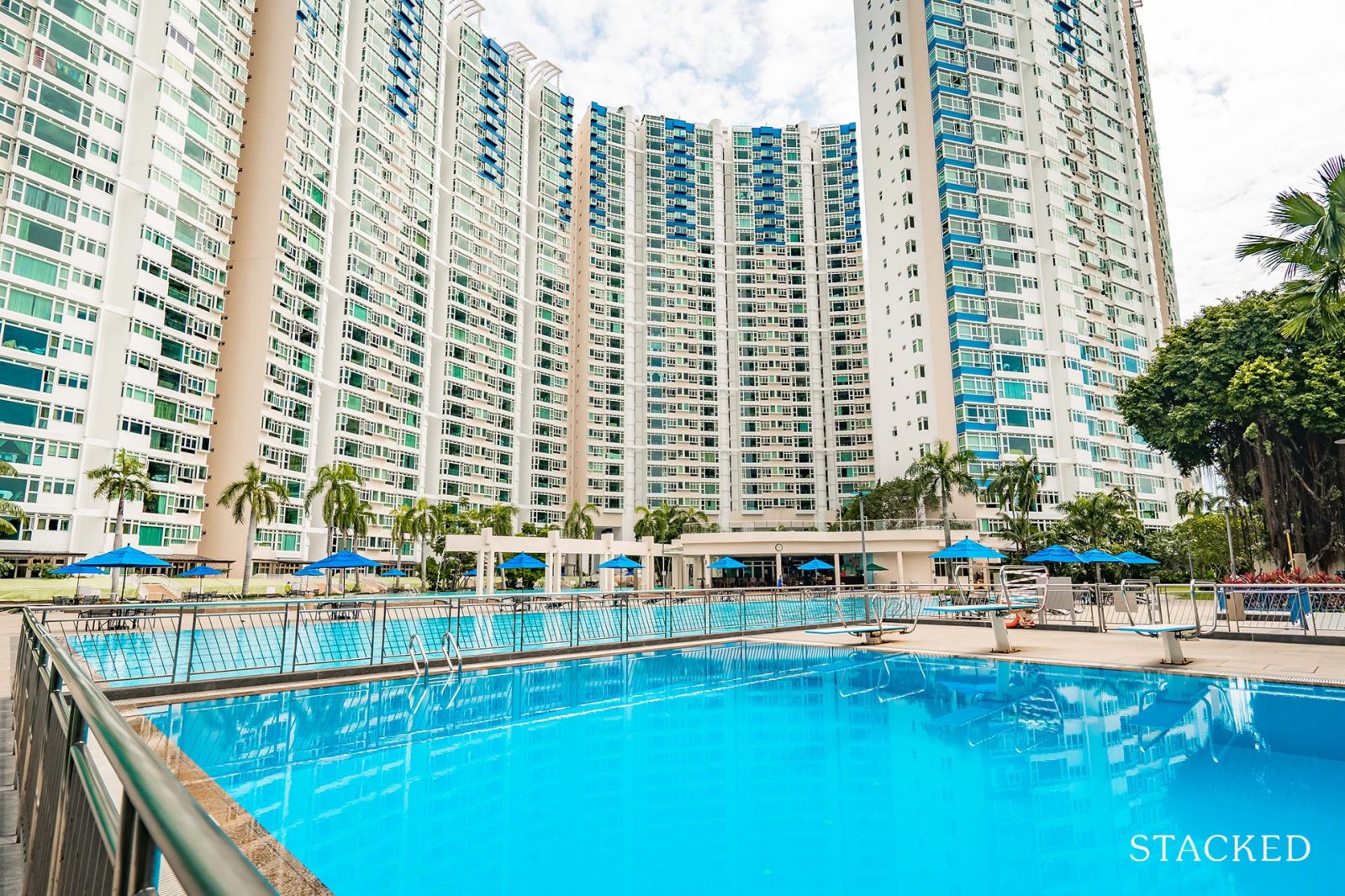
My eye turns to the cluster of older condos in Bayshore, such as Costa Del Sol, The Bayshore, and Bayshore Park. The recent launch of Vela Bay in April this year set a new benchmark for a new condo in that area, with the 51-unit project selling 72% of its units and setting an average selling price of $2,886 psf.
This has widened the price disparity to older condos in the area like Costa Del Sol, The Bayshore, and Bayshore Park. New private home prices are set to increase in the coming months as new GLS sites are awarded in the Bayshore precinct. We covered the price disparity taking place in that part of the East Coast in our pricing review here.
Enbloc investors should be cautious before reverting to that kind of behaviour
My take on the prevailing situation is that, even though the government has made it easier for large and ageing developments to launch a collective sale tender, and has increased the odds of it turning out successful, this doesn’t mean that property investors should consider it a safe exit strategy.
Firstly, these buyers must be wary of the Sellers Stamp Duty (SSD). This is a tax applied to the sale proceeds. You pay 16% SSD if you sell within the first year of buying; this then decreases to 12%, 8%, and finally 4% on the fourth year*. You are required to pay the SSD even if it's due to a collective sale.
*For properties purchased on or after 4th July 2025.
So, if the en-bloc sale happens within three years of your purchase, you do have to pay the 8%. When coupled with the amount spent on renovations, agent commissions, legal fees, and other transactional costs, this can leave you in an unfavourable position. More so if the price of your replacement properties has risen.
Buyers should also remember that developers aren't short of options to replenish their landbank. The government continues to maintain a healthy pipeline of sites in the current (and likely future) GLS programme. The 2026 Confirmed List alone will yield 9,320 new private homes. This is more than 50% higher than the annual average supply over the past decade, and developers almost always prefer these to messy en-bloc negotiations.
Finally, consider that homes today are much smaller. This has an indirect effect on en-bloc prospects. As we’ve seen in various Stacked Pro articles, such as this one on Signature Park, some own-stay buyers ignore a condo’s age in favour of size. These homebuyers are less investment oriented, and are more concerned that a replacement property will be much smaller. This could be one of the toughest segments to persuade when it comes to achieving en-bloc consensus; as homes keep getting smaller, they may never find it worthwhile to surrender what they have.
We shouldn’t lose sight of the lesson we learned back in 2017, when the en-bloc craze came to an end.
In general, it is still a good proposition to buy a unit in an older condo if it is a good property for you today. The reasons should be fundamentals like a larger unit, access to amenities important to you, or other unique traits that can’t be replicated. This way, even if a collective sale doesn’t materialise, you still have a home you can live in comfortably.
If you aren’t counting on an en-bloc, you should still stay aware of the possibility of it occurring at your development. Before you make the purchase, check if there were recent en-bloc attempts, and how close they came to succeeding. The last thing you want is to buy into an older condo, renovate it, and then find the en-bloc passed and you’ll need to move again.




0 Comments