


When it comes to long-term accommodation options in Singapore, there are two broad categories available. Some prefer to stay in or around central areas like the Central Business District (CBD) or familiar tourist areas. But others, especially foreigners coming for work, may want to immerse themselves in the local culture and interact with more locals.
The co-living options in truly suburban locations are few and far between at the moment. This is a gap in the market that MBER, a hybrid co-living and serviced apartment, is eager to step into.
Developed by Aw & Sons Group, the new serviced apartment and co-living property is located at 2 Teck Chye Terrace off Upper Serangoon Road. The site used to house the former Lim Tua Tow Market, a wet market and hawker centre that was demolished in the 1990s.
Serangoon isn’t the most obvious neighbourhood for a new serviced apartment property, which is also the first long-term accommodation asset by Aw & Sons Group. Serangoon is a familiar heartland town with HDB estates, schools, coffee shops, and local businesses.
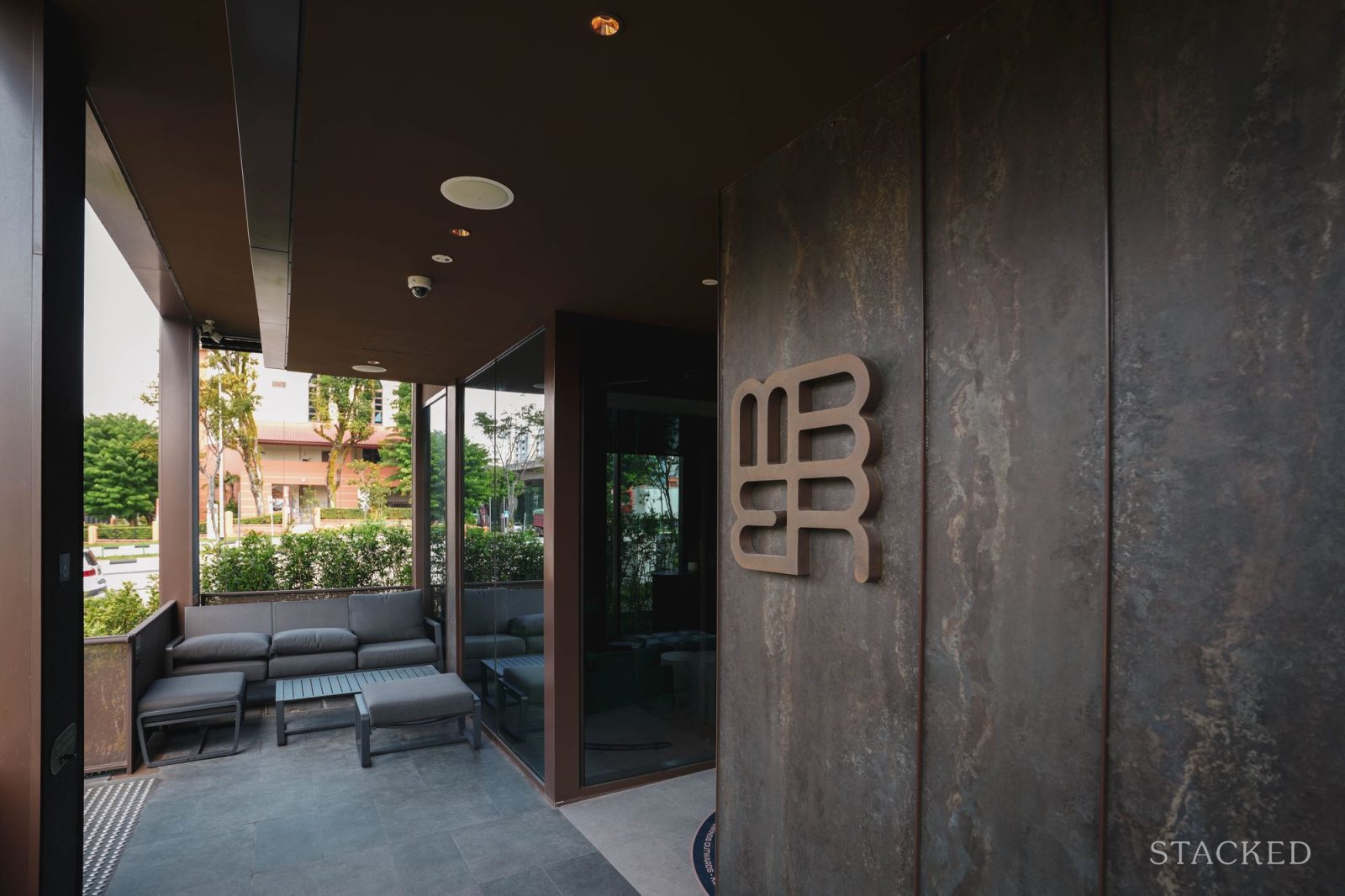
But after touring the property, I understood the reasons why this location was chosen. Conceptually, MBER is built on more than the straightforward premise of being close to an MRT and not too far from the city centre.
Instead, it’s geared towards being an experience. It strikes me as a nod back to an older - and arguably better - era of accommodation. This was when the hospitality experience meant that you’d remember the name of the concierge who assisted you, or the other guests you met during your stay, even years after the trip.
Serangoon is an unusual choice, but perfect for MBER’s concept
If the brand’s first accommodation property was along Orchard Road or the CBD, I don't think its concept would work nearly as well. After my visit, I believe that much of its appeal stems from the fact that it integrates well within a vibrant heartland neighbourhood.
According to the developer, MBER was conceived as an alternative to both traditional serviced apartments and conventional co-living offerings. The development houses 47 serviced apartments with a mix of three- and four-bedroom units, as well as 78 co-dwelling (or co-living) units.
Renowned architectural firm Formwerkz Architects was also brought in to design the new building, while its interiors are designed by Afternaut. The architecture of the building was inspired by the heritage of the site as a former wet market.
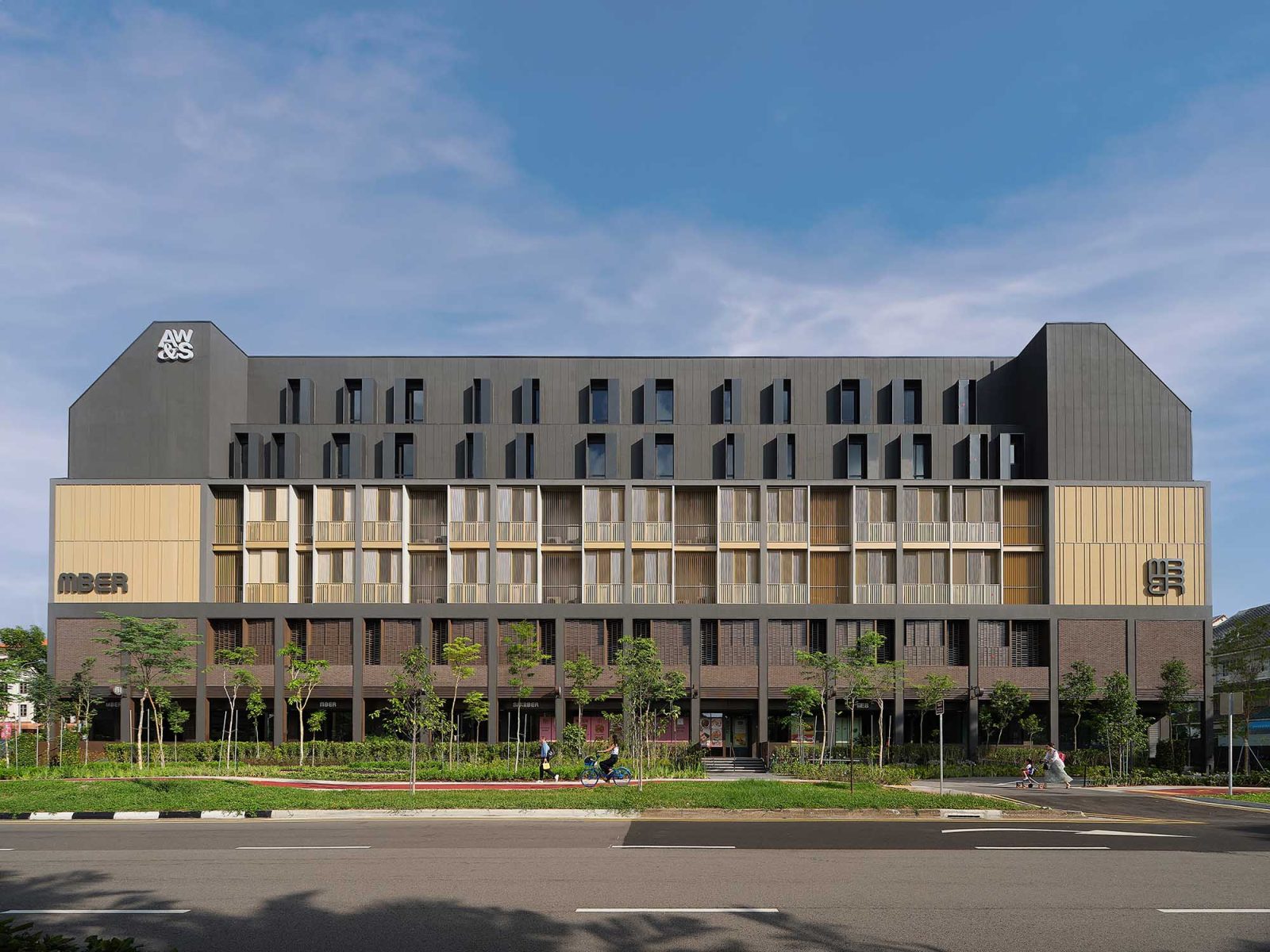
The architecture of MBER is a nod to old-school Singapore. Elements such as gable forms, open circulation and natural airflow reference the openness of traditional market structures, while the building itself features a contemporary composition of bold lines, layered materials and generous communal spaces.
As to the location itself, Serangoon is both central and intensely local. NEX is one of Singapore's largest heartland malls, and Serangoon MRT Interchange, which is attached to it, connects to both the North-East and Circle Lines.
NEX and Serangoon Interchange are within walking distance of Mber. But as most Singaporeans will tell you, nearly anything that you can find along Orchard Road can be found in a heartland mall these days.
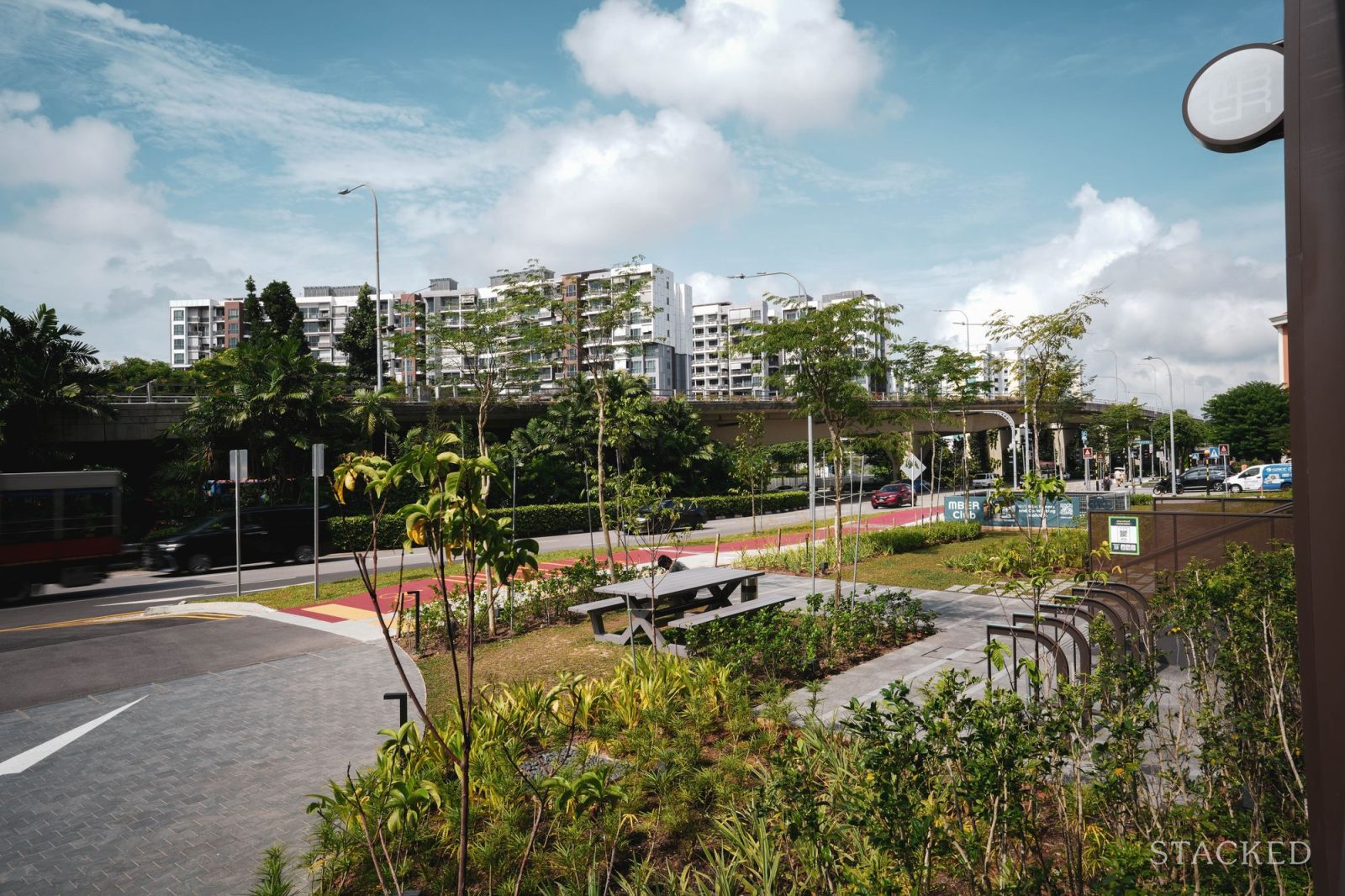
This part of Serangoon is packed with foodie destinations, from local favourite Oddity cafe to the 24-hour Joji’s Diner. It also bears mentioning that, from MBER, there are quick bus connections to Serangoon Gardens and the famed Chomp Chomp food centre. As someone who lived in the area for a few years, I can vouch for the fact that, whatever time of day it is, residents at MBER can find an interesting F&B option nearby.
More importantly, though, this is just the type of environment that suits MBER's target audience
If you're staying in a conventional serviced apartment near the CBD, there’s a good chance that your daily routine will probably revolve around the offices, prime shopping belts, and the conventional places frequented by most expatriates. But at Mber, you’re more likely to visit Serangoon’s coffee shops, cafes, and other small local businesses that make up everyday Singapore.
Its location in Serangoon isn’t just convenient and accessible; it's the basis of the sense of community and identity that Mber is curating there.
A unique take on serviced apartments and co-living spaces
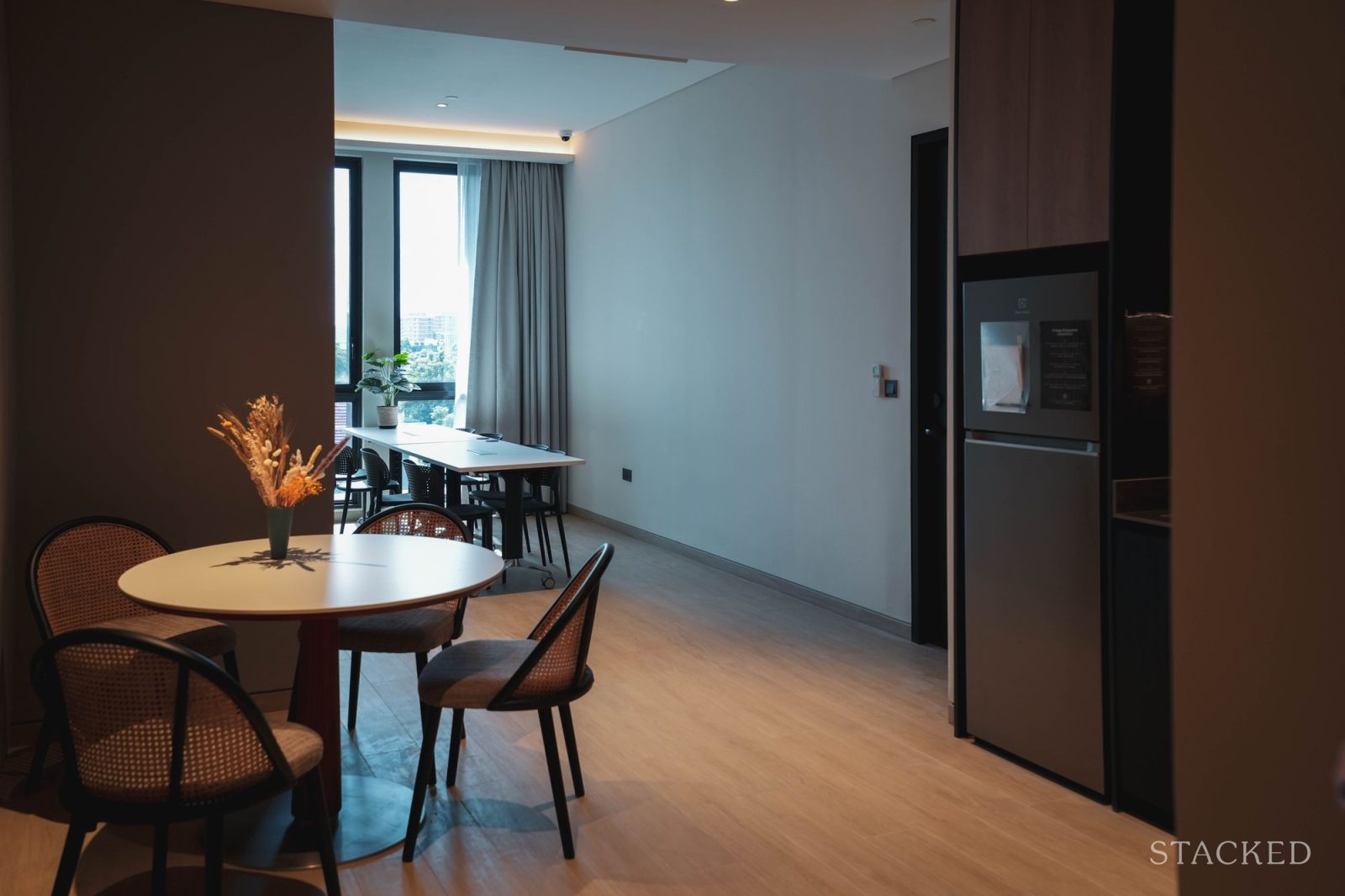
Mber may be all about community, but the serviced apartments - which come in three- and four-bedroom layouts, and range from 920 to 1,340 sq ft - are some of the best I’ve seen in terms of privacy.
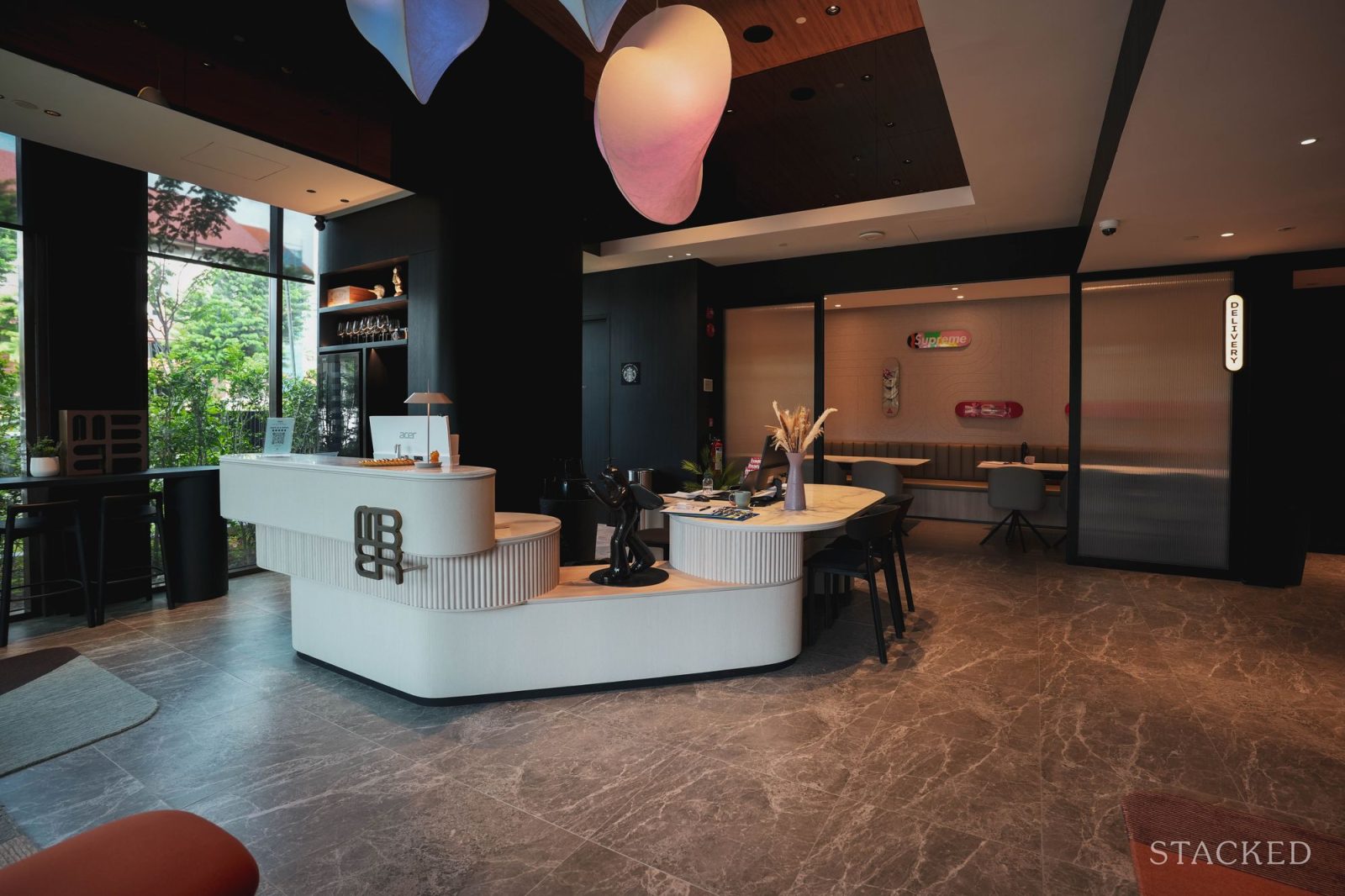
The first thing you notice when you enter any of the rooms, or even the common areas like the reception, is the acoustics, which fully block out most of the noise from the nearby road.
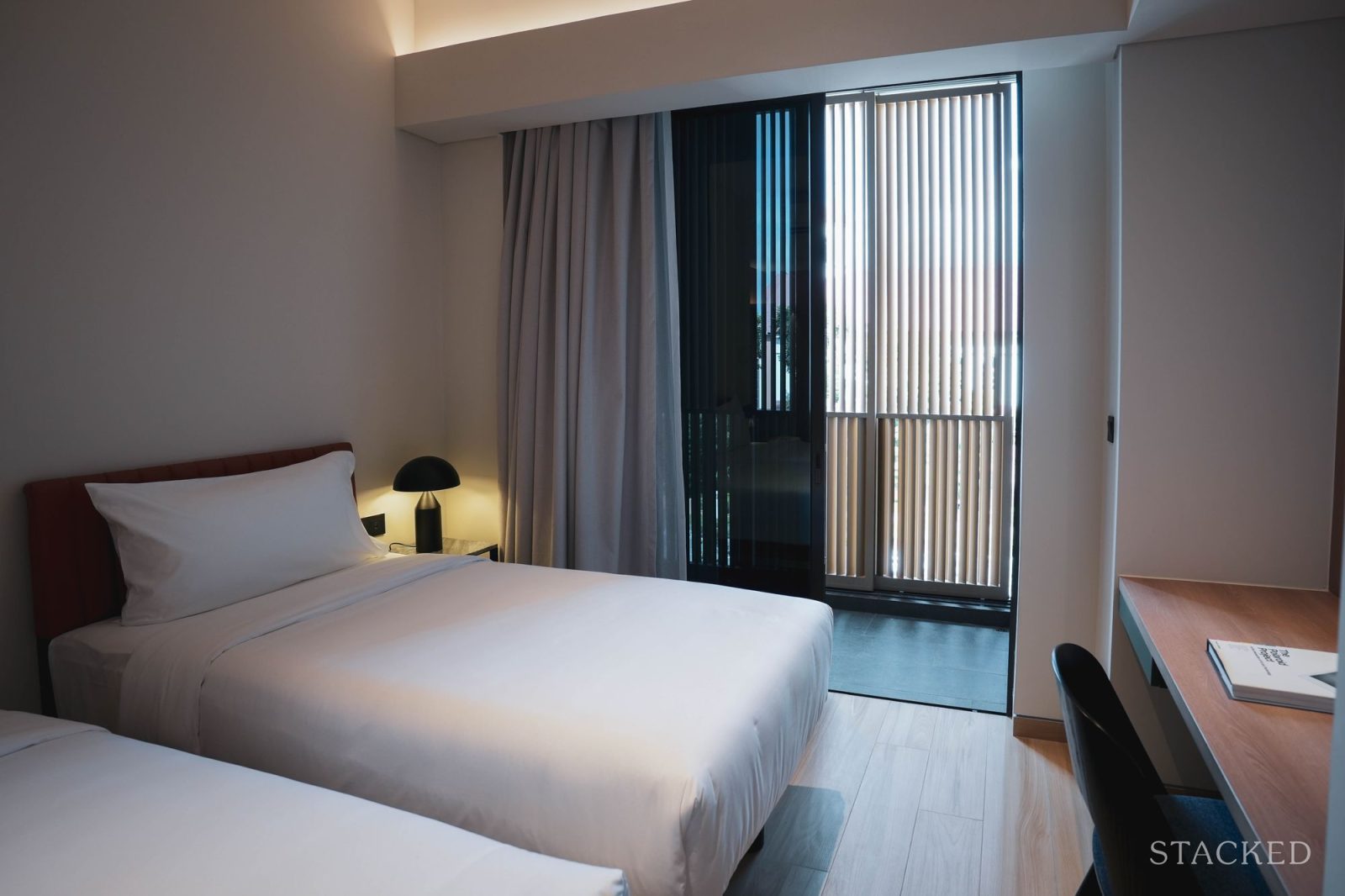
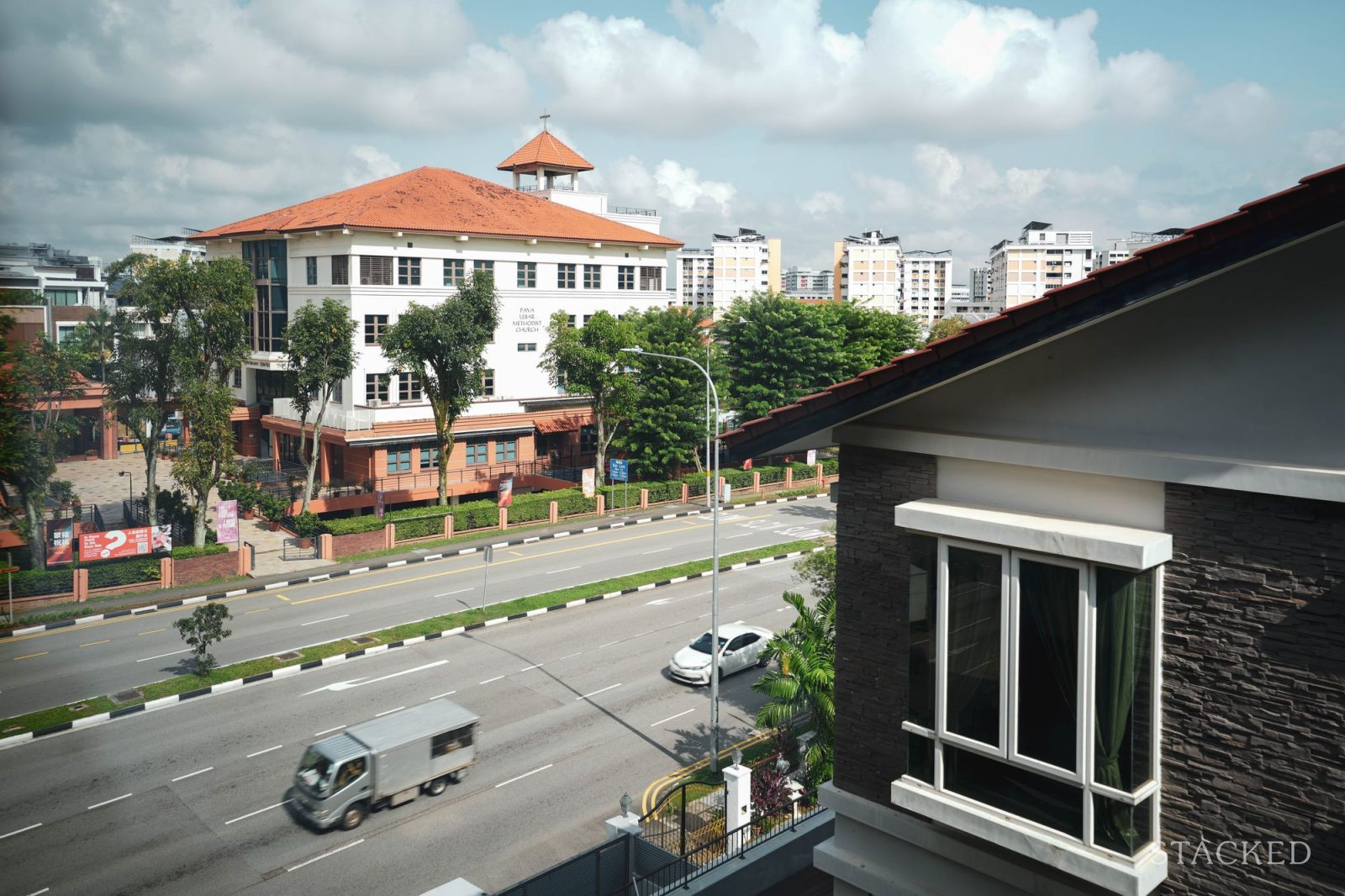
Each room is remarkably well insulated. One of the rooms we visited faced the nearby flyover, and you’d usually expect to hear at least some road noise. But I didn’t even notice how close we were until I peered beyond the curtain.
I also noticed I couldn’t overhear the conversations taking place in the next room, which is bound to please most tenants, especially if they find themselves sharing rooms with work colleagues or travel buddies.
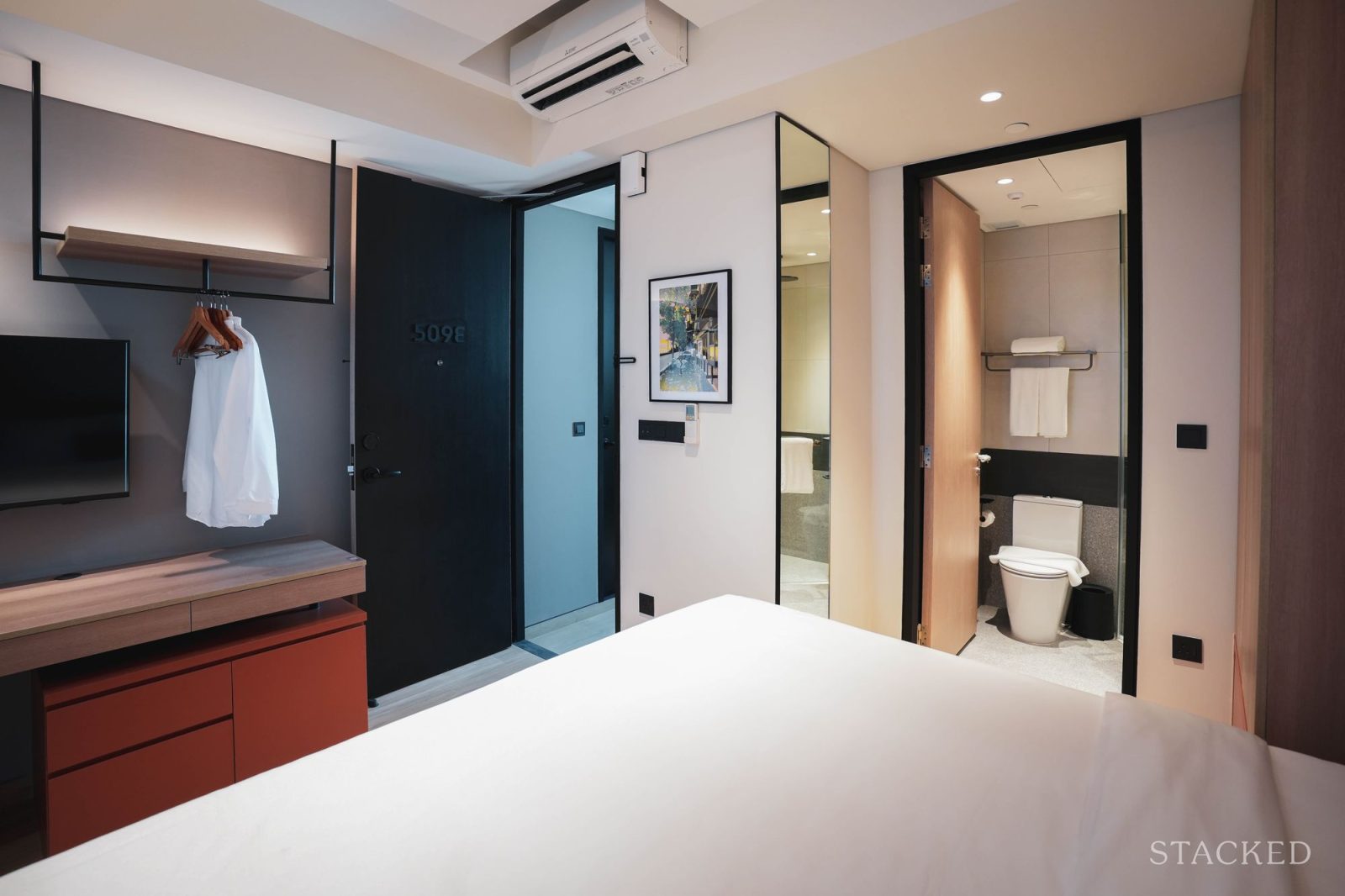
Adding to the room's privacy is the provision of en-suite bathrooms for each bedroom, with custom fittings by Rigel, and a rainshower. This is also a nice bonus for families who stay in one of the three- or four-bedroom serviced apartment units, so that no one needs to queue to get ready for work.
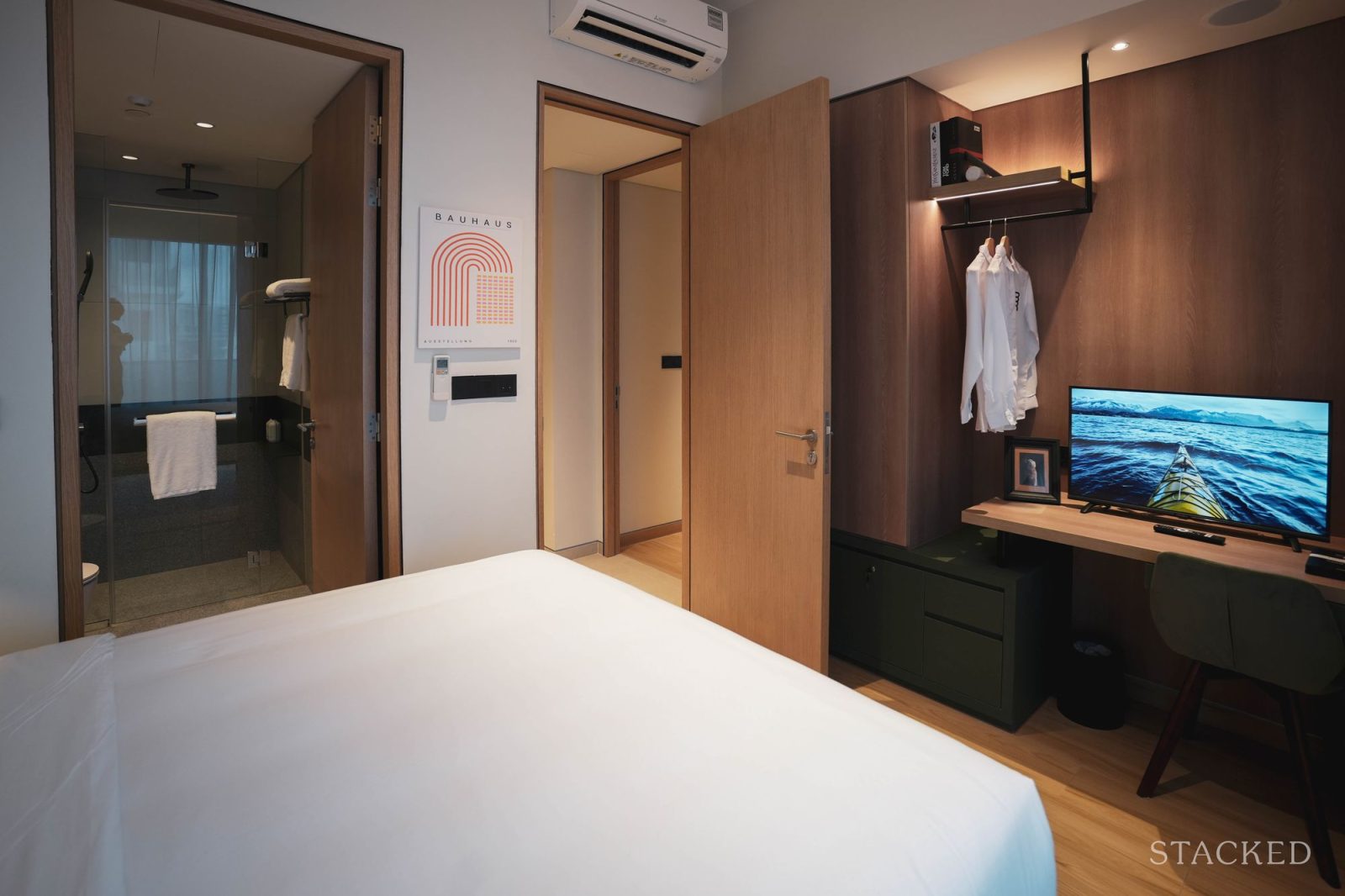
The design of each room and its layout is another area where the development shines, and the four-bedroom especially impressed me. In the unit that we visited, the front door doesn’t open directly into the kitchen or sitting room. A nook setup with a sofa and TV screen was well-positioned so that not everyone is obligated to share whatever you’re watching. There’s also a clear progression from the main entrance to common areas and then private bedrooms.
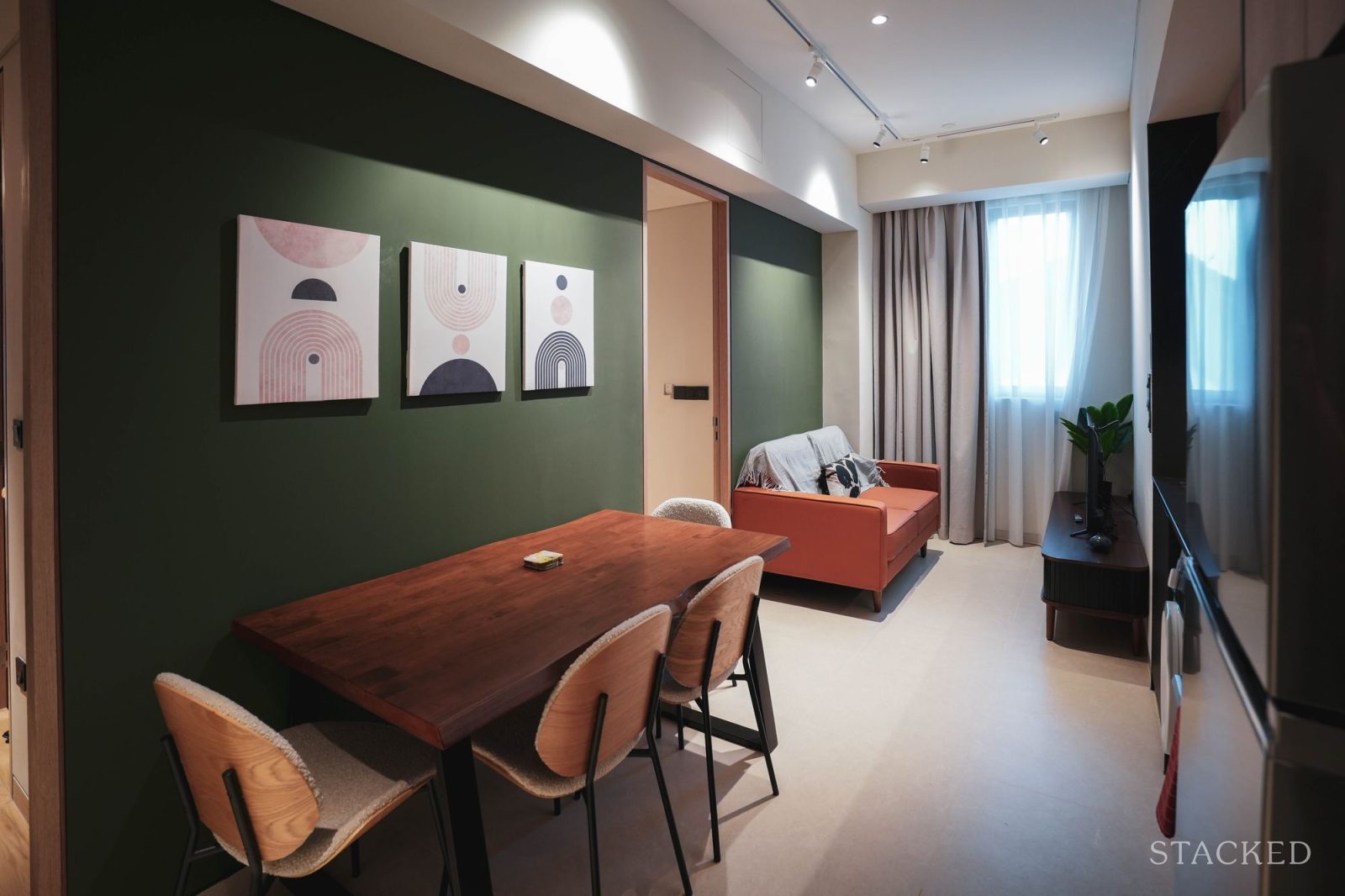
For the three-bedroom serviced apartment units, in the unit that we visited, two of the bedrooms have balconies, which provide an additional private retreat. While the TV space isn’t in a nook like the four-bedders, the excellent acoustics - plus the surprising spaciousness - more than make up for that.
Overall, the layouts touch on what I consider to be most important for shared living: people need enough room to be apart. That’s often harder to achieve than building shared spaces, but Mber manages this well.
For each unit, the kitchens are fully equipped and feel designed to be actually used for cooking. Countertops are large enough that you have room to actually prep food, which is quite different from the squeezed pantries I’m used to seeing in other shared-living properties.
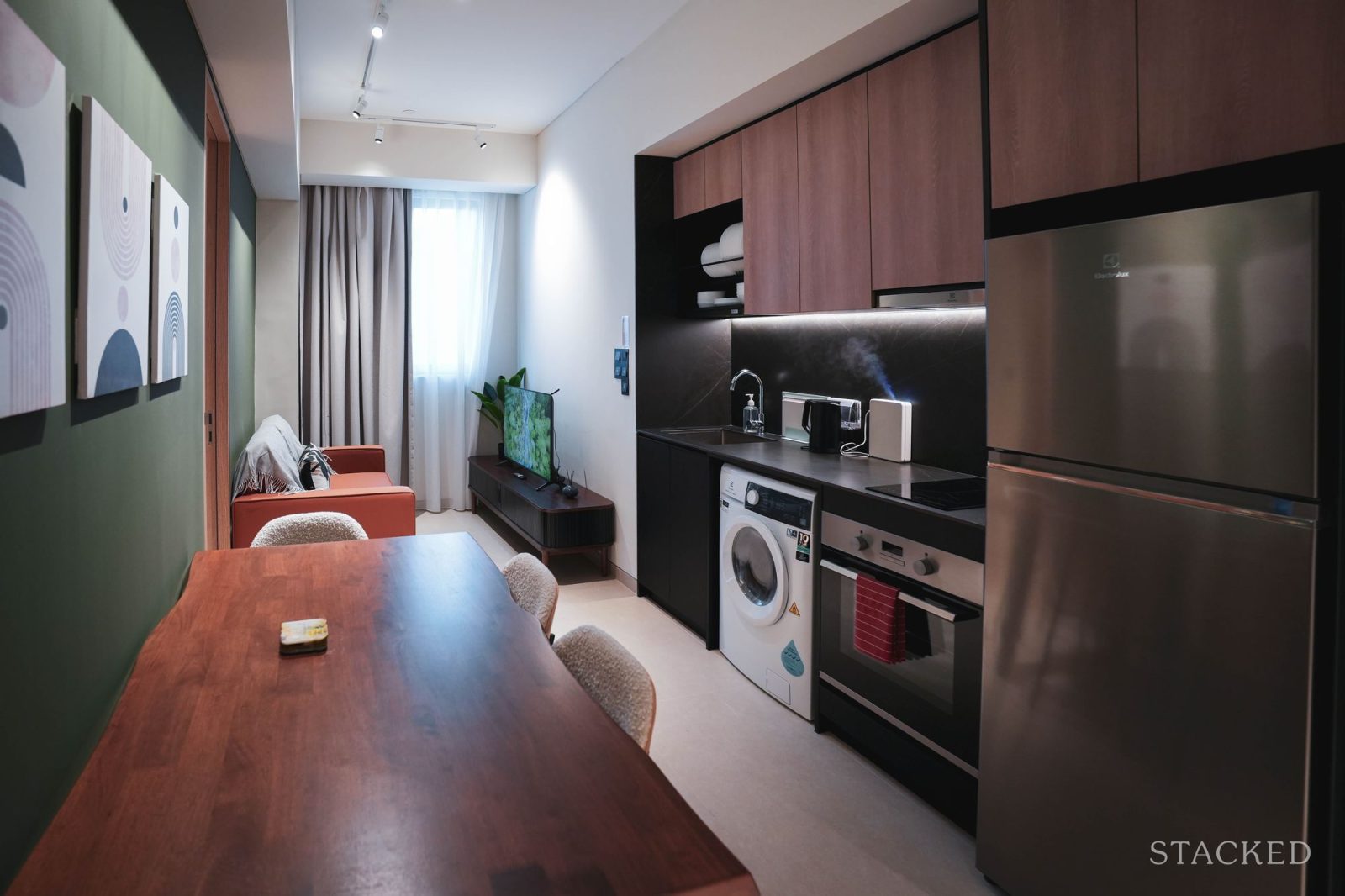
The washer-dryer is also located here, although this is perhaps one area where some residents may need to exercise a degree of coordination - unrelated occupants are still sharing this single laundry appliance.
For residents staying longer than a month, there are also dedicated letterboxes. In my view, this is another winning touch for the privacy of residents, since not everyone enjoys seeing their mail on a shared table.
Co-living units with individual themes
The co-living units are where Mber showcases the personality of the concept. Located on the fifth and sixth (attic) floor, the co-living rooms are individually themed. For example, two of the rooms I saw had a library and game-room theme, with an extensive book collection in the library and a futsal table in the games room.
These shared spaces then connect to different individual rooms where the co-living residents live.
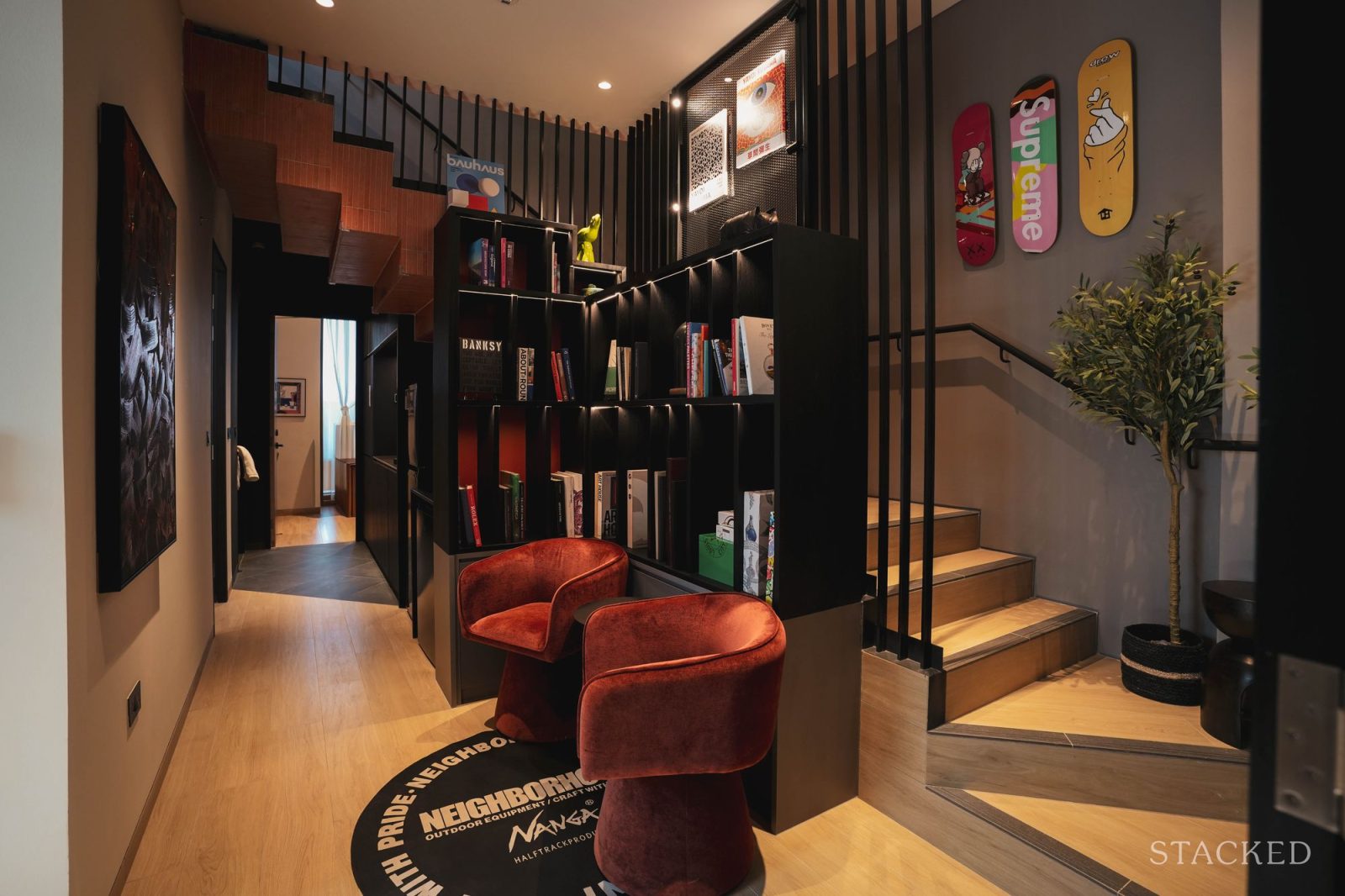
Another interesting feature of the co-living rooms is the fact that they are double-storey units. The larger rooms are on the upper floor and have easier access to the rooftop areas.
When we visited, the rooftop space was being worked on, but when it is completed, it should offer a penthouse-style living experience. The double-storey layout also considerably raises the sense of openness via the ceiling height, and these units feel noticeably more spacious.
Importantly, residents don't need to drag luggage up staircases. Lift access extends all the way up to the attic floor.
What I appreciated most, though, is that the themed approach never overwhelms practicality. The futsal table, for instance, won’t require you to squeeze past even while it’s in use.
From what we saw, there is a good balance in terms of the number of rooms on each floor, and a greater emphasis on creating memorable accommodation. Oh, and as a nice added touch, coffee makers for the residents serve Starbucks. With a proper Starbucks cup and all.
The Mber Club and facilities
While the rooms have been designed with privacy in mind, the common spaces and facilities are designed to encourage interaction. There is also a strong emphasis on wellness among the facilities in the development.
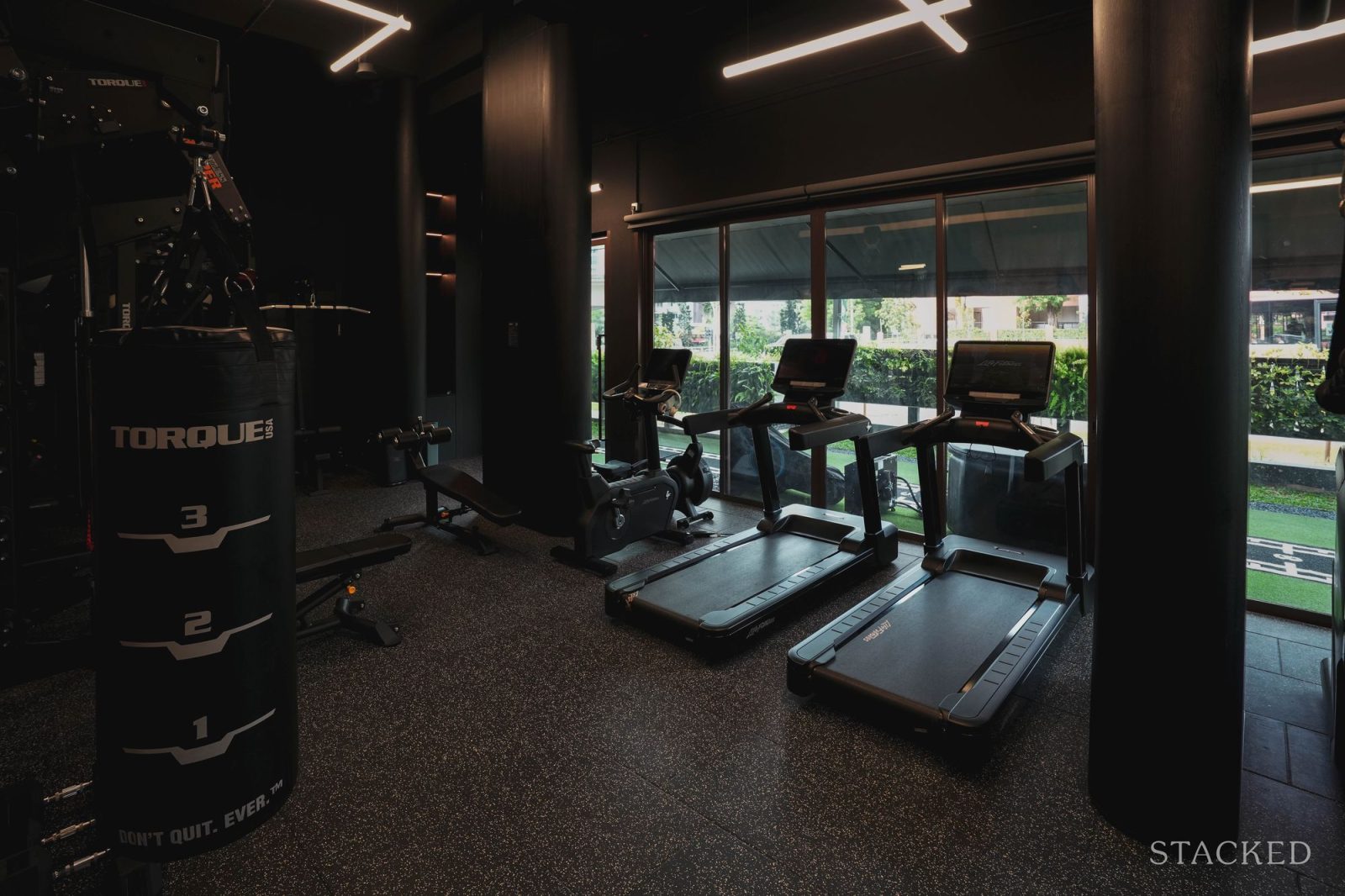
At the centre of this is GYMber, MBER's hybrid indoor-outdoor high-performance gym. Unlike the compact gyms that you’ll sometimes see in older serviced apartments, this one is extensive and leans heavily into Hyrox-style training.
The space accommodates a full HYROX-style training routine, and facilities extend beyond traditional gym equipment to include outdoor sled training zones, an ice bath, and a wellness jacuzzi pool.
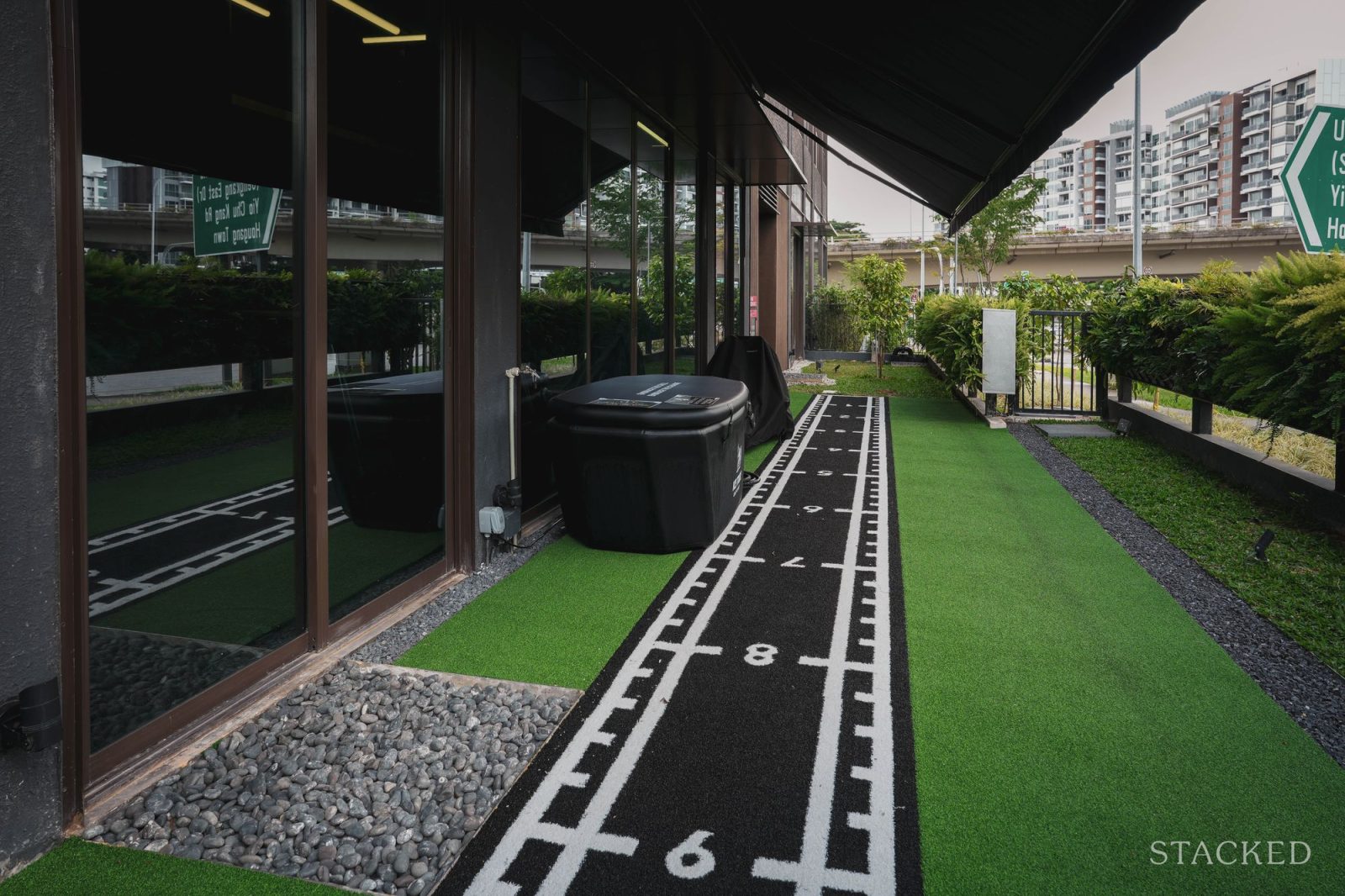
An interesting choice is the placement of the ice bath in the outdoor area. While uncommon, this does make more sense to me, since it keeps messy ice drainage away from indoor flooring.
Mber has partnered with Farreez Rosman, founder of Hustle Haus, to curate physical training programmes.
The outdoor space next to the gym also includes dedicated wellness pools, and some ground-floor units enjoy direct access to the pool. There are also three shower rooms that are available to residents.
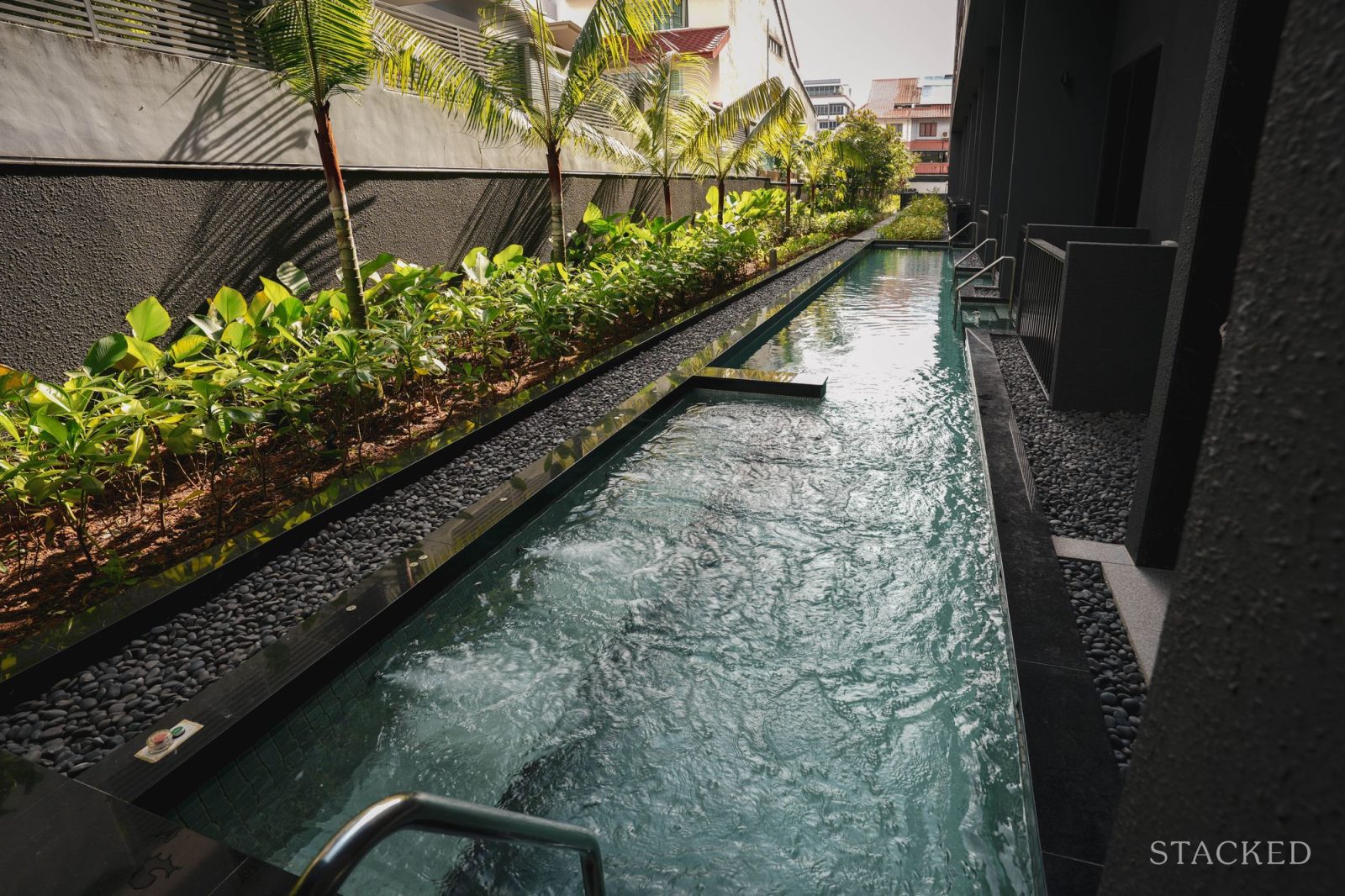
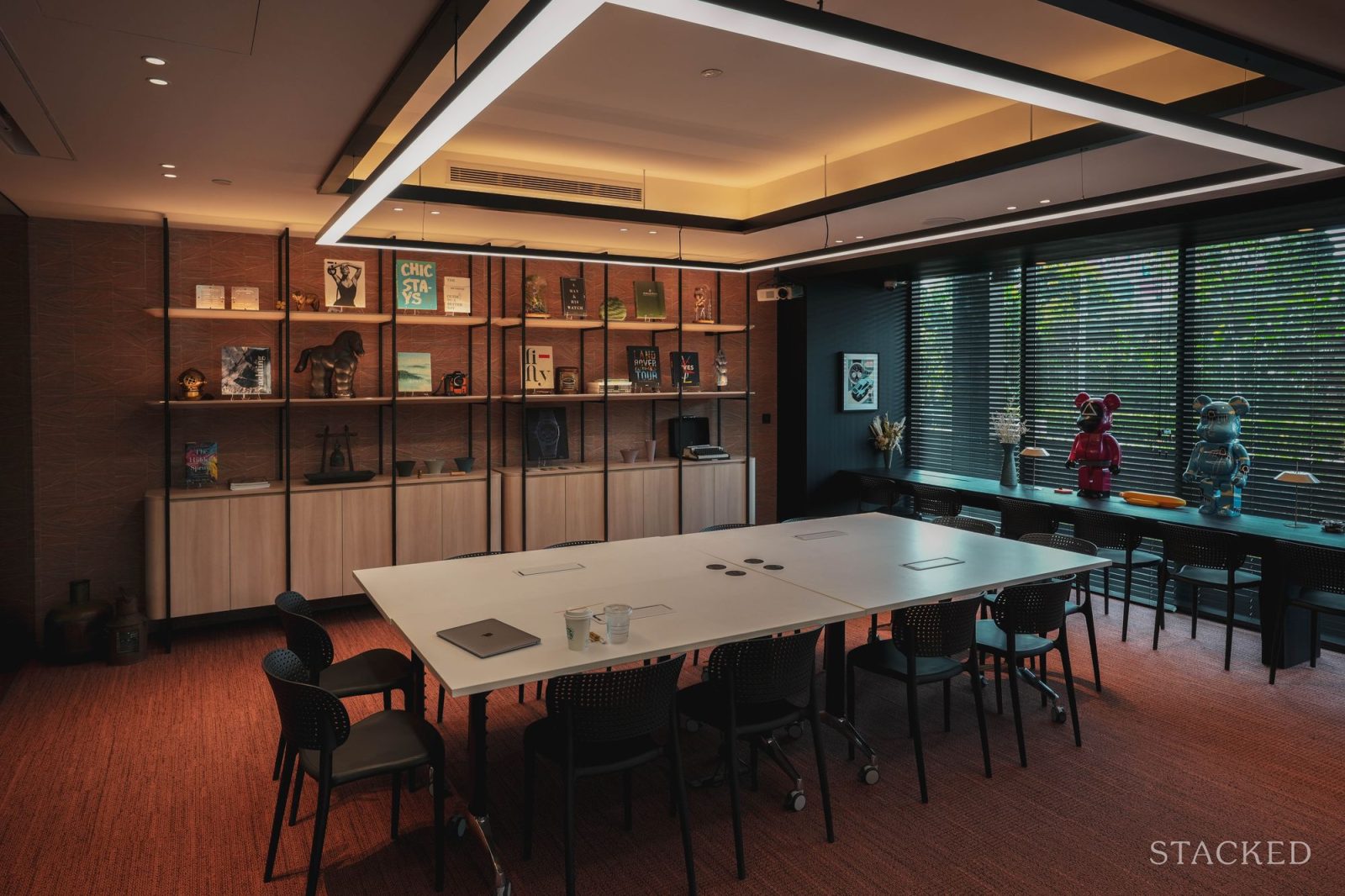
Gym aside, MBER provides a wide range of facilities: there’s a co-working space, meeting rooms, a conference room, and an outdoor dining area. BBQ pits are also expected to be added in future.
The co-working area deserves a special mention. Unlike the usual work lounge, this is a sizable space that takes up most of the space in one of the co-living units. This ties into the shared space, such as the aforementioned library and games room, which is a feature of the co-living units.
Co-living residents are informed in advance that the space in front of their room is communal and might be used by others. I don’t think many will mind since having the co-working space right outside your door (plus the good sound insulation) can be very practical.
Mber also organises quarterly community dinners and other activities through its Mber Club, which will host a calendar of salons, cultural programmes, workshops and gatherings.
The operator says that they hope their programmes will encourage residents to meet one another outside of their immediate living arrangements. As some residents are Singaporean - as I’ll touch on later - this is excellent for foreigners seeking more integration.
But some of the facilities at Mber Co-living & Serviced Apartments aren’t exclusively for residents. The conference room, gym, and a few of the other communal spaces can also be used by the public for a fee.
The development also includes five F&B tenants on the ground floor that are open to the public, and these F&B options are expected to be operational by the end of 3Q2026.
Who are the residents at Mber?
While we were touring the new development, we learned an interesting detail about the profile of residents who are among the first to stay in the serviced apartments and co-living units.
It turns out that some Singaporeans chose Mber while their HDB blocks and estates are undergoing renovations under the Home Improvement Programme (HIP). The main reason is that the serviced apartments provide a more comfortable living environment for their ageing parents during this upgrading and renovation period.
(If you haven’t gone through it before, know that the renovations as part of the HIP can be especially inconvenient for elderly family members, who need to use the temporary toilet accommodations installed on the ground floor).
Now I don’t think this is a permanent demographic for Mber, and it is a matter of good timing that it opened while several HDB estates in Serangood are undergoing their HIP. But it suggests that it is a viable option for local households to consider.
I do think the Serangoon location will be part of the appeal here, since rather than relocating to a co-living or pricey serviced apartment in a city-fringe area, residents can stay in a familiar neighbourhood environment.
Overall, the development also caters to a good number of corporate clients, who currently make up around half of the resident numbers at the moment. These are usually small teams brought into Singapore who work on a project for a few weeks before returning to their home countries.
This explains some of the design choices that we highlighted in the earlier section, namely En-suite bathrooms, strong sound insulation, and separation between social and private spaces.
As for its overall occupancy rate, Mber opened its doors earlier this month and is in the process of stabilising its operations. When I visited the property, its occupancy rate was around 27%, which is normal for a new hospitality project.
The operator expects the overall occupancy rate to reach around 82 to 85% by the end of this year. Looking ahead, the operator says that they expect to accommodate concert-goers and performing artists visiting Singapore. We heard that several eager fans of the boy group BTS have booked rooms when the concert hits Singapore in December.
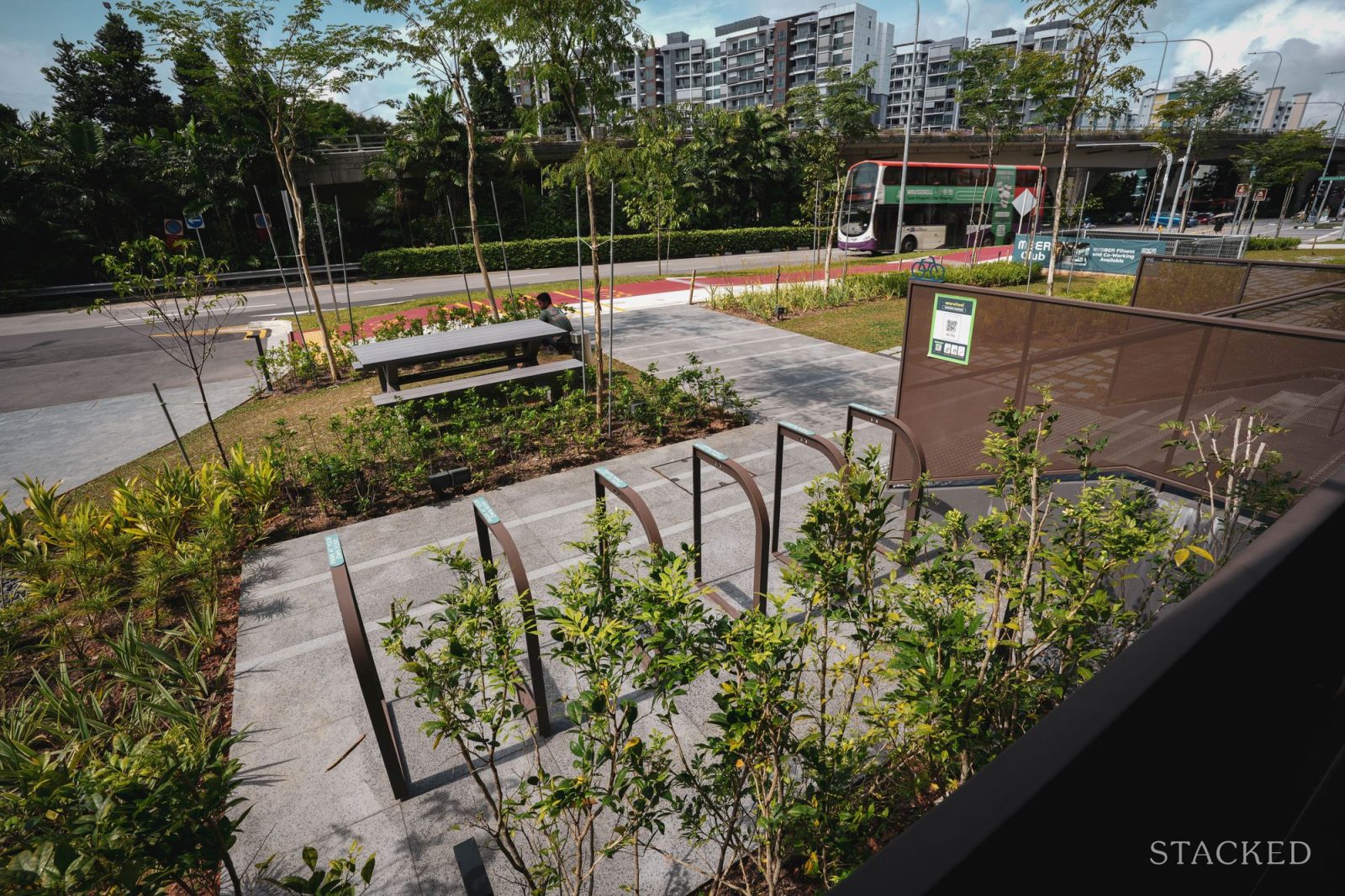
This diverse mix of residents may become Mber’s greatest strength and a way for it to stand out among a highly competitive market.
A foreign professional staying for two months, a Singaporean family waiting for renovation, or a concert-goer from a neighbouring country has a chance to interact in the various shared spaces. This makes for a very different experience than staying in a conventional serviced apartment or hotel.
Singapore has no shortage of serviced apartments or co-living spaces these days
What we need is differentiation. For foreigners seeking a more immersive experience of Singapore, Mber is the first development I’ve seen that is located in a suburban neighbourhood, which is also actively designed around that idea.
It’s also a compelling alternative for locals who need a temporary place to stay during renovations, HIP works, or other life transitions. Overall, this new property by Mber feels more connected and neighbourly than many other options.



0 Comments