Higher-floor units almost always come with a price premium, but whether that premium is justified is less clear once you look at resale performance. While buyers often assume higher floors will hold or even grow their value, the data shows this isn’t consistently the case. In fact, there are projects where higher-floor units lag behind their lower-floor counterparts, particularly when ground-floor units offer strong alternatives.
In this analysis, we break down actual transactions across several developments to see where paying more for a higher floor hasn’t translated into stronger resale returns, and what this means for buyers weighing the trade-off.
The challenge for many buyers today isn't access to information.
It's interpreting that information in a way that makes sense for their finances, goals, and stage of life.
Over time, that's also why we decided to work with agents who shared the same data-driven and advisory-led approach behind our editorial, consultants who could help readers think through decisions more objectively, rather than simply push transactions.
Today, the team has worked with more than 2,000 clients across over $5B in property transactions.
A quick explanation of low floor and higher floor units
For this analysis, transactions are grouped by floor level: units on the fifth floor and below are classified as low floor, while units on the 6th floor and above are classified as high floor. We considered transactions from 2014 through June 2025, including only developments with at least 10 transactions in both the low- and high-floor categories.
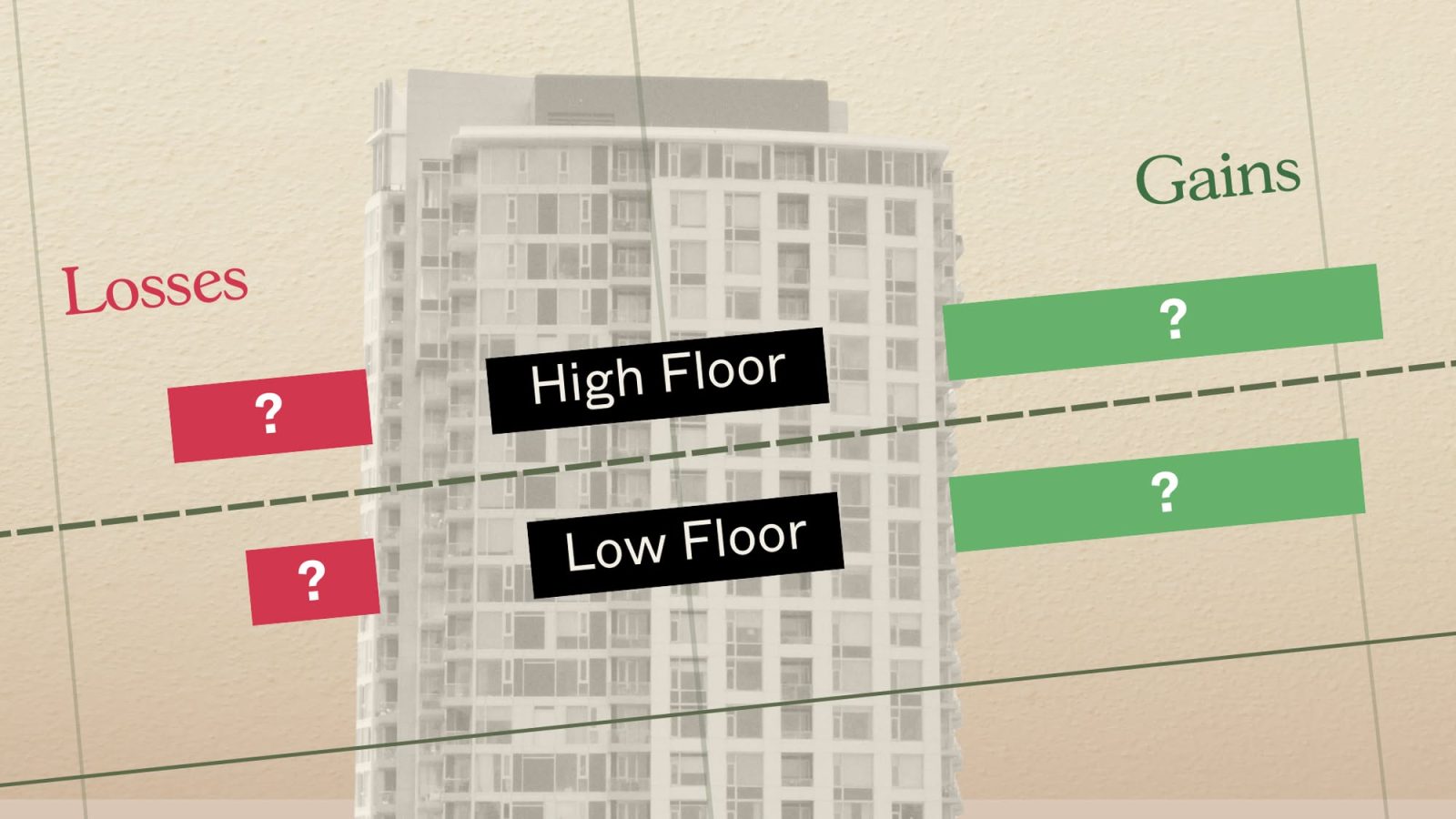
Let’s start with the basics: how profitable have low-floor units been compared to their higher-floor counterparts?

| Floor level | Gains | Losses | ||||||
| Average gains | Average ROI | Average holding period (Years) | Tnx volume | Average losses | Average ROI | Average holding period (Years) | Tnx volume | |
| High floor | $327,486 | 27.63% | 5.5 | 21107 | -$150,290 | -6.83% | 5.2 | 990 |
| Low floor | $308,381 | 27.12% | 5.5 | 11863 | -$98,407 | -6.48% | 5.3 | 679 |

From here we can see that, on the whole, the ROI between the two are so close that the difference is negligible. But this is an overall snapshot that doesn’t tell us too much, and now we’re going to zoom in on the exceptions.
Ryan J. Ong
A seasoned content strategist with over 17 years in the real estate and financial journalism sectors, Ryan has built a reputation for transforming complex industry jargon into accessible knowledge. With a track record of writing and editing for leading financial platforms and publications, Ryan's expertise has been recognised across various media outlets. His role as a former content editor for 99.co and a co-host for CNA 938's Open House programme underscores his commitment to providing valuable insights into the property market.Need help with a property decision?
Speak to our team →Read next from Property Investment Insights
PRO Property Investment Insights This Old Executive Condo Was Once Seen As Too Expensive — 20 Years Later, Has It Become A Value Buy?
PRO Property Investment Insights This Prime Area In Singapore Still Has Condos Under $2M — Despite Nearby Prices Climbing Much Higher
PRO Property Investment Insights This Old Bukit Panjang EC Once Had More Losing Sellers Than Winners — But Look At It Now
PRO Property Investment Insights This “Affordable Central” Neighbourhood Has Outperformed Singapore’s Condo Market Over The Past Decade
Latest Posts
Singapore Property News A 4-Room HDB Flat Just Sold For A Record $1.263 Million In Bishan — Here’s What Buyers Are Paying For
Property Market Commentary Why Some New Condo Owners Struggle To Sell Even After Prices Have Risen
On The Market 5 New Launch Condos That Still Have Two-Bedders Available — Starting From $1.18 Million
0 Comments