This Popular 520-Unit Condo Sold 85% At Launch — Here’s What Happened To Prices After
March 10, 2026
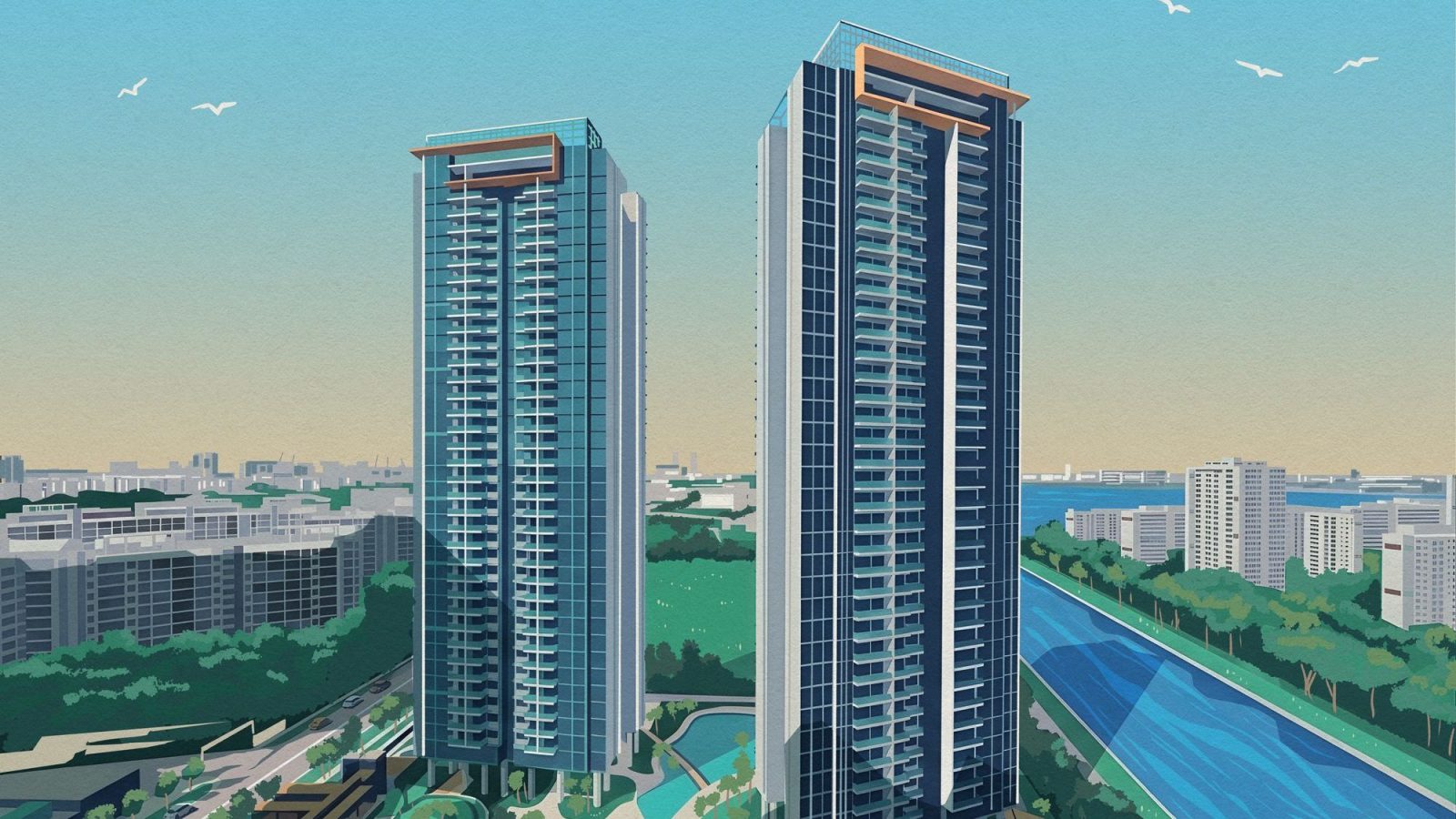
For homebuyers who were actively on the market in 2018, Twin Vew was one of the more memorable new launch projects of the year. Located on West Coast Vale in District 5, Twin Vew is a 520-unit condominium that launched in May 2018.
Developed by CSC Land, the 99-year leasehold project managed to sell out 85% of its units over its weekend launch. The feat was noteworthy in the primary market back then, which had seen months of subdued sentiment following a series of property cooling measures from 2013 and 2017.
When Twin Vew hit the market, there was debate about whether the project’s success marked a turning point for the better in the private residential property market. However, the real contributing factor to its sales success may simply be its first-mover advantage.
Let’s break down what this means. CSC Land won the site in 2017 after submitting a $291.99 million bid for the site, a land rate of about $592 psf per plot ratio (ppr). Twin Vew launched in May 2018, and achieved an average selling price of $1,399 psf
But City Developments (CDL) won the adjacent plot in February 2018, with a top bid of $472.4 million or a land rate of $800 psf ppr. On the face of it, this was a higher land rate compared to what CSC paid for Twin Vew, which typically results in a relatively higher average selling price.
As a result, buyers had reason to believe that CDL’s upcoming project would likely be much pricier compared to Twin Vew. But Whistler Grand saw launch prices of about $1,380 psf when it entered the market in November 2018.

It also helped that Parc Riviera, a 752-unit condo next to Twin Vew, established an initial pricing benchmark of approximately $1,220 psf for new condos on West Coast Vale when the condo launched in 2016.
This benefited Twin Vew, which is nicely positioned between Parc Riviera and the Whistler Grand, as we’ll see below. So, although a wider market recovery was indeed happening, it seems quite likely that this initial price positioning – rather than more abstract market movements – drove up the strong buying interest in Twin Vew.
But the big question is whether all of this resulted in better performance at the condo in the following years.
Was Twin Vew just a one-time success for its earliest buyers because of its strategic launch timing? Or is it a solid performer on top of that?
In the first part of our deep dive, we examine Twin Vew’s performance by looking at three aspects of the development: how it performed during its launch phase, how it fared upon entering the resale market, and how it compares with nearby projects and the wider 99-year leasehold market.
Past performance is a useful signal, but it's not a forecast. The projects that outperformed over the last cycle aren't guaranteed to do so again, and the reasons they outperformed may no longer apply.
The more useful question is whether a particular property still makes sense at today's price, given your budget, objectives and timeline. That's where many buyers find it helpful to get a second opinion.
Over time, that's also why we decided to work with agents who shared the same data-driven and advisory-led approach behind our editorial, consultants who could help readers think through decisions more objectively, rather than simply push transactions.
Today, the team has worked with more than 2,000 clients across over $5B in property transactions.
How Twin Vew was initially marketed.
We could describe the product positioning of Twin Vew as a value-forward entry. In sequence, the condos that set the price benchmarks for West Coast Vale were Parc Riviera, then Twin Vew, and then Whistler Grand.
In theory, the price discrepancy between Twin Vew and Whistler Grand – once the latter was complete – should have translated to stronger gains for Twin Vew buyers. Even for owner-occupiers, the sense of perceived urgency at the time was palpable: they thought, if they didn’t get their unit now, they would likely pay much more for a shot at Whistler Grand later.
As such, buyers raced to secure a unit at Twin Vew before Whistler Grand could set the new, higher benchmark for the area.
While West Coast Vale is not the most central or accessible location, it is close to Clementi, a mature town known for convenience and schools. Twin Vew is within one kilometre to Nan Hua Primary, which contributes to its overall demand from families with school-going children.
How did Twin Vew perform during its launch?
| Year | Average $PSF | No. of units sold |
| 2018 | $1,400 | 453 |
| 2019 | $1,476 | 7 |
| 2020 | $1,485 | 32 |
| 2021 | $1,493 | 28 |
| % change | 6.59% | – |

Twin Vew’s estimated breakeven was around $1,065 psf ppr. At an average launch price of around $1,400 psf in 2018, units were transacting at roughly 31% above this price point. This was still just a bit above Whistler Grand’s breakeven price of $1,314 psf, making it quite attractive.
Joey Peh
Joey is a data analyst and licensed real estate agent with a passion for storytelling through numbers.Need help with a property decision?
Speak to our team →Read next from Property Investment Insights
PRO Property Investment Insights Why This 25-Year-Old 999-Year Condo In The West Delivered The Highest 2-Bedder Returns — Averaging $529,000 In Profits
PRO New Launch Condo Analysis Lentor Gardens Residences Starts From $1.5M For A Two-Bedder — How Its Pricing Compares In Lentor
Property Investment Insights We Analysed How Executive Condominiums Have Performed Since Launch — Here Are The 3 Biggest Lessons We Found
PRO Property Investment Insights How A 30-Year-Old Condo Became Serangoon’s Strongest-Performing Condo For 2-Bedders — With Average Profits Of $457,000
Latest Posts
Singapore Property News This $17.8M Portfolio Of 14 Office Units Comes Fully Leased — Just As CBD Office Rents Are Expected To Rise Up To 20%
Property Advice We’re Planning To Retire In Johor: Should We Replace Our $3M Singapore Home With A $1.5M Condo?
Investor Case Studies Why We Bought A $1.26M 3-Bedroom Condo Instead Of Two 1-Bedroom Investment Units: A Buyer’s Case Study
0 Comments