



Dear Stacked,
My wife and I currently live in a four-room BTO flat in the East that has just reached its minimum occupation period (MOP). We are planning to sell it, and use the proceeds to buy a larger home. Both of us have lived in the East all our lives, and we would prefer to stay in this part of the island if possible.
Financially, my wife earns more than $7,000 a month and, on her own, could get a $1.2 million loan to purchase a condominium. Meanwhile, I earn more than $8,000 a month and could secure a $1.6 million loan on my own to purchase a condo. Together, we are looking to purchase a condo within our budget of approximately $2.8 million.
We have been weighing three options. The first is to upgrade to Coastal Cabana. It is in the East, which suits us, and it is one of the last few ECs that fall under the old ruling where the Deferred Payment Scheme is accepted. It would also be privatised in five years.
The second option is to sell our flat and buy two private properties. My wife would buy a new launch two-bedroom unit to hold as a rental, and I would buy a resale three-bedroom unit for our own stay. A project like Coco Palms would sit within our budget for this own-stay unit.
The third option is to put everything into a larger new launch three-bedroom unit and rent elsewhere for the four years until its completion. We are not enthusiastic about renting and moving twice, but an agent suggested that this would give us the highest capital gains.
Which option offers the best exit potential and highest gains over time? We lean towards the first two options, but we worry that the sell-one-buy-two route could overleverage us.
Moreover, where might we turn to for an appropriate rental property? Several agents have introduced us to new project launches such as Hudson Place Residences or the upcoming Thomson Reserve. But we need help identifying which project has better rental fundamentals.
Thank you!
(This is part of an ongoing series where we answer reader questions about the property market. If you have one of your own, send it to stories@stackedhomes.com.)
Hi and thanks for writing in!
Of the three paths you have laid out, only one comes with a deadline: your eligibility to buy an executive condominium (EC). The other two options will still be available to you in five or ten years, in some form or another.
This distinction is easy to miss when the options evaluated are not like-for-like, but we think that it changes the sequence of your decisions. We will work through each option based on its own merits in this article.
However, it is worth flagging upfront that the EC route, the sell-one-buy-two route, and the rent-and-wait route are not really three answers to the same question. Our reckoning is that the first option is a window, the second a strategy, and the third is a logistics trade you may have already half-rejected.
The EC eligibility window changes your comparison
As a subsidised form of a hybrid public-private housing option, ECs start under public housing rules and convert into a private residential development after ten years. Only married couples or family nuclei under a $16,000 monthly household income ceiling can buy an EC directly from the developer.
Moreover, as you rightly pointed out, Coastal Cabana is among the last few sites launched under the older five-year Minimum Occupation Period (MOP) rules. For other readers, we cover the latest changes to the EC scheme in another article.
Given your approximate income of more than $17,000, you are over the $16,000 income ceiling for an EC. Whether you still qualify depends on your actual monthly income and HDB’s assessment.
It would be a good move on your part to confirm this with HDB or the EC sales team before going further. The point that follows holds only if you do qualify: your incomes will likely rise over the next five years, so this is probably the last cycle in which an EC is realistically on the table.
That is the key reason we would not treat Coastal Cabana as an equivalent alternative to the sell-one-buy-two plan. Even if Option 2 delivers a higher theoretical return, walking away from Option 1 means walking away from a one-time eligibility, not just a project.
Option 1: Coastal Cabana and the EC options available
Overall, the process of purchasing a unit at Coastal Cabana seems to favour your situation. Buying a new EC unit from the developer incurs no upfront Additional Buyer's Stamp Duty (ABSD), so you avoid the remission-and-refund cycle that an HDB upgrader buying a private new launch has to navigate.
The Deferred Payment Scheme (DPS) also means that you only pay the 25% down payment and Buyer’s Stamp Duty (BSD) once you sign the Sale and Purchase Agreement, with your loan only disbursed at key collection. You can also sell the Built-To-Order (BTO) flat closer to the EC’s completion rather than today.
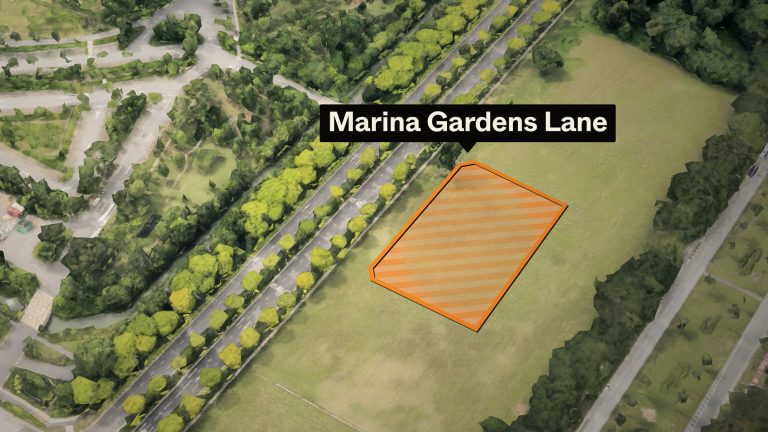
The financial fit is also comfortable. Based on transaction data compiled by Stacked, the median price at Coastal Cabana for mid-sized units (broadly the 3-bedroom band) is around $1.72 million, translating to approximately $1,794 psf based on transactions lodged so far this year.
That sits well within the headroom that your combined affordability allows, and leaves a buffer if interest rates move or if priorities shift before the Temporary Occupation Period (TOP).
Now, the more challenging question is predicting if the price growth trajectory of recent EC projects will mirror the outstanding price increases that previous EC projects have demonstrated.
Average resale $PSF of ECs and private condos (islandwide)
| Year | Avg $PSF of ECs (resale) | Avg $PSF of condos and apartments (resale) | % difference |
| 2015 | $729 | $1,223 | 67.81% |
| 2016 | $711 | $1,271 | 78.87% |
| 2017 | $710 | $1,313 | 84.83% |
| 2018 | $813 | $1,352 | 66.40% |
| 2019 | $848 | $1,396 | 64.54% |
| 2020 | $866 | $1,338 | 54.41% |
| 2021 | $942 | $1,410 | 49.74% |
| 2022 | $1,100 | $1,533 | 39.32% |
| 2023 | $1,239 | $1,657 | 33.70% |
| 2024 | $1,307 | $1,739 | 33.05% |
| 2025 | $1,390 | $1,809 | 30.14% |
| Annualised | 6.67% | 3.99% |
Based on resale data compiled by Stacked, the average price of ECs grew at an annualised rate of 6.67% between 2015 and 2025. In contrast, the private residential market recorded an average annualised price growth of 3.99% over the same period.
In addition, the price gap between ECs and condos narrowed from almost 68% in 2015 to about 30% in 2025. That is the long-running EC thesis: buy at the subsidised entry price, ride the price uplift as the project is privatised as its resale prices increase to match the benchmark rates in the private housing market.
However, the starting price matters. It’s important to note that ECs that launched in 2015 were priced from a much lower base than ECs launching today, giving them a wider margin to catch up with the nationwide private condo sector.
But the transaction figures for the EC and condo markets in District 18 tell a different story.
Average resale $PSF of ECs and private condos in District 18
| Year | Avg $PSF of ECs (resale) | Avg $PSF of condos and apartments (resale) | % difference |
| 2015 | $757 | $876 | 15.79% |
| 2016 | $743 | $879 | 18.32% |
| 2017 | $709 | $885 | 24.88% |
| 2018 | $756 | $971 | 28.45% |
| 2019 | $832 | $973 | 16.89% |
| 2020 | $890 | $966 | 8.54% |
| 2021 | $940 | $1,039 | 10.58% |
| 2022 | $1,058 | $1,177 | 11.27% |
| 2023 | $1,171 | $1,363 | 16.42% |
| 2024 | $1,290 | $1,444 | 11.95% |
| 2025 | $1,343 | $1,486 | 10.69% |
| Annualised | 5.90% | 5.42% |
Within Pasir Ris and Tampines, the average price of ECs and condos have grown at roughly similar rates over the past decade, at 5.9% and 5.42%, respectively. ECs have the advantage of only about half a percentage point here, well below 2.7 percentage points at the islandwide level.
In this part of the East, the project’s locational benefits and what it offers seem to greatly influence its price trajectory, rather than its status as an EC of a condo. But it’s worth comparing Coastal Cabana’s premium against its neighbouring developments for a clearer perspective.
| Project | Property type | Completion year |
| EASTVALE | Executive Condominium | 1999 |
| WATERCOLOURS | Executive Condominium | 2014 |
| SEASTRAND | Condominium | 2014 |
| SEA ESTA | Condominium | 2015 |
| RIPPLE BAY | Condominium | 2015 |
| SEA HORIZON | Executive Condominium | 2016 |
| COASTAL CABANA | Executive Condominium | 2029 |
| Project | Avg $PSF | Avg price | Tnx volume |
| EASTVALE | $1,065 | $1,256,600 | 10 |
| WATERCOLOURS | $1,210 | $1,279,034 | 23 |
| SEA HORIZON | $1,268 | $1,405,939 | 10 |
| SEA ESTA | $1,360 | $1,506,074 | 12 |
| RIPPLE BAY | $1,407 | $1,554,911 | 15 |
| COASTAL CABANA | $1,800 | $1,640,380 | 213 |
| SEASTRAND | $1,318 | $1,660,000 | 3 |
Transaction data suggest that the price premium which Coastal Cabana holds over its neighbouring resale ECs is sizeable, at around 40–70% on a psf basis. Some of that gain is what you would expect for a new project on a fresh 99-year lease, modern facilities, and brand new units and designs.
The question that we would ask ourselves is how much of the post-MOP price growth has been factored into the developer’s selling prices today? Especially since the price gap between resale ECs and condos in District 18 is not doing the heavy lifting you would expect.
To lay it out simply: a new EC in Pasir Ris that sells for about $1,800 psf, needs to catch up to the resale benchmark that is inching up at a marginal rate. The room of outstanding price growth is quite thin by comparison.
That does not undo the case for purchasing an EC unit for yourself. But we would not lean into Coastal Cabana specifically on the assumption that it will enjoy the over-sized price gains that characterised the ECs a decade ago. Consider your eligibility, ABSD-free entry, DPS, and a comfortable fit with your budget. Capital appreciation is a bonus, not the central pitch.
Option 2: The sell-one-buy-two approach, and what your budget actually buys
The sell-one-buy-two case is a straightforward concept. You separate your home from your investment property: one funds your lifestyle, the other works as a yield-and-appreciation asset. Done well, it could serve as your long-term wealth-building structure.
But the question is whether your individual budgets line up against the units that are priced for sale given the price trends and market conditions that characterise the property market today.
Average private residential prices over the last 12 months
| Unit type | New Sale | Sub Sale | Resale |
| 1-bedroom | $1,362,112 | $968,768 | $1,057,151 |
| 2-bedroom | $1,763,198 | $1,549,229 | $1,594,473 |
| 3-bedroom | $2,497,479 | $2,277,045 | $2,406,775 |
| 4-bedroom | $3,584,983 | $3,621,620 | $3,297,158 |
According to our estimates, the $1.2 million loan which your wife is able to secure lines up with a one-bedroom unit in the primary market rather than the two-bedder you mentioned.
An overview of recent new launch projects so far this year suggests that most two-bedroom units tend to command an average price quantum of around $1.76 million, which would take her well past her individual limit and into combined-affordability territory.
You might want to consider that if a two-bedroom unit is your priority, then a resale condo could be a more viable path.
On the other hand, your individual $1.6 million loan for a resale 3-bedder seems to be workable. Within Coco Palms in Pasir Ris, the project you highlighted, three-bedroom units are transacting at a median absolute price of about $1.6 million - and an average price of $1,736 psf - across 15 deals lodged in 2025 and in 2026 to date.
That sits within your budget, which means you have some choice across the various stacks and floors at Coco Palms.
In our opinion, this path is where the concern over over-leveraging yourself starts to materialise. In general, it seems like you can afford adopting this strategy. But the compromise sits on the rental side: if your wife purchases a $1.2 million one-bedder rather than the two-bedder you described.
A compact one-bedroom unit rented out for roughly $3,150 a month (the islandwide median for a comparable size), paired with a three-bedroom unit at Coco Palms for own-stay, would be feasible but is a different proposition from two well-chosen properties in two different growth corridors.
The sell-one-buy-two route also adds vacancy risk and a second mortgage to manage in periods when rents soften. Singapore's rental market has been resilient, but that is a market-level observation, not a guarantee for any single unit. How quickly a unit rents and at what price depends on what you buy and where.
This leads us to the other question you raised.
Where would we actually look for the right rental property?
Your scepticism about agents pushing the next upcoming new launch is well-founded. Tenants pay for accessibility, employment-node proximity, and getting more bedrooms per dollar - rather than paying top dollar for the latest completed project.
It's always a good approach when purchasing an investment property, to examine the location and tenant pool, followed by the product - whether it's a new project versus a resale development.
The locations that consistently rent well to working tenants are the ones close to large employment nodes or direct to MRT links.
Properties in the city-centre like the Core Central Region (CCR), city-fringe locales in the Rest of Central Region (RCR), areas like Newton, Novena, River Valley, as well as the Alexandra-Queenstown corridor in particular, draw a deep pool of professional tenants.
The rental market in suburban locations in the Outside of Central Region (OCR) work off different fundamentals, such as proximity to schools, educational campuses, or specific industrial and employment clusters.
Often, we see that resale properties tend to trump new launch projects in terms of affordable entry-level $psf prices, and this is where the math of calculating rental yield begins.
A project that already commands a hefty price premium over the surrounding resale market average has likely had its expected future price appreciation already priced in. Thus, the rental rate is anchored to the location, not how new the unit or development is.
On the other hand, rejuvenation plans that include the development of new housing supply into an area will end up creating stiff competition for rental units, compressing rental growth in the years you need them most.
Your instinct to evaluate the project’s rental fundamentals is the right one. Hudson Place Residences and Thomson Reserve are not bad projects; they are just not automatically the right rental answer for your $1.2 million budget.
Option 3: the new launch and four years of renting
You have already named the issue that marks this option. It concentrates capital into one asset for maximum exposure while banking on its capital appreciation, but it costs you four years of rent and two moves.
The breakeven calculation is roughly: the additional appreciation on the larger new launch has to cover the cumulative rental outlay over four years.
| Potential Advantages | Potential Drawbacks |
| Exposure to a higher-value asset | Need to rent for several years before moving in |
| Potential for stronger capital appreciation if the project performs well | Additional rental expenses during the interim period |
| Exposure to a brand-new project from day one | More moving parts to manage |
| Ability to lock in today's price while the project is under construction | Future returns depend on both the project's performance and the cost of renting in the meantime |
For households that genuinely have no preference about where they live in the interim, this option can work. But since you have already flagged the renting hassle as a concern, the additional return needs to be somewhat significant, not a marginal one, and the project would have to be specifically evaluated on that basis. We would not recommend pursuing this route based on an agent's pitch alone.
Our take: a matter of sequence, not choice
The instinct to treat Options 1 and 2 as competing strategies is what makes the decision feel harder than it has to be. They are not really competing. They are two stages of a property journey and one of them carries a deadline.
Taking the EC route now does not close off the sell-one-buy-two route later. If Coastal Cabana, or another EC that still falls under your eligibility window, performs reasonably over the next five to ten years, you arrive at the privatisation point with more equity, a larger asset base, and a household income that has likely moved on as well. That is a stronger starting position for a two-property structure than today's, where your wife's $1.2 million individual loan ceiling already forces a compromise on the investment unit.
Pursuing the sell-one-buy-two approach first does the opposite. It deploys the capital you have today into two assets that fit within today's individual borrowing limits, and it permanently closes the EC chapter. There is no going back to recover the eligibility once you cross it.
If we were to take a step back, there’s a good chance that we would lean toward Option 1, but with a clear caveat - that this is not specifically a call favouring Coastal Cabana.
Whether this particular project is the right EC depends on a closer look at its pricing against the remaining EC pipeline, the upcoming District 18 supply around its TOP, and what alternative EC sites under the old MOP rules are still available.
If you need more help analysing this project, you can check out our condo review here, as well as our extensive pricing review here. In our opinion, the EC window should be maximised before it shuts, and the sell-one-buy-two ambition is better timed for the cycle after, not this one.



1 Comments
15k combined want to buy 2.8m? Good luck to you if one of you loses your jobs…