


By global standards, Singapore’s built environment and urban landscape has been changing at a furious pace over the last hundred years or so. A combination of land scarcity and the rapid development of our towns and estates means that we’ve had to sacrifice a lot of our architectural heritage.
Beyond conservation zones and the civic district, it’s not easy to find buildings that are more than 60 or 70 years old, and buildings over 100 years old even rarer.
So, it's probably a good thing that rather than perpetually tearing down and building over our history, a handful of new developments have found a way to balance the unending demand for new homes with the conservation of our architectural heritage.
In this article, we’ll list four condominiums that incorporate conservation buildings, featuring how each of them have utilised it to add a distinct touch to the project.
1. Avenue South Residences
Jointly developed by UOL Group, Singapore Land, and Kheng Leong Co, the 1,074-unit Avenue South Residences is a 99-year leasehold project off Kampong Bahru Road in Bukit Merah. The District 3 condo was completed in 2023.
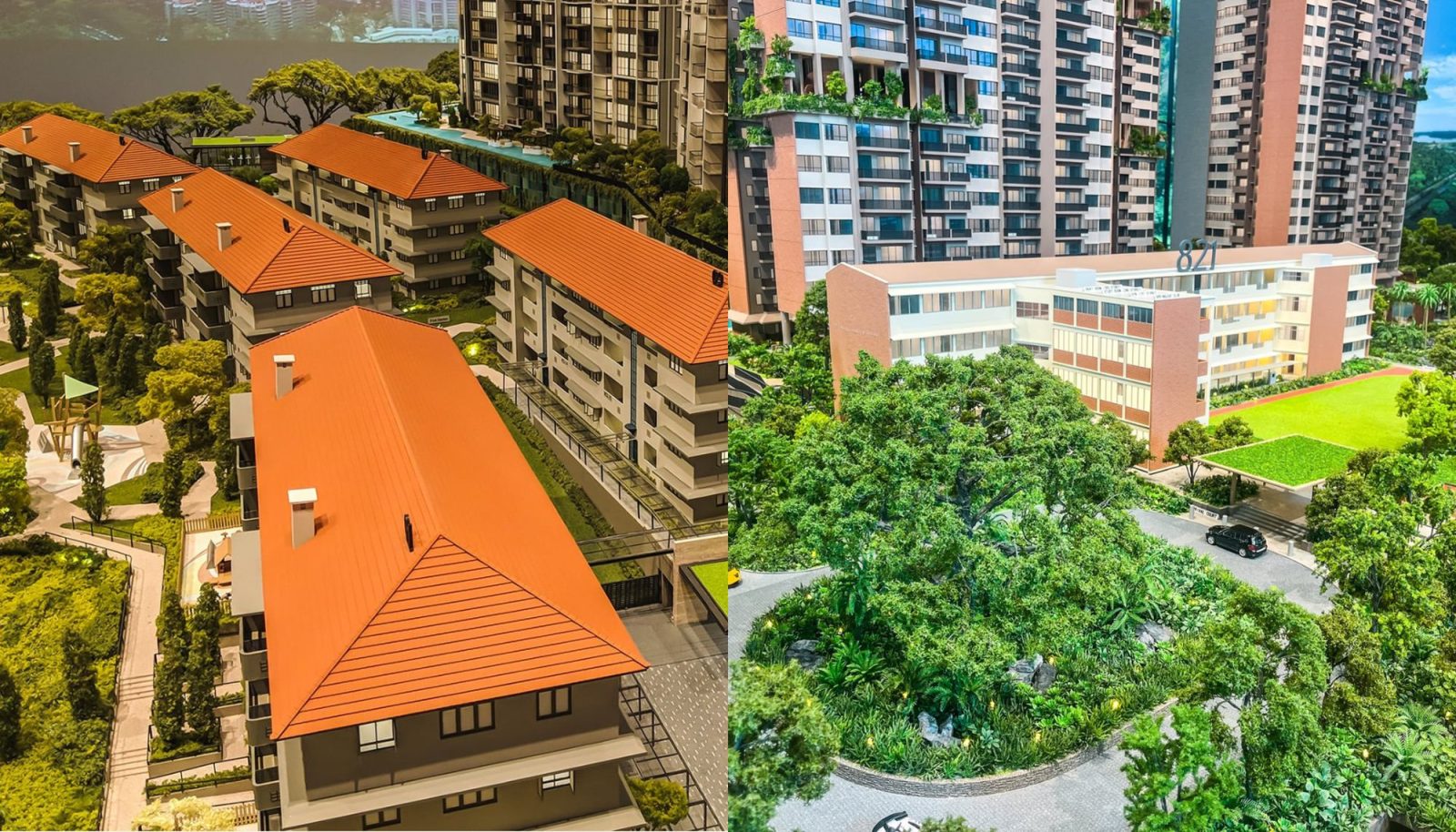
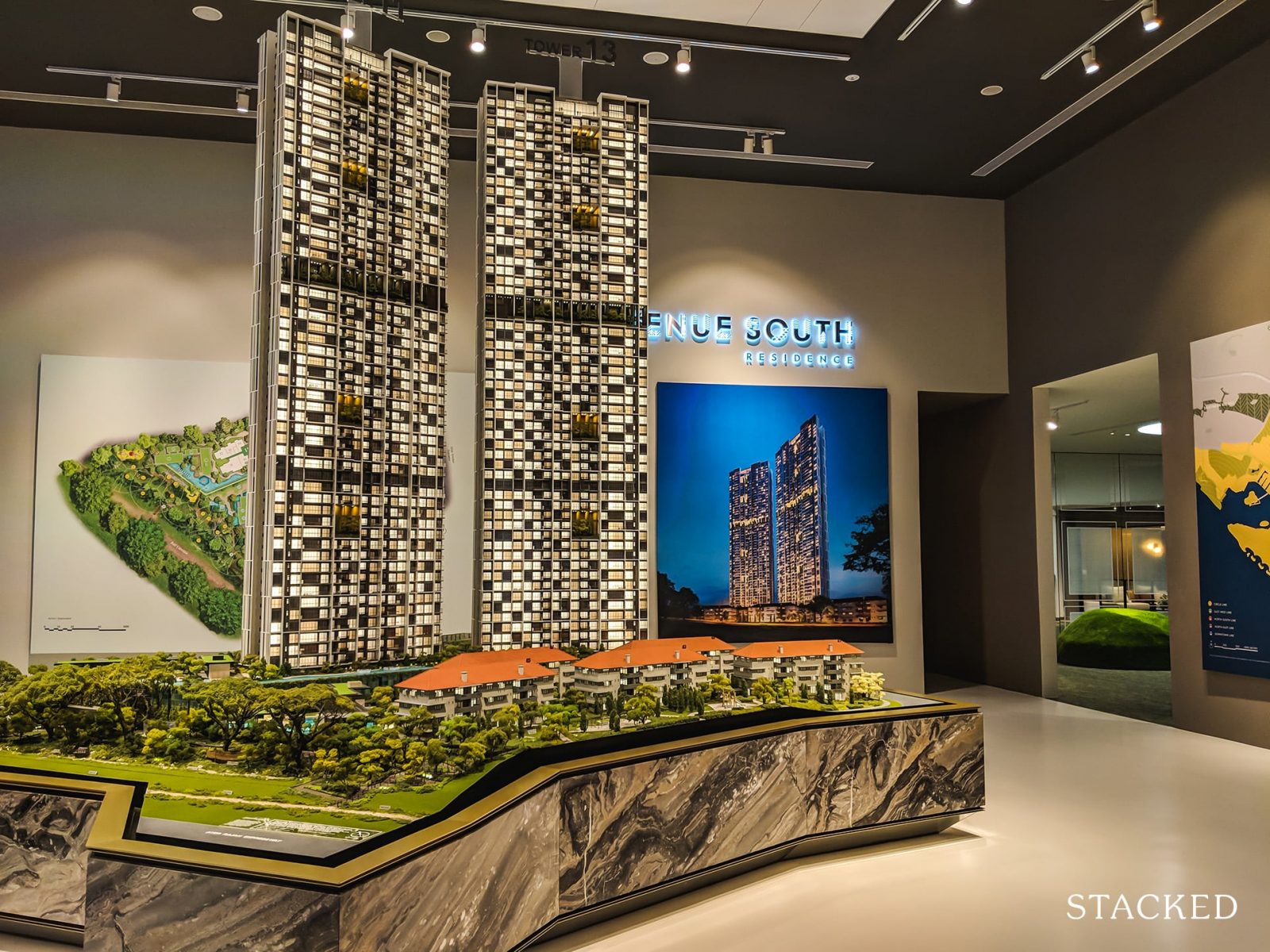
Avenue South Residences is a relatively recent and recognisable example of architectural conservation that has been incorporated into a new condo. The development features five low-rise blocks of conservation flats.
These were originally built between 1949 and 1952 by the Singapore Improvement Trust (SIT), the predecessor of today’s HDB, and they made up part of the former Kampong Silat Estate. After the familiar pre-war flats in Tiong Bahru, these are the second-oldest examples of public housing estates in the country.
The five retained blocks are 18, 19, 22, 23 and 24 Silat Avenue. They demonstrate some of the earliest examples of early town planning in this part of Singapore, such as the orientation and layout of the blocks as well as shop spaces on the ground floor.
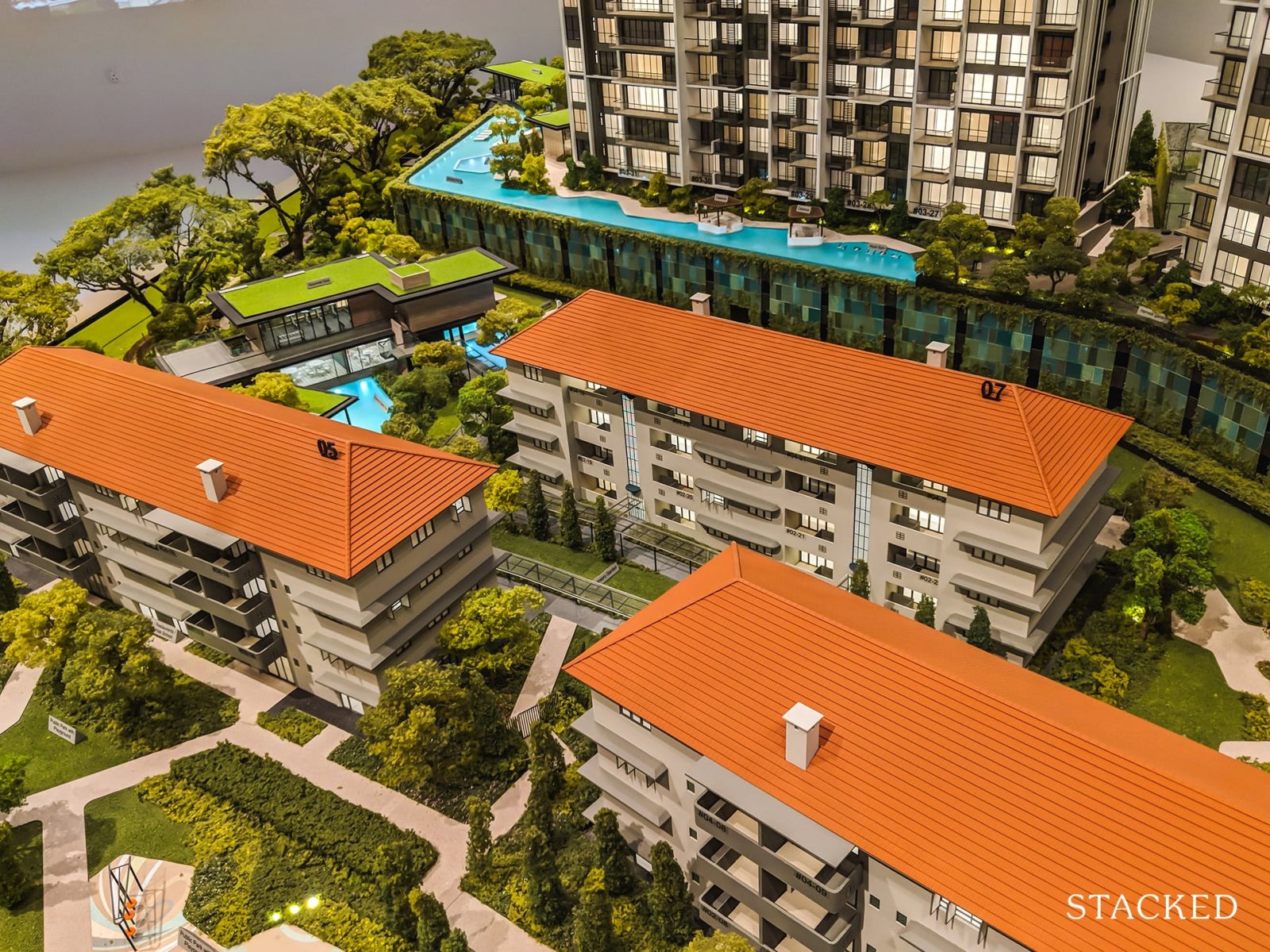
These four- and five-storey conserved blocks feature an art-deco style. Some notable features include the restored red-tiled pitched roofs, wooden windowframes, and large but enclosed balconies (these enclosed balconies were actually where the kitchens in the original units were located).
These flats were in use right up till 2007 when they underwent the Selective En-Bloc Redevelopment Scheme (SERS), and remaining residents were given replacement housing at Kim Tian Road. The conservation of five of the original 15 housing blocks at Kampong Silat was announced in 2014.
They were selected for conservation because Kampong Silat marked an important transition point: it was the tipping point when kampong life began to give way to the type of modern public housing that shaped our heartlands and suburbs.
Prices for units in these heritage blocks ranged from over $850,000 for a one-bedder, to over $1.6 million for a three-bedroom unit. Personally, it is ironic that while Avenue South Residences has elevated the benchmark price for condos in that area, the original Kampong Silat was actually known as a poorer and working class neighbourhood.
How it works within the development
The five conserved apartment blocks are known as The Heritage Collection at Avenue South Residences, which also consists of two 56-storey towers with units in the Horizon Collection (comprising units from the first to 39th floors) and Peak Collection (from the 40th-56th floors).
There are 86 units within the conserved blocks, and the unit mix ranges from one- to three-bedroom units. When the project launched in September 2019, indicative prices for units in the Heritage Collection started from about $858,000 for a one-bedder, $1.15 million for a two-bedder, and $1.6 million for a three-bedder.
At the time, the condo units in the conserved blocks were pitched as a more accessible entry point, compared to the higher-floor units in the Peak and Horizon Collections.
When we reviewed this project, the three-bedroom units in the Heritage Collection layout stood out due to their larger-sized kitchens, the inclusion of two private balconies, and good cross-ventilation throughout the unit.
In our view, the units in the conserved blocks are an excellent demonstration of integrating conserved buildings into a new development that makes practical use of it, rather than just having it as a showpiece.
2. Springleaf Residence
Springleaf Residence is a 941-unit development along Upper Thomson Road in District 26. Developed by GuocoLand, this 99-year leasehold project is expected to be completed by the end of 2029.
The project was one of the most successful new launch projects in 2025, selling 92% of its units when it first hit the market.
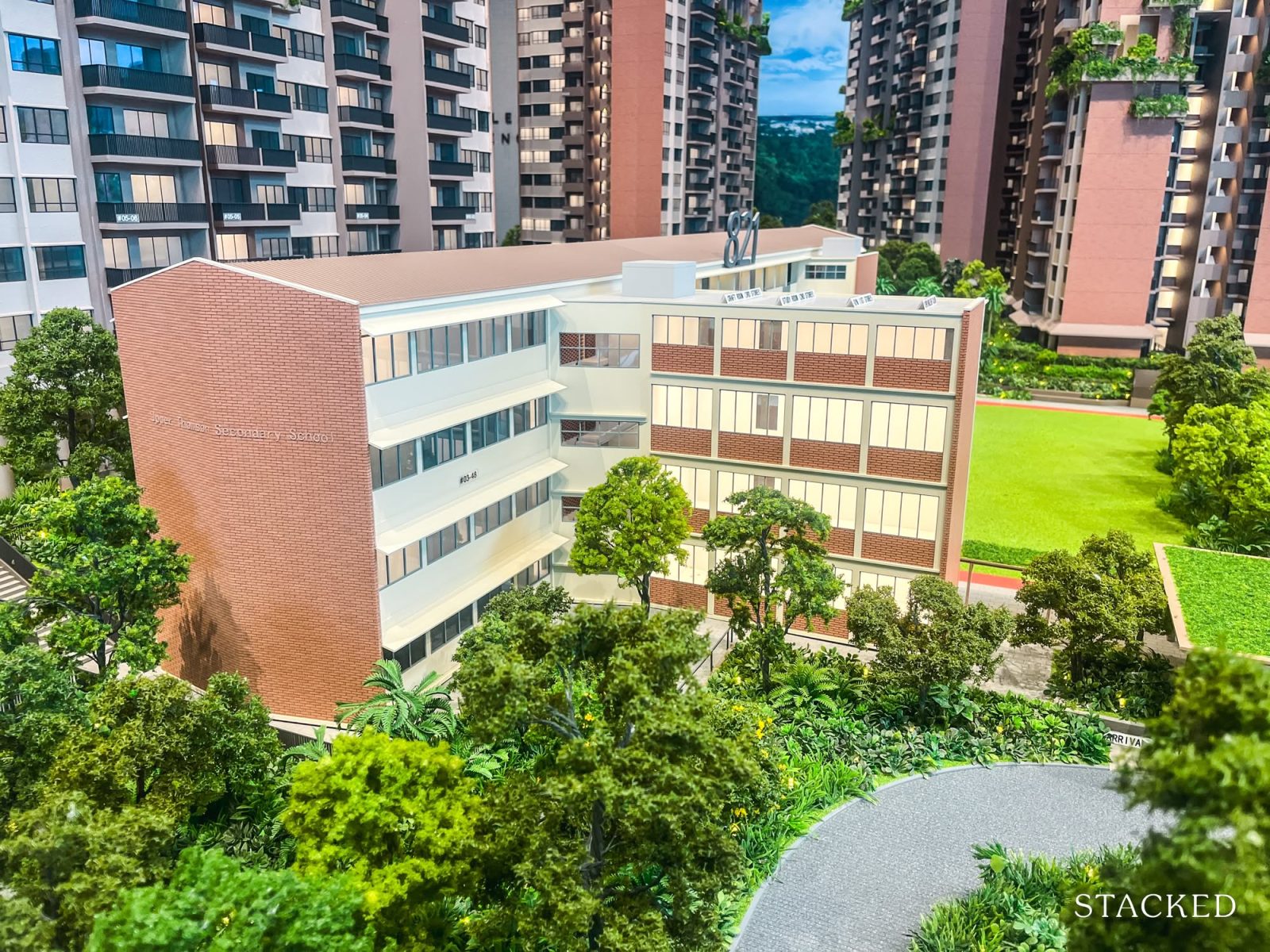
In this case, the conserved building at Springleaf Residence was the school block of the former Upper Thomson Secondary School. It is one of the few condos on the Outside of Central Region (OCR) that features a conserved building, since most of these projects are typically located in more central areas.
The former Upper Thomson Secondary School first took in students in 1965, and was in operation until 1998. The old school buildings were repurposed for use by Seletar Institute (SI), which was one of Singapore's original tertiary educational institutions that offered three-year pre-university courses.
The SI campus was used until 1997 and the buildings were vacant until the land tender for this site was closed in April 2024. GuocoLand would incorporate the former school building as a residential block in Springleaf Residence.
The decision to conserve the school block goes beyond preserving the memory of the former school, and is part of a wider conservation effort in this region. URA conserved the former school, along with the old Nee Soon Post Office, as a reminder of the original township that took root in this area.
Springleaf was once part of Nee Soon Village, a commercial hub in the north until the 1980s. The site of Nee Soon Village is somewhere in the vicinity of Nee Soon Camp, and the area was once a self-sufficient enclave with its own schools, community centres, and clinics.
How it works within the development
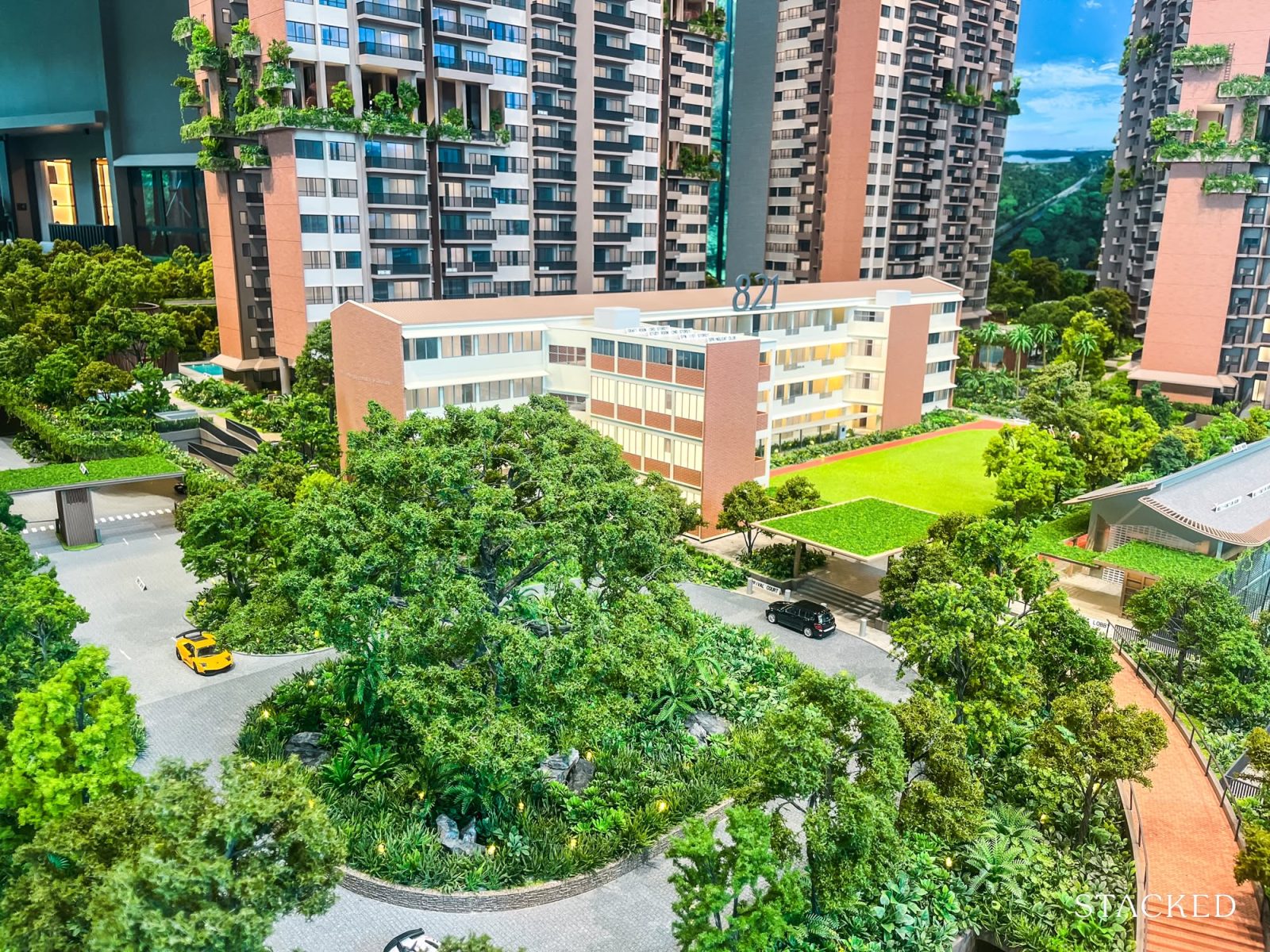
The entire development consists of five 25-storey residential towers and the four-storey conserved school building. The former school building is T-shaped: the longer section houses residential units, while the shorter section is used for shared amenities.
There are 32 homes within the conserved building, ranging from one- to three-bedroom units. One notable difference is that units in the conserved building have a slightly higher 3.1-metre ceiling, compared to 2.9 metres in the main residential towers.
Several of the common facilities are inside the conserved block. The first level houses the gym, the second level has a co-working space, and the third level is for workshops, arts and crafts, and function rooms for gatherings and events.
The condo also features a running track and multifunction rooms which are the ECA House - a reference to the Extra-Curricular Activities in school that older Singaporeans may recognise.
Visitors arriving at the grand arrival area still see the “Upper Thomson Secondary School” name prominently displayed along the conserved block. It’s an interesting and unusual centerpiece for a new condo.
3. The Continuum
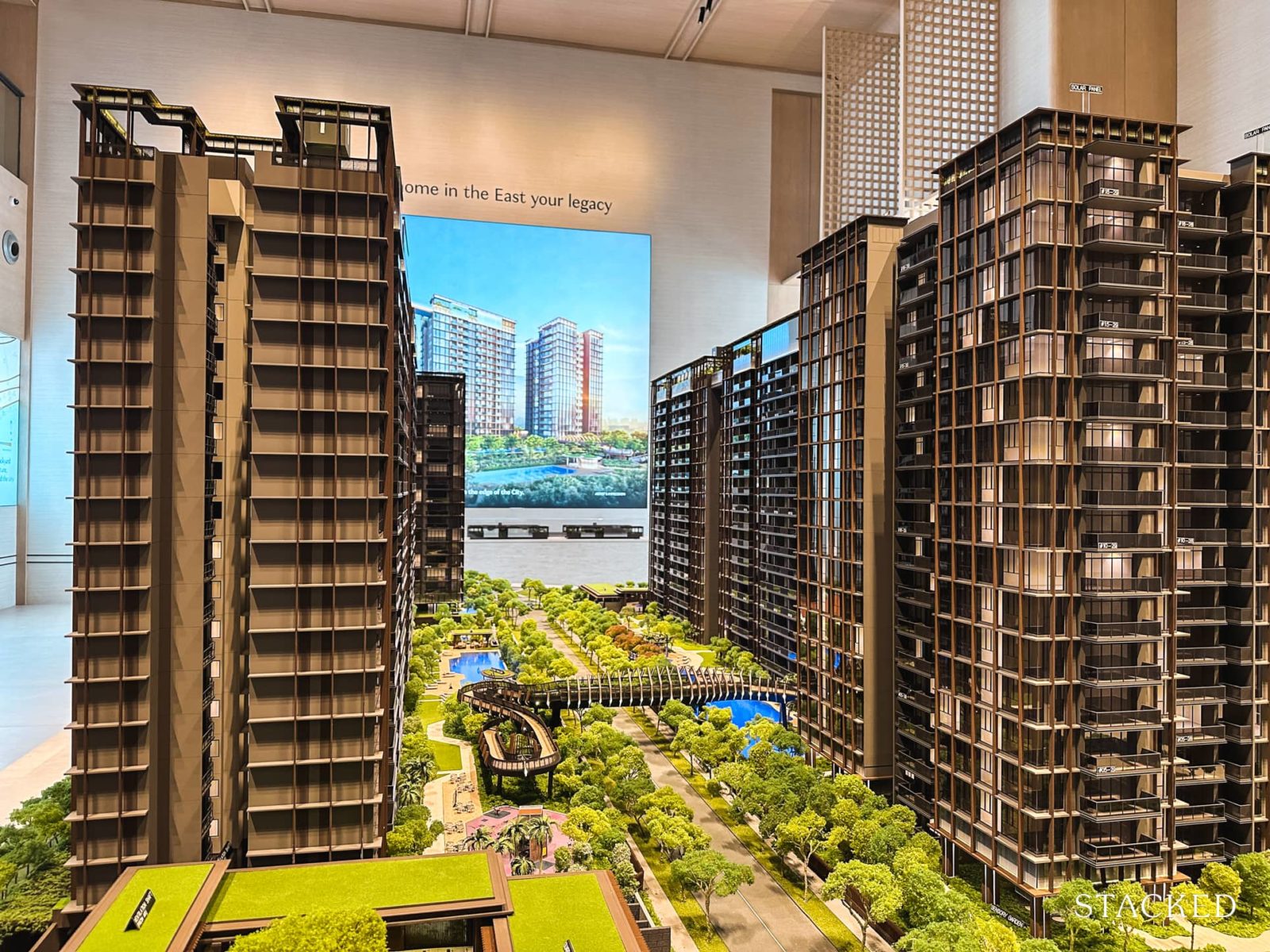
Located along Thiam Siew Avenue in District 15, The Continuum is a freehold development with 816 units. The project is expected to be completed next year.
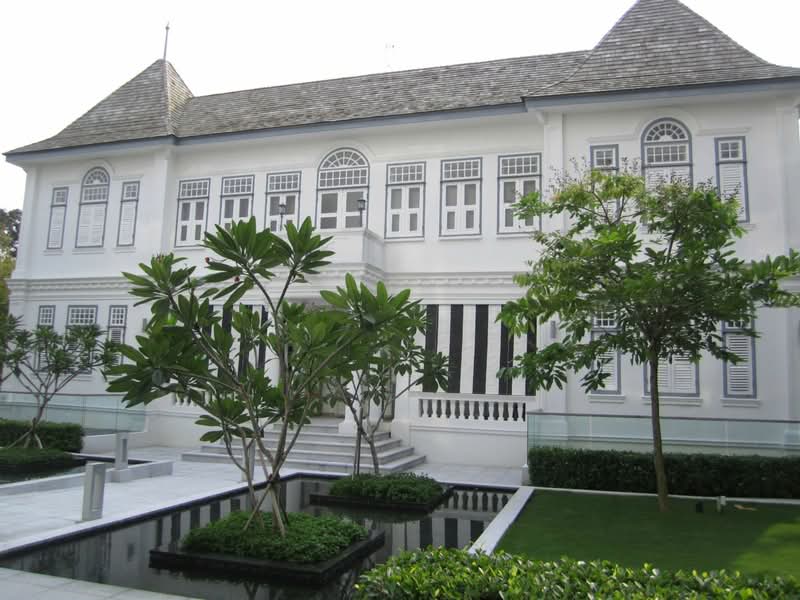
The Continuum has a single conserved building: a detached bungalow, which formerly had the address of 21 Thiam Siew Avenue.
Originally, the bungalow had been part of the Wee family estate. Thiam Siew Avenue is named after Wee Thiam Siew, a prominent Singaporean businessman and hotelier. The Wee family is closely associated with the Katong area, particularly the estate that later became The Continuum.
For close to 80 years, the Wee family owned around 25 detached and semi-detached houses in this area. Most of the houses were built in the 1940s, and they were sold en-bloc for about $815 million in 2021.
For those old enough to remember, Wee Thiam Siew once owned the famous Seventh Storey Hotel at Rochor (later acquired for the construction of the Downtown Line), as well as the former Lion City Hotel (today the site of Katong Regency and KINEX mall).
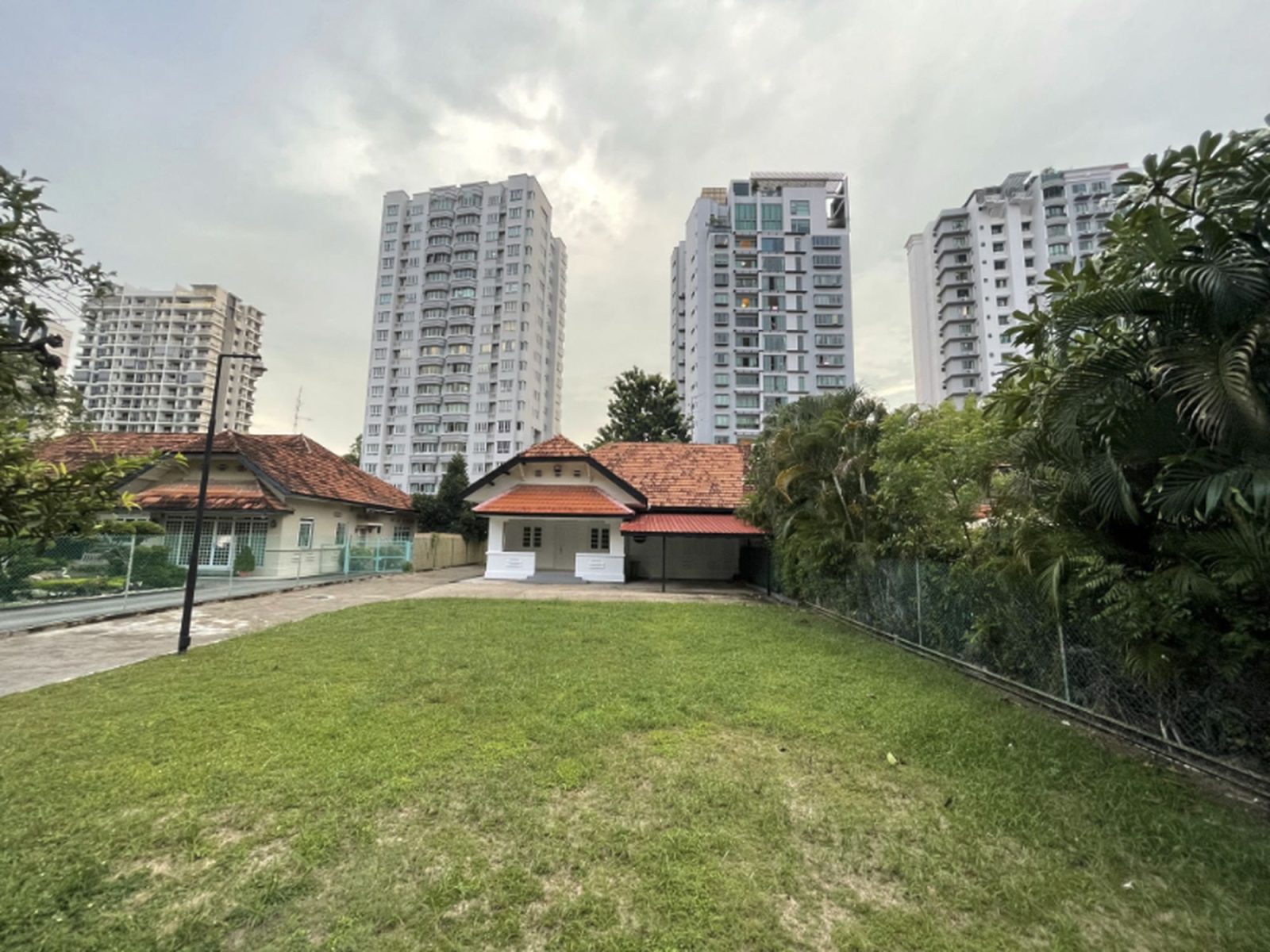
The Wee family estate had been one of Singapore’s longest-held private residential enclaves and it was still largely intact by the time it went en-bloc, which is rare for large landed clusters over such a long time.
When The Continuum preserved 21 Thiam Siew Avenue, it also preserved a piece of one of Singapore’s longest-lasting family estates, one that had been part of Katong since before World War II. Hence the name ‘Continuum’, which suggests a continuation rather than a break with the past.
However, it is unfortunate that only a single house that once made up part of the old estate has been kept, and some might call this more of a memorial than a true conservation effort.
How it works within the development
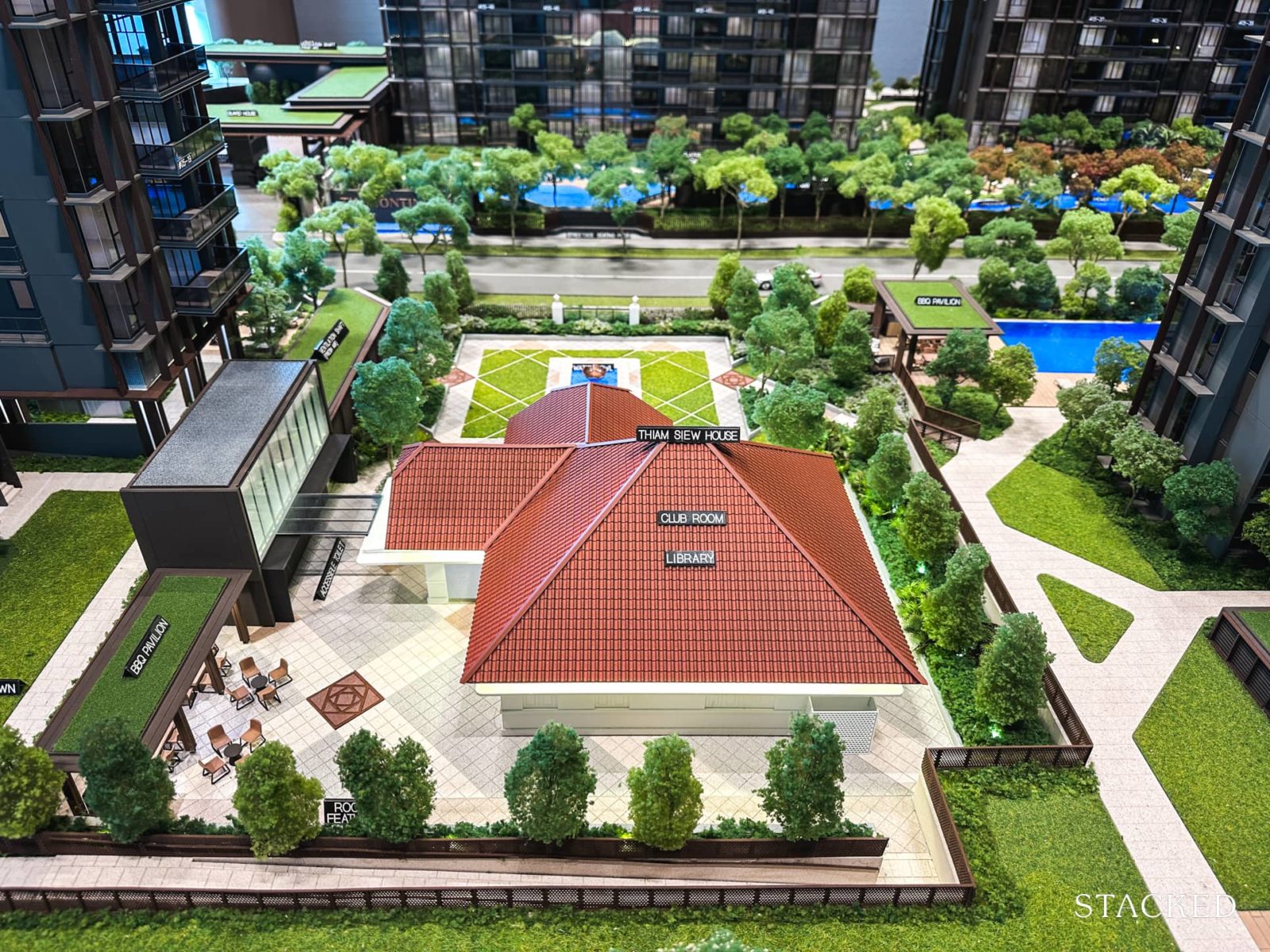
The Continuum has an unusual site layout because it spans two separate land parcels connected by an overhead bridge. The conserved bungalow is located on the northern side of the project, and has been adapted into a clubhouse. It still bears the name Thiam Siew House.
The restored bungalow contains common facilities like private dining rooms, a library, lounge spaces, and function rooms. Many of its original features - like Marseille roof tiles and timber casement windows - have been retained. Some of the doors and gate posts are also part of the original house.
Jointly developed by Hoi Hup Realty and Sunway Developments, there is a newer glass clubhouse opposite the conserved bungalow, and it’s a visible ontrast between old and new. Practically speaking, it also means that residents in one half of the development don’t need to cross to the other side to experience all those facilities.
4. Grand Duchess at St Patrick's
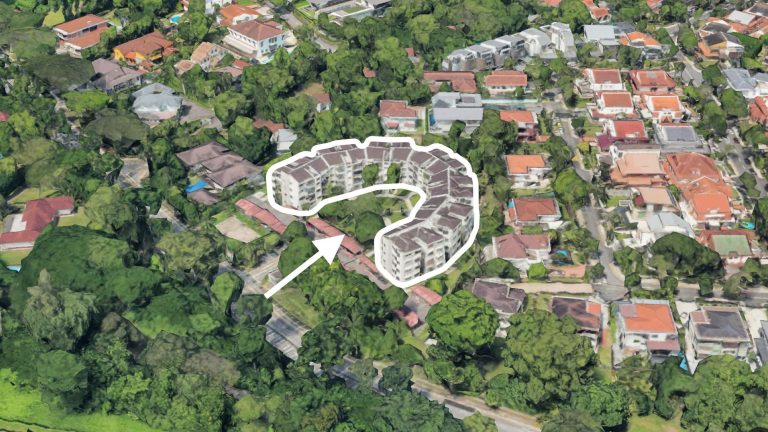
Grand Duchess at St Patrick’s is a District 15, and the development sits along St Patrick’s Road. This is a boutique freehold development with just 121 units, and it was completed in 2010. The development sits on a generous site area of over 130,000 sq ft despite its relatively low unit count. It's also surrounded by low-rise landed housing estates in Katong.
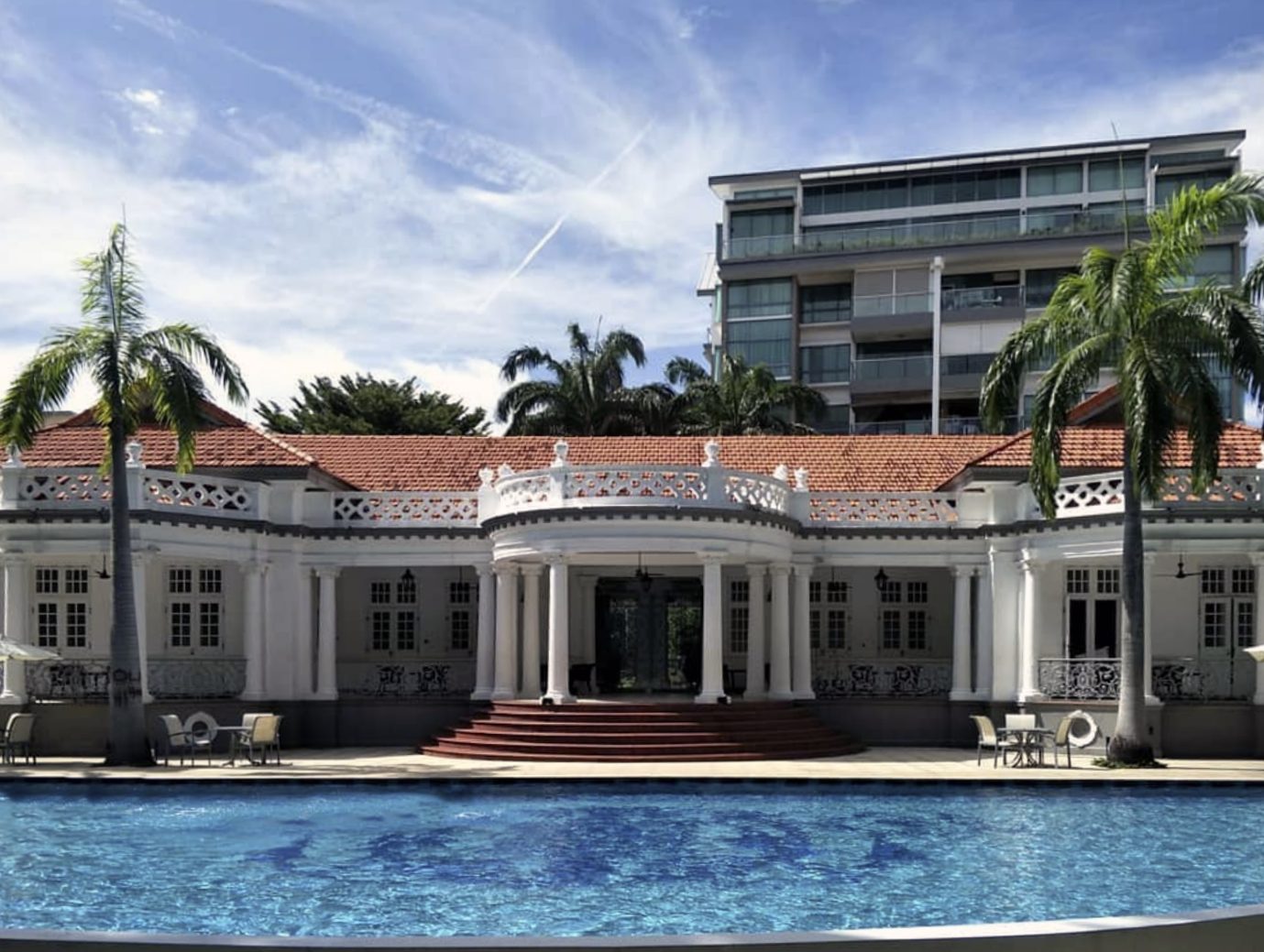
The conserved buildings at the centre of this condo are classic Victorian-style colonial villas, which are estimated to date back to 1914 and 1925. These were part of the original Frankel Estate - not the one we see today, but the colonial era estate owned by David Frankel.
Together with his brother Julian Frankel, they were part of a Lithuanian-Jewish family that immigrated to Singapore in 1888, to escape anti-semitic persecution in their area of the Russian Empire (present-day Lithuania).
Their business operated out of Victoria Street, and for a time they were Singapore’s largest furniture, import, and dry goods company. This funded their acquisition of a 200-acre seaside property in Siglap (this was long before land reclamation). This became the original Frankel Estate. Later during a 1923 stopover, Albert Einstein and his wife, Elsa, would visit this at-the-time seaside property while hosted by the Frankel family.
The Frankel family's journey - escaping hardship in Eastern Europe and finding a new home here - is a familiar Singaporean narrative. It’s a reminder that even in our colonial days, this was an open port formed by cultures from around the globe.
When the parcel of land where the condo now sits was acquired via an en-bloc sale in the mid-2000, the developer was required to preserve both bungalows under URA's Frankel / St. Patrick’s conservation guidelines.
How it works within the development
Grand Duchess at St Patrick’s has a total of eight residential blocks that range from five- to eight-stories, which are arranged around the two heritage bungalows. This layout ensures the conserved buildings have a centre stage location within the development. They are one of the first buildings that visitors see when they enter the project.
The condo’s facilities are split between the two conserved structures.
The Majestic Clubhouse (124 St Patrick’s Road) is the larger of the two villas, and dates back to around 1914. This acts as the primary clubhouse, and includes a gym, lounge, games room, reading room, and spa facilities. This house had more extensive restoration work done, and the developer even rebuilt the original checkerboard-tiled verandahs. Other parts of the historical architecture are also preserved, like the exposed beams and foundational masonry.
The Heritage Residences (126/126A St Patrick’s Road) are part of the smaller villa from 1925. These are two landed-style residential homes, which are for residential use. These are very large dual-storey homes of around 6,600 sq ft each, which retain the classic pitched clay-tile roofs and exterior facade. They’re the only two of their kind in the project.
A notable detail is that the Grand Duchess predates many condos with conservation buildings. It was completed back in 2010, so it’s one of the earliest examples of a condo incorporating landed heritage houses.

0 Comments