Old vs New Family-Sized Condos in District 9: A Data-Driven Analysis of Value in 2025
September 25, 2025
Previously, we looked at price movements of older versus newer one and two-bedders in District 9 (D9). When it comes to family-sized units, however, there could be some major differences. Will we see the same gains in units that are predominantly for owner-occupiers, rather than investors? And how will the older projects fare, given their often outsized layouts and higher quantum? In this piece, we’ll dive into three- and four-bedder trends in D9, and see whether their age makes a difference at this end of the market:
A quick note on newer versus older
We use 20 years or younger for newer (not new, mind you, but just newer) because most projects in Singapore last 19 to 24 years – so it’s a good middle point. It’s also generally accepted in the market (by convention and no particular authority) that the 20+ age range is when most condos are referred to as “older.”
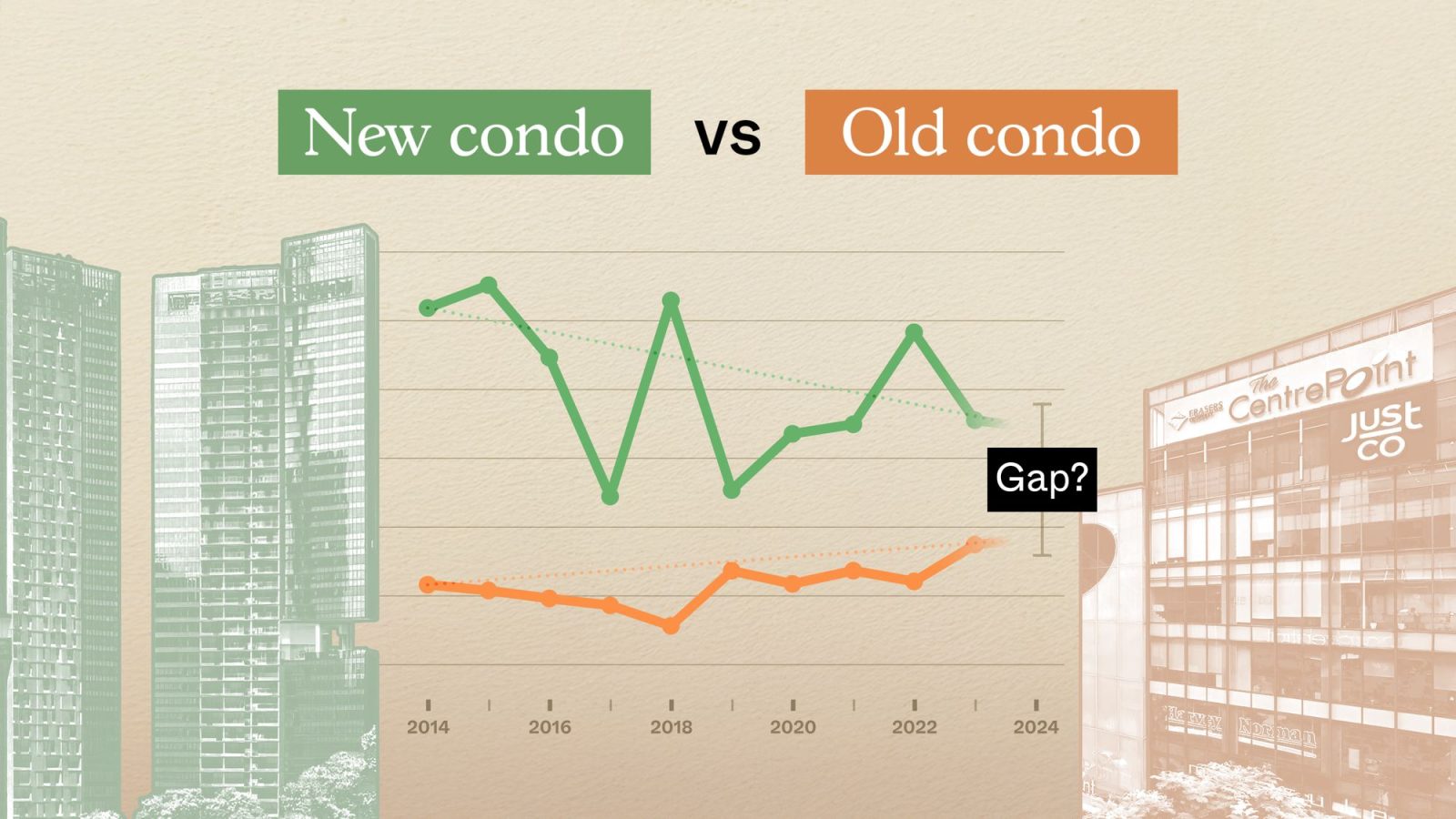
Let’s start with a look at three-bedder prices and how they’ve moved, in different age brackets:
The challenge for many buyers today isn't access to information.
It's interpreting that information in a way that makes sense for their finances, goals, and stage of life.
Over time, that's also why we decided to work with agents who shared the same data-driven and advisory-led approach behind our editorial, consultants who could help readers think through decisions more objectively, rather than simply push transactions.
Today, the team has worked with more than 2,000 clients across over $5B in property transactions.
Three-bedroom units
Average $PSF
| Year | New | Old | Difference |
| 2014 | $2,903 | ||
| 2015 | $1,938 | ||
| 2016 | $2,395 | $771 | $1,624 |
| 2017 | $2,492 | $1,195 | $1,297 |
| 2018 | $1,711 | ||
| 2019 | $2,129 | $1,467 | $661 |
| 2020 | $2,422 | $661 | $1,761 |
| 2021 | $1,675 | $609 | $1,066 |
| 2022 | $1,898 | $1,904 | -$6 |
| 2023 | $2,064 | $1,633 | $431 |
| 2024 | $2,206 | $1,608 | $598 |
| Annualised | -1.03% | 9.62% |

Since there were no old three-bedder transactions in 2014 and 2015, we’ll look at 2016 to 2024 instead.
Ryan J. Ong
A seasoned content strategist with over 17 years in the real estate and financial journalism sectors, Ryan has built a reputation for transforming complex industry jargon into accessible knowledge. With a track record of writing and editing for leading financial platforms and publications, Ryan's expertise has been recognised across various media outlets. His role as a former content editor for 99.co and a co-host for CNA 938's Open House programme underscores his commitment to providing valuable insights into the property market.Need help with a property decision?
Speak to our team →Read next from Property Investment Insights
PRO Property Investment Insights This Old Executive Condo Was Once Seen As Too Expensive — 20 Years Later, Has It Become A Value Buy?
PRO Property Investment Insights This Prime Area In Singapore Still Has Condos Under $2M — Despite Nearby Prices Climbing Much Higher
PRO Property Investment Insights This Old Bukit Panjang EC Once Had More Losing Sellers Than Winners — But Look At It Now
PRO Property Investment Insights This “Affordable Central” Neighbourhood Has Outperformed Singapore’s Condo Market Over The Past Decade
Latest Posts
Singapore Property News A 4-Room HDB Flat Just Sold For A Record $1.263 Million In Bishan — Here’s What Buyers Are Paying For
Property Market Commentary Why Some New Condo Owners Struggle To Sell Even After Prices Have Risen
On The Market 5 New Launch Condos That Still Have Two-Bedders Available — Starting From $1.18 Million
2 Comments
I know this info is not easy to get, but for these properties, it is not really fair to compare rental yields without taking maintenance & sinking fund fees into account because you could be talking $500/mth compared to $1500-2000/mth.
Hey Siew Wei Ngiam, you’re absolutely right — maintenance fees and sinking funds can make a meaningful difference to actual rental yields, and it’s not always fair to compare without factoring them in.
Property is nuanced in so many ways: things like renovations, layouts, facilities, and even how well a condo is maintained can all affect returns.
In this piece, we looked at the numbers in aggregate to spot broader systemic patterns that might be useful as a starting point. That said, we take feedback like yours seriously, and when we have the resources, we’ll definitely aim to dive deeper into individual developments to account for things like maintenance and sinking funds.
Thanks for raising this — it’s an important reminder of the complexity behind the numbers!