



Dear Stacked,
We have a three-bedroom condo unit at D'Nest in Pasir Ris, which we are renting out at this time while still servicing the home loan. We stay in an HDB Executive Apartment (EA) in Pasir Ris that is fully paid up. We plan to retire in five years and are deciding between these two options.
- Sell D'Nest within the next one to four years, followed by also selling the HDB EA in four to five years' time. We would then buy a smaller four-room flat with a good facing at Costa Grove, a BTO project on Pasir Ris Drive 3. The remaining sale proceeds will be our future retirement fund.
- Alternatively, we could keep the unit at D’Nest and the HDB EA, renting both out, and then rent a smaller HDB unit for our own stay. The rental income would contribute towards our living expenses and cover our rental flat into our retirement years.
Would you be able to recommend another option for us to consider?
(This is part of an ongoing series where we answer reader questions about the property market. If you have one of your own, send it to stories@stackedhomes.com.)
Hi, and thanks for writing to us!
Your question is about which option would hold up better to support you during your retirement years, which is usually characterised by lower fixed incomes and when unexpected costs are harder to absorb.
It’s also important to keep in mind that managing two tenanted properties is not a straightforward venture for most landlords these days.
Based on what you’ve shared, we think that you’re in a reasonably strong position as a property owner. You own two residential assets in an area that has a strong track record of consistent rental demand. The EA is fully paid up and the rental income from D'Nest is already flowing.
Now, the question is how you want to structure all of this so that it continues to work for you in five years - or even longer - without creating obligations that outlast your capacity to manage them.
Let’s start by taking a look at how D’Nest has performed on the resale and rental market so far.
How D'Nest has performed
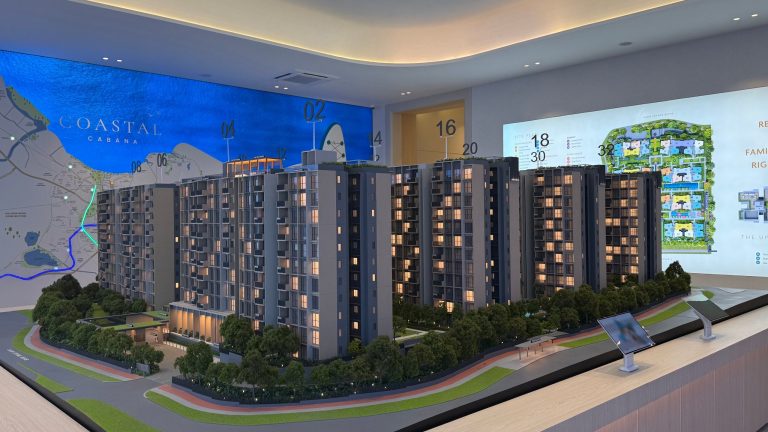
This 912-unit condominium is a 99-year leasehold project that was completed in 2017. D’Nest is located in Pasir Ris in District 18, and the condo has a mix of one- to five-bedrooms, as well as five- and six-bedroom penthouses.
If we examine the resale transactions from 2017, the average psf price at D’Nest has risen steadily from around $1,106 psf in 2017 to $1,495 psf in 2025. In terms of three-bedroom units, average transacted prices have moved from approximately $1.11 million to $1.49 million over the same period, a gain of about 34.5%.
Next, let’s analyse the average price performance of condos in D18 as well as the broader private residential market.
Average resale PSF performance in D18
| Year | D'nest | D18 non-landed private property | All non-landed private property |
| 2017 | $1,106 | $864 | $1,293 |
| 2018 | $1,103 | $938 | $1,323 |
| 2019 | $1,091 | $936 | $1,346 |
| 2020 | $1,088 | $940 | $1,280 |
| 2021 | $1,137 | $1,009 | $1,354 |
| 2022 | $1,246 | $1,147 | $1,473 |
| 2023 | $1,370 | $1,325 | $1,595 |
| 2024 | $1,449 | $1,413 | $1,681 |
| 2025 | $1,495 | $1,456 | $1,756 |
| Annualised | 3.84% | 6.75% | 3.91% |
Based on the data we’ve compiled, the overall price growth of 34.5% set by D’Nest over eight years looks solid, until you set it against the average resale price movement in District 18. Other non-landed private homes in the district have grown at an average annualised rate of 6.75% over the same period, which is well ahead of the pace set at D'Nest.
At the same time, prices at D'Nest have broadly matched the islandwide resale average annualised price growth.
Average three-bedroom transacted prices at D’Nest
| Year | Average 3-bedroom price |
| 2017 | $1,107,714 |
| 2018 | $1,095,409 |
| 2019 | $1,108,111 |
| 2020 | $1,078,471 |
| 2021 | $1,094,907 |
| 2022 | $1,258,542 |
| 2023 | $1,292,178 |
| 2024 | $1,442,761 |
| 2025 | $1,489,883 |
| % increase from 2017 to 2025 | 34.50% |
The price gap between D’Nest and its peers in District 18 is worth noting because it suggests the condo has already completed its early price appreciation phase. Future capital gains are more likely to track the broader private residential market than narrow the gap with better-performing District 18 projects.
For a seller thinking about timing a sale, this matters; the case for waiting is weaker when the window of opportunity for a condo to outperform its neighbours has largely closed.
How have Executive Apartments (EAs) in Pasir Ris performed so far?
Executive Apartments (EAs) in Singapore are a type of public housing that was prevalent between the mid-1980s and early 2000s, but HDB no longer builds this type of flat. Usually, the typical size of these flats span from 1,400 - 1,600 sq ft, and they offer more space than a standard five-room HDB flat. Moreover, the layout is particularly appealing to multi-generational households.
You can read our complete list of EAs that can be found across Singapore here.
Based on data compiled by Stacked, the average price for EAs in Pasir Ris has risen by close to 50% since 2015 to date, reaching an average of just over $900,000 across all lease cohorts in 2025.
Average resale prices of EAs in Pasir Ris
| Year | Built between 1985–1994 | Built between 1995–2004 | All EAs |
| 2015 | $575,288 | $630,532 | $606,128 |
| 2016 | $573,325 | $612,231 | $603,672 |
| 2017 | $593,968 | $612,043 | $612,727 |
| 2018 | $601,536 | $630,991 | $615,653 |
| 2019 | $606,564 | $624,833 | $597,168 |
| 2020 | $605,323 | $635,935 | $622,261 |
| 2021 | $664,690 | $695,828 | $687,171 |
| 2022 | $746,416 | $788,701 | $764,316 |
| 2023 | $800,781 | $824,548 | $816,052 |
| 2024 | $849,616 | $870,046 | $855,863 |
| 2025 | $898,951 | $931,035 | $901,999 |
| % increase from 2015 to 2025 | 56.26% | 47.66% | 48.81% |
Most of the initial price appreciation that these public housing flats saw came after 2020, driven by strong demand for larger home layouts during and after the Covid-19 pandemic. That lockdown experience prompted many homeowners to prioritise larger living spaces.
With no new EA supply entering the market, scarcity has helped underpin prices, even as the older cohorts age further into negative lease decay territory.
The prevailing concern for EA owners is that those flats built between 1985 and 2004 are now between 21 and 40 years old.
However, the CPF usage for buyers is tied to how much of the remaining lease covers the youngest buyer to age 95. This means that as that lease shortens, the eligible buyer pool narrows and buyers who cannot use their CPF in full need to compensate with more cash.
This shrinks the pool of prospective buyers and strengthens their bargaining power over sellers to demand lower selling prices.
But this does not mean EAs have become unsaleable. Instead, it means that the current catchment of buying demand may not stay that way indefinitely. Sellers who want the broadest possible buyer pool will find that there are more willing buyers today, compared to a smaller catchment in five to ten years.
Let’s take a closer look at the two options that you’ve shared.
Option 1: Sell both and right-size
In this option, you would exit D'Nest over the next few years, then sell the EA closer to your retirement date and move into a smaller flat. The intention after that would be to move into a good-facing unit at Costa Grove, a Build-To-Order (BTO) development in Pasir Ris.
This approach converts both assets into usable capital, removes the outstanding loan on D'Nest, and eliminates the complexity of managing tenanted properties in retirement. You would end up owning one home, fully paid, with the proceeds from both sales available as a retirement fund.
But how much of those proceeds actually remain for retirement after you account for the replacement housing cost?
Based on recent transactions, a three-bedroom unit at D’Nest would typically sell for somewhere between $1.4 million and $1.5 million, before accounting for any outstanding loan. On the other hand, the Pasir Ris EA, based on current market pricing, could fetch somewhere in the range of $880,000 to $930,000.
Together, we think that those potential sales figures represent a substantial combined exit value.
However, your replacement home is not free. The youngest four-room flats in Pasir Ris today (completed around 2015) were already transacting at an average of about $770,000 in 2025. Meanwhile, Costa Grove will not complete its Minimum Occupation Period (MOP) until 2031. By then, we reckon that prices in that estate will certainly increase.
If the goal is to land at a flat in Costa Grove as your final home, there may be a more cost-efficient way to reach the same outcome.
Rather than targeting a newly MOP flat, where resale buyers typically price in a premium, an older four-room unit in Pasir Ris that meets your space and facing requirements could be acquired at a lower price. This has the chance to put you in a better position to preserve a larger portion of the combined sale proceeds for your retirement.
Option 1 ultimately offers you a route that is relatively straightforward and with a good amount of certainty. The trade-off is that the amount available for retirement depends heavily on what you spend on the replacement flat and on how the remaining capital is managed.
Option 2: Keep both and live on rental income
This second option would see you holding on to both properties and relies on a continuous rental income to cover your future living expenses as well as the cost of renting a smaller flat for your own stay.
We should start by examining the rental market for these two properties. Based on recent rental data from January to April 2026, a three-bedroom unit at D'Nest usually commands an average monthly rent of $4,111. Meanwhile, an EA in Pasir Ris typically commands an average rent of around $3,667 per month.
But if you intend to rent a four-room flat in the same area for yourself, the prevailing rental rate is about $3,212 per month.
Recent rental transaction data in Pasir Ris
| Average rent (Jan - Apr 2026) | Rent range (Jan - Apr 2026) | |
| D'nest 3-bedroom | $4,111 | $3,500 - $4,700 |
| Pasir Ris Executive flats (EA and EM) | $3,667 | $3,000 - $4,500 |
| Pasir Ris 4-room flats | $3,212 | $2,300 - $3,900 |
That gives you a combined inflow of roughly $7,800 per month against an outgoing of $3,200, suggesting a surplus of around $4,500 before considering any costs.
From that $4,500 surplus, you would still need to cover the outstanding loan repayments on D'Nest. The exact figure depends on your remaining loan quantum and tenure, but this is often the largest single item that compresses net cash flow.
Beyond that, there are maintenance fees for both properties, property tax on both units at non-owner-occupied rates, agent fees on new tenancies, and periodic upkeep and repair costs.
Once those are factored in, the actual cash available for living expenses each month could be a good deal lower than the initial surplus, particularly while the loan on D'Nest is still running. The surplus improves as the loan is paid down, but the early years of retirement are precisely when financial buffers matter most.
There is also the question of consistency since consistent rental income is not guaranteed. Vacancy periods between tenants, a softer rental market, or a tenant who requires early exit from a lease can each create gaps between tenancies.
Moreover, managing two properties through those disruptions, while also renting your own home, requires your prolonged attention and administrative capacity. This is worth considering when thinking about what you want your retirement to look like.
Overall, our view is that this option keeps your assets intact and preserves future flexibility. However, in the near-term, this approach might not offer the passive and predictable income stream that it initially suggests.
Option 3: A more balanced path
There is a middle ground that sits between the two options, namely an approach that reduces your portfolio to one property rather than zero or two.
Pathway A: Sell D'Nest, continue staying in the EA
From our perspective, this is the more conservative route.
Selling your unit at D'Nest removes the outstanding loan, ends the rental management obligation on that unit, and releases a capital sum that can be deployed into income-generating instruments or held for retirement. You’ll continue to stay in a home you already own and know well, with no rental costs.
The catch is that this does not produce recurring income unless the proceeds from the sale of the condo unit at D'Nest are actively reinvested. The EA would be kept as your own home, so it generates no rent.
But this approach would simplify your financial structure. You’ll own one property, have no loan, and the question becomes purely about how to manage the capital from the D'Nest sale to sustain your retirement over time. For buyers who want to leave behind the complexity of handling a rental property with an outstanding loan, this pathway offers a relatively clean transition.
However, EAs are not immune to the negative impact of lease decay which we raised earlier.
The latest EAs in Pasir Ris were built between 1992 and 1994, and they already have as little as 65 years remaining on their lease today, compared to the tenure at D'Nest's which has about 84 years left on its lease.
If your EA falls into that cohort, the window before CPF restrictions start affecting your resale buyer pool is shorter than it might seem. Staying in the EA works well for your own needs in retirement, but it should come with a plan for when to eventually sell the property.
Pathway B: Sell the EA, move into D'Nest
Alternatively, you could move into the unit at D'Nest for your own stay, and sell the EA to realise its capital value. This secures your housing in a newer private development with a longer remaining lease, and removes the ongoing maintenance and demographic concerns associated with the EA as it ages.
The trade-off is that you assume the status of a private property owner-occupier, along with its associated costs (maintenance fees, property tax, and so on), which is generally higher than that of an EA. While you may have the EA's sale proceeds as a near-term buffer, as with Pathway A, this option does not generate income on its own.
It is also worth noting that if D'Nest is to become your forever home, you are still holding a 99-year leasehold property that started in 2010, which means there are around 84 years left on its lease in 2026. That sounds comfortable today, but lease decay may pose an issue when it is time to sell or pass it on.
In both pathways, what you do with the proceeds from the property you sell shapes whether Option 3 actually supports your retirement. Without reinvestment, you are drawing down on a fixed pool of capital, and the depletion timeline is a crucial consideration.
With reinvestment into income-generating instruments, you can create a more predictable income stream that does not depend on occupancy, tenant quality, or rental market conditions.
The choice between these two pathways is also partly a lifestyle question. What matters more to you: a newer private address, or the simplicity of a fully paid home you already occupy?
A potential repositioning option
We also think it might be worth highlighting another way forward, although it sits outside the scope of a retirement strategy in the conventional sense.
If you still have several years before your retirement, have sufficient income stashed away, and enough remaining loan eligibility, you could sell both properties and use the combined proceeds to funnel them into one or two private properties at a better location or quality tier.
Here, the rationale is grounded on the fact that upgrading your asset base now, while you are still earning and can service a loan, gives you a stronger platform to either sell later at a higher value, or hold for longer-term rental income than D'Nest or the EA.
But this runs counter to what you’ve shared so far about where you want to be in the future. Taking on new loan obligations and repositioning into private property in the lead-up to retirement increases your exposure to market cycles precisely when you need to be reducing it. If prices soften or rental demand weakens, you are managing that risk without the income buffer of a salary.
We flag it here because some readers in your position may consider it and dismiss the other options too quickly. Our view is that this move makes more sense for someone in their early to mid-40s with a longer runway, not for someone five years from retirement looking to simplify.
So what should you do?
You own two residential properties that benefit from strong prevailing market forces in terms of buying and rental demand. Moreover, you’ve identified a clear five-year runway before retirement. From our perspective, this is already a genuinely strong starting point for a property owner in your position.
The question is which structure is less demanding when things are not going according to plan, because that is when the differences between the options become material rather than theoretical.
Option 2 is the scenario that looks most attractive on a spreadsheet but carries the most execution risk. The gross rental inflow is compelling, but the net figure, after loan repayments, taxes, fees, and the cost of your own rental, is narrower than it appears.
If rental income drops or a property sits vacant for two months, the whole structure requires a top-up. Managing that in retirement, on a fixed lump sum, is a different proposition from managing it today when you are still earning.
If the loan for the unit at D’Nest is close to being fully paid off by the time you retire, that changes the calculation somewhat, and this pathway becomes more viable. That said, we would not recommend anchoring a retirement plan to a cash flow figure that leaves very little room.
On the other hand, Option 1 is the cleanest exit in terms of obligations, but the effectiveness of this approach depends on how much is set aside for the replacement flat.
If a large portion of the combined sale proceeds goes into a relatively new flat at Costa Grove, which would likely see its prices peak at the time, the amount left for retirement may be more constrained than expected.
Spending less on the replacement flat, perhaps targeting an older four-room resale in Pasir Ris at a lower quantum, would preserve more of the capital that needs to support you over the next 25 to 30 years.
Option 3, specifically selling D'Nest and staying in the fully paid EA, is probably where the balance lies for most people in your position. It removes the loan, stops the rental management complexity on the private property, and releases a capital sum that can be properly structured for retirement income.
The EA gives you stable, no-cost housing in an area you already know well. The one caveat is that the exit will need to be planned ahead of time.
The specific reallocation of the D'Nest sale proceeds is the variable that determines how well this works. That is a conversation worth having with a financial planner, not just a property adviser, because the answer involves CPF top-up decisions, the CPF Full Retirement Sum, and investment instruments that fall outside the scope of property analysis alone.
The underlying choice that you’ve presented to us here is between a retirement anchored on rental income or on capital. Both can work. The rental-income path requires more active management and more tolerance for income variability. The capital path requires more discipline in how you draw down and reinvest, but it is simpler to execute and easier to adjust if circumstances change.



0 Comments