


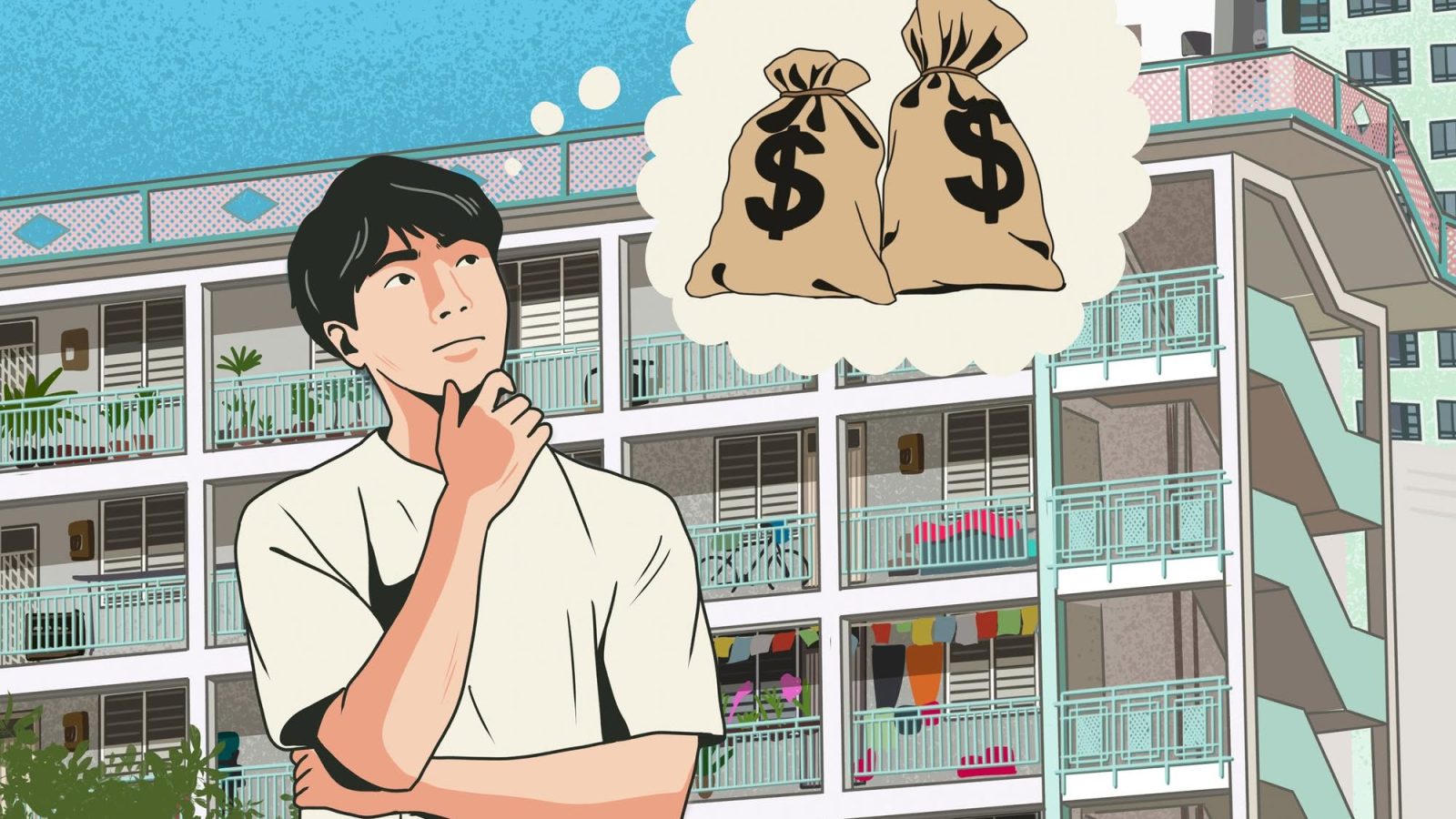
HDB built so many more homes, so why will housing continue to feel expensive and scarce?
It was a bit of an eyebrow-raiser this week, when two long-time Stacked readers asked me “Eh, I thought you said resale flat prices will stop going up? When ah?”
Well I didn’t really say it would stop going up, just that the momentum we saw in the post-pandemic period would slow. There’s been comparatively few times in our history when housing prices have seen persistent declines, and the last time this happened for resale flats was somewhere between 2013 to 2018, when the Mortgage Servicing Ratio was introduced.
But the other issue is that price growth has slowed. This has been in the news quite a bit, even at the start of last month. After a few more conversations however, it’s become clear to me that what the numbers show - and the sentiment on the ground - are quite divergent. The majority of homeowners that I’ve spoken to say they’ve felt very little reassurance or relief, despite rising supply and flat prices flattening out.
While it’s admittedly anecdotal, there’s a clear consistency in the opinions I’ve encountered: flat prices are expensive, they have very little optimism in being able to live where they want, and there are concerns about their children’s future housing.
Part of this is due to something touched on in one of this week’s articles
The term “record breaking number of million-dollar flats” seems to appear every month and at this point it’s almost routine. You know it’s hit new heights when, here in the property content business, we need to aim at much bigger numbers (e.g., resale flats above $1.5 million!!!) to even draw interest.
As mentioned in that article, resale flats are becoming something of a split market. Certain resale flats, such as those in mature areas, DBSS flats, and some maisonettes are inching up to the price point where some early Executive Condominiums (ECs) once were. They’re in a very different tier of affordability and are becoming their own segment in the property market, and aren’t very reflective of the wider resale market anymore.
For those who don’t realise it, however, the normalisation of the million-dollar flat is at odds with news of marketwide prices slowing, and the alarm bells certainly make the million-dollar flats more memorable.
Another factor, however, is the shrinking household size and changing cultural norms
You can find a good amount of information on Singstat, but to summarise: Between 2015 and 2025, Singapore’s average household size fell from 3.39 people to 3.06. Over the same period, one-person households rose from 11.9% to 16.7% of all resident households. So even if Singapore’s population weren’t growing, we would still need more homes now than we did in the past.
Younger Singaporeans wanting to move out and have more privacy is one factor. But we’re also seeing factors like later marriages, adult children moving out (we’re a super-aged society after all), widowed seniors, and more lifelong singles.
This trend is likely to continue. As NPTD has pointed out, older folk are more likely to live alone, or as couples, after children move out or a spouse dies, and by 2035, it’s projected that about a quarter of our population will be over 65. Rising singlehood also reinforces the trend. Among residents aged 25 to 49*, the percentage of singles increased from 38.8% to 45.2% for men, and from 26.1% to 35.3% for women.
*Singles under 35 cannot buy an HDB flat anyway, but they can still constitute a delayed wave of demand.
This isn’t some kind of blame game. It’s just a reality of how we’re becoming more dispersed by household. Consider this example: An extended family that once occupied a single 5-room flat may eventually be spread across (1) ageing parents who remain in place (2) a married child nearby, and (3) perhaps a single or divorced adult child forming yet another separate household.
The other important cultural layer is visible in our near 90% home ownership
This is so deeply embedded in our mindset that, when households get more dispersed, the reaction is not simply “we need more rental options,” although in some other countries that’s arguably a more reasonable approach.
Singaporeans refuse to treat renting as an equal alternative to ownership. This is reflected in the endless debate of whether the 99-year lease is “truly” rental or ownership; even the semantics of calling it rental is a sort of political third rail. This compels the continued need for more homes, even as individual households shrink in size.
Once we put these factors together, it’s easier to understand why news of stabilising prices - or claims of affordable housing - seem so much harder for some homebuyers to swallow.
On a practical basis, the government has implemented changes like shorter build times as well as building more, and the construction of Plus and Prime flats, which provide a chance (albeit an often slim one) to stay in areas that some may otherwise be priced-out of. But the sense of scarcity will likely continue, as long as every newly formed household feels compelled to buy as quickly as possible.
Right now, it feels as if every marriage, divorce, adult child moving out, etc. turns into another race for a flat.
That’s because Singaporeans see the home not just as a roof over their head, but also a form of financial security and a social norm.
So when will flat prices stabilise? The numbers show it’s happening now.
But when will it feel like flats are widely available and affordable? That requires much more than a flatter resale price index. It might need something bigger like a shift in the homeowners mindset, or perhaps a repeat of the 1990s when we did have a surplus (not exactly a healthy outcome either. Until then, stabilising prices may be a policy success that never actually feels like one.
Meanwhile in other property news…
- If right-sizing from a condo, should you buy a resale flat or wait for a new BTO flat? Check out our advice here.
- Cluster housing is supposed to be a tough sell…so how did this particular leasehold cluster housing project average $733,000 in resale profits? Find out which one here.
- The Town Hall Link white site has seen a $1.8 billion bid; a far cry from a previous attempt, when bids were too low for a larger plot. Here’s what to expect.
Unsure what your next property move should be?
Weekly Sales Roundup (09 November - 15 November)
Top 5 Most Expensive New Sales (By Project)
| Project name | Price S$ | Area (sqft) | $PSF | Tenure |
|---|---|---|---|---|
| ZYON GRAND | $6,369,000 | 1,819 | $3,501 | 99 yrs (2024) |
| GRAND DUNMAN | $6,148,000 | 2,433 | $2,527 | 99 yrs (2022) |
| UNION SQUARE RESIDENCES | $4,765,000 | 1,518 | $3,140 | 99 yrs (2024) |
| ELTA | $4,477,000 | 1,776 | $2,521 | 99 yrs (2024) |
| VELA BAY | $4,010,000 | 1,378 | $2,910 | 99 yrs (2025) |
Top 5 Cheapest New Sales (By Project)
| Project name | Price S$ | Area (sqft) | $PSF | Tenure |
|---|---|---|---|---|
| LENTORIA | $1,288,000 | 538 | $2,393 | 99 yrs (2022) |
| 8@BT | $1,473,000 | 517 | $2,851 | 99 yrs (2023) |
| NARRA RESIDENCES | $1,503,000 | 700 | $2,148 | 99 yrs (2025) |
| LUCERNE GRAND | $1,581,000 | 624 | $2,532 | 99 yrs (2025) |
| LENTOR GARDENS RESIDENCES | $1,584,100 | 678 | $2,336 | 99 yrs (2025) |
Top 5 Most Expensive Resale
| Project name | Price S$ | Area (sqft) | $PSF | Tenure |
|---|---|---|---|---|
| THE DRAYCOTT | $6,170,000 | 2,637 | $2,340 | FH |
| GRAMERCY PARK | $5,550,000 | 2,185 | $2,540 | FH |
| MARTIN MODERN | $5,300,000 | 1,798 | $2,948 | 99 yrs (2016) |
| THE GRANGE | $5,120,000 | 1,744 | $2,936 | FH |
| NEWTON ONE | $4,560,000 | 1,808 | $2,522 | FH |
Top 5 Cheapest Resale
| Project name | Price S$ | Area (sqft) | $PSF | Tenure |
|---|---|---|---|---|
| SUITES @ EASTCOAST | $720,000 | 377 | $1,911 | FH |
| EIS RESIDENCES | $723,000 | 420 | $1,722 | FH |
| SEASTRAND | $745,000 | 570 | $1,306 | 99 yrs (2011) |
| PRIME RESIDENCE | $800,000 | 581 | $1,376 | FH |
| BOATHOUSE RESIDENCES | $808,000 | 624 | $1,294 | 99 yrs (2011) |
Top 5 Biggest Winners
| Project name | Price S$ | Area (sqft) | $PSF | Returns | Holding period |
|---|---|---|---|---|---|
| CENTRAL GREEN CONDOMINIUM | $2,800,000 | 1,690 | $1,657 | $1,932,000 | 22.1y |
| BUTTERWORTH 8 | $2,818,888 | 1,313 | $2,147 | $1,873,328 | 24.7y |
| D'GROVE VILLAS | $4,060,000 | 1,690 | $2,402 | $1,863,000 | 17.3y |
| THE GRANGE | $5,120,000 | 1,744 | $2,936 | $1,520,000 | 9.1y |
| KOVAN MELODY | $2,880,000 | 1,410 | $2,042 | $1,380,000 | 11.1y |
Top 5 Biggest Losers
| Project name | Price S$ | Area (sqft) | $PSF | Returns | Holding period |
|---|---|---|---|---|---|
| GRAMERCY PARK | $5,550,000 | 2,185 | $2,540 | -$1,330,000 | 7.3y |
| ONE SHENTON | $1,620,000 | 1,001 | $1,618 | -$284,600 | 19.8y |
| 120 GRANGE | $1,540,000 | 570 | $2,699 | -$55,000 | 6.0y |
| HEDGES PARK CONDOMINIUM | $1,090,000 | 915 | $1,191 | -$5,000 | 3.3y |
| THE MEZZO | $905,000 | 560 | $1,617 | $7,000 | 3.0y |
Top 5 Biggest Winners (ROI%)
| Project name | Price S$ | Area (sqft) | $PSF | % Return | Holding period |
|---|---|---|---|---|---|
| CENTRAL GREEN CONDOMINIUM | $2,800,000 | 1,690 | $1,657 | 222.6% | 22.1y |
| BUTTERWORTH 8 | $2,818,888 | 1,313 | $2,147 | 198.1% | 24.7y |
| THE BAYSHORE | $1,370,000 | 1,012 | $1,354 | 174.0% | 23.0y |
| PARC PALAIS | $1,780,000 | 980 | $1,817 | 136.9% | 30.2y |
| DOUBLE BAY RESIDENCES | $2,190,000 | 1,367 | $1,602 | 130.2% | 17.4y |
Top 5 Biggest Losers (ROI%)
| Project name | Price S$ | Area (sqft) | $PSF | % Return | Holding period |
|---|---|---|---|---|---|
| GRAMERCY PARK | $5,550,000 | 2,185 | $2,540 | -19.3% | 7.3y |
| ONE SHENTON | $1,620,000 | 1,001 | $1,618 | -14.9% | 19.8y |
| 120 GRANGE | $1,540,000 | 570 | $2,699 | -3.4% | 6.0y |
| HEDGES PARK CONDOMINIUM | $1,090,000 | 915 | $1,191 | -0.5% | 3.3y |
| THE MEZZO | $905,000 | 560 | $1,617 | 0.8% | 3.0y |
Transaction Breakdown
| Type Of Sale (Proportion) | ||||||||||||||||||||
| ||||||||||||||||||||
| 158 private home sales: 48 new, 5 sub-sale, 105 resale | ||||||||||||||||||||
 |
Follow us on Stacked for news and updates on the Singapore property market.

0 Comments