


Hi Stacked,
In about four years, I plan to sell my two-bedroom dual-key unit at Principal Garden. I would prefer not to be tied down to a new mortgage when I find my replacement home, which I hope will be a suitable long-term home that I can enjoy in my golden years.
I bought the unit at Principal Garden for nearly $1.5 million, and I'm still paying the mortgage. There are three possible routes that I could take:
- Firstly, sell the condo unit and rent for about 30 months before buying a resale HDB flat and utilising government grants to support that purchase.
- Next, I would still sell the condo unit and rent for the same period, but apply for a Build-To-Order (BTO) flat instead. I would be considered a second-time buyer and would continue to rent until the BTO project is completed. This could take a few years; in the meantime, I would invest the sale proceeds from selling my condo unit.
- Finally, after selling the condo unit, I would buy a resale flat with at least 70 years left on its lease, fully paying for this sale in cash. I intend to leave the flat to my son, who will be in his 30s by this time.
Which option would you recommend? Thank you.
(This is part of an ongoing series where we answer reader questions about the property market. If you have one of your own, send it to stories@stackedhomes.com)
(This is part of an ongoing series where we answer reader questions about the property market. If you have one of your own, send it to stories@stackedhomes.com.)
Hi, and thanks for writing in!
Your dream of owning a fully paid home by the time you hit retirement is a reasonable goal, and all three of your options have a strong chance of delivering on your objectives.
But where they differ is how long you'd spend renting before you move into your new home. In short, your first two options will see you rent for at least 30 months since HDB requires private property owners to wait out 30 months before they can buy a subsidised flat.
This wait-out period also covers any Build-To-Order (BTO) flat that you successfully ballot for, as well as any resale flat bought with the help of government grants.
Your third option doesn't come with this waiting period. Since 28 July 2026, private property owners who buy a resale flat without grants or an HDB loan can do so straight away, as long as they sell their private home within six months of completing the flat purchase.
This means the first two routes only make financial sense if the grants, or a cheaper BTO flat, give you more than what you might spend on rent.
Since you have not shared with us your outstanding loan or CPF usage, we can't calculate exactly how much you might stand to receive from the sale of your two-bedroom unit.
Instead, we'll start with what units similar to yours have sold for in recent months, then compare the three options that you have shared with us.
How much could your unit fetch if it were sold today?
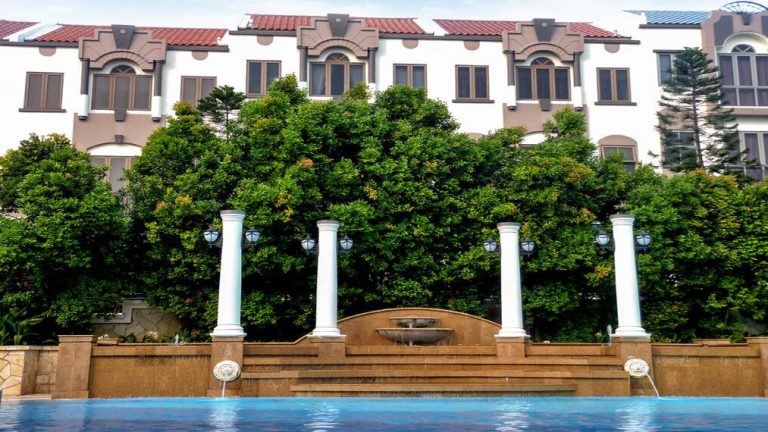
Before we begin, let's get a picture of the development you are currently staying in. Principal Garden is a 663-unit condo along Prince Charles Crescent in District 3. The 99-year leasehold project was completed in 2018.
According to URA transaction data, there have been ten resale transactions of 861 sq ft units (the size of your two-bedroom dual-key layout) since December 2021.
Sales of 861 sq ft units at Principal Garden
| Sale date | Floor range | Price | $PSF |
|---|---|---|---|
| Dec 2021 | 11 to 15 | $1,640,000 | $1,905 |
| Apr 2022 | 21 to 25 | $1,750,000 | $2,032 |
| Dec 2022 | 16 to 20 | $1,880,000 | $2,183 |
| Mar 2023 | 01 to 05 | $1,741,100 | $2,022 |
| Dec 2023 | 11 to 15 | $1,900,000 | $2,206 |
| Apr 2024 | 06 to 10 | $1,850,000 | $2,148 |
| Nov 2024 | 06 to 10 | $1,866,000 | $2,167 |
| May 2025 | 06 to 10 | $1,900,000 | $2,206 |
| Feb 2026 | 06 to 10 | $1,888,000 | $2,193 |
| Jun 2026 | 01 to 05 | $1,830,000 | $2,125 |
So far, the sale of units of this size in the last four years has ranged from $1.74 million to $1.9 million. If we only examine the sale of low-floor units, resale prices shifted from an average of $1.85 million in April 2024 to $1.89 million in February 2026.
We think that this suggests that resale prices for units of the size that you own have been relatively flat. This is not isolated to this particular unit type. Across the development, other common unit configurations such as the 807 sq ft two-bedder have also recorded relatively flat price growth in recent years, with the median price landing at around $1.85 million from 2024 to 2026.
Based on your purchase price of nearly $1.5 million and comparing it against the resale transactions this year, there's a chance that you would walk away with profits ranging from $371,000 to $429,000.
However, you still need to account for agent fees, and GST may cost you roughly $40,000, while legal fees will set you back a few thousand dollars more. And this is before you start to pay down your outstanding loan and refund your CPF.
Option 3: What would it cost to buy a resale flat straight away?
Under this choice, you would buy a new home without relying on HDB grants or an HDB loan. Thus, you could time the flat purchase with the condo sale and move only once.
This would also mean that you wouldn't be subject to Additional Buyer's Stamp Duty (ABSD) for owning both homes at the same time, since IRAS waives it upfront for owners moving from a private property to an HDB flat.
If you opt to pay for your next home in full, this would remove the need for a mortgage. But we think that you might want enough savings for daily expenses, healthcare and emergencies.
We also estimate that Buyer's Stamp Duty (BSD), legal fees, renovation and furnishing costs may come out of the same budget. The BSD alone comes up to about $9,360 on a purchase of a $492,000 flat, and about $12,960 when it comes to the purchase of a $612,000 flat.
Meanwhile, if you pick a flat that has at least 70 years left on its lease, this is longer than what you would need for yourself. The longer lease matters more for your son. If he were added as a co-owner of the flat while he is in his 30s, the remaining tenure on the flat would need at least 65 years left to cover him until he turns 95.
To help you get started on your property search, we examined the average price of three-and four-room resale flats this year and grouped them based on the years left on their lease.
Average price of three-room flats in 2026
| Town | Flats with less than 70 years left | Flats with more than 70 years left | Price difference |
|---|---|---|---|
| ANG MO KIO | $428,079 | $716,988 | $288,909 |
| BEDOK | $412,948 | $635,763 | $222,815 |
| BISHAN | $484,911 | - | - |
| BUKIT BATOK | $402,803 | $521,374 | $118,572 |
| BUKIT MERAH | $429,246 | $764,100 | $334,854 |
| BUKIT PANJANG | $426,554 | $504,422 | $77,867 |
| BUKIT TIMAH | $488,642 | - | - |
| CENTRAL AREA | $545,900 | - | - |
| CHOA CHU KANG | $396,718 | $484,741 | $88,022 |
| CLEMENTI | $424,216 | $726,917 | $302,701 |
| GEYLANG | $378,787 | $701,091 | $322,304 |
| HOUGANG | $436,159 | $558,617 | $122,458 |
| JURONG EAST | $396,899 | $497,350 | $100,451 |
| JURONG WEST | $366,167 | $512,772 | $146,605 |
| KALLANG/WHAMPOA | $447,460 | $723,246 | $275,786 |
| MARINE PARADE | $465,715 | - | - |
| PASIR RIS | $333,222 | $616,786 | $283,564 |
| PUNGGOL | - | $550,020 | - |
| QUEENSTOWN | $392,000 | $804,585 | $412,585 |
| SEMBAWANG | - | $524,409 | - |
| SENGKANG | - | $544,362 | - |
| SERANGOON | $469,008 | - | - |
| TAMPINES | $477,134 | $612,623 | $135,489 |
| TOA PAYOH | $373,558 | $797,689 | $424,131 |
| WOODLANDS | $380,203 | $515,635 | $135,432 |
| YISHUN | $420,332 | $492,038 | $71,706 |
Average price of four-room flats in 2026
| Town | Flats with less than 70 years left | Flats with more than 70 years left | Price difference |
|---|---|---|---|
| ANG MO KIO | $555,909 | $973,905 | $417,996 |
| BEDOK | $546,542 | $889,686 | $343,144 |
| BISHAN | $765,019 | $1,065,311 | $300,292 |
| BUKIT BATOK | $516,043 | $672,855 | $156,813 |
| BUKIT MERAH | $654,624 | $983,214 | $328,590 |
| BUKIT PANJANG | $512,140 | $610,000 | $97,860 |
| BUKIT TIMAH | $865,136 | - | - |
| CENTRAL AREA | $756,238 | $1,287,282 | $531,044 |
| CHOA CHU KANG | $538,554 | $567,881 | $29,327 |
| CLEMENTI | $596,171 | $1,021,183 | $425,012 |
| GEYLANG | $619,194 | $959,741 | $340,547 |
| HOUGANG | $577,825 | $671,752 | $93,927 |
| JURONG EAST | $507,860 | $610,607 | $102,748 |
| JURONG WEST | $505,904 | $583,464 | $77,560 |
| KALLANG/WHAMPOA | $662,650 | $999,765 | $337,116 |
| MARINE PARADE | $627,017 | - | - |
| PASIR RIS | $628,552 | $776,088 | $147,536 |
| PUNGGOL | - | $683,347 | - |
| QUEENSTOWN | $709,030 | $1,058,504 | $349,474 |
| SEMBAWANG | - | $612,556 | - |
| SENGKANG | - | $649,426 | - |
| SERANGOON | $679,343 | $688,284 | $8,941 |
| TAMPINES | $624,485 | $764,689 | $140,204 |
| TOA PAYOH | $621,638 | $1,040,976 | $419,338 |
| WOODLANDS | $513,029 | $572,264 | $59,235 |
| YISHUN | $514,619 | $602,667 | $88,048 |
According to transaction data, how much more you pay for a new home with a longer leasehold tenure depends largely on the town.
In mature estates like Toa Payoh and Queenstown, an average three-room flat with more than 70 years left costs over $400,000 compared to an older flat in the same area. This is likely because most of the longer-lease flats sold there this year were only completed around 2021.
On the other hand, the gap is under $90,000 if you search for homes in towns like Yishun, Choa Chu Kang and Bukit Panjang. A three-room flat with a longer lease there can fetch approximately $485,000 to $505,000, which matches the price range of most older three-room flat costs in Bishan.
Similarly, four-room flats - in these less mature towns - with more than 70 years left transact for about $568,000 in Choa Chu Kang and $572,000 in Woodlands. This is less expensive compared to a younger three-room flat in Ang Mo Kio, Clementi or Toa Payoh.
These are figures based on transactions registered in 2026, and a flat with 72 years left on its lease today would have less than 68 years by the time you feel ready to buy.
Option 1: Would the grants make up for 30 months of rent?
The main appeal of your first option is the government housing grants. But you'd have to pay rent for at least 30 months, and likely longer once you factor in the time needed to find, buy and renovate a flat.
Here's what you could expect to pay for a three- or four-room flat, based on HDB's median rents in 3Q2026.
Median monthly rent for HDB flats in 3Q2026
| Town | 3-room | 4-room |
|---|---|---|
| ANG MO KIO | $2,800 | $3,400 |
| BEDOK | $2,800 | $3,400 |
| BISHAN | $3,000 | $3,700 |
| BUKIT BATOK | $2,730 | $3,400 |
| BUKIT MERAH | $3,000 | $4,000 |
| BUKIT PANJANG | $2,700 | $3,000 |
| CENTRAL | $3,300 | $4,800 |
| CHOA CHU KANG | $2,700 | $3,100 |
| CLEMENTI | $3,100 | $4,100 |
| GEYLANG | $2,900 | $3,800 |
| HOUGANG | $2,700 | $3,230 |
| JURONG EAST | $2,850 | $3,500 |
| JURONG WEST | $2,700 | $3,600 |
| KALLANG/WHAMPOA | $3,000 | $3,800 |
| MARINE PARADE | $3,000 | $3,500 |
| PASIR RIS | - | $3,400 |
| PUNGGOL | $2,900 | $3,250 |
| QUEENSTOWN | $3,100 | $4,300 |
| SEMBAWANG | - | $3,200 |
| SENGKANG | $2,880 | $3,200 |
| SERANGOON | $2,800 | $3,500 |
| TAMPINES | $2,900 | $3,500 |
| TOA PAYOH | $3,000 | $3,850 |
| WOODLANDS | $2,600 | $3,100 |
| YISHUN | $2,700 | $3,100 |
At these rental rates, renting a three-room flat for 30 months would cost about $78,000 to $99,000. Likewise, a four-room flat would cost about $90,000 to $144,000. Take note that this excludes moving costs, stamp duties, and any agent fees payable. It also assumes that the rent is unchanged.
Overall, HDB rents in most towns have been steady this past year. In Yishun, the median three-room rent rose from $1,700 in 3Q2021 to $2,650 two years later.
As you said, you could invest your sale proceeds into other investment assets while you rent. But if you bought the unit immediately, you could still invest whatever amount didn't go towards the purchase. Thus, the extra gains from waiting only come from the money set aside for the flat.
If that's about $500,000 earning conservatively 3% to 4% a year, it would add roughly $37,500 to $50,000 over 30 months.
How much could you receive in grants if you bought on your own?
For this, we'll assume that you haven't previously bought a subsidised flat or received a housing grant.
Grants for a three-or four-room resale flat, if you bought it as the sole owner
| Grant | Amount | Main conditions |
|---|---|---|
| CPF Housing Grant (Singles) | $40,000 | First-timer, average gross monthly income of $8,000 or less |
| Enhanced CPF Housing Grant (EHG) (Singles) | Up to $60,000 | Income of $4,500 or less, worked continuously for 12 months and still working when applying |
The EHG is where you'd need to be careful. To qualify, you'd need to still be working when you apply for your HDB Flat Eligibility (HFE) letter, so if you've already retired by the time in your early 60s, a lower income alone wouldn't qualify you for it.
If you received only the $40,000 Singles Grant, along with $37,500 to $50,000 in investment returns, waiting to buy your new home would bring in about $77,500 to $90,000 in terms of capital returns. But renting a three-room flat in a cheaper town would cost about $78,000 over the same period, so the two would roughly cancel out even before you count the cost of moving twice.
If the full EHG grant came through, waiting could leave you ahead by tens of thousands of dollars. But given the employment condition, we wouldn't plan around it.
What if you buy the flat with your son?
Grants for a three-or four-room resale flat, buying it together with your son
| Grant | Amount | Main conditions |
|---|---|---|
| CPF Housing Grant (Families) | $80,000 | First-timer household, average gross monthly household income of $16,000 or less |
| Enhanced CPF Housing Grant (EHG) (Families) | Up to $120,000 | Household income of $9,000 or less, employment conditions and sufficient remaining lease |
The EHG takes your son's income into account along with yours. The grant decreases from $120,000 for a household with a monthly income of $1,500 or less, to $50,000 for those who earn a monthly household income of $5,501 to $6,000.
If your son lives with you, the Proximity Housing Grant could also add up to another $30,000 in grants. Depending on the size of the EHG grant that you receive, the family grants could comfortably exceed 30 months of rent.
However, your son would need to be a co-owner to receive the family grants. A co-owner who receives a CPF housing grant is treated as having used his housing subsidy, which means he'd become a second-timer if he wanted to ballot for a BTO flat in the future.
This could cost him later on. If he marries a first-timer, their EHG for a new flat would be capped at $60,000 under the first-timer and second-timer scale, instead of up to $120,000 for two first-timers, and he'd also lose the ballot priority that first-timers enjoy.
He'd also generally pay a resale levy on another subsidised flat, and couldn't buy another HDB flat while holding a share of yours. So if your son is likely to want a BTO flat with a partner one day, we'd keep him off the title.
Option 2: How long would you be renting while waiting for a new BTO flat to be completed?
Your second option sees you applying for a BTO flat when you're in your 60s, and then waiting for the successful ballot, the construction time of the project, and then your own renovation.
Here's how quickly the rent adds up at an average three-room rent of $2,900 a month.
Total rent by length of rental period
| Total rental period from condo sale | Approximate age at move-in | Total rent |
|---|---|---|
| 5 years | 66 | $174,000 |
| 6 years | 67 | $208,800 |
| 7 years | 68 | $243,600 |
*Assumes rent stays at $2,900 a month, and excludes moving and other rental costs.
Each additional year adds $34,800 to the total, and that's assuming the rent doesn't rise.
The November 2026 BTO launch gives us a sense of current prices and waiting times. The three- and four-room flats below assume you apply with your son, since a single buyer can generally only buy a two-room Flexi flat. As with the grants, applying together would also use up his first-timer status.
November 2026 BTO launch
| Project | Classification | 3-room price range | 4-room price range | Estimated waiting time |
|---|---|---|---|---|
| Sembawang Anchor | Standard | $274,000 - $348,000 | $312,000 - $428,000 | 34 months |
| Plantation Dew | Standard | $266,000 - $317,000 | $339,000 - $445,000 | 38 months |
| Chencharu Acres | Standard | $297,000 - $355,000 | $353,000 - $428,000 | 39 - 41 months |
| Bayshore Sails | Plus | $409,000 - $526,000 | $580,000 - $758,000 | 44 months |
| Bayshore Oasis | Plus | Not offered | $559,000 - $786,000 | 38 months |
| Merpati Meadow | Plus | Not offered | $545,000 - $726,000 | 39 months |
| Toa Payoh Hillside | Prime | Not offered | $558,000 - $796,000 | 45 months |
The Plus and Prime flats come with a 10-year MOP, and these flats can never be rented out as a whole. They also require a share of the resale price to be paid back to HDB when the flat is eventually. As these would also apply to your son if he inherits it, the Standard projects suit your plans better.
Does a BTO flat still cost less after you account for rental costs?
To illustrate this, we've taken six years as the total rental period, including the first 30 months, and added the rent to the price of each Standard project.
BTO price plus six years' rent
| Standard project | 3-room price plus six years' rent | 4-room price plus six years' rent |
|---|---|---|
| Sembawang Anchor | $482,800 - $556,800 | $520,800 - $636,800 |
| Plantation Dew | $474,800 - $525,800 | $547,800 - $653,800 |
| Chencharu Acres | $505,800 - $563,800 | $561,800 - $636,800 |
Compared to when you bought resale flats in the same town, you could see most of your savings disappear if you pick this option. The price of a three-room flat at Sembawang Anchor - including its rent - would come up to about $483,000 to $557,000.
Meanwhile, a three-room resale flat in Sembawang with more than 70 years left would fetch an average resale price of $524,409. In Yishun, a three-room flat at Chencharu Acres - including rent - would cost about $506,000 to $564,000. This is higher than the average resale price of $492,038 for a flat of this type in that town.
However, investment returns could tip the comparison in favour of the BTO option. Over six years, $500,000 earning 3% to 4% a year would bring in about $90,000 to $120,000.
On those assumptions, the three-room BTO flats in Sembawang and Yishun could cost about $18,000 to $160,000 less than a resale flat in the same town, even before taking into account grants, and they'd come with a relatively fresh 99-year lease.
But this relies on six years of steady returns, no rent increases, and a successful ballot within your first few tries. As the jump in rents between 2021 and 2023 indicated, the rent assumption can change quickly.
You'd also be in your late 60s by the time you settle in, after about six years of renewing tenancies. Given that your main goal is to reduce your overall financial commitments, that's a long time to keep paying rent.
What other factors should you weigh in before you decide to sell your two-bedder?
If your property purchase timeline is tied to your retirement plans, waiting until your mid-60s may make sense. There are no indications that continuing to hold on to your unit at Principal Garden would lift your selling price, as units of your size have sold at about the same prices for the last four years.
HDB resale prices have also been stable, with the resale price index slipping 0.1% q-o-q in 1Q2026, falling 0.3% q-o-q in 2Q 2026, and dipping 0.1% q-o-q in 3Q2026.
Market analysts also expect more flats to reach their minimum occupation period (MOP) next year, from 8,000 in 2025 and 13,500 this year to an expected 15,000 in 2027 and 19,500 in 2028.
This will inject a fresh batch of available rental units onto the market, giving tenants more choice, which should help keep resale prices in check by the time you decide to buy a property.
Neither trend is guaranteed, but if both come true, waiting would cost you another few years of mortgage interest and maintenance fees.
Whenever you decide to sell your condo unit, the CPF you used for your condo, along with accrued interest, will be returned to your CPF account.
The refund will first top up your Retirement Account (RA) to your Full Retirement Sum (FRS), and the rest will go into your Ordinary Account for your next flat. How much goes into your RA depends on what you've already set aside, so this doesn't mean the $205,800 would be deducted from your proceeds.
We recommend checking your exact refund with CPF Board before committing, as it affects how much cash you'd have for the flat itself.
So, what should you do?
Based on what you've shared, we'd lean towards your third option of selling your condo and buying a resale flat without grants. It's the only route without a rental period, and since the 15-month wait-out period was removed, you can time your purchase so that you only have to move once.
That said, the flat you choose matters as much as the route you take. In Yishun, Woodlands, Choa Chu Kang or Bukit Panjang, flats with more than 70 years left on their lease had an average price of about $485,000 to $516,000 for a three-room flat, and $568,000 to $610,000 for a four-room flat this year.
Renting for 30 months to qualify for grants only makes sense if you'd receive more than the $40,000 Singles Grant. The larger family grants would require adding your son as a co-owner and using up his first-timer status.
The BTO route would be our least preferred. It could come out ahead on paper if your investments do well and rents stay flat, but it would mean about six years of renting, the possibility of unsuccessful ballots, and only settling into your home in your late 60s.
Finally, your son may value his first-timer status, with its bigger grants and better ballot chances, more than a flat with a few extra years on its lease.

0 Comments