


Two brothers who were named as the executors of the estate of their deceased mother spiralled into a heated and escalating dispute, which eventually saw each of them levelling a multitude of claims against each other.
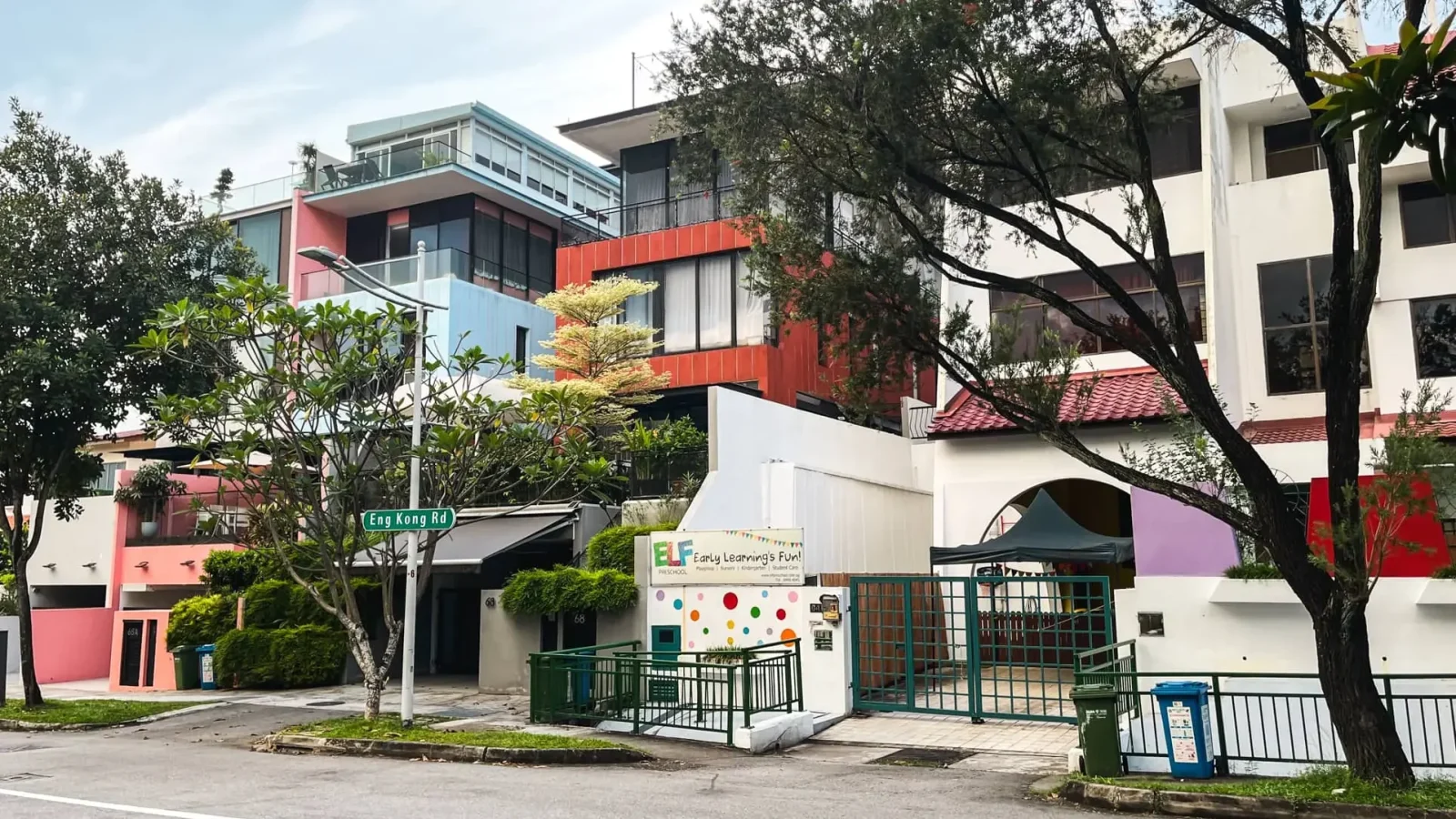
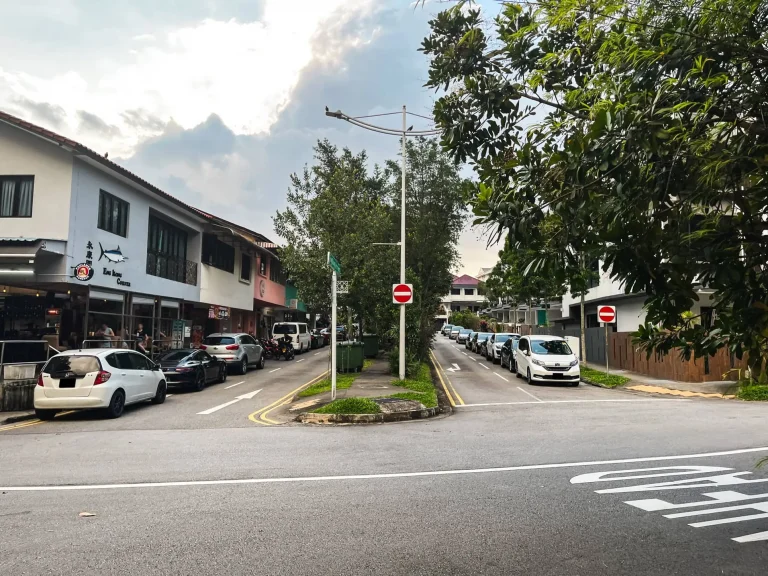
At the heart of this family argument was a semi-detached house at Eng Kong Road. The lengthy court battle, which lasted four years, involved disagreements over unpaid rent, rental income, property taxes, and a handwritten agreement.
This eye-raising case grabbed our attention because it touches on several issues that property co-owners may face: namely, occupation arrangements between co-owners and rental income disputes.
The two brothers who butted heads were David Chan and Franklin Chan, who were named as the executors of their mother's estate when she passed away in December 2012. Two other siblings, George Chan and Jack Chan, were not named as beneficiaries.
Three properties were bequeathed in their late mother's will:
- a semi-detached house at Eng Kong Road, which was still under construction at the time of her passing
- a retail unit at Far East Shopping Centre
- and a unit at Springdale Condo
Their mother had made provisions in her will to ensure that the progress payments towards the construction of the semi-detached house could be settled. This included money in bank accounts held by herself or jointly with one or more of her children.
But she also stipulated that any shortfall was to be met from the rental proceeds from the Far East Shopping Centre retail unit and the Springdale Condo unit.
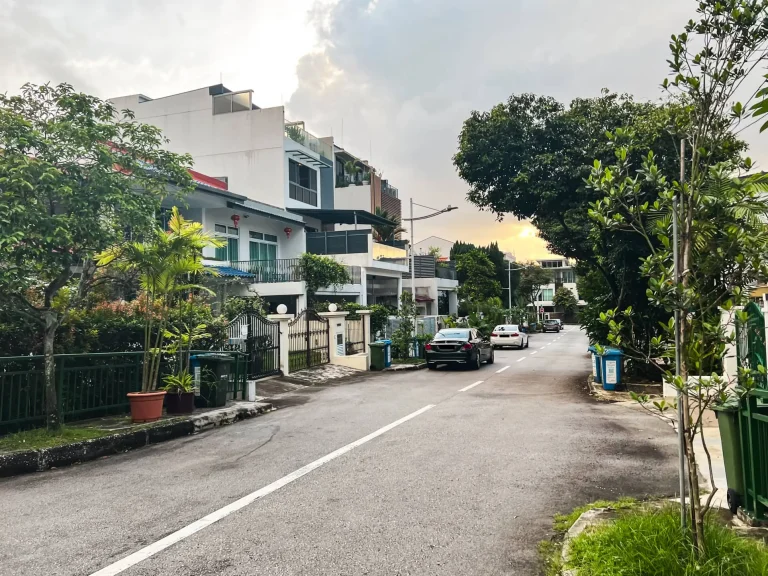
Eventually, the semi-detached house was completed in June 2014, and it was occupied on the following occasions:
- From October 2014 to September 2016, Franklin and his family resided at the newly completed house.
- After they moved out, Franklin's son, Charles, continued to stay there for two months. Thereafter, the house was vacant for about eight months.
- As the co-owners of the property, the two brothers then leased the house for the next four years, with the final tenant vacating the property in January 2022.
It was the sale of this landed house that ignited the family dispute.
According to court documents, Franklin presented an Option to Purchase (OTP) at a meeting with his brother David. A buyer had offered $5 million for the semi-detached house which they co-owned, and Franklin just needed David's signature.
However, David wouldn't sign it until Franklin signed a handwritten note setting aside $600,000 of the sale proceeds for their other two brothers who were not named in their mother's will - George and Jack.
A shouting match ensued that ended when Franklin gave in. However, he went on to message David the next day, claiming that he had been forced into signing it "under duress".
Court documents state that the landed property was sold in April 2022. Based on URA caveats, the house at 56 Eng Kong Road transacted for $5.7 million ($1,517 psf) when it was sold on April 11 that year.
In his published judgment of this case, dated 19 October 2026, Justice Christopher Tan of the High Court ruled on that handwritten note, along with more than a dozen other claims the brothers had brought against each other. The judgment ruled on a range of issues, such as whether the one living there owes the others rent, who keeps the tenant's rent and pays for renovations, and whether a promise between brothers can hold up in court.
David's messages showed he had agreed to a rent-free stay
After Franklin's family moved into the house in October 2014, the brothers verbally agreed that he would pay David $4,000 a month. As the judge noted, a co-owner living in a home he co-owns usually doesn't owe the other owners any rent, but they're free to agree otherwise.
Franklin's message described the $8,000 monthly payment as "more than fair current market rental" for that property.
Franklin paid this from May 2015 to August 2016. But David sued him for $40,000 in unpaid rent over 10 months - from October 2014 to April 2015, and from September to November 2016.
For the first seven months - from October 2014 to April 2015 - Franklin claimed in court that there was a separate verbal deal that let him stay for free at the semi-detached house, until he found a tenant for his own flat at The Pinnacle@Duxton.
But he never found one and subsequently sold the flat in May 2015, and then started paying David that month.
But David denied ever agreeing to this arrangement, calling it a "lopsided agreement spelled (sic) by you which I didn't reject outright due to brotherhood" - in a message sent in June 2015. He later told their uncle in 2018: "I felt unfair, but didn't argue as I valued the brotherhood."
As a result, Justice Tan found that David had agreed, "albeit resentfully", and threw out the $28,000 claim for those seven months.
But David had a stronger case pressing for the last three months of unpaid rent. Franklin said he had paid for September 2016 but couldn't produce a bank record, and the judge held that the person who claims to have paid has to prove it.
For the payments for October and November 2016, only Franklin's son stayed on to oversee repairs taking place at the house, so Franklin argued he owed nothing.
But the judge pointed out that by this logic, his whole family could have stayed "indefinitely" without paying, which he called a "ludicrous outcome" and awarded David $12,000.
The tenant's rent belonged to both brothers even if only one signed the lease
Later, the house was leased to a tenant who stayed for more than four years, at a monthly rate of $7,800. According to rental caveats, there have been 47 rental transactions in the Eng Kong estate since March 2022 to date, and the median monthly rent was about $7,500.
But only the first tenancy was signed by both brothers. Its rent - amounting to $142,971 in total - went into a joint account that required both of their signatures for any withdrawal.
When that tenancy ended in 2019, David refused to sign a two-year extension, so Franklin signed it with the tenant on his own. The tenant then used his two-month deposit of $15,600, which Franklin was holding, to pay for the first two months and after that paid each brother half the rent directly.
Franklin then verbally agreed to another extension in 2021, and kept all the rent the tenant paid him until the tenant vacated the property at the end of that lease in January 2022.
Here, the judge relied on section 73A of the Conveyancing and Law of Property Act, under which a co-owner who collects more than his share of the rent must pay the other owners what is due to them. Since it is a matter of law, it didn't matter that David never signed the later tenancies.
Franklin was ordered to pay David $7,800 - his half of the two months paid from the deposit - and $19,500 for his half of the $39,000 which Franklin collected in the final months. Meanwhile, Justice Tan ruled that the $142,971 in the joint account was to be split equally.
Likewise, Franklin's claim for $74,880 in "excess rent" didn't succeed either. The first tenancy agreement set aside $3,120 of the $7,800 for "furniture, fixtures & fittings", which he said he had paid for, so he argued David should only get half of the remaining $4,680.
But he admitted in court that the brothers had never agreed to this.
Moreover, the agreement's inventory list was never attached, which was also the problem in a recent deposit dispute we covered.
Likewise, the $60,000 that Franklin claimed he spent on renovating the landed house didn't land with the judge, who stated that if one co-owner chooses to spend money on a shared property, the other doesn't have to chip in if he was never given the chance to say no.
In fact, a message sent by Franklin stated that moving in cost him almost $50,000 for total renovation and basic household items. This convinced Justice Tan that most of the money went towards his family's stay.
A commission which couldn't be verified
Franklin, who was described as a registered property agent under PropNex Realty, had apparently found the tenant for the landed house. He kept one month of the tenant's deposit (amounting to $7,800) as his "rental commission" in 2017, and later claimed $15,600 in commission from David.
But the first tenancy agreement said renewal commission would go to the agency, and David never signed the extension naming Franklin as the one to be paid.
As it turned out, Franklin had never handed the $7,800 to PropNex. After asking many times for a receipt, David emailed PropNex's whistleblowing address in December 2021: "I suspect the said commission is not submitted to PropNex".
Franklin sued him for defamation over that email, but the claim failed because what it said was true, as PropNex later confirmed.
How a handwritten note became a $600,000 contract
One of the sticking points during this entire debacle was a handwritten note signed by both brothers and dated 11 September 2021.
Only a few lines long, it stated that they had agreed to use the sales proceeds from the sale of the semi-detached house to pay their brothers, George and Jack, $300,000 each or $600,000 in total.
The underlying promise behind this stemmed from an instance back in 2018, when their uncle flew in from Mauritius to try to patch things up between the four brothers. He proposed that David and Franklin each put in $300,000 for George and Jack, and both agreed in principle, but the money was never paid.
Then, in early September 2021, a buyer offered $5 million for the Eng Kong Road landed house, which Franklin called a "windfall offer" since it was more than 10% above the bank's $4.5 million valuation of the property.
A week before the meeting, David had already tied the sale to the old promise, replying to Franklin's request to come and sign the OTP by demanding that George and Jack be paid from the sale proceeds.
But Franklin argued that the note wasn't a binding contract. A position that Justice Tan rejected for several reasons:
- A family promise can still count. Courts usually assume promises within a family aren't meant to be enforced. But the brothers hadn't been getting along since 2014, and putting the promise in writing showed they meant it.
- David's signature was his side of the deal. A contract needs each side to give something. As a co-owner, David had every right to refuse to sell, so agreeing to sign was what he gave in return for Franklin's promise.
- Refusing to sign wasn't duress. Holding out for the payment was within David's rights, and Franklin couldn't say he was caught off guard, since David had raised it in writing a week earlier.
Franklin also claimed he was under pressure to sell because he owned a HDB flat in Toa Payoh. But David only learnt of the flat in 2023, so he couldn't have used it against Franklin.
Justice Tan also noted that Franklin's actions after the signing didn't help his case either. David had responded to the claim that Franklin was forced to sign the OTP under 'duress' by offering to call off the sale and return the buyer's cashier's order, but Franklin went ahead with the deal anyway.
Later that month, he messaged George the "good news" that the house had sold and that George would get his $300,000 after completion. George replied thanking him for the $600,000 to be shared between him and Jack, and Franklin didn't correct him.
Franklin also admitted he could have walked away from the sale, or asked a court to order one. In the end, the judge concluded he signed because he was "bent on making a killing", agreeing "(albeit grudgingly) to take a haircut of $300,000" to close the deal.
In other words, the $500,000 the buyer paid above the bank's valuation of the property covered most of the $600,000 promised to George and Jack. Each brother gives up $300,000, or 12% of his $2.5 million half, and the $600,000 held in the joint account since April 2022 will now go to them.
Most of this case came down to what was put in writing
Broad elements of this legal case, and whether each brother won or lost their various claims, boil down to what they had put in writing.
David's own WhatsApp messages cost him $28,000 in rent; Franklin had no bank record for the September rent; there was nothing showing David agreed to the renovation; and no signature from David on the commission; the handwritten note, signed and dated by both brothers, eventually cost Franklin $300,000.
For siblings who inherit a home together, the lesson that we can take away from all of this is to agree in writing early on who lives there, who collects the rent, and who pays for what.
When George replied to the "good news" of the property sale in 2021, he took it that both brothers had agreed to pay, and in his words, hoped the money would "rekindle our brotherly relationship". He will now get his $300,000, but only because a High Court judge has ordered it so.



0 Comments