


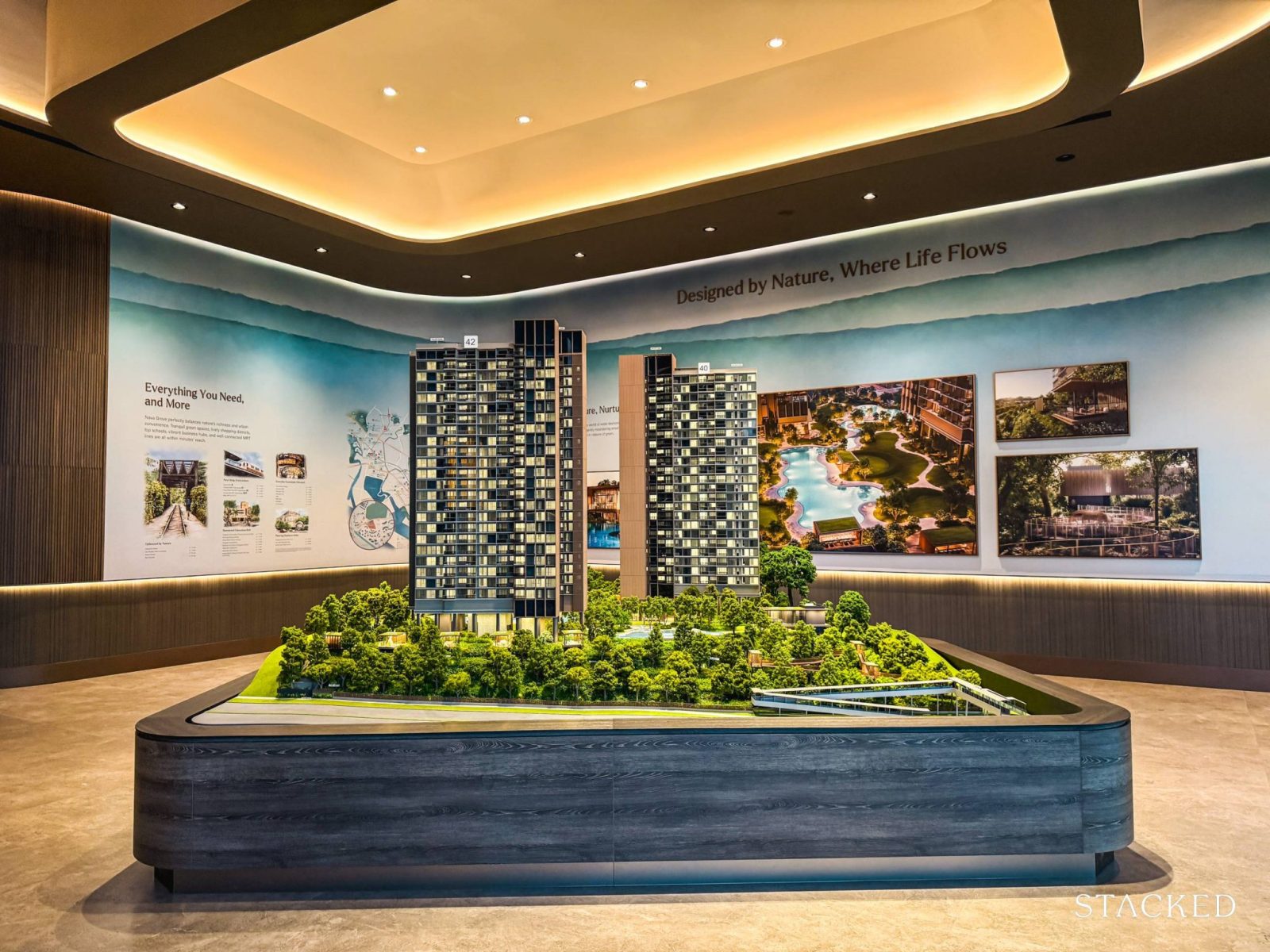
This case study is based on a recent consultation conducted by Norman (R015193B), a property agent and partner property consultant with Stacked. This write-up walks through the key decisions, trade-offs, and market considerations involved, with insights that buyers and sellers may find useful.
Initial expectations: Considering HDB flats as the starting point
When the couple first reached out to the Stacked consultancy team in 2024, they weren’t initially thinking about buying a condo. This was due to budget restrictions at the time, and with a budget of around $1 million, condos were out of the picture.
The couple was also focused on HDB flats for another reason: they had just turned 35 years old and were eligible to purchase as joint singles (the usual minimum age for singles to own an HDB flat). This was a threshold the couple had waited for many years to cross, and they were committed lifelong singles.
When they first spoke to our consultancy team, they hadn't seriously considered concerns beyond simple home ownership. They were somewhat aware that there were more financially efficient ways to buy property, but they were not focused on issues like resale gains. Their priority was simple: find a home they would be comfortable living in.
A preference for a HDB in an area better known for condos
While the couple said they were looking for a HDB flat, they also mentioned they were familiar with the Holland Village area. They had already lived in this neighbourhood for some time and preferred to be in the same general area.
This preference piqued our curiosity as property agents, since buyers who want to live in Holland Village - an area known for its enclaves of private properties - usually start by looking for an affordable condo in the area.
Our consultants eventually learned that, before reaching out to us, the couple had viewed several condos around the Holland Village area. This was done with the help of various other agents, but they observed that each unit they had been shown came with a discouragingly high price compared to their budget. When they raised this issue, some agents were dismissive, asserting that the couple had to assume selling prices would be high for a District 10 condo.
However, Norman, the Stacked consultant who worked with this couple, still felt something was missing. He surmised that the problem wasn’t a lack of information. Instead, the couple hadn’t been introduced to more viable housing options in the Holland Village area. Moreover, they hadn’t been provided a clear way to evaluate the units they were viewing, and this created the perception that every option was exorbitantly priced.
This was why they had struggled to move forward with any confidence in a new private home in the area they desired.
Understanding “expensive”: the role of context in pricing
Rather than suggest alternatives, Norman presented the couple with a more holistic perspective of their housing needs and situation. He began by introducing how the HDB and private property market had moved in recent years until that point in 2024, as well as an overview of the trajectory of HDB flat prices and private property prices over the past decade, about 35% to 40% over that period.
But it’s important to look at absolute gains as well, not just percentages. Since private properties have a higher quantum (overall price), the absolute profits from the sale of a private property significantly outpace that of an HDB unit - even if the percentage gain is similar.
For example, A 35% increase on an $800,000 flat is a gain of about $280,000. IF you owned a $1.6 million condo instead, that same increase would have netted you $560,000. For buyers with the discipline and the holding power, the higher entry price may sting at first, but it can also reward them with significantly more opportunities later.
“Many buyers focus on the percentage growth that the unit they are eyeing could reap, but from an analytical perspective, what really matters is the absolute capital gain,” says Norman. “Once you understand that, it becomes clear what each type of property offers different buyers”.
To be clear, this was not presented as a reason to avoid HDB flats. Rather, it was simply a way to clarify the upsides and downsides: at that time, the couple was only seeing the upside of flats (mainly as relatively cheaper options), without a balanced view of the drawbacks and implications on their property planning.
Another factor that surprised the couple was financing.
This was another blind spot in the couple’s initial considerations, which related to financing issues for the purchase of HDB flats. This issue came to their attention when Norman walked them through the calculations for both housing types - HDB flats and private properties.
HDB flats are subject to the Mortgage Servicing Ratio (MSR). This restricts the monthly home loan repayment to 30% of the borrowers’ monthly income, using a floor rate of 3% per annum (HDB loan) or 4% per annum (bank loan).
Private properties, on the other hand, are not subject to MSR. Loans for private properties are governed by the Total Debt Servicing Ratio (TDSR). The TDSR restricts monthly loan repayments to 55% of the borrowers’ monthly income instead*.
*Note that one difference between the MSR and the TDSR is that the MSR doesn’t take into consideration other debt obligations; it’s only based on the home loan repayment. The TDSR, on the other hand, does take into consideration obligations such as personal loans, credit card loans, etc. But as our couple did not have any serious debt, this element posed no disadvantage to them, and the TDSR was far more permissible to them than the MSR.
Once the numbers were laid out to them, the couple realised two things. They could be more restricted in terms of financing for an HDB property, and their borrowing capacity for a private property was actually higher than they were initially led to believe.
In the end, Norman helped them to determine that they could potentially reach a budget of around $1.65 million for a private property with the right financing, without too much of a stretch on their finances.
“Some buyers assume buying a HDB flat is always the more affordable option, but the MSR can be quite restrictive,” says Norman. “In certain cases, buyers may actually have more flexibility when financing the purchase of a private property”.
At this point, the couple began to reconsider whether a HDB flat at a $1 million budget was really their preferred buying choice.
Introducing a more balanced perspective of what’s expensive
At one point during their consultations with Norman, the couple were seriously considering a unit at Pinetree Hill, where some units at the time were priced at about $1.88 million.
However, when Norman reviewed surrounding transactions in the area and compared units of generally similar sizes and layouts, he determined that the price range was around $1.6 million to $1.8 million. He advised them that the unit they were eyeing was priced at the upper end of the average price range of condos in the area.
This was because the unit was on a higher floor. While some may consider the price premium justified, Norman encouraged them to consider how important this really was to them. Although they still came close to committing, they realised it was a stretch compared to surrounding prices and took a step back.
Norman said this also led them to reassess their approach, and they chose to focus again on HDB flats.
Revisiting HDB flats and the limits of the initial plan
With Norman’s help, the couple began exploring HDB options in areas like Dover, Clementi, and Bukit Timah. While these were not in the vicinity of Holland Village, they were in the West, which (for them) was at least broadly in the same region.
Norman shares that, as far as possible, they kept the exploratory range to flats in locations that the couple found familiar or matched their lifestyle preferences.
But other considerations resulted in many available listings being disqualified. “The areas we looked in tended toward pricier HDB flats, and the desirable ones often superseded the $1 million budget,” Norman says. He adds that he suggested expanding the range of locations to consider, but the couple was reluctant to stray much further.
“They were trying to stay within a certain budget, but also within a specific area. And those two considerations don’t always line up,” he says. This led to another shift in the couple’s buying approach, and they began to consider how they could enter the private home market, albeit with disciplined financial constraints.
New launch vs resale: timing the entry
By then, with the focus turning towards the private residential market again, the couple compared recently completed resale condos such as Leedon Green, One Holland Village Residences, and Clavon.
These newer projects offered more efficient unit layouts and would generally require minimal renovation, which was a major advantage to the couple. However, Norman had to explain another trade-off.
In general, the earlier in the sales phase you buy into a project, the more competitive the selling price compared to other private developments you tend to face. That’s not always true, but it is generally the case. For a full explanation of this, you can check out the reason here.
Norman pointed out that, because projects like Leedon Green. One Holland Village and Clavon had already entered the resale market, and their average prices had significantly increased. Purchasing a new condo unit on the resale market usually means buying at a higher price compared to its launch prices, and this tends to result in relatively weaker capital gains.
Upon learning this, the couple shifted their attention toward new launch projects at the time. In this segment, they had a chance to enter earlier in the sales phase and ultimately to better position themselves to benefit from rising prices as the condo reached completion and entered the resale market.
Shortlisting projects and expanding the search
Several projects were then shortlisted based on location, price, and layout. The list of initial contenders included:
- Hill Haven
- Emerald of Katong
- Chuan Park
- Norwood Grand
The couple had become more open to exploring areas outside of the west - Emerald of Katong is an 846-unit condo on Jalan Tembusu in the East. While the shortlisted projects were in different locations, they represented realistic options within the couple’s price range.
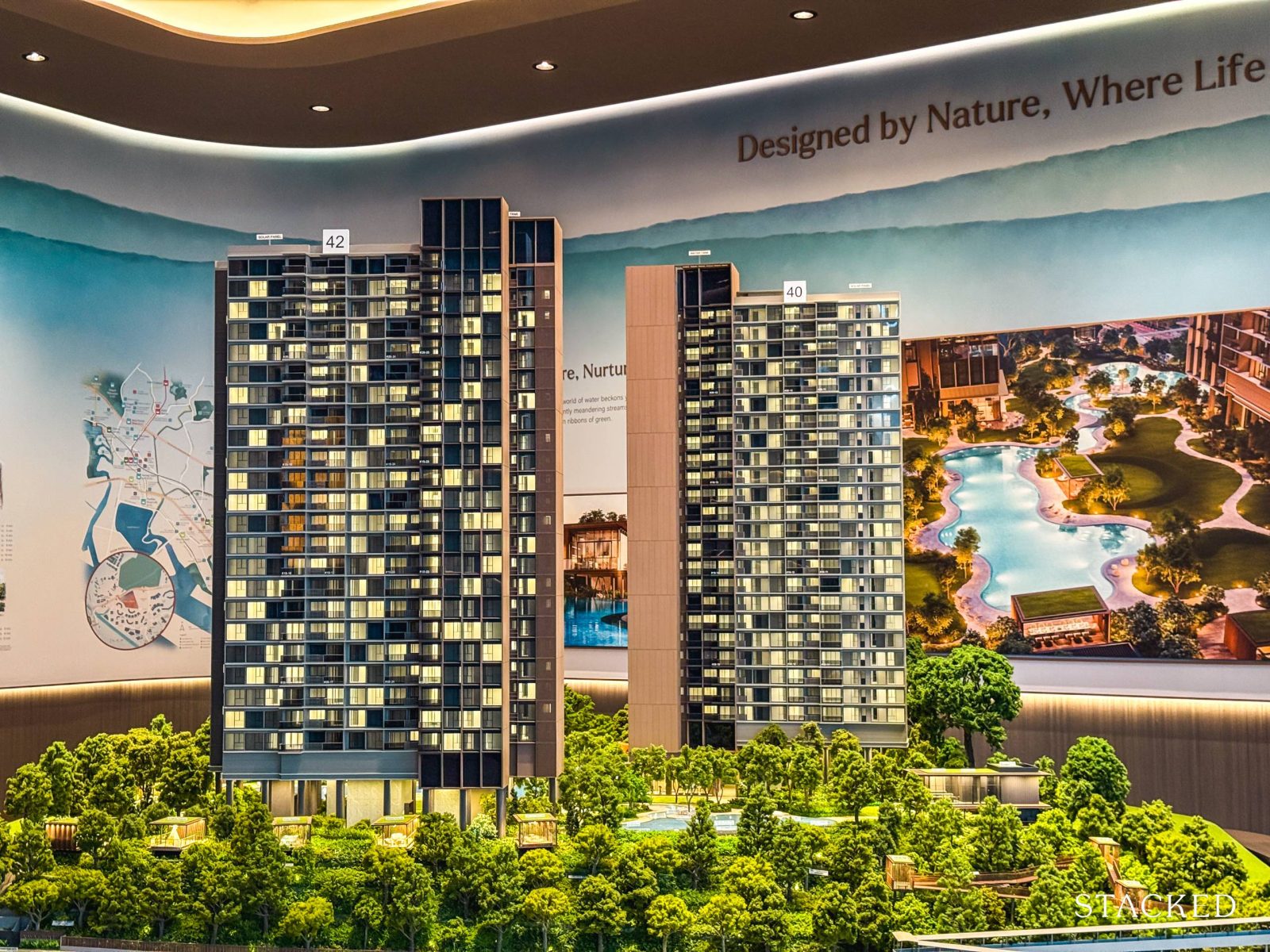
When Nava Grove launched in October 2024, it quickly became a strong contender. The couple was drawn to its appealing location and the surprisingly competitive price, which we covered in detail here.
However, Emerald of Katong also featured appealing lifestyle attributes; the locale closely mirrored the character found at Holland Village. The development also banked on competitive pricing to draw buyers.
To maximise their chances, the couple submitted ballots for Nava Grove and Emerald of Katong.
Several factors eventually led the couple to buy a unit at Nava Grove. One of these was the balloting process: at Emerald of Katong, the couple both put in separately for two different queue numbers and they obtained numbers 193 and 388, respectively.
According to Norman, he says that these were high numbers on the ballot list, and there was a good chance the more desirable units would be snapped up by the time their turn came.
Conversely, the couple snagged queue number 75 for Nava Grove (ironically, they got the better queue number when they didn’t get separate ballots.) This gave them a clear advantage to secure their choice units at Nava Grove.
Beyond the ballot process, Norman also helped the couple identify an appropriate unit. One option was a two-bedroom, one-bathroom unit in Block 38, which sits within one kilometre of Henry Park Primary School. At around 624 sq ft and priced at approximately $1.469 million, this two-bed, one-bath unit also appeared affordable. However, the trade-offs were significant.
The smaller size and the single bathroom configuration limited both liveability and future resale appeal. In contrast, a two-bedroom, two-bathroom unit offered greater flexibility and a broader buyer pool. “For two-bedders, that extra bathroom makes a big difference. It opens up the buyer pool quite a bit," says Norman. This led to the couple eventually choosing a two-bed, two-bath unit, of around 700 sq ft in a different block.
A final consideration, in terms of location, was that the Nava Grove location in Bukit Timah was more familiar to the couple compared to Katong.
GFA harmonisation and floor height were also factors considered
At the time of this transaction, GFA harmonisation was still a new concept. You can see the details about it here. Like many agents at the time, Norman was saddled with explaining the inherent confusion this caused, as the first harmonised condos appeared next to older, non-harmonised counterparts.
Importantly, the 700 sq ft Nava Grove unit was compared to the unit they had first considered: the 764 sq ft unit considered at Pinetree Hill. When it was explained that Pinetree’s unit was pre-harmonisation, it became clear that the difference in size was smaller than expected. The Pinetree unit’s stated size included non-livable areas such as aircon ledges, but in contrast, the 700 sq ft Nava Grove unit measured actual usable space. In practical terms, the liveable areas of the two were comparable.
Another key decision was to opt for a fifth-floor unit, rather than a higher floor.
While higher-floor units were available, these would have pushed prices closer to the $1.8 million range, and thus out of budget. By keeping to the fifth floor, the couple was able to secure a unit for $1.628 million, which was under their $1.65 million condo budget.
This buffer was important not just for affordability, but also for future resale flexibility, particularly for a two-bedroom unit where buyers tend to be more price-sensitive.
Final thoughts
This case highlights a common issue among first-time buyers: namely, without context, it can be challenging for buyers to judge reasonable upsides and downsides. Cheaper is not always better or more appropriate, and there’s a danger in such oversimplifications.
A related issue here is understanding the nature of financing. Without a good grasp of factors like the MSR, TDSR, and the impact of recurring monthly repayments, it becomes very tough to estimate the budget. Once the couple understood how projects compared, in terms of pricing, layout, buyer pool, and timing, they were able to make a more confident decision. Rather than just go for whatever looked cheapest - which may have been suboptimal - they were instead able to recognise what was worth paying for, to derive the most benefit out of their property purchase.



0 Comments