


Buildings that are easy to maintain rarely make headlines, but a study commissioned by the Building and Construction Authority (BCA), released on July 22, puts concrete numbers on the idea.
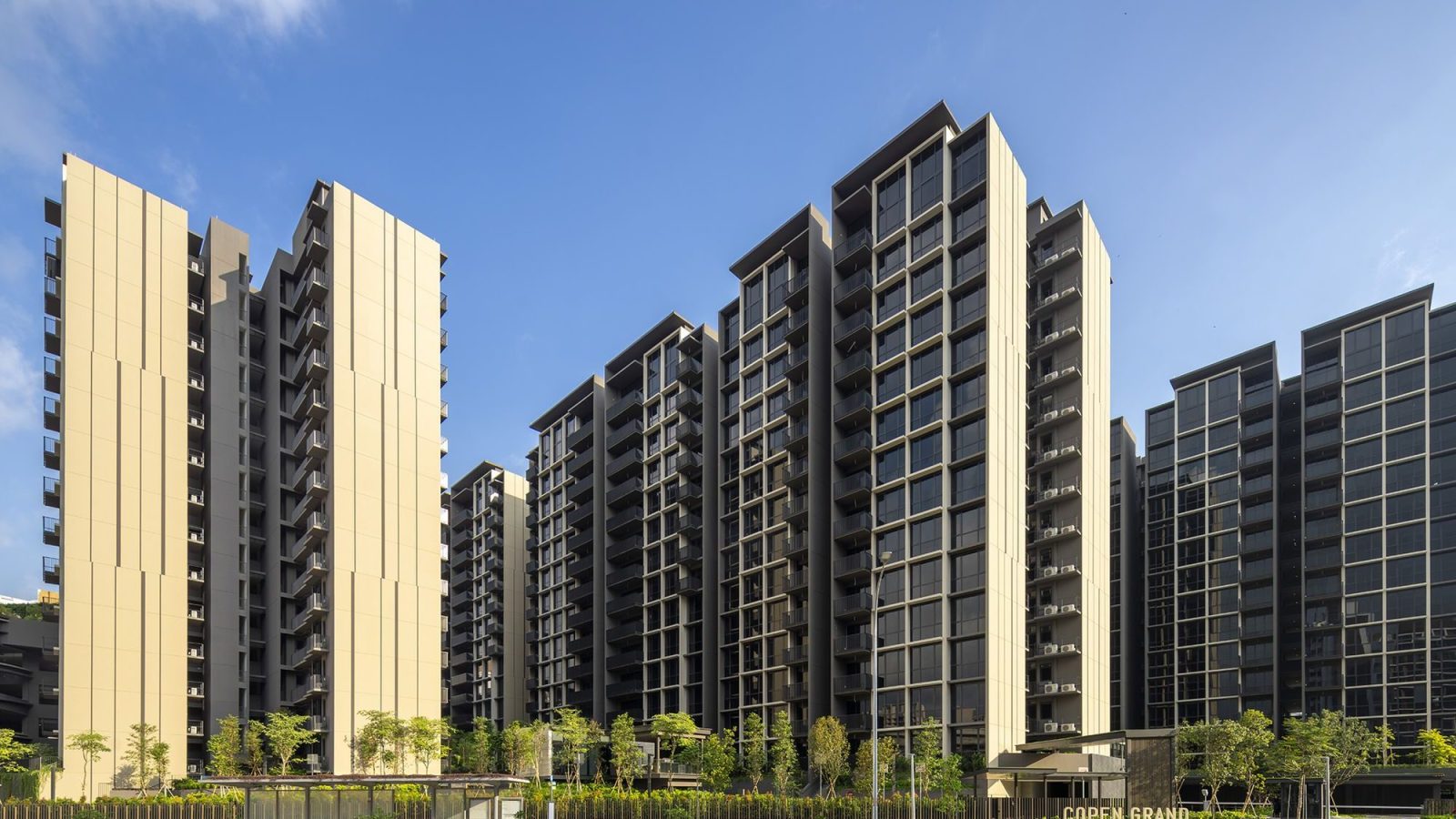
Working with third-party consultants, BCA examined two existing commercial buildings (Surbana Jurong's SJ Campus and CapitaLand's Ascent), a new commercial development (Shaw Tower), and a new Executive Condominium (EC) (Copen Grand).
Across the three commercial buildings, annual operational savings were estimated to range from $310,000 to $950,000 after designing for maintenance upfront, while Copen Grand saved roughly $110,000. Most of the added construction costs for these features were recouped within three to six years.
BCA also announced separate changes to the projects that must adopt CORENET X, its digital platform for coordinating building-plan submissions across agencies, effective from October 2026.
Ageing buildings and a shrinking workforce are driving the push
The study concerns Design for Maintainability, or DfM: building in how a structure will be cleaned, repaired and serviced at the design stage, rather than working it out after construction is done. BCA has been pushing the concept because Singapore's building stock is growing and ageing; at the same time, the facilities management workforce is shrinking. These two pressures cannot be solved by simply hiring more maintenance workers.
DfM has been part of BCA's Green Mark 2021 certification scheme since 2021, through a dedicated Maintainability (Mt) section that assesses how easy a building's design makes it to service. Projects that meet the section's prerequisites and score at least 10 of its 15 available points earn a Green Mark Mt Badge.
But BCA said industry feedback pointed to a gap; there was no quantitative evidence of how much DfM saved, and private residential developers in particular had little reason to invest in it, since they sell their units at completion. The savings would go to the Management Corporation and future homeowners, not to them.
To close that gap, BCA turned to Surbana Jurong Consultants, part of the Surbana Jurong Group (SJ Group), awarding the study in December 2024 with work starting the following month. The brief was to put a dollar figure on the business case using life-cycle costing, an approach that weighs a project's construction cost against its running and maintenance costs over a set period, in this case 30 years.
"At SJ Group, we believe this whole-of-lifecycle approach is essential to unlocking asset performance, reducing lifecycle costs, and delivering resilient, sustainable and future-ready development," says Praveen Hassan Chandrashekar, Regional Director (Asia) of the Sustainability & Resilience Office at SJ Group.
Completed in May 2026, the study mapped Green Mark Mt Section features onto the four buildings and modelled the savings against a baseline design without them.
Modest upfront costs in exchange for substantial savings
For the three commercial buildings, the added construction cost of incorporating DfM measures worked out to between 0.6% and 1.5% of total construction cost. In return, the study found potential annual operational savings ranging from $310,000 to $950,000, with most measures paying back their added cost within six years. Copen Grand's incremental construction cost was lower, at 0.2% of total construction cost, and its potential annual operational savings were smaller too, up to $110,000 a year, but its payback period was shorter: within five years for most measures.
| Metric | Commercial (Shaw Tower, SJ Campus, Ascent) | Residential (Copen Grand) |
| Added construction cost | 0.6% to 1.5% of total construction cost | 0.2% of total construction cost |
| Potential annual operational savings | $310,000 to $950,000 | Up to $110,000 |
| Typical payback period | Under 6 years | Under 5 years |
| Maintenance labour cut | Many measures cut man-days by more than 60% | Many measures cut man-days by more than 65% |
The residential case study shows a smaller dollar figure than the commercial buildings largely because a single EC carries less mechanical and electrical plant than an office tower does, but its percentage reduction in maintenance man-days was the highest of the four buildings studied.
BCA said the largest productivity gains across all four came from architectural decisions made at the design stage, such as the choice of floor materials, ceiling types and how the façade is accessed for cleaning, rather than from mechanical or electrical upgrades on their own.
One cat ladder at Shaw Tower saves $750,000
BCA's example of how this plays out comes from Shaw Tower, a newly redeveloped office building of about 560,000 sq ft owned by Shaw Towers Realty, with Lendlease as project and development manager, Aedas as architect and Beca as the M&E consultant.
Servicing the fan and basin at the top of a cooling tower usually means bringing in scaffolding every time, since there is no permanent way up. Shaw Tower's design team built in an enclosed cat ladder instead, giving workers safe, direct access. BCA said this one change is projected to generate more than $750,000 in life-cycle savings, with a payback period of just three years. Cooling towers typically last 15 years, so the tower's owner recovers the cost of the ladder well within the equipment's working life, with 12 years of savings still ahead of it.
"The new Shaw Tower has been redeveloped with our beliefs in incorporating maintainability features from the outset, to support operational efficiency, sustainability and resilience that will withstand the test of time," says Alfred Yeung, General Manager of Shaw Towers Realty.
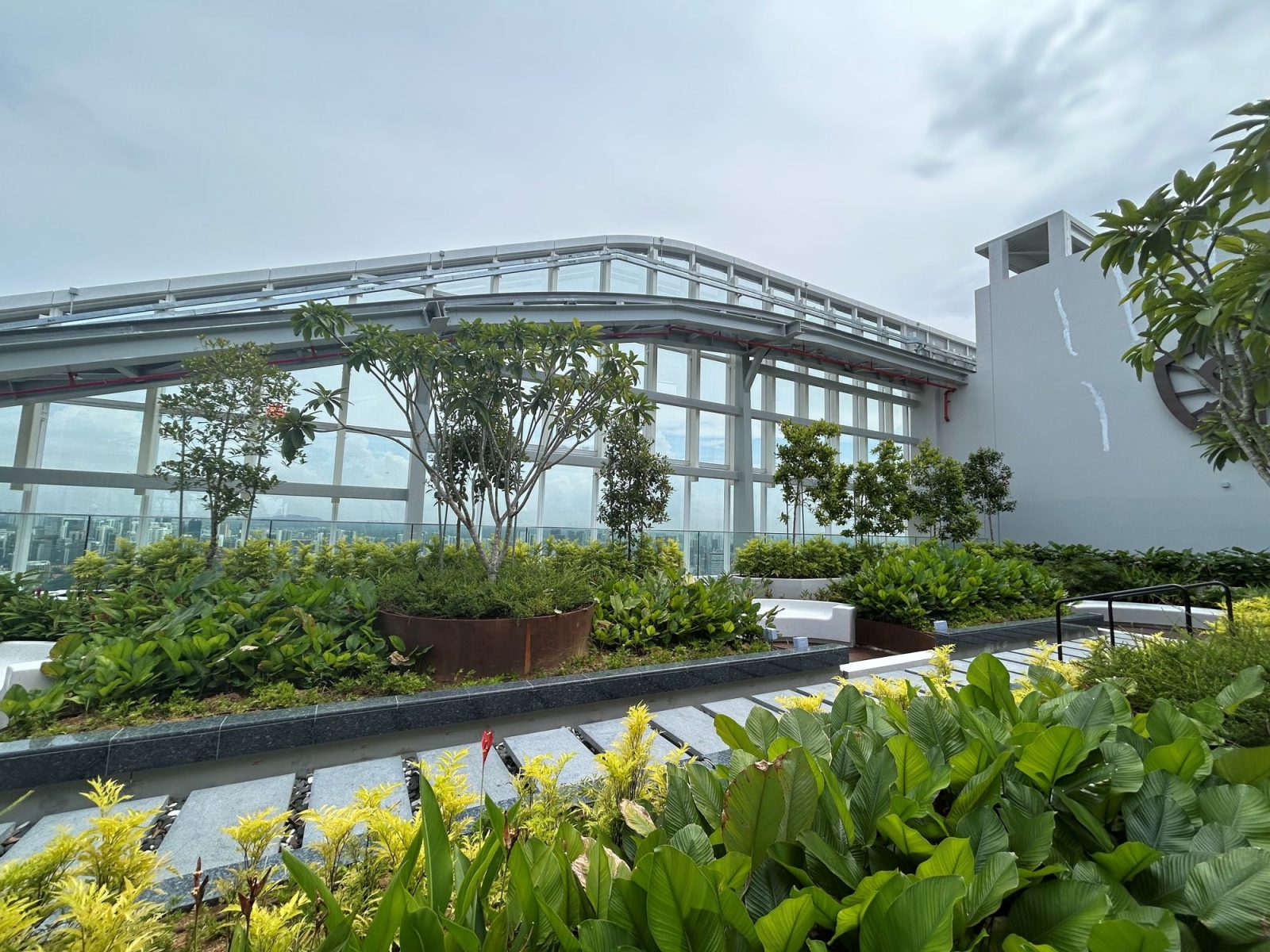
Other features built into the tower include a rail for accessing its vertical green wall, a Building Maintenance Unit system with an integrated glass-replacement arm for façade work at height, and a motorised lifting beam for moving heavy mechanical equipment between the rooftop plant room and ground level without temporary cranes.
DfM at Copen Grand starts with landscaping and drainage
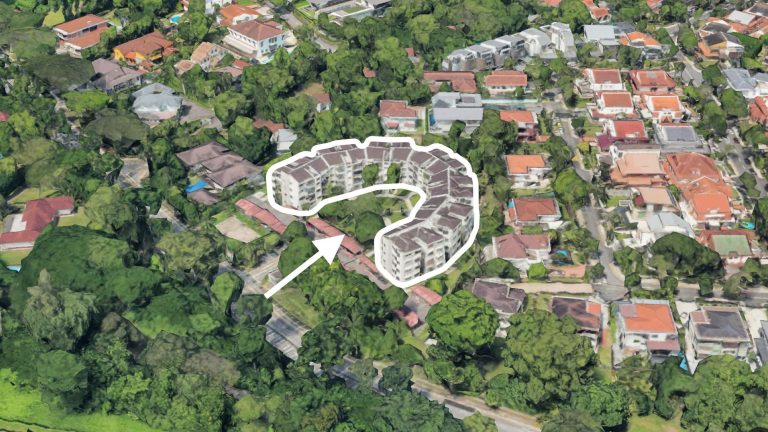
For residents of private properties, Copen Grand is the more relatable case. The 639-unit EC in Tengah, developed by City Developments (CDL) and Sunway MCL, obtained its Temporary Occupation Permit in April 2025 and is Singapore's first EC to attain BCA's Green Mark Platinum Super Low Energy standard.
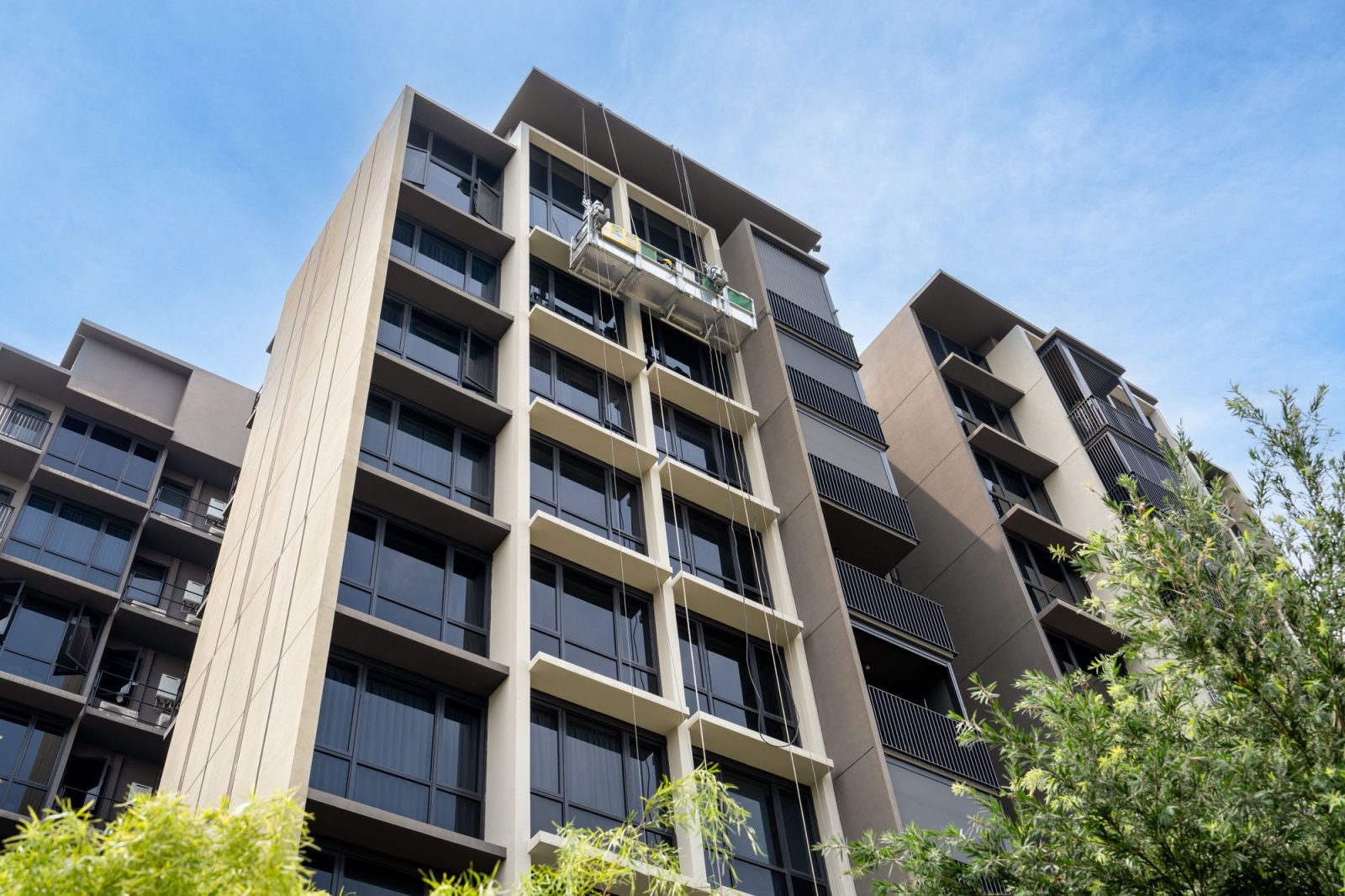
Its DfM features include water points every 15m radius along the landscaping so gardeners do not need to run hoses across long stretches, gravel maintenance paths that reach planter beds without disturbing what is planted, rain-cover overhangs at lift lobbies to cut water ingress, and a davit arm system at roof level that lets 100% of each residential block’s facade be cleaned and inspected with gondolas without scaffolding.
Developers don't benefit from the savings, so BCA made it compulsory
None of this changes what a unit at Copen Grand cost to buy, since the study measures running costs after the building was completed. What it does change is who gains from those lower running costs, and that is the crux of the incentive problem BCA's study was set up to address.
Copen Grand's developers do not benefit from any of the operational savings the study found, because the units are already sold; the Management Corporation, and by extension the residents who pay maintenance fees, gets that instead. BCA acknowledged this directly in the study, noting that private residential developers see no direct return on investment from DfM, and that its real value to them is as a marketability tool: a Green Mark Mt Badge signals a lower-running-cost, better-maintained asset to a homeowner at the point of sale, even though the developer never captures the savings itself.
For public buildings and GLS-awarded sites, the badge was never optional to begin with. Since 2021, the Mt Badge has been compulsory for new and retrofitted public buildings under the GreenGov.SG initiative, on top of the Green Mark Platinum Super Low Energy standard.
It has also been a sustainability condition attached to the Built Environment Transformation Gross Floor Area (GFA) Bonus Incentive Scheme since November 2021, and to Government Land Sales (GLS) sites since June 2022, meaning private developers building on GLS land awarded from that date have effectively had to design for it regardless of whether they wanted to.
BCA has said more than 60 projects have adopted the Mt Badge to date, with about a quarter of those doing so voluntarily, beyond what the GLS and GFA-bonus conditions required. The new study is aimed at growing that voluntary share by giving developers and building owners an actual dollar figure to weigh against the modest upfront cost, rather than asking them to take the savings on faith.
Fewer projects will need to use CORENET X
Separately, BCA used the same announcement to scale back how it is rolling out CORENET X, the digital gateway that coordinates building-plan submissions across agencies. From October 1, all new projects with a gross floor area of 5,000 sqm (about 53,800 sq ft) or more will be required to submit via CORENET X. Projects below that threshold will no longer be mandated to use the platform and can continue submitting through the older CORENET 2.0 system.
BCA said a review found CORENET X's benefits, mainly earlier coordination between agencies that cuts down on downstream delays, were more pronounced on larger, more complex projects involving more regulatory submissions. For smaller projects, often run by smaller firms with fewer staff, the costs of mandatory adoption were likely to outweigh the benefit, prompting the narrower threshold.
The next test: whether developers act without a mandate
"For too long, maintenance has been treated as someone else's problem – to be addressed only after the building is handed over," says Ang Kian Seng, Group Director of Environmental Sustainability at BCA. "This study shows that designing for maintainability is not a cost burden, but a sound investment. By making maintainability a priority from day one, we can reduce long-term costs, improve productivity and create a more resilient built environment that serves future generations well."
BCA said it will work with SJ Group and industry trade associations on a series of engagement sessions with architects, engineers, developers and facilities managers to share the study's findings and gather feedback on wider adoption. Those sessions, more than the study itself, are where BCA's actual bet gets tested.
A stronger dollar case only draws private residential developers into building beyond what GLS conditions or Green Mark tiers already require if it improves their economics, and right now, the savings the study just quantified go to homeowners and their Management Corporations, not to the developers footing the bill.



0 Comments