


Much of the attention on the HDB market over the past few years has been on resale prices, but there’s been comparatively less discussion about how much these flats can generate in rental income. And while most Singaporeans buy an HDB flat primarily as a home, rental yield is still a useful consideration for those who may eventually move out and retain their flat.
We looked at HDB rental and resale transactions over the 12 months from November 2025 to October 2026, and there were some interesting differences across the various towns.
Jurong West, for instance, recorded the highest indicative gross rental yield for 4-room flats at 7.9%, compared to the islandwide figure of 6.4%. The median monthly rent was $3,500, against a median resale price of $534,500.
The figures are also backed by a fairly substantial sample of 926 rental approvals and 592 resale transactions, which gives us more confidence in the comparison than in some of the smaller HDB towns.
How does Jurong West compare with other towns?
Jurong East comes in a close second, with an indicative gross rental yield of 7.6%. While the median rent is identical to that of Jurong West at $3,500 a month, the median resale price is slightly higher at $549,444. Bedok, Woodlands and Yishun follow, all with gross rental yields of 6.8%.
For a better sense of how these figures compare, we’ve included the islandwide rental yield as well as that of Toa Payoh, which recorded the lowest yield among the towns we looked at:
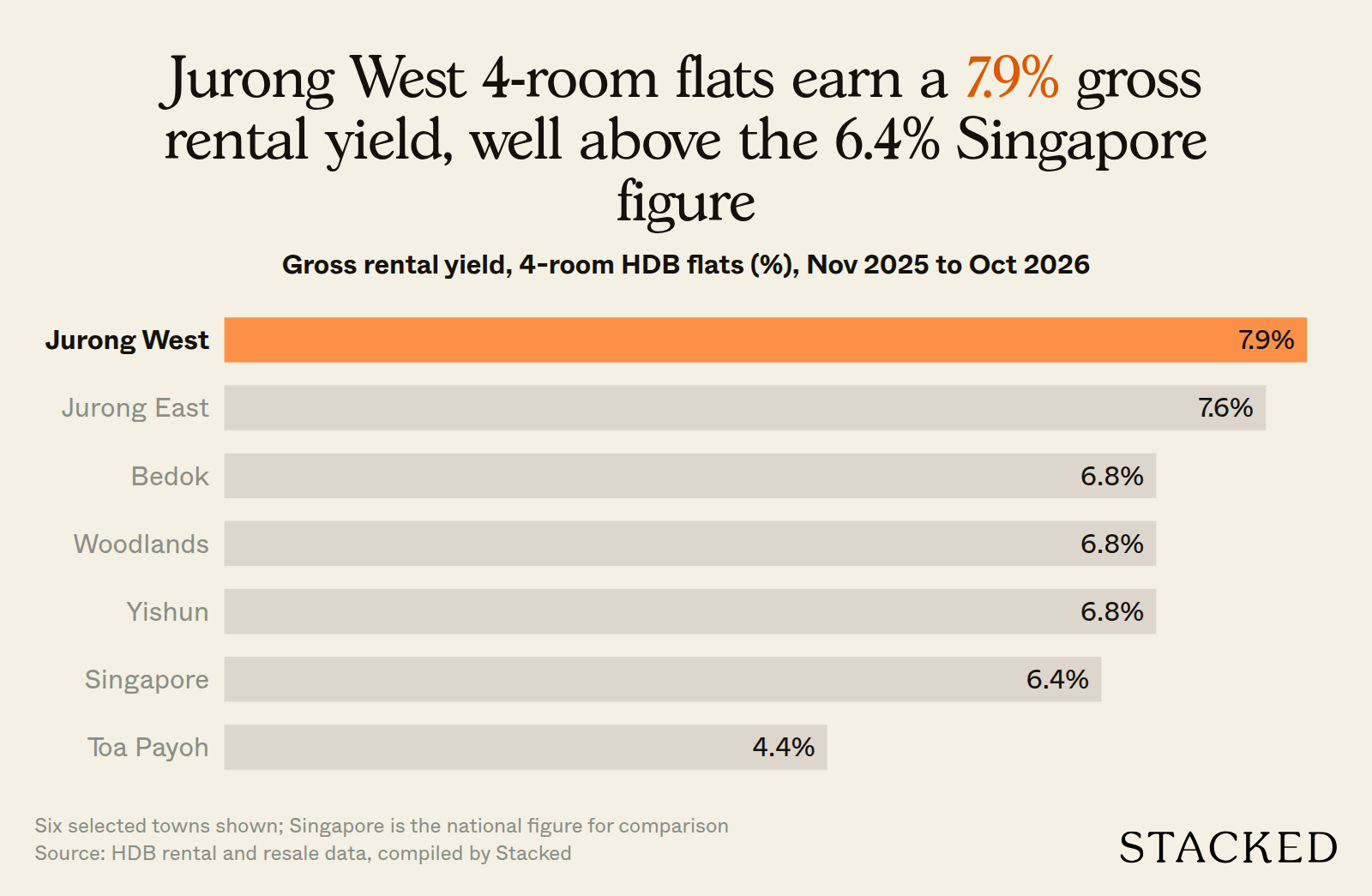
What’s interesting about Jurong West is that while the median rent for a 4-room flat is only about 4.5% higher than the islandwide median ($3,500 versus $3,350), the median resale price is about 15% lower ($534,500 versus $630,000). It’s the relatively lower cost of buying a flat here, rather than exceptionally high rents, that accounts for much of the higher rental yield.
Contrast this with Queenstown, where a 4-room flat commands a significantly higher median rent of $4,200 a month. However, with a median resale price of $1.03 million, the gross rental yield works out to just 4.9%.
This is an important distinction, as some of the more sought-after HDB towns among tenants may also be the most expensive for buyers. While landlords in Queenstown collect more in rent each month, those in Jurong West stand to earn a higher rental return relative to what they paid for their flat.
Jurong West has consistently recorded above-average rental yields
In the preceding 12-month period, the gross rental yield for 4-room flats in Jurong West was 7.5%. The increase to 7.9% can be attributed to two factors: median monthly rents rose from $3,400 to $3,500, while median resale prices fell from $542,000 to $534,500.
Looking further back, Jurong West has consistently recorded higher rental yields than the islandwide figure across every 12-month period we examined since November 2021:
What’s more notable is that the gap has widened over the years, from just 0.4 percentage points in the earliest period to 1.5 percentage points in the latest.
Part of this comes down to the divergence in resale prices. Over the past year, the islandwide median resale price for 4-room flats rose slightly from $626,000 to $630,000, while prices in Jurong West moved in the opposite direction. Coupled with rising rents in Jurong West, this has made the town stand out even more in terms of rental yields.
Rental yields can vary quite significantly within Jurong West itself
Among the 15 streets in Jurong West with at least 15 rental approvals and 15 resale transactions, gross rental yields ranged from 6.6% at Boon Lay Drive to 8.7% at Jurong West Street 91. The latter recorded a median monthly rent of $3,500 against a median resale price of $485,000, based on 55 rental approvals and 37 resales.
We would be a little more cautious about drawing conclusions at the street level, however, given the smaller number of transactions.
One limitation of this comparison is that the flats being rented out may be quite different from those being sold. To account for this to some extent, we narrowed our analysis to the 240 blocks that recorded both rental and resale transactions over the same period. The gross rental yield remained at 7.9%, although this still doesn’t account for differences between individual units within the same block.
Another consideration is the age of the flats in Jurong West. Those built before 1990 recorded a median resale price of $495,000, with a median remaining lease of 58 years. In comparison, flats built from 2010 onwards sold for a median of $639,444, with about 88 years of lease remaining.
While we haven’t broken down rental yields by remaining lease, this is an important consideration for prospective buyers. An older flat may offer a more attractive rental yield on account of its lower purchase price, but this needs to be weighed against its longer-term resale prospects as the lease runs down.
A higher rental yield doesn’t necessarily make Jurong West a better buy
Bear in mind that the 7.9% figure is a gross rental yield, before accounting for property taxes, maintenance costs, agent fees and periods of vacancy. It’s also derived from median rental and resale prices across the town, rather than the actual returns of individual landlords.
Perhaps the more interesting takeaway from the figures is how differently the rental and resale markets value certain HDB towns.
While buyers are willing to pay substantially more to own a flat in places like Queenstown and Toa Payoh, the difference in what tenants are willing to pay isn’t nearly as pronounced.
This has worked in Jurong West’s favour from a rental yield perspective, particularly over the past year, when median resale prices fell slightly even as rents continued to rise. But for buyers who intend to rent out their flat further down the road, rental income is only one part of the equation. How well the flat holds its value over the course of their ownership matters just as much.


0 Comments