


This case study is based on a recent consultation conducted by Andrew (R059210F), a property agent and partner property consultant with Stacked. This write-up walks through the key decisions, trade-offs, and market considerations involved, with insights that buyers and sellers may find useful.
Uncertainty over the next move when their flat attained its MOP
When their flat attained its MOP, the couple were aware that this milestone presented them with significant opportunities.
In general, this is true, since five-year old flats are well-positioned to capitalise on a steep price appreciation once the unit enters the resale market, since the negative impact of lease decay has not yet weighed down on its price growth. These new flats also typically are in good move-in condition.
In this case, the couple’s flat was relatively new and well-maintained, and the new owners wouldn’t have to spend much in the way of renovations if they chose.
The flat in Clementi also benefitted from appealing locational attributes, the area is a mature residential town with proximity to several schools. The size of the flat, at 969 sq ft, was also spacious enough to comfortably accommodate families.
The couple realised that this was an opportunity to realise the value of their flat. They also wanted to use the proceeds from the sale as a springboard into private home ownership, where they could continue being homeowners.
Their priority was to upgrade into a home what met their lifestyle needs and that they felt comfortable living in, while factors like future capital gains were secondary – although, they still wanted it to be a sensible long-term move.
However, like many first-time upgraders, they had difficulties developing a clear roadmap and the sheer number of housing options for them to consider on their own was overwhelming.
Clarifying the starting budget
The couple did begin by setting an initial budget for themselves, and a comfortable number for them was $2 million. This was the amount they shared with our consultancy team when they first reached out to us.
But when Andrew first spoke with them in March 2024, it became clear that this figure was more of a rough comfort zone than a properly tested budget. The couple had not yet worked through the likely sale proceeds from their existing flat, how much CPF could be used, and what level of monthly repayments would be comfortable.
Rather than jump straight into viewings, Andrew first focused on getting their financial planning on the right path,
“Many buyers tend to start with a budget that they feel comfortable with but may not necessarily be an amount that is grounded in the full picture,” Andrew says, adding that once it is properly mapped out, buyers will have more clarity on what they can purchase.
The process of refining their budget included: likely sale proceeds from their existing HDB flat, based on recent comparable transactions; available CPF balances that could be used for the next purchase; cash top-up required after accounting for proceeds and CPF funds; and loan eligibility and financing limits under prevailing rules.
Andrew also discussed a monthly repayment level that they would be comfortable servicing, as well as how much capital buffer they needed to retain for renovation, moving costs, and future plans.
The result was encouraging, and the couple’s instincts were not far off but they had slightly more room than they had initially expected. With proper planning, it was determined that their realistic affordability range was around $2.1 million to $2.2 million.
What followed next was a look at important fundamentals
In many aspects, most owner-occupiers tend to have the same set of concerns as property investors. But when the intention is to own a home, simply knowing the numbers doesn’t suffice it for most homeowners, says Andrew.
In subsequent meet ups after discussing their finances, Andrew focused on getting the couple to list their non-negotiable factors before they started house hunting.
The first non-negotiable factors were their preferred location. For the couple, both sets of parents were living in the West, so remaining in that region was important to them. But they also hoped to position this as an upgrade into the private home market in this region.
The second consideration was time. The couple saw themselves staying in their next home for around eight to ten years. This meant their new home had to accommodate their current lifestyle, as well as other life changes like a growing family.
They also had a firm demand for adequate living space, since they were used to a certain degree of liveable space that their flat offered, and were hoping to keep to the same size as their 969 sq ft flat.
While they accepted some loss of space might be necessary, they told Andrew they didn’t want to downsize too aggressively either.
Once these priorities were determined, Andrew took charge of marketing their existing flat. He wanted to start early so that the eventual sale and purchase timeline could be coordinated more smoothly.
Selling the four-room Clementi flat
A significant challenge faced by HDB upgraders is avoiding having to move twice - once to a rental or other form of acceptable accommodation, and the other to the replacement home once it's ready.
With Andrew managing both sides of the move, he could better coordinate the sale milestones with the eventual purchase timeline.
There were also strong reasons to be confident that the flat would be sold on the resale market, since the number of resale flats that were less than 20 years old in that part of Clementi is limited. Moreover, the sellers of newer flats were testing the waters to see how much higher they could price their units.
This was a mixed situation that Andrew and the couple faced. While it drove up the catchment of potential buyers, on the other hand, stiff competition set higher price benchmarks for flats in that area.
Overall, Andrew says that it was a more advantageous situation for the couple, who were pricing their unit reasonably compared to similar listings at the time. “Their asking price made the unit look more accessible to buyers who wanted a flat in that Clementi location,” he says.
The flat was launched for sale with two sets of open house viewings, to build momentum and concentrate interest. His aim was to generate sales activity early, garner multiple offers in order to establish price discovery, and then negotiate from a stronger position.
It was an important step since there were other recently MOP-ed flats in the area that were entering the resale market, and Andrew felt that it was important not to drag out the sale and let the listing stagnate on the market.
In the end, Andrew’s approach worked. Within the first two weeks of initial marketing efforts, several offers were submitted and the couple accepted the highest priced offer.
“In this case, speed helps bolster confidence and when buyers can see genuine competition, it tends to accelerate the decision-making process and negotiations become clearer,” says Andrew.
It was also important that the couple were on board with this sales approach. They were highly responsive to buyers and cooperative with viewing arrangements. Without this, Andrew may have had to resort to slower methods than the initially planned open house viewings.
With the sale secured, the couple also had more confidence regarding their affordability budget (once theoretical, now solid).
Selling turned out to be easy, but finding a suitable replacement home was more challenging.
With the sale of their flat behind them, the couple and Andrew faced the more difficult part of the journey of finding a replacement home that matched their long-term needs.
Their revised budget initially ranged around the $2 million mark. Practically, that meant many of the private homes available to them would be two-two-bedroom units, especially if they wanted newer projects or those in more central locations.
However, most two-bedroom units in newer condos are often sized from 600 to 700+ sq ft. To the couple, this was a drastic loss in liveable space compared to their 969 sq ft. flat. This lack of space would also be problematic if they planned to grow their family over the next eight to 10 years.
To help them understand and visualise where the compromises would lie, Andrew brought the couple for several viewings across different projects and unit types.
The couple remarked that many choices which seemed straightforward based on online listings could feel very different in person. Some units looked attractive on paper due to their price or location, but once they stepped inside, the limitations became clearer. Bedrooms felt more compact than they expected, living areas were less comfy, and the amount of storage that some of these units offered could become an issue over time.
The couple also considered whether a two-bed, two-bath layout might still be workable. For many buyers, it can be a practical compromise for family living. But after viewing several options, the couple felt that it would require too much compromise, for a home that needed to last at least a decade.
“Sometimes buyers need to physically experience the space before they can make a confident decision. Once they saw several units, they became much clearer on what they could accept and what they could not,” Andrew says.
He also helped to expand the list to older resale options with larger floor plates, including some two-bedroom units that were close to, or around 1,000 sq ft. These offered better space efficiency but came with trade-offs in terms of age - they were mainly in older projects with less efficient layouts, and more dated facilities.
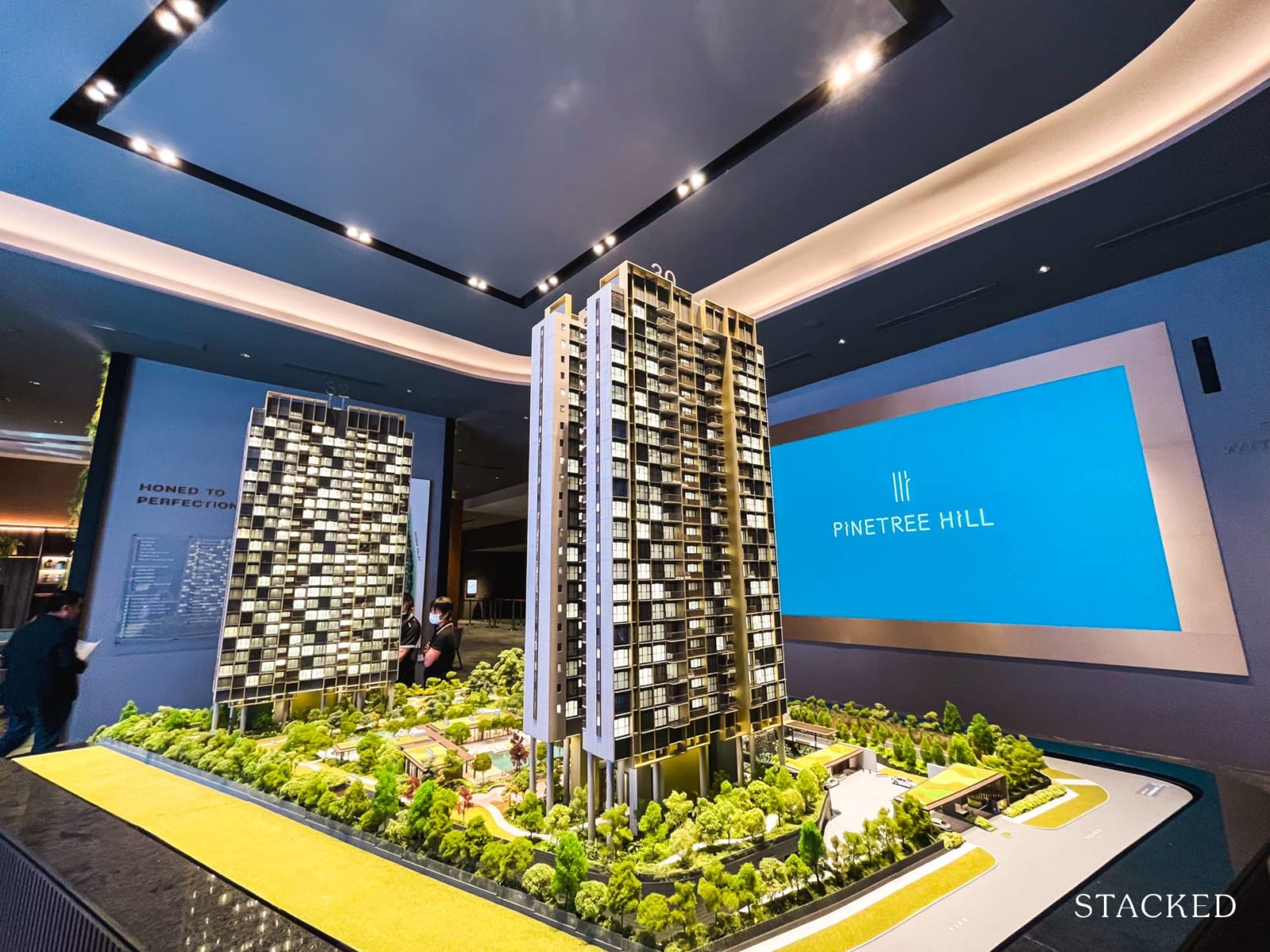
While the couple were not too enthused about having to rent, they didn’t completely exclude the possibility of a unit in a new launch project. A new condo on their shortlist included Pinetree Hill, and they were considering a two-bedroom with study unit which offered more flexibility than a standard two-bedder.
The study could function as an auxiliary room, while the second bedroom could still serve future family needs. But as their house hunting progressed, it became clear these types of features - while moderately helpful - still did not overcome the lack of space the couple felt for them.
An opportunity at One-North
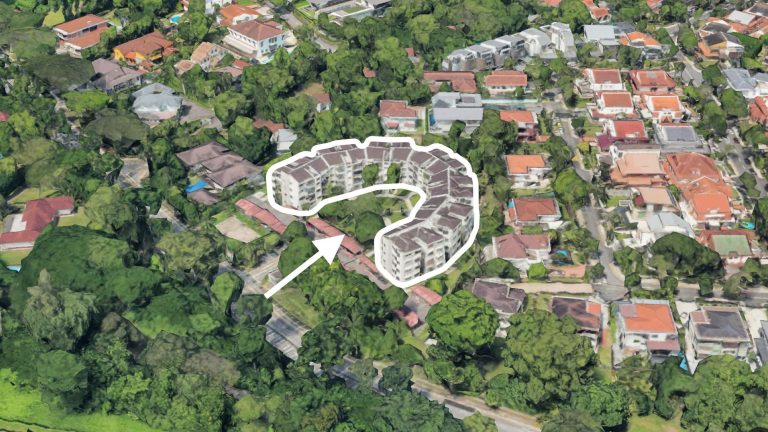
Eventually, an opportunity to purchase a sub-sale unit at One-North Eden came onto their radar. Subsale units refer to units originally bought from the developer, but which are resold before the actual completion of the project.
The unit was a three-bedroom compact layout that measured 947 sq ft and was very close in size to their former four-room flat.
For the couple, the appeal was straightforward. First, it was a typical three-bedroom unit, and after spending much of the search trying to adapt themselves around two-bedroom layouts, this was one of the first homes that they felt like an actual upgrade rather than a compromise.
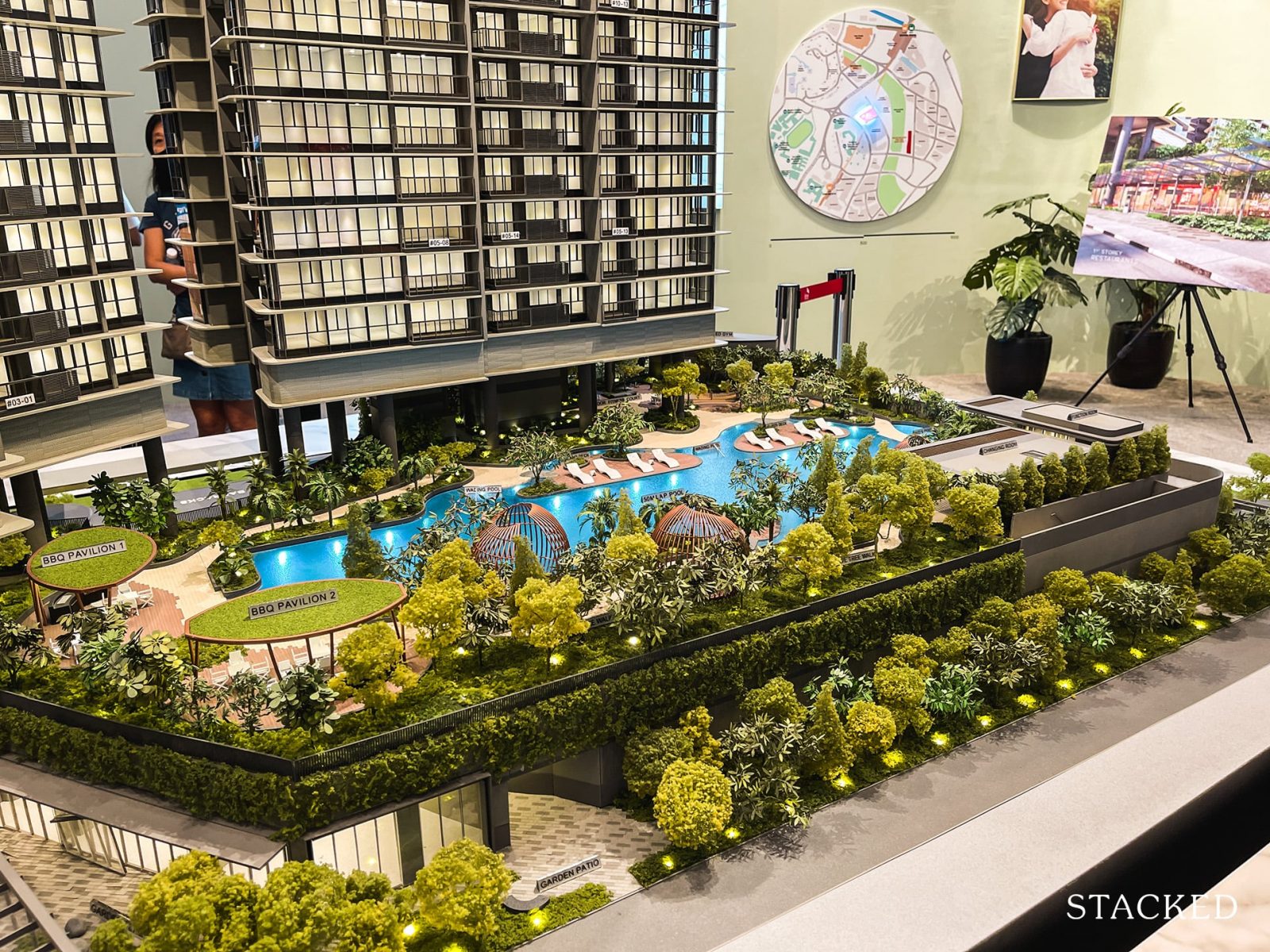
Next, it was a newly completed home. As a sub-sale purchase, they could move in relatively soon, while enjoying a recently completed unit as its first occupants. Moreover, the layout aligned with the next phase of life they were planning. Whether it was future family expansion, the need for a home office, or simply wanting more breathing room, the additional bedroom offered flexibility that many earlier units they viewed did not bring to the table.
“They wanted their next move to feel meaningful,” Andrew said. “When the three-bedroom came up, it addressed many of the concerns we had identified throughout the search.”
But there were also trade-offs.
With sub-sale units, buyers lose the so-called competitive pricing that is typically associated with the early phases of developer sales. The unit also turned out to be pricier, stretching beyond the original $2 million budget.
The cost came to $2.29 million and was at the upper limit of the couple’s affordability.
But the couple’s perspective had evolved by that time. After numerous viewings, they had come to appreciate that a three-bedder at this high-but-manageable price point was a rarity given the prices and unit sizes in the new launch market.
Since they also intended to hold on to the unit for a long time, they were comfortable accepting a relatively higher entry price for the unit. Within roughly two to three weeks of selling their flat, they had exercised the option for the three-bedroom unit.
Final Thoughts
The start of the upgrading journey for most buyers tends to focus on their budget. Price is the easiest initial starting point, and the most immediate concern for buyers moving from an HDB flat into private property.
But as this couple discovered, affordability is often only the first layer of the decision.
When it comes to home ownership, other fundamental issues arise like how much space still feels comfortable a decade later, or whether the next home has the flexibility to accommodate a growing family.
In this couple’s case, the eventual answer was not the cheapest option. Instead, it was the property that came closest to preserving liveability, while still moving them forward into the next stage of home ownership.
“For many first-time homebuyers, there’s a tendency to stick to one price point at first. But once they see and experience how much difference the price gap can make, the decision often changes,” says Andrew, adding that it is a common turning point for first-time upgraders.
For this couple, multiple viewings provided the clarity to move decisively. If they had not seen the compromises they would have had to make in terms of available and affordable two-bedroom units, they likely would have taken too long, or perhaps rejected, the three-bedroom unit at One-North at Eden.
The couple were able to secure the right home because they stayed flexible and were willing to do the work of seeing and experiencing the alternatives in detail.



0 Comments