


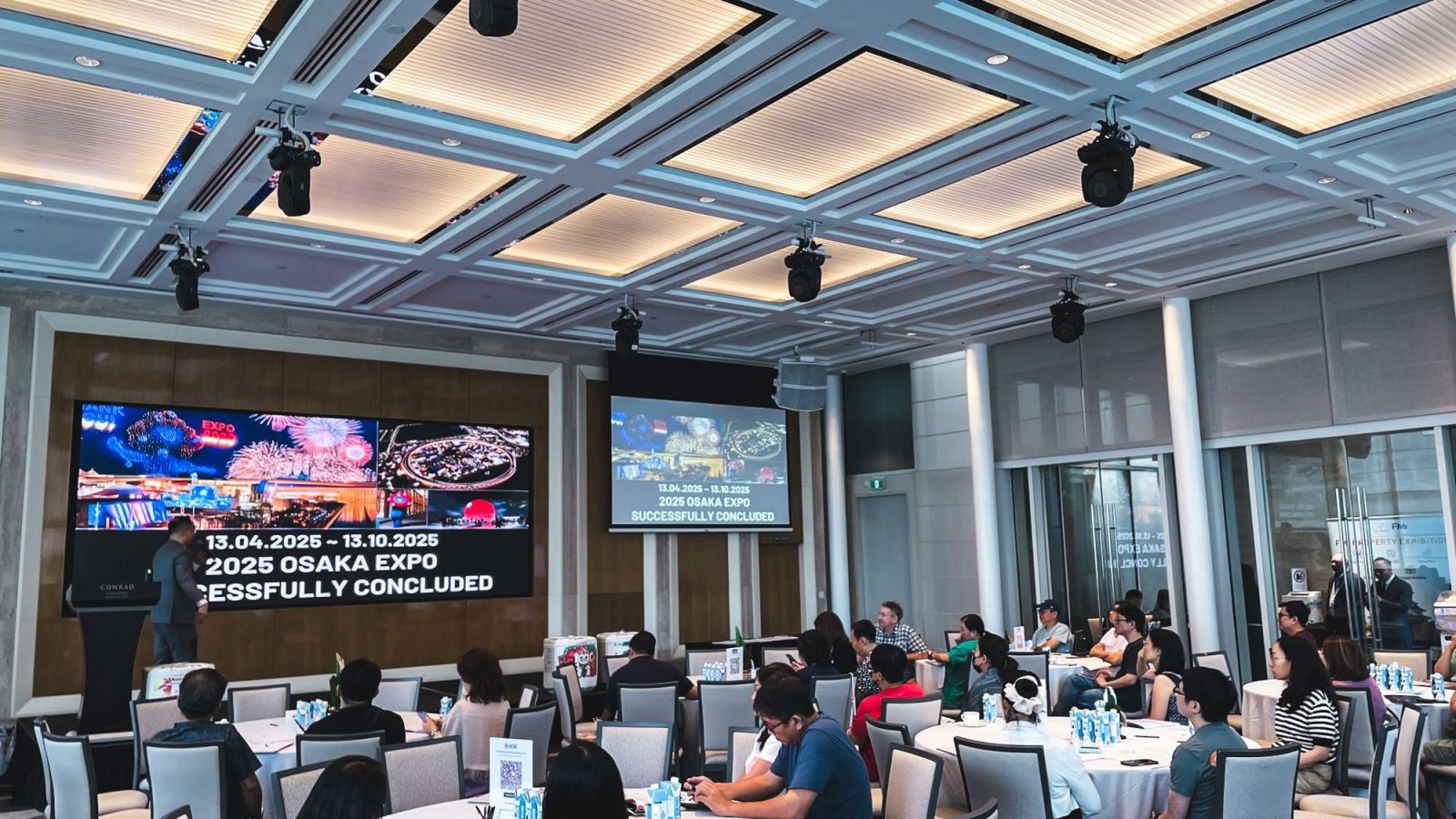
Over the weekend of April 11 and 12, I attended a Japanese property event at the Conrad Singapore Marina Bay, which was organised by Singapore-based international property agency and consultancy FM Investment (FMI).
Founded by real estate veteran Amous Lee in 2015, the company undertakes development and investment projects, and is a turn-key developer that builds and markets its own properties with Japanese stakeholders.
While the highlight of the show were the numerous projects marketed by FMI, I felt that it was the company’s extensive ecosystem that stole some of the limelight from the properties they’re selling.
Most firms and agencies that market overseas properties, the engagement usually ends when you close the deal. In my experience, you often hope that’s the last conversation you have with them since anything else probably involves complaints.
While FMI showcased its property offerings in Japan, what stood out the most to me was the extensive, full-service ecosystem they’ve built. Beyond just selling the units, FMI also manages property in Japan which covers their own app development, to pick-ups from the airport, to laundry, and more.
If you’ve tried managing an overseas investment property, you’ll probably know the support system that you need is a lot more extensive than it initially appears, even for a small portfolio with a one- or two-bedder unit.
FMI and the recent pivot to Osaka
Helmed by Lee, who is an industry veteran with over 26 years of experience in international property markets including at Knight Frank, FMI manages a portfolio of more than 50 projects across the country.
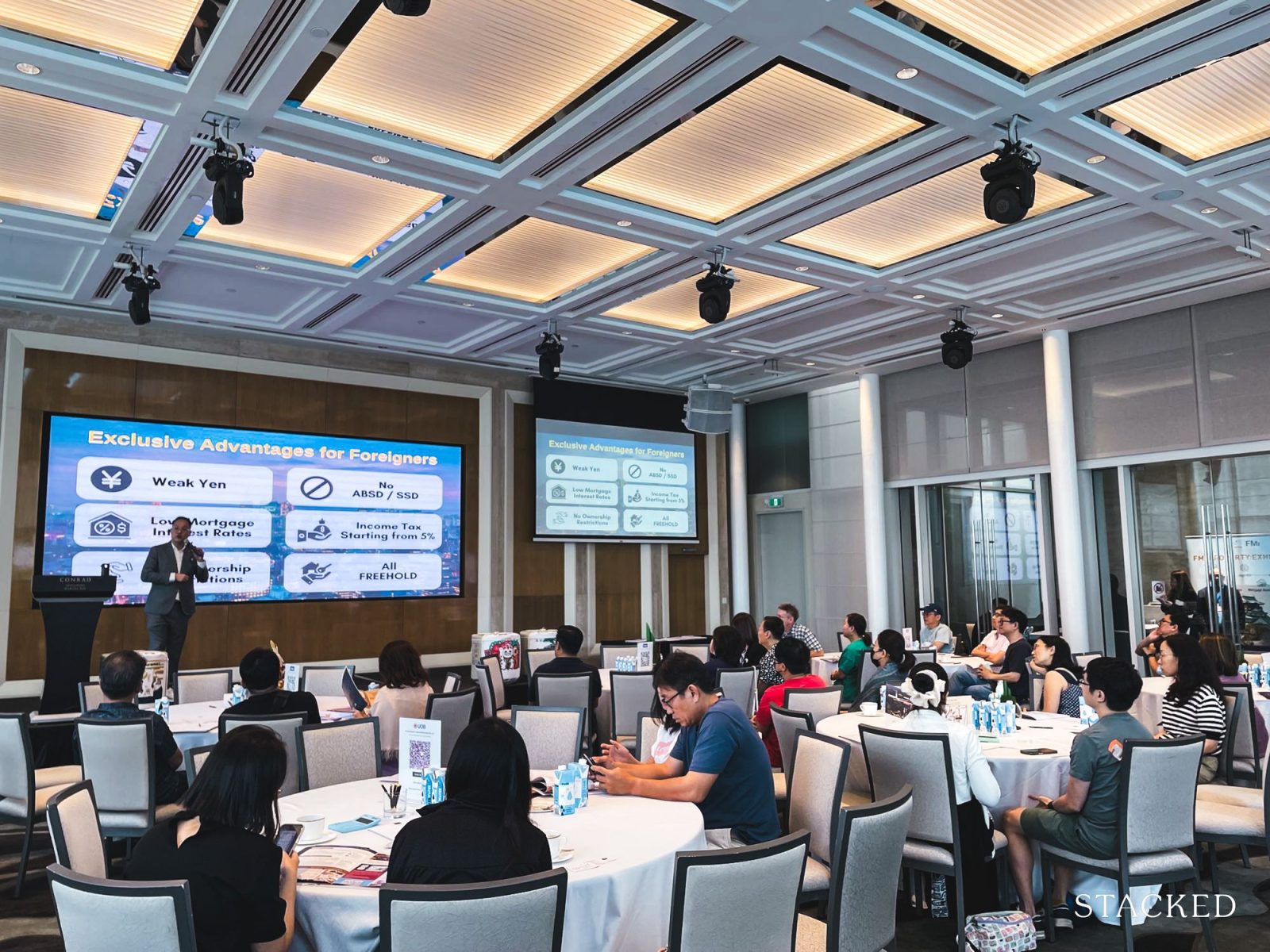
While the firm initially started marketing properties in Tokyo, its focus has shifted in recent years towards Osaka. This pivot reflects broader market trends. In a conversation with Lee, he noted that Tokyo has seen significant price increases, with gross rental yields now averaging around 3.5%.
(For the record, that’s the gross rental yield we tend to see in Singapore as well. So if that’s all you’re getting, then it might not make much sense to venture abroad as well.)
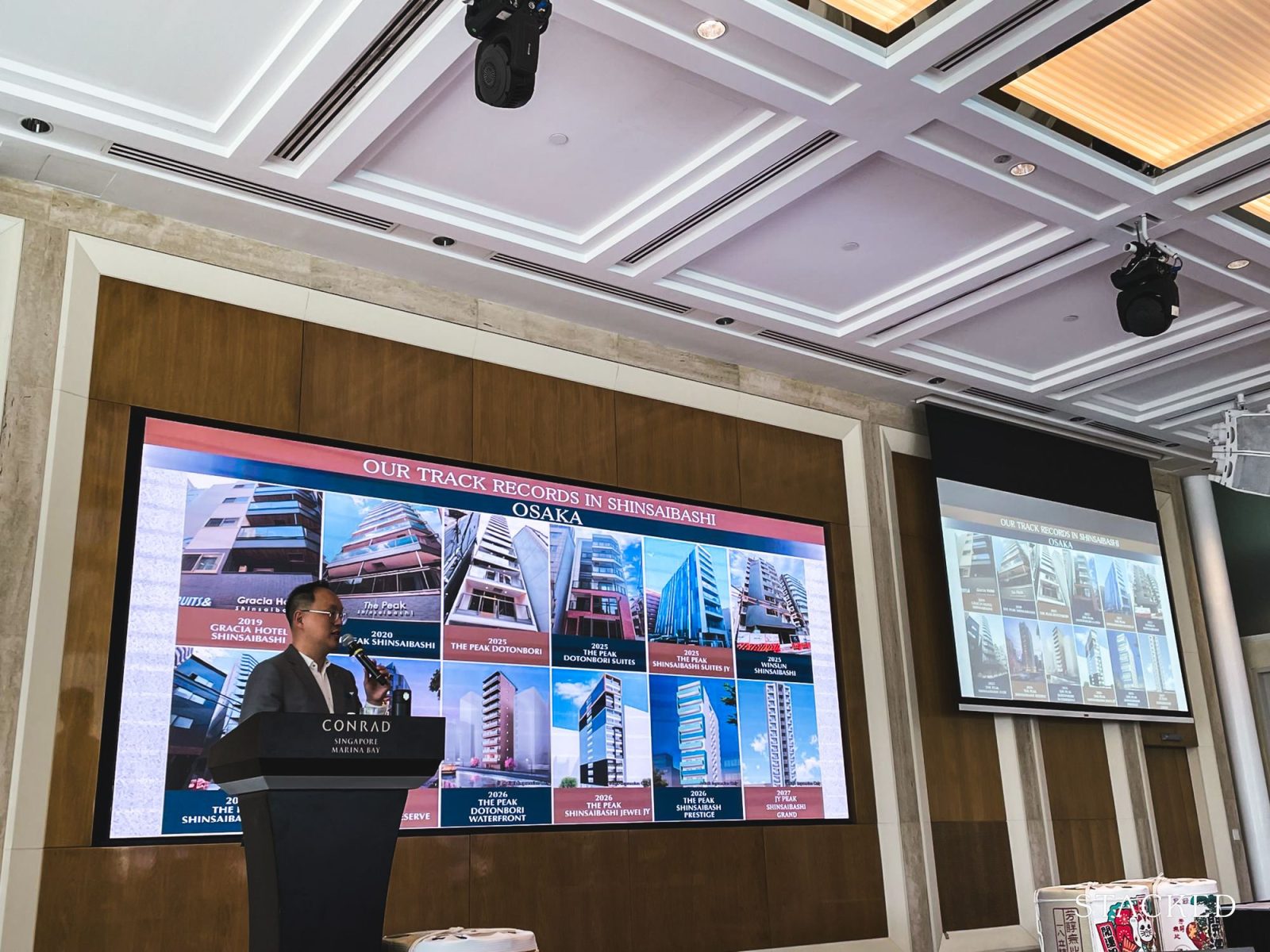
Osaka, by contrast, offers a different opportunity. Entry prices are generally lower, while rental yields remain comparatively higher. Coupled with developments such as an upcoming integrated resort and casino, there seems to be more runway for property prices there to grow in the coming years.
This is where FMI’s current slate of projects fits in.
The current jewel of FMI’s offerings in Osaka is The Peak Shinsaibashi Tsuki. This is located at 1 Chome-11-30, Shimanouchi (Chuo Ward), which is about as central as you can get in Osaka. This 92-unit project is within walking distance of Shinsaibashi Station, a key interchange that connects multiple major lines.
Typical unit sizes are in the range of around 300 to 600+ sq ft, in one- and two-bedder configurations. The development also includes facilities that are not usually seen among properties in that area, such as a 24-hour gym and allocated car park spaces - a relative luxury in crowded Osaka.
The inclusion of the 24-hr gym is symbolic of the attention to practical details, which seems to be the spine behind FMI’s success so far. For foreigners in Japan, going to the gym can be a friction point - many gyms in Japan require separate rental of shoes or apparel, and navigating sign-ups or usage can be difficult if you don’t speak Japanese. Having a gym that you can just stroll down to, in the comfort of your own sneakers and tracksuit, is more than a small convenience.
While The Peak Shinsaibashi Tsuki is positioned as the company’s flagship property, FMI’s broader offering in Japan includes projects that lean more toward yield, such as The Peak Namba Minami Reserve.
Located at Shikitsuhigashi in Osaka’s Naniwa Ward, the project sits within walking distance of multiple stations, including Imamiya Ebisu and Daikokucho. These provide access to several major lines such as the Nankai Koya Line and Midosuji Line, allowing quick connectivity to key areas like Namba and Shinsaibashi.
In terms of positioning, Namba Minami sits just outside the most centrally located districts, but remains well connected. This is reflected in its pricing and yield profile. Units range from around 269 to 556 sq ft, and the project claims owners could reap yields of up to around 5%.
Where the ecosystem comes in
The properties are great, to be sure. But the standout is FMI’s ecosystem, in particular their property management arm, Chief of Homes, and their in-house platform, the OKINI app. For owners, the app is virtually a landlord’s staff, providing:
- monthly rental reports
- booking visibility
- maintenance updates
- notifications on guest activity
For tenants or short-term guests, bookings can be made through the app or external platforms. I noticed that additional services such as airport transfers or local recommendations are integrated into the app as well.
Behind the scenes, this is supported by FMI’s own operational setup, which brings together in-house cleaning and linen services, guest handling and check-ins, and even AI-assisted pricing solutions.
Rather than setting a fixed rental rate, prices are adjusted dynamically based on demand conditions. This includes factors such as nearby accommodation rates, seasonal trends, and even external indicators like flight prices into Osaka.
Now this isn’t new and it’s the same thing you see in hotels and short-term rental platforms. But the consideration here is toward owners - it allows you to maximise rental returns, with less manual effort - and for a portfolio of multiple units, manual pricing is impractical.
All of this emerged out of dealing with the real friction points that absentee landlords experience
Previously, rental reports for landlords were generated the traditional way: having spreadsheets emailed to individual owners. But while this was viable for around 50 to 100 units, FMI is now dealing with 700 units and growing, hence the incorporation of such data services into the app, says Lee.
As for laundry, it wasn’t something FMI intended to handle as well. But when laundry was outsourced to third parties, the results were inconsistent: linen sometimes ended up in a central washing facility, without consideration for issues like mixing old and new linen. Also, if the sheets weren’t clean, the complaints ended up reflecting on FMI.
The airport concierge service, like the gym, also caters well to tenants who don’t speak Japanese, and are totally new to the country. Japan’s rail network is notoriously complex, and DIY landlords can expect plenty of calls from new arrivals struggling to get to the property.
So the development of Chief of Homes and the OKINI app is the result of over a decade of FMI’s accumulated experience in Japan. Many aspects of the ecosystem don’t appear intentional, but emerged out of actual necessity.
Help with financing and tax issues
Beyond the app and property management, FMI also provides assistance with taxes through access to tax advisory support, as well as assistance with reclaiming withholding tax, and navigating the filing process.
This is something most other marketing agencies and developers don’t offer. While these are services that can be sourced independently, having them integrated into the same ecosystem makes the process much quicker: the tax advisory service, the developer, and the property manager are under the same umbrella.
FMI also has staff on hand to assist with financing, which is one of the main hurdles faced by overseas investors (as an aside, I was able to find that interest rates from a Japanese bank are around 2.7% per annum as of 2026.)
Read our other article about investing in Japan: This Singaporean Has Been Building Property In Japan Since 2015 — Here’s What He Says Investors Should Know.
For landlords who have not invested overseas before, FMI’s full service system doubles as a reference point.
By seeing what’s tracked and automated, it becomes clearer what’s actually required to run an overseas rental unit. From cleaning issues to guest handling and bookings,it’s an accidental primer on what to brace for when investing abroad.
The added services become particularly important in markets with language barriers, and where a higher level of service quality is expected. If this is what we see going forward however, then overseas investing goes beyond just the choice of property: it’s also about the right choice of system for managing the property portfolio.
To be clear, FMI’s property management offerings are not mandatory: you can take the DIY route, and simply purchase a unit and rent it out yourself, handling the various issues. That may suit landlords who still prefer a hands-on approach. But for most investors, full service suites like FMI are the likely way forward; especially as property portfolios grow, and tenant expectations rise.
You can visit the FMI Japan site here, and for updates on their next expo.



0 Comments