

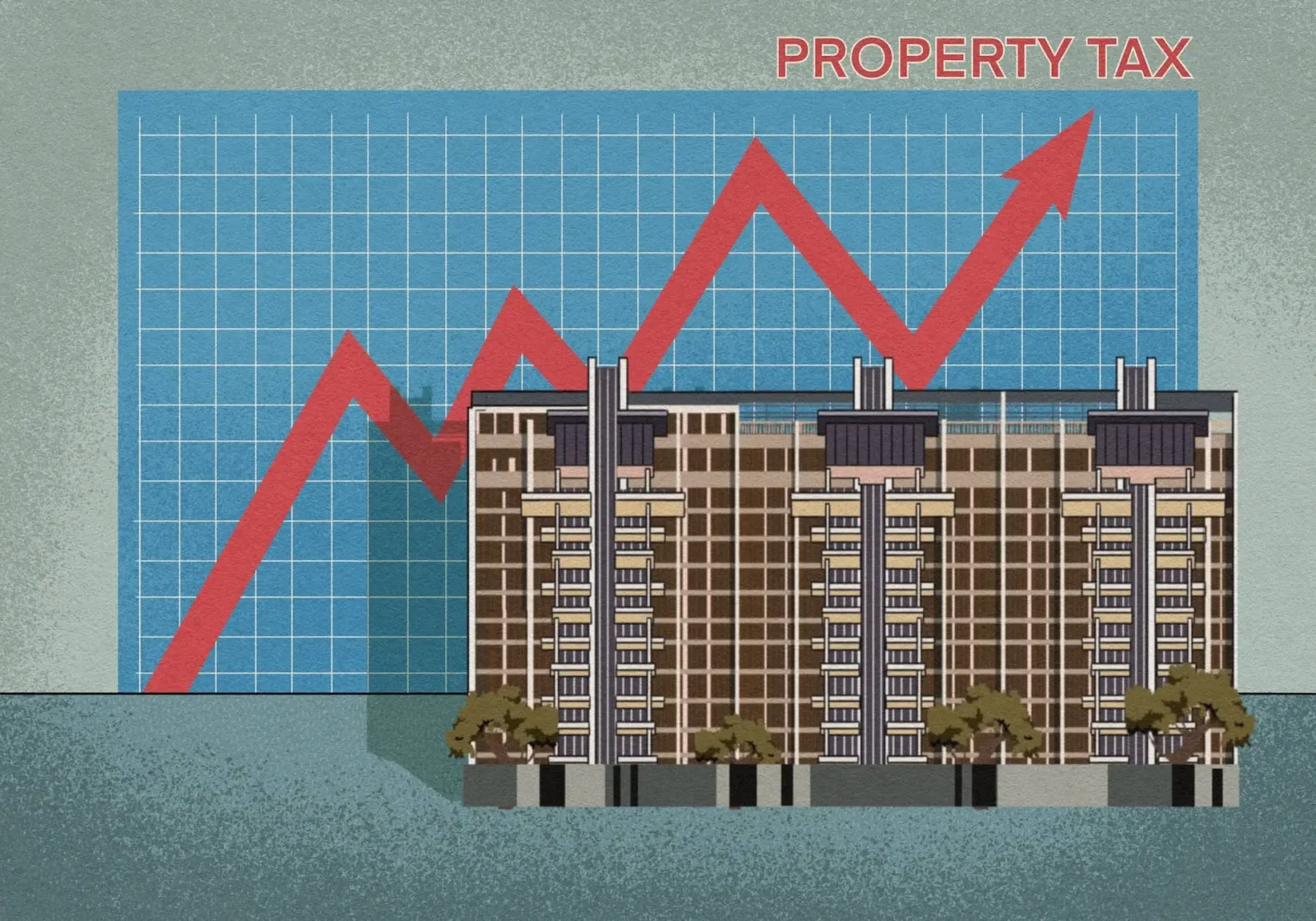
Everything is going up in price, so it comes as little surprise that property taxes are too. Rising Annual Value (AV) will apply to most homes across the board; but it’s the higher-end properties that will see the biggest impact. It may also bear consequences for tenants, as landlords may pass down the costs. Here are the possible consequences ahead:
Yield tables and rent charts are useful reference points, but the units that actually rent well and continue to attract tenants over time aren't always the ones at the top of a yield table.
The more important question is whether the investment still makes sense once you factor in holding costs, vacancy and your long-term plans. That's often where buyers find a second opinion most valuable.
Over time, that's also why we decided to work with agents who shared the same data-driven and advisory-led approach behind our editorial, consultants who could help readers think through decisions more objectively, rather than simply push transactions.
Today, the team has worked with more than 2,000 clients across over $5B in property transactions.
What’s the rise in property taxes like?
For owner-occupied properties, these were the tax rates in 2023:
| Annual Value ($) | Effective 1 Jan 2023 | Property Tax Payable |
| First $8,000 Next $22,000 | 0% 4% | $0 $880 |
| First $30,000 Next $10,000 | - 5% | $880 $500 |
| First $40,000 Next $15,000 | - 7% | $1,380 $1,050 |
| First $55,000 Next $15,000 | - 10% | $2,430 $1,500 |
| First $70,000 Next $15,000 | - 14% | $3,930 $2,100 |
| First $85,000 Next $15,000 | - 18% | $6,030 $2,700 |
| First $100,000 Above $100,000 | - 23% | $8,730 |
As of 2024, this has increased to the following:
| Annual Value ($) | Effective 1 Jan 2024 | Property Tax Payable |
| First $8,000 Next $22,000 | 0% 4% | $0 $880 |
| First $30,000 Next $10,000 | - 6% | $880 $600 |
| First $40,000 Next $15,000 | - 10% | $1,480 $1,500 |
| First $55,000 Next $15,000 | - 14% | $2,980 $2,100 |
| First $70,000 Next $15,000 | - 20% | $5,080 $3,000 |
| First $85,000 Next $15,000 | - 26% | $8,080 $3,900 |
| First $100,000 Above $100,000 | - 32% | $11,980 |
For non-owner occupied properties, here’s the property tax rate last year:
| Annual Value ($) | Effective 1 Jan 2023 | Property Tax Payable |
| First 30,000 Next $15,000 | 11% 16% | $3,300 $2,400 |
| First $45,000 Next $15,000 | - 21% | $5,700 $3,150 |
| First $60,000 Above $60,000 | - 27% | $8,850 |
And here’s the property tax rate we’ll see from 1st January 2024:
| Annual Value ($) | Effective 1 Jan 2024 | Property Tax Payable |
| First $30,000 Next $15,000 | 12% 20% | $3,600 $3,000 |
| First $45,000 Next $15,000 | - 28% | $6,600 $4,200 |
| First $60,000 Above $60,000 | - 36% | $10,800 |
As you can see, it’s mainly the properties with a higher AV that are affected. But this is where rate increases - such as due to the rise in property values and rental rates the past year - may have an impact. The tax increases are not unexpected by the way, as they have been rolled out since the announcement of Budget 2022.
The assigned AV is an estimation of your home’s rental value, in an unfurnished state, minus its maintenance fees. You can find the AV of your specific property here.
In general, most HDB properties will have an AV of under $12,000, while most condos will have an AV of about $20,000 to $30,000. Anything higher than that is usually (but not always) a landed property of some sort.
The government is quite generous in this regard, as estimated AV is often below the actual rental rate. It’s unlikely, for instance, that even the smallest bungalow or semi-detached house would cost as little as $60,000 a year to rent in whole; and yet we may see such properties with an even lower AV than that.
Mainly a concern to investors
For owner-occupiers of HDB flats, these property tax increases are trivial (likely to stay under $30 a month, even for larger executive flats.) However, the increase can matter to landlords, who are renting out private properties.
Take, for instance, a rented-out condo unit that has its annual value bumped from $40,000 to $45,000. In the previous year, at an annual value of $40,000, the landlord would have paid a property tax of $4,900.
Most realtors, however, opined that it would be maintenance rates and interest rates, and not so much property taxes, that would discourage investment. However, they did tell us that the combination of all three would make it difficult for landlords to lower rental rates further, even as rising supply presents tenants with more options.
If the AV reaches $45,000 in 2024, this amount is increased to $6,600, translating to just over $141 a month in added costs. Not a seemingly huge amount in itself, but keep in mind that the increase follows rising interest rates, as well as rising condo maintenance costs.
One realtor also told us that there’s natural “compensation” for the rising property tax, if we consider how AV is calculated. He says:
“AV is based on current market rates. If your property value is going up, and your location is improving, then AV and property tax also go up. But I would take it as a good sign. That means your area is being upgraded, people now pay more to live there. If now there is an MRT station at your doorstep, your AV and tax may go up, but the increase in your rent and resale gains easily make up for that.”
We are getting a one-time rebate in 2024
Just for the coming year only, there’s a one-time property tax rebate. Unfortunately, it’s for owner-occupied properties only. The amounts are as follows:
| 1 & 2-room flat | 3-room flat | 4-room flat | 5-room flat | Executive HDB | Private property |
| 100% (You pay nothing) | 70% | 50% | 40% | 30% | 15%; capped at $1,000 |
This isn’t a huge amount, but every little bit helps. 2024 is shaping up to be an expensive year, and some homeowners are still adapting to their higher home loan rates.
Yield tables and rent charts are useful reference points, but the units that actually rent well through a cycle, after vacancy, holding costs, and your intended exit, aren't always the ones at the top of the list.
If you'd like to discuss how this applies to your own circumstances, you can reach out for a one-to-one consultation here.
And if you simply have a question or want to share a thought, feel free to write to us at stories@stackedhomes.com. We read every message.



0 Comments