

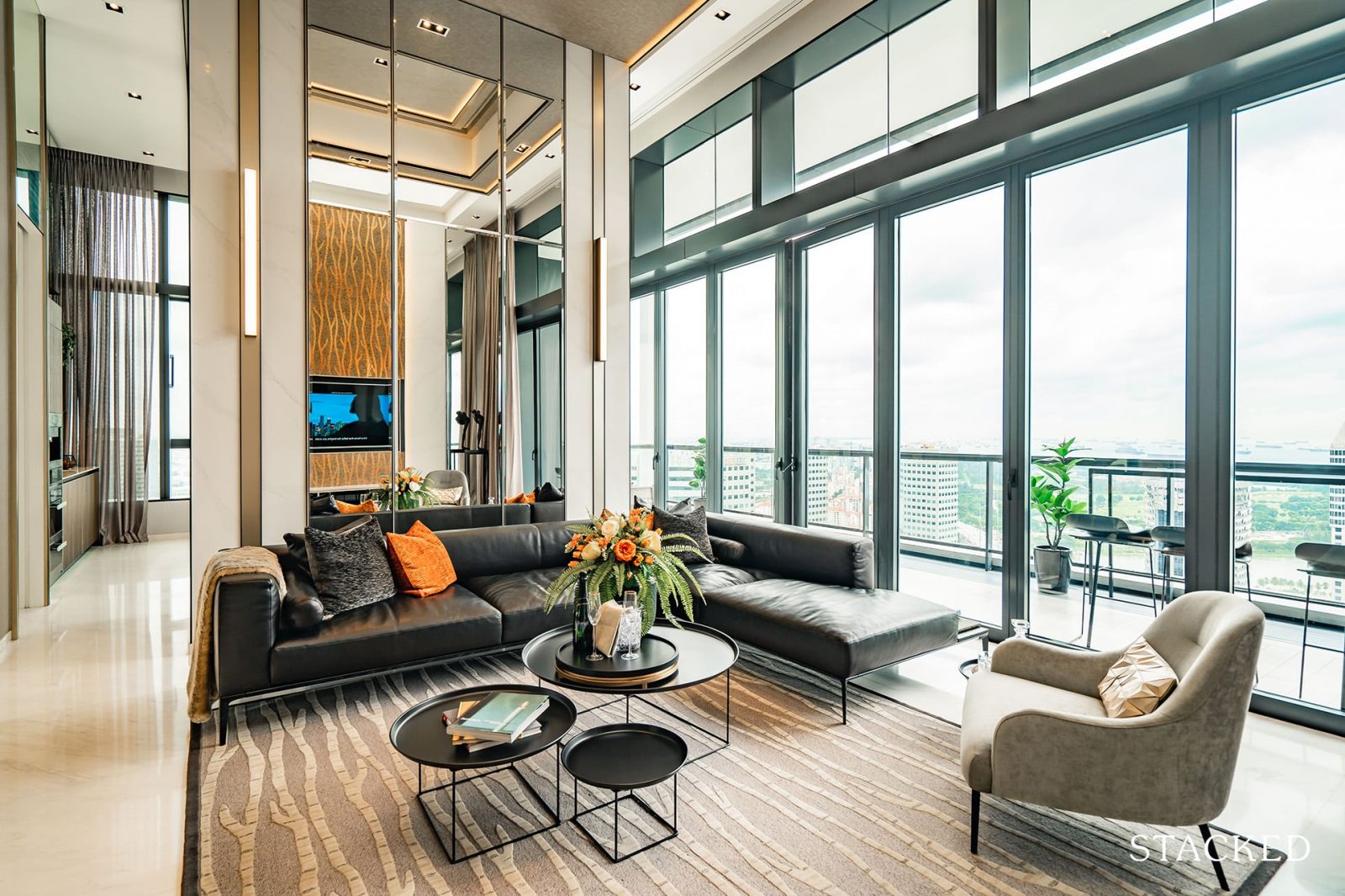
In the recent budget 2022 announcement, the government said it would raise property taxes starting next year. While the increment isn’t significant for most homeowners, it adds to a series of mounting costs for investors and landlords; and we expect IRAS is going to see a few more appeals regarding Annual Value (AV). Here’s the rundown on the likely effect:
Table Of Contents
The challenge for many buyers today isn't access to information.
It's interpreting that information in a way that makes sense for their finances, goals, and stage of life.
Over time, that's also why we decided to work with agents who shared the same data-driven and advisory-led approach behind our editorial, consultants who could help readers think through decisions more objectively, rather than simply push transactions.
Today, the team has worked with more than 2,000 clients across over $5B in property transactions.
How high are the new property taxes?
Before looking at the new property tax tiers, here's a look at the existing property tax rates for owner-occupied properties since 2015:
| Annual Value ($) | Effective 1 Jan 2015 | Property Tax Payable |
|---|---|---|
| First $8,000 Next $47,000 | 0% 4% | $0 $1,880 |
| First $55,000 Next $15,000 | - 6% | $1,880 $ 900 |
| First $70,000 Next $15,000 | - 8% | $2,780 $1,200 |
| First $85,000 Next $15,000 | - 10% | $3,980 $1,500 |
| First $100,000 Next $15,000 | - 12% | $5,480 $1,800 |
| First $115,000 Next $15,000 | - 14% | $7,280 $2,100 |
| First $130,000 Above $130,000 | - 16% | $9,380 |
Changes from 2023 and 2024 include both tiers as well as rates:
| Annual Value | Rate as of 1st Jan 2023 | Rate as of 1st Jan 2024 |
| First $8,000 Next $22,000 | 0% 4% | 0% 4% |
| First $30,000 Next $10,000 | - 5% | - 6% |
| First $40,000 Next $15,000 | - 7% | - 10% |
| First $55,000 Next $15,000 | - 10% | - 14% |
| First $70,000 Next $15,000 | - 14% | - 20% |
| First $85,000 Next $15,000 | - 18% | - 26% |
| First $100,000 Above $100,000 | - 23% | - 32% |
Here's what an actual property tax calculation looks like based on the old and new system:
| Annual Value | 2015 - 2022 | 2023 | 2024 |
| $10,000 | $80 | $80 | $80 |
| $20,000 | $480 | $480 | $480 |
| $30,000 | $880 | $880 | $880 |
| $40,000 | $1,280 | $1,380 | $1,480 |
| $50,000 | $1,680 | $2,080 | $2,480 |
| $60,000 | $2,180 | $2,930 | $3,680 |
| $70,000 | $2,780 | $3,930 | $5,080 |
| $80,000 | $3,580 | $5,330 | $7,080 |
| $90,000 | $4,480 | $6,930 | $9,380 |
| $100,000 | $5,480 | $8,730 | $11,980 |
| $110,000 | $6,680 | $11,030 | $15,180 |
| $120,000 | $7,980 | $13,330 | $18,380 |
| $130,000 | $9,380 | $15,630 | $21,580 |
| $140,000 | $10,980 | $17,930 | $24,780 |
| $150,000 | $12,580 | $20,230 | $27,980 |
For Non-Owner-Occupied residential properties, the current tax rates are as follows:
| Annual Value ($) | Effective 1 Jan 2015 | Property Tax Payable |
|---|---|---|
| First 30,000 Next $15,000 | 10% 12% | $3,000 $1,800 |
| First $45,000 Next $15,000 | - 14% | $4,800 $2,100 |
| First $60,000 Next $15,000 | - 16% | $6,900 $2,400 |
| First $75,000 Next $15,000 | - 18% | $9,300 $2,700 |
| First $90,000 Above $90,000 | - 20% | $12,000 |
From 2023 onward, this is reduced to just three tiers:
| Tax rate as of 1st Jan 2023 | Tax rate as of 1st Jan 2024 | |
| First 30,000 Next $15,000 | 11% 16% | 12% 20% |
| First $45,000 Next $15,000 | - 21% | - 28% |
| First $60,000 Above $60,000 | - 27% | - 36% |
And here's what the actual property tax would look like based on the old and new system:
| Annual Value | 2015 - 2022 | 2023 | 2024 |
| $10,000 | $1,000 | $1,100 | $1,200 |
| $20,000 | $2,000 | $2,200 | $2,400 |
| $30,000 | $3,000 | $3,300 | $3,600 |
| $40,000 | $4,200 | $4,900 | $5,600 |
| $50,000 | $5,500 | $6,750 | $8,000 |
| $60,000 | $6,900 | $8,850 | $10,800 |
| $70,000 | $8,500 | $11,550 | $14,400 |
| $80,000 | $10,200 | $14,250 | $18,000 |
| $90,000 | $12,000 | $16,950 | $21,600 |
| $100,000 | $14,000 | $19,650 | $25,200 |
| $110,000 | $16,000 | $22,350 | $28,800 |
| $120,000 | $18,000 | $25,050 | $32,400 |
| $130,000 | $20,000 | $27,750 | $36,000 |
| $140,000 | $22,000 | $30,450 | $39,600 |
| $150,000 | $24,000 | $33,150 | $43,200 |
The Annual Value (AV) is based on estimated annual rental income, as determined by IRAS. Note that the AV is not related to actual rental income, which can be significantly higher or lower.
The majority of homes in Singapore will not even reach an AV of $30,000. The AV of the average HDB flat is below $10,000, so none of this is really relevant to flat owners.
Even among private properties, most mass-market condos have an AV of around $22,000 to $24,000. Most properties that exceed an AV of $30,000 are upmarket condos, prime region developments, landed homes, etc.
As such, the vast majority of Singaporean home buyers probably won’t notice any difference. Even among landlords, those renting out mass-market condos will probably see a bump of just one or two percentage points.
How will the taxes affect the property market?
- Landlords will likely push for higher rent to compensate
- Not much impact at both the highest and lowest tiers
- Investors may shift to more mass-market assets
- Most of the impact is on landed homes
1. Landlords will likely push for higher rent to compensate
Assuming the rental market remains at a peak (likely for 2023, but we don’t whether the momentum will remain till 2024), landlords will likely raise rates. Of course, this is more subject to supply and demand than anything else, but it's easier to pull off now because of the high demand.
We have to stress that this isn’t about property taxes alone: landlords are also likely to experience interest rate hikes in the coming year, as the US normalises its economy after Covid. It’s a combination of rising mortgage rates, along with rising taxes, that are likely to push up rental rates.
For tenants, this is just one more factor that suggests it’s vital to lock in a good rate; right now if you can.
One relator opined that higher taxes could cause a “bandwagon” effect, where even unaffected landlords would raise rates:
“Once someone raises their rental because of the higher tax, there’s a knock-on effect; others will see and also raise their rental. The raise may not even correspond to the increase in tax, or have anything to do with it.”
2. Not much impact at both the highest and lowest tiers
On the surface, it seems that property tax hikes are most devastating to sellers in the high-end market; such as those selling bungalows, and penthouses, or renting out such units. Surprisingly, realtors who work with such niche properties say sellers and landlords remain unfazed.
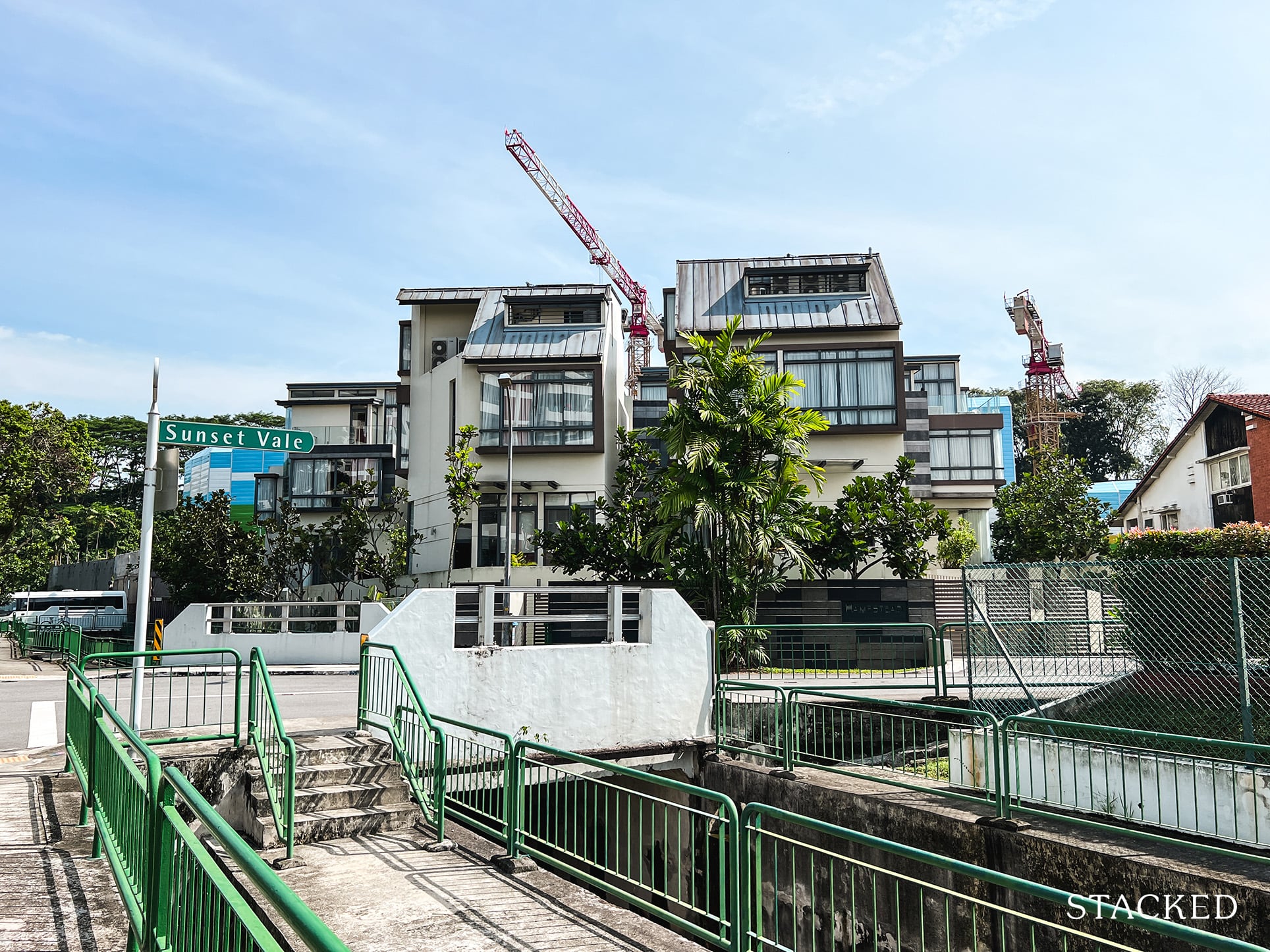
One realtor noted that:
“Most landed homes are for own-stay and are not bought to be rented out anyway; and such properties are purchased out of appreciation for their location and uniqueness. Higher property tax, just like higher ABSD, is not a deterrent to buyers (referring to buyers of luxury properties – Ed.).”
Another realtor pointed out that taxes in Singapore are still low, in a regional context:
“Even with the fair changes, Singapore still has no gains tax, no inheritance tax, and a proven history of asset appreciation; many buyers still feel it’s a low tax environment to other regional alternatives, and we have positive outlooks on sales going forward.”
As such, this may be a tax hike that isn’t a huge bother to either end of the spectrum. The average home buyer is unaffected, while the ones who can afford homes with an AV above $60,000 are too affluent to feel the pinch.
3. Investors may shift to more mass-market assets
Most mass-market condos will not cross an AV of $24,000 but some luxury units, such as penthouses in prime areas, may go past an AV of $30,000; and landed homes certainly can.
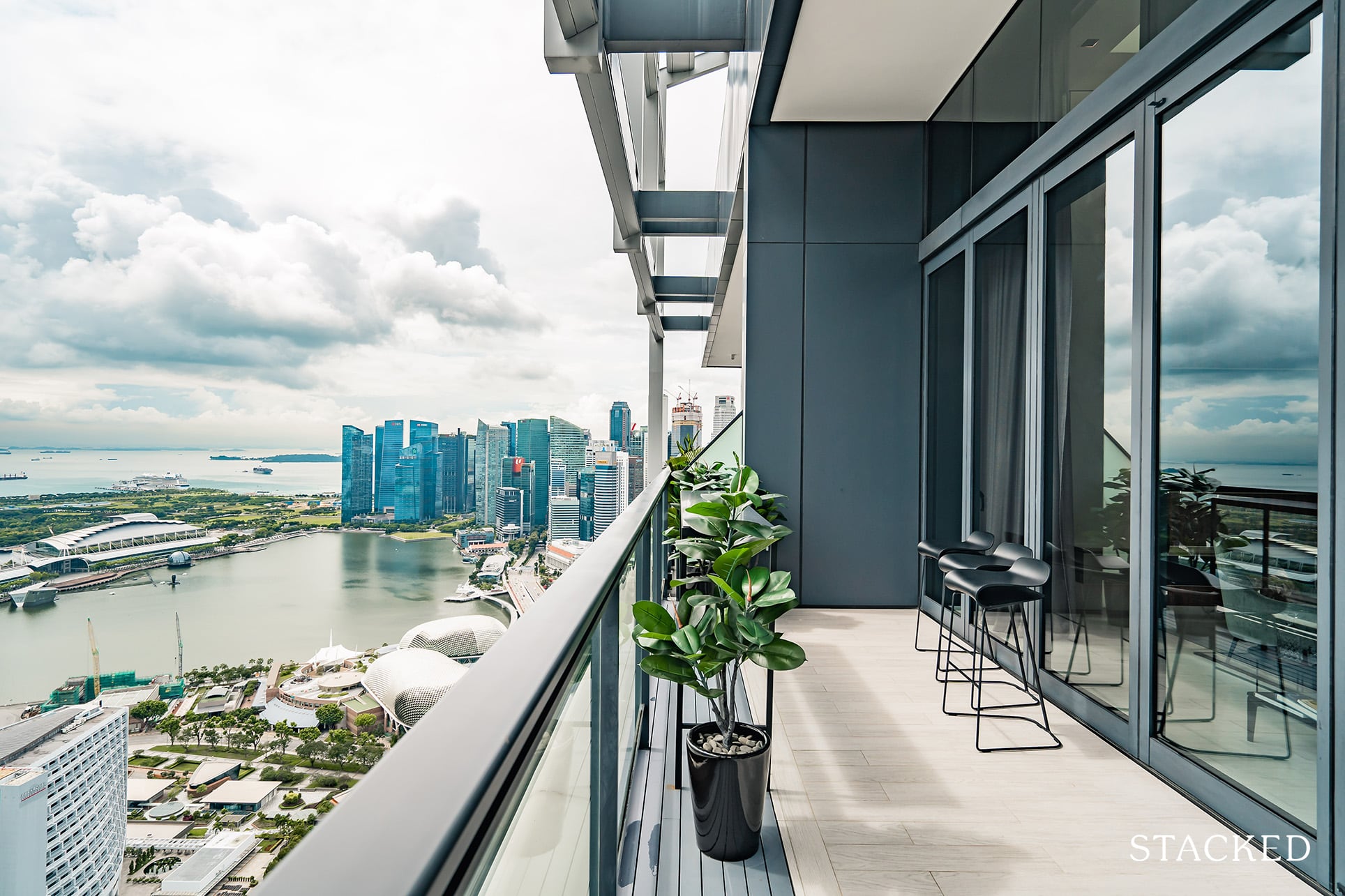
As investors are already coupled with higher ABSD since December last year, the combination of higher taxes and stamp duties may drive them toward the Rest of Central Region (RCR) or Outside of Central Region (OCR) in the coming years.
This is, however, contingent on how Covid-19 pans out. If there’s a returning influx of affluent expatriates in 2024, then higher property taxes may be a non-issue.
4. Most of the impact is on landed homes
Most properties that go past an AV of $30,000 tend to be in the landed category; as such, it’s the sellers and owners of these homes that bear the brunt.
Landed homes are already not a favourite choice for rental assets (the high-cost results in very low yields, compared to a condo). A higher property tax and more maintenance to take care of will further cement the issue.
As for pure owner-occupiers, we don’t think the wealthiest buyers are affected by the changes (see the realtors’ comments in point 2). However, a higher property tax could affect the upper-middle income group, such as those who were pondering houses with just above an AV of $30,000 – it does make for a tougher call between a mass-market terrace house, and a nice condo unit with lower AV.
Overall, the property tax increases come after a fair amount of time (they were last revised back in 2015), and will cause very little ruckus. The hike in GST, however, is another issue.
For more on property news as it impacts the Singapore real estate market, follow us on Stacked. You can also follow us for in-depth reviews of new and resale condos alike.
At Stacked, we like to look beyond the headlines and surface-level numbers, and focus on how things play out in the real world.
If you'd like to discuss how this applies to your own circumstances, you can reach out for a one-to-one consultation here.
And if you simply have a question or want to share a thought, feel free to write to us at stories@stackedhomes.com. We read every message.

3 Comments
Hey the Owner-occupied property tax rate for 2023/2024 looks wrong
Hello Ryan,
What would the Property Tax be for non-owner occupied property with current Annual Value of $99,600 be wef 1st Jan 2023 and 1st Jan 2024 respectively ?