














Project Case Study: Springleaf Residence
Client Details
- 36 years old
- Investment-focused buyer
- Second property purchase made with Stacked
- Financing via a private home loan
Buyer’s Brief
- Choosing another property after selling a unit at Penrose
- Seeking another new launch with upside potential
- The budget was around $1.7 million
- Preference for a three-bedroom unit with strong potential for resale returns
- Preferred projects with efficient layouts and good long-term demand
- Open to longer holding periods (medium term) if market conditions require it
Challenges She Faced
- Limited resale inventory within her budget
- Rising renovation costs, which make resale less attractive
- A crowded new launch pipeline at the time, making comparisons complicated
- Financing limits of around $1.2 million for the loan amount
- The usual challenge of project selection, ballot timing, and unit orientation for new launches
This case study is based on a recent consultation conducted by Alex (R057616Z), a property agent and partner property consultant with Stacked. This write-up walks through the key decisions, trade-offs, and market considerations involved, with insights that buyers and sellers may find useful.
So many readers write in because they're unsure what to do next, and don't know who to trust.
If this sounds familiar, we offer structured 1-to-1 consultations where we walk through your finances, goals, and market options objectively.
No obligation. Just clarity.
Learn more here.
Coming back into the property market after Penrose
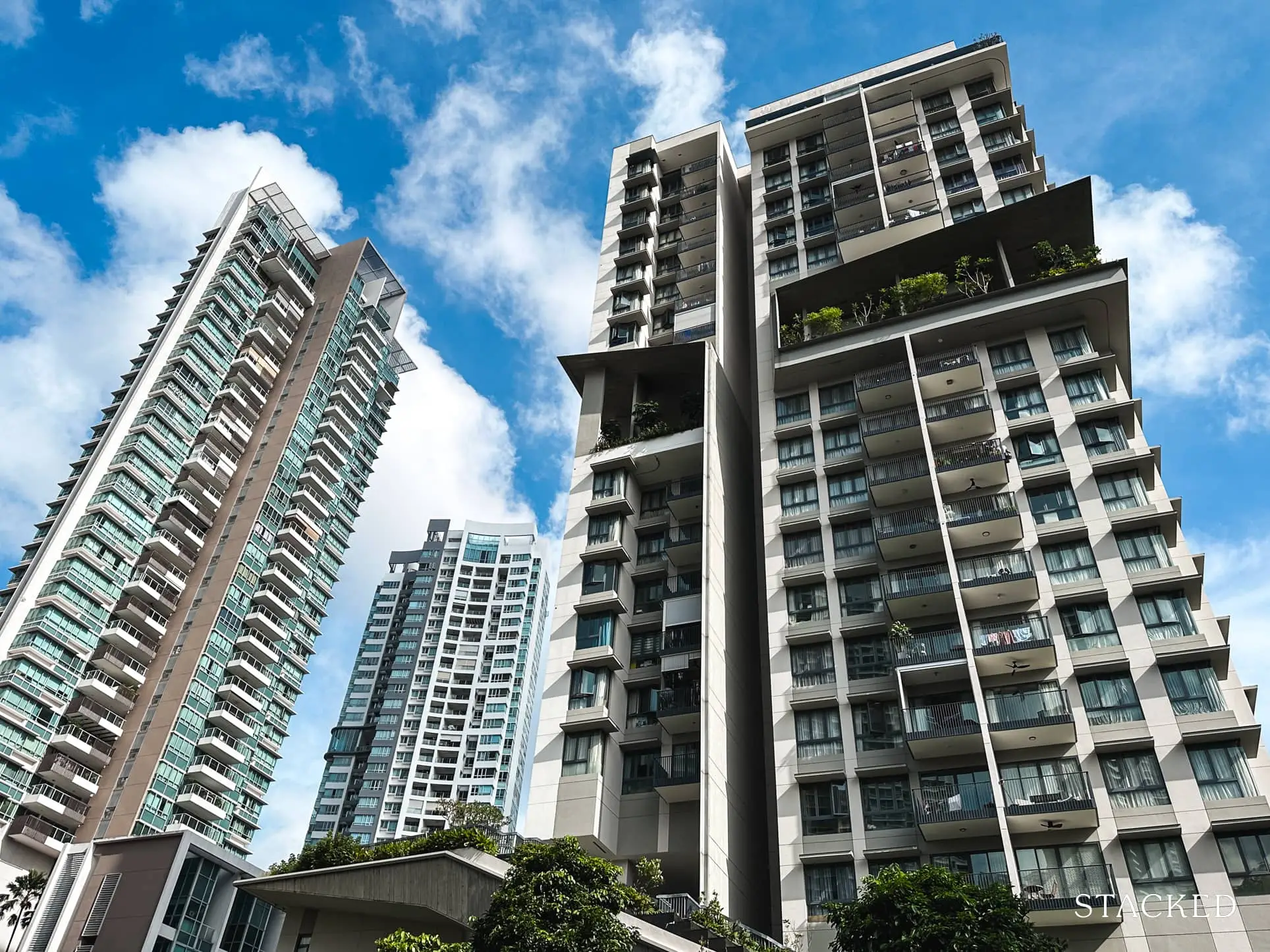
This client had previously worked with us to purchase a unit at Penrose, a 566-unit condominium on Sims Drive that was launched in 2020. Thus, when she called us again, it wasn’t a ‘first call’ scenario for us. We were already familiar with her approach to making property decisions, and this was a follow-up on the next step in her property investment plan.
This time, she was looking to redeploy the sale proceeds of her Penrose unit into her next investment. Based on our prior working relationship, we knew she preferred practical investments rather than speculative bets.
She was also in a strong position with the holding power to handle any market disruptions, and if necessary, she would be comfortable holding an asset for longer than expected before recycling the capital.
This is an important consideration, since holding power helps to mitigate some amount of risk when planning out your property investments.
Since there was already clarity in her goals, we agreed on a general property profile: the next purchase would be a three-bedroom unit around $1.7 million. This ensures depth in the pool of prospective future buyers, since many families – especially HDB upgraders – will look for at least a three-bedder unit when upgrading.
We also tried to find a unit that matched these criteria in a project with good long-term demand drivers, such as proximity to schools, and a layout that has perennial appeal to future buyers looking for a family home.
However, as we surveyed the market, this proved to be quite challenging
The three-bedder options within the $1.7 million price range were not as plentiful as they first appeared.
This was partly due to limited resale inventory. At the time, fewer people were selling due to rising replacement property costs. The introduction of higher ABSD, along with other factors like rising renovation costs, was causing sellers to hold back. Thus, if they couldn’t find a new property to upgrade into, there was no incentive for them to sell.
We also wondered if the updates to the GFA harmonisation framework might have been a factor in terms of distorting the perspective of $PSF prices, and could have made post-harmonisation projects appear both smaller and pricier (an illusion that we explain here).
While our client was open to resale or new launches, the narrow resale market turned our attention to new launches instead.
Moving into a very crowded new launch market
The new launch market at the time was the opposite of the resale market. It was jam-packed and we saw multiple new project launches over a relatively short time. Some of the developments entering the market back then were:
- Canberra Crescent Residences
- Springleaf Residence
- Promenade Peak
- River Green
- Upper House
And that was only the beginning. Subsequent project launches that were expected around that period included Penrith, Skye at Holland, and Faber Residences.
Realistically, though, only a handful of these projects fit the criteria set down by our client. For new launches in the Core Central Region (CCR), there was no chance that a three-bedder would be within our $1.7 million budget.
After an analysis of these new launches and their three-bedder price points, the two projects we ended up shortlisting were Canberra Crescent Residences and Springleaf Residence.
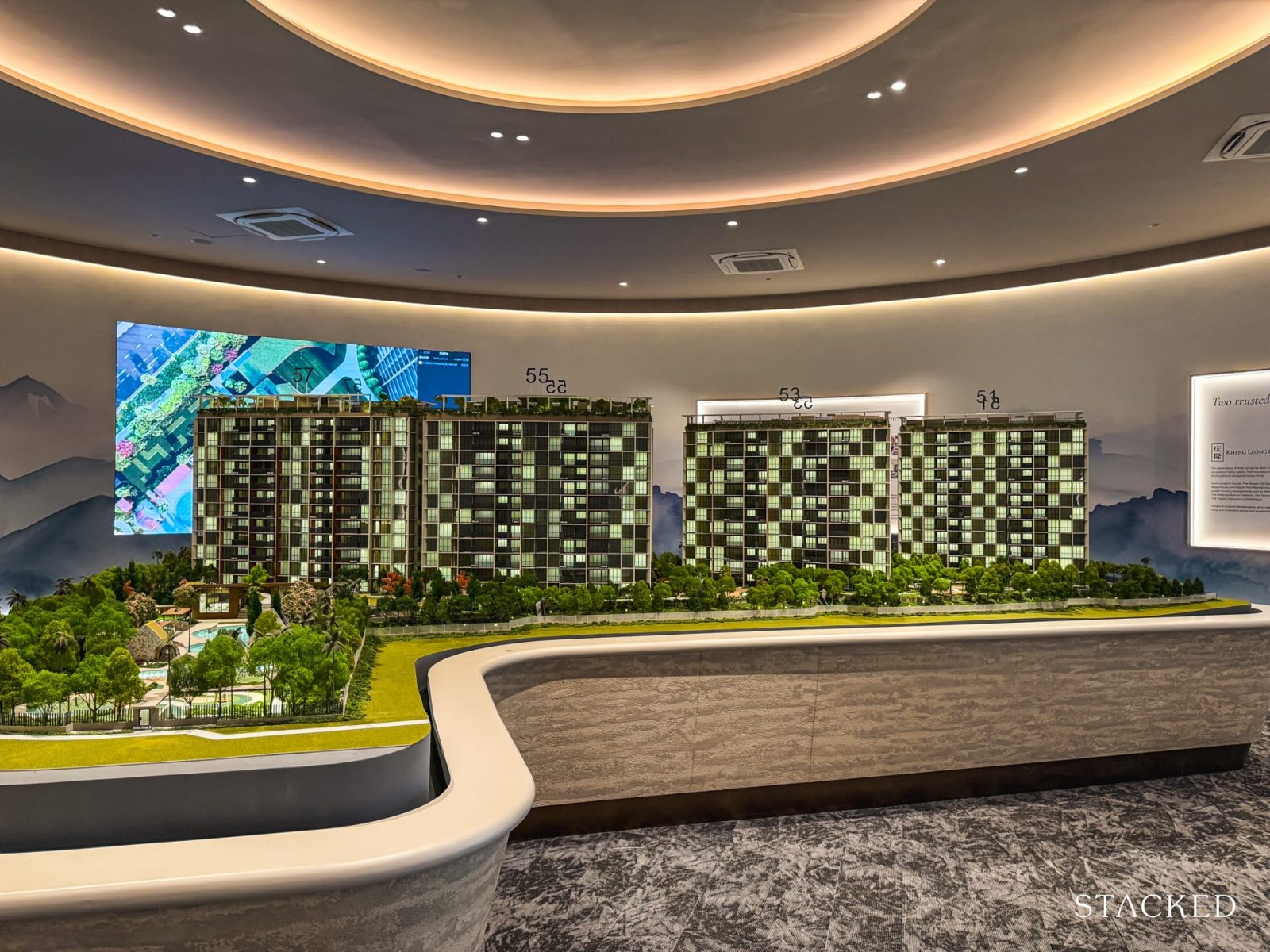
You’ll notice these two projects are not in mature areas, hence the relatively lower price point, but we view Canberra as a developing area with good upside potential, whereas Springleaf Residence provides a first-mover advantage.
This fits the profile of a buyer who is mainly focused on investment returns and who is comfortable with a longer holding period if necessary.
Comparing Canberra Crescent Residences and Springleaf Residence
From this point, our conversations with the client became more detailed. We explained how each project would sit within its surrounding market, because resale buyers generally compare them against nearby developments when they enter the secondary market in the future.
At the time of this purchase, two projects stood out within our client’s budget: Canberra Crescent Residences and Springleaf Residence.
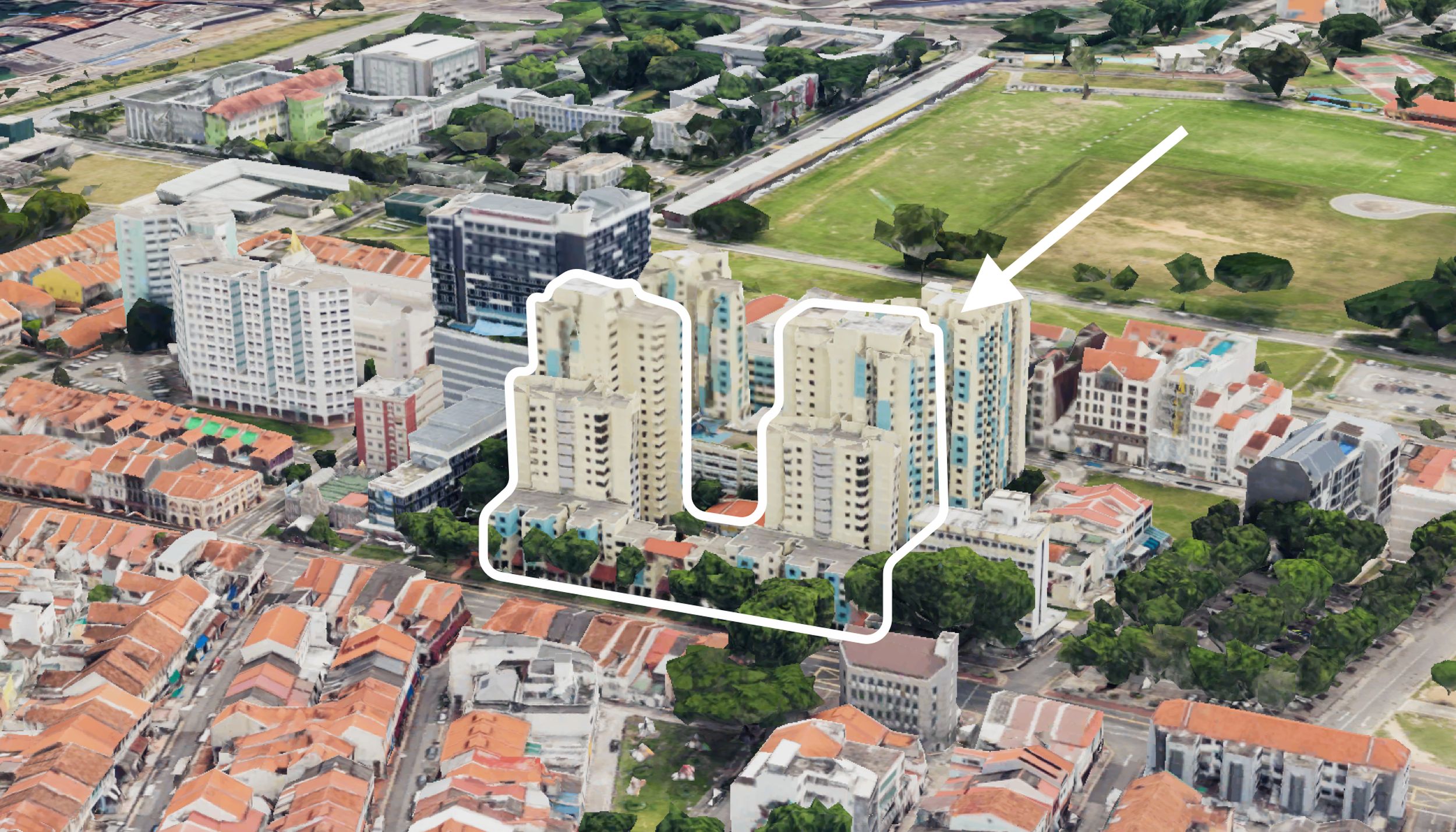
Canberra Crescent Residences is a 376-unit development on Canberra Crescent in District 27. The project launched in August 2025, with prices starting from about $1,880 psf and three-bedroom units were priced from $1,920 psf.
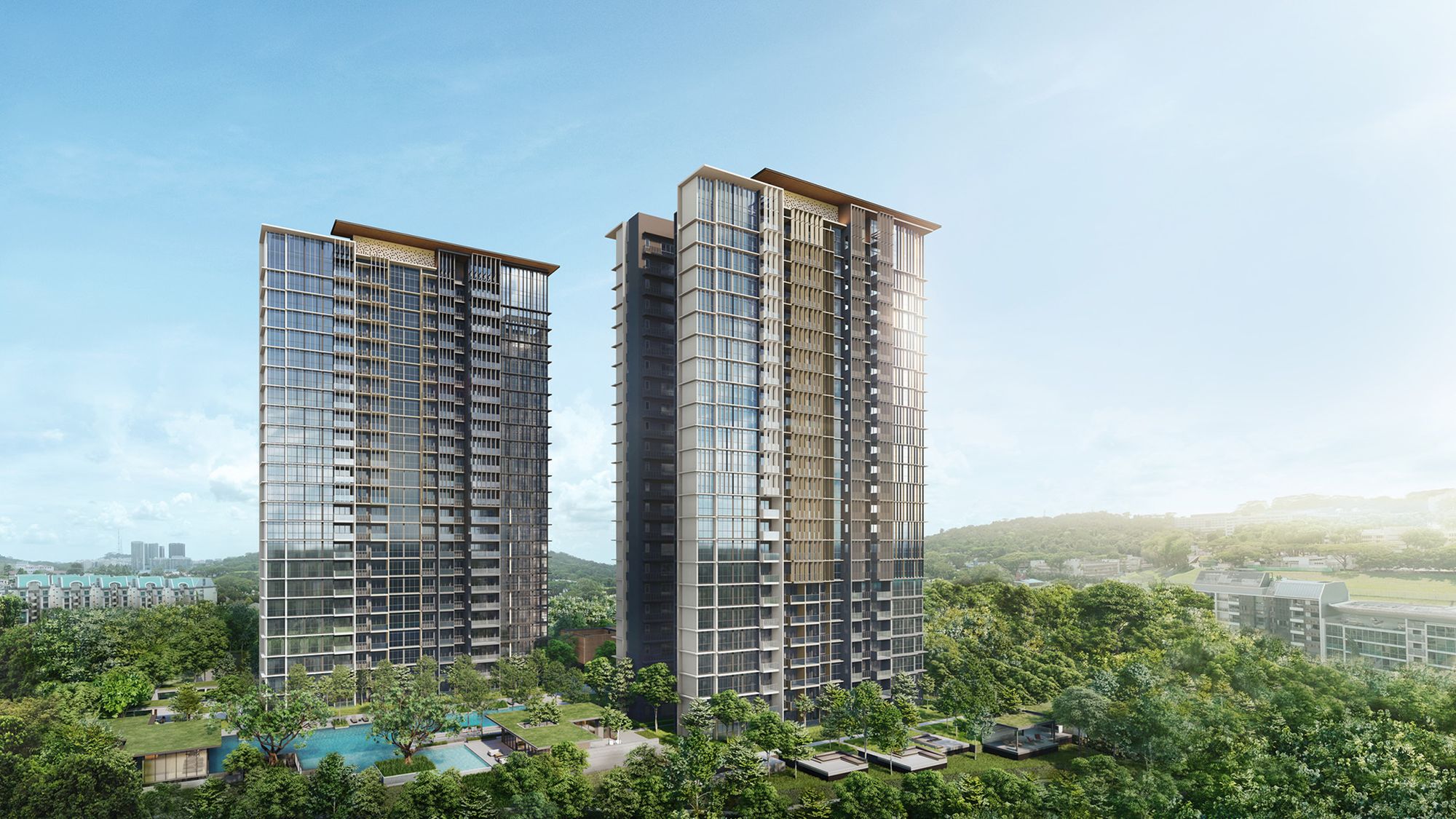
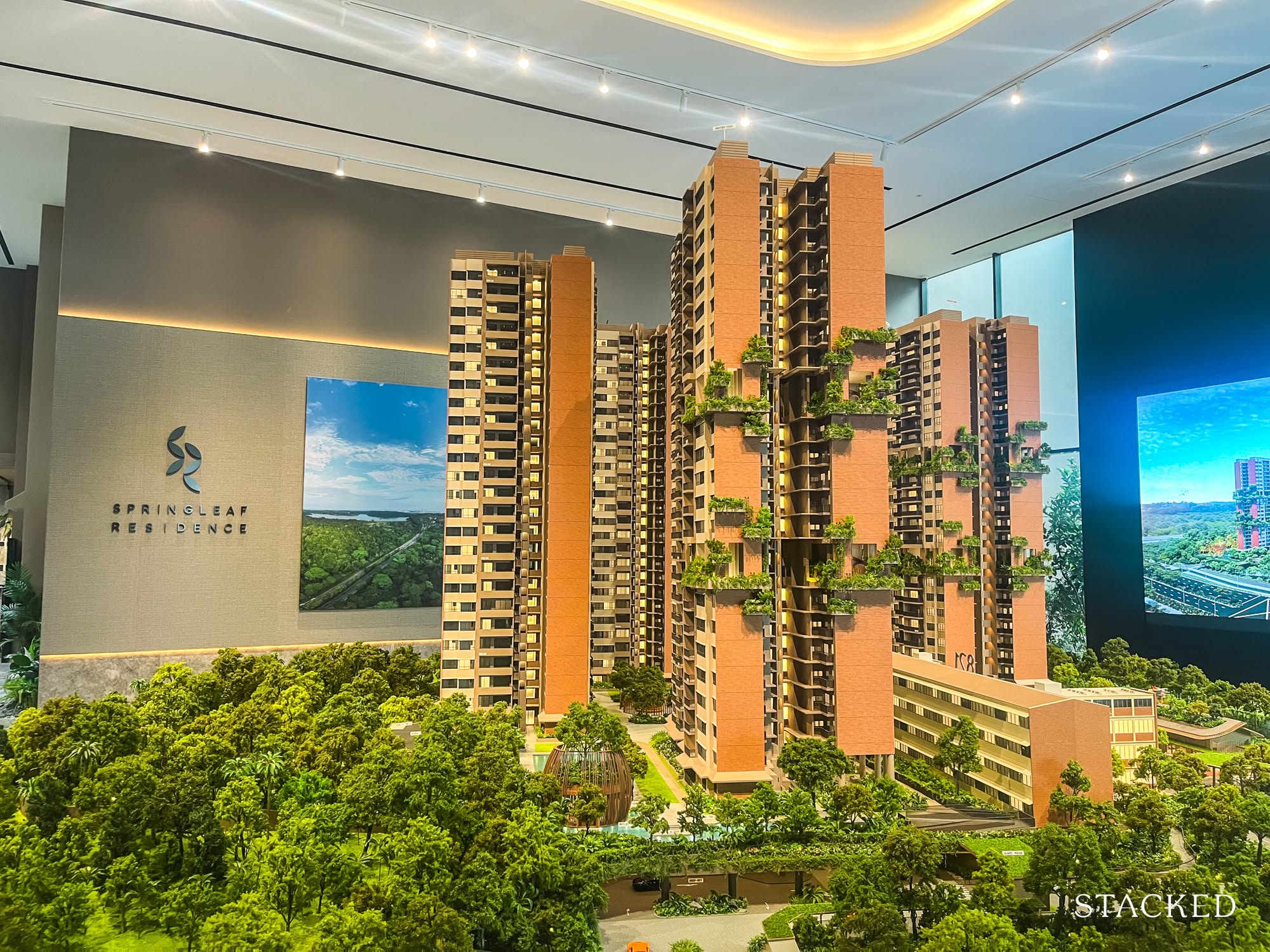
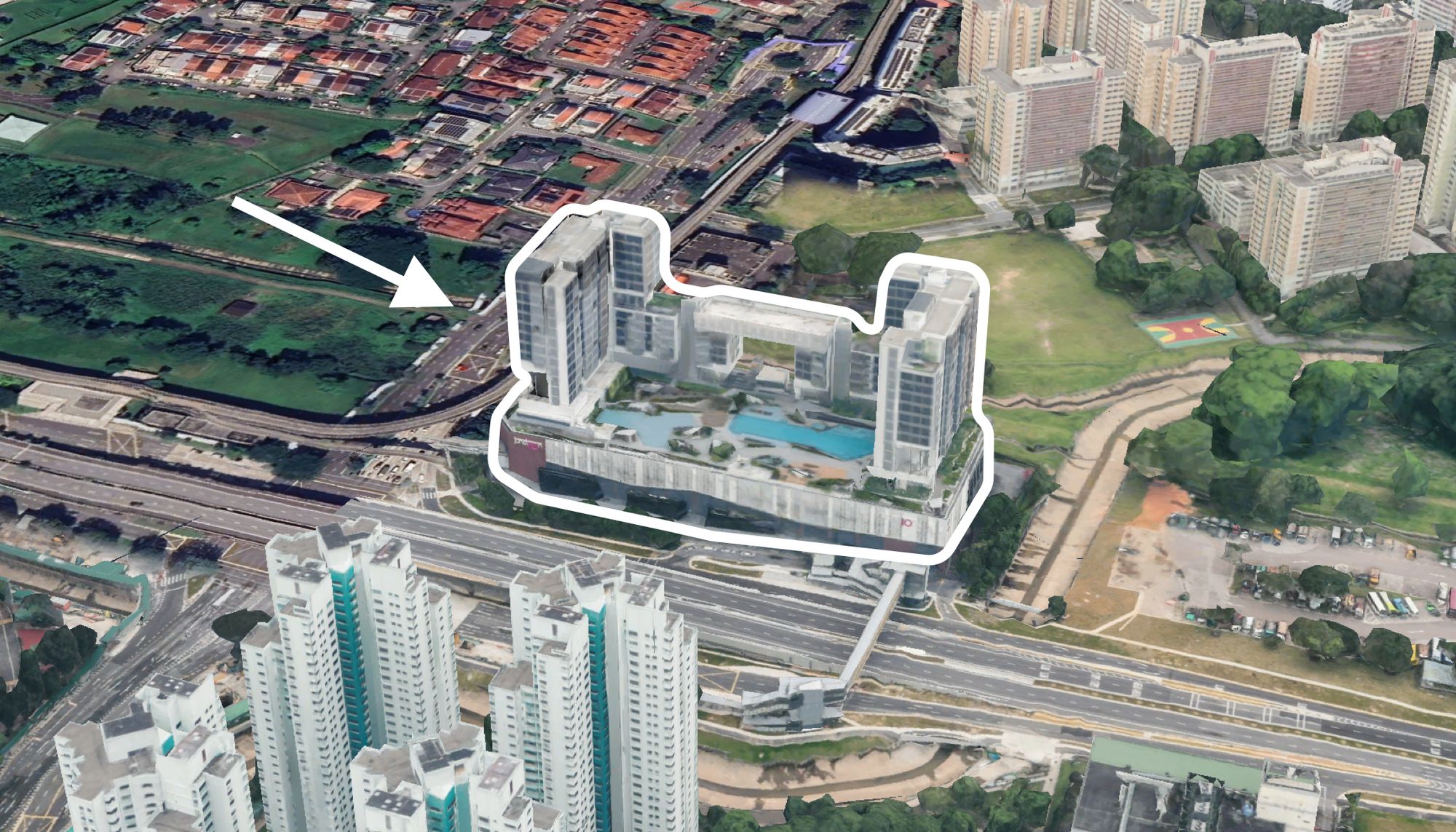
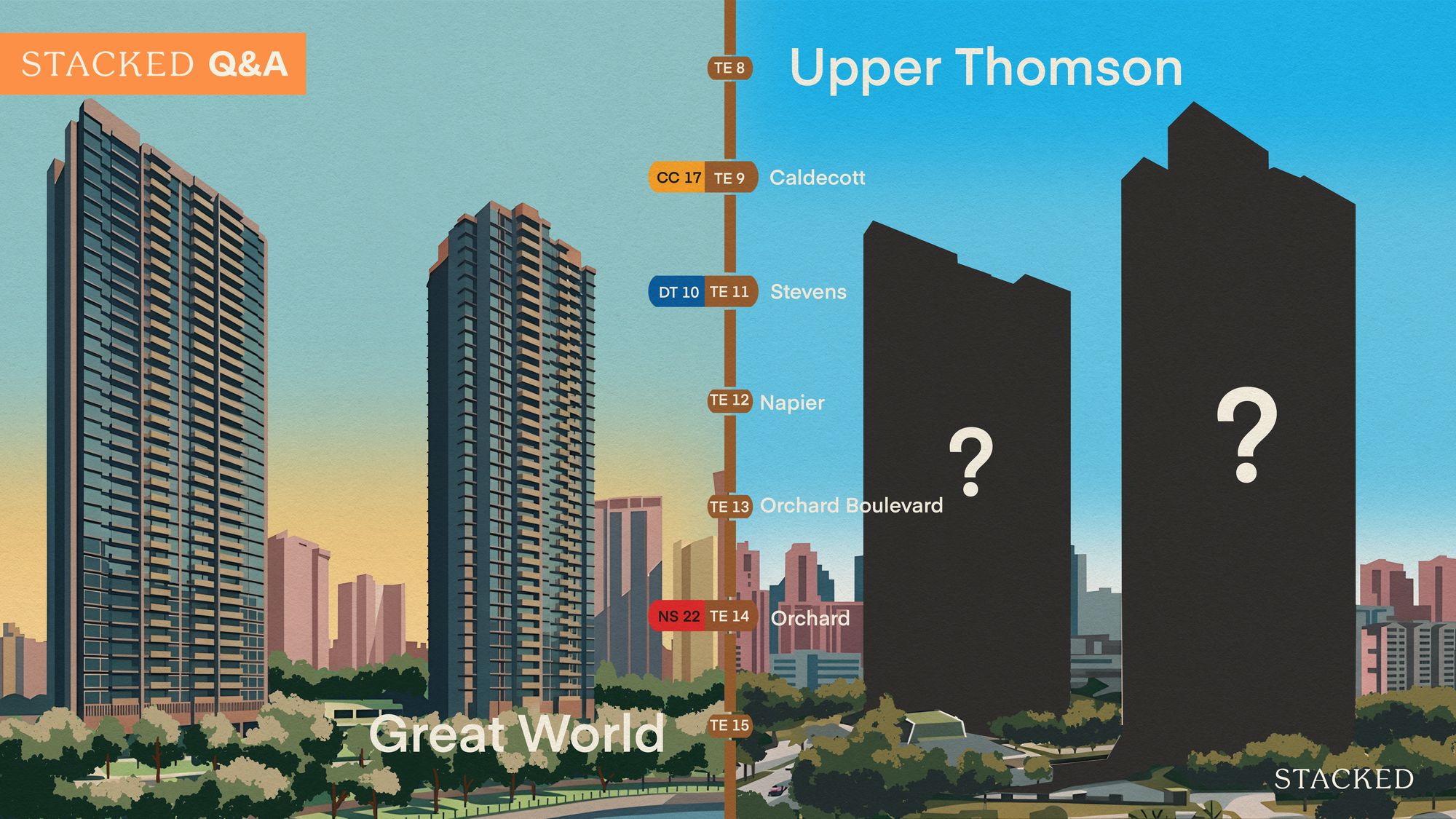
Springleaf Residence is a 941-unit development on Upper Thomson Road in District 26. The caveat was that this project launched with slightly higher prices starting from around $1,995 psf, and three-bedroom units were priced from $2,058 psf.
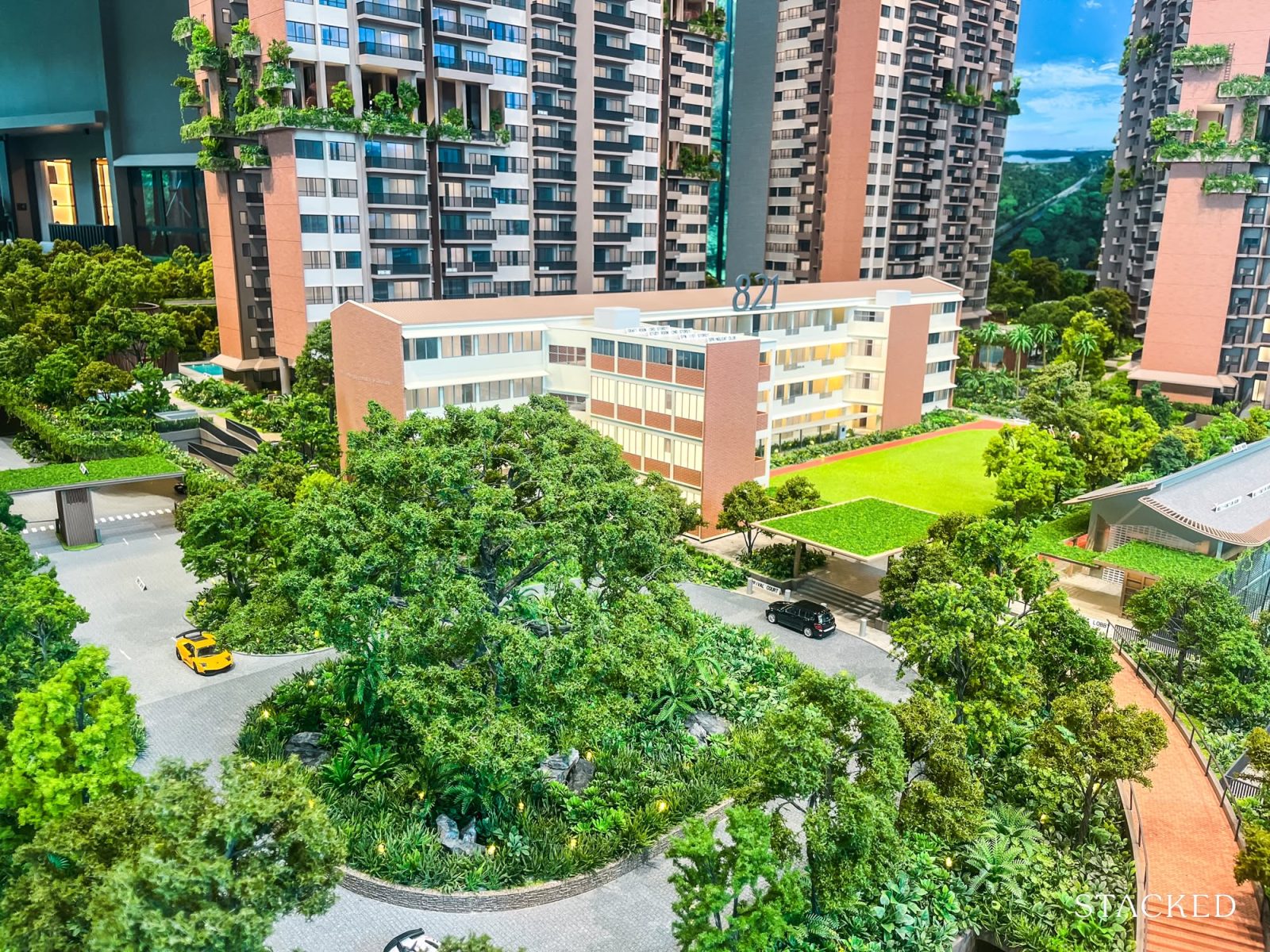
Since both projects hit the market at around the same time, we compared them to determine which would offer the stronger short-term investment potential for our client.
Our analysis focused on several key factors, including surrounding resale prices, transport connectivity, potential demand from HDB upgraders, and the demographics of the surrounding neighbourhood.
Examining Canberra Crescent Residences
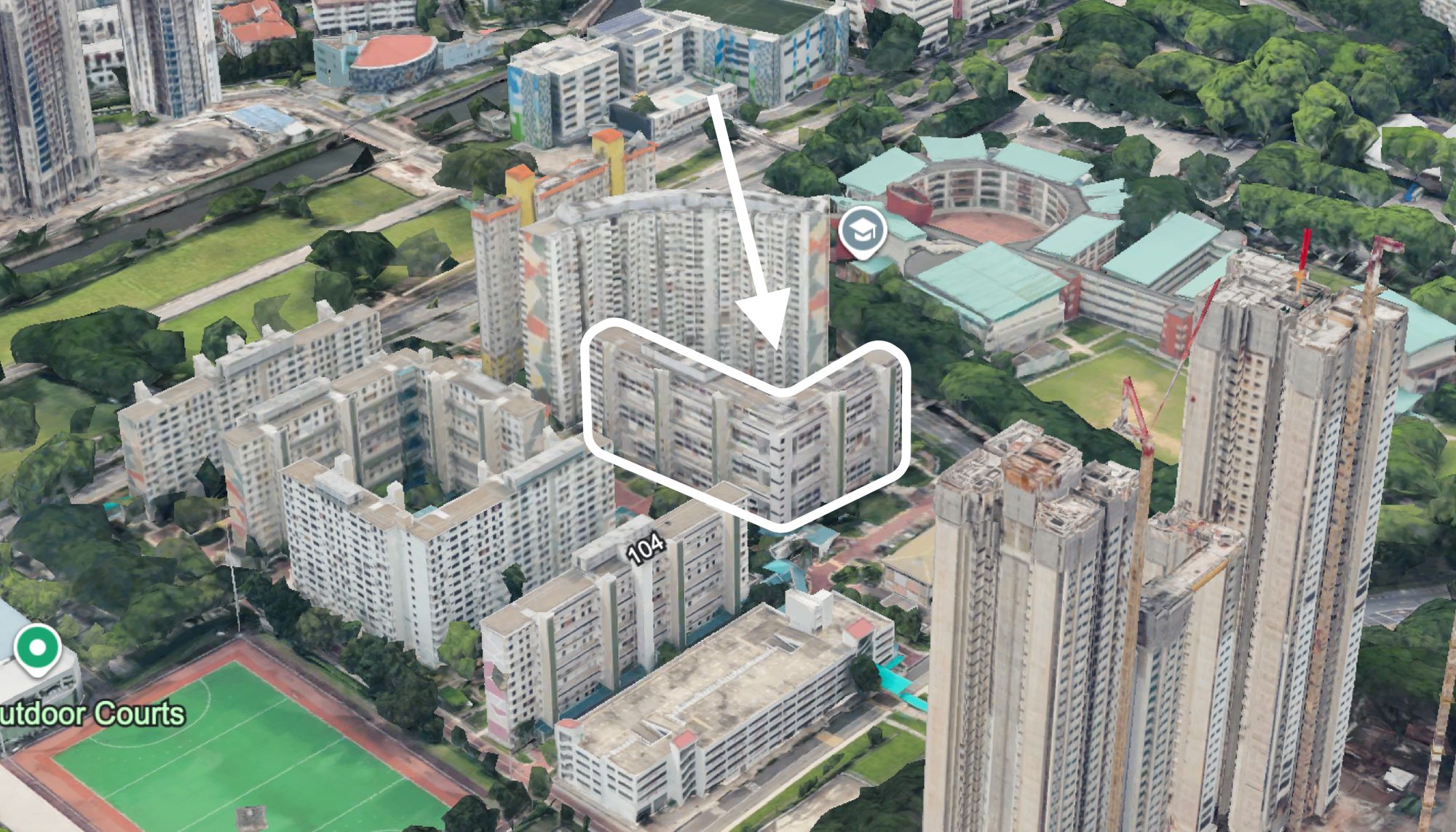
For Canberra Crescent Residences, the closest comparison in the resale market was Provence Residence, a 413-unit EC on Canberra Crescent.
At Provence Residence, the most affordable premium three-bedroom unit measuring 1,066 sq ft was priced at about $1,022 psf for a second-floor unit, translating to roughly $1,089,000. The most affordable compact three-bedroom unit at 883 sq ft was priced at about $1,028 psf, or around $907,000.
In comparison, Canberra Crescent Residences was launching at a significantly higher price. In general, the newest project launch in a neighbourhood tends to be priced higher than existing developments – but the question is how much higher.
At Canberra Crescent Residences, the most affordable premium three-bedroom unit at 883 sq ft was priced at around $1,928 psf, which came up to about $1,701,700. Meanwhile, the most affordable compact three-bedroom unit at 797 sq ft started from around $1,902 psf, or roughly $1,514,700.
We did consider that, in terms of unit layouts, Canberra Crescent Residences benefits from post-harmonisation design guidelines. This will be relevant to future buyers who will prefer buying in the knowledge that they aren’t paying for non-living areas like air-con ledges or planter boxes.
Also, it meant that the size of the compact three-bedroom units – which range from around 797 sq ft to 883 sq ft – reflects the unit’s total liveable space.
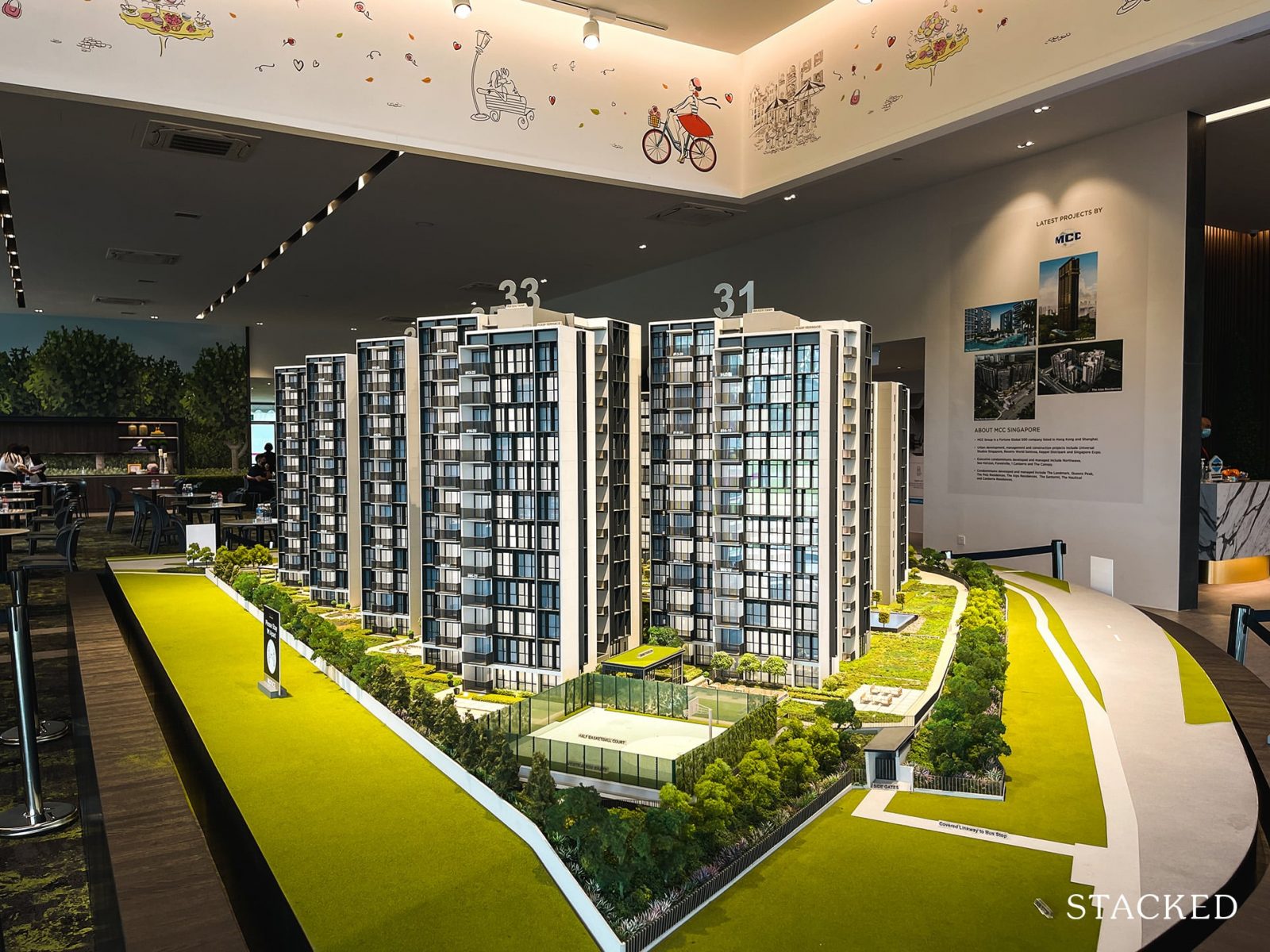
Going in favour of Provence Residence is the fact that its compact three-bedroom units use a dumbbell layout, which is often perceived as one of the most efficient configurations in the market. This is a design where bedrooms flank the living/dining area, thus mitigating the need for corridor space (i.e. you don’t need a corridor when the living/dining area is the space between the bedrooms).
We also felt that Provence Residence had a larger living area in terms of its width, compared to the comparable layout at Canberra Crescent Residences.
To analyse the private residential resale market in the Canberra neighbourhood, we also reviewed the latest transaction data of condos in that area.
At the time of our analysis, there were no sub-sale transactions recorded yet for Provence Residence. The latest resale transaction involved a 926 sq ft three-bedroom unit that sold in July 2025 for $1,616 psf, translating to about $1,496,000. Across the broader Canberra area, resale asking prices for three-bedroom units were generally between $1.3 million and $2 million.
Examining Springleaf Residence
As we mentioned above, Springleaf Residence is a little bit unprecedented. This project is the first large condo development in the area, which had mostly been landed properties and lower-density housing.
The closest nearby developments included The Brooks 1 and 2, Forest Hills Condominium, The Essence, and potentially future projects within the Lentor GLS area.
Among these, the most relevant comparison was likely Lentor Mansions, which had a strong sales performance during its launch. The 533-unit condo on Lentor Gardens sold 400 units (70%) over its initial sales weekend in March 2024, setting an average selling price that ranges from $2,104 psf to $2,478 psf.
The unit mix and sizes were also comparable, with three-bedroom compact units ranging around 786 sq ft, 818 sq ft, and 904 sq ft. Lentor Mansions also benefits from proximity to CHIJ St Nicholas Girls’ School, an attribute which helped to support buying demand.
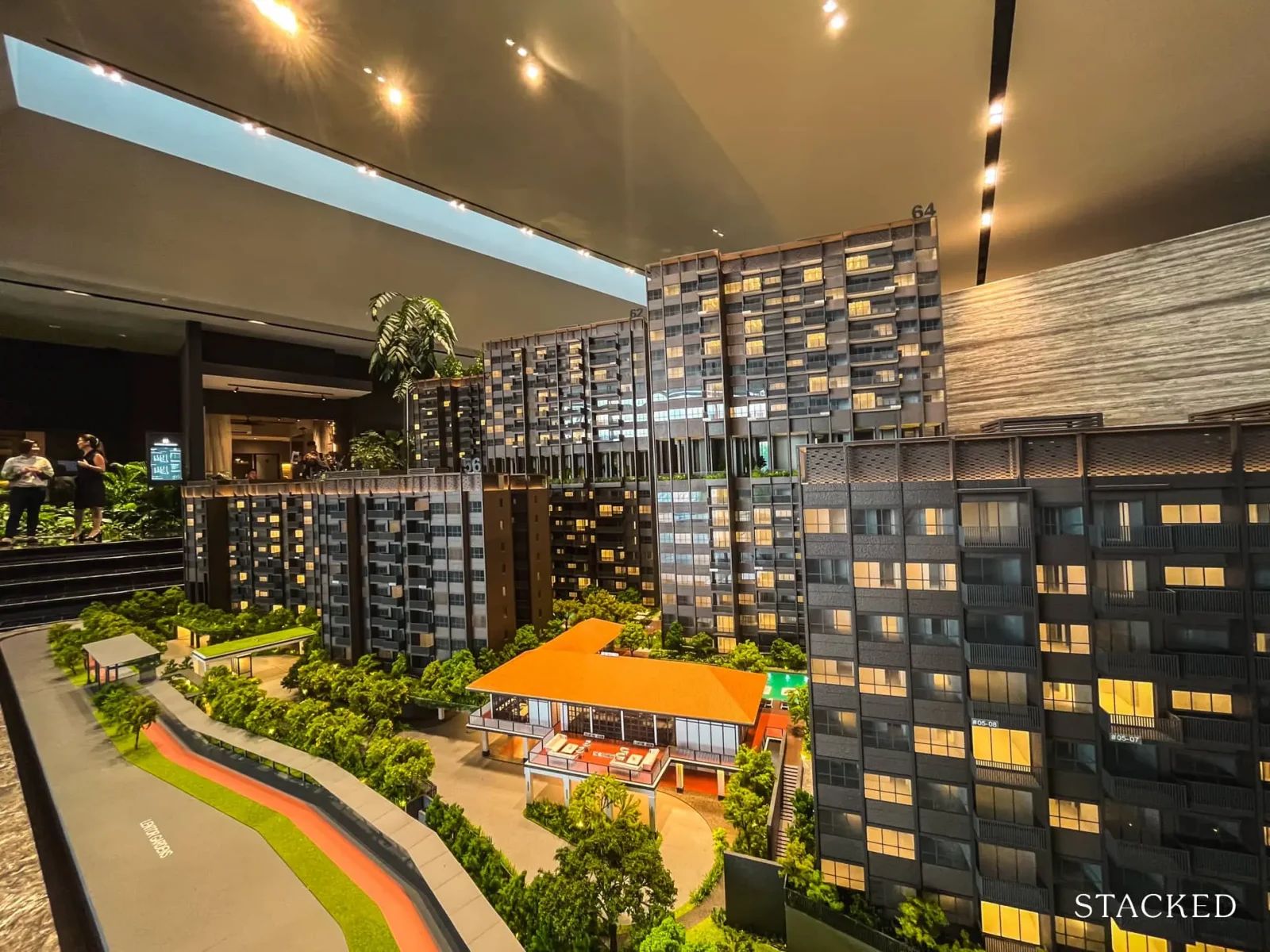
When Lentor Mansions launched in March 2024, its cheapest compact three-bedroom unit measuring 786 sq ft was priced at around $1,761,000.
The other nearby projects were not good comparison points for Springleaf Residence, although they were the closest available:
The Brooks 1 and 2 are mixed developments where most of the units are smaller one-bedroom and two-bedroom layouts. Forest Hills Condominium is an older development where most units are significantly larger, which places it in a different buyer segment. The Essence, while completed relatively recently in 2023, is a boutique low-rise development with only 84 units, and its unit mix is also largely made up of one- and two-bedroom units.
This bodes well for Springleaf Residence, because it means the project stands out, besides being just the newest development. Compared to existing options, Springleaf Residence sits on a relatively large land parcel, has a wide range of condo facilities, is in proximity to the MRT, and has layouts designed under the post-harmonisation guidelines. From an investment standpoint, these meet the major criteria for future resale value.
Larger private residential developments with a wide range of facilities tend to have broader buyer appeal, and because the surroundings are lower density, it offsets the higher unit count.
All in, we decided Springleaf Residence was the more compelling option for our client, although a lot would still depend on the outcome of the ballot for units.
At the same time, we also took a closer look at the financing considerations
Our client was 36 years old and was purchasing the property primarily as an investment. Based on her financial profile and a 30-year loan tenure, the estimated loan amount she qualified for was about $1.2 million.
For the $1.7 million purchase, the upfront payment structure would be as follows:
- Minimum requirement of 5% cash down: $85,000
- Next 15% in any combination of cash or CPF: $255,000
- Buyers Stamp Duty: $54,600
- Additional 5% foundation payment: $85,000
This brought the total upfront requirement to $479,600.
Based on the purchase price, the required loan would have been approximately $1,275,000. However, since the loan eligibility came up to around $1.2 million, there was a shortfall of about $75,000.
At this point, we discussed two possible approaches with the client. The first option was to show additional funds to satisfy the loan requirement. The second was to top up the difference using available cash.
Our client was able to cover the shortfall through her own arrangements.
Moving on to the result of the balloting
With both projects shortlisted and the financing confirmed, the next step was the ballot process.
The ballot for units in a new development can sometimes be the biggest variable in a new launch purchase. Even if the project fits the budget and strategy perfectly, the queue number determines whether the preferred units are still available.
For Canberra Crescent Residences, our client received queue number 260.
While not a disastrous result, it wasn’t something we were too happy with either. By the time our selection slot arrived, most of the compact three-bedders we had been targeting were already taken. The remaining units either faced the guardhouse or were in premium stacks that would significantly raise the price.
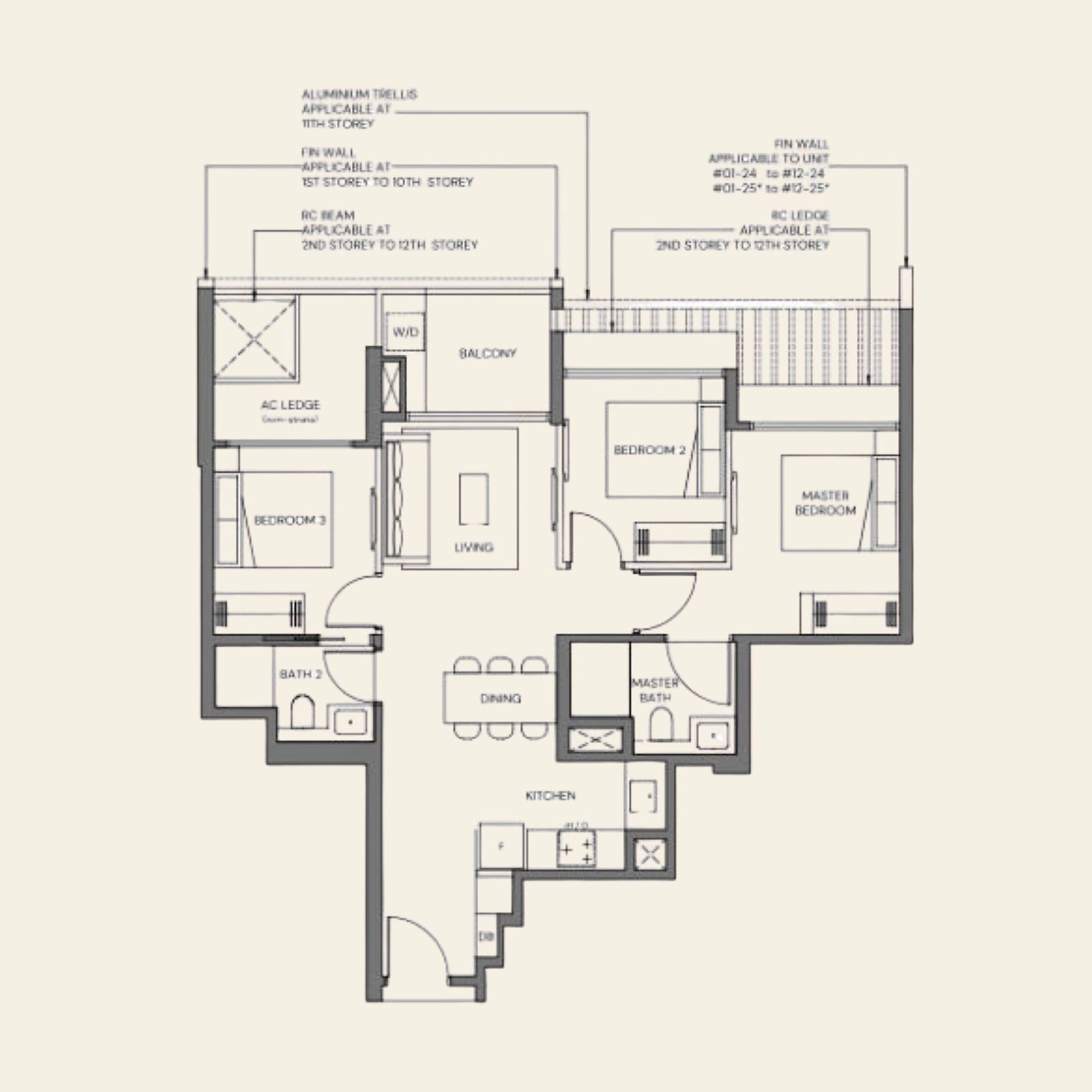
Since Canberra Crescent sold around 40% of its units on the first day of its sales, we felt there was no time pressure to secure a unit there. In addition, we were more inclined toward Springleaf Residence for the reasons mentioned above.
So, we recommended waiting for ballot results at the sales launch of Springleaf Residence before committing to a unit. When the ballot results for Springleaf Residence were released, the initial queue number came back at 495.
On paper, this looked even less promising. However, GuocoLand offered priority allocation to buyers who had previously owned one of their developments. As it so happened, our client qualified under this category – and she was able to participate in a separate priority selection day.
This turned out to be a significant advantage. It effectively meant our position was about 59th in the selection queue – so there was still a realistic chance of securing one of the units we had shortlisted earlier.
Narrowing down the stacks
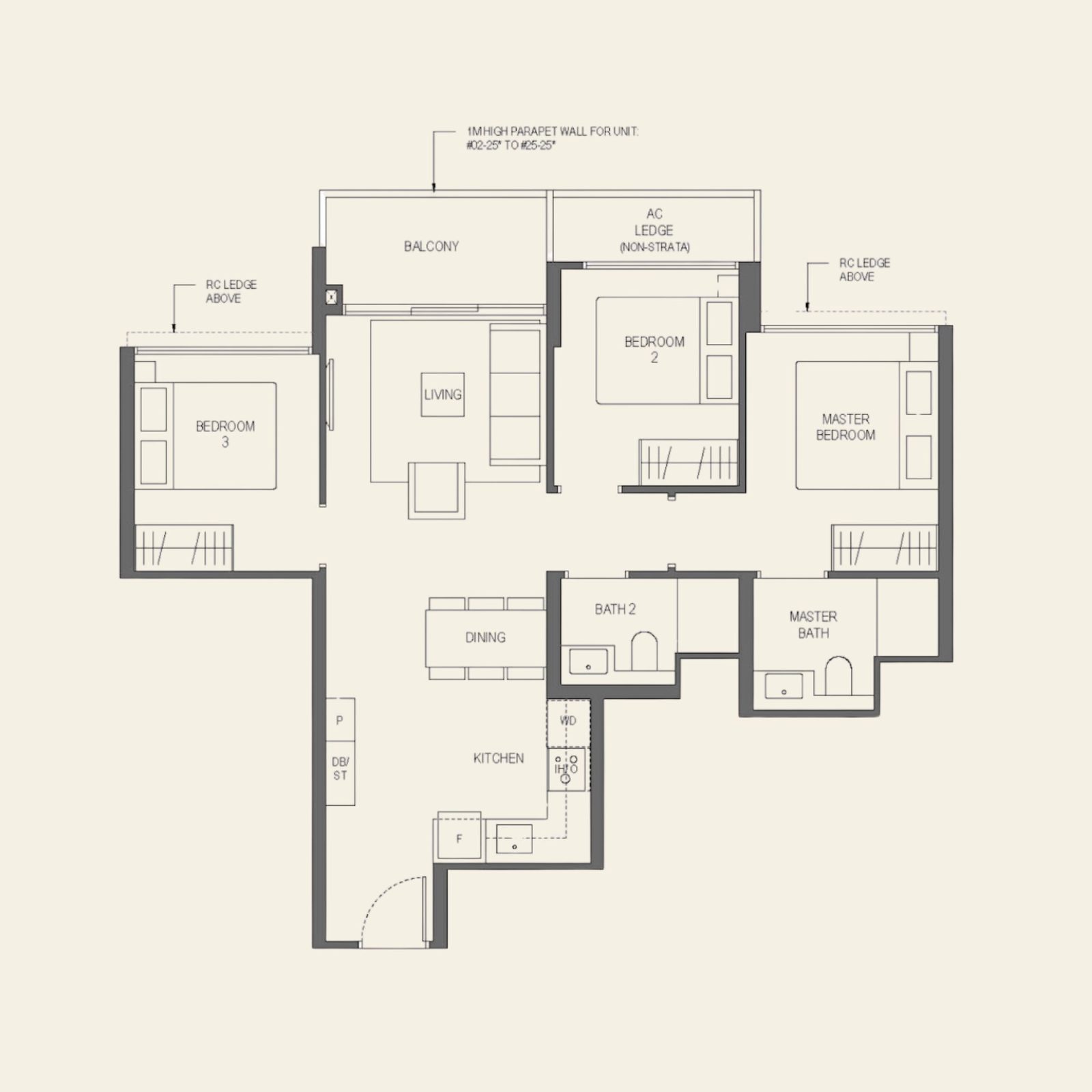
Before selection day, we had already identified several stacks that we felt offered the best balance of orientation and long-term resale potential. The stacks we were watching were 12, 20, 5, and 6.
However, during the initial release phase, only a limited number of stacks were available, mainly stacks 12 and 10.
Stack 10 was less favourable because it faced the highway. From our previous experience with Penrose, we had observed that highway-facing units often take longer to sell compared to inward-facing units, even when priced competitively.
Interestingly, stack 10 also carried a $28,000 premium despite facing the highway. Given the potential traffic noise and resale considerations, we couldn’t really recommend this; thus, we focused on stack 12.
The final unit selection
When it came to the actual selection, most of the compact three-bedroom units had already been taken. However, one unit that stood out among the remaining options was a unit on the 14th floor.
This unit faces in toward the development and enjoys an unblocked forest view. Compared to the highway-facing alternatives, we felt this orientation would hold up much better from a long-term resale perspective.
Importantly, it also fit neatly within our client’s $1.7 million budget.
While we expect Lentor Mansions to remain a strong performer in the area due to its earlier launch momentum, we believe Springleaf Residence will remain a close competitor. Given the similarity in unit mix and positioning, it is reasonable to expect that pricing performance between the two developments will move relatively closely over time.
For our client, securing this unit meant entering a development with strong fundamentals, a layout that appeals to future family buyers, and an entry price that helps pave the way for gains.
At Stacked, we like to look beyond the headlines and surface-level numbers, and focus on how things play out in the real world.
If you’d like to discuss how this applies to your own circumstances, you can reach out for a one-to-one consultation here.
And if you simply have a question or want to share a thought, feel free to write to us at stories@stackedhomes.com — we read every message.
Frequently asked questions
Why did the client choose Springleaf Residences over other 2025 launches?
What were the main factors considered when comparing Canberra Crescent Residences and Springleaf Residences?
How did the client’s financial profile influence the property purchase decision?
What was the significance of the ballot process in the property purchase?
What considerations were made regarding the unit layouts and pricing for Canberra Crescent Residences and Provence Residence?


1 Comments
Dear Sir
I have sold my landed property in Siglap / Frankel area . Want to purchase apartment in District 15 . Need advise