














Deciding where to purchase your next property may seem straightforward at first to some buyers. Familiar locales and neighbourhoods like Tampines, Bishan, and Woodlands can spring to mind.
But the problem is that some neighbourhoods are larger than others and going through all the new projects and resale properties can feel like drowning in options; when it comes time to shortlist the properties, analysis paralysis is a real possibility.
There are nuances like the age of the project, likely financing issues, potential exit strategies, and dozens of other factors that can complicate the matter. Sometimes, the more experts you consult, the worse and more confusing it gets.
So, how do most experienced property buyers navigate these complexities?
A straightforward answer is that most experienced buyers don’t try to compare all of these variables at once. Instead, they narrow it down based on the trade-offs they’re willing to accept.
That’s why two buyers looking for properties in the same neighbourhood can end up with completely different shortlists of projects and units, even if their budgets are not that far apart. It also means less chances of making a purchase or investment error.
Here’s a quick rundown of what they consider:
So many readers write in because they're unsure what to do next, and don't know who to trust.
If this sounds familiar, we offer structured 1-to-1 consultations where we walk through your finances, goals, and market options objectively.
No obligation. Just clarity.
Learn more here.
1. How the planning area (neighbourhood) has performed.
This isn’t as straightforward as checking whether prices have “gone up” in the neighbourhood. In general, average property prices in Singapore tend to go up in almost every area.
The question is how much the prices have risen, and whether the increase is due to improvements in the area, or a trickle-down effect from a broad price uplift in the property market.
For instance, in Tampines, average resale prices grew from around $810 psf in 2015 to about $1,468 psf in 2025. In terms of average resale prices, the town overtook Pasir Ris and has significantly narrowed the price gap with resale properties in Bedok over the past decade.
While these are neighbourhoods and towns in the East, there can be significant differences in price performance across other regions. In this case, Tampines went from being perceived as relatively affordable, to almost defining resale condo prices in the region.
Knowing what to expect from the resale market of a specific neighbourhood can help you gauge whether you’re a first mover (i.e. entering at a stage of growth, which will reward a longer holding period), or entering a mature area, where the runway for further capital gains is relatively limited.
The “maturity” of a neighbourhood isn’t as clear cut as it seems either.
Punggol, for instance, is at a tipping point after the completion of Waterway Point, and the upcoming Punggol Digital District (PDD). Woodlands may see a dramatic change after the opening of the rail connection to Johor Bahru.
As for larger planning areas like Tampines, some parts of the neighbourhood can be in a very different stage of development from the others – such as in the case of Tampines West versus Tampines Central.
These days, it’s not enough to have a general idea of whether a neighbourhood is ‘mature’ or more developed. Amid a competitive housing market, buyers need to check the specific price movements in sub- or micro-locations within the area.
2. Within the target area, can you realistically afford a unit of the size and type you need?
This may sound obvious but it’s where many buyers go wrong. A common mistake is to start by browsing listings across the whole neighbourhood, without first anchoring yourself to a realistic price range for the unit size you need.
Incidentally, the prices you see on property portals are just asking prices, which may not correspond to the reality on the ground!
In our view, it’s also important not to obsess over a unit’s $PSF price – a unit, like a one-bedder, can have a very high $PSF but a very low overall cost.
In practice, this means most buyers aren’t choosing between all or even most condos in a neighbourhood. They’re choosing between very specific trade-offs within their budget.
For example, a buyer with a budget of about $2 million may end up deciding between:
- a newer, more compact three-bedroom unit
- an older, larger three-bedroom unit
- or even stretching their affordability to smaller four-bedroom units in certain projects
Each option attracts a different group of buyers, and the housing options would be found in different parts of the same neighbourhood.
Once you have a clearer sense of what unit size or type you need, and your available budget, the shortlist narrows very quickly. You’ll no longer meander across entire pages of listings, and waste time on irrelevant viewings or research. This is how more experienced buyers can act quickly and with more confidence.
3. Who is buying in that neighbourhood, and at what price point?
In general, savvy buyers tend to consider other buyers they’re competing with in the same housing market or area. Different neighbourhoods attract different profiles. Some areas are still largely driven by HDB upgraders, while others see a higher proportion of existing private property owners.
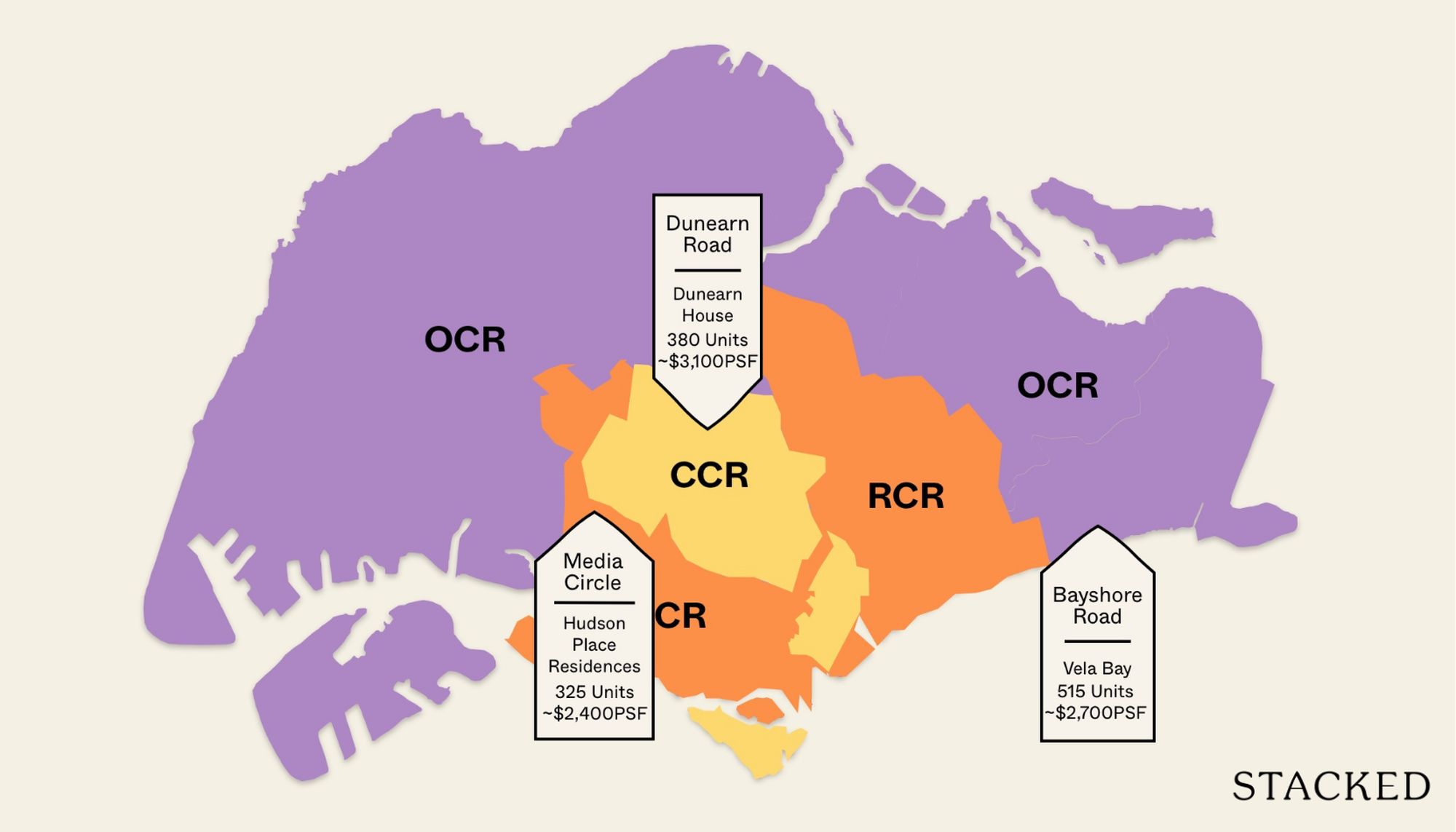
For example, consider the upcoming Bayshore estate. The first new condo to break ground is Vela Bay, a project by SingHaiyi and Haiyi Holdings. We think that most of the new condo buyers will come from the older condos in the area, such as Bayshore Park, Costa Del Sol, and possibly even from the landed homes at Lucky Heights.
This is a different buyer profile compared to areas like Sengkang or Punggol, where most private condo demand comes from HDB upgraders. In these markets, price sensitivity is much more acute, and the bulk of new condo buying demand tends to cluster around a narrower price range (especially for three-bedder units preferred by families.
But, if you’re purchasing a unit that appeals to a larger catchment of buyers, like a three-bedder in an area that mostly attracts HDB upgraders, you’re likely to see a consistent demand from this demographic. However, a niche segment like boutique condos, may face a smaller catchment of ready buyers, even if the property is attractively priced and located.
Understanding who are the same buyers in the market, and what the catchment of buyers might be in the future, helps you avoid shortlisting properties that may be more difficult for you to sell later.
4. Which projects in the vicinity compete, and which do not?
A mistake relatively new buyers tend to make is comparing everything in the neighbourhood, and assuming another condo’s proximity translates to it being a viable alternative.
Even within the same planning area – and sometimes even next to each other – not all condos are true alternatives. A new launch compact three-bedder at $2 million may not be a viable alternative to a bigger, 25-year-old three-bedder that might fetch over $2.2 million – especially after factoring in in an older layout, lease decay, and the $200,000+ difference.
Beyond proximity, projects attract different buyers, sit at different age ranges, and serve different needs. For example, a buyer prioritising convenience may end up comparing a handful of newer projects near an MRT station. Another buyer focused on space may only look at older developments with larger layouts. And someone trying to keep within a tighter budget may end up excluding developments without compact one or two-bedders.
These different groups of buyers may be searching within a one- to two-kilometre vicinity, but they all end up with different perceptions of what’s a viable alternative to them. Once you understand which projects are competing, your shortlist shrinks very quickly.
5. Who are you likely to sell to later, and when?
Experienced buyers don’t just think about whether the price is good right now. They think about how to exit the property down the road, and just as importantly, when that exit is likely to happen.
As we’ve mentioned so far, factors like different unit types, project ages, micro-locations, appeal to different catchments of buyers at different points in time. The buyers coming into the market in your area five years from now may be quite different, and their purchase considerations may be different as well.
For example, you may have bought a compact two-bedder near an MRT station with the goal of reaping rental income. But over time, that unit could appeal to owner-occupiers, such as young couples or singles, especially if surrounding amenities improve (or prices rise to the point where larger units become unaffordable).
Another consideration is the size of the development. A boutique project may feel exclusive today, but the low transaction volume can mean uncertainty later as buyers don’t have a clear reference point on the resale price.
Likewise, a mega-development (with over 1,000 units) could mean lower prices and maintenance fees, but there could be more intense competition when you prepare to sell the unit later.
Experienced buyers tend to look for units that fit a broad and active segment of buyers, so that the resale journey is more straightforward. This is coupled with considerations over the holding period – for example, timing their exit to coincide with nearby HDB projects reaching their five-year MOP.
Once you narrow things down this way, the shortlist becomes less of a headache.
Of course, doing this properly takes time. You need to dig up transaction histories, buyer profiles, sub-locations, and how different unit types behave within the same area. So, for our upcoming Pro series, we’ll be doing the deep dive for you.
We’ll break down specific planning areas by two-, three-, and four-bedders, look at how each segment performs, who typically buys there, and which projects tend to come up in shortlists. Follow us on Stacked Pro for the updates.
At Stacked, we like to look beyond the headlines and surface-level numbers, and focus on how things play out in the real world.
If you’d like to discuss how this applies to your own circumstances, you can reach out for a one-to-one consultation here.
And if you simply have a question or want to share a thought, feel free to write to us at stories@stackedhomes.com — we read every message.
Frequently asked questions
How do experienced buyers shortlist condos in a neighbourhood?
Why is it important to consider the neighbourhood's price performance when shortlisting condos?
How does a buyer determine if they can afford a unit in their target area?
Why should buyers consider who is buying in the neighbourhood and at what price point?
What role does project competition play in shortlisting condos?
Why is it important for buyers to think about their future resale prospects when shortlisting properties?


0 Comments