





23.8% Senior Citizens By 2030: How Singapore’s Ageing Population Will Affect Physical Real Estate


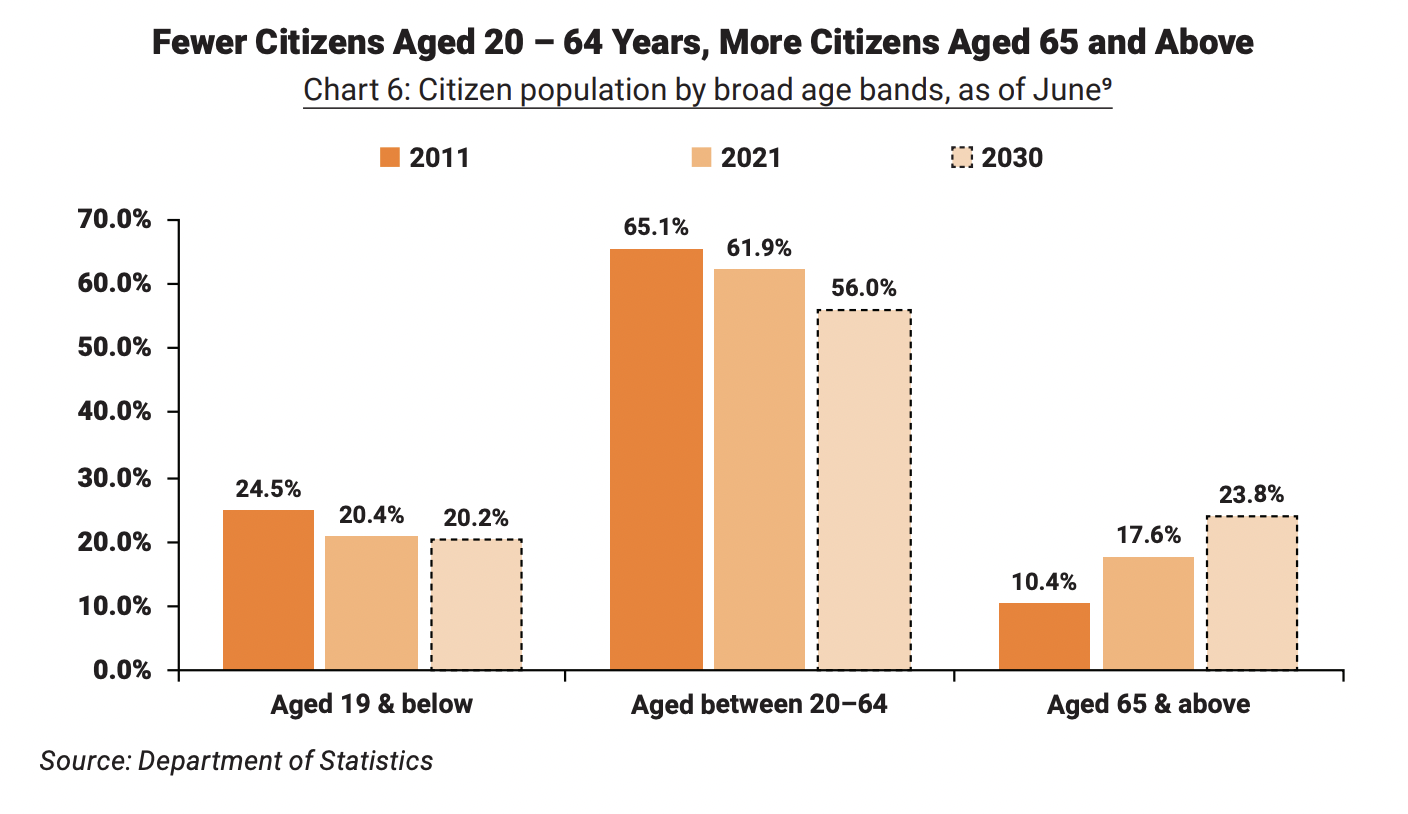
We recently came across this article in Straits Times with quite eye-opening statistics on Singapore’s ageing population:
The proportion of Singapore residents who are seniors is estimated to double from 16 per cent in 2021 to 33 per cent by 2050.
And,
Households in which all members were 65 and above doubled from 52,200 (4.6 per cent) in 2010 to 128,200 (9.3 per cent) in 2020.
While Singapore generally maintains a good mix of residents in every planning area, some do have more senior citizens than others. Some of the effects can be felt in day-to-day life, such as the shops nearby, and who they cater to; others may have an impact further down the road, such as when it’s time for a collective sale. With our population rapidly ageing, here are some factors to consider in these estates:
Table Of Contents
- Which estates have the highest population of older folks?
- What could happen in areas with older resident populations?
- 1. It affects the nature of surrounding amenities
- 2. Walkability gets prioritised
- 3. Collective sale efforts can be more challenging
- 4. Communal activities and outreach methods will differ
- On the sensitive topic of hoarding
Market commentary like this is only useful if you can translate it into what it means for your own purchase: your entry price, holding period and exit options.
That’s where many buyers get stuck. General market insights rarely tell you whether a specific unit, at a specific price, is the right decision for your circumstances.
Over time, that’s also why we decided to work with agents who shared the same data-driven and advisory-led approach behind our editorial, consultants who could help readers think through decisions more objectively, rather than simply push transactions.
Today, the team has worked with more than 2,000 clients across over $5B in property transactions.
Which estates have the highest population of older folks?
If we go by planning area, these seem to be Bedok, Ang Mo Kio, Jurong West, and parts of Hougang. This is based on the most recent map from SingStat:
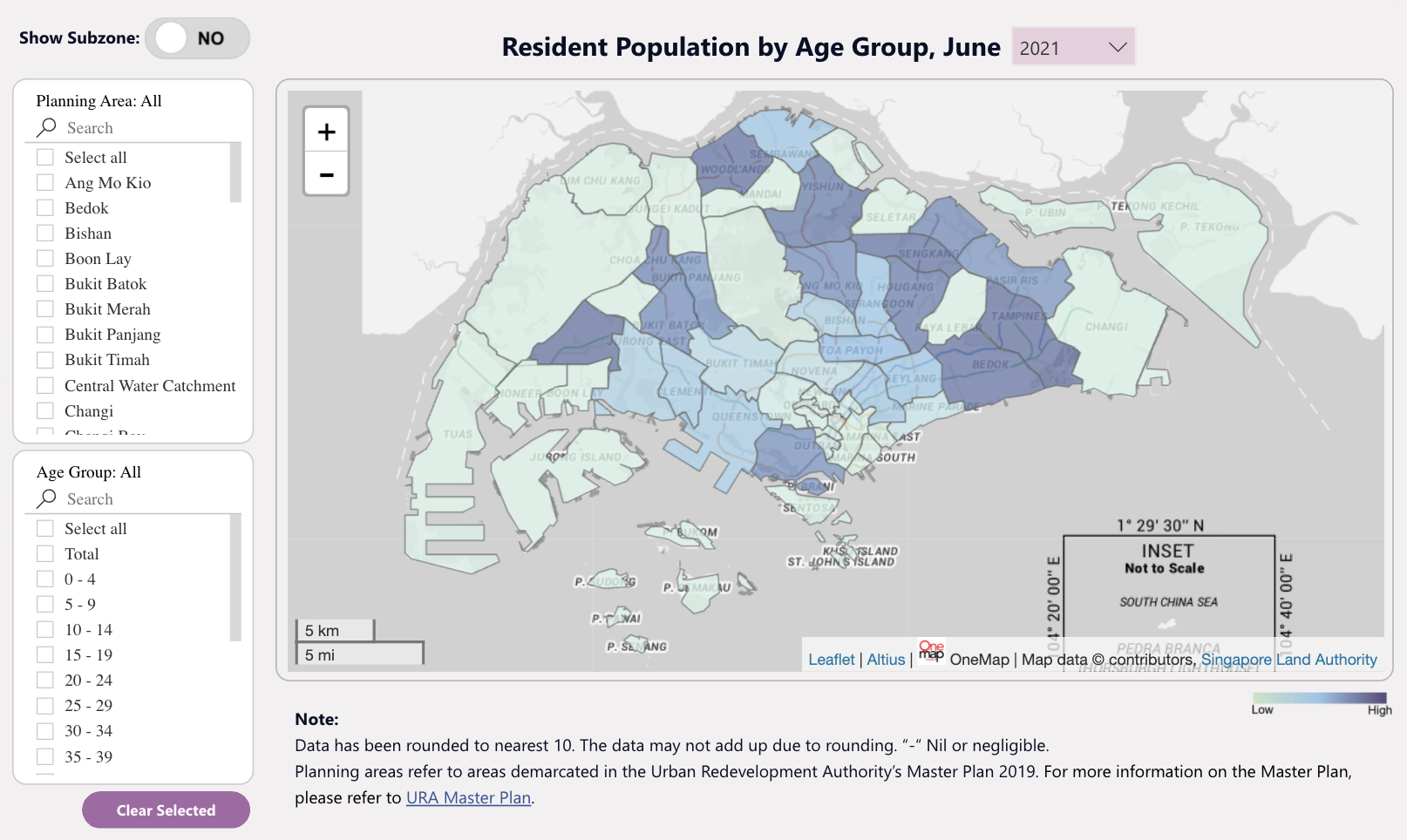
That said, keep in mind that planning areas are very large, which can make this too generalised for the average home buyer.
For example, Bedok is one of our largest residential areas, which may contribute to it having a higher percentage of seniors. You can certainly find parts of Bedok that have a much younger group of residents, than the planning area as a whole.
(While we can’t verify it, some realtors tell us the elderly population of Bedok tend to reside in the Bedok Reservoir area, and not so much in Bedok Central).
For home buyers, you do need to view the area on the ground, to get a sense of how “senior” the neighbourhood truly is.
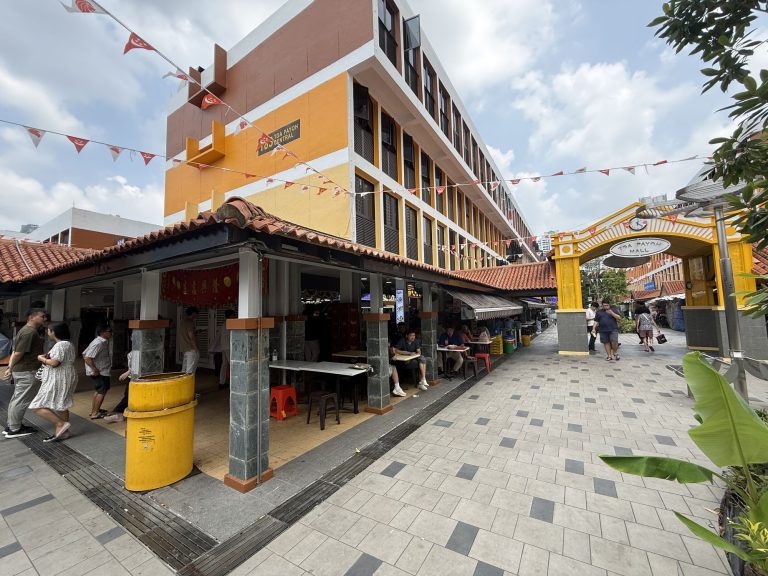
For example, it’s quite well known that some parts of MacPherson and Chinatown have a very high population of seniors, though you won’t see that on the map above.
What could happen in areas with older resident populations?
- It affects the nature of surrounding amenities
- Walkability gets prioritised
- Collective sale efforts can be more challenging
- Communal activities and outreach methods will differ
Finally, we’ll touch on the sensitive issue of hoarding.
1. It affects the nature of surrounding amenities
Businesses in an area will change to accommodate the nearest customers. For example, in most areas where the population is retirees, you are less likely to find high-cost artisanal cafes or restaurants.
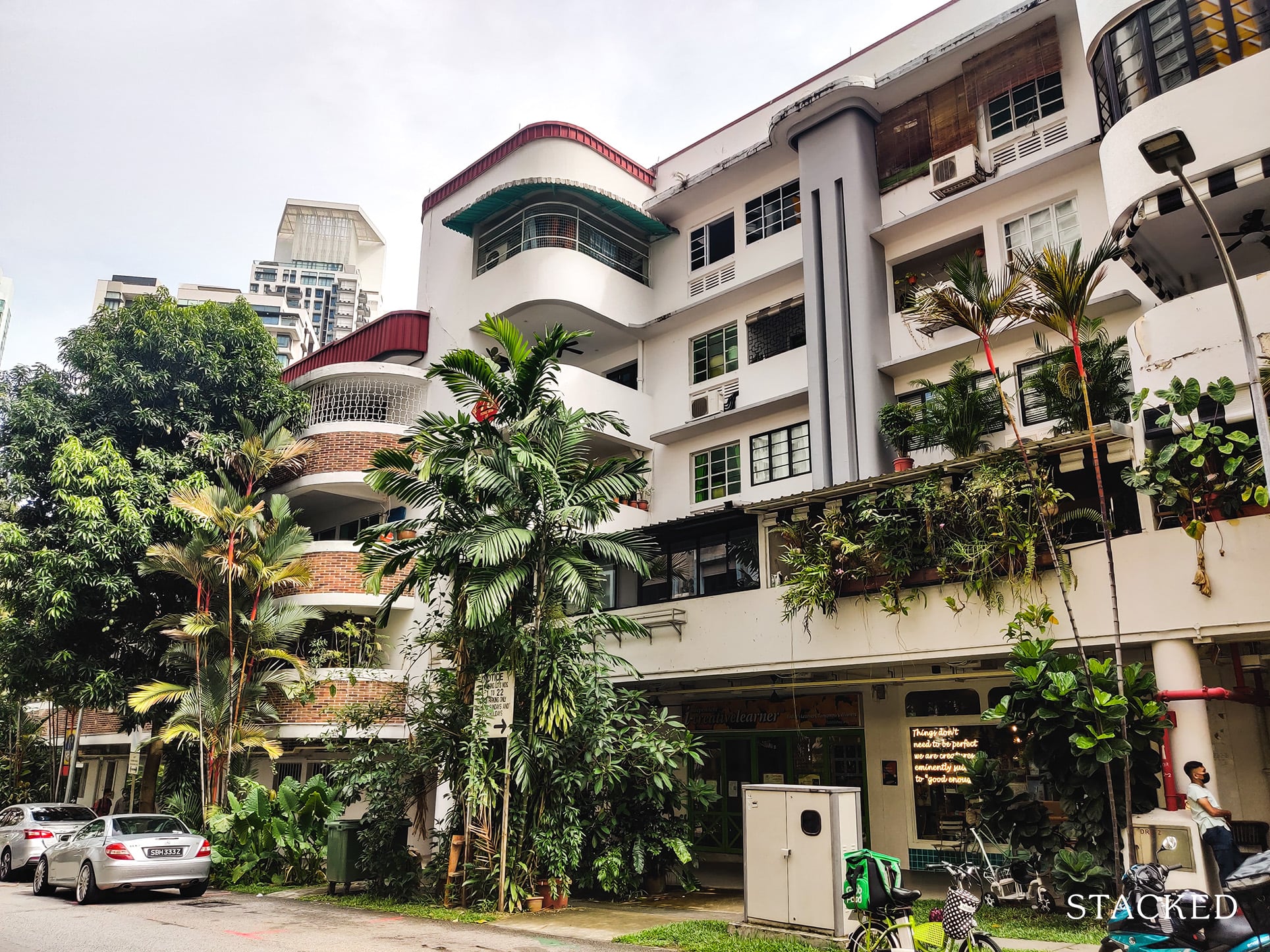
In cases of rapid gentrification, this can cause a displacement of the existing population. This has been observed and discussed in areas like Tiong Bahru and Queenstown, where older residents (many of them retirees) cannot afford amenities like $7 lattes, or lunch menus that are upward of $30.
This has some impact on home buyers, as the amenities that appeal to them may not fit into a more senior neighbourhood.
This is not just about food and shopping – it’s also about facilities such as childcare centres, enrichment centres, and clinics.
Areas with more senior citizens than young couples may, for instance, draw fewer childcare centres. Consider, for example, that infant care facilities boomed in a younger area like Sengkang, as opposed to Bedok.
Conversely, areas with more senior citizens might have more in the way of eldercare facilities, including clinics. Yio Chu Kang, for instance, aims to be a dementia-friendly neighbourhood by 2025, catering to many seniors in the area.
2. Walkability gets prioritised
When a neighbourhood has a high proportion of senior citizens, urban planners will begin to focus on walkability. You can find a deep description of the reasons in this article (Singapore is one of the countries covered).
To summarise, however, walkability is essential to the health of senior citizens. At the most basic level, a 70- or 80-year-old cannot cross a busy road as easily as a 25-year-old; and they can’t always access the safest way to do so (e.g., it’s a nightmare for a 70-year-old using a walker to climb up the overhead bridge).
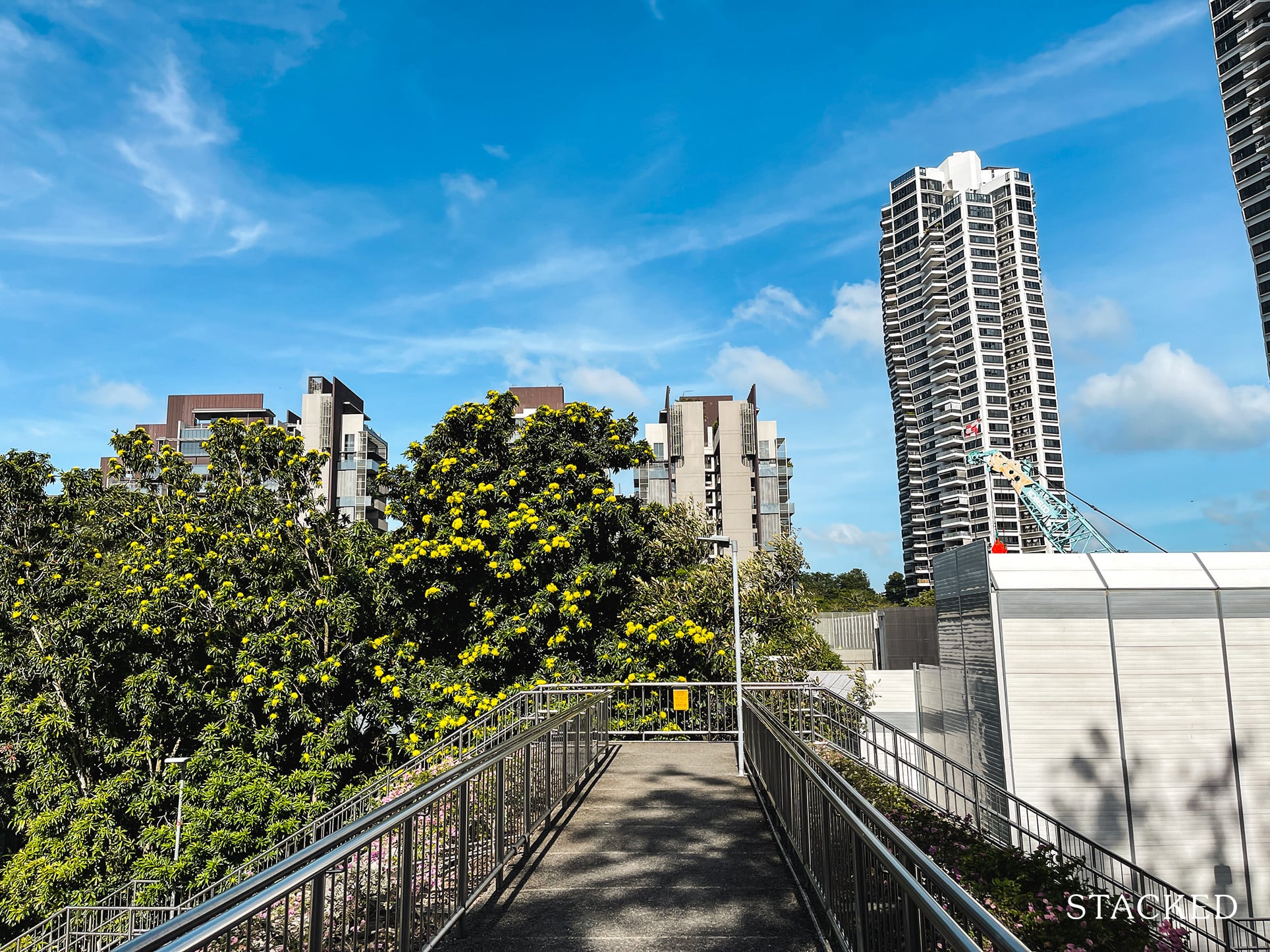
Higher-level concerns involve social interaction and mental health, as older folks are more likely to cloister themselves when walking around is an issue.
Attempts to reduce heavy traffic, such as by adopting a car-lite approach, thus become a higher priority. This can be a strong positive for many buyers, as it can mean more in the way of walking trails, or lower traffic congestion in the area.
(Note that walkability is also a boon to families with children, due to road safety issues).
On the flip side, a car-lite approach and lower congestion can affect developments. For example, condos that are within 400 metres of an MRT station are allowed to build fewer parking lots; and some may find there isn’t even room for visitor parking.
3. Collective sale efforts can be more challenging
In general, an en-bloc sale becomes more difficult, as the number of older owner-occupiers goes up.
It is difficult – and in some cases almost impossible – for a 70+ year old senior to uproot and move. It’s not just about the significant inconvenience; it’s also a matter of finance. Not every senior citizen will have the means to afford a new home that makes them happy; even with the sale proceeds (do remember that loans are much harder to get for senior citizens).
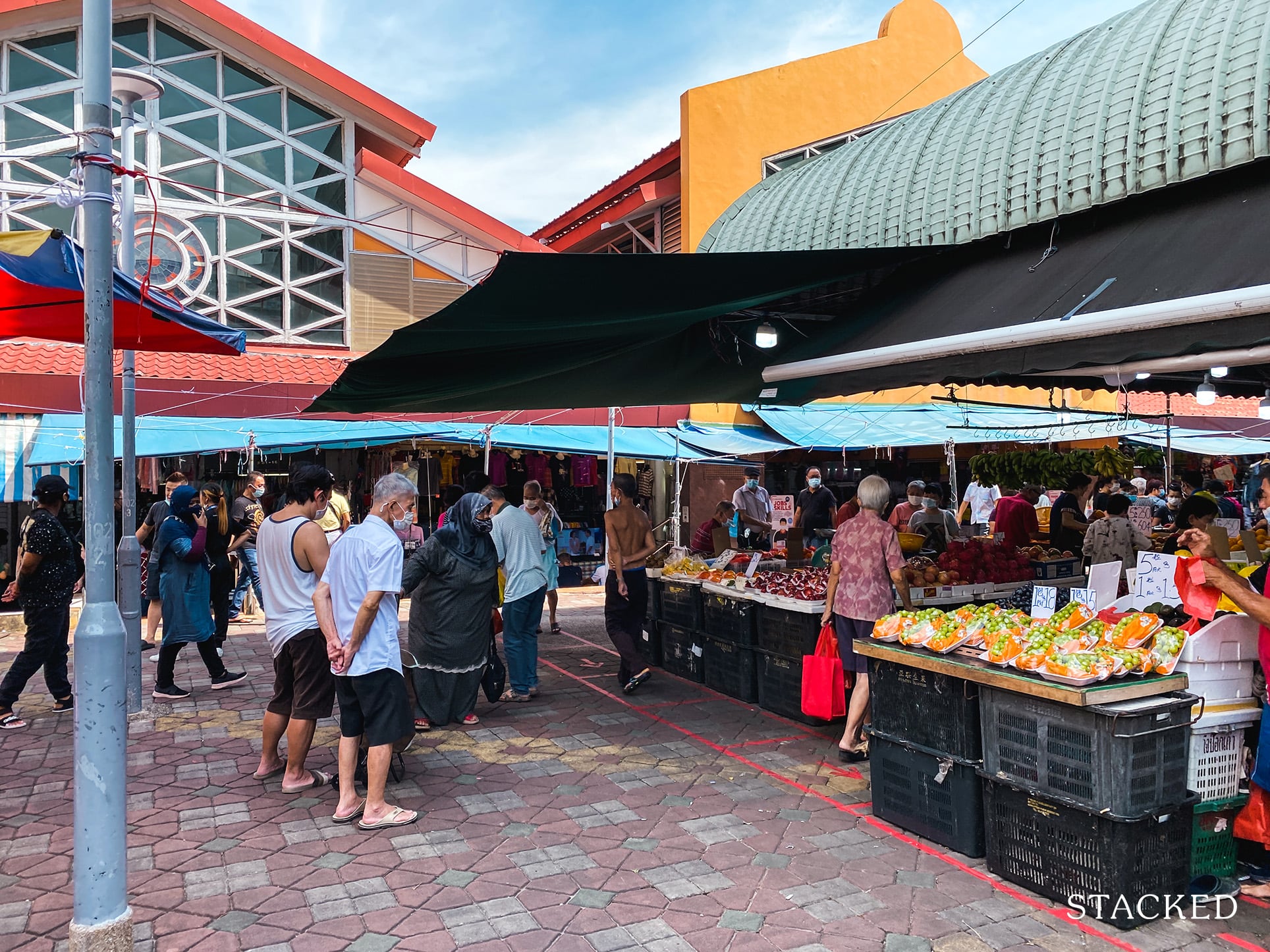
In addition, most seniors are committee to ageing in place, and their friends and favourite hang-outs are all in the neighbourhood. As such, resistance to en-bloc sales can be high.
We’ve previously pointed out that, with regard to HDB flats, we feel this could be a grinding point with the Voluntary Early Redevelopment Scheme (VERS). Getting sufficient consensus will likely be tougher if the HDB flats consist of mainly elderly folk.
4. Communal activities and outreach methods will differ
This is more for those who are active in Community Centre (CC), town councils, etc. You do have to expect that the activities will be designed to accommodate the larger population.
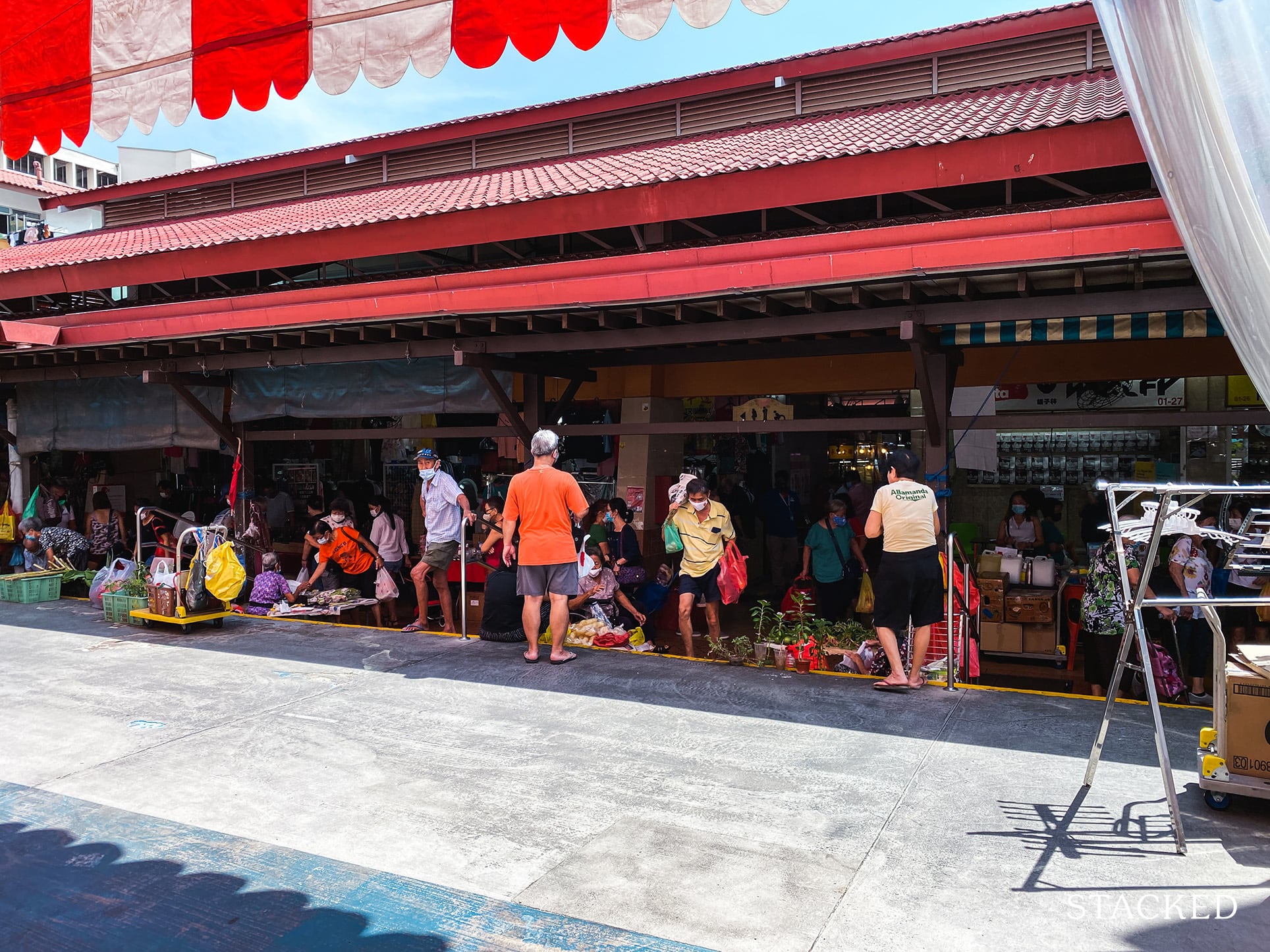
A neighbourhood with more seniors is less likely to organise high-octane basketball or football tournaments; but you will get more in the way of line dancing, getai, arts-and-crafts, etc.
One of the issues we’ve heard from some homeowners is that, in neighbourhoods where it’s mainly older folk, you’re less likely to find tutoring services in the CC. These are quite important, for families that can’t afford to splurge on private tuition.
It’s hard to tell if this is universally true, as each CC has its own activities; but it does make sense that smaller demand would lead to fewer such courses.
Town councils and CCs may also differ in the way they reach out to residents. Older folks, for example, may not be as receptive to text messages or email – so you may find that most communication happens on the bulletin boards near lifts, or door-to-door.
It’s up to you whether you love this or hate this; we know some HDB owners loathe people turning up at their door when things can be communicated online, whilst others feel it’s warmer.
On the sensitive topic of hoarding
Some Singaporeans will mumble that hoarding is “more likely” when there are a lot of older residents.
Hoarding is not strictly related to old age; the tendency can begin quite young. It is simply that the accumulation becomes more noticeable among older hoarders, as there has been more time for it to pile up.
Hoarding is also not restricted to HDB estates, and condos have their share of hoarders.
While it can be problematic to live next to a hoarder, it’s a bit of a stretch to think one is suddenly going to appear next to you, on account of neighbours being elderly.
By all means, scout out your neighbours; but don’t let an ageist theory deprive you of getting a great home.
You can reach out to us at Stacked if you need help finding the right neighbourhood or unit; and check out in-depth reviews of new and resale condos in the Singapore private property market.
Commentary like this is useful for understanding the broader market. The harder part is applying those ideas to a specific property, budget or decision you’re actually considering.
That’s often where a second opinion becomes valuable.
If you’d like to discuss how this applies to your own circumstances, you can reach out for a one-to-one consultation here.
And if you simply have a question or want to share a thought, feel free to write to us at stories@stackedhomes.com. We read every message.
Frequently asked questions
How will Singapore's aging population affect local amenities and services?
Why is walkability important in neighborhoods with many elderly residents?
What challenges are there in selling older residential estates in Singapore?
How do community activities differ in neighborhoods with more seniors?
Is hoarding more common among elderly residents in Singapore?
0 Comments