


At an international property event I attended last weekend, I discovered an interesting consideration about investing in an overseas property - namely, the issue of economies of scale.
Unlike institutional or asset managers, who manage portfolios comprising entire apartment blocks, the size of the portfolio owned by your typical retail investor doesn’t justify hiring a dedicated property manager to ensure the units are in tip top shape all the time.
Usually, we see retail investors grow a relatively modest portfolio of one or a small handful of apartment units - generally studios, as well as one- or two-bedroom units - where most of the rental income is going into the landlord's pocket rather than property management services.
This is a concern because seemingly small cultural differences can snowball into huge headaches.
The international property event I attended was organised by FM Investment who were promoting their portfolio of Japanese properties. During a presentation by the CEO, he mentioned how the company ended up having to develop and run an in-house laundry service.
You can read our full coverage of the event here.
This is now part of their full suite of end-to-end services, from property investment financing, to acquisitions, and rental and property management. The laundry service grew organically because tenants were complaining that third party laundry services seemed to be doing a poor job.
This undermined the overall rental experience and negatively affected reviews and the rentability of the property.

But this reminded me of other issues I’ve heard from friends who invest in overseas properties. In many European countries, it’s perfectly normal for tenants to dry their clothes indoors, even in the living room or bedroom.
This isn’t poor tenant behaviour, but a reflection of how their homes are designed in the context of their climate, especially countries with a temperate or seasonal climate. Outdoor clothes drying may not be allowed in most developments, and during the colder months it’s more practical to dry your laundry inside.
But here’s the issue that some of these investors experienced as a result.
In buildings with limited ventilation (very common in older buildings), or during winter when windows are kept shut, the moisture released from drying clothes accumulates indoors. Give it a few months to a year and the unit develops damp patches and mould, often behind furniture or along external walls.
A good property manager plays a pivotal role here. They can’t stop the indoor drying, but they can stop the mould. The issue is, how do you justify hiring someone to do this?
It might make sense if you own multiple units in the same building, but surely you won’t hire someone to check on a single studio or one-bedroom unit just for an issue like this.
In some countries like Japan, even sorting the garbage isn’t a straightforward task. Garbage disposal in Japan is highly regulated; some might even say a bit obsessive. Different types of waste have to be sorted carefully, cleaned, and disposed of on specific days.
If tenants get this wrong, there’s a real chance the trash doesn’t get picked up. This can quickly lead to complaints from neighbours, or even intervention from building management.
Usually, your tenants are also foreigners who are also grappling with these cultural differences for the first time, and struggling to understand or communicate with local authorities and service providers.
The challenge for many buyers today isn't access to information.
It's interpreting that information in a way that makes sense for their finances, goals, and stage of life.
Over time, that's also why we decided to work with agents who shared the same data-driven and advisory-led approach behind our editorial, consultants who could help readers think through decisions more objectively, rather than simply push transactions.
Today, the team has worked with more than 2,000 clients across over $5B in property transactions.
This is why there’s a booming market for full-service property management services tagged with international property investment pitches.
As long as individual retail investors are limited to small scale investment portfolios that don't justify the cost of a property manager, the best way to ensure continuous rentability and rental appeal will not only involve buying the unit, but buying into a full service support system.
We still see investment pitches promoting Japanese investment property that are bundled with rental guarantees or sublease arrangements. But companies like FMI don't just develop the property, they also handle everything from tenant sourcing to day-to-day issues like complaints, repairs, and compliance with local rules.
In the UK, in university towns like Manchester, newer rental developments are being built around integrated management concepts. Some projects come with on-site teams, co-working spaces, and tenant services that are managed regularly.
These facilities aren’t just “lifestyle” add-ons, though they’re often politely advertised as such.
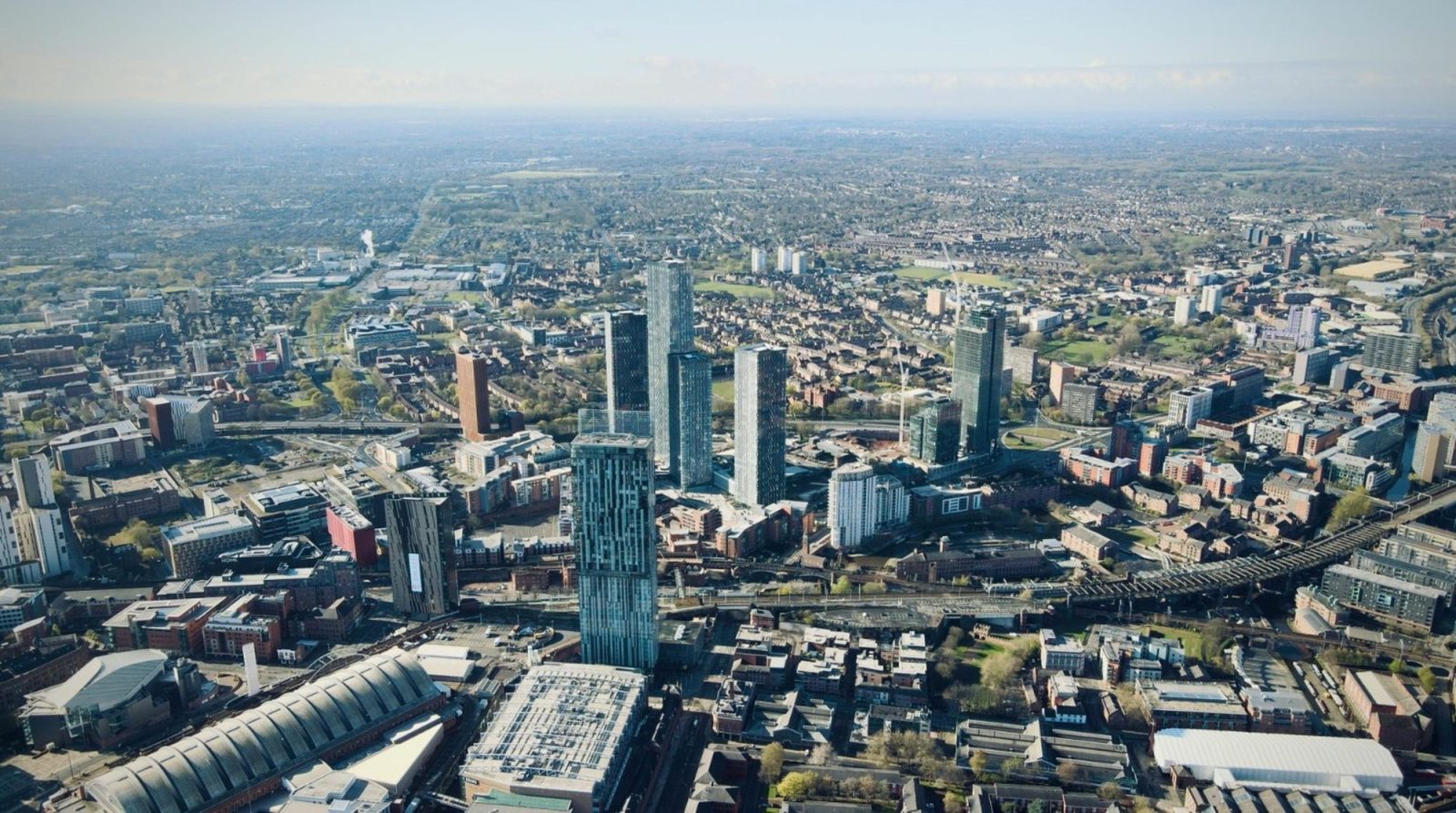
At this point, I think the sellers know that retail investors need this. Most of these investors don’t have the time or inclination to work with multiple third parties on such issues, and they won’t be encouraged to expand their investment portfolio if they have to deal with a larger number of these issues.
Looking ahead, I suspect an increasing number of international property investors will drop so-called ‘romantic’ notions of scouting out your own little investment property in a foreign country, and then “learning the ropes” so to speak of being a landlord.
It's more likely that savvy investors will be looking to work with agencies or developers who are backed by a full ecosystem of solutions, when it comes to supporting overseas property investing.
Turning back home to Singapore, the site of the former Shuqun Secondary School in Jurong East is on the news again.
The school site has been vacant since 2019, and the former school buildings were last used as temporary Covid-19 testing/vaccination centres during the pandemic.
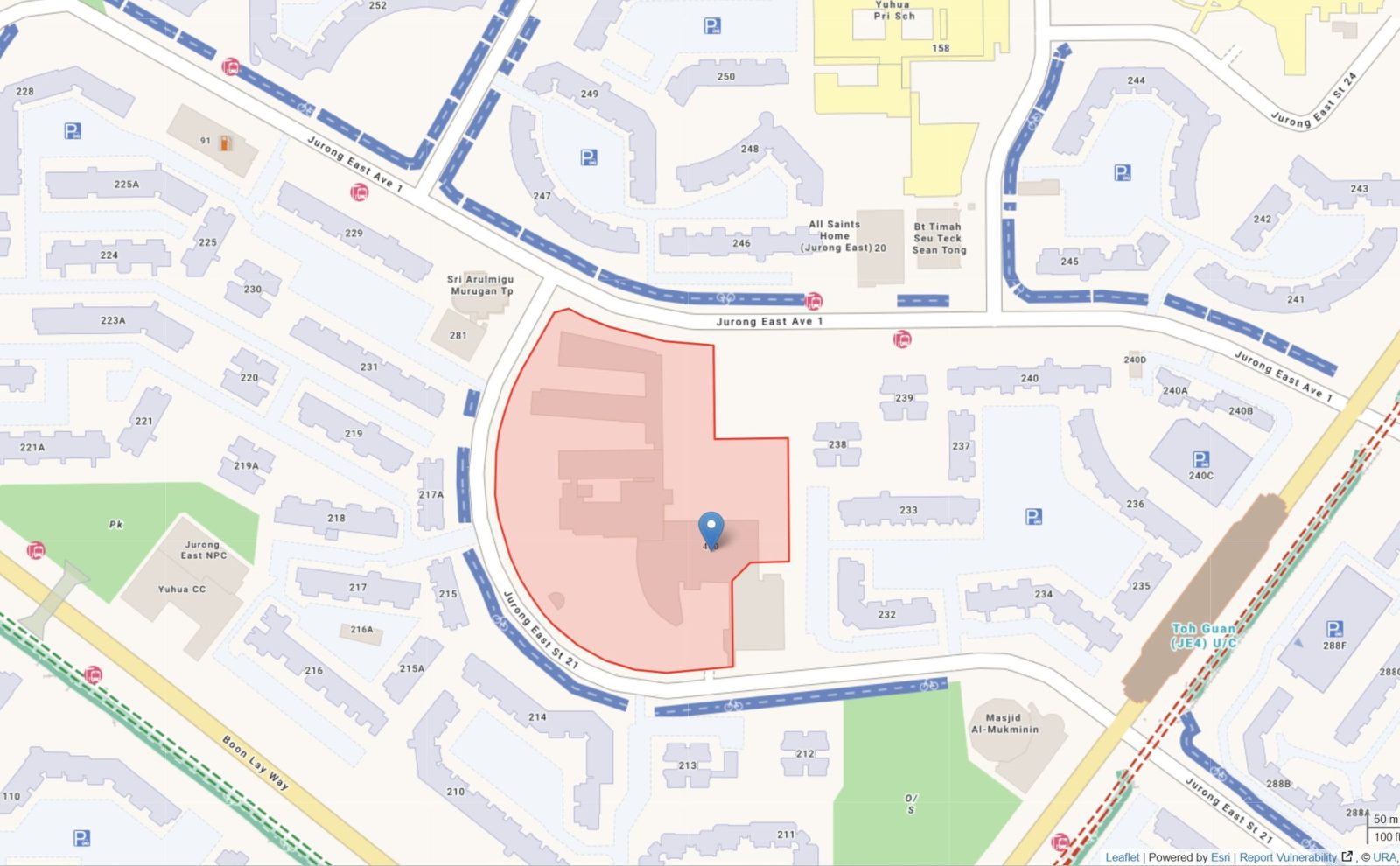
Recently, URA has proposed to increase the plot ratio of the roughly three-hectare site from 3.5 to 5.0, according to a recent proposed amendment to the Master Plan. This would significantly intensify the allowable built up area when it is eventually redeveloped for residential homes.
Based on the proposed plot ratio, the site could yield around 1,150 to 1,250 HDB flats, or up to about 1,750 to 1,800 private homes.
The site is also about 400 metres from the upcoming Toh Guan MRT station on the Jurong Region Line (JRL), and is near existing amenities like Yuhua Village Market. Its not an outstanding site but a conveniently located plot for a future development in the West.
Could it be a target for upgraders from Tengah in future?
It surprises me to hear this opinion from some mainstream media outlets. We ccan’t discount that the future new residential development could attract interest from HDB upgraders in Tengah.
But Tengah is still being developed (in fact it is the newest town today) and while flats which complete their usual five-year minimum occupation period (MOP) tend to command premium prices, it’s unclear how much price appreciation we’ll see materialise in this nascent residential town, especially over such a short period.
A more realistic perspective would be that upgrading demand is likely to come from Jurong East, which has benefitted from significant rejuvenation efforts in recent years. The town’s mature housing stock means that a growing number of homeowners no longer see it as just a jumping off point to “better” neighbourhoods.
This means there are more upgraders who want to stay within its boundaries, and an increasing number of flats here have benefitted from steady price appreciation for their owners to potentially bridge the gap with private properties.
I’m inclined to think the Shuqun site will be mostly given over to HDB use, especially given its proximity to Yuhua Village Market and Toh Guan station. For those who have family and friends in Jurong, this is a site worth watching.
Meanwhile in other property news…
- Does the US-Iran War carry any implications for Singapore’s property market? We spoke to some experts for their opinions.
- Should you swap a flat in Holland V for a condo unit in Marine Parade, if the condo might cost $2.3 million? Here’s our in-depth answer.
- Check out how one couple managed to find their ideal unit in Nava Grove, after clarifying the key issues.
- Pasir Ris is one of the three main towns that define the East region, but our deep dive shows how it differs quite a bit from Tampines and Bedok.
Weekly Sales Roundup (06 - 12 April)
Top 5 Most Expensive New Sales (By Project)
| PROJECT NAME | PRICE S$ | AREA (SQFT) | $PSF | TENURE |
| 21 ANDERSON | $22,500,000 | 4489 | $5,013 | FH |
| SKYWATERS RESIDENCES | $12,482,340 | 2099 | $5,947 | 99 yrs |
| RIVER MODERN | $6,897,000 | 1830 | $3,769 | 99 yrs (2025) |
| THE CONTINUUM | $6,150,000 | 2260 | $2,721 | FH |
| RIVER MODERN | $6,096,000 | 1830 | $3,331 | 99 yrs (2025) |
Top 5 Cheapest New Sales (By Project)
| PROJECT NAME | PRICE S$ | AREA (SQFT) | $PSF | TENURE |
| NARRA RESIDENCES | $1,366,000 | 646 | $2,115 | 99 yrs (2025) |
| UNION SQUARE RESIDENCES | $1,368,000 | 506 | $2,704 | 99 yrs (2024) |
| THE CONTINUUM | $1,428,000 | 560 | $2,551 | FH |
| TEMBUSU GRAND | $1,530,000 | 646 | $2,369 | 99 yrs (2022) |
| COASTAL CABANA | $1,574,000 | 915 | $1,720 | 99 yrs (2024) |
Top 5 Most Expensive Resale
| PROJECT NAME | PRICE S$ | AREA (SQFT) | $PSF | TENURE |
| ST THOMAS SUITES | $8,800,000 | 3757 | $2,343 | FH |
| THE BOTANIC ON LLOYD | $7,480,000 | 3488 | $2,145 | FH |
| THE PATERSON | $6,500,000 | 3283 | $1,980 | FH |
| PARC STEVENS | $6,300,000 | 2411 | $2,613 | FH |
| PEACH GARDEN | $5,120,000 | 2766 | $1,851 | FH |
Top 5 Cheapest Resale
| PROJECT NAME | PRICE S$ | AREA (SQFT) | $PSF | TENURE |
| THE VUE | $625,000 | 420 | $1,489 | FH |
| URBAN VISTA | $725,000 | 441 | $1,643 | 99 yrs (2012) |
| REZI 3TWO | $728,888 | 452 | $1,612 | FH |
| VIBES@UPPER SERANGOON | $760,000 | 441 | $1,722 | FH |
| HILLSTA | $760,888 | 527 | $1,443 | 99 yrs (2011) |
Top 5 Biggest Winners
| PROJECT NAME | PRICE S$ | AREA (SQFT) | $PSF | RETURNS | HOLDING PERIOD |
| FIFTH AVENUE CONDOMINIUM | $4,800,000 | 2433 | $1,973 | $3,200,000 | 21 Years |
| THE PATERSON | $6,500,000 | 3283 | $1,980 | $2,850,000 | 21 Years |
| BELMOND GREEN | $3,500,000 | 1270 | $2,756 | $2,242,430 | 24 Years |
| PARC STEVENS | $6,300,000 | 2411 | $2,613 | $2,070,000 | 15 Years |
| ST THOMAS SUITES | $8,800,000 | 3757 | $2,343 | $2,037,400 | 11 Years |
Top 5 Biggest Losers
| PROJECT NAME | PRICE S$ | AREA (SQFT) | $PSF | RETURNS | HOLDING PERIOD |
| MIDTOWN BAY | $1,850,000 | 753 | $2,455 | -$366,400 | 6 Years |
| REFLECTIONS AT KEPPEL BAY | $1,720,000 | 1012 | $1,700 | -$67,400 | 16 Years |
| RV ALTITUDE | $1,210,000 | 441 | $2,742 | -$53,000 | 5 Years |
| NORMANTON PARK | $902,000 | 527 | $1,710 | -$49,000 | 5 Years |
| ICON | $1,177,500 | 700 | $1,683 | -$2,500 | 5 Years |
Top 5 Biggest Winners (ROI%)
| PROJECT NAME | PRICE S$ | AREA (SQFT) | $PSF | ROI (%) | HOLDING PERIOD |
| COTE D'AZUR | $2,700,000 | 1292 | $2,090 | 212% | 24 Years |
| FIFTH AVENUE CONDOMINIUM | $4,800,000 | 2433 | $1,973 | 200% | 21 Years |
| BELMOND GREEN | $3,500,000 | 1270 | $2,756 | 178% | 24 Years |
| MAYSPRINGS | $1,410,000 | 1335 | $1,056 | 177% | 24 Years |
| 8@WOODLEIGH | $2,140,000 | 1076 | $1,988 | 151% | 17 Years |
Top 5 Biggest Losers (ROI%)
| PROJECT NAME | PRICE S$ | AREA (SQFT) | $PSF | ROI (%) | HOLDING PERIOD |
| MIDTOWN BAY | $1,850,000 | 753 | $2,455 | -17% | 6 Years |
| NORMANTON PARK | $902,000 | 527 | $1,710 | -5% | 5 Years |
| RV ALTITUDE | $1,210,000 | 441 | $2,742 | -4% | 5 Years |
| REFLECTIONS AT KEPPEL BAY | $1,720,000 | 1012 | $1,700 | -4% | 16 Years |
| ICON | $1,177,500 | 700 | $1,683 | 0% | 5 Years |
Transaction Breakdown
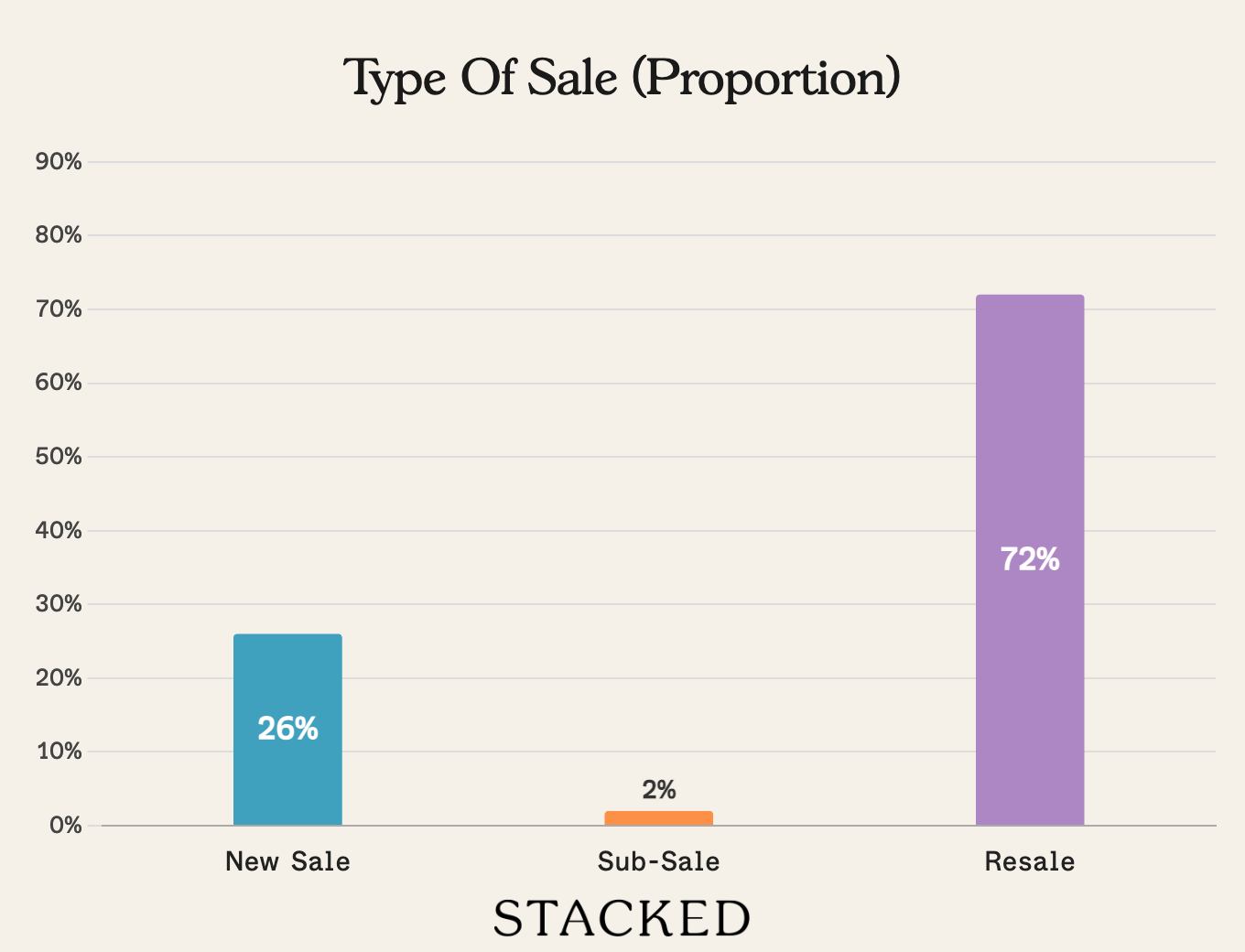
Follow us on Stacked for news and updates on the Singapore property market.
At Stacked, we like to look beyond the headlines and surface-level numbers, and focus on how things play out in the real world.
If you'd like to discuss how this applies to your own circumstances, you can reach out for a one-to-one consultation here.
And if you simply have a question or want to share a thought, feel free to write to us at stories@stackedhomes.com. We read every message.



0 Comments