

Dear Stacked,
My husband and I need to decide whether to consolidate our property holdings into one landed family home, or retain an investment property while purchasing another home for our own stay. We are both Singaporeans and have approximately $2 million in cash and CPF. If we purchase a landed property, we could spend around $3 to $4.5 million.
We currently own a unit at The Verandah Residences, which we bought for $1.91 million in 2018. We hope to sell it for about $2.1 million, and this property has an outstanding loan of close to $1.3 million.
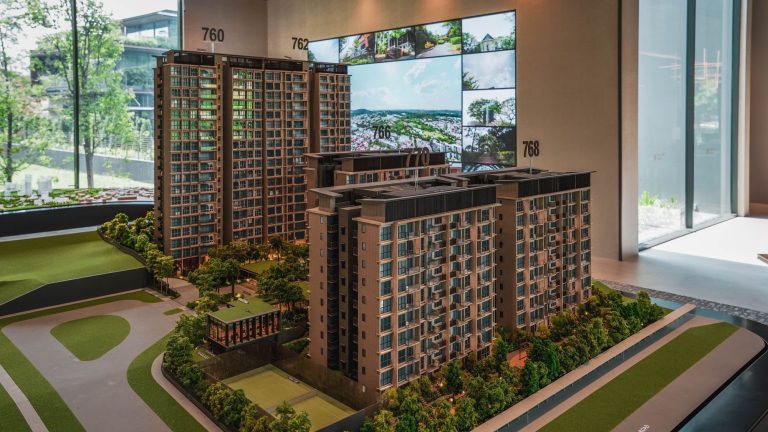
We also have a unit at Tembusu Grand that was purchased for $1.878 million in 2023. That unit has an outstanding loan of about $1.1 million. It has been rented for $4,700 per month for a 12-month period since June this year. The monthly mortgage is approximately $2,700.
But our family resides in a unit at Ritz Regency, which we rent for $5,150 per month, because we want to be within 1 km of Kong Hwa School for our child’s Primary 1 registration in July 2027.
If the enrollment is unsuccessful, we would have more flexibility over where we live. Other areas in the East that we prefer include Kembangan, Telok Kurau, Siglap, Tanah Merah, Bedok, Paya Lebar, Joo Chiat, and Katong. But the uncertainty makes the timing and location of our next purchase complicated.
We could sell both properties and purchase one landed home. The appeal would be a larger family home and potentially owning a freehold landed asset. But this would concentrate our wealth into one property, and give up on the rental income and potential appreciation of the unit at Tembusu Grand.
Should we build a two-property portfolio, or consolidate the proceeds into one landed home? And if we keep the unit at Tembusu Grand, would purchasing a landed home still be financially comfortable?
For a landed purchase, would it be more prudent to target an older property at around $3 million to $3.6 million and reserve approximately $300,000 to $500,000 for renovation or rebuilding works, rather than spend closer to $4 million to $5 million on a new turnkey property?
Thank you very much for your time, and we look forward to hearing your thoughts.
Hi, and thanks for writing in!
We appreciate that you offered us a detailed breakdown of your situation. Before we start making any comparisons, let’s clearly establish what you actually want your property assets to accomplish for your family.
If the priority is to improve your family’s quality of life, we think that a landed home offers the obvious benefits: more space, more privacy, and a home that your children can grow up in.
But the trade-off, as you pointed out, is that you would be concentrating a large part of your wealth in a single asset. In addition, you forego any potential rental income from investment properties.
We also think a landed home might cost you some flexibility down the road, in the sense that selling the house in the future might get more complicated. This can arise from the challenge in securing a replacement property.
The way ahead also depends on how investment-oriented you would like to be. In this case, owning two condo units as investment assets provides more of an edge in the future. These rental-yielding properties can continue generating rent, and you can sell them later without uprooting your family.
However, this does come with a bit of its own baggage in the form of financing and property and other associated taxes. Also, there’s no guarantee that the units at Tembusu Grand will outperform a landed property just because you’re collecting good rental income at the moment.
So, the foremost question is which option takes priority: owner-occupancy or investment? We would focus on answering this first, before elaborating on your question.
The challenge for many buyers today isn't access to information.
It's interpreting that information in a way that makes sense for their finances, goals, and stage of life.
Over time, that's also why we decided to work with agents who shared the same data-driven and advisory-led approach behind our editorial, consultants who could help readers think through decisions more objectively, rather than simply push transactions.
Today, the team has worked with more than 2,000 clients across over $5B in property transactions.
What would your finances look like after the sale?
A useful method of framing your property decision-making is to estimate the aftermath of either property purchase.
First, we’ll estimate your available funds and borrowing capacity after selling the unit at The Verandah Residences. Then, we’ll compare this with a situation where you sell both of the units at The Verandah Residences and Tembusu Grand.
We’re going to assume the following to help us analyse this:
- Each property is owned by a different spouse (otherwise you will incur ABSD on the second property)
- Your combined annual income is split equally between both spouses.
- Neither spouse has any other outstanding loans (otherwise there may be further restrictions on your maximum loan quantums)
- The approximately $1 million that each of you holds in cash and CPF excludes funds already committed to your existing properties.
If you only sell the unit at The Verandah Residences
| Selling price | $2,100,000 |
| Less: Outstanding loan | -$1,336,550 |
| Less: CPF principal and accrued interest | -$274,360 |
| Less: Legal fees | -$3,000 |
| Less: Agency fee, including GST | -$45,780 |
| Estimated cash proceeds | $440,310 |
If we assume the distributions of the $1 million in existing cash and CPF, the potential purchase budget would be:
| Existing cash and CPF | $1,000,000 |
| CPF refunded from The Verandah Residences | $274,360 |
| Cash proceeds from The Verandah Residences | $440,310 |
| Estimated maximum loan* | $2,269,051 |
| Total funds available | $3,983,721 |
| Less: BSD based on $3,983,721 | -$178,623 |
| Estimated affordability | $3,805,098 |
*Based on a monthly income of $25,000, a 20-year loan tenure and no other debt obligations. While the actual interest rate will likely be lower, loan affordability is assessed on a 4% interest rate floor, as set by MAS.
According to our estimates, if you only sell the unit at The Verandah Residences, this could leave your spouse (the one making the purchase) with a budget of approximately $3.8 million, while allowing you to retain the unit at Tembusu Grand as an investment property.
Thus, you may not be forced into selling the unit at Tembusu Grand to afford another sizeable unit in a condo. The estimated budget puts you within reach of many family-sized units on the market today. However, you might feel the financial stretch if you chose to buy a landed home.
If you sell both properties
Let’s assume that the unit at Tembusu Grand is also sold at its estimated market value of $2.05 million:
| Selling price | $2,050,000 |
| Less: Outstanding loan | -$1,097,178 |
| Less: CPF principal and accrued interest | -$334,878 |
| Less: Legal fees | -$3,000 |
| Less: Agency fee, including GST | -$44,690 |
| Estimated cash proceeds | $570,254 |
Let’s combine that with the sale of the unit at The Verandah Residences:
| Existing cash and CPF | $2,000,000 |
| CPF refunded from both sales | $609,238 |
| Cash proceeds from both sales | $1,010,564 |
| Estimated maximum loan* | $4,538,101 |
| Total funds available, before BSD | $8,157,903 |
| Less: BSD based on $8,157,903 | -$404,787 |
| Estimated affordability | $7,753,116 |
Taking this situation purely on the financing limits, it would seem that selling both properties could give you a budget of approximately $7.75 million. Bearing in mind that your preferred budget of below $4.5 million is still sensible, and you may want to keep to that regardless.
But we can say with some certainty that selling both of the condo units would put you in a comfortable position to afford your next home, even if it is a landed property.
Would one landed home or two separate condo properties suit your situation better?
In order to unpack this, let's take a look at how the price of non-landed private residential developments compared to landed properties have moved over the past decade.
| Year | Non-landed private properties (subsale and resale only) | Landed private properties (subsale and resale only) |
| 2015 | $1,197 | $1,187 |
| 2016 | $1,248 | $1,138 |
| 2017 | $1,293 | $1,176 |
| 2018 | $1,323 | $1,211 |
| 2019 | $1,346 | $1,269 |
| 2020 | $1,280 | $1,269 |
| 2021 | $1,354 | $1,382 |
| 2022 | $1,473 | $1,559 |
| 2023 | $1,595 | $1,695 |
| 2024 | $1,681 | $1,787 |
| 2025 | $1,755 | $1,912 |
| 2026 (Up to June) | $1,799 | $1,999 |
| Annualised | 3.78% | 4.85% |
According to the data compiled by Stacked, between 2015 and the first half of 2026, landed home prices recorded an annualised price growth rate of 4.85%, compared to a price growth of 3.78% for condos, over the same period.
The uptick in price after 2021 is largely attributed to the strong recovery in the housing market at the end of the Covid-19 pandemic, when demand for new private homes outstripped the supply of completed developments.
That said, these are broad market averages. Factors like unit size, development location, and entry prices can still change the outcome for your specific properties. But in a very general sense, we have seen stronger appreciation from the landed segment - at least in terms of raw percentage gains.
Other non-quantitative factors to consider
Beyond price, here are other factors that would be useful to keep in mind:
| One landed home | Two separate properties | |
| Historical market performance | Landed market has grown more strongly over the period studied | Could be better or worse depending on the individual condos selected |
| Family space | Typically offers more space and privacy | Depends on the own-stay property |
| Rental income | None if entirely owner-occupied | Investment property can continue generating rent |
| Flexibility | Capital is concentrated in the family home | Investment property can be sold independently |
| Diversification | Reliant on one property | Exposure is spread across two properties |
| Upkeep | May be higher and less predictable | Condo maintenance costs tend to be more predictable |
| Liquidity | Higher quantum may narrow the buyer pool | Properties can be sold separately |
We’ll also point out that many - but not all - landed enclaves tend to be located further from most of the shopping malls in a neighbourhood, as well as most MRT stations in the vicinity.
This isn’t always a drawback, and some homeowners may consider it part of the exclusivity of living in a landed estate. But it’s worth keeping in mind as you go about your property search.
You should also consider that most condo projects tend to record a higher transaction volume, which goes a long way in supporting price growth over a long period of time. On the other hand, landed homes have a relatively low yearly transaction volume, which can make positive price momentum and growth rather slow.
What kind of landed home would you be able to afford given your budget?
To recap: if you only sell the unit at The Verandah Residences, it could give you a budget of approximately $3.82 million. Meanwhile, your preferred budget is $4.5 million even if you sell both of the condo units.
Let’s see what that could buy in your preferred neighbourhoods:
| District | 99-year average price | Average size | FH/999-year average price | Average size |
| 14 | $3,236,250 | 3,193 sq ft | $5,132,290 | 2,738 sq ft |
| 15 | — | — | $6,711,141 | 3,082 sq ft |
| 16 | $3,011,861 | 2,718 sq ft | $5,284,264 | 3,156 sq ft |
| 17 | $2,509,209 | 1,827 sq ft | $4,620,710 | 3,466 sq ft |
| 18 | $2,812,184 | 2,340 sq ft | $5,199,333 | 3,949 sq ft |
In general, if you continue to hold on to the unit at Tembusu Grand, this would leave you with enough to afford a 99-year leasehold landed home. Based on the transaction data that we’ve compiled, the average landed home in District 14 and 16 - which cover areas such as Paya Lebar, Eunos, Bedok, and Upper East Coast - fetched average resale prices of approximately $3 million to $3.24 million.
This price range is within your estimated budget of $3.82 million, although the margin for renovation and other expenses may be tighter than it first appears.
A landed property worth $3.2 million, that requires another $300,000 to $500,000 in renovation costs would bring the cost to around $3.5 million to $3.7 million. This also comes ahead of any BSD, legal fees and other development of acquisition expenses.
Freehold landed homes are a different matter. The average freehold or 999-year landed home in District 14 and 16 typically commands an average resale price of $5.1 million to $5.3 million. When we include District 15 - home to Katong, Joo Chiat, and parts of the East Coast - the price of a freehold landed home is more expensive still, at approximately $6.71 million.
If you choose to sell both condo properties, it has a greater chance of giving you the financial capacity to find a suitable home within this higher price range. But if you intend to keep the purchase price below $4.5 million, your options would still be limited. Even District 17, which has the lowest average price for a freehold landed property among the districts in the East, those properties still command prices of $4.6 million and more.
This does not mean that there are no freehold landed properties that can be found at prices under the district average. But the affordable options likely involve compromises in terms of property location, land size, and the condition of the home.A lower purchase price is not much of a bargain, if the house then requires extensive rebuilding.
If the compromises are too severe for your taste, a spacious condo unit may provide a better choice, and you have the bonus of keeping the unit at Tembusu Grand as a separate investment.
Since there’s such a large gap between 99-year leasehold and freehold landed properties, let’s examine how each segment has performed over time.
| Year | 99-year leasehold landed (subsale and resale only) | 999-year/freehold landed (subsale and resale only) |
| 2015 | $845 | $1,258 |
| 2016 | $803 | $1,210 |
| 2017 | $856 | $1,232 |
| 2018 | $846 | $1,305 |
| 2019 | $869 | $1,365 |
| 2020 | $859 | $1,378 |
| 2021 | $955 | $1,494 |
| 2022 | $1,110 | $1,701 |
| 2023 | $1,171 | $1,866 |
| 2024 | $1,171 | $1,938 |
| 2025 | $1,278 | $2,042 |
| 2026 (Up to June) | $1,214 | $2,163 |
| Annualised | 3.35% | 5.05% |
The data indicates that both landed segments recorded decent price appreciation over time, but the gap in terms of the rate of price growth has widened considerably. The fact is, the landed market’s stronger overall performance is driven by freehold and 999-year properties.
This is the challenge that we would flag out with the entry-level landed option. A $3 million to $3.6 million 99-year leasehold home may allow you to retain ownership of the unit at Tembusu Grand, but this means you may need to accept historically weaker gains on a 99-year leasehold landed home.
But spending $4.5 million or more still doesn’t guarantee a suitable freehold home in your preferred parts of the East, since the average quantum has exceeded that price. So we wouldn't start with the assumption that buying a landed home is automatically the better upgrade, especially if it lands you a property with too many compromises.
Should you wait until after the outcome of the P1 registration?
Given the uncertainties of primary school registration and enrollment, our preference would be to wait for the outcome before committing to another property. If (touch wood) your child doesn’t end up at Kong Hwa, the location constraint disappears. You then have a much wider search area, and your requirements may even change.
If your child gains admission through home-school distance priority, you must continue residing at the registered address for at least 30 months from the start of the P1 Registration Exercise, lest your child be transferred to another school.
You can buy another property during this period and rent it out until you’re ready to move. But this is rarely as straightforward as it sounds - you would incur non-owner-occupier property tax, and the tenancy would need to end at the right time. It may also be harder to secure a tenant for an older landed home, which you already intend to renovate.
At the current rental price of $5,150 per month, another 30 months of rent at Ritz Regency would cost you approximately $154,500 - assuming the rent remains unchanged. That’s still a considerable addition to your property costs.
If you wait until after the enrollment result, it would remove one major variable from an already expensive decision. We would only buy earlier (1) if you find an exceptional property, which you would be happy to own regardless of the school outcome, or (2) which can be rented out without creating any financial or logistical headaches.
Should you expand your search beyond neighbourhoods in the East?
Your own-stay property needs to suit your family’s daily routines, lifestyle and long-term comfort. If the East is where you genuinely want to live, buying elsewhere simply for the sake of diversification isn’t a real win. We wouldn’t compromise on having a more livable home, just to address a theoretical investment question.
Besides, two properties in the same region will not necessarily perform in the same way. Their prospects will depend on their specific locations, property types, and project tenure. A condo and a landed home will also appeal to different groups of buyers and tenants.
We would choose the family home based on where you actually want to live, and assess Tembusu Grand separately as an investment.
Our Final Thoughts
Based on what you’ve shared, we would not rush to sell the unit at Tembusu Grand or buy a landed home - not before the outcome of your child’s P1 registration is known.
If you sell the unit at The Verandah Residences, there’s a good chance that you could walk away with approximately $3.82 million. That’s enough to pay for a sizeable condo unit, or maybe a 99-year landed home, while allowing you to keep the unit at Tembusu Grand for its rental income.
The data also suggests that freehold landed home options in the East are generally quite pricy, and affordable options may come with too many compromises. From our perspective, there’s little point in buying a landed home if the result is going to be extensive renovations and expensive maintenance that eat away at your savings.
However, if living in a landed home is a genuine long-term priority for your family, then selling both condo properties to buy a better landed property could make sense. But be clear about what you are doing: this would be a lifestyle decision more than an investment approach, since you would be giving up on the potential rental income and lose some flexibility on future property moves.
For now, we’d say focus on the sale of the unit at The Verandah Residences, and wait for the primary school enrollment. After that, take a fresh look at the market and see what your sale proceeds can afford you.
At Stacked, we like to look beyond the headlines and surface-level numbers, and focus on how things play out in the real world.
If you'd like to discuss how this applies to your own circumstances, you can reach out for a one-to-one consultation here.
And if you simply have a question or want to share a thought, feel free to write to us at stories@stackedhomes.com. We read every message.

0 Comments