


























This case study is based on a recent consultation conducted by Grady (R047131G), a property agent and partner property consultant with Stacked. This write-up walks through the key decisions, trade-offs, and market considerations involved, with insights that buyers and sellers may find useful.
Project Case Study: Springleaf Residence
Client Details
- 36 and 34 years old
- Own-stay buyers
- Married with one child (newborn)
- Upgrading from a three-room HDB flat in Commonwealth
Buyer’s Brief
- Looking for a three-bedroom unit for own stay (space for child and to work from home)
- Budget around $2 million to $2.3 million
- Preference for a resale condo due to immediate housing needs
- Strong preference for Commonwealth / Alexandra / Holland area
- Must be within walking distance to MRT
- Within 4km of parents’ home (to retain PHG eligibility)
- Focus on practical layouts rather than views or high floors
- Primary goal is capital preservation rather than maximising returns
Challenges They Faced
- Lease decay on their existing flat, with around 40 years left on the land lease
- Buyer pool constraints due to financing limits on older flats
- Need to sell first to unlock funds, but timelines did not align neatly
- Limited resale inventory of three-bedroom units within budget
- Strong competition for well-priced units in mature estates
- Balancing urgency (due to newborn) with making a sound long-term decision
So many readers write in because they're unsure what to do next, and don't know who to trust.
If this sounds familiar, we offer structured 1-to-1 consultations where we walk through your finances, goals, and market options objectively.
No obligation. Just clarity.
Learn more here.
The first call and concerns over growing urgency
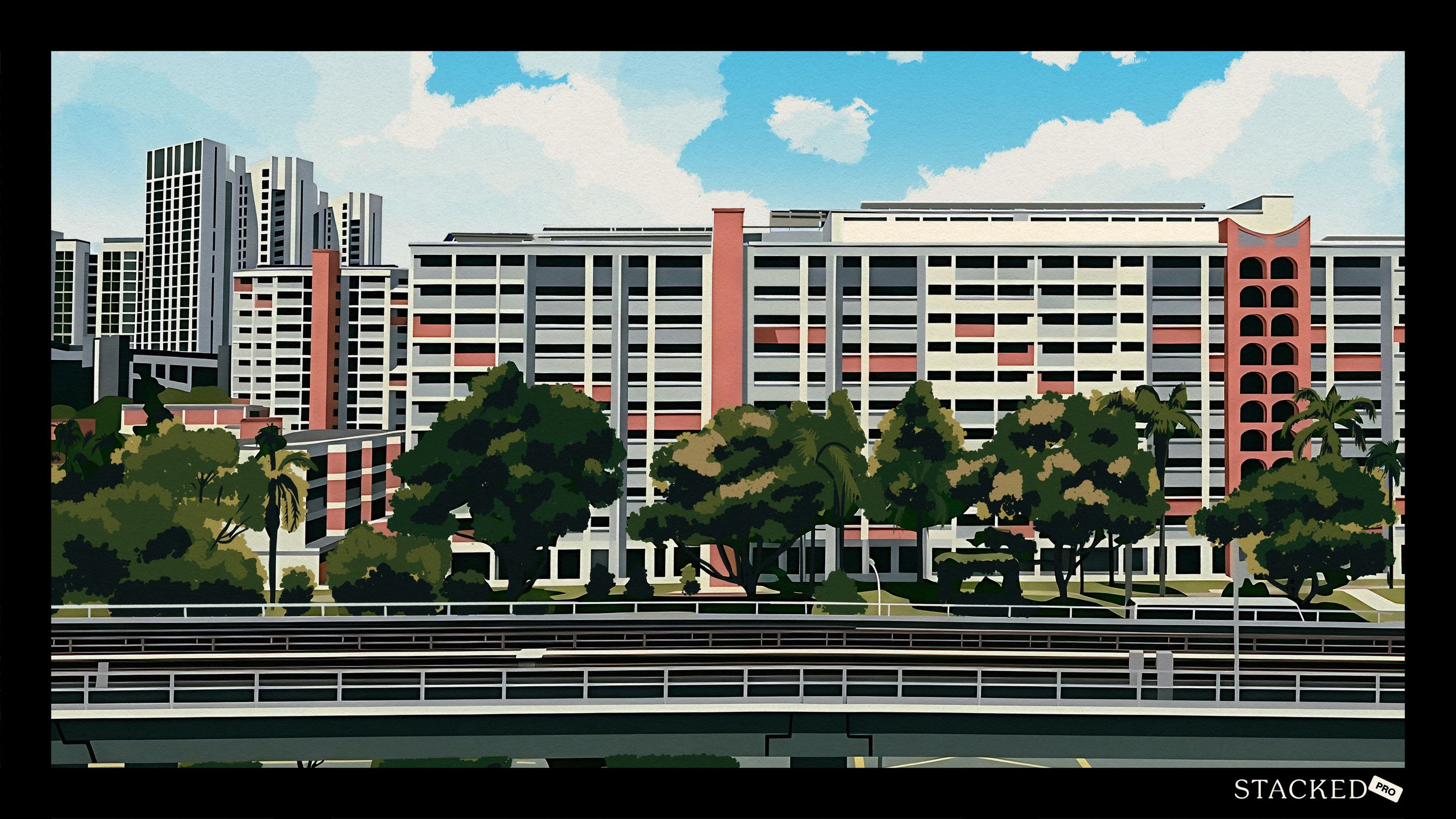
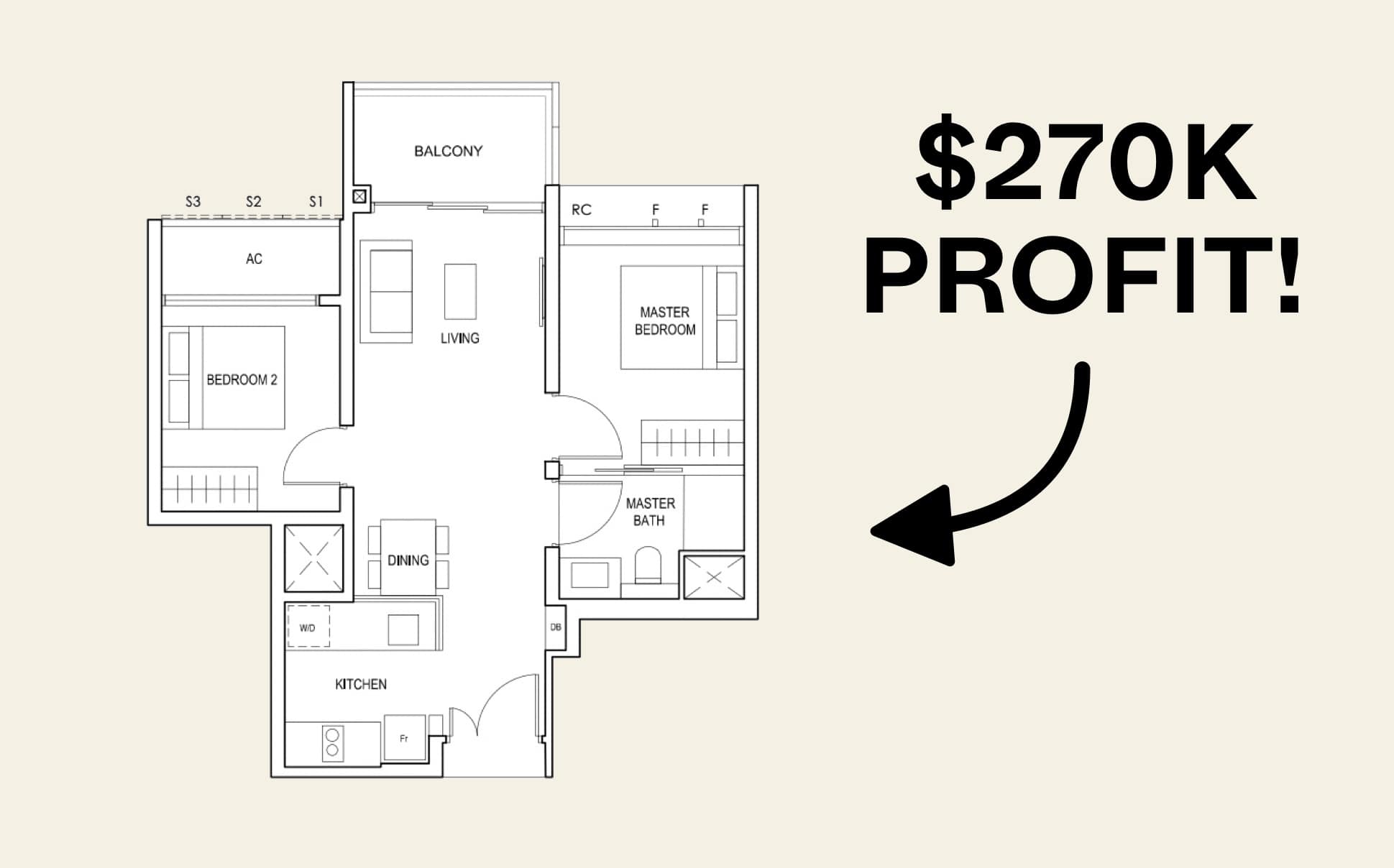
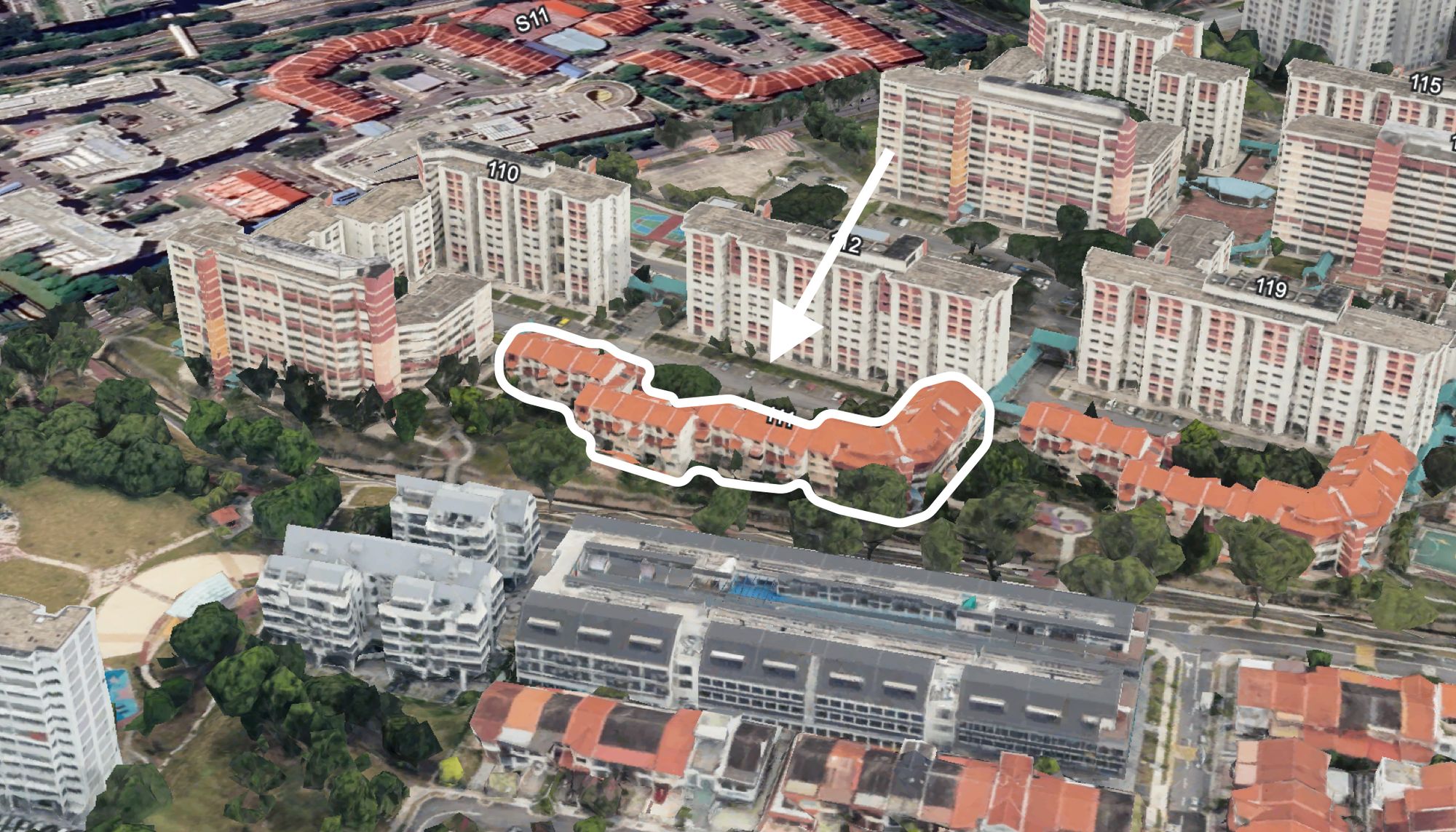
When the couple first reached out in late July their situation wasn’t urgent, but it was already changing. They had been living in their three-room flat in Commonwealth for about five years. This was an older flat that had cost under $300,000 despite the attractiveness of its location. When they initially bought the unit, it was sufficiently spacious and the couple fully renovated it.
When their newborn came along – about four and half years after they purchased the flat – they now found the layout had become restrictive given their new family situation. The study room had to be repurposed as a nursery, which meant their work-from-home setup moved into the living room. This resulted in a more cluttered feel and the sense of everything being a temporary workaround.
At the same time, there was also a growing concern about the flat’s remaining lease and the impact on its price. With about 40 years left on its land lease, it was still sellable. But they were aware that financing constraints would become more pronounced over time.
For example, prevailing policies such as the maximum CPF usage for buyers may be reduced if the remaining lease cannot last until the youngest buyer is 95. If a private home loan is used, banks may also restrict loan quantum’s based on a short remaining lease.
“The concern was more about how that buyer pool would shrink in the next few years, especially as financing gets tighter for younger buyers looking to buy the flat,” Grady says.
The couple’s concern wasn’t whether they could sell, as there was still interest in the property given its appealing location. The issue was whether they could still achieve a reasonable price to help with their plans to upgrade, and how that price could be harder to attain the longer they waited.
Since there was now a sense of urgency, we began marketing the flat as soon as mid-September 2025.
Listing and selling the flat
The initial tranche of responses to the flat’s listing were strong despite the age of the property, which reflected the value of its good location. “We had quite a number of interested buyers, but the challenge was about the loan eligibility. With older flats you can get a lot of enquiries, but not everyone can necessarily follow through,” says Grady.
There were 22 enquiries submitted within the first three weeks, and multiple offers that ranged from $420,000 to $440,000. Compared to newer three-room flats in Commonwealth, Queenstown, or Dawson – which can reach $700,000 to $800,000 – it was one of the few resale flats on the market in this area that came at such an affordable entry price.
However, the profile of the buyer pool revealed an important constraint – most buyers were singles above 35 or downgraders. Grady estimates that about 80% of the prospective buyers were in this category.
Their mindset was also quite telling. Most prioritised the location today over what might happen 30 years later. Some even expressed hope that the flat might eventually be selected for SERS. In many cases, this wasn’t a fully strategic decision, and it was simply what they could afford based on their loan eligibility.
(Note: Prevailing housing policy at the time of this article means that there are no more SERS planned, so those buyers would have been burned had they proceeded!)
Several of the buyers encountered loan eligibility issues due to the flat’s low remaining lease.
“One buyer stepped up with the highest offer,” Grady says, “But didn’t realise how much the loan quantum would be reduced because of the remaining lease on the flat, and they later dropped out as a result”.
This highlighted a key point when selling older flats, and older properties in general – it’s possible to see a high level of buying interest but still run into difficulties closing a deal because of the prevailing financing framework.
A significant amount of work had to go into identifying and filtering out buyers who were interested but who could not qualify. Ultimately, the couple agreed to an offer of $440,000, which was a sale price that resulted in a Cash Over Valuation (COV) of $35,000.
The sale process also proved that their initial concerns were legitimate. If they had waited even longer to sell the flat, it’s possible that the catchment of prospective buyers would have struggled with even worse financing issues, and the outcome may have been much less positive.
Starting the search for a replacement home: what worked and what didn’t
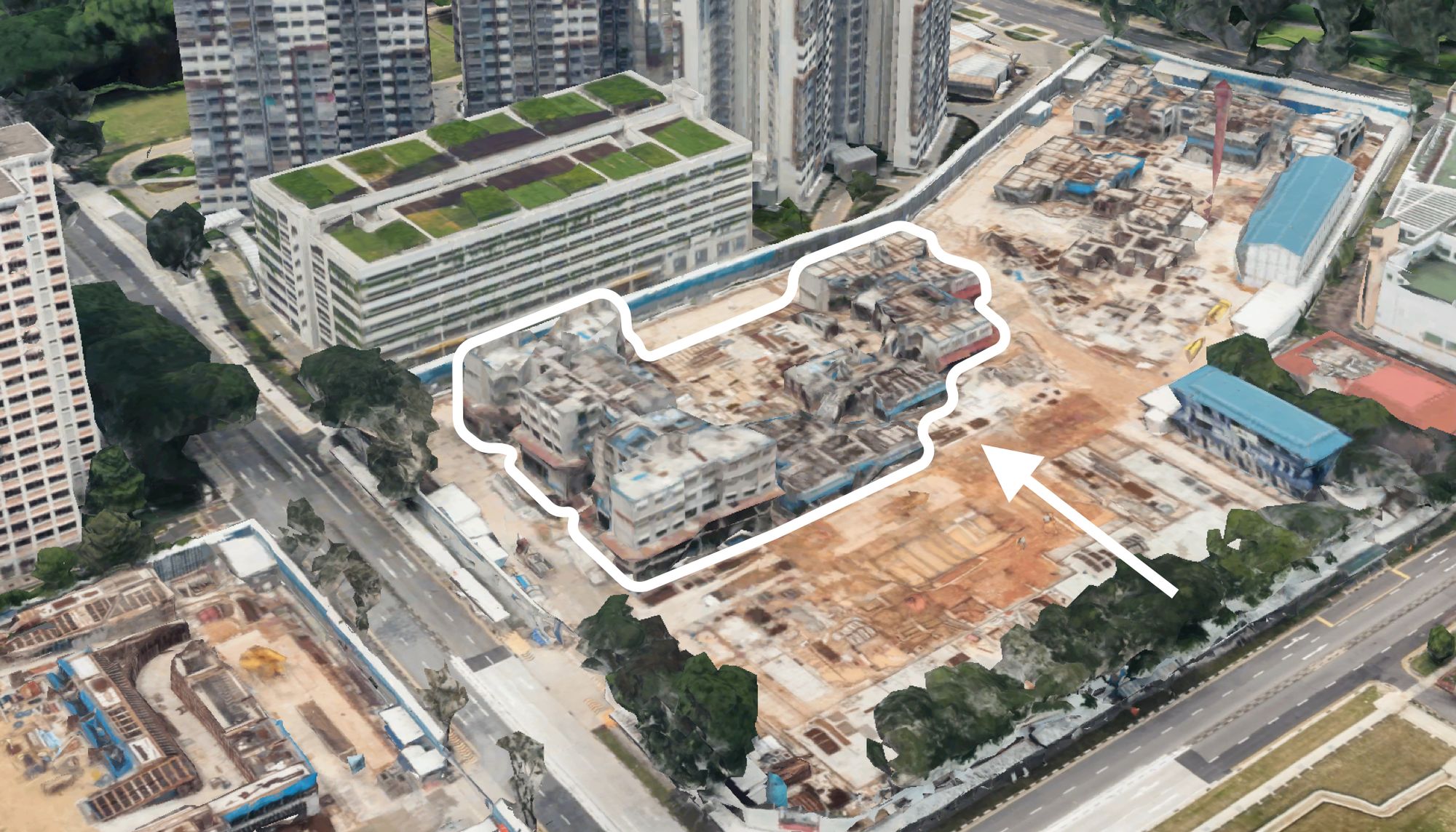
The search for a replacement home took place while the sale of the flat was still underway. Based on our couple’s preferences, the initial viewings were all units within the Commonwealth / Alexandra area. Some of the properties covered during this time included Stirling Residences, Commonwealth Towers, Echelon, Artra, and Alex Residences.
Initially, there wasn’t a rigid checklist of points per se. But after a few viewings, the couple had a better sense of what they wanted in a home.
They expressed a clear preference for projects that sit on relatively larger land sites and featured more extensive facilities. In other words, condos that were more deliberately designed to accommodate the needs of families.

We also noticed the couple were less particular about issues such as unit facing, views, and the height of the unit. What mattered the most was the unit layout – they were looking for an interior that focused on practicality and efficiency, and there was a need to accommodate a proper work-from-home setup.
The couple also expressed a distaste in single-block projects, and developments that mostly featured vertically integrated facilities, such as sky gardens, above-ground pools, and various facilities spread across different floors. They often remarked that these projects felt more like offices than residences to them.
These preferences helped us to narrow the field quickly.
But just as they began to get a clearer sense of what they wanted, another issue surfaced. We realised that relatively few three-bedders fit the $2 million to $2.3 million budget they had. We were also confined to whatever resale listings were available at the time, since the couple could not wait several years for a new project to be completed.

This was evident when they pursued a unit at Stirling Residences. The asking price for the unit they shortlisted was $2.35 million and there were multiple interested buyers. The seller’s agent conducted a blind bid, requesting both price and timeline.
The couple offered $2.3 million but the unit was eventually sold at around $2.31 million. The difference was small but enough for them to miss out.
Grady says “For a situation like this, if the pricing is right, you’re usually not the only one looking. Even a small difference in offer, or a slight hesitation, can be enough to lose out on the deal”.
The options were so limited that, for a moment, the couple even considered some two-bedroom plus study units at Echelon, as these units were priced similar to smaller three-bedroom units. This wasn’t ideal but it reflected the limited supply within their budget.
Securing the unit at Highline Residences
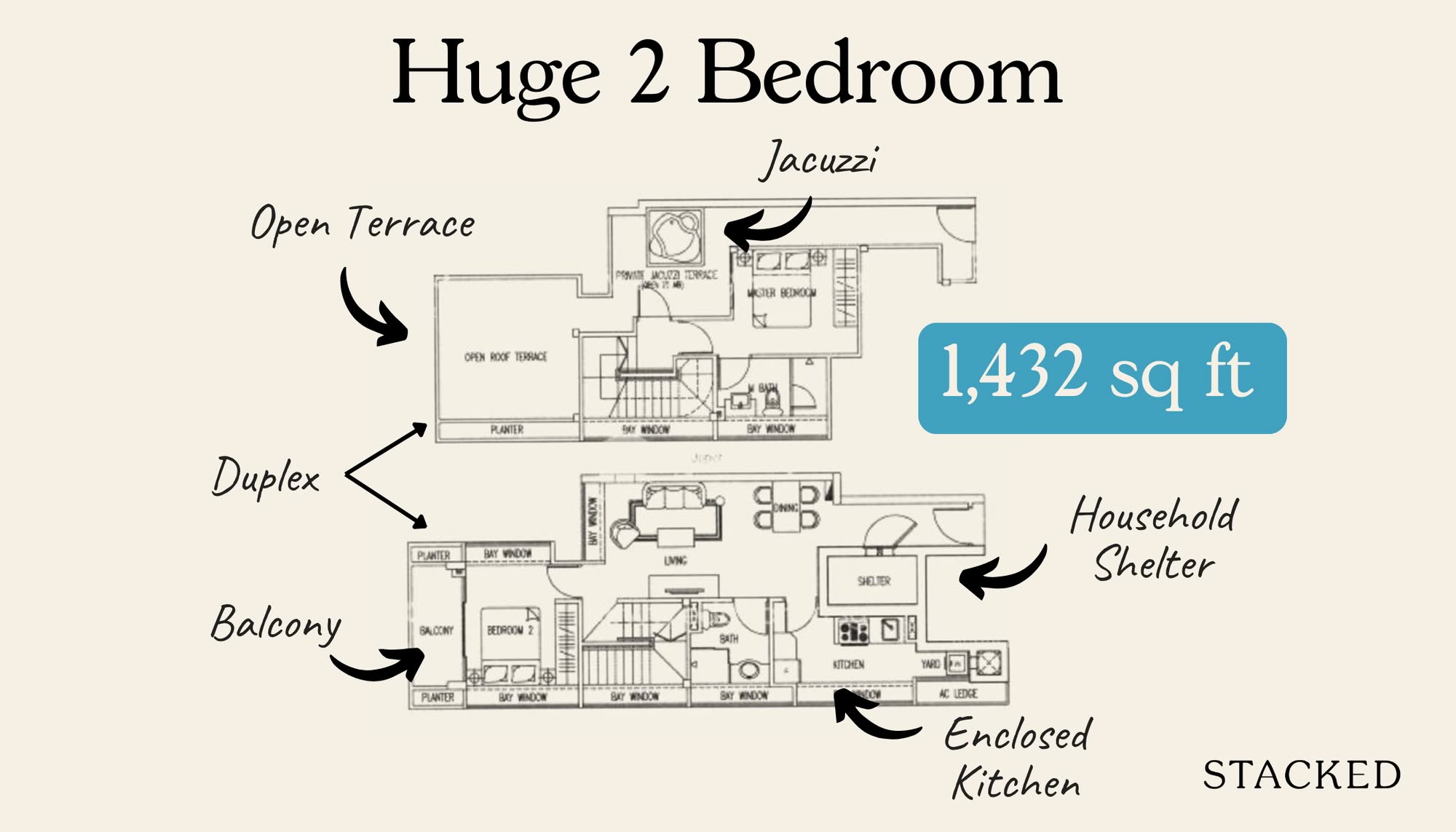
Shortly after missing out on the unit at Stirling Residences, an opportunity presented itself at Highline Residence. There was a 915 sq ft, three-bedroom unit available there – slightly larger, in fact, than the unit at Stirling Residences that they had missed out on.
By this point the couple had already sold their flat and had roughly 60 days to secure a replacement property (given the buyer’s timeline for moving in). So, when they viewed the unit at Highline Residences, the time to make their decision was relatively quick.
The asking price for the unit was $2.35 million and the couple offered $2.3 million – the same amount as their earlier bid for the unit at Stirling Residences. The offer was made on the same day as the viewing, and this time, it was accepted.

In terms of size and layout, the difference between this unit and the one at Stirling Residences was not dramatic on paper – roughly 893 sq ft versus 915 sq ft. However, it was still a proper three-bedder with the right layout that this couple was looking for.
They also preferred it since the rooms not come with too many built-in furniture. This gave them flexibility to adapt the space over time, rather than having to work around existing fixtures.
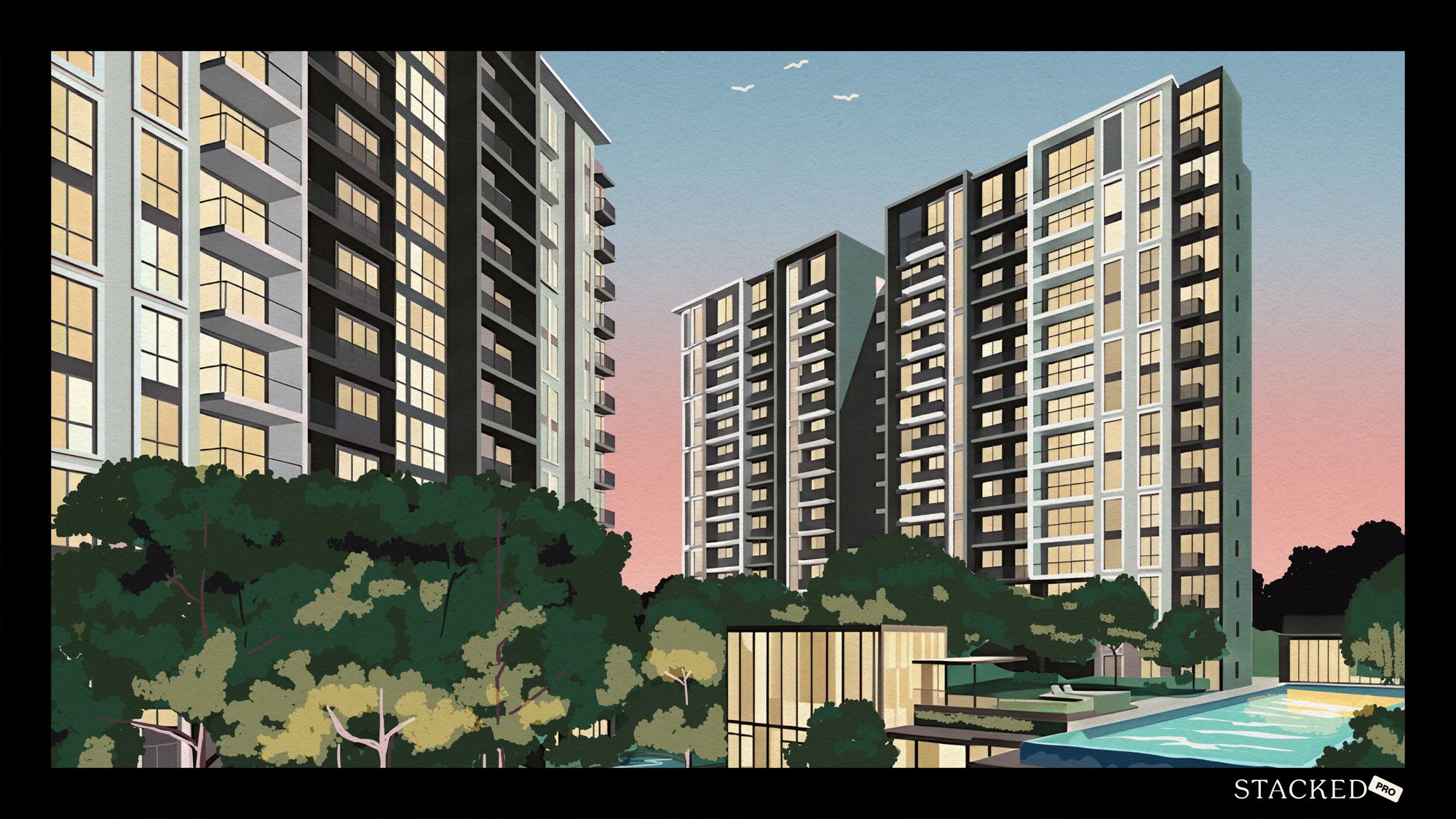
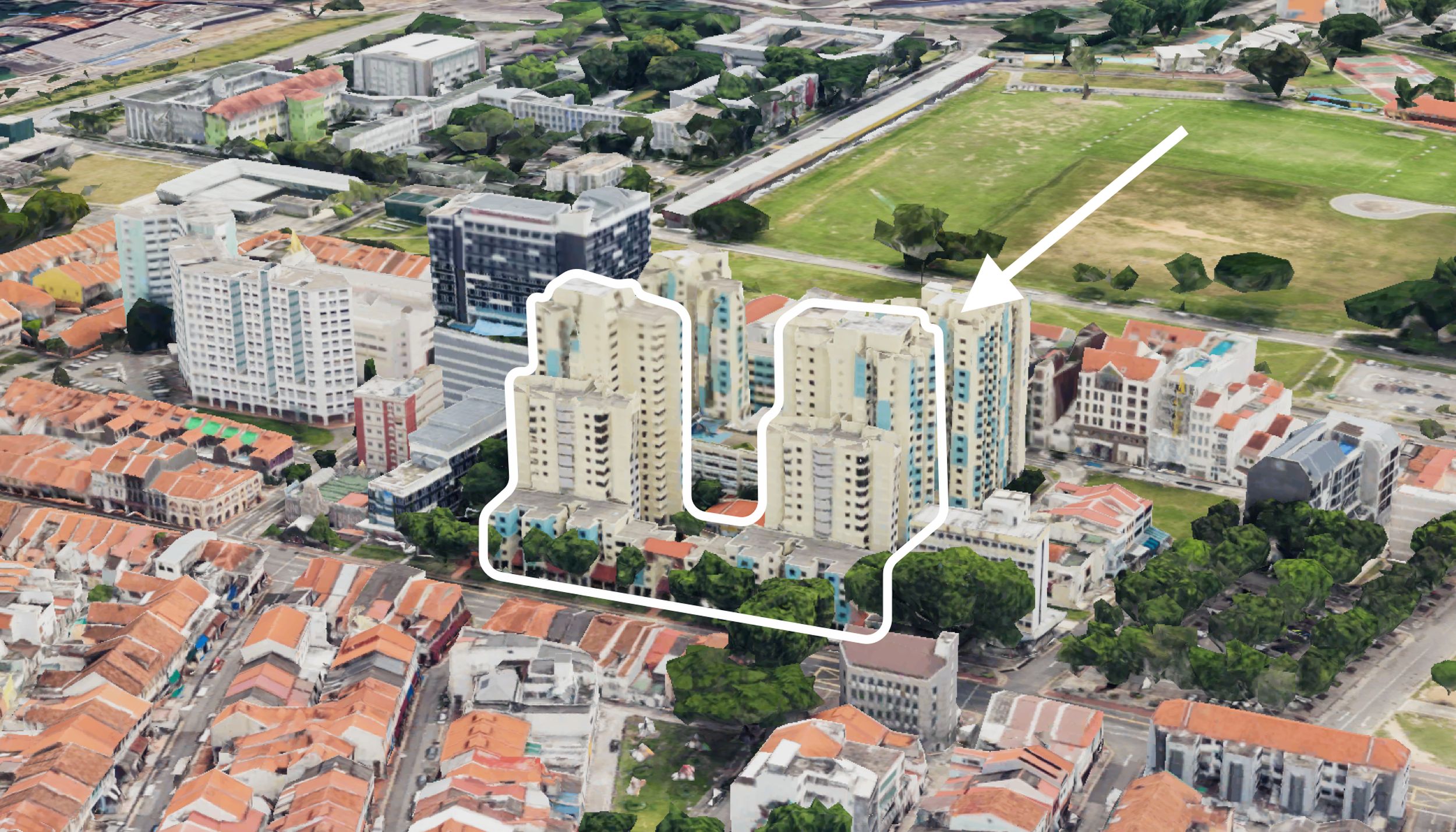
Highline Residences also aligned with their preferences. It was located within their desired area, within walking distance to Tiong Bahru and close to familiar surroundings. The development also offered a larger, more cohesive living environment compared to some of the other options they had seen.
In a market where many options felt like partial compromises, this stood out as a balanced choice.
Final thoughts
Looking back, this case is a good example of how – instead of obsessing over the “perfect” home – it may be better to prioritise and make trade-offs. The couple could have waited for a more “perfect” unit. But doing so would have meant taking on a different kind of risk and remaining in a flat where lease decay would worsen later prospects.
Another consideration here regarding older homes. If you’re at the peak of your career, but sitting on a depreciating asset, it may not be a particularly strong position. As we saw in this case, the impact of lease decay on a property’s selling price is not just theoretical. Certain government policies, such as the end of SERS, limitations on CPF usage, can intensify the effects of lease decay.
We can also see that a significant part of the sale process was filtering through buyers, ensuring they’re able to proceed. This is an instance in which, due to the unusual nature of the property (40 years left on the lease), it may be more helpful to get an agent’s help than to attempt a DIY transaction.
At Stacked, we like to look beyond the headlines and surface-level numbers, and focus on how things play out in the real world.
If you’d like to discuss how this applies to your own circumstances, you can reach out for a one-to-one consultation here.
And if you simply have a question or want to share a thought, feel free to write to us at stories@stackedhomes.com — we read every message.
Frequently asked questions
Why did the couple decide to sell their flat in Commonwealth?
What challenges did the couple face when selling their older flat?
How did lease decay affect the sale of the flat?
What was the outcome of the flat’s sale?
How did the couple’s preferences influence their choice of new home?
Why did the couple choose Highline Residences as their new home?



0 Comments