



















How to avoid ABSD in Singapore: 2 ingenious ways to go about it



The Additional Buyer Stamp Duty (ABSD) is probably one of the most hated acronyms among Singaporeans, along with COE and ERP. After the latest round of cooling measures, where the ABSD rates were raised for Singaporeans buying their second residential property, many would be buyers were probably scrambling to search for solutions on how to avoid ABSD in Singapore.
So if you are looking to avoid ABSD tax in Singapore, is there anything you can actually do about it?
Here are some workarounds that people have done so far.
Reader questions like the one above rarely have a clear-cut answer. The “right” move depends on your finances, timeline, long-term goals, and how much downside you’re prepared to accept if things don’t go to plan.
That’s the hardest part of any property decision, not finding information, but understanding what it means for your situation before committing.
Over time, that’s also why we decided to work with agents who shared the same data-driven and advisory-led approach behind our editorial, consultants who could help readers think through decisions more objectively, rather than simply push transactions.
Today, the team has worked with more than 2,000 clients across over $5B in property transactions.
2 ways on how to avoid ABSD in Singapore
1. De-coupling
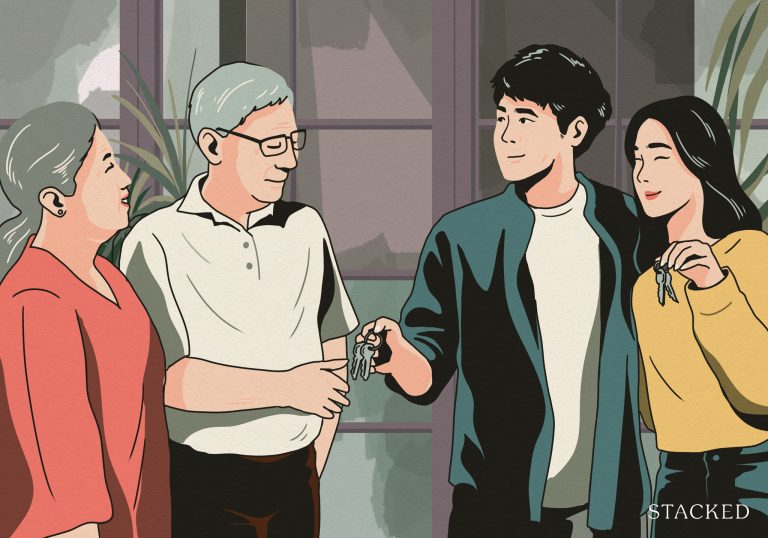
De-coupling basically just means removing one spouse from the ownership of the property, so that you can free up one name to purchase another property, thereby avoiding any ABSD. This means that you will be buying over your partner’s share of the property, or vice versa. The transfer of ownership will be done through a traditional Sales and Purchase agreement and this will have to be stamped. So buyer stamp duty will have to be paid based on the purchase price (or the market value, whichever is higher) of the share of the property. Note that all CPF and accrued interest have to be refunded as well.
You can also “gift” the share of the property to your spouse, but this will require you to not have any outstanding loans.
2. Purchasing through a trust
This is a “loophole” that is usually used by cash rich families that utilise their children’s name to purchase additional properties without having to pay the ABSD. The biggest caveat of this is that you will have to pay cold hard cash to do so, no bank will give you a loan for this. So if you do have hoards of cash stacked up somewhere, this could be a viable way to go about avoiding ABSD.
Bonus:
Recently, a news report from the Straits Times reported that there was a “curious case of a rising number of returned units” at some new launches. For most new projects with progressive payments, the buyer will have to pay 5 percent of the purchase price as a booking fee. After which if the buyer does not go ahead with the purchase, 25 percent may be forfeited and the unit will have to be returned to the developer.
It turns out in these cases, the buyers do still intend to purchase the property. The only difference is that the developers have allowed the options to purchase to be continually reissued after expiry, without any forfeiting of the booking fee.
According to Mr Chia Ngiang Hong of City Developments:
“As with most projects, OTPs typically lapsed or were re-issued due to various reasons such as (buyers’) change of mind, request for addition and/or deletion of name, or change of unit.
Moreover, (following the cooling measures), some home buyers including HDB upgraders required more time to arrange their finances and loans.”
So in this case, not so much of avoiding ABSD, but delaying the inevitable doom of paying it.
Want to find out more about ABSD remission? Here is all you need to know!
The questions our readers send in are rarely about the market in general. They’re about a home they’re considering, a timeline they’re working towards, or a trade-off they’re trying to make.
That’s where we usually help readers go a step further, applying the same research and decision-making framework behind our articles to their own situation.
If you’re facing a similar decision and would like someone to help you think it through before you commit, you can book a one-to-one consultation here.
And if you simply have a question or want to share a thought, feel free to write to us at stories@stackedhomes.com. We read every message.

2 Comments
Hello, does this type of platform exist for other countries? For example, for Latin America, in particular Colombia, or other countries in Latin America? Does it exist in North America: Canada, US and/or Mexico?