



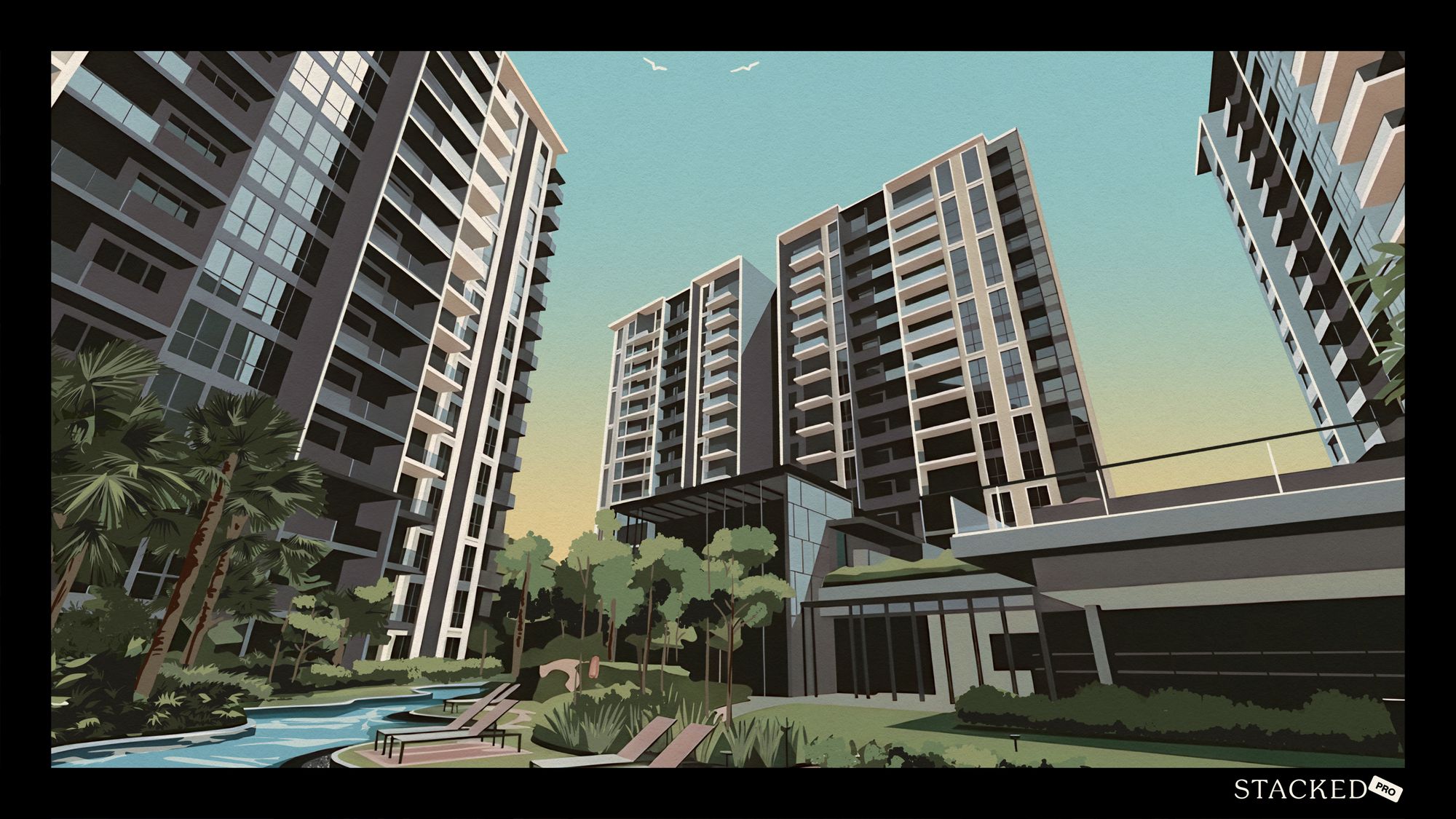

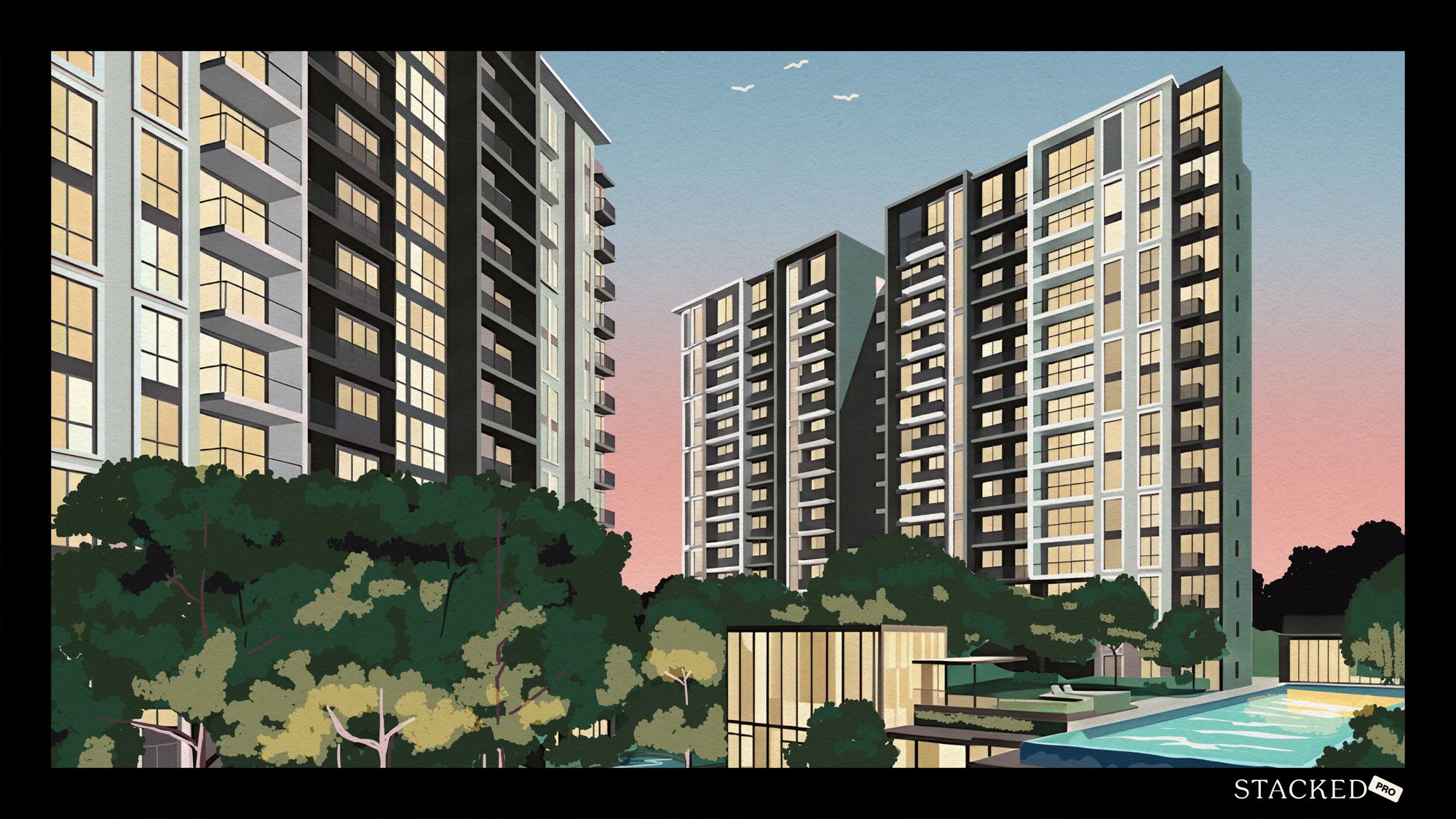



























By and large, the Executive Condominium (EC) scheme has successfully introduced many well-received housing developments that cater to a ‘sandwiched’ class of buyers – those to can’t afford a condominium, and homeowners who earn too much to qualify for HDB subsidies.
Devised as a replacement for flats like Executive Maisonettes back in the 1990s, the EC scheme has outlived the Design Build and Sell Scheme (DBSS) and is a proven rung on the property progression ladder.
While most EC projects tend to result in capital gains for their sellers, there can be substantial differences in the sales outcomes for different buyers.
For example, the performance of the well-known Hundred Palms Residences EC reflects on the heights the resale prices that some of these headline-grabbing projects can reach.
On the other hand, we’ve also written about ECs which are not immune to losses, and sellers face issues like timing and holding period which have a significant impact on the sales outcome.
In general, most buyers seldom consider whether the market conditions that drove up the resale prices that characterised earlier EC transactions still apply today. There’s also a tendency to oversimplify and be dazzled with the outsized percentage gains recorded at some ECs.
To throw a spotlight on the issue, and to offer an analytical framework, we’re going to highlight some of the important questions prospective EC buyers should ask when they’re hunting for a new EC.
In addition, over the coming weeks we’ll be covering ECs from across different areas to answer common queries that buyers (and sellers) may face today.
So many readers write in because they're unsure what to do next, and don't know who to trust.
If this sounds familiar, we offer structured 1-to-1 consultations where we walk through your finances, goals, and market options objectively.
No obligation. Just clarity.
Learn more here.
To begin, let’s acknowledge that ECs have changed a lot over the years
In general, some earlier-generation ECs were launched at prices that were relatively less the average resale price of nearby condos in their neighbourhood.
This was especially true of the earliest batches of ECs: In our view, it was fair since there tended to be a distinct difference in build quality and features that EC projects offered compared to new condos back then.
In those early days of the EC scheme, most new EC projects tended to be located quite far from amenities like the MRT station and the commercial hub of neighbourhoods.
However, with the recent launch of new EC projects, such as Rivelle Tampines and Coastal Cabana, it is evident that the quality and product offerings of new EC projects closely matches contemporary condos, and it’s no longer true that all ECs are far from MRT stations.
Rivelle Tampines is close to Tampines West MRT station on the Downtown Line, while projects like North Gaia is close to Yishun MRT station on the North-South Line.
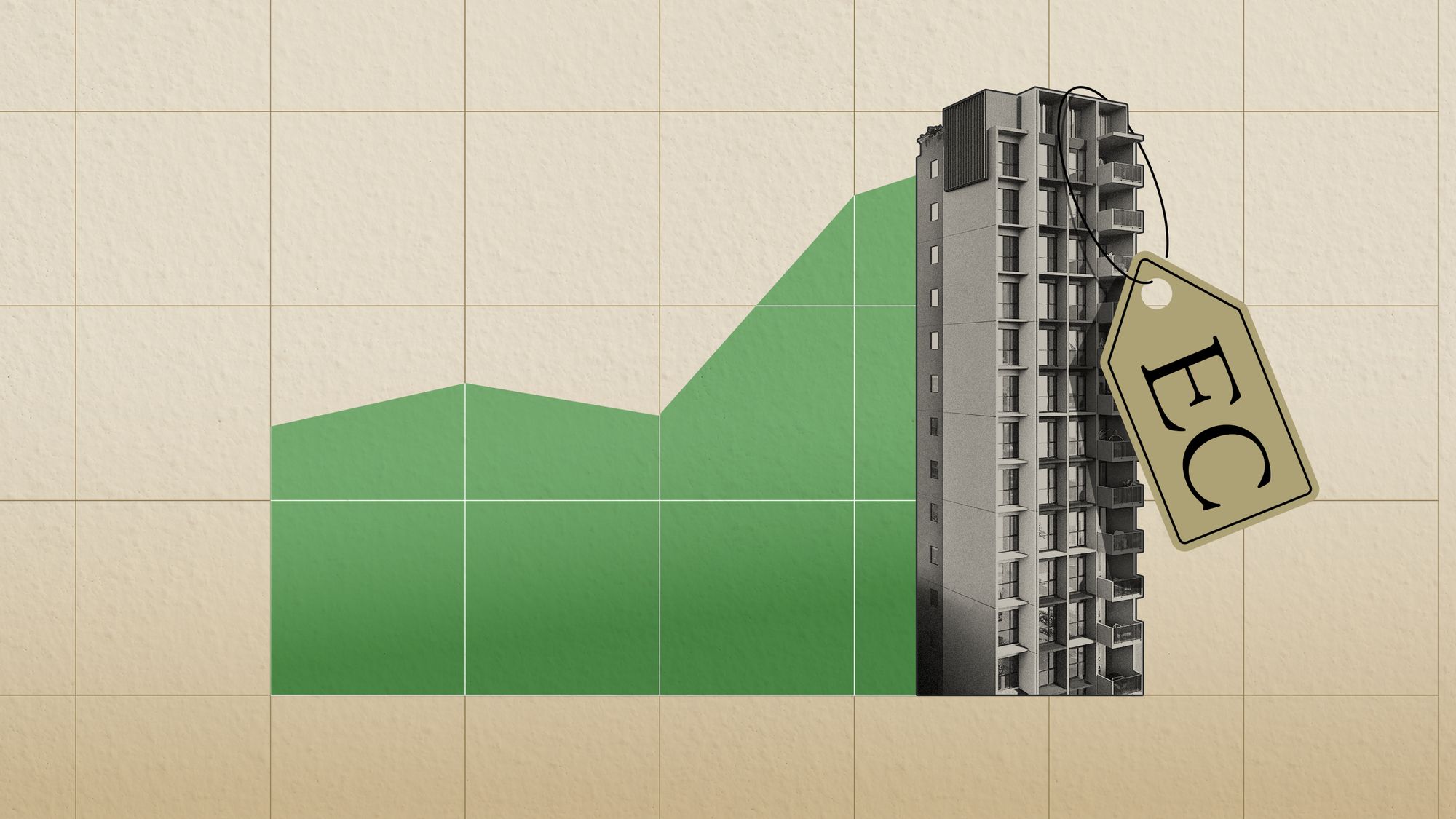
But this also means that the average selling price of new EC projects have been an a steep upwards trajectory in recent years, as we pointed out before, EC prices have almost doubled over the past decade.
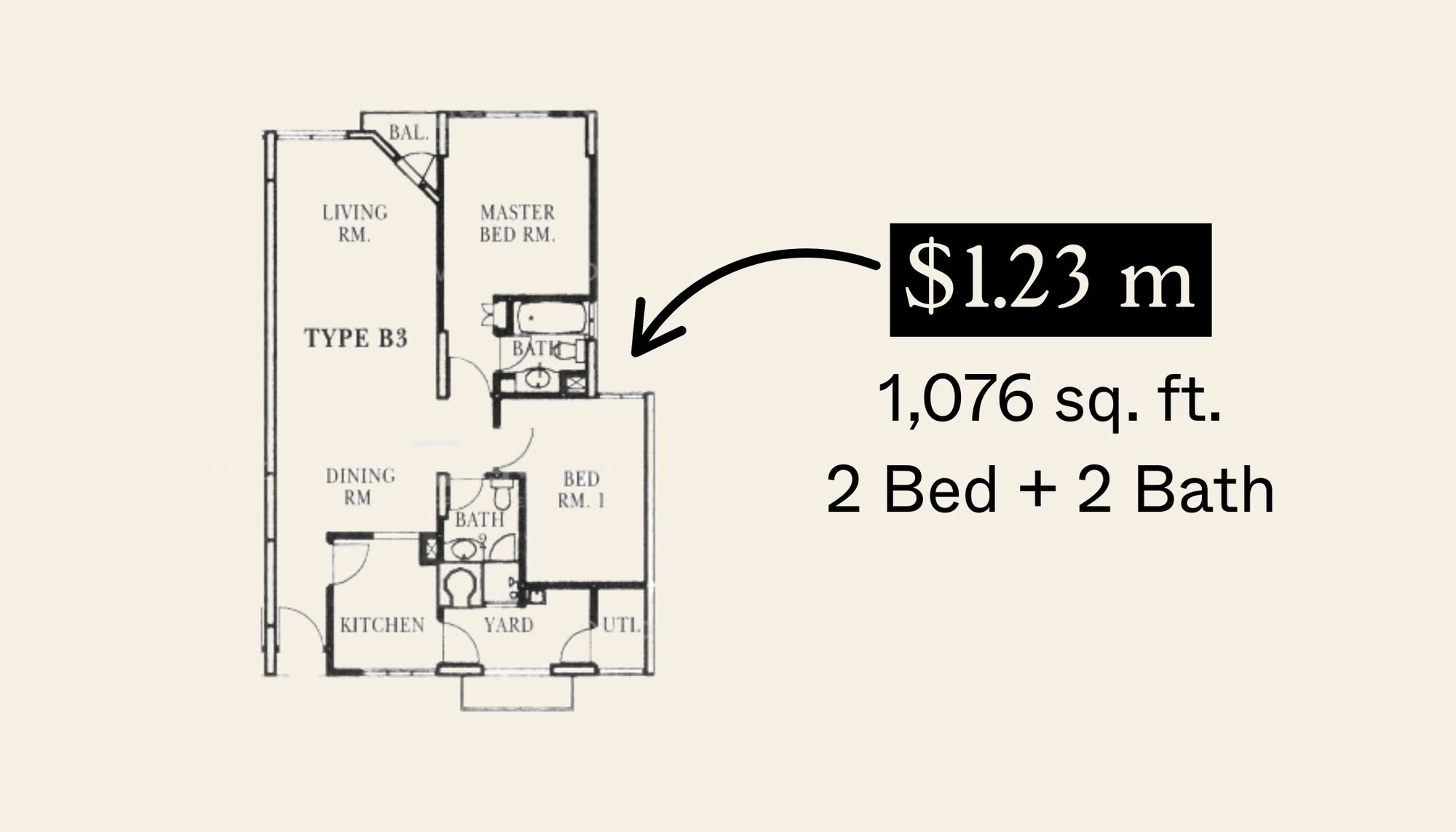
As newer projects set higher $PSF benchmarks, some buyers may be eyeing resale ECs as an alternative. Since the unit mix in an EC comprises three-bedders and up, there is the allure of clinching a unit at an affordable quantum despite being a relatively larger-sized unit.
But given the different base prices, how should buyers properly compare an EC to surrounding alternatives? Other key questions EC buyers today face are:
- Are ECs really outperforming in the resale market, or are they just catching up from a lower starting price?
- Did the price of older ECs have more room to grow because the gap with condos was wider back then?
- How does nearby competition affect an EC on the resale market?
- When it comes time to sell, who are you selling to, and does that limit your resale gains?
1. Is an EC really outperforming or did it just see a big percentage price gain because of a relatively lower starting price?
In general, new ECs are typically priced lower than condos in the vicinity. Thus, when you buy something cheaper to begin, the overall percentage gains can look much bigger.
For example, if an EC launches at $1,000 psf and rises to $1,300 psf, that looks like a 30% gain. The leap in percentage increase is easier to achieve compared to neighbouring condos, which were unsubsidised and may have started at $1,300 – $1,500 psf, in some cases.
But this doesn’t reflect on the actual dollar profits, and more importantly, it’s not necessarily a sign that an EC is an outperformer in that submarket.
This is an important consideration for owner-occupiers since the apparent capital gain may be due to a condo having fewer facilities or greater negative impact of lease decay.
2. If it’s an older EC, did it simply have more room to grow because the price gap with condos was wider back then?
Even if most ECs benefitted from this “catch-up” effect in terms of resale price, the next question we should ask is whether earlier ECs had an edge that newer ones don’t.
For example, an older EC that launched for sale at an average selling price of $800 psf, while nearby private condos were at $1,300 psf – this is a difference of $500 psf.
That’s very different from a newer EC launching at $1,700 psf, with nearby private condos at $2,000 psf – it’s a much smaller price gap. Even if both projects eventually move closer to surrounding resale prices, the earlier EC simply had more room to grow from the start.
So, the consideration is more than whether resale EC prices catch up, but whether older ECs were set up for stronger gains from the start given their relatively lower launch prices.
3. How does nearby competition affect an EC on the resale market?
Once an EC is fully privatised, it’s no longer competing as an “EC.” From that point, it’s just another resale condo in the area. This can be an advantage as well as a drawback.
The advantage is the lower relative price of an EC. Between spending $1.8 million on a two-bedder at a new launch condo, a resale EC might offer a larger three-room unit at a similar price range.
On the flip side, the qualities of the EC weigh a lot. Earlier generation ECs may not have included the same range of facilities and convenience which contemporary projects offer, which might dissuade some buyers. In these instances, a newer EC might fare better, despite starting with a narrower price gap compared to new or resale condos in the vicinity.
A recent example is Pinery Residences versus Rivelle Tampines (EC). While the two are opposite each other, Pinery Residences is a mixed-use project with a retail component and boasts a direct connection to the MRT station.
These comparisons can go beyond simple numbers and also boil down to the layout of the units. In a family-oriented area like Hougang / Serangoon, for instance, an EC like Hundred Palms Residences did well because its larger unit sizes are a better fit compared to the compact units at some nearby condos.
4. When it comes time to sell, who are you selling to, and does that limit your resale gains?
This is probably the biggest question for those who still plan to upgrade their homes in the future, or who see the price appreciation of the condo as part of their long-term financial plans.
When we examine the exit strategy for an EC, it’s not just how much prices have increased. It’s also whether there is a large enough catchment of buyers at the price you want to sell.
Buyers will be comparing the price of your unit with other properties listed for sale in that price range – from newer condos to older projects with larger space.
It’s important to understand the area – such as knowing whether future buyers are likely to come from nearby HDB estates. And if so, to consider the likely price quantum that they’ll find affordable. For example, the largest units in an EC may have a low $PSF but would be priced at a relatively high quantum to make it unaffordable to some buyers.
On the face of it, the EC market isn’t as straightforward as it first appears – At least not anymore
Yes, ECs generally see good capital gains, but most of its exceptional resale performance is attributed to specific factors: the starting price, how much of a price gap it had to catch up, and how the project compared to other resale alternatives.
Those factors don’t stay the same over time, so there is something of an art and a science to picking the right EC. This is especially true today given that new ECs start at higher average selling prices and face a different property market compared to a decade ago.
Instead of assuming ECs will follow the same growth trajectory as before, it’s important to look at how each project performed, and the underlying reasons that supported its growth.
That’s why over the coming weeks, we’ll be looking at ECs across different areas and time periods, and analysing how their prices moved from launch, through to MOP, and finally full privatisation. We’ll even be doing the comparisons against nearby projects for you. So, follow us on Stacked Pro for the coming updates.
At Stacked, we like to look beyond the headlines and surface-level numbers, and focus on how things play out in the real world.
If you’d like to discuss how this applies to your own circumstances, you can reach out for a one-to-one consultation here.
And if you simply have a question or want to share a thought, feel free to write to us at stories@stackedhomes.com — we read every message.



0 Comments