

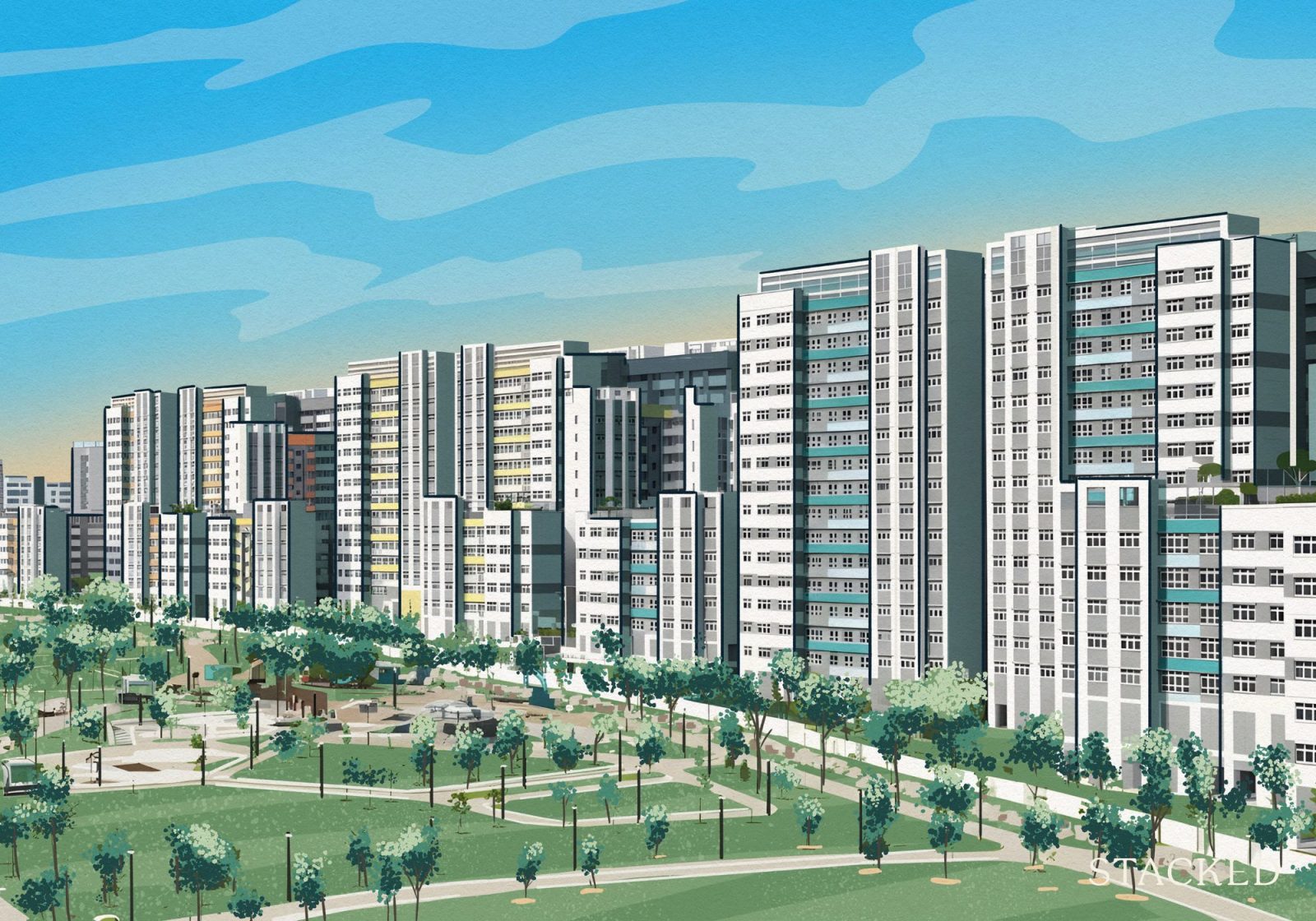
In our previous analysis of HDB flats and lease decay, we found that some flats are unusually resistant to the erosion of price growth as it ages. We also explained that lease decay is not a simple linear process, where price movements move down predictably with age.
Rather, the impact of lease decay on resale HDB price growth functions more like a threshold: prices can seem to steadily increase and ignore the worst impact of lease decay, right up until the property hits a certain point; then price growth tends to fall off the proverbial cliff.
So the real risk, if you own an older flat and want to sell, is less about the progressive ageing of the flat. Instead, it’s being mindful about the exact threshold at which most buyers decide that age is a major factor in their price considerations.
In this article, we try to determine when that tipping point is. We want to know how many years of remaining lease a flat must have before the price growth starts flattening or failing. Here’s what we found out:
How we’re going to do this (our methodology)
We’re going to analyse HDB resale transactions by town and flat type, focusing on how prices vary with remaining lease, rather than simply by age or transaction year.



0 Comments