


Recent changes to en-bloc rules have made it easier for ageing condos to go up for collective sale*.
*It will make it easier to secure consent for the collective sale. Whether or not the sale succeeds is a different matter, and one that I am less optimistic about.
If we can make it easier for condominiums to attempt a collective sale, why not apply that to ageing HDB developments as well? That seems to be the gist of the conversation between MinLaw and MND right now.
This topic is especially relevant because last August the government announced no future plans for further Selective En-Bloc Redevelopment Scheme (SERS) sites. This means that from now on, the end point for HDB flats is either going to be the Voluntary Early Re-Development Scheme (VERS), or a simple continuation to the end of the 99-year lease.
VERS applies to selected HDB flats, aged 70 years and above. Owners vote on whether the Government should buy back these flats before the 99-year leases expire. In return, the owners are compensated based on the remaining lease, and will have earlier access to replacement units with fresh leases.
There’s no announced voting threshold for VERS that has been publicly revealed at the moment. But in the private market, recently proposed changes lower the consent requirement from 80% to 70% for developments aged 40 to 59 years, and to 65% for those aged 60 years and above.
In short, the older the project is, the lower the threshold of consent needed. The question on my mind is whether VERS should similarly adopt a lower threshold, based on the age of the flats in question.
The challenge for many buyers today isn't access to information.
It's interpreting that information in a way that makes sense for their finances, goals, and stage of life.
Over time, that's also why we decided to work with agents who shared the same data-driven and advisory-led approach behind our editorial, consultants who could help readers think through decisions more objectively, rather than simply push transactions.
Today, the team has worked with more than 2,000 clients across over $5B in property transactions.
Broadly speaking, I do think it will be necessary for VERS to have a lower threshold.
While HDB developments and private residential projects are very different, there are some similarities that will cross lines. Even in a condo, en-bloc sales are notoriously difficult to push through.
For HDB projects - which also tend to have a higher density of households - there’s an added dimension: more of the units will be homes rather than investment assets. Also, as multiple blocks may undergo SERS at once, more households are involved and this means greater effort in seeking a common-enough consensus.
Thus, I think it is likely that resistance to moving out will be higher in HDB projects, compared to private housing.
But this is also why I feel that simply lowering the threshold may not move the needle sufficiently. Since we’re taking a page from the private housing segment, in terms of tiered threshold requirements, let’s also take a second page:
The en-bloc scene in the private residential market has been stagnant, to put it mildly. Small and privately owned land parcels are still able to successfully en-bloc, but the sale of very large land parcels / projects has been limited.
And while there are many reasons for this - such as the attractiveness of recent Government Land Sale sites - one of the main culprits remains the cost of a replacement property. After an en-bloc sale, the proceeds may not suffice to pay for a property in an equally strong location, at least not a unit that’s of the same size.
VERS has a potential advantage here: the Government has said it will prepare replacement housing options in advance, including coordinating nearby land parcels for new flats. This removes a major source of uncertainty that private en-bloc sellers face.
Nonetheless, that still won’t make the process gripe-free. One consideration is that older flats tended to be built much larger. This is especially true for the owners of scarce flat types like maisonettes or jumbo flats, which are now among the older units (although this is admittedly a very small number of flats).
There are also, inevitably, owners who feel they could get a better outcome selling on their own, versus accepting the Government’s pay-out. I’ve spoken to several owners who feel that’s still true even if that event happens further down the road, and the negative impact of lease decay on their property value has worsened.
From my perspective, I think they’re being overconfident - since by that time, the 70-year mark financing and CPF usage will be limited or non-existent for buyers. Perhaps this confidence is currently propped up by the high prices that even very old flats can still fetch, but I think this will change after we see the closing years of the first failed VERS.
In light of this, lowering the threshold for VERS may help, but the most promising way to encourage it lies in the replacement units.
I’ve observed that the most significant difference between SERS and VERS is that there wasn’t a need to convince anyone of SERS. Whether or not you were happy with the replacement options, it was going to happen, end-of-story.
But with VERS, we want to convince homeowners to take the deal so we can renew our ageing estates. It also helps to contribute to a wider, invisible safety net: it results in fewer people outliving their lease.
Moreover, it's a significant help to older Singaporeans who have lifelong dependents; it allows the inheritance of a flat with a fresh lease by dependents who - for reasons we shouldn’t judge - are unlikely to afford a unit of their own throughout their lives.
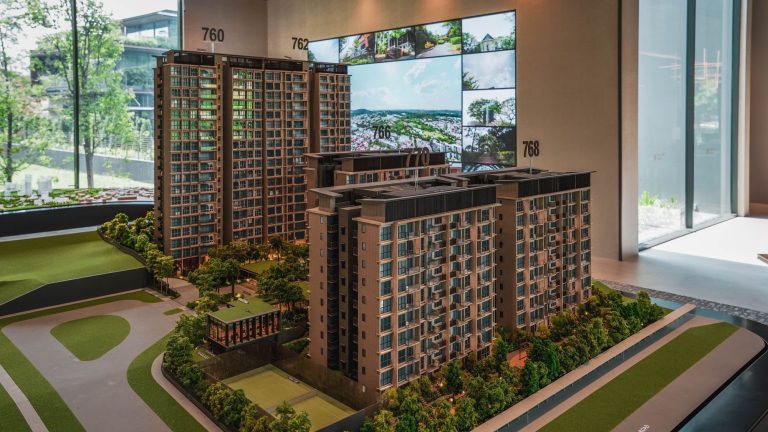
When it comes to convincing people to choose VERS, a lot of the weight will be on the replacement housing options. This will have to be treated with greater emphasis than we’ve seen in previous SERS exercises: not just with nice brochures anymore, but early “wind-ups” in the same way new launch condos do it.
Perhaps if we let residents walk through mock-ups, visit the replacement neighbourhood, and sit down with someone who can explain their household’s costs and moving timeline. The authorities might even want to consider putting in some showflats at the HDB Hub. Residents should have a concrete picture of how life in the replacement home would work, long before any actual voting takes place.
As for the actual models and showflats and brochures, this is the same kind of intensive, high-touch marketing used for new launch condos. This will add to the cost of VERS, but it’s probably something HDB will need to take a page from; at least for the first few VERS exercises.
Lowering the consent threshold is, I think, just one small part of what will be a rather expensive and involved process. But some of that added expense is the cost of asking people to uproot their lives. The first few VERS exercises will also set expectations for what comes after. If residents see replacement homes with manageable costs and practical support, subsequent exercises will see better success rates.
Meanwhile in other property news…
- What happens if a tenant sues over property defects? The result is enlightening for tenants and landlords alike.
- Amberwood may be leading the pack, being one of the earliest condos in Holland Plain. Here’s what to expect so far.
- If you’re fortunate enough to be owning two condo units today, should you sell them both to buy a landed home? Check out our insights into a reader’s question on this.
- When it comes to rental in Jurong, the tenant base used to just be industrial. But today, there are office workers, students, faculty, and more who seek to rent there. Here’s a look at how the area’s rental is changing.
Weekly Sales Roundup (31 August - 06 September)
Top 5 Most Expensive New Sales (By Project)
| PROJECT NAME | PRICE S$ | AREA (SQFT) | $PSF | TENURE |
| GRAND DUNMAN | $5,282,000 | 2131 | $2,478 | 99 yrs (2022) |
| TERRA HILL | $4,738,000 | 1894 | $2,501 | FH |
| VELA BAY | $4,113,000 | 1378 | $2,985 | 99 yrs (2025) |
| ELTA | $4,098,000 | 1776 | $2,307 | 99 yrs (2024) |
| SPRINGLEAF RESIDENCE | $3,429,000 | 1453 | $2,360 | 99 yrs (2024) |
Top 5 Cheapest New Sales (By Project)
| PROJECT NAME | PRICE S$ | AREA (SQFT) | $PSF | TENURE |
| UNION SQUARE RESIDENCES | $1,280,000.00 | 463 | $2,765.00 | 99 yrs (2024) |
| NARRA RESIDENCES | $1,317,000.00 | 560 | $2,353.00 | 99 yrs (2025) |
| THE LAKEGARDEN RESIDENCES | $1,564,100.00 | 678 | $2,306.00 | 99 yrs (2023) |
| OTTO PLACE | $1,598,000.00 | 872 | $1,833.00 | 99 yrs (2024) |
| KASSIA | $1,621,000.00 | 753 | $2,151.00 | FH |
Top 5 Most Expensive Resale
| PROJECT NAME | PRICE S$ | AREA (SQFT) | $PSF | TENURE |
| THE CLAYMORE | $8,127,000 | 2680 | $3,032 | FH |
| MARINA COLLECTION | $6,800,000 | 4725 | $1,439 | 99 yrs (2007) |
| TEMBUSU GRAND | $5,900,000 | 2691 | $2,192 | 99 yrs (2022) |
| LEONIE GARDENS | $5,700,000 | 3261 | $1,748 | 99 yrs (1990) |
| HILLTOPS | $5,360,000 | 1550 | $3,458 | FH |
Top 5 Cheapest Resale
| PROJECT NAME | PRICE S$ | AREA (SQFT) | $PSF | TENURE |
| PARC ROSEWOOD | $650,000 | 431 | $1,510 | 99 yrs (2011) |
| PEOPLE'S PARK COMPLEX | $688,000 | 463 | $1,486 | 99 yrs (1968) |
| RIPPLE BAY | $715,000 | 484 | $1,476 | 99 yrs (2011) |
| PARC BOTANNIA | $778,000 | 506 | $1,538 | 99 yrs (2016) |
| KINGSFORD . HILLVIEW PEAK | $790,000 | 549 | $1,439 | 99 yrs (2012) |
Top 5 Biggest Winners
| PROJECT NAME | PRICE S$ | AREA (SQFT) | $PSF | RETURNS | HOLDING PERIOD |
| THE CLAYMORE | $8,127,000 | 2680 | $3,032 | $3,863,000 | 30 Years |
| MIRAGE TOWER | $4,200,000 | 1744 | $2,409 | $1,932,000 | 16 Years |
| CLEMENTIWOODS CONDOMINIUM | $2,570,000 | 1679 | $1,531 | $1,669,100 | 20 Years |
| THE METROPOLITAN CONDOMINIUM | $3,000,000 | 1399 | $2,144 | $1,573,020 | 19 Years |
| KING'S MANSION | $3,290,000 | 1604 | $2,051 | $1,480,000 | 9 Years |
Top 5 Biggest Losers
| PROJECT NAME | PRICE S$ | AREA (SQFT) | $PSF | RETURNS | HOLDING PERIOD |
| MARINA COLLECTION | $6,800,000 | 4725 | $1,439 | -$5,870,240 | 19 Years |
| THE COAST AT SENTOSA COVE | $3,550,000 | 2562 | $1,386 | -$665,800 | 20 Years |
| MARINA ONE RESIDENCES | $2,150,000 | 1130 | $1,902 | -$160,809 | 10 Years |
| KOPAR AT NEWTON | $1,730,000 | 689 | $2,511 | -$88,630 | 4 Years |
| THE LAKEGARDEN RESIDENCES | $1,564,100 | 678 | $2,306 | -$27,900 | 1 Years |
Top 5 Biggest Winners (ROI%)
| PROJECT NAME | PRICE S$ | AREA (SQFT) | $PSF | ROI (%) | HOLDING PERIOD |
| LAKEHOLMZ | $2,048,000 | 1507 | $1,359 | 210% | 20 Years |
| CLEMENTIWOODS CONDOMINIUM | $2,570,000 | 1679 | $1,531 | 185% | 20 Years |
| CENTRAL GREEN CONDOMINIUM | $2,100,000 | 1292 | $1,626 | 168% | 27 Years |
| BOTANNIA | $2,275,000 | 1270 | $1,791 | 163% | 18 Years |
| BAYSHORE PARK | $1,108,000 | 947 | $1,170 | 152% | 26 Years |
Top 5 Biggest Losers (ROI%)
| PROJECT NAME | PRICE S$ | AREA (SQFT) | $PSF | ROI (%) | HOLDING PERIOD |
| MARINA COLLECTION | $6,800,000 | 4725 | $1,439 | -46% | 19 Years |
| THE COAST AT SENTOSA COVE | $3,550,000 | 2562 | $1,386 | -16% | 20 Years |
| MARINA ONE RESIDENCES | $2,150,000 | 1130 | $1,902 | -7% | 10 Years |
| KOPAR AT NEWTON | $1,730,000 | 689 | $2,511 | -5% | 4 Years |
| THE LAKEGARDEN RESIDENCES | $1,564,100 | 678 | $2,306 | -2% | 1 Years |
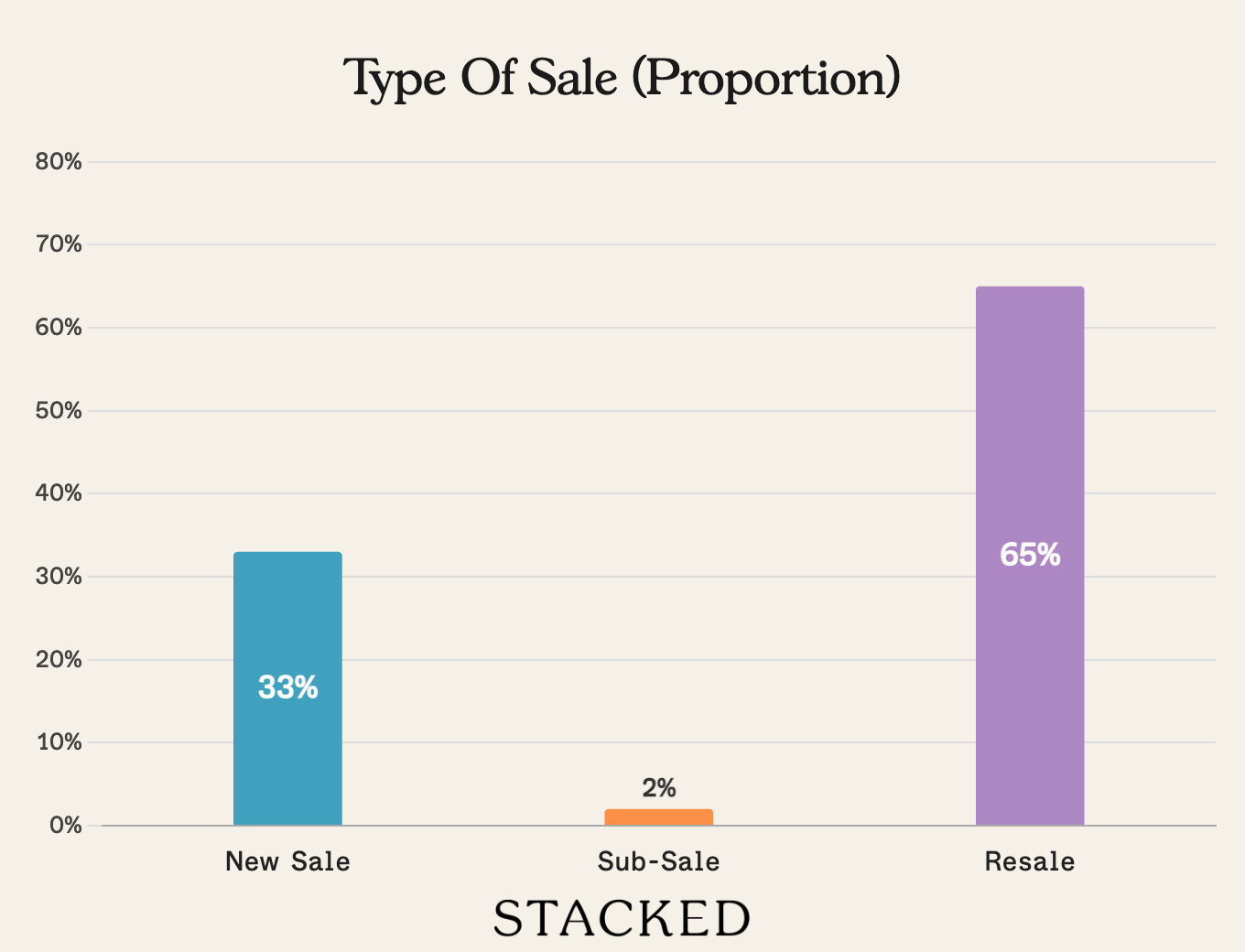
Transaction Breakdown
Follow us on Stacked for news and updates on the Singapore property market.
At Stacked, we like to look beyond the headlines and surface-level numbers, and focus on how things play out in the real world.
If you'd like to discuss how this applies to your own circumstances, you can reach out for a one-to-one consultation here.
And if you simply have a question or want to share a thought, feel free to write to us at stories@stackedhomes.com. We read every message.


0 Comments