

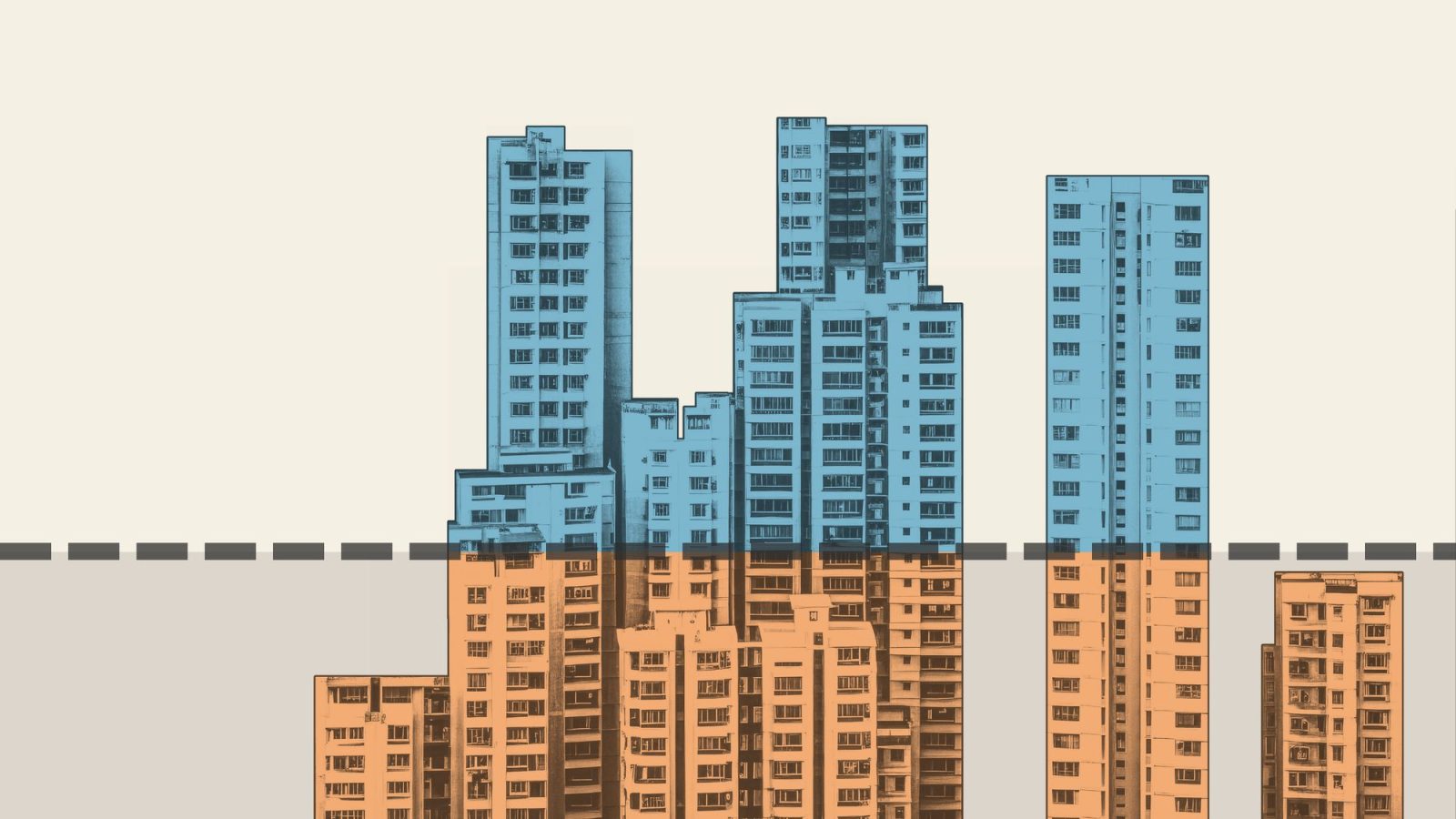
Floor height is one of the main factors in developer pricing. It almost goes without saying that, as far as new launches go, a higher floor will cost more than a lower one. Even floor height discounts only have meaning because of this assumption; otherwise “all-floors-same-price” wouldn’t be much of a sales promo.
But just because you paid a steep premium for a higher floor, does that mean it will carry over when you sell? Or does the high floor advantage vanish in the resale market, where subsequent buyers focus on other fundamentals like layout, size, renovations, etc.?
In this piece, we look at how floor price premiums behave across districts, unit sizes, and property age - and whether those premiums meaningfully translate into better resale outcomes across different transaction types.
To examine this, we looked at resale and sub sale transactions from January 2024 to November 2025, comparing only units that are truly like-for-like. Here’s what data revealed about whether your high floor premium will help at resale:
Our methodology
For this analysis we focused on resale and sub sale transactions only, as the point is to see whether the floor height premium persists in the secondary market.
We looked at transactions from January 2024 to November 2025, and compared only units that were directly comparable. This meant matching units within the same development and stack, with identical layouts, sizes, and facings. This means that, as far as possible, we tried to isolate floor level as the primary variable.
We also excluded projects with too few transactions to draw meaningful observations.
The challenge for many buyers today isn't access to information.
It's interpreting that information in a way that makes sense for their finances, goals, and stage of life.
Over time, that's also why we decided to work with agents who shared the same data-driven and advisory-led approach behind our editorial, consultants who could help readers think through decisions more objectively, rather than simply push transactions.
Today, the team has worked with more than 2,000 clients across over $5B in property transactions.
Let’s start with looking at how high-floor premiums vary between districts
While higher floors are almost always pricier, the premium can vary. In some districts, an extra floor can mean a huge price jump. In others, the difference is marginal:
| District | Average price jump per floor |
| 1 | $7,850 |
| 2 | $9,823 |
| 3 | $5,889 |
| 4 | $23,473 |
| 5 | $5,726 |
| 7 | $8,469 |
| 8 | $4,887 |
| 9 | $13,643 |
| 10 | $11,299 |
| 11 | $3,876 |
| 12 | $3,413 |
| 13 | $1,188 |
| 14 | $8,059 |
| 15 | $11,894 |
| 16 | $8,507 |
| 17 | $14,915 |
| 18 | $12,665 |
| 19 | $7,242 |
| 20 | $6,176 |
| 21 | $2,576 |
| 22 | $6,542 |
| 23 | $5,209 |
| 25 | $450 |
| 26 | -$2,220 |
| 27 | $8,738 |
| 28 | $5,013 |

Higher floor premiums are not uniform at all. The spread is very wide, ranging from almost $23,500 per floor in District 4 to just a few hundred dollars in District 25, and even turning negative in District 26. The impact of a higher-floor unit varies quite a bit based on location.
There is also a general trend: districts closer to the city centre, or with luxury appeal, generally show larger price jumps per floor. Districts like 9, 10, and 15, for example, are established luxury condo districts; so the floor price jumps are especially notable here.
That said, the presence of a negative or near-zero premium means floor height isn’t equally regarded everywhere. In District 26, for example, lower-floor units may even transact at higher prices. It’s probable that these districts have more price-sensitive buyers, as well as more practical family buyers who emphasise other fundamentals (e.g., renovation quality).
In addition, we should add that in districts with very few transactions, it’s possible that one or two outliers might skew the prices. This is an unavoidable reality with our datasets.
As a general snapshot, this is how floor jump averages look by unit type:
| Unit type | 1-bedroom | 2-bedroom | 3-bedroom | 4-bedroom |
| Average price jump per floor | $3,288 | $6,910 | $9,398 | $12,608 |
So as a very loose rule of thumb: the smaller your unit size, the less the floor height will impact the pricing. There are good reasons for this.
Compact units are more commonly bought as rental assets, and tenants are usually less fussy about luxuries like floor height. Landlords also try to keep the cost as low as possible to maximise rental yields. As such, it makes sense that very few landlords are willing to splurge on high-floor one or two-bedders. Such units do have niche appeal, but usually to lifelong singles, couples, or retirees who are buying for own-stay use.
As for family-sized three- and four-bedders, these units are more commonly bought for own-stay use. As families intend to stay on for the long-term, they’re inclined to pay more for better views and a quieter unit.
Now let’s look at how the floor price jump differs for each unit size, in different districts
| District | 1-bedroom | 2-bedroom | 3-bedroom | 4-bedroom |
| 1 | $2,082 | $14,435 | $12,322 | -$15,079 |
| 2 | $4,689 | $16,094 | $10,000 | |
| 3 | $3,265 | $3,567 | $11,136 | $9,954 |
| 4 | -$1,376 | $14,502 | $20,652 | $51,044 |
| 5 | $4,052 | $6,277 | $7,875 | -$235 |
| 7 | $7,792 | $10,320 | $2,867 | |
| 8 | $4,169 | $3,939 | $3,506 | $19,485 |
| 9 | $9,493 | $9,879 | $9,629 | $41,191 |
| 10 | -$430 | $16,283 | $17,997 | -$10,057 |
| 11 | $2,027 | $160 | $5,098 | $17,055 |
| 12 | $653 | $4,263 | $8,647 | -$27,764 |
| 13 | $2,546 | $3,524 | -$4,243 | $8,148 |
| 14 | $2,781 | $8,266 | $9,957 | $19,608 |
| 15 | $9,719 | $10,529 | $16,037 | -$22,172 |
| 16 | $1,146 | $4,929 | $8,420 | $53,749 |
| 17 | $2,324 | $15,613 | $18,966 | $17,405 |
| 18 | $4,391 | $8,804 | $14,579 | $22,917 |
| 19 | $1,155 | $4,552 | $8,346 | $13,129 |
| 20 | -$895 | $2,334 | $10,157 | $21,906 |
| 21 | $15,685 | -$346 | $1,650 | $16,523 |
| 22 | $5,700 | $5,941 | $6,060 | $10,496 |
| 23 | $3,653 | $5,329 | $6,071 | $1,074 |
| 25 | $15,667 | $4,285 | $3,058 | -$23,055 |
| 26 | $10,407 | -$3,547 | -$76,667 | |
| 27 | $3,036 | $5,735 | $9,528 | $10,587 |
| 28 | $2,545 | $4,721 | $5,590 | $14,335 |
There are some consistent trends throughout. Smaller units still show smaller floor price jumps, for instance. However, one notable detail is that larger units tend to show more volatility. Four-bedders swing from very strong positive premiums in some districts to sharply negative ones in others.
This could be due to four-bedders being high quantum units that see fewer transactions; so this naturally makes their pricing more volatile.
Whatever the reason, the pattern does suggest that - as unit size increases - floor premiums become larger in dollar terms but also less predictable. So buyers of large units, such as four-bedders, should be aware that floor height is a less stable predictor of future prices.
Next, we will look at whether the age of the properties has any effect on the floor price jump.
For this part of our analysis, it makes sense to look at only 99-year leasehold projects, as these are the ones where age has the most obvious bearing.
| Lease start year | Lease start 2015 and later | Lease start between 2005 and 2014 | Lease start between 1995 and 2004 | Lease start between 1985 and 1994 | Lease start between 1975 and 1984 | Lease start 1974 and earlier |
| Current age | Age 10 years and below | Age 11 to 20 years | Age 21 - 30 years | Age 31 to 40 years | Age 41 - 50 years | Age above 51 years |
| Average price jump per floor | $7,792 | $7,826 | $8,251 | $12,198 | $10,719 | -$5,695 |
Younger developments show smaller and more consistent floor premiums. Projects with leases starting from 2015 onward, or even up to the 2005–2014 cohort, cluster tightly around a similar average price jump per floor.
One likely reason is that, unlike older properties, there hasn’t been a long accumulation of renovations (or lack of renovations) to impact the unit price. That is, renovations are more recent, fittings have not diverged significantly, and buyers are comparing like-with-like.
But as developments age, floor premiums become both larger and less predictable. Notice that, from the 1985–1994 and 1975–1984 cohorts, the average price jump per floor increases noticeably.
This greater disparity is likely due to other factors such as renovation quality, wear and tear, and even changes to the project's surroundings (e.g., over the decades, a new project sprung up next door and impeded the view, as well as providing newer alternatives.)
One example is that in the oldest group, the average price jump per floor turns negative. That is, lower-floor units are, on average, transacting at higher prices than higher-floor ones. This suggests that in very old projects, unit condition can override floor level as a concern.
In short, the floor height premiums are more likely to carry over in younger leasehold projects, and less likely to do so in older ones.
As above, let’s also break this into various districts, while still accounting for age
| District | Lease start 2015 and later | Lease start between 2005 and 2014 | Lease start between 1995 and 2004 | Lease start between 1985 and 1994 | Lease start between 1975 and 1984 | Lease start 1974 and earlier |
| 1 | $10,336 | $6,632 | $3,972 | |||
| 2 | $8,115 | $29,021 | $12,154 | -$2,835 | ||
| 3 | $4,275 | $4,602 | $14,252 | $8,703 | ||
| 4 | $30,777 | -$14,587 | $18,182 | |||
| 5 | $2,190 | $8,444 | $35,473 | $19,838 | ||
| 7 | $106,000 | $4,509 | $32,205 | -$14,275 | ||
| 8 | $4,635 | $28,112 | $10,784 | |||
| 9 | $12,628 | $17,272 | $25,056 | $3,895 | $37,980 | |
| 10 | $14,035 | $12,484 | $5,965 | $10,833 | $250,000 | |
| 11 | $5,167 | $2,748 | $260,000 | |||
| 12 | $875 | -$153 | -$139 | $10,000 | ||
| 13 | $3,500 | -$1,312 | ||||
| 14 | $6,663 | $11,519 | -$13,979 | $5,910 | ||
| 15 | $18,829 | -$850 | -$7,243 | $51,748 | $8,856 | |
| 16 | $1,653 | $7,246 | $18,609 | $10,050 | $5,092 | |
| 17 | $6,376 | $8,925 | ||||
| 18 | $11,748 | $13,045 | $15,430 | $13,595 | ||
| 19 | $10,073 | $7,202 | $2,977 | -$6,324 | ||
| 20 | $9,495 | $8,753 | $5,607 | -$35,888 | $757 | |
| 21 | $15,994 | -$1,761 | -$47,819 | -$9,751 | ||
| 22 | $12,305 | $9,486 | -$3,253 | $3,100 | $22,672 | |
| 23 | $3,818 | $5,936 | $5,202 | -$429 | ||
| 25 | $1,973 | -$4,182 | $8,357 | |||
| 26 | $17,750 | -$15,370 | ||||
| 27 | $9,726 | $8,112 | $1,495 | $28,093 | ||
| 28 | $8,479 | $3,902 |
There is no single district where floor premiums behave consistently across all age groups. Nevertheless, the general pattern reinforces what we saw above:
Younger developments tend to show smaller and more stable floor premiums across districts. Conversely, extreme or erratic values are concentrated in the older age bands.
So overall, the premium buyers pay for higher floors is neither small nor uniform. It varies widely by district, differs across unit types and floor levels, and can be reshaped when a project enters the resale market.
With this in mind, let’s look at the key question: do launch-day premiums actually translate into stronger resale performance?
To examine this more closely, let’s look at some specific developments and compare their profitability by floor level.
We will focus on projects launched between 2018 and 2020. This time frame allows us to keep launch pricing broadly comparable, while ensuring enough resale data to draw reasonable conclusions.
For the purposes of our analysis, let’s consider units below the eighth storey as “low-floor,” while those above are treated as “high-floor”. We know this isn’t a perfect approach, and it probably seems conservative for taller projects; but it mirrors how pricing is commonly structured at most new launches.
As before, we will compare only units within the same stack, with identical sizes and facings. We’ll also exclude projects where transaction volumes are too low to be representative.
Let’s look at new to sub sale and resale transaction returns by floor level
| Project | Average return for high floor units | Average return for low floor units | Difference in average return |
| THE LANDMARK | 6.76% | -1.81% | 8.58% |
| THE TRE VER | 23.37% | 18.59% | 4.79% |
| PARK COLONIAL | 28.95% | 24.32% | 4.63% |
| NORMANTON PARK | 14.83% | 10.22% | 4.61% |
| AFFINITY AT SERANGOON | 19.69% | 16.92% | 2.77% |
| PENROSE | 33.84% | 31.98% | 1.86% |
| AVENUE SOUTH RESIDENCE | 9.91% | 8.64% | 1.27% |
| KOPAR AT NEWTON | 11.68% | 10.61% | 1.07% |
| THE M | 6.11% | 5.30% | 0.81% |
| TREASURE AT TAMPINES | 29.62% | 29.15% | 0.47% |
| MARGARET VILLE | 21.22% | 21.48% | -0.26% |
| PARC ESTA | 34.05% | 34.46% | -0.41% |
| JADESCAPE | 31.36% | 31.82% | -0.46% |
| KI RESIDENCES AT BROOKVALE | 22.81% | 23.27% | -0.47% |
| THE GARDEN RESIDENCES | 15.75% | 16.38% | -0.63% |
| RIVERFRONT RESIDENCES | 30.58% | 31.41% | -0.83% |
| THE TAPESTRY | 22.37% | 23.32% | -0.94% |
| STIRLING RESIDENCES | 28.26% | 29.21% | -0.96% |
| ONE PEARL BANK | 7.13% | 8.65% | -1.52% |
| PARC CLEMATIS | 29.32% | 31.44% | -2.12% |
| ONE-NORTH EDEN | 18.72% | 21.09% | -2.37% |
| CLAVON | 25.28% | 28.37% | -3.09% |
| THE AVENIR | 2.25% | 8.94% | -6.69% |
| TWIN VEW | 30.85% | 39.73% | -8.88% |
| WHISTLER GRAND | 29.64% | 41.28% | -11.64% |
First, it’s important to distinguish between absolute price and profitability. A high-floor unit can transact at a higher price, yet still deliver a weaker return if its entry price was significantly higher.
Out of the 25 projects, low-floor units recorded higher average returns in more than half (15) of them. The differences are not always slim either; Whistler Grand, Twin VEW, and The Avenir show a noticeable gap in favour of lower-floor units.
One potential reason is their initial pricing rather than performance. Low-floor units were typically launched cheaper to begin with. This makes it easier for them to see higher percentage gains, as opposed to high-floor units that were sold at an initial premium.
We can see that when two identical units differ only by floor, and the price gap is wide, then the cheaper unit provides better downside protection; even if the resale price ends up lower.
And again, at resale, buyers also tend to focus more on affordability and condition than on floor height. That said, this doesn’t mean higher floors consistently underperform. Developments such as The Landmark, The Tre Ver, Park Colonial, and Normanton Park saw higher average returns on upper-floor units; so it does seem to matter in ways specific to the projects.
Nonetheless, from the data above, it seems broadly true that paying more for higher floors doesn’t reliably translate into resale gains.
To better understand this relationship, let’s look at the individual transactions themselves. This is what we see when we plot the returns against floor levels. This should allow us to see where dispersion occurs, and whether higher floors might deliver better outcomes on a unit-by-unit basis, rather than just looking at project-wide averages.

Let’s also compare the average price jump per floor at launch, with what we see in subsequent sub sale and resale transactions.
This helps to identify if the resale market recognises the premium the developer charges, or whether the premiums are just launch-stage marketing that doesn’t carry over.
| Project | Average price jump per floor for new sale transactions | Average price jump per floor for sub sale/resale transactions done in 2024 and 2025* | Difference |
| THE LANDMARK | $15,151 | -$70,000 | $85,151 |
| TWIN VEW | $6,440 | -$57,936 | $64,376 |
| RIVERFRONT RESIDENCES | $3,564 | -$31,250 | $34,814 |
| JADESCAPE | $6,823 | -$26,780 | $33,603 |
| PARK COLONIAL | $5,031 | -$27,676 | $32,707 |
| STIRLING RESIDENCES | $6,273 | -$25,021 | $31,293 |
| PARC ESTA | $4,348 | -$22,879 | $27,227 |
| MARGARET VILLE | $5,193 | -$14,998 | $20,191 |
| THE TRE VER | $5,441 | -$13,134 | $18,575 |
| WHISTLER GRAND | $6,423 | -$10,346 | $16,769 |
| THE TAPESTRY | $3,766 | -$9,009 | $12,775 |
| PARC CLEMATIS | $3,054 | -$9,375 | $12,429 |
| ONE-NORTH EDEN | $15,932 | $6,632 | $9,299 |
| TREASURE AT TAMPINES | $5,896 | -$667 | $6,563 |
| AFFINITY AT SERANGOON | $3,890 | -$485 | $4,375 |
| THE GARDEN RESIDENCES | $8,261 | $4,182 | $4,079 |
| KOPAR AT NEWTON | $17,033 | $13,506 | $3,527 |
| CLAVON | $5,444 | $5,135 | $309 |
| KI RESIDENCES AT BROOKVALE | $10,478 | $10,211 | $267 |
| NORMANTON PARK | $2,388 | $3,805 | -$1,417 |
| PENROSE | $4,501 | $7,252 | -$2,751 |
| AVENUE SOUTH RESIDENCE | $8,260 | $12,055 | -$3,795 |
| ONE PEARL BANK | $8,109 | $13,806 | -$5,697 |
| THE AVENIR | $11,406 | $24,918 | -$13,512 |
| THE M | $28,834 | $45,062 | -$16,228 |
| Average | $6,439 | -$9,428 | - |
Higher-floor units still transact at higher absolute prices, but the incremental price difference per floor is not always consistent; in some cases the lower floors become pricier.
So far, this is a strong sign that floor premiums are front-loaded at launch. Developers will almost always charge more for higher floors upfront, but that premium often erodes when the unit enters the resale market.
But what if you don’t buy a higher floor unit at launch, but rather as a resale unit, or a sub sale unit?
Some of the projects above are too new and lack sufficient volume for this analysis. If we were to use the same projects in the dataset above, these are the only four with such transactions:
| Project | Average return for high floor units | Average return for low floor units | Difference in average return |
| RIVERFRONT RESIDENCES | 13.28% | 19.14% | -5.86% |
| STIRLING RESIDENCES | 19.04% | 12.22% | 6.82% |
| THE TRE VER | 14.78% | 6.46% | 8.32% |
| PARK COLONIAL | 23.39% | 12.10% | 11.29% |

So just among these four projects, it would seem higher floors appear to deliver better returns as just resale or sub sale transactions. But the volume is extremely low:
| Project | No. of high floor units sold | No. of low floor units sold |
| RIVERFRONT RESIDENCES | 2 | 3 |
| STIRLING RESIDENCES | 4 | 2 |
| THE TRE VER | 1 | 1 |
| PARK COLONIAL | 2 | 1 |
This doesn’t mean much, as the volume is not really representative. So let's also take a look at some projects that were launched between 2015 to 2017 instead:
| Project | Average return for high floor units | Average return for low floor units | Difference in average return |
| FOREST WOODS | 47.87% | 37.76% | 10.11% |
| PARC RIVIERA | 34.50% | 29.05% | 5.44% |
| THE ALPS RESIDENCES | 41.58% | 39.82% | 1.76% |
| SEASIDE RESIDENCES | 31.58% | 29.96% | 1.61% |
| PRINCIPAL GARDEN | 31.41% | 30.07% | 1.34% |
| THOMSON IMPRESSIONS | 39.97% | 41.00% | -1.03% |
| NORTH PARK RESIDENCES | 32.48% | 33.63% | -1.15% |
| THE CLEMENT CANOPY | 40.47% | 41.99% | -1.52% |
| BOTANIQUE AT BARTLEY | 51.91% | 54.27% | -2.37% |
| GRANDEUR PARK RESIDENCES | 30.79% | 33.55% | -2.76% |
| PARC BOTANNIA | 23.63% | 26.42% | -2.79% |
| MARTIN MODERN | 15.21% | 18.61% | -3.40% |
| SIMS URBAN OASIS | 33.97% | 37.94% | -3.97% |
| THE POIZ RESIDENCES | 40.51% | 45.71% | -5.20% |
| KINGSFORD WATERBAY | 16.29% | 22.08% | -5.79% |
| HIGH PARK RESIDENCES | 64.42% | 73.65% | -9.22% |
| GEM RESIDENCES | 30.40% | 39.78% | -9.39% |

Out of the 17 projects, low-floor units delivered higher average returns in 12 of them. This simply reaffirms the pattern we saw above: In most cases the lower-floor units benefited from a lower entry price at launch, allowing their returns to catch up or even surpass those of higher-floor units.
High-floor units often still transacted at higher absolute prices, but the premiums charged by developers don’t seem to carry over in their resale gains.
Let’s also compare the average price jump per floor at launch, with what we see in subsequent sub sale and resale transactions.
| Project | Average price jump per floor for new sale transactions | Average price jump per floor for sub sale/resale transactions done in 2024 and 2025* | Difference |
| GEM RESIDENCES | $5,596 | -$11,591 | $17,187 |
| FOREST WOODS | -$2,487 | -$19,391 | $16,904 |
| THE CLEMENT CANOPY | $3,341 | -$10,928 | $14,269 |
| BOTANIQUE AT BARTLEY | $3,485 | -$3,339 | $6,824 |
| THE ALPS RESIDENCES | $2,657 | -$1,186 | $3,843 |
| PRINCIPAL GARDEN | $4,840 | $2,517 | $2,323 |
| PARC RIVIERA | $3,730 | $1,612 | $2,118 |
| QUEENS PEAK | $9,472 | $7,411 | $2,061 |
| MARTIN MODERN | $13,573 | $11,963 | $1,611 |
| NORTH PARK RESIDENCES | $5,314 | $3,882 | $1,432 |
| HIGH PARK RESIDENCES | $3,873 | $3,209 | $664 |
| SIMS URBAN OASIS | $4,720 | $4,412 | $307 |
| THOMSON IMPRESSIONS | $4,332 | $4,504 | -$172 |
| THE POIZ RESIDENCES | $4,474 | $4,782 | -$308 |
| PARC BOTANNIA | $4,410 | $5,109 | -$699 |
| GRANDEUR PARK RESIDENCES | $3,441 | $4,372 | -$931 |
| KINGSFORD WATERBAY | $1,759 | $3,711 | -$1,952 |
| SEASIDE RESIDENCES | $14,718 | $23,935 | -$9,217 |
| CITY SUITES | $7,084 | $24,833 | -$17,750 |
| ARTRA | $11,300 | $49,637 | -$38,337 |
| Average | $5,307 | $3,756 | - |
Here, a handful of projects show a negative average price jump per floor, when it comes to sub sale and resale transactions.
This may also be a timing effect. During a new launch, developers tend to start prices low, and then gradually raise them as units are sold.
Now in some cases, the higher floor units may have been bought earlier, when prices were still lower (either because they’re more desirable, or because buyers know that if they wait longer, they may get priced out of the top floor units.)
Conversely, the buyers may have picked up the remaining low floor units afterward, when the developer had adjusted prices upward. This can create the illusion that lower floors were priced higher, even though it actually reflects price escalation over time; and less so a genuine preference for lower-floor units.
Now let’s look at sub sale to resale, and resale to resale transactions
| Project | Average return for high floor units | Average return for low floor units | Difference in average return |
| THE CLEMENT CANOPY | 21.37% | 12.12% | 9.25% |
| PARC RIVIERA | 19.65% | 13.23% | 6.42% |
| SIMS URBAN OASIS | 20.25% | 16.29% | 3.95% |
| THE POIZ RESIDENCES | 21.24% | 17.90% | 3.34% |
| PARC BOTANNIA | 14.50% | 11.27% | 3.24% |
| BOTANIQUE AT BARTLEY | 27.90% | 26.71% | 1.18% |
| THE ALPS RESIDENCES | 16.61% | 16.74% | -0.13% |
| HIGH PARK RESIDENCES | 24.65% | 26.46% | -1.81% |
| FOREST WOODS | 15.67% | 17.52% | -1.85% |
| PRINCIPAL GARDEN | 12.94% | 16.30% | -3.36% |
| NORTH PARK RESIDENCES | 9.51% | 13.56% | -4.05% |
| THOMSON IMPRESSIONS | 9.52% | 13.91% | -4.38% |
| KINGSFORD WATERBAY | 13.81% | 20.31% | -6.50% |
| SEASIDE RESIDENCES | 0.75% | 16.25% | -15.50% |

Out of the 14 projects analysed, low-floor units recorded higher average returns in 8 of them, including developments such as Seaside Residences, Kingsford Waterbay, and North Park Residences.
Again, the lower entry price appears to have continued working in favour of low-floor buyers. This appears to be true even after the initial launch sales. But this isn’t universal, as there are several projects where high-floor units outperformed, such as The Clement Canopy, Parc Riviera, Sims Urban Oasis, and The Poiz Residences.
In any case, the key takeaway is that the relationship becomes far less predictable once we move fully into the secondary market. Whether the premium carries over is even less reliable than if you had bought new and then resold.
Conclusion
While higher-floor units almost always command clear premiums at launch, those premiums usually did not - from the data we have available - reliably carry over into resale gains.
While higher-floor units still sell at higher absolute prices at resale and sub sale, the percentage gains tend to be lower compared to low-floor units. There can be a multitude of reasons, but the most likely is just that lower-floor units were priced cheaper to begin with, and thus have more room for gains.
Another pattern we found is that the bigger the unit, and the older the project, the less predictable the floor height premium becomes.
That said, this does not mean higher floors always perform poorly. In certain developments, most likely those with strong views or distinct positioning, higher-floor units can and do outperform. However, the evidence suggests that paying more for height should be primarily as a lifestyle decision, rather than a financial one.
For “pure” investors, the emphasis is really about entry price rather than floor height. Lower-floor units, by virtue of their lower launch prices, have a strong edge: they combine room for appreciation with a lower capital commitment.
An interesting added tip from a realtor we spoke to:
The advice was to either buy very low, or buy very high. If you buy very low, you are likely buying at the lowest entry price (and again, if rental is the intent, most tenants won’t pay significantly more for a nicer view.)
If you buy very high, you get true differentiation from the other units. Having the best unblocked views, or one of the most prestigious units, can still help in subsequent negotiations. It’s just an opinion, but an interesting one to consider.
For further deep dives into issues such as floor height, or the performance of new and resale projects, follow us on Stacked Pro.
At Stacked, we like to look beyond the headlines and surface-level numbers, and focus on how things play out in the real world.
If you'd like to discuss how this applies to your own circumstances, you can reach out for a one-to-one consultation here.
And if you simply have a question or want to share a thought, feel free to write to us at stories@stackedhomes.com. We read every message.


0 Comments