









Dear Stacked Homes Team,
We are currently exploring properties in the Newton and Redhill areas. One of our children studies at Hillcrest and attends sports training in the Newton area. As such, we are considering whether it would make sense to live closer to Newton to reduce commuting time over the next eight years (from primary through secondary school).
Our other two children are currently in polytechnic and university. They are also comfortable sharing a bedroom, which means we are considering a layout with one bedroom for them and a smaller room that can function as a study.
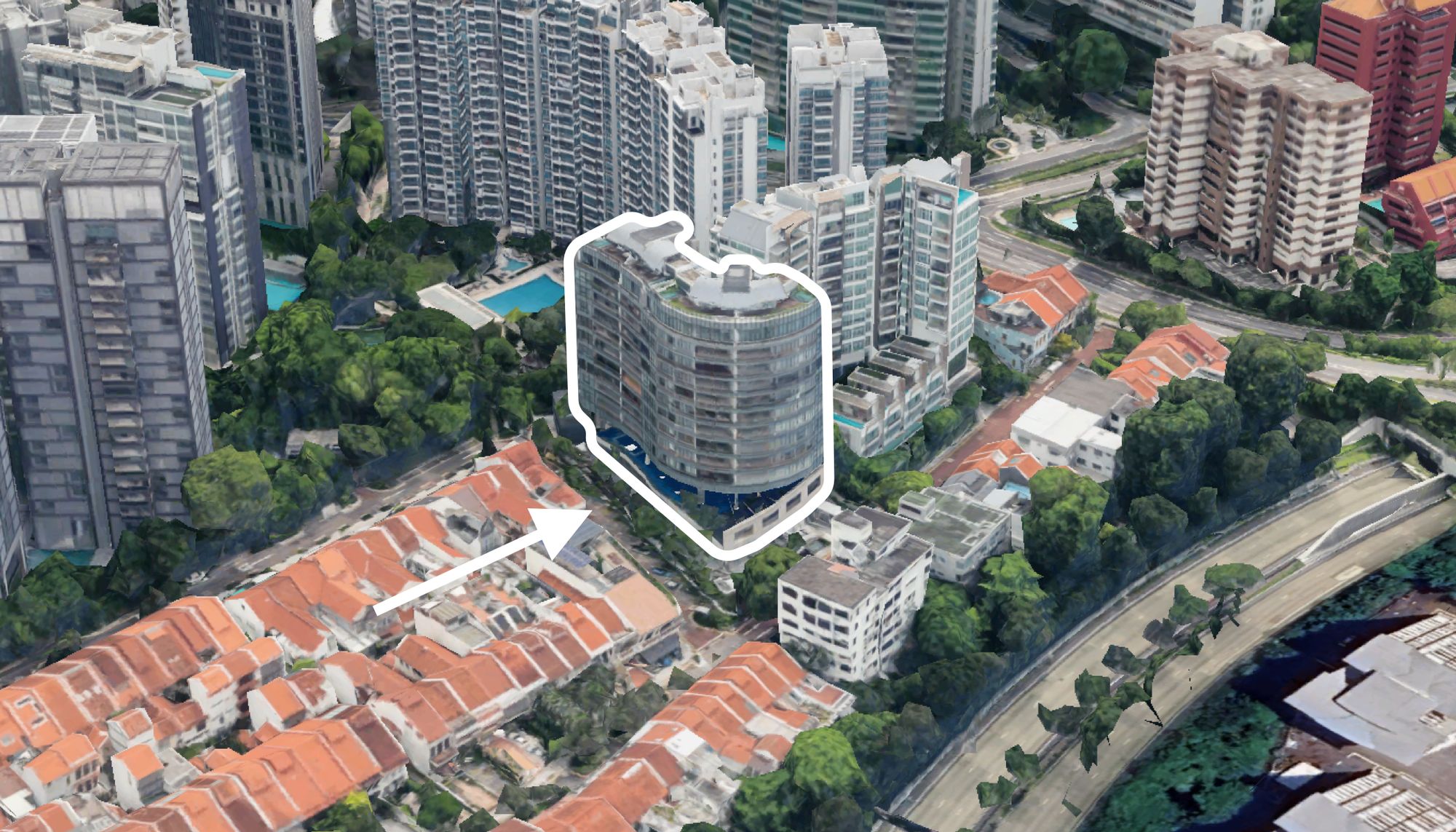
One of the developments we are currently considering is Amaryllis Ville, particularly a two-bedroom plus study unit. We are also looking at Tanglin View as a possible option.
Our combined monthly income is approximately $18,000. We currently have around $400,000 in CPF savings and about $400,000 in cash proceeds from the recent sale of our five-room flat. Based on this, our agent has advised that we could consider purchasing a condominium of up to around $2 million.
- Given our financial profile, would purchasing a $2 million property be considered prudent, or would you recommend a more conservative budget?
- Between Newton and Redhill, which location may offer stronger long-term value retention and growth potential?
- As we will be around 50 years old in 2027, should we prioritise proximity to our child’s school and activities over the next eight years, or focus more on investment fundamentals when choosing the property?
- From a longer-term strategy perspective, would it be advisable to purchase under a single name (for example through decoupling) so that we may potentially acquire a second property in the future?
Thank you very much for taking the time to review our situation. We would truly appreciate any guidance you may be able to offer.
(This is part of an ongoing series where we answer reader questions about the property market. If you have one of your own, send it to stories@stackedhomes.com.)
Hi and thanks for writing to us!
The key question for your scenario is not just affordability, but how and where that budget should be deployed.
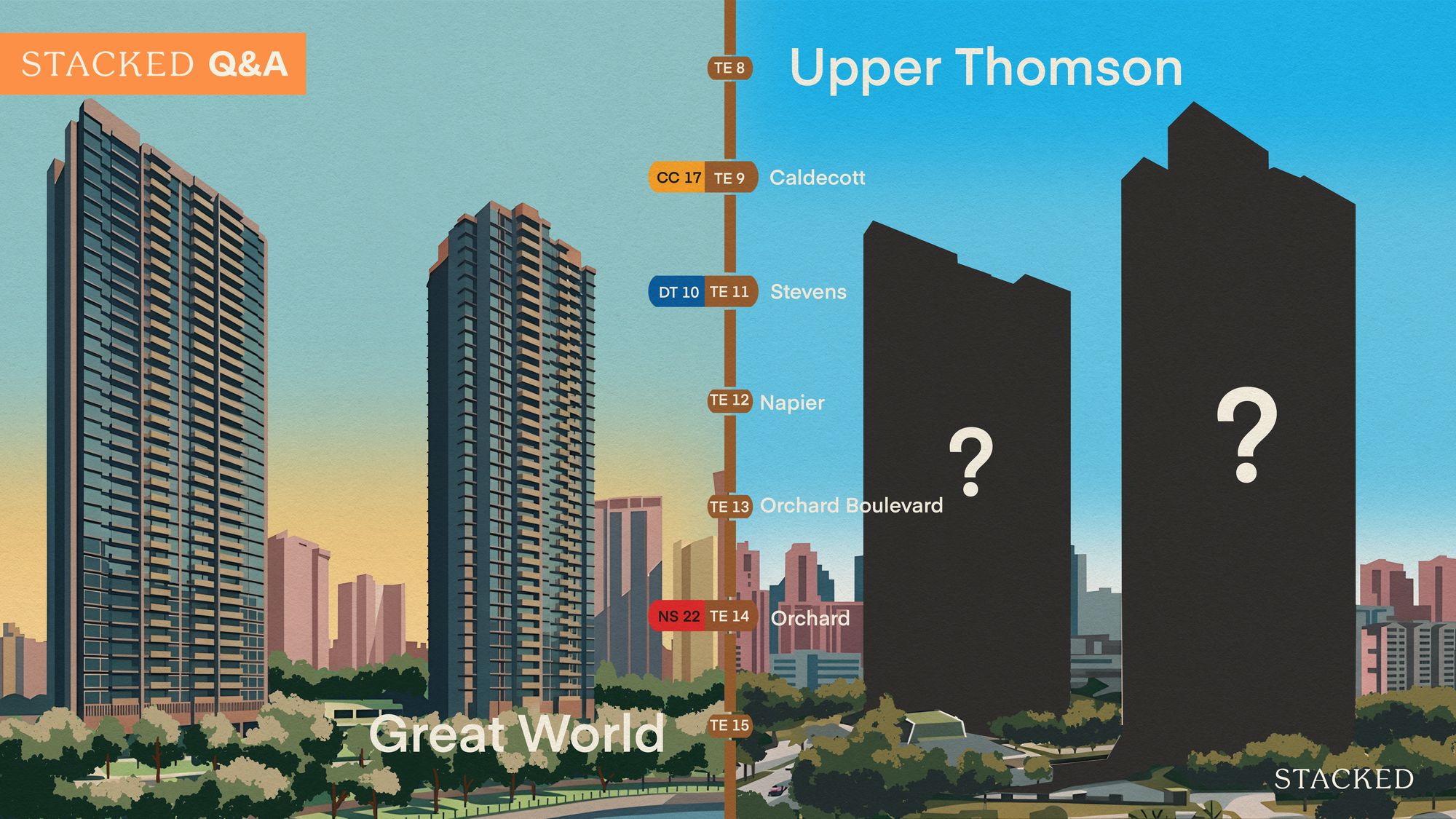
On one hand is Newton, where one of your children studies and trains several times a week. Living nearby could meaningfully reduce travel time over the next several years. On the other hand are city-fringe alternatives such as Redhill, where the same budget may stretch further in terms of space and flexibility.
This is not simply a Newton versus Redhill decision. It’s also about prioritising convenience for the next stage of life, versus more financial considerations like longer-term resale demand.
With a family of five, we’d focus on layout efficiency, future buyer demand, and capital preservation. Let’s look at whether the developments you’re considering can meet this, and whether alternative strategies might better balance present needs with long-term financial rewards.
So many readers write in because they're unsure what to do next, and don't know who to trust.
If this sounds familiar, we offer structured 1-to-1 consultations where we walk through your finances, goals, and market options objectively.
No obligation. Just clarity.
Learn more here.
First, let’s take a closer look at your financial situation
| Combined monthly income | $18,000 |
| Current age | 49 |
| Combined CPF | $400,000 |
| Cash | $400,000 |
| Maximum loan based on ages of 49 and combined monthly income of $18,000 | $1,402,274 (based on 4% interest – MAS medium term interest rate floor) |
| Total CPF + cash + loan | $2,202,274 |
| BSD based on $2,202,274 | $79,713 |
| Estimated affordability | $2,122,561 |
Based on the above, we agree with the assessed affordability limit of around $2 million.
If you were to take a home loan with maximum financing (75% of the price or valuation, whichever is lower), this is the projected monthly repayment based on the interest rate:
| Interest rate | Monthly repayment |
| 4% | $9,898 |
| 3% | $9,203 |
| 2% | $8,539 |
(Even though most home loans are far below 4% right now, we highlight it because 4% is the floor rate used by banks to determine thresholds such as the Total Debt Servicing Ratio, or TDSR. A higher floor rate is applied to prepare for the possibility of interest rate spikes.)
As of early 2026, most SORA-based loans are currently low and around the 2% mark; but we would advise being comfortable with repayments at higher rates, as these can rise. Also keep in mind that there are other recurring costs besides the monthly loan repayment, such as maintenance fees (about $400 to $500 a month for most condos), and property taxes.
A location analysis of Newton versus Redhill
We’ll begin by looking at how property prices have moved in both areas over the past decade. We’ll start by using all transaction types in general.
District 3 (D3) encapsulates the Redhill – Alexandra area, whilst District 11 (D11) spans the Newton – Novena area.
| Year | D3 | D11 |
| 2015 | $1,569 | $1,517 |
| 2016 | $1,610 | $1,558 |
| 2017 | $1,686 | $1,714 |
| 2018 | $1,759 | $1,677 |
| 2019 | $1,962 | $1,810 |
| 2020 | $2,004 | $1,834 |
| 2021 | $2,042 | $1,849 |
| 2022 | $2,292 | $2,165 |
| 2023 | $2,259 | $2,526 |
| 2024 | $2,200 | $2,215 |
| 2025 | $2,719 | $2,176 |
| Annualised | 5.65% | 3.67% |
In a very general sense, D3 properties have seen quicker price appreciation. However, these numbers can be distorted by the number of new launches which drive up the area’s $PSF.
So, let’s exclude developer sales, and look at the price movements in only the sub sale and resale market:
| Year | D3 | D11 |
| 2015 | $1,296 | $1,481 |
| 2016 | $1,255 | $1,466 |
| 2017 | $1,346 | $1,677 |
| 2018 | $1,669 | $1,674 |
| 2019 | $1,631 | $1,563 |
| 2020 | $1,627 | $1,598 |
| 2021 | $1,672 | $1,704 |
| 2022 | $1,920 | $1,786 |
| 2023 | $2,023 | $1,936 |
| 2024 | $2,125 | $1,993 |
| 2025 | $2,192 | $2,058 |
| Annualised | 5.39% | 3.35% |
Even setting aside any new launch disruptions, the results are the same: D3 has seen quicker price growth over the past decade.
So far, these are based on all property types in the two districts. But since the two developments you’re considering – Tanglin View and Amaryllis Ville – are both 99-year leasehold projects, we’ll also look at price movements when comparing only these leasehold projects. Again, we’ll look only at sub sale and resale transactions:
| Year | D3 | D11 |
| 2015 | $1,263 | $1,394 |
| 2016 | $1,217 | $1,366 |
| 2017 | $1,346 | $1,317 |
| 2018 | $1,697 | $1,517 |
| 2019 | $1,653 | $1,335 |
| 2020 | $1,641 | $1,447 |
| 2021 | $1,697 | $1,463 |
| 2022 | $1,917 | $1,678 |
| 2023 | $2,050 | $1,770 |
| 2024 | $2,137 | $1,799 |
| 2025 | $2,207 | $1,809 |
| Annualised | 5.74% | 2.64% |
The result is an even more pronounced lead for D3. Leasehold properties here have more significantly outperformed D11.
Our next step is to look at the actual overall price (quantum) for the unit sizes you’re considering.
This is less abstract than $PSF, as quantum ultimately determines what you pay, as well as your stamp duties.
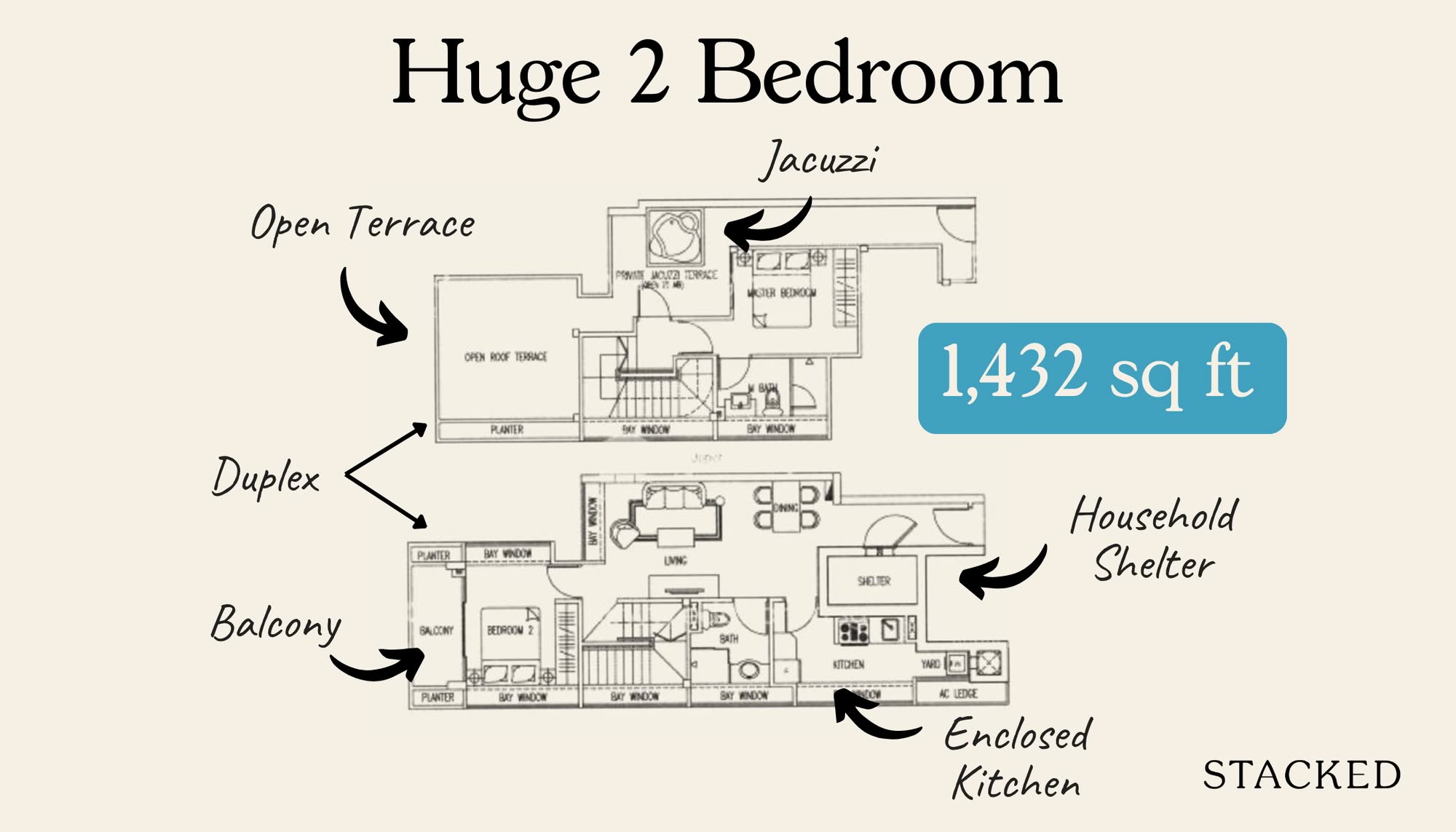
The minimum ypical unit size preferred for a family of five is usually a three-bedder unit, but we have included two-bedders in this scenario. This is because Amaryllis Ville and Tanglin View have two-bedders that can go past 870+ sq ft, which by current standards would be viewed as viable three-bedders.
We’ve also kept to the price ranges of leasehold properties only:
2-bedroom units
| Year | D3 | D11 |
| 2015 | $1,211,126 | $1,499,900 |
| 2016 | $1,211,520 | $1,527,992 |
| 2017 | $1,284,638 | $1,427,429 |
| 2018 | $1,620,892 | $1,675,116 |
| 2019 | $1,532,514 | $1,752,625 |
| 2020 | $1,388,560 | $1,750,653 |
| 2021 | $1,424,889 | $1,745,480 |
| 2022 | $1,525,263 | $1,826,990 |
| 2023 | $1,599,663 | $1,941,251 |
| 2024 | $1,639,205 | $2,027,667 |
| 2025 | $1,679,199 | $2,072,700 |
3-bedroom units
| Year | D3 | D11 |
| 2015 | $1,515,687 | $1,996,157 |
| 2016 | $1,575,350 | $1,867,618 |
| 2017 | $1,675,774 | $1,868,857 |
| 2018 | $2,017,354 | $2,315,840 |
| 2019 | $1,892,071 | $2,365,167 |
| 2020 | $1,874,849 | $2,295,200 |
| 2021 | $1,900,036 | $2,419,850 |
| 2022 | $2,063,246 | $2,541,522 |
| 2023 | $2,170,780 | $2,615,438 |
| 2024 | $2,264,319 | $2,717,911 |
| 2025 | $2,453,504 | $2,792,306 |
Even though D3 does tend to have higher $PSF levels, note that you’ll probably be paying less than in D11. This is because the average quantum in D3 is lower (the smaller the unit, the higher the $PSF tends to become, but the lower the overall quantum.)
A lot of the price differences you’re seeing here reflect age and unit size. D3’s properties tend to be newer but also built smaller; hence the combination of a higher $PSF but lower quantum. In D11, you’ll find older resale condos, which were built much larger – this flips the equation, and you’ll see a lower average $PSF but a much heftier quantum.
Looking at longer-term performance, D3 has generally seen stronger price growth over the past decade (within the context of resale and leasehold projects, as that’s what we’re examining here.)
This is also partly because D11 has larger, higher quantum units within the city centre; these units are more expensive to begin with. Because they have a higher base price, we tend to see weaker percentage gains.
Qualitatively, you’ll also want to make sure the area fits your lifestyle; this can go beyond simple numbers.
Newton offers greater convenience and prime location appeal; but Redhill manages to be close to the city centre, without the same amount of traffic and noise. This isn’t a dollars-and-cents consideration, but one specific to lifestyle preferences.
Now let’s make a direct comparison between Amaryllis Ville and Tanglin View
| Project | Amaryllis Ville | Tanglin View |
| Tenure | 99-year | 99-year |
| Completion year | 2004 | 2001 |
| No. of units in project | 311 | 384 |
| Land size (sqm) | 12,332 | 17,513 |
| Units per sqm | 0.03 | 0.02 |
| Unit mix | 1, 2, 3, 4 | 2, 3, 4 |
The two projects are relatively close in terms of age and unit count, although Tanglin View has a larger land area.
Tanglin View sits on a larger land parcel with lower density, which could lean in its favour. Amarillys Ville also has a wider unit mix that also offers one-bedders, but this doesn’t suit your needs.
Price movement over the past decade
| Year | Amaryllis Ville | Tanglin View | All 99-year leasehold projects (resale only) |
| 2015 | $1,478 | $1,210 | $1,051 |
| 2016 | $1,434 | $1,191 | $1,140 |
| 2017 | $1,432 | $1,172 | $1,123 |
| 2018 | $1,543 | $1,284 | $1,164 |
| 2019 | $1,530 | $1,298 | $1,189 |
| 2020 | $1,574 | $1,311 | $1,159 |
| 2021 | $1,683 | $1,379 | $1,227 |
| 2022 | $1,818 | $1,524 | $1,370 |
| 2023 | $1,925 | $1,617 | $1,516 |
| 2024 | $2,020 | $1,723 | $1,616 |
| 2025 | $2,101 | $1,880 | $1,683 |
| Annualised | 3.58% | 4.50% | 4.82% |
The performance difference is honestly not very large. Amaryllis Ville consistently commands a higher $PSF, and Tanglin View has recorded a slightly stronger annualised growth rate.
We’re looking at barely a difference of one percentage point though, and both these projects have kept pace with the wider leasehold market.
Let’s look at the actual dollar differences, in unit transactions on both sides:
2-bedroom units
| Year | Amaryllis Ville | Tanglin View |
| 2015 | $1,457,600 | $1,153,333 |
| 2016 | $1,423,986 | $1,108,333 |
| 2017 | $1,429,286 | $1,133,333 |
| 2018 | $1,484,100 | |
| 2019 | $1,429,333 | $1,261,000 |
| 2020 | $1,488,267 | $1,194,444 |
| 2021 | $1,622,909 | $1,248,333 |
| 2022 | $1,750,000 | $1,395,000 |
| 2023 | $1,816,539 | $1,432,667 |
| 2024 | $1,927,750 | |
| 2025 | $1,996,250 | $1,710,000 |
3-bedroom units
| Year | Amaryllis Ville | Tanglin View |
| 2015 | $1,998,571 | $1,397,689 |
| 2016 | $1,754,815 | $1,374,429 |
| 2017 | $1,969,600 | $1,373,247 |
| 2018 | $2,165,800 | $1,499,056 |
| 2019 | $2,598,000 | $1,539,353 |
| 2020 | $2,298,600 | $1,545,000 |
| 2021 | $2,311,000 | $1,574,407 |
| 2022 | $2,776,500 | $1,818,714 |
| 2023 | $2,584,000 | $1,928,533 |
| 2024 | $2,555,000 | $1,994,375 |
| 2025 | $2,697,500 | $2,233,637 |
For two-bedroom units, resale units at Amaryllis Ville have generally transacted in the $1.4 million to $2 million range. Tanglin View has been cheaper for two-bedders, ranging between $1.1 million and $1.7 million.
For three-bedders, these units at Amaryllis Ville have seen transactions at the higher limit of your affordability. We’re seeing transactions range from $2 million to way past the budget at $2.7 million. Tanglin View is also cheaper here and better situated within your budget range at $1.4 million to $2.2 million.
This also partly explains Tanglin View’s stronger price growth: it’s usually coming from a lower initial price, thus making percentage gains higher.
Here’s a rundown on the unit sizes for the above transactions, so you can see any potential trade-offs in spaciousness:
Average unit size based on transactions done
2-bedroom units
| Year | Amaryllis Ville | Tanglin View |
| 2015 | 967 | 872 |
| 2016 | 964 | 926 |
| 2017 | 974 | 872 |
| 2018 | 971 | |
| 2019 | 958 | 980 |
| 2020 | 958 | 872 |
| 2021 | 964 | 872 |
| 2022 | 964 | 980 |
| 2023 | 964 | 872 |
| 2024 | 966 | |
| 2025 | 964 | 1,034 |
3-bedroom units
| Year | Amaryllis Ville | Tanglin View |
| 2015 | 1,376 | 1,171 |
| 2016 | 1,252 | 1,161 |
| 2017 | 1,423 | 1,187 |
| 2018 | 1,421 | 1,157 |
| 2019 | 1,694 | 1,166 |
| 2020 | 1,427 | 1,181 |
| 2021 | 1,362 | 1,150 |
| 2022 | 1,582 | 1,166 |
| 2023 | 1,329 | 1,207 |
| 2024 | 1,245 | 1,145 |
| 2025 | 1,249 | 1,164 |
Units at Amaryllis Ville tend to be larger, particularly for three-bedroom units. Tanglin View features slightly more compact layouts, but this may not be a clear drawback. As we covered in pricing above, Tanglin View’s smaller sizes result in significant cost reductions, which allow it to better fit your price range.
You should consider if the difference in square footage truly justifies pushing into the extreme end of your affordability.
The flip side is that, because you’re a family of five, it could be argued you need more space. It might also be a good time to consider living arrangements over the next decade: whether your children are likely to move out and live independently, for example, which could mitigate the need for an extra room or so.
Next, let’s also look at other developments you might want to consider, at your price range and requirements
Just in case these haven’t been presented to you yet, the table below shows alternative projects in D3 and D11. These are also developments where transactions have been at $2 million or under (for either two or three-bedders), as of year-end 2025.
| Project | 2-bedder | 3-bedder |
| ZEDGE | $1,316,667 | $1,800,000 |
| MEDGE | $1,358,000 | $1,510,000 |
| QUEENS PEAK | $1,467,500 | $1,953,678 |
| 35 GILSTEAD | $1,480,000 | $2,656,667 |
| THE METROPOLITAN CONDOMINIUM | $1,530,413 | $2,730,833 |
| CENTRAL GREEN CONDOMINIUM | $1,531,400 | $2,369,000 |
| ALEX RESIDENCES | $1,537,077 | $2,121,535 |
| EMERALD PARK | $1,545,984 | $2,000,000 |
| 6 DERBYSHIRE | $1,572,500 | $2,296,000 |
| QUEENS | $1,580,000 | $2,171,616 |
| AVENUE SOUTH RESIDENCE | $1,597,613 | $2,408,000 |
| FYVE DERBYSHIRE | $1,600,000 | $2,328,333 |
| ECHELON | $1,604,867 | $2,715,972 |
| MARGARET VILLE | $1,607,841 | $2,189,610 |
| STIRLING RESIDENCES | $1,631,733 | $2,454,488 |
| MONTEBLEU | $1,654,500 | $2,350,000 |
| HIGHLINE RESIDENCES | $1,682,467 | $2,588,413 |
| COMMONWEALTH TOWERS | $1,685,413 | $2,326,489 |
| THE CREST | $1,696,207 | $2,575,876 |
| DOMAIN 21 | $1,700,000 | $2,673,333 |
| THE TREVOSE | $1,730,000 | $2,950,000 |
| PRINCIPAL GARDEN | $1,765,022 | $2,876,700 |
| CUBE 8 | $1,775,000 | $2,753,333 |
| HILLCREST ARCADIA | $1,800,000 | $2,000,000 |
| ADRIA | $1,810,000 | $2,980,000 |
| NEWTON SUITES | $1,811,933 | $3,050,000 |
| NINETEEN SHELFORD ROAD | $1,855,555 | $3,000,000 |
| ARTRA | $1,896,857 | $2,835,273 |
| ONE PEARL BANK | $1,898,786 | $3,154,815 |
| RIVER PLACE | $1,900,000 | $2,627,094 |
| ASCENTIA SKY | $1,944,000 | $2,833,750 |
| ROCHELLE AT NEWTON | $1,955,000 | $2,975,778 |
| THE ANSLEY | $2,000,000 | $2,600,000 |
| PULLMAN RESIDENCES NEWTON | $2,000,000 | $3,719,000 |
Some of these are older projects with larger layouts, while others are newer developments where units are more compact but priced more accessibly.
This also highlights another point: focusing on only one or two developments can sometimes narrow the search unnecessarily, especially in the resale market where availability changes frequently.
If you haven’t already done so, it can be a good idea to cast about for a broader range of options, before creating a definitive shortlist.
Should you purchase a newer leasehold project?
The general assumption is that newer projects will perform better, given the longer remaining lease and newer layouts / facilities. However, this isn’t always true. For example, take a look at the performance of these leasehold condos in D3:
| Year | QUEENS | TANGLIN VIEW | MERAPRIME | RIVER PLACE | DOMAIN 21 | ASCENTIA SKY | THE METROPOLITAN CONDOMINIUM | ARTRA | HIGHLINE RESIDENCES | EMERALD PARK | ALEX RESIDENCES | ECHELON | COMMONWEALTH TOWERS | CENTRAL GREEN CONDOMINIUM | QUEENS PEAK | PRINCIPAL GARDEN | THE CREST | AVENUE SOUTH RESIDENCE | HARVEST MANSIONS | LANDMARK TOWER | MARGARET VILLE | ONE PEARL BANK | PEARL BANK APARTMENT | RIVIERE | STIRLING RESIDENCES | THE LANDMARK | All 99-year leasehold projects (resale only) |
| 2015 | $1,256 | $1,210 | $1,372 | $1,310 | $1,431 | $1,469 | $1,334 | $1,133 | $1,531 | $1,246 | $1,049 | $879 | $785 | $1,051 | |||||||||||||
| 2016 | $1,246 | $1,191 | $1,329 | $1,239 | $1,559 | $1,444 | $1,292 | $999 | $1,246 | $936 | $818 | $736 | $1,140 | ||||||||||||||
| 2017 | $1,172 | $1,172 | $1,436 | $1,281 | $1,471 | $1,431 | $1,268 | $1,888 | $1,123 | $1,478 | $1,834 | $1,251 | $1,858 | $1,840 | $891 | $861 | $752 | $1,123 | |||||||||
| 2018 | $1,227 | $1,284 | $1,520 | $1,429 | $1,480 | $1,458 | $1,401 | $2,141 | $1,241 | $1,908 | $1,793 | $1,917 | $1,412 | $1,796 | $1,998 | $1,182 | $1,055 | $1,164 | |||||||||
| 2019 | $1,269 | $1,298 | $1,576 | $1,417 | $1,468 | $1,513 | $1,480 | $1,959 | $1,282 | $1,812 | $1,836 | $1,852 | $1,413 | $1,896 | $2,016 | $1,204 | $1,189 | ||||||||||
| 2020 | $1,240 | $1,311 | $1,464 | $1,324 | $1,513 | $1,471 | $1,457 | $1,871 | $1,912 | $1,230 | $1,811 | $1,742 | $1,836 | $1,412 | $1,878 | $1,904 | $1,955 | $1,159 | |||||||||
| 2021 | $1,334 | $1,379 | $1,607 | $1,476 | $1,492 | $1,509 | $1,497 | $1,934 | $2,064 | $1,244 | $1,909 | $1,872 | $1,895 | $1,443 | $1,866 | $1,914 | $1,915 | $1,189 | $1,988 | $1,903 | $1,227 | ||||||
| 2022 | $1,432 | $1,524 | $1,766 | $1,570 | $1,651 | $1,692 | $1,615 | $2,094 | $2,192 | $1,292 | $1,979 | $1,988 | $1,970 | $1,479 | $2,004 | $1,969 | $1,936 | $2,238 | $1,447 | $2,003 | $2,279 | $2,144 | $1,370 | ||||
| 2023 | $1,563 | $1,617 | $2,002 | $1,643 | $1,806 | $1,767 | $1,708 | $2,272 | $2,266 | $1,565 | $2,079 | $2,132 | $2,091 | $1,542 | $2,126 | $2,066 | $1,935 | $2,243 | $2,180 | $2,564 | $2,284 | $2,286 | $1,516 | ||||
| 2024 | $1,703 | $1,723 | $2,008 | $1,754 | $1,948 | $1,885 | $1,798 | $2,349 | $2,359 | $1,554 | $2,152 | $2,184 | $2,200 | $1,701 | $2,198 | $2,167 | $1,918 | $2,278 | $1,392 | $2,161 | $2,480 | $2,872 | $2,322 | $2,437 | $1,616 | ||
| 2025 | $1,818 | $1,880 | $2,079 | $1,830 | $2,035 | $1,960 | $1,912 | $2,395 | $2,409 | $1,527 | $2,239 | $2,127 | $2,225 | $1,684 | $2,217 | $2,162 | $1,957 | $2,259 | $2,217 | $2,503 | $2,935 | $2,381 | $2,322 | $1,683 | |||
| Annualised (2020 – 2025) | 7.95% | 7.47% | 7.26% | 6.69% | 6.11% | 5.91% | 5.59% | 5.06% | 4.74% | 4.42% | 4.34% | 4.08% | 3.92% | 3.58% | 3.37% | 2.58% | 0.02% | – | – | – | – | – | – | – | – | – | 7.76% |
Since many of the newer projects only began seeing sub sale or resale transactions from around 2020 onwards, we compared their performance between 2020 and 2025.
Over this period, the average annualised growth rate across all 99-year leasehold resale projects was around 7.76%. You can see that many older developments had growth rates broadly in line with this benchmark, and some even managed to exceed this. Meanwhile, several newer developments actually saw weaker appreciation.
This is partly because new developments typically enter the market at a higher $PSF This doesn’t necessarily prevent further price growth, but it can limit the room for appreciation. Older developments, by contrast, often start from a lower price base.
As such, project age alone is rarely the determining factor in price performance. It does matter, to be sure; but its impact can be outweighed by many other factors like entry price, supply, layout efficiency, and even the typical buyer / seller profiles in the area.
Newer projects definitely offer advantages in terms of facilities and remaining lease, but that doesn’t bring a guarantee of stronger capital appreciation.
An alternative approach for your consideration
School proximity will likely weigh on your decision for the next eight years. In light of this, consider how much weight to place on short-term convenience, versus the longer-term positioning of the property.
Beyond choosing between Amaryllis Ville and Tanglin View, another option is to separate your investment property from the home you live in. Instead of buying a property primarily based on convenience, you could purchase a unit with stronger long-term growth potential in any location, rent it out, and then rent a home in the area that best suits your lifestyle needs.
This approach offers two potential advantages.
- First, the investment decision can be driven purely by property fundamentals rather than lifestyle constraints.
- Second, your living arrangements remain flexible, particularly if your needs change after your child finishes school.
Here’s what the numbers would look like:
Let’s assume the following:
| Purchase price | $2,000,000 |
| BSD | $69,600 |
| CPF + cash | $800,000 |
| Loan required | $1,269,600 |
| Monthly mortgage repayment based on 4% interest* | $8,966 |
If the property is rented out at a 3% yield, the numbers would look roughly like this:
| Monthly rental income | $5,000 |
*Again, the actual home loan rate is likely to be lower than this floor rate
But what about the cost of renting a home for your own stay? Would this investment asset cover it?
The following projects in D3 and D11 feature two- and three-bedders where monthly rents are generally below $5,000:
| Project | 2-bedder | 3-bedder |
| MEDGE | $3,448 | $3,888 |
| SURREY COURT | $3,500 | $4,642 |
| MANDALE HEIGHTS | $3,575 | $5,000 |
| NOVENA LODGE | $3,580 | $3,850 |
| D’ IXORAS | $3,580 | $4,150 |
| ZEDGE | $3,594 | $4,000 |
| THE AXIS | $3,650 | $4,800 |
| PASTORAL VIEW | $3,850 | $4,603 |
| SUFFOLK PREMIER | $3,950 | $4,750 |
| NOVENA REGENCY | $3,967 | $4,750 |
| SHELFORD REGENCY | $3,980 | $4,800 |
| SUITES @ SURREY | $4,150 | $4,500 |
| EMERALD PARK | $4,268 | $4,997 |
| 28 SHELFORD | $4,283 | $4,445 |
| THE SPRINGS | $4,343 | $4,733 |
| ENG HOON MANSIONS | $4,400 | $3,500 |
| QUEENSWAY TOWER | $4,450 | $4,667 |
| KHEAM HOCK GARDENS | $4,575 | $5,000 |
| IRIDIUM | $4,738 | $4,800 |
| KAI FOOK MANSION | $4,806 | $4,400 |
It’s not a stretch that the rental income from your investment property could largely offset the rent you pay. Under this structure, you would effectively be holding a property positioned for long-term appreciation, while renting a home that suits your current lifestyle needs.
For families in transition – particularly when children may move out within the next decade – this can be a way to maintain flexibility, without compromising on property-related returns.
That said, this approach also carries risks, including potential vacancy periods and fluctuations in rental demand.
But there’s still another advantage to this approach
One reason this strategy is worth considering is the type of properties available within your budget.
With a budget of around $2 million, options within the central districts may often be limited to smaller unit types or older developments. While your children are currently comfortable sharing a bedroom, your family’s space requirements may evolve over time. Renting your own home allows you more flexibility as your circumstances change.
From an investment perspective, there’s also the question of where future price growth will come from. Based on resale prices over the past decade, the Core Central Region (CCR) tends to see slower price growth compared to the Rest of Central Region (RCR) or Outside of Central Region (OCR).
As we’ve shown above, properties that come in at already higher prices have more limited room for gains; and the CCR is generally the priciest region to buy into.
Here’s what the percentage growth looks like in each region:
| Year | CCR | RCR | OCR |
| 2015 | $1,731 | $1,233 | $968 |
| 2016 | $1,836 | $1,210 | $943 |
| 2017 | $1,843 | $1,281 | $982 |
| 2018 | $1,958 | $1,400 | $1,038 |
| 2019 | $2,005 | $1,399 | $1,052 |
| 2020 | $1,899 | $1,381 | $1,053 |
| 2021 | $1,969 | $1,485 | $1,135 |
| 2022 | $2,069 | $1,754 | $1,262 |
| 2023 | $2,047 | $1,895 | $1,396 |
| 2024 | $2,204 | $1,878 | $1,482 |
| 2025 | $2,248 | $1,983 | $1,553 |
| Annualised | 2.65% | 4.87% | 4.84% |
So, in theory, separating your investment property from the home you live in can be a sensible strategy.
It allows your purchase to be guided by long-term market prospects rather than lifestyle constraints, while still giving you the flexibility to live in a location that suits your family.
But again, we understand that managing both a tenant and your own rental arrangement can add a layer of complexity; and we also get that it can feel uncomfortable paying rent while owning a property elsewhere.
As such, we’re presenting this as just one possible alternative rather than the default path.
Regarding your question on decoupling
You also asked whether it may make sense to purchase the property jointly now and decouple later, so that one spouse can acquire another property without incurring Additional Buyers Stamp Duty (ABSD).
For the benefit of other readers and for clarification, we’ll run through the advantages of doing this:
By purchasing the first property under both names, you maximise loan eligibility today, as banks assess the combined income of both borrowers. At a later stage, one spouse can sell their share of the property to the other spouse, allowing the existing spouse to purchase a residential property without ABSD.
In practice, however, there are other complexities to consider.
First, when the share is transferred, Buyer’s Stamp Duty (BSD) will apply to the value of the share being purchased. The remaining spouse must also be able to service the loan on a single income, as the bank will reassess the mortgage at that point. This means, for instance, that your spouse must be able to meet the TDSR limit.
Timing is another important factor. If the decoupling were to take place closer to when your child finishes school, roughly eight years from now, you would likely be approaching your late fifties. At that stage, maximum loan tenures are shorter, which can reduce borrowing capacity and increase the upfront cash and CPF required. This can, again, make it much harder for your spouse to qualify for sufficient financing alone.
Structuring the purchase under a 99/1 tenancy-in-common arrangement can make a future buy-out simpler; but the overall benefits of this strategy may be more limited, once financing constraints are taken into account.
What should you do?
Stepping back, your decision ultimately revolves around three key trade-offs.
First, convenience versus flexibility. Newton offers immediate proximity to your child’s school and training, but Redhill may provide greater flexibility in pricing, and potentially stronger resale prospects.
Second, space versus affordability. Amaryllis Ville generally offers larger units, but Tanglin View’s more compact units can keep the overall quantum lower.
Third, simplicity versus structuring. Strategies such as decoupling, or separating investment and residence, can work to your advantage; but these involve the complexities we’ve already mentioned above.
This ties back to the broader question you raised: whether to prioritise proximity to your child’s school and activities or focus more on investment fundamentals.
There is rarely a universally correct answer. Much depends on how much value your family places on day-to-day convenience over the next eight years, relative to the idea of the property as a vehicle for gains.
It is, however, possible to do both; and this starts with choosing a property that aligns with you not just today, but with how you see your family needs evolving over the coming decade.
Don’t over-optimise purely for investment or purely for convenience; all-or-nothing approaches have too much potential downside for families in your stage of life. Rather, try to choose a home that works comfortably for the next decade, while still sitting in a location with steady and resilient demand, even if that may mean a few (controlled) compromises on either side.
At Stacked, we like to look beyond the headlines and surface-level numbers, and focus on how things play out in the real world.
If you’d like to discuss how this applies to your own circumstances, you can reach out for a one-to-one consultation here.
And if you simply have a question or want to share a thought, feel free to write to us at stories@stackedhomes.com — we read every message.
Frequently asked questions
What is the main consideration when choosing between Newton and Redhill for property investment?
Based on the article, what is the estimated maximum affordable property price for the family?
Which district has seen quicker property price appreciation over the past decade, according to the article?
How do leasehold property prices compare between Amaryllis Ville and Tanglin View?
What are some differences between Amaryllis Ville and Tanglin View in terms of land size and unit mix?


0 Comments