

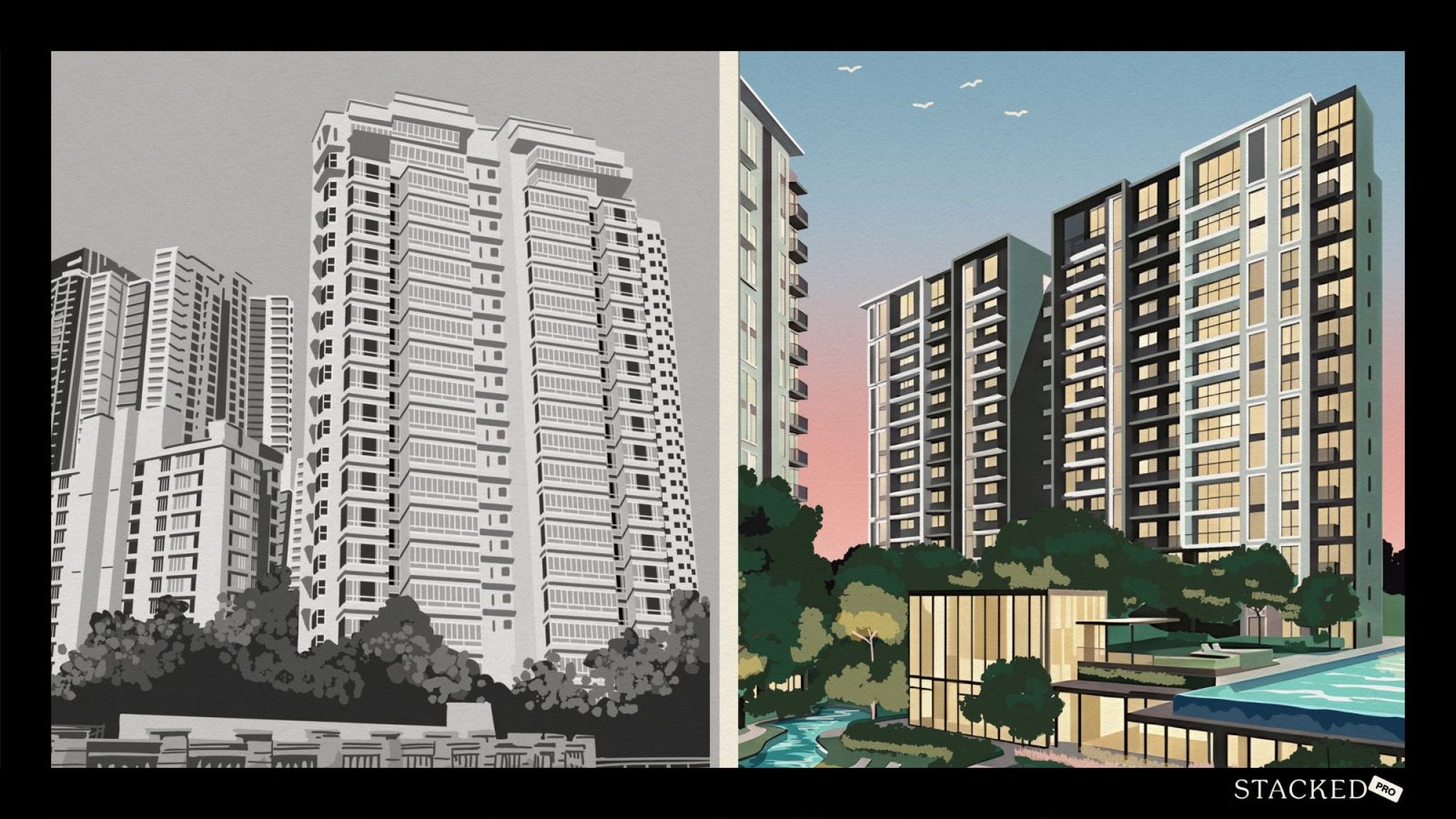
There was one trend that we left unexplained in our article last week, the first in our series of Pro articles covering the rental market. In that article, we shared how District 25's oldest three-bedroom condos kept beating their newer neighbours on rental yield, and lease decay looked like the obvious explanation.
But a shrinking lease is normally bad news for a property, not something that works in a landlord's favour.
To uncover the factors behind this trend, we narrowed last week's dataset to 99-year leasehold condominiums only, so a project's tenure doesn't complicate the comparison, and grouped every qualifying project by completion year into 10-year bands: up to 1990, 1991-2000, 2001-2010, 2011-2020, and 2021 onwards.
We maintain the eligibility rule which we also used in last week’s article: at least 10 registered rental contracts, at least five resale transactions, and a Temporary Occupation Permit (TOP) of at least 24 months, all within the same 12-month window.
We’ll also use the year that the development was completed, rather than its Temporary Occupation Period (TOP), to define each band, since it is a more direct measure of how much a project's lease has run down.
With that narrower dataset, let's start with whether the pattern in age holds up beyond District 25's three-bedroom cluster.





0 Comments